Ten Songs for those Struggling with Addiction

- “Start Over” – Flame feat. NF
- “Relief” (Acoustic) – Wolves At The Gate (feat Toby Morrell)
- “Redeemed”- Big Daddy Weave
- “Break the Cycle” – For Today
- “Killa” – Lecrae
- “This Is Amazing Grace” – Phil Wickham
- “Lord, I Need You” – Matt Maher
- “Rock of Ages” – Ascend the Hill
- “Your Great Name” – Natalie Grant
- “Sweetness of Freedom” – Citizens
Evangelism as an Overflow of Worship

Why do we share the gospel? Because we’re told to? Guilted into it? Or do we share the gospel? Many of us don’t. However, what could motivate us to share the gospel? Guilt? I don’t think that’s the most helpful or biblical motivation.
We share the gospel or should share it because it is the gospel; it is good news! When we have good news will share it. If we like a certain football team, soccer team, or bad mitten team we will be excited if they win and likely even call friends that like the opposing team to brag. If we go to the store and see a certain purse or pair of pants on sale and we buy them we will be excited and even tell someone how much we paid for them. If we go to a new movie or see a show we like we will not hesitate to tell someone about it and that they “have to see it.” We do these things because we’re excited about the “good news.”
I could command you to tell the good news. I could write out the Great Commission right here and just say, “Do it.” But I think if I did that, I would be pulling that text out of context. Notice, before Jesus said His words in Matthew 28:16-20, He first did and said many other things. We find the Great Commission positioned at the end of Matthew. In fact, if my math is correct, there are one thousand and sixty-six verses before it. I believe we must first hear the rest of the book for Jesus’ last charge to be in context; not least of which is Jesus’ death and resurrection. I believe the followers of Christ who were there to hear Jesus’ charge were worshipers (cf. Matt. 28:1; 9: “Mary Magdalene and the other Mary… took hold of his feet and worshiped Him.”). They had not only heard the gospel but had seen it with their own eyes (1 John 1:1-2). They were not given some bland command in the Great Commission but rather it was to them an outlet so that they did not burst.
The singer must sing a song or go mad and the Christian must tell of Christ. Elihu describes well the feelings of compulsion we should have. “The spirit within me constrains me. Behold, my belly is like wine that has no vent; like new wineskins ready to burst. I must speak, that I may find relief” (Job 32:18b-20a).[i] Or Jeremiah says it this way, “If I say, ‘I will not mention him, or speak anymore in his name,’ there is in my heart as it were a burning fire shut up in my bones, and I am weary with holding it in, and I cannot” (20:9).[ii]
Singing, Sanctification, and Transformation

Why sing? Why are “psalms, hymns, and and spiritual songs” important? What does singing do?
In the world we live in
“There is a ‘downward pressure’ continually in operation, which seeks to take that which is penultimate, and make it ultimate… The antidote to such ‘downward pressure’ is the continual eschatological emphasis of word and sacrament, of prayer and praise, and of koinonia [fellowship] lived in the present in light of the age to come.”[i]
Truly, “unless there is within us that which is above us, we shall soon yield to that which is around us.”[ii] St. Gregory reportedly said something similar: “If you do not delight in higher things, you most certainly will delight in lower things.” Truly, “worship shapes individual and community character.”[iii] That is, all worship, good or bad, Christian or other, intentional or unintentional. Thus we must focus on what is true, noble, right, pure, lovely, admirable, excellent, and praiseworthy (see Phil. 4:8).[iv] We must keep “the good,” the true good—God and His truth—the summum bonum ever before us.
Our ultimate love, the place where we rest our desire, has an ultimate affect. So, “moral decay doesn’t happen in a vacuum. It is supported by the idolatry of the society at any given time, and expressive of its worship, even if such be completely unarticulated.”[v] Moral decay happens when something other then God is our ultimate good (cf. Rom. 1).
Thus, it is important that we temper our hearts variously through singing, community, and the absorption of God’s word. That’s how we’re shaped biblically and practically. The more we have our chief end in view, through various means, the better we will live to that end.
We need deep and substantive reflection and celebration. We need to work at fostering transformative experiential worship where we can taste and see that the LORD is good. We need God to restore to us the joy of our salvation. We need God to open the eyes of our heart, we need the Spirit to move, we need God’s strength to comprehend His amazing love that surpasses knowledge.
Truly
“It is… superior satisfaction in future grace that breaks the power of lust [or addiction]. With all eternity hanging in the balance, we fight the fight of faith. Our chief enemy is the lie that says sin will make our future happier. Our chief weapon is the truth that says God will make our future happier… We must fight [our sin] with a massive promise of superior happiness. We must swallow up the little flicker of lust’s pleasure in the conflagration of holy satisfaction.”[vii]
Where do we turn for this? “The role of God’s Word is to feed faith’s appetite for God. And, in doing this, it weans [our] heart away from the deceptive taste of lust.”[viii] Therefore, we must feast on Scripture. And singing is an especially useful tool to help the word of Christ dwell in us richly (Col. 3:16).
Singing psalms and hymns and spiritual songs and being involved in Christian community is very important because, as C.S. Lewis said, “What is concrete but immaterial can be kept in view only by painful effort.”[ix] We need each other, we need music, we need preaching to shake us awake to unseen realities. That’s why we’re told—commanded even when we don’t feel like it—to make a joyful noise to the LORD (Ps. 66:1; 81:1; 95:1, 2; 98:4, 6; 100:1).[x]
We’re told to sing because when we sing with our voice our whole body, and I would argue, our whole self (i.e. our heart) reverberates with the truth of what we sing. When we sing lyrics, whether good or bad, they get into us and shape us. We are essentially preaching to ourselves, teaching ourselves, telling our self what we should desire, we are holding up a vision of prospering and “the good.”[xi] If we are driving down the highway listening to Taylor Swift, Blink 182, or Eminem it has a very real potential to shape us. We, at least, very often, internalize what we are singing. We imagine and feel not only the rhythm and tone but what the whole artistic message is putting forth. Music shapes us by implanting seeds of desire.[xii]
We are to be filled with the Spirit, instead of being drunk with alcohol or high on drugs, in part through singing (Eph. 5:15-20). Thus,
“Worship is one of the most transforming activities for us to engage in as Christians… When we become duly impressed with God our lives change because the things that matter to us change. We no longer want some of the things we previously desired. An overridding and overwelming passion for God himself, God’s people, and God’s kingdom purposes in this world replace those desires. True worship happens when we get a glimpse of God–who he is and what he is about–and just stand there in awe of him, being impressed and transformed down to the very depths of our being by the magnificent vision of the glory of our heavenly Father.”[xiii]
Truly, “Reality is simply far too great to be contained in propositions. That is why man needs gestures, pictures, images, rhythms, metaphor, symbol, and myth. It is also why he needs ceremony, ritual, customs, and conventions: those ways that perpetuate and mediate the images to us.”[xiv] We must use a collaboration of means to remind ourselves that it is the LORD God, the Maker of heaven and earth alone, that can meet our every need. We must use good songs, good stories, the Bible, Christian community, logic, etc. to stir up our (correct) desires for the LORD and all the good He is and has for us. We must take care least there be an unworthy thought in our heart (Deut. 15:9). We must pursue things that bring light and life and reject what is rank in ruin and worthlessness (see e.g. Ps. 101).
Truly, wherever our treasure (i.e. desire, view of “the good,” or our view of the good life) is, our heart (“heart” in Scripture has to do with our whole self; cognition, volition, emotions) will be also (Matt. 6:21; Lk. 12:34).[xv] Thus, we must work at fostering worship of the one true God.
Singing sinks God’s truth deep within our souls. Singing works because it leads us to worship. Singing teaches us what we should truly desire. Singing tunes our hearts to sing God’s praise.
_______________________________
[i] Doe, Created for Worship, 236.
[ii] Christian worship: it’s Theology and practice, 81
[iii] Doe, Created for Worship, 234.
[iv] Cf. Payne, The Healing Presence, 140.
[v] Doe, Created for Worship, 236.
[vi] Ibid., 235 see also Jonathan Edwards very important book Religious Affections.
[vii] Piper, Future Grace, 336.
[viii] Ibid., 335.
[ix] C.S. Lewis, Letter to Malcolm: Chiefly on Prayer (New York: Harcourt, Brace and World, 1963), 114.
[x] “Worship isn’t merely a yes to the God who saves, but also a resounding and furious no to lies that echo in the mountains around us. The church gathers like exiles and pilgrims, collected out of a world that isn’t our home, and looks hopefully toward a future. Our songs and prayers are a foretaste of that future, and even as we practice them, they shape us for our future home” (Mike Cosper, Rhythms of Grace: How the Church’s Worship Tells the Story of the Gospel [Wheaton: Crossway, 2013] 104).
[xi] “Music gets ‘in’ us in ways that other forms of discourse rarely do. A song gets absorbed into our imagination in a way that mere texts rarely do… Song seems to have a privileged channel to our imagination, to our kardia, because it involves our body in a unique way… Perhaps it is by hymns, songs, and choruses that the word of Christ ‘dwells in us richly’” (Smith, Desiring the Kingdom, 171).
[xii] Even Nirvana communicates; even if it’s emptiness or aggression that they put forward. However, realize that I am not saying that we cannot listen to Garth Brooks or Bruno Mars. Though I am not sure how or to what end those and other artist will shape you. I would say that “For Today,” a Metal band that is explicitly Christian, would have more of intentional transformative affect upon me then most artists. This is, I guess, both because of the content of their lyrics and the package in which they are wrapped (i.e. often very active and passionate singing and yes even screaming). However, Garth Brooks could perhaps have a transformative affect for some people as well (I am not one of them). Bruno Mars may be close to a-formative. Yet, as humans, I think we are similar to water. If we are not moving, i.e. being transformed, then we are stagnating, being deformed. Our bent, since the Fall, is away from our creator. Thus, perhaps, if we listen too much Bruno Mars and the like, a-formative music, we will stagnate. If we are left to our own devises and don’t have a gaud we do not progress. Our default is digression.
[xiii] Richard E. Averbeck, “Spirit, Community, and Mission: A Biblical Theology for Spiritual Formation,” 38 in the Journal of Spiritual Formation & Soul Care). I think Eph. 5:17-21 is noteworthy here. See also “Singing, in the Body and in the Spirit” by Steven R. Guthrie in JETS and “Being the Fullness of God in Christ by the Spirit” by Timothy G. Gombis in Tyndale Bulletin.
[xiv] Payne, The Healing Presence, 146 cf. 148.
[xv] “Disordered action is a reflection and fruit of disordered desire” (Smith, Desiring the Kingdom, 177)
The Breadth and Width of Musical Expression

It’s important for a painter to paint with a full pallet; yellows, reds, and blues and various types of hues; orange, green, and pink, in short, a full panorama of colors. This allows one to do better justice to reality. If a painter paints for very long and very well, he will eventually use the full range of colors.
Shouldn’t it be the same for musicians? Should not they, at times, have clashing symbols, bludgeoning bass, and frantic whispers? Is not there a time for aggression as well as joy? Soprano singers have their place, that’s true; but left to their own devices they won’t be able to communicate the breadth of the human condition and reality. We need waltzes and swing, we need metal and Mozart, we need jazz and, surprised to say, we need pop. However, that is not to say that all forms or types of music are good. That is not true in the artistic or moral sense. What I mean, rather, is that human experience is so broad that we need lots of “colors” and “easels” to express it. Look at the Psalms. Or look even just at David’s Psalms. David would have understood (and perhaps wrote) pop praise songs akin to what we hear on the radio as well as laments. David did not paint with broad bland strokes but used the appropriate “brush” for the appropriate picture.
I think we see a parallel also in the breadth of literature or genres in Scripture. One genre or form of literature simply won’t do in the communication of truth.[1] In the same way, contemporary Christian music in the vein of CCM, won’t be able to communicate the full breadth of truth in Scripture.[2] There are things worth screaming over and musically weeping over. I, for instance, am personally convinced that Christians need double-bass “fight” songs from time to time. I would argue that some heavy music is better than a lot of the stuff we hear on Christian radio (see here and here).
Popular contemporary Christian music tends to paint with brood bright strokes, using mainly happy and poppy major chords. Dark colors and minor keys seem to be all but forgotten. It’s like they’ve remembered redemption but forgotten the Fall. There are reasons to rejoice. But there are also reasons to weep, and scream. Christianity offers a full-orbed worldview. It deals with the pain and paradoxes of life. Much of contemporary Christian music doesn’t. A lot of secular music deals with angst; and that, that I can relate to. The world has much good in it, yet much bad, we are vying for meaning and redemption, and we have a thirst that can’t be quenched here. Much of contemporary Christian music, through lyrics and arrangement, doesn’t deal with or admit angst. It often seems ingeniune.[3]
Witness the realness and struggles of the Psalms. They are not always just poppy and happy. Sometimes they are, but not always. They incorporate a richer view of what it is to be: Blacks, browns, grays as well as pinks, yellows, and light blues; they use minor as well as major cords. They sing and scream. They cry and rejoice.
“When all Scripture references to music making are combined, we learn that we are to make music in every conceivable condition: joy, triumph, imprisonment, solitude, grief, peace, war, sickness, merriment, abundance, and deprivation. This principle implies that the music of the church should be a complete music, not one-sided or single faceted.”[4]
The Psalms and the Bible broadly communicate and speak to the human condition and I hope more and more Christian art will as well.
Christian music as a role should take into account the major plot turns of Scripture. Neither stuck in the Fall or New Creation. To do justice to Scripture and reality, much of Christian music must expand its scope to include the Fall and the tragic pain and loss that humanity now suffers as a result.
“Modern and postmodern art often claim to tell the truth about the pain and absurdity of human existence, but that is only part of the story. The Christian approach to the human condition is more complete, and for that reason more hopeful (and ultimately more truthful). Christian artists celebrate the essential goodness of the world that God has made… Such celebration is not a form of naive idealism, but of healthy realism. At the same time, Christian artists also lament the ugly intrusion of evil into a world that is warped by sin, mourning the lost beauties of a fallen paradise… There is a sense not only of what we are, but also of what we were: creatures made to be like God… Even better, there is a sense of what we can become. Christian art is redemptive… Rather than giving in to meaninglessness and despair, Christian artists know that there is a way out.”[5]
Hopefully there will be more and more Christian artists that deal with the damning affects of the Fall. That will deal with the angst and anger we often feel. But also the amazing promise of hope, redemption, and shalom through Messiah Jesus. This world is fallen but we must not forget the future, the coming reign of Christ, or what He has already accomplished on the cross.
True Christian expression should take into account the dark night of the soul, the melancholy madness we sometimes feel, as well as exuberant joy. It should recall our suffering Savior on the cross as well as His coming reign in which He’ll slay unrepentant sinners. It should at times acknowledge doubt and affirm belief. It should encompass the whole range of human emotions, various genres of Scripture, and the full sweep of the Christian story and the end (telos) of it all should be the glory of God through the exaltation of Christ.
This then would be real, rich, and weighty musical art. Music that strives, obtains, aches, yearns, realizes, weeps, and rejoices. Music that is accurate and true; music that is richly diverse and leaks over into other genres. Music that reflects the great story that we all find ourselves in—the creation of all things good, the Fall and thus futility we all reckon with, the redemption offered in Christ, and the Judgment and New Creation that awaits. Music that is rich, hopeful, and honest. Music that is hard and peaceful. Music that does justice to the world we live in, in all of its beauty and pain. Music that offers hope and redemption but that’s not naive about pain and pointlessness and suffering.
Music has a distinct ability to distill, channel, and focus truth and beauty into a unified whole so that the result is a type of laser that cuts into our core to wreak havoc and heal. As Augustine said, sounds flow into our ears, and truth streams into our hearts. Music is important and it shapes us.[6] It is thus important that it is done well and shapes us well, to the right end (telos).
________________________________
[1] “When the psalmist says, ‘Sing to him a new song; play skillfully, and shout for passages throughout the Psalms refer to all four main forms of music: strings, woodwinds, brass, and percussion. The ascriptions to the Psalms also contain evocative references to musical tunes, such as “The Death of the Son’ (Ps. 9) and ‘The Lily of the Covenant’ (Ps. 60). The Bible is full of many kinds of music. And as for literature, what further endorsement is needed beyond the Bible itself, which is the world’s richest anthology of stories, poems, historical torical narratives, romances, soliloquies, psalms, laments, prophecies, proverbs, parables, epistles, and apocalyptic visions?” (Philip Graham Ryken. Art for God’s Sake: A Call to Recover the Arts [Kindle Locations 180-185]. Kindle Edition.)
[2] “By continuously ‘praising the Lord’ the CCM artist rarely shows evidence of a comprehensive worldview. In fact, the world is not viewed at all. What is viewed is personal spiritual experience and usually only its more beautiful peaks. The valley of the shadow of death is rarely traversed, nor is the valley of indecision” (Steve Turner, Imagine: a vision for Christians in the arts, 52).
[3] “The problem with some modern and postmodern art is that it seeks to offer truth at the expense of beauty. It tells the truth only about ugliness and alienation, leaving out the beauty of creation and redemption. A good deal of so-called Christian art tends to have the opposite problem. It tries to show beauty without admitting the truth about sin, and to that extent it is false-dishonest about the tragic implications of our depravity. Think of all the bright, sentimental landscapes that portray an ideal world unaffected by the Fall, or the light, cheery melodies that characterize the Christian life as one of undiminished happiness. Such a world may be nice to imagine, but it is not the world God sent his Son to save” (Ryken, Art for God’s Sake, 242-246).
[4] Harold M. Best, Music Through the Eyes of Faith, 186.
[5] Ryken. Art for God’s Sake, 217-227
[6] “Music gets ‘in’ us in ways that other forms of discourse rarely do. A song gets absorbed into our imagination in a way that mere texts rarely do… Song seems to have a privileged channel to our imagination, to our kardia, because it involves our body in a unique way… Perhaps it is by hymns, songs, and choruses that the word of Christ ‘dwells in us richly’” (Smith, Desiring the Kingdom, 171).
Sin is Not Good #6
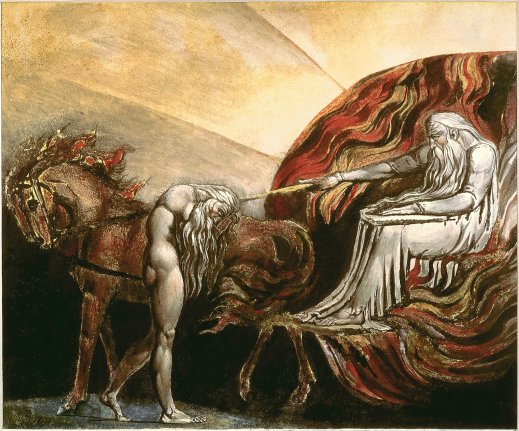
Sin Leads to Enslavement
Sin is like Gollum’s ring. It enslaves and destroys. It looks so good but ends in lava.
Truly, “What we revere, we resemble, either for ruin or restoration,”[i] and we all revere something. So “when we speak of ‘worship’ …we are not speaking about an activity of one’s life, but speaking of the activity of one’s life.”[ii]
Thus, “What distinguishes us (as individuals, but also as ‘people’) is not whether we love, but what we love. At the heart of our being is a kind of ‘love pump’ that can never be turned off—not even by sin or the Fall; rather, the effect of sin on our love pump is to knock it off kilter, misdirecting it and getting it aimed at the wrong things.”[iii]
Yet when we aim at the wrong thing, worship the wrong thing, and thus deprive God of His glory, He deprives us of ours[iv] and we end up empty and doing all manner of wickedness. This is woven into the fabric of the universe, our very existence.
We will worship. That’s not the question. The question is who or what will we worship and to what end. What will be the result?
One catechism asks, “With what design did God create man?” The answer: that we should know God, love and glorify Him, and so be happy forever.[v] Truly “God is to be worshipped, not simply because he demands to be, but because this is the proper destiny of his creation.”[vi] Worship is inevitable.[vii] It will and is happening. The question is not will you worship but what? And what will it lead to?
Will it damn you and lead to enslavement; or will it bring eternal shalom and human flourishing (i.e. true cross-cultural human flourishing not the mere individualistic perception of flourishing) (recall Rom. 1 and 6)? Is it true or is it false?
When we worship the LORD we are going with the grid that is innately ingrained within us since the beginning. This is innate within us but it is strangely not natural. We have been dispossessed of where we were, where we should be. Yet, it is where we should be. The worship of the LORD God is true and right but it also works, it is the way it was designed to be (and thus it not surprisingly works that way).
We were made for ineffable joy and thus we not surprisingly seek for it. The thing about the joy we seek (sehnsucht) is that it’s not quite like our hunger, thirst, or other desires; it cannot be filled within the earth. So, apparently, we with our longing seek to fill it with that which cannot fill it. We think that, similar to our other “thirsts,” it too can be quenched here on earth through tangible means. Yet experience, many wise people, and Scripture have exhorted us that that is just not the case. There is a greater thirst within us, yet also a greater quenching. There is joy unimaginable, though now not wholly obtainable.
So, hear Romans 6:20-23: “When you were slaves to sin, you were free from the control of righteousness. What benefit did you reap at the time from the things you are now ashamed of? Those things result in death! But now that you have been set free from sin and have become slaves of God, the benefit you reap leads to holiness, the result is eternal life. For the wages of sin is death, but the gift of God is eternal life in Christ Jesus our Lord.”
Thus, sin is not good because it enslaves and leads to death although it promises life and fulfillment.
________________________________
[i] G. K. Beale, We Become what we Worship: A Biblical Theology of Idolatry (Downers Grove: InterVarsity Press, 2008.).
[ii] Noel Doe, Created for Worship, 20.
[iii] James K. A. Smith, Desiring the Kingdom, 52.
[iv] cf. Noel Doe, Created for Worship, 29.
[v] Longer Catechism of the Eastern Church [1839], question 120.
[vi] Noel Doe, Created for Worship, 39.
[vii] cf. e.g. Noel Doe, Created for Worship, 230, 231.
Religious Affections
“For although to true religion, there… must indeed be something else besides affection, yet true religion consists so much in the affections, that there can be no true religion without them. He who has no religious affection, is in a state of spiritual death, and is wholly destitute of the powerful, quickening, saving influences of the Spirit of God upon his heart. As there is no true religion, where there is nothing else but affection; so there is no true religion, where there is no religious affection. As on the one hand, there must be light in the understanding, as well as an affected fervent heart, where there is heat without light, there can be nothing divine or heavenly in that heart, a head stored with notions and speculations, with a cold and unaffected heart, there can be nothing divine in that light. If the great things of religion are rightly understood, they will affect the heart. The reason why men are not affected by such infinitely great, important, glorious, and wonderful things, as they often hear and read of, in the Word of God, is undoubtedly because they are blind; if they were not so, it would be impossible, and utterly inconsistent with human nature, that their hearts should be otherwise, than strongly impressed, and greatly moved by such things”

~Jonathan Edwards, Religious Affections (Yale University, 2009), 120-21
“Holy affections are not without light; but ever evermore arise from some information of the understanding, some spiritual instruction that the mind receives, some light or actual knowledge. The child of God is graciously affected, because he sees and understands something more of divine things than he did before, more of God or Christ and of the glorious things exhibited in the gospel; he has some clearer and better view than he had before, when he was not affected: either he received some understanding of divine things that is new to him; or he has his former knowledge renewed after the view was decayed”
~Jonathan Edwards, Religious Affections (Yale University, 2009), 266
True Knowledge Should Truly Humble

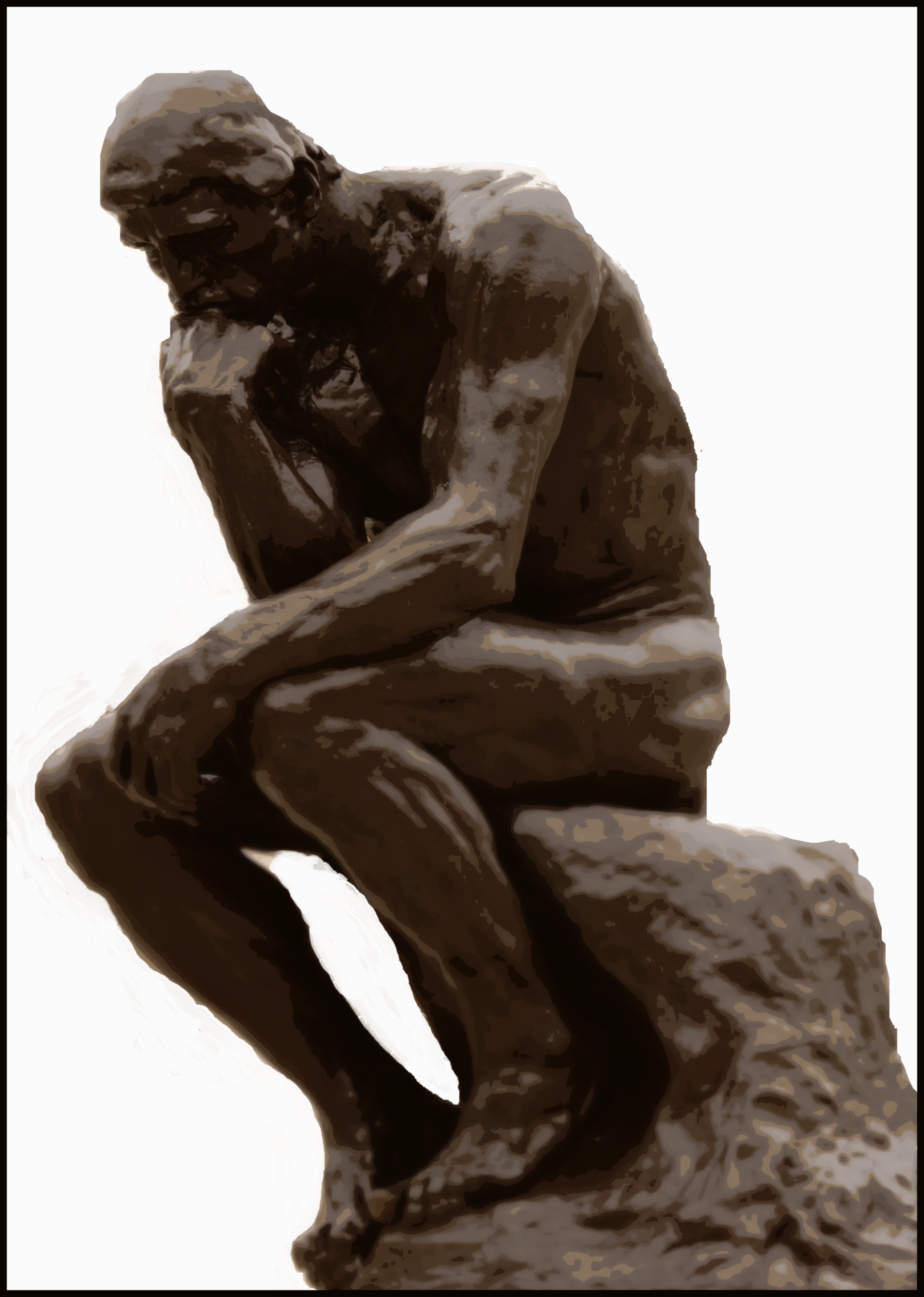
Knowledge[1] is dangerous. Not only the consequence that ideas themselves have but also the tendency that knowledge has to puff up. Truths that should lay us low in humility often conflate our egos. Paradoxically, knowledge is also the very thing that humbles.[2] We may not be proud without knowledge but neither will be humble. We will be ignorant. Knowledge is dangerous. Albeit, a necessary danger.
Knowledge is indispensable to live life rightly. We must understand though, that knowledge is not innate within us. It must be pursued. However, the very fact that knowledge is external should press us to pursue it in humility. It is not ours. We do not have the market on knowledge. Also, if we pursue it arrogantly we will miss much of it (Prov. 3:5-6; 15:14, 22). We should realize that not only is knowledge external from us but so is the desire for knowledge. We should not think we are better than the ignorant because our very desire for knowledge is itself a gift (James 1:17).
The desire for knowledge with the goal of being humbled is good. The fear of the LORD is the beginning of knowledge and humility comes before honor (Prov. 1:7; 9:10; 15:33; Job 28:28). Jesus pronounces woes upon the Pharisees, not for their knowledge, their knowledge is commendable, but on the result that their knowledge had upon them. It did not humble them (Matt 23:5-7, 11-12). The publican had little knowledge but it served to humble him. If we truly understand, if the eyes of our hearts are enlightened, we will praise God and not ourselves. We can have all knowledge but if we have not love, it profits us nothing (1 Cor. 13:1-3).
Thomas A Kempis said in The Imitation of Christ that “On the day of judgment, surely, we shall not be asked what we have read but what we have done; not how well we have spoken but how well we have lived.” That is not to say that knowledge is not important, it is. However, knowledge that does not lead to life change and humility is worthless and condemning. The person that knows the right thing to do and does not do it for that person it is sin (James 4:17). Kempis rightly says, “The more you know and the better you understand, the more severely will you be judged, unless your life is also the more holy. Do not be proud, therefore, because of your learning or skill. Rather, fear because of the talent given you.” God will judge us according to all that He has entrusted to us (see Matt. 25:14-30).
As our minds rise to exalted things, our consciousness of ourselves must fall. Truth humbles, or it is not understood to be truth to ourselves. Again Kempis says,
“What good does it do to speak learnedly about the Trinity if, lacking humility, you displease the Trinity? …I would rather feel contrition than know how to define it. For what would it profit us to know the whole Bible by heart and the principles of all the philosophers if we live without grace and the love of God?”
Knowledge is vital, we cannot serve or know the LORD without it, but knowledge must always humble.
How do we fight the damning affect that knowledge so often has? It all has to do with our motivation from the outset. As J.I. Packer has said, in his classic book Knowing God, “there can be no spiritual health without doctrinal knowledge; but it is equally true that there can be no spiritual health with it, if it is sought for the wrong purpose.”[3] Do we study the Trinity to be in awe and wonder before the God who is three-in-one? Or do we study the Trinity to look astute before our peers? The choices are not restricted to arrogance or ignorance but we have to fight for the last alternative, humility. If we go the way of ignorance we will never know humility, who or what would we be humbled before? And arrogance is the misapplication of knowledge. It is a pursuit of knowledge with the wrong goal in mind. Do we read science journals and Scripture to merely gain knowledge? Or do we do it to be humbled by the God that formed the furthest reaches of the galaxies and yet revealed Himself to us; yea, atoned for our sins (cf. Heb. 1:3)?
Pursue knowledge. Pursue it in whatever field. But do so in humble worship with your ultimate end being to glorify God. May we be amazed by and enraptured in the truths of Scripture as children. May we continually go to God humbly in awe of Him and His truth that is contained everywhere around us for God gives grace to the humble (James 4:6).
~Whatever you study or seek to know, do it all to the glory of God~
______________________
[1] I say “knowledge” and not any specific stream of knowledge because I believe that all truth is God’s truth. What I mean by knowledge is knowledge that is true, true truth, as Schaeffer put it. This could be in the realm of science, math, history, etc. All truth is God’s truth because God upholds the universe by the Word of His power thus all mathematical equations are held together by His hand. Science shows us the extent to which the glory of God is manifested in His universe (as Johannes Kepler said, “science is thinking God’s thoughts after Him”), all history is a story of God unfolding Himself and is actually a testimony of His grace to redeem such as we are.
[2] Richard Baxter rightly says, “If we have any knowledge at all, we must needs know how much reason we have to be humble; and if we know more than others, we must know more reason than others to be humble” (The Reformed Pastor, 144).
[3] J.I. Packer, Knowing God, 22. He further says, “if we pursue theological knowledge for its own sake, it is bound to go bad on us. It will make us proud and conceited” (21). Rather “our concern must be to enlarge our acquaintance, not simply with the doctrine of God’s attributes, but with the living God whose attributes they are” (23).
Adam Clarke on Loving God with all our Heart

What is implied in loving God with all the heart, soul, mind, strength, etc., and when may a man be said to do this?
1. He loves God with all his heart, who loves nothing in comparison of him, and nothing but in reference to him: – who is ready to give up, do, or suffer any thing in order to please and glorify him: – who has in his heart neither love nor hatred, hope nor fear, inclination, nor aversion, desire, nor delight, but as they relate to God, and are regulated by him.
2. He loves God with all his soul, or rather, εν ολη τη ψυχη, with all his life, who is ready to give up life for his sake – to endure all sorts of torments, and to be deprived of all kinds of comforts, rather than dishonor God: – who employs life with all its comforts, and conveniences, to glorify God in, by, and through all: – to whom life and death are nothing, but as they come from and lead to God, From this Divine principle sprang the blood of the martyrs, which became the seed of the Church. They overcame through the blood of the Lamb, and loved not their lives unto the death. See Revelation 12:11.
3. He loves God with all his strength (Mark 12:30; Luke 10:27) who exerts all the powers of his body and soul in the service of God: – who, for the glory of his Maker, spares neither labor nor cost – who sacrifices his time, body, health, ease, for the honor of God his Divine Master: – who employs in his service all his goods, his talents, his power, credit, authority, and influence.
4. He loves God with all his mind (intellect – διανοια) who applies himself only to know God, and his holy will: – who receives with submission, gratitude, and pleasure, the sacred truths which God has revealed to man: – who studies no art nor science but as far as it is necessary for the service of God, and uses it at all times to promote his glory – who forms no projects nor designs but in reference to God and the interests of mankind: – who banishes from his understanding and memory every useless, foolish, and dangerous thought, together with every idea which has any tendency to defile his soul, or turn it for a moment from the center of eternal repose. In a word, he who sees God in all things – thinks of him at all times – having his mind continually fixed upon God, acknowledging him in all his ways – who begins, continues, and ends all his thoughts, words, and works, to the glory of his name: – this is the person who loves God with all his heart, life, strength, and intellect. He is crucified to the world, and the world to him: he lives, yet not he, but Christ lives in him. He beholds as in a glass the glory of the Lord, and is changed into the same image from glory to glory. Simply and constantly looking unto Jesus, the author and perfecter of his faith, he receives continual supplies of enlightening and sanctifying grace, and is thus fitted for every good word and work.
~Commentary on the Bible, by Adam Clarke [1831].
Text Courtesy of Internet Sacred Texts Archive.
Family Worship
Regaining family worship is essential to having a church, culture, and society that lives for the LORD. It is when parents love the LORD their God with all their heart that they will teach their kids God’s truth diligently (see Deut. 6:4-9). I pray that the Church will resolve and say with Joshua, “As for me and my house, we will serve the Lord” (Josh. 24:15).
Family worship does not need to take a lot of time but should be regular and strive to be appropriate for the age groups involved. What do we do in family worship? There are three vital things:
- Read: It is the Word of God that is “profitable for teaching, for reproof, for correction, and for training in righteousness, that the man of God may be complete, equipped for every good work” (2 Tim. 3:16-17). It fun to ask a question about one of the verses that was read or have the child pick one verse to ask about. It is also helpful to teach kids to pray about something that is read in the Bible.
- Pray: We should teach our kids to go to God in prayer. This teaches them reliance on God.
- Sing: We are exhorted all over Scripture to sing songs to the Lord and this is something kids have the tendency to especially enjoy.
Other things that are helpful:
Bible Memory: Almost every night before the kids go to bed we say a Bible verse with them. My son at this time has around fifteen Bible verses memorized. It has been fun hearing him recite the verses and asking to say the Bible verse. He asks to say “the heart one,” referring to Proverbs 3:5-6.
Catechism: Another practice that has been helpful is teaching our kids theological questions and there answers. Uriah is part of the way through the little book at this point. It has been great to see the connections he is already making regarding the things of God because of this practice.
Constant Intentionality: Take every chance you get to teach your kids (Deut. 6:6-9). When the sun is setting overhead tell your kids who made it and praise God for it. When a need arises pray about it and be sure to include the kids.
Resources:
- Child’s Story Bible by Cathrine Vos
- Jesus Story Book Bible by Sally Lloyd-Jones
- Big Truths for Young Hearts by Bruce Ware
- My 1st Book Of Questions and Answers by Carine Mackenzie
- familyworshipproject.com
- Read narrative portions of Scripture or even just retell them. This helps to engage kid’s attention.
- Family Worship: In the Bible, in History & in Your Home by Donald S. Whitney



 in X
in X 