Diane Langberg, When the Church Harms God’s People
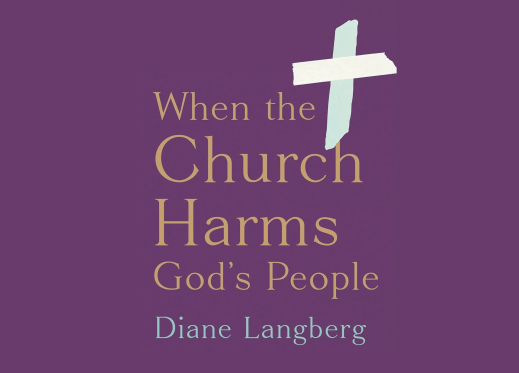
I really appreciated Diane Langberg’s book, When the Church Harms God’s People. Sadly, her book is very needed. Here are a few of my favorite quotes:
The body of Christ is called to be like Christ as individuals and as a gathered body of those who are one with him. Anything that does not look like Christ is not the church, even if it purports to be… We, the body of Christ, are called to follow our Head, be like our Head, carrying his light and truth into the world. Outward success, fame, wealth, and large numbers are not the fruit our Lord demonstrated during his earthly ministry. God’s purpose is to create a living body in which God is over and within each of its members as well as its corporate life.
Ministry growth, fame, and money are often taken as proof of God’s presence and work. But if that is true, then Jesus was an abject failure. He who had ultimate power and riches laid them aside. He did not grab onto them. He did not pursue them. They did not govern him. Proof of the presence of God is not found in the accoutrements of power and fame. It is found in likeness to his character.
If you want to be a shepherd/leader who honors God, the first thing you must know is that limitation is required for expansion. Incarnational leadership follows the opposite course of human leadership. Incarnational leadership descends from heaven to earth; it goes from up to down, from expansive to limited, from broad to narrow.
The infinite gathered himself up into a womb. All-Glory laid himself down in a barn. All-Power became a toddler. All-Love was slain. Such limitation is inconceivable to us. We think of limitation as an obstacle to overcome. We fight tiredness, sickness, and slowness. We believe that if we had more time, more energy, more ability, and more money, we could increase the good we want to accomplish. He, who never grows weary, knew tiredness. He, who is infinite and eternal, submitted to the clock. He, who is perfect, bore our sin and our sicknesses. Our God limited himself on all these fronts and more, and the resulting expansion is mind-boggling.
You want to live and work in the name of Jesus? If you want to lead the people of God in a way that expands his work and protects his honor, then you must do so by way of limitation. Restriction is foundational. There must be restriction of the tongue, the desires, the abilities, and the opinions of the self. There must be limitation of your way, your time frame, your speed, and your preference. There must be a limiting of the good, including your mental capacity, energy level, and powers of speech. If you want to lead, you must make yourself like those who are following. You must know their pace, their thoughts, their fears, and their needs.
We have erected beautiful buildings devoted to worship all over the world. We have created stunning music. We have raised up theology schools and trained theologians. Such things are not inherently wrong. But these things are not the church. A1ll these things can be externally beautiful yet become a den of thieves.To all of you who are shepherds: Your goal is not to preserve a church or human organization. Your goal is to serve your Lord and Shepherd, Jesus Christ.
Institutions, organizations, ministries, places, systems, and leaders may be part of Christendom, but that does not necessarily mean they reflect the ways of Jesus Christ. Nor is Christendom even the same as the living body of Christ; institutions and leaders can look Christian on the outside but be far away from Christ on the inside.
Church leaders and their followers often point to popularity, number of congregants, growing bank accounts, and particular political views as signs of God’s presence and blessing. None of these are listed in Scripture as signs of Christlikeness.
We often tend to select leaders in the Christian world according to their gifts rather than their character. We are often drawn to leaders whose intelligence, oratory, and social facility overshadow a weakness of character. When a leader is particularly gifted verbally, has a charismatic personality, and is adept with using spiritual language, it is easy to assume maturity and obedience to God. We see gifts and assume the leader’s character matches the image they project. Sadly, there have been charismatic leaders in the Christian world who achieved power and status because of their capacity for public speaking, vision casting, and entrepreneurial capabilities but had hidden character flaws such as lack of integrity or egotistical narcissism. We have watched thriving institutions crumble upon the discovery of ungodly leadership. Spiritual maturity is measured by character, by the fruit of the Spirit of God in a life.
Jonathan Tepper, Shooting Up (a book review)

Jonathan Tepper, Shooting Up: A Memoir of Love, Loss and Addiction,
Author Background
Jonathan Tepper seems like a rather amazing and interesting individual. He grew up as a missionary kid among drug addicts. And yet received the Rhodes Scholarship, which is extremely difficult to get. It is one of the most prestigious and competitive awards, and requires exceptional academic achievement, but also outstanding leadership, character, and commitment to serve others. He earned an M.Litt. in Modern History from the University of Oxford. He is now the Chief Investment Officer of Prevatt Capital.
In addition to the book we’re reviewing, he wrote The Myth of Capitalism, which was ranked as one of the Best Books of 2018 in Economics by the Financial Times. Tepper does not mean that capitalism does not exist, but that monopolies ruin the benefits of capitalism. This is true in regard to large-scale markets as well as the local scale of your internet provider. We need a recovery and appropriate enforcement of antitrust laws to protect consumers and competition itself. So, part of the financial problem many families face is not a problem of capitalism but competition. Much of the apparent competition is an illusion. All the while, companies with a monopoly pay what they want and price how they want. The monopoly wins, and competition and the average American lose.
Introduction
Shooting Up tells the story of the author growing up in a drug slum in Spain, where his missionary parents sacrificially loved and cared for heroin addicts. This eventually led to the founding of a groundbreaking drug rehabilitation center. It tells the true tale of care and dedication in the midst of destructive addiction. It recounts one family’s real and gritty love for the forgotten and left behind. It’s honest about the harsh realities of the world and the questions and struggles life brings.
If God could part the Red Sea and multiply loaves and fish, why didn’t God heal His faithful followers dying of AIDS? “Jesus healed the lepers and raised the dead. He spat into the mud and rubbed it into the blind man’s eyes to heal him. But the Bible stories all seemed like a sick joke when the men and women in the center were dying with no healing in sight.” (p. 203)
Here’s my own set of questions: “If Jesus loves the little children so much, then why did Ollie, Paige, MarieAnne, Torry, Terrance, and others need to die? If Jesus brings transformation, why did Mike steal Christmas presents from his kids to buy drugs‽”
I’ve always thought addiction is a microcosm of the sinful world we inhabit. It highlights the effects of sin in high definition and accelerated form. Shooting Up is an honest account of addiction, recovery, and loss seen through the eyes of a young boy coming to grips with the rugged realities we call life. “Shooting Up is a quietly devastating coming-of-age memoir that is as unsettling as it is unforgettable—a haunting exploration of belief, belonging, and the costs of sacrifice.”
The author graciously shared a free copy for me to review. I was immediately interested based on my experience with my heroin addict friends.
Insights and Impact
Overall, I appreciated the real-life story with real-life struggles and wrestling. It reflects the harsh realities we face in life. I also felt compelled to a real, gritty, in-the-trenches with people love. Love like Jesus’ love—Light going into darkness, the Pure entering putrid. Of course, that’s not the full reality. For when we truly enter into others’ lives, we see how alike we are to them, no matter what we thought before. We see our humanity is their humanity.
Four specific lessons stuck out to me…
1) Incarnation is real and painful.
In the house, there was a plaque with a quote from C. T Studd: “Some want to live within the sound of church or chapel bell; I want to run a rescue shop, within a yard of hell.” (p. 6) That’s what the Tepper family did. And in doing so, they imitated our Lord Jesus. Jesus had said, “As the Father has sent me, even so, in the same way, I am sending you.” The Tepper family listened and incarnated themselves into a diffrent people and culture.
In the incarnation, God entered flesh. “Carnal” often has bad connotations. Yet, Jesus became in-carnate—in flesh. Jesus is God with boots on, well, sandals. If Jesus were walking our streets today, He would be talking and making disciples of junkies.
Or as Bono from U2 said, “If Jesus were on earth you’d find him in a gay bar in San Francisco. He’d be working with people suffering from AIDS. These people are the new lepers. If you want to find out where Jesus would be hanging outit’ll be with the lepers.” (Alan Hirsch and Michael Frost, The Shaping of Things to Come, p. 44).
Sadly, very often we as Christians are ex-carnational. We have a come and see mentality that makes those who don’t know Jesus cross borders—whatever those borders are—and be missionaries themselves. That, however, was not the case with the Tepper family. They infleshed the gospel.
The Bible is honest about the brutality of the incarnation. Jesus took on flesh, and His flesh was bruised and battered, and He Himself was tempted (Heb. 4:15). Jesus, the Light, plummeted into our darkness, and the devil threw his worst at Him. When we serve and incarnate ourselves, we should expect no less.
One of the difficult things about ministry, however, is that the whole family is often swallowed up by it. Missionary kids and pastor kids don’t necessarily choose ministry, but they’re still stuck in the thick of it.
“If your parents are engineers, plumbers, or lawyers, it doesn’t matter one bit to your life, but if your parents are missionaries, it changes everything. You can’t pick your parents, but they get to pick your life. They decide where you’ll live, when you’ll pack your bags and go, and you’ll get roped into their work saving the lost.” (p. 9)
2) After repairs, there are still scars.
There’s a theme of repairing what is broken throughout the book. Repairing furniture, cleaning up buildings, and helping addicts. One of the things the drug rehabilitation center did to stay afloat financially was a furniture repair shop. “When the used or abandoned furniture entered through the doorway, the pieces came in with scrapes and dents, disfigured by years of neglect and abuse. The former owners had been unkind to the dressers, wardrobes, and desks. The handles were missing, the mirrors cracked and shattered, and often layers of faded paint covered what had once been solid oak.” (p. 70)
The men “took the furniture apart piece by piece, revealing stains and scratches in the wood, and peeling off all the old coats of paint.” (p. 70) “They loved taking something others thought was rubbish, cleaning it, caring for it and transforming into something new with sandpaper, varnish and care.” (p. 37) Maybe the men saw something in the funiture that resembled themselves.
“As a child,” the author shared, “I believed that no matter how broken and scarred by scrapes the pieces were when they entered the shop, they could always be restored. Now, though, I saw that although the scratches and scars grew fainter, they were never gone. The woodworm remained hidden, but the ravages of time could never fully be reversed. How easily we are damaged, and how hard to put back together.” (p. 180)
The Apostle Paul said in 2 Corinthians 5:17 that if anyone is in Christ, they are a new creation; the old has gone, behold, all things are new. But he also said “before transformed by the renewal of your mind” and that we “are being transformed into the same image from one degree of glory to another” (2 Cor. 3:18). Transformation takes time, and scars remain. It’s true of furniture, and it’s true of each of us in this life.
3) There are blessings and perils to education.
The Tepper family clearly valued education, but there are particular perils to education. The author shares that he couldn’t decide on many things about his life, but with his books and encyclopedias, his mind was free to roam where it wanted. “Books could fit in any backpack, yet they contained entire worlds. They were my magic carpet to change reality and take me wherever I wanted.”
“Books filled every corner of our small apartment. My parents had made a study with bookcases that lined the walls from the floor to the ceiling, as my father had when he was growing up. Books were stacked randomly in piles on the carpet like stalagmites. My parents said books had the power to transport and transform you.” (p. 9)
Education can be a blessing but also baffling. The author quotes Solomon: “For in much wisdom is much grief; and he that increases knowledge increases sorrow” (Eccl. 1:18). “Education can be a bittersweet experience. For all the joy of discovery, sometimes I wished I were a house painter and had skipped school when I was twelve. I would know how to read, but I might not be troubled by questions of belief. (p. 202)
4) Beauty will break forth from the brokenness.
Very tragically, the author’s mother got a brain tumor. After her surgery, she was not the same. She took her own life in 2012. She jumped from the rooftop of the drug rehab headquarters.
“With the added perspective of time, death has made me aware of the preciousness of life, the importance of family and friends, and the overwhelming power of love and memory.” The author goes on to share, “Shattering tragedies have marked my life, but I was always surrounded by a loving family and community. True misfortune and trauma are for those who suffer and are not surrounded by love.” (p. 266)
Yet, in reading the book, a question replayed in my mind. Why, if God is good, is there suffering? More than that, why doesn’t God protect His own faithful servants from suicide? There are many questions beyond my understanding, but I know God is love. And soon sin, and its chorus of chaos will end, and new creation will resound.
As the author said, “My mother suffered a great deal, and now she is suffering no more. I hope people will remember what a wonderful woman she was all her life. I never met a kinder, gentler, more selfless person.” (p. 264)
As Julian of Norwich said, and as is quoted in the book,
All shall be well and
All manner of things shall be well.
That is the Christian hope. We can minister in the dark because the light has come, and soon it will totally overwhelm the darkness.
Favorite Quotes
Suffering itself is meaningless. It is our response to it that gives it meaning, and it is not an easy task to thread the needle of suffering. The answer to suffering is always more love. We can love those who are hurting, and when we are grieving, we can treasure and remember those who have passed.(p. 266)
I could come home in the years ahead, but it would never truly be the same. You cannot turn back the days to the hours of youth and health. Home is not even a place; it is a fleeting state of mind—of innocence—you can never go back to. You can never truly go home. (p. 224)
Why was it that some Christians took parts of the Bible so literally—the seven-day creation, the flood, and the endless genealogies— yet viewed the Sermon on the Mount with its call to meekness, kindness, and love, and the Ten Commandments, as mere suggestions? (p. 117-18)
Suffering itself is meaningless. It is our response to it that gives it meaning, and it is not an easy task to thread the needle of suffering. The answer to suffering is always more love. We can love those who are hurting, and when we are grieving, we can treasure and remember those who have passed. (p. 266)
Every great love story will eventually become one of loss. If we do not love, we will not suffer. We cannot have it any other way. (p. 266)
Hate destroys you, but love transforms us and the world around us. (p. 69)
My mother and father had reason to be proud of all they accomplished over the decades, but not because of the size of the building or the numbers of addicts in the centers. My parents did not set out to create a large organization, seek political influence, or fight any culture wars. They set out to show compassion to one addict at a time. (p. 262)
What a vast gap between knowledge and wisdom! I was no more responsible for my odd, schizophrenic childhood than they were for their normal ones, yet I placed the burden upon them to understand me. It is easier to blame others than to accept our shortcomings and grow. And so I retreated further into my shell. (p. 224)
If only my parents had not taught me how to think, I would not have had the tools to take my own beliefs apart piece by piece and to saw off the branch I was sitting on. (p. 202)
“Thank you, Lord, that while we were stealing from the slot machines last night you didn’t let the police catch us. Thank you, God, for looking after your sheep. Amen.” (p. 39)
Some Christians were the worst possible advertisements for Christianity. (p. 117)
David shared a room with Timmy, and I bunked with Peter, who was only one year, two months, and one day younger than me. But my parents’ books had a room all to themselves. (p. 10)
Patriotism, Nationalism, and Christianity

Too often, American Christians come off as nationalistic. What is nationalism, and why is it problematic?
I love America. I served in the Army National Guard for 9 years and now serve in the Air National Guard as a chaplain. I have sworn to defend the Constitution from all enemies, foreign and domestic. I do not take this lightly. I deem the ideals in the Constitution, the Declaration of Independence, and the Bill of Rights, and the freedoms and flourishing flowing from them, as worthy of protection, even calling forth the sacrifice of my life and limbs. So, I would say I am a patriot but not a nationalist.
With anything, definitions matter. The way we define patriotism and nationalism will helpfully contrast them for our purposes. There is a healthy kind of love for country and an unhealthy, biased, and blind kind. There is also a Christian kind of love for one’s country. As well as a sub-Christian love for one’s country in which the country plays a bigger role and occupies greater space in one’s affections, allegiance, hopes, and fears than it should.
Patriotism
Stephen Nathanson defines patriotism as involving:
- Special affection for one’s own country
- A sense of personal identification with the country
- Special concern for the well-being of the country
- Willingness to sacrifice to promote the country’s good[1]
It is shown through civic virtues, national loyalty, and contributions to the country’s well-being. It involves participating in democracy, respecting national symbols, and supporting fellow citizens. Serving in the military or government, voting, paying taxes, obeying the law, and learning about and respecting the country’s history and founding principles are all patriotic. All of these things are good and honorable. There is nothing wrong with being a Christian and being patriotic.
Patriotism does not confuse the city of man with the City of God. Patriotism leaves room for serious criticism of one’s country. Patriotism is not naive.
Patriotism does not mean promoting one’s country’s interests under any circumstances and by any means. The patriot can and should recognize a higher moral principle above that of one’s own nation. A patriot does not need to and must not lose his prophetic voice. A patriot may fight for his country, but also demand that the war is just.
Nationalism
The Merriam-Webster dictionary defines nationalism as an ideology that elevates one nation or nationality above all others and places primary emphasis on promoting its culture and interests rather than those of other nations or nationalities. I would further add, from a Christian perspective, that we consider this definition in relation to God’s Kingdom. Patriotism has its rightful place and perspective within our earthly nation. But with nationalism, the nation occupies a bigger place in hearts, minds, and allegiance than is warranted. “Patriotism that loses perspective and offers our highest loyalty to a specific state is an evil and destructive thing. In essence, nationalism is the imbalanced and distorted form of something that is good—patriotism.”[2]
| Healthy Patriotism | Unhealthy Nationalism |
| America < Jesus’ Kingdom | America > Jesus’ Kingdom |
| Subservient to King Jesus and His policies | Subservient to the President and his policies |
| Ultimately concerned about Jesus’ transnational Kingdom | Ultimately concerned about America |
| Eschatology: Hope in Jesus | Eschatology: Hope in American greatness |
| The fall/problem: everyone are sinners in need of Jesus and His love and truth (right and left) and Satan is set to destroy everyone (right and left) | The fall/problem: The left (or the right) are the problem. If we can deal with them, this nation will be back to its original state (Eden/Promised Land)[3] |
| Savior/messiah: Jesus who fixes the problem of sin, is truth incarnate and thus shows us how to live—lives of love. And who will ultimately destroy Satan, sin, and death. | Savior/messiah: a strong political leader who will fix what is broken (and remember the other side is what is broken) |
| Loves everyone. Wisely, carefully, and considerately protects America. | Loves America. Brashly and thoughtlessly does whatever it thinks is in the interest of America. |
| Open to critique and correction. Not naive. Prophetic voice remains. | No critique or correction. No place for the prophetic voice. |
Powerful Push Towards Nationalism
Any powerful nation will push towards nationalism. Of course, no nation says, “We are a variable and artificial entity that sometimes fails in our moral duties, but we want your allegiance in order to increase our power and security.” Instead, God is often co-opted to bolster the country’s standing in the eyes of the people. That is why people who are nationalistic tend to be religious. A link has been made between one’s nation and one’s God.
We see the messianic undertones all over the place, from “Obamacare” to “TrumpRX.” We can trust the Führer to provide what we need. The president is my shepherd, I shall not want. The president leads me to prosperity. The President is here; I will fear no enemy.
The immense power, rich history, and traditions of the United States can inadvertently foster nationalistic tendencies. While the story of the United States, on balance, is predominantly positive, this goodness can be perilous. Nationalism becomes alluring when nations possess sufficient strength or goodness to garner deep loyalties.[4] This can facilitate false beliefs and narratives, and promote placing hope where it should not be placed.
Our nation’s “superpower status and the longevity of our political system provide a potent seedbed for nationalist ideas. When this is combined with a rather widespread belief that the United States is (or in some cases, was) a Christian nation, nationalism becomes a seductive worldview for Christians.”[5]
One of my major critiques of nationalism is that it takes something that may very well be good, or even very good, and transforms it into an absolute good.[6] Of course, every culture and nation has some redeemable qualities. And “It is indisputable that different nations reflect varying degrees of Christian influence in their histories.”[7]

But no nation is God’s ideal. No nation will ever bring heaven to earth. That is a utopian concept. The New Jersusalem will come down from and by God from heaven (Revelation 21:2).
The reality is, however, there will always be temptation to place our hope in govermental powers on earth. Christians must remember that Revelation warns us against the sin of nationalism. We must not put our hope in Babylon. Babylon will fall (Revelation 17-18).
Christianity
The only nationalism the Christian should be about is trans-nationalism: Jesus and His eternal Kingdom made up of people from every tribe, language, nation, and tongue. Christianity is transcultural and transnational.[8] Christianity is not America, and it’s not American. Jesus was a Middle Eastern Jewish carpenter who was crucified. “Jesus people” have historically transformed culture sacrificially and lovingly from the margins.
Christianity is not about my church or your church, this country or that country; it’s about the whole universe being subservient to Jesus. Jesus is the Boss before whom every being in the entire universe will be made to bow. Jesus is bigger than politics. “The Christians primary solidarity is not with those who pledge alliagnce to a particular flag but those who confess Jesus as Lord regardless of their nationality.”[9]
Christianity is political, but it is first and foremost about Jesus reigning in individual hearts and lives; and Jesus’ command is summed up in this: love the LORD (YHWH) with every fiber of your being—material and immaterial—and others as yourself. Jesus will soon reign on this very earth. Christians are about that political reign not by getting overly caught up in earthly politics, but by ensuring they themselves are following Jesus the King and helping others to see who He is and bow before Him.
People will not bow their head, heart, and hands (and morality) before Him until they know and love Him. Christians are not about outward conformity but conformity from the heart. And that happens through love by the Spirit.
One of the death knells of nationalism is the historical perspective that remembers the transitory nature of nations. Nationalism is short-sighted and wrong in its diagnosis and offer of a cure. It’s demonic because it distracts from the real hope of Jesus. Nationalism is also deeply off base because, as Brenda Salter-McNeil has said, ”Cultural difference and diversity was always a part of God’s original plan for human beings. No one culture, people, or language can adequately reflect the splendor of God.” Nationalism and Christianity don’t go together.
Some people might respond…
Some people might respond: “Your unrealistic or unfaithful talking about all the high-fluent Jesus’ Kingdom stuff… You are unrealistic and should care about America. Don’t you care about our kids‽ Don’t you see the moral collapse of the nation‽”
First, I do care about America, and I do things for the betterment of America. As stated above, I am in the Air Force. I also vote and carryout other civic duties, volunteer, serve my local community as a pastor and hospice chaplian.
Second, Colossians 3 says “Set your mind on things which are above, not on things which are on the earth.” This and other Scriptures demonstrate that our first focus as Christians should be Jesus’ eternal Kingdom and our heavenly citenzenship (Philippians 3:20). This positions us to be more profitable people in whatever earthly kingdom we find ourselves.
Third, the hope of America is a person. And that person is Jesus. It’s not any other person or policy. It’s not morality. The hope of America is not America. Jesus, that’s who we all need: His person and policy.
Yes, I know we can’t actually vote for Jesus. Yes, I know the President is not the “pastor and chief.” But yes, the diagnosis and what we think is the cure for this country radically matters. A lot of people seem to be “practical nationalists” even if they say they aren’t.
Fourth, we can’t piecemeal take God’s word. God’s word that says, “thou shalt not commit adultery,” thus condemning homosexuality and pornography, also says, “love your enemies” and “pray for those who spitefully use you.” Sometimes political opponents don’t take into account the whole counsel of God or the weightier matters of the law.
How can we hold to the sacredness of the family with one breath but with the next belittle and objectify women or put down people of different nationalities—people made in the image of God for whom Jesus died? Don’t we get the value of the family and the value of all humans from the same place?
If God’s word, the truth, is our mother, then the indoctrination of the internet should not be our father. We should keep suckling from the same source, that of love and truth, not one mixed with poisonous lies. We should keep in mind that this world’s wisdom is mixed with the serpent’s bite of devilish deceit.
The God of moral order is also the God of sacrificial love. We can’t have actual moral order and the flourishing it promises without the accompanying love. It’s a fool’s errand to think we can have the heads of the quarter without taking the tales’ side too.
Conclusion
So, as a Christian, I do not believe there should be any connection between Christianity and nationalism. I do, however, think there is a clear place for appropriate patriotism.
Patriotism has warrant in Scripture. Patriotism realizes that the freedoms, blessings, and prosperity we have as a nation are a stewardship from God, which is meant to be wisely managed. Patriotism realizes the freedoms we enjoy are not free and they are not just to be enjoyed but leveraged for higher purposes. Patriotism realizes that freedoms are meant to be protected along the lines laid out in the just war literature.[10]
Patriotism realizes that the government is not infallible but is under the higher government of someone higher. Patriotism praises God for the country in which God has placed us, but has no illusions of perfection or the possibility of perfection.[11]
Psalm 23 is not just a funeral poem. It’s political. YHWH is my shepherd. He leads and I follow Him. He is the great shepherd who shows His love by laying His life down for His sheep. It is He—King Jesus—who brings eternal goodness, prosperity, and flourishing; not any earthly ruler.
“Trust in Him at all times. Pour out your heart to Him, for God is our refuge. Common people are as worthless as a puff of wind, and the powerful are not what they appear to be. If you weigh them on the scales, together they are lighter than a breath of air… Power, O God, belongs to You; unfailing love, O Lord, is Yours. Surely You repay all people according to what they have done.” (Ps. 62:8-9, 11b-12)
Notes
[1] https://plato.stanford.edu/entries/patriotism/
[2] Steve Wilkens and Mark L. Sanford, Hidden Worldviews: Eight Cultural Stories That Shape Our Lives, 62.
[3] “The supposed antidote for the nation’s ills is sought by a recovery of some golden age within our national history when those things did not exist. Usually, this blessed and right time is not specifically identified, but it often looks a lot like the world the Cleaver family inhabited” (Hidden Worldviews, 70). “Several problems emerge immediately from this idea. First, when “golden eras” are defined by a narrowly construed set of issues, they quickly take on a mythical character in which all the blemishes of that gilded age are ignored or glossed over. Thus, it is common to hear a desire to return to the Christianity of our founding fathers without recognizing that many of them were deists who talked a lot about God but were hostile toward Christianity. A second problem is that we run the risk of turning God into a vending machine with the idea that he will provide us with the national protection, status and well-being if we behave in proper ways. Finally, our return to God’s favor is generally thought to be orchestrated by political actions that will get us back on the right cultural and moral track. In each case, Christians are tempted to rely on political methods and goals to define our mission” (Hidden Worldviews, 70).
[4] Wilkens and Sanford, Hidden Worldviews: Eight Cultural Stories That Shape Our Lives, 65.
[5] Wilkens and Sanford, Hidden Worldviews, 62.
[6] Wilkens and Sanford, Hidden Worldviews, 73.
[7] Wilkens and Sanford, Hidden Worldviews, 75. It should also be noted that “Much of what we believe to be true, good or just proper manners is not filtered through conscious decision-making processes, but is a matter of absorption… Greater awareness of differences between cultures can remind us of the relativity of one’s own national traditions, ideas and assumptions” (Hidden Worldviews, 73).
[8] “Nationalism ignores the transnational nature of Christianity. Perhaps one of the most overlooked lessons in Scripture’s account of Pentecost (Acts 2) is that Christianity is not the sole possession of any particular nation. Instead, God’s new work now transcends old boundaries and encompasses all the nations” (Wilkens and Sanford, Hidden Worldviews, 75).
[9] Wilkens and Sanford, Hidden Worldviews.
[10] See Eric Patterson’s book A Basic Guide to the Just War Traditionfor a good book on the subject.
[11] There is thankfulness and humility so there can be, when appropiate, partnerships with other nations.
*Photo by Janay Peters
How Can You Move Past Your Past?

Way back before smartphones and before GPS, there was something called MapQuest. With MapQuest, you could print out easy-to-follow directions. Instead of your device telling you what to do and when, you had to remember what you had already done and where you were. Otherwise, you would make the wrong turn.
I’m directionally challenged, and sometimes I get lost. It was especially bad for me before the advent of smartphones and the constant presence of GPS. I’d forget where I had been and then wouldn’t know what I needed to do next, and so I’d get lost.
Just as when driving, in life we must know where we’ve been, where we are, and where we’re going.
Remember Where You Have Been (and who you were)
Why should we remember? Doesn’t Paul say, “forgetting what lies behind and straining forward to what lies ahead” (Phil. 3:13)? Yes, he does. But… Paul also says he was “a persecutor of the church” (v. 6). which is something he did in the past. He didn’t forget that fact.
Paul is emphasizing not forgetting, but focus. We are not to focus on the past. We are to focus on the path and prize before us (v. 14-15).
We know from Galatians 1:13 that Paul did, in fact, remember his “former life.” It was in part because Paul realized that formerly he “was a blasphemer, persecutor, and insolent opponent” that he stood in awe of God’s mercy (1 Tim. 1:13).
Paul even called himself the foremost of sinners, but he knew and rejoiced that Jesus came to save sinners like himself (1 Tim. 1:15).[1] That’s what we see in Luke 7:46: Jesus said it is the person who knows they have been forgiven much, who loves much.
And remember, even the prodigal son is to rejoice and party. Not in a casual, lighthearted way, but with a profound sense of knowing that he was lost but is now found.
The father welcomes him to the party. The father throws a feast. Not so much because of his past or despite his past, but because his past is past. There is great rejoicing because of the return.
Also, Ezekiel 16 gives a powerful analogy. It is a story about a baby girl who was abandoned. No eye pitied the baby (v. 5). It was left to wallow in its own blood (v. 6).
That is the sad and sick part of the story. Yet, it sets up the beauty of the rescue that happens. If we forget why the rescue was necessary, we’ll forget that the rescue even happened.
It might be difficult for Snow White to recount all the difficulties she faced, but if she forgets the curse she was under, then she won’t be as grateful to her prince, who rescued her.
The orphan outcast in Ezekiel 16 forgot her previous sorry state, and so she forgot her rescue and Rescuer. She did not remember the days of her youth, when she was naked and bare, wallowing in her own blood (v. 22). She forgot her past, so she forgot to be grateful. That’s what we’re liable to do if we forget our past. Sometimes our broken pasts are what highlight God’s transforming beauty.
Not sure if you’ve heard of the word kintsugi, but it is a Japanese word that means “joining with gold.” Kintsugi is a Japanese art form in which a broken vessel’s shards are put back together using gold lacquer. What was badly broken becomes beautiful.
In fact, the bigger the break, the better the beautiful gold shows. Sometimes glory is seen not through strength but through the Savior fixing what was shattered. God brings beauty from what is broken (Isaiah 61:3).
It’s also important to remember the past because it can help prevent us from being unnecessarily hurt in the future. Take Joseph in the Bible, for example. Joseph was mistreated by his brothers. And he did not simply ignore or forget how his brothers sinned against him. He wept over that reality even while he trusted the LORD and forgave his brothers (Genesis 45:1-5; 50:15-21).
Yet, he also helped his brothers to seriously face their sins (Gen. 42:14-20; 44:1-5). Remembering the past can also help prevent us from believing lies. Remembering can be a kind of light that exposes sin, sin that you have perpetrated, and sin that has been perpetrated against you.
So, remembering is often not easy. It can be painful. Many do not want sin to be exposed (John 3:16-21). But as Anna Salter has said, “Darkness produces good mushrooms, but poor flowers.” Or as Dan Allender has said, “The past clings to the present like an intractable barnacle.”[2] If we want to move forward and blossom as God desires us to, sometimes we have to consider and heal from past wounds.
So, we can ask the LORD to search our hearts (Ps. 139:23-24) and ask Him to reveal any hurts that need healing. We cannot solve a problem until we see the problem for what it is.
Another way of saying it: we cannot give our burden to the LORD until we have acknowledged that it’s a burden (1 Peter 5:6-9). Therefore, we remember our past not to wallow in it, but to rejoice in the Lord’s abundant provision. And when we remember where we have been, it helps us stand in awe of where we are now by the grace of God.
Remember Where You Are (and who you are now)
We need something to eclipse our past. But that thing has to be big, or it won’t be able to eclipse whatever lies behind us.
Notice that doesn’t change the reality of our past; it is just a bigger reality than our past. What could eclipse our past? What could be so big that it makes a difference in how we see everything?
John Bunyan’s Pilgrim’s Progress recounts the story of a pilgrim named Christian. Christian had an unbearable burden—the crushing weight of sin and guilt. He could find no freedom from the weight of his sin. Until… Until he came upon a hill that had a cross at the top of it and a grave at the bottom. It was as Christian looked upon the cross that his unbearable burden fell off. It fell off and tumbled into the tomb, never to be seen again.
That was the crucial moment in Christian’s journey. His path wasn’t finished, but he was thenceforth new. The Bible teaches us that we are not what we have done or what has been done to us. In Christ, we are new; a new creation (2 Cor. 5:17).
We must fight to remember so we don’t forget. Zechariah chapter 3 tells us a pretty amazing story about Joshua the high priest. He was no doubt a man who sought to live a holy and righteous life and was a leader in the community as the high priest, yet Satan accused him (Zech. 3:1).
That’s actually what the word Satan means, accuser. And that’s what Satan does, he accuses. And he accused Zechariah.
But the LORD rebukes Satan. And the LORD says He has chosen His people, He has plucked them from the fire. And the LORD has Joshua’s filthy garments removed and clothes him with pure clothing (v. 4-5).
That’s what Jesus does. He takes away our sin and gives us clothes of His righteousness. So when we stand before the LORD and hear Satan’s accusations, all Satan’s accusations fall flat.
We can boldly go before the LORD because Jesus has provided a way for us. We are hidden and clothed in Christ (Col. 3:3). Therefore, because of the cleansing and clothing of Christ, we are not condemned, and we should not listen to the lies of Satan, the accuser.
We are God’s children, welcomed with Christ the King. So, we remember where we are: in Christ. And we remember who we are: new creations in Christ.
So, there is another sense in which we are to forget. We are to put the past in the past. We are to remember that in Christ, our sins have been cast into the depths of the sea (Micah 7:19). So, because God forgets our sins, we should too.
Remember Where You Are Going (and whose you are)
Remembering who we are and whose we are helps us put the past in the past. We won’t ever be able to move past our past if we don’t let it stay in the past… Obvious. Yet, profound. The past is the past, so we don’t need to keep dredging it up unnecessarily.
Imagine being at a traffic light and it turns green. You are free to go. Move on. But you just stay there. You’re acting as if it’s red. You’re acting as if you’re stuck. But you’re free to go. But you don’t. You just stay there, stopped at the green light.
That’s what it’s like when we don’t move past the past. I don’t want to be insensitive because I know a lot of people have some really difficult things that they deal with from the past.
You might have been hurt by someone in the past, or you might have hurt someone in the past. You might have sinned against others or been sinned against. Likely, it’s a confusing mix of both. But we want to move forward and not becrushed by the weight of the past.
Remembering where we are going makes all the difference in the world. We see this in passages like Hebrews 11. When we know that we are “strangers and exiles on the earth” (v. 13) and we “desire a better country, that is, a heavenly one” (v. 16) we live differently.
When we look at the past, God’s transforming grace in Christ is there. Our sins are buried in the deepest, darkest, undivable ocean. They can’t be dredged up. When we look at our present, God’s transforming grace in Christ is there.We’re hidden in Christ. Our sin cannot be seen. We have Christ’s blanket of righteousness as our cover. When we look at the future, God’s transforming grace in Christ will be there. Our sins will be forever gone. We’ll have only a song of Christ’s transforming grace.
Our past paints a picture of our need for God. We use the lessons of our past to rely on God for our future. God has been good, and He will be good eternally, and with that truth in mind and by the empowering grace of the Spirit, we can and must move forward.
Thinking About the Past to Move Forward in the Future
- How has your family of origin or something in your past affected your relationship with God and your mental/emotional health?
- Whether it is in your conscience or in practical terms, what decisions have you made in the past that you are still suffering from?
- How does remembering who you are now in Christ encourage you?
- How does remembering the promise of the future help you deal with the hurts of the past?
Notes
[1] “Paul had a clear grasp of the scope of his sinful past, the lies that had fueled his sin, and exactly what he needed God to help him change. In other words, we cannot put the painful past behind us until we have fully grappled with it” (Steven R. Tracy, Mending the Soul: Understanding and Healing Abuse, 134).
[2] Dan B. Allender, The Wounded Heart, 202.
*Photo by Ray Kacaribu
What is Forgiveness and How Can I Forgive?

The Bible talks about forgiveness frequently. It talks about God’s forgiveness of us and our forgiveness of others. Forgiveness is important. So, it’s important that we have a good understanding of it.
What does forgiveness mean?
The truth is, we hear many confusing definitions of forgiveness. Yet, to misunderstand forgiveness brings serious consequences.[1]
The main New Testament Greek word for forgive is ἄφεσις, and basically means to “let go.” Yet, we should know that the best way to determine the biblical meaning of forgiveness is to look at its various uses in the Bible.[2] That’s a big errand and not one we will be able to do here. Yet, this study can still be helpful.
There are three main types of forgiveness.[3]
1. Legal or Judicial Forgiveness
“Judicial forgiveness involves the remission or pardoning of sin by God.” This type of forgiveness “lies at the heart of Christianity and the salvation experience.”[4] This form of forgiveness is contingent on confession of sin (Ps. 32:5; 1 Jn. 1:9) and repentance (Lk. 24:47; Acts 2:38; 5:31). In the ultimate sense, this type of forgiveness cannot be granted by humans, only sought by humans. This type of forgiveness is the kind that every person must seek. Because there is none righteous, not even one (Rom. 3:10). So, we are all in need of forgiveness.
There is, however, another sense of judicial forgiveness. That is, to forgive the debt that one owes. Imagine a friend borrows five hundred dollars; it is my right to get my money back. He owes a debt to me. But I can forgive that debt so that he does not owe me.
The Bible says that the wage of sin is death (Rom. 6:23). The debt we owe because of our sin is death and separation from God. Yet, God makes a way for our debt to be forgiven.
Are Christians to grant legal or judicial forgiveness?
First, it depends on what is meant. As we have said, we are not in the place of God to forgive sins which have been committed against Him. Yet, God in His grace and mercy has provided a way of forgiveness. God is both just and the justifier of the one who places their faith in Jesus (Rom. 3:26).
Second, God has instituted governmental authorities over us to carry out justice and enforce the law. If someone has broken the law and is sentenced to pay the penalty for their crime, we cannot release them from their punishment. In that sense, we cannot “let go” and forgive.
Yet, third, it does seem there is a sense that Christians are, at least at times, to grant legal or judicial forgiveness. This seems especially to be the case when Christians are dealing with other Christians. For example, Paul writes in his letter to the Christian Corinthians, “To have lawsuits at all with one another is already a defeat for you. Why not rather suffer wrong? Why not rather be defrauded” (6:7)?
2. Psychological Forgiveness
“Psychological forgiveness is the inner, personal category of forgiveness, and it has two aspects: negatively, it involves letting go of hatred and personal revenge; positively, it involves extending grace to the offender.”[5]This is a form of forgiveness that I believe all Christians are called to.
It should be realized, however, that letting go of revenge and retribution does not mean letting go of justice or the desire for justice. In fact, trusting in God’s perfect justice enables us to leave revenge to God (Rom. 12:19). God will perfectly carry out justice even when governmental justice fails. Trusting God’s justice facilitates forgiveness. We don’t have to avenge ourselves because God is a just avenger (Deut. 32:35; Ps. 94:1-2; Rom. 12:19; 1 Thess. 4:6).
So, “forgiveness does not necessarily remove negative consequences for the one forgiven, nor does it automatically grant trust and reconciliation.”[6] We see this in different places throughout the Bible. In Numbers 14:20-23, God forgives His people of their sin, but that does not mean there aren’t consequences. There are. None of the rebellious adults enter the Promised Land (see also 2 Sam. 12:11; Hos. 3:1-5).
Also, psychological forgiveness is not necessarily felt first; it is often granted first.[7] Forgiveness is not just a feeling; it’s a choice. Hopefully, feelings eventually accompany the choice, but forgiveness is a “letting go” whether or not we feel like letting go.[8]
Forgiveness does not mean that one must forget. “There is no such commandment in the Scripture. Forgiveness is not a shock treatment that instantly wipes out memory of the recent past.”[9] Forgiveness is a process. And I also believe it is a provision of God. He helps us to forgive, and He can heal our hurts.
Are Christians to grant psychological forgiveness?
In short, yes, I believe they are. But psychological forgiveness does not necessarily mean things must automatically or ever go back to the way things were.
3. Relational Forgiveness
This type of forgiveness is restorative. It is the restoration of a relationship or reconciliation. This form of forgiveness is always desirable, but not always possible. There are various scenarios in which this is the case. Aaron Sironi points out that Joseph, in Genesis 42-45, wisely withheld reconciliation until his brothers acknowledged their sins and expressed true remorse.[10]
“When trust is deeply broken, restoration is often a lengthy process largely determined by the changing attitudes and actions of the abuser. Words and tears are not and will never be enough to restore trust. When an abusive person genuinely repents, there is an understanding and acceptance that rebuilding trust will take time.”[11]
In Luke 17, Jesus says: “Pay attention to yourselves! If your brother sins, rebuke him, and if he repents, forgive him, and if he sins against you seven times in the day, and turns to you seven times, saying, ‘I repent,’ you must forgive him.”
First, we should pay attention to ourselves, knowing that we all stumble in many ways (James 3:2). We must realize that “temptations to sin are sure to come” (Lk. 17:1) to us all. We shouldn’t ignorantly and arrogantly think we are immune.
Second, if someone[12] sins, we are to lovingly rebuke them. Yet, we must make sure we are not puffed up in pride, and we must make sure we do not have a log in our own eye when we seek to look at the speck in someone else’s eye (Matt. 7:3-5). We must also realize that some offenses should just be overlooked (Prov. 19:11; 1 Pet. 2:19, 23). We shouldn’t make an issue where no issue exists or where something can be lovingly overlooked.
Third, it says that if they repent, we are to forgive them. That seems to mean if they don’t repent, we are not constrained to forgive them, at least in the relational sense. Though, in the psychological sense mentioned above, I believe we are still to forgive. So, at least some forms of forgiveness are conditional.
But, Timothy Keller makes a good point when he says,
If a relationship has broken down, it is always your move to initiate relationship repair. Matthew 5 says, “If your brother has something against you, go to him,” while Matthew 18 says, “If you have something against your brother, go to him,” so it doesn’t matter who started it. A Christian is responsible to begin the process of reconciliation, regardless of how the alienation began. [13]
Notice Romans 12:18 says, “If possible, so far as it depends on you, live peaceably with all.” Sometimes it is not up to us. If people in our lives insist on continued abuse, we do not need to relationally forgive them. In fact, we likely should not. I believe that would be casting our pearls before swine (Matt. 7:6).
Fourth, we are to forgive those who sin against us when they repent, even when they are struggling to defeat their sin. Therefore, we see Christians are to offer relational forgiveness when genuine repentance has taken place (2 Cor. 2:5-11).
Are Christians to grant relational forgiveness?
As we have seen, the granting of relational forgiveness seems to depend on various factors. Is it wise and safe to be in a relationship with the person who hurt you? Have they shown signs of genuine godly repentance and change?
Steps to Forgive
It can be difficult to forgive others. Yet, forgiveness is something God calls us to. So, here are five steps to help us forgive.
1. Understand God’s Forgiveness
Look at these verses about God’s forgiveness of us!
- “The Lord our God is merciful and forgiving, even though we have rebelled against Him” (Dan. 9:9).
- “As far as the east is from the west, so far has He removed our transgressions from us” (Ps. 103:12).
- “Who is a God like You, who pardons sin and forgives the transgression of the remnant of His inheritance? You do not stay angry forever but delight to show mercy. You will again have compassion on us; You will tread our sins underfoot and hurl all our iniquities into the depths of the sea” (Mic. 7:18-19).
This is how Keller says it:
We should be in the accused prisoner’s dock, but we put ourselves in the judge’s seat. But the Lord, who rightly sat in the universe’s judgment seat, came down, put himself in the dock, and went to the cross. The Judge of all the earth was judged. He was punished for us. He took the punishment we deserve. This humbles us out of our bitterness because we know we are also sinners living only by sheer mercy (Forgive: Why Should I and How Can I?).
2. Understand what God says about forgiveness
We must consider what we have already looked at above. In addition, once we have remembered and celebrated God’s abundant love and forgiveness, it’s good to remember what He calls us to.
- “Be kind and compassionate to one another, forgiving each other, just as in Christ God forgave you” (Eph. 4:32).
- “Bear with each other and forgive one another if any of you has a grievance against someone. Forgive as the Lord forgave you” (Col. 3:13).
- “For if you forgive other people when they sin against you, your heavenly Father will also forgive you. But if you do not forgive others their sins, your Father will not forgive your sins” (Matt. 6:14-15 see also Matt. 18:15-35).
3. Understand the offense(s) and negative emotions
If we are to rightly forgive someone, it’s important that we rightly understand what it is we are forgiving them for. Therefore, it is important to clearly think about what they have done and what the result has been. When we know what we need to forgive, we are better positioned to forgive.
4. Deliberately let go of the desire for revenge
We, like Jesus, are to entrust ourselves to Him who judges justly (1 Pet. 2:23). That means we work to let go of a desire for revenge because we know that God will make all things right in the end.
5. Reevaluate the person who hurt you and discover their humanity
We remember that we are all sinners in need of grace. If someone has done something to hurt you, it could be because they have been deeply hurt or because Satan deeply deceived them. Of course, neither of those things justifies at all what they did, but it can be helpful to see their humanity.
What Does Real Repentance Look Like?
This is an important consideration for the person asking for forgiveness, as well as the person granting forgiveness to consider. Genuine repentance is especially important with relational forgiveness. As we saw above, Joseph wanted to see signs of genuine repentance from his brothers before granting relational forgiveness.
So, if someone seeks to genuinely repent, they should:
- Take full responsibility for what they have done.
- Acknowledge the full and extensive scope of what they have done.
- Put boundaries and plans in place to protect the one they have hurt.
- Take active steps to change.
This is what godly repentance looks like that leads to life, as opposed to worldly repentance that leads to death (2 Cor. 7:10-16).[14] People, in other words, are called to bear fruit in keeping with repentance (Matt. 3:8).
Conclusion
It seems that for the Christian, forgiveness is required in every case. Yet, there are different types of forgiveness. If we forgive what someone owes us, that means we realize we will not exact payment. That, however, does not mean that God will not exact payment. Forgiveness, then, is an act of faith that entrusts justice and retribution into God’s hands. We can forgive and let things go when we give them to God. God can handle those things.
Notes
[1] Aaron Sironi, “From Your Heart… Forgive,” 47 in The Journal of Biblical Counseling, vol. 26, num. 3.
[2] See Steven R. Tracy, Mending the Soul, 183
[3] Timothy Keller says, “These are not two kinds of forgiveness but two aspects or stages of it. One could say that the first must always happen, and the second may happen, but that is not always possible. Attitudinal forgiveness can occur without reconciliation, but reconciliation cannot happen unless attitudinal forgiveness has already occurred. (Forgive: Why Should I and How Can I?, 107)
[4] Steven Tracy, Mending the Soul, 184.
[5] Tracy, Mending the Soul, 185.
[6] Tracy, Mending the Soul, 182.
[7] Jay Adams, The Christian Counselor’s Manuel, 67.
[8] Keller says, “Forgiveness is often (or perhaps usually) granted before it’s felt inside. When you forgive somebody, you’re not saying, ‘All my anger is gone.’ What you’re saying when you forgive is ‘I’m now going to treat you the way God treated me. I remember your sins no more'” (Forgive).
[9] Adams, The Christian Counselor’s Manuel, 64-65.
[10] Sironi, “From Your Heart… Forgive,” 51.
[11] Sironi, “From Your Heart… Forgive,” 51.
[12] Luke 17:3 says “brother.” This refers to any Christian brother or sister. But seems to apply in certain contexts to non-Christians, as well.
[13] Keller, Forgive, 190.
[14] “True repentance begins where whitewashing (“Nothing really happened”) and blame-shifting (“It wasn’t really my fault”) and self-pity (“I’m sorry because of what it has cost me”) and self-flagellation (“I will feel so terrible no one will be able to criticize me”) end” (Keller, Forgive, 149).
Body and Spirit: Christianity and the Importance of Exercise

I recently read David Mathis’ book, A Little Theology of Exercise. It is good and reminded me to finish writing something I started in 2023…
I have been exercising religiously and consistently for the past five years or so.[1] I use both “religiously” and “consistently” purposely here. I don’t primarily exercise for aesthetics or athleticism. But because “exercise is of some value,” as the Apostle Paul says (1 Timothy 4:8).
Some of the values I have seen in my own life: mental clarity, more patience and less anger, self-discipline, less stress (and fewer stress-related canker sores), and less back and knee pain. But that’s not it. My exercise has been religious too.
Exercise can actually be a type of spiritual discipline and an act of worship when done for the right reasons. Christians need to reject lazy and sedentary lives while also avoiding obsession with fitness and body image. Exercise is to serve the higher purpose of loving God and others well.
Christians know the body is not evil or unimportant; it is a precious part of what it means to be human. So, our bodies are to be stewarded to God’s glory. By working to keep our bodies healthy, we position ourselves to better serve God and others.[2] Exercise can help us better steward our time on earth.
Jonathan Edwards, the 18th-century theologian and philosopher, saw the benefit of regular exercise, although he didn’t have a gym to go to. In the winter, when he couldn’t ride his horse and walk, he would “chop wood, moderately, for the space of half an hour or more.”[3] I don’t think what we do is as important as doing something. We all have things we gravitate towards. Physical activity is helpful for us.
John J. Ratey’s book, Spark: The Revolutionary New Science of Exercise and the Brain, was also helpful. He shows that exercise…
- helps with stress
- is especially helpful for those with ADHD
- is very beneficial for recovering addicts; it can assist the fight for sobriety because of how the reward system works in our brains
- helps with mental agility
- helps spur the growth of new brain cells
- helps combat anxiety and depression
- helps prevent and heal neurodegenerative disorders
Exercise is important. I love what the Apostle Paul says: “Physical training is good, but training for godliness is much better, promising benefits in this life and in the life to come” (1 Timothy 4:8). Of course, the Apostle Paul did not live a sedentary lifestyle.
Paul walked some 10,000 miles on his missionary journeys. So, Paul, although bookish, was also active. Jesus also did not live a sedentary lifestyle. Jesus was a carpenter/masonry craftsman, several of Jesus’ disciples were fishermen, and Paul was a tentmaker.
“Regular human movement has been assumed throughout history.” But now, as David Mathis said, “We have cars, and we walk far less. We have machines and other labor-saving devices, and so we use our hands less. We have screens, and we move less. Added to that, in our prosperity and decadence, food and (sugar-saturated) drinks are available to us like never before.”
We definitely need to hear “godliness is much better,” but I think we also need to hear, “physical training is good.” This is especially the case because we drive, we don’t walk. We order fish, we don’t hoist them in from a ship. We build more things on Minecraft than with our hands.
It does make sense that our spiritual lives are more important than our physical fitness. But I don’t believe there is some huge separation between the two. Activity helps activate our minds. And the Bible says we are supposed to love the Lord our God with all our heart, soul, mind, and strength, and we are to glorify God in whatever we do. The Bible also says that Christians are temples of the living God; that doesn’t mean that our bodies must be marble, but it does mean that we shouldn’t treat our bodies like latrines.
We are embodied beings, not disembodied souls. Our bodies, it is true, are not glorified yet; they are battered and broken, but they’re not inherently bad. So, let’s exercise for effectiveness and longevity, not self-worth or selfies. God is the one who instills our self-worth (and gave Jesus for us), and being obsessed with selfies is silly.
Notes
[1] Exercise has been a part of my life since about as long as I can remember. I started playing soccer when I was five and remember first being allowed to jog to Fleets Fitness when I was thirteen.
[2] Scripture says to do good to people as you have opportunity (Gal. 6:7), but more and more, if it is difficult to get off the couch, it will also be increasingly difficult to help people. So, I think disciplining ourselves for the sake of godliness (1 Timothy 4:7) can and even should include physical exercise.
[3] The Works of President Edwards.
*Photo by Mike Cox
Should Christians Legislate Morality?

Christians Should Not Enforce “Vertical” Morality
In our modern, pluralistic, and heavily secularized society, John Warwick Montgomery points out that Christians should be particularly cautious not to jeopardize the spread of the gospel by insensitively imposing Christian morality on unbelievers. We must avoid any recurrence of the Puritan Commonwealth, where people are compelled to act externally as Christians regardless of their true faith. Unfortunately, these efforts often lead to the institutionalization of hypocrisy and a decline in respect for genuine Christian values.[1] It can also lead people to a false assurance of a right relationship with God.
Instead, Montgomery says Christians should recognize that Scripture presents two distinct types of moral commands. We see this in the first and second parts of the Ten Commandments.[2] In the first part, we see duties related to God. These commands cover the relationship between individuals and God (“vertical” morality). In the second part, we see duties related to neighbors. These commands cover the relationship between individuals and other people (“horizontal” morality).
Montgomery believes it is crucial not to impose the first part of the Ten Commandments on unbelievers. These commands are:
- “You must not have any other god but Me.”
- “You must not make for yourself an idol.”
- “You must not misuse the name of the Lord your God.”
- “Remember to observe the Sabbath day by keeping it holy.”
Even if Christians are in the majority in a country, they should not impose laws related to the above four commandments. “This is because the proper relationship with God can only be established through voluntary, personal decision and commitment.”[3]
1 Corinthians 5:10 is an important verse for us to consider on this subject as well. Paul argues that avoiding all sinful individuals in the world would mean that Christians would need to “leave the world” entirely, which is an impractical and unrealistic standard. Instead, the church’s primary responsibility is not to judge those outside the faith; it is their duty to judge those who claim to be believers but live in sin within the church.
The Quran says there is no compulsion in religion. Jesus demonstrated that principle. He never forced anyone to follow Him. That’s what we see throughout the New Testament. Christians are to be evangelistic and strive to compel people to see the goodness and glory of Jesus. Still, they are never commanded to command people to bow to Jesus.
Christians Should Work Towards A General “Horizontal” Morality
Christians should, however, encourage people towards general “horizontal” morality. Even while the focus in the New Testament is on the morality of Jesus’ followers, we do see warrant for the promotion of social order and general morality. I think of John the Baptizer and the Apostle Paul, for example (Mark 6:14-20; Matt. 14:1-12; Acts 16:35-39; 24:25; 1 Tim. 2:1-4 also see Rom. 13 and 1 Peter 2). But the letters of the New Testament were written to Christians, telling Christians how to live.
Here’s the second part of the Ten Commandments, which are good for every society to lovingly and practically apply.
- “Honor your father and your mother”
- “You shall not murder”
- “You shall not commit adultery”
- “You shall not steal”
- “You shall not bear false witness against your neighbor”
- “You shall not covet”
These commands are applied in various ways throughout the Bible. For example, the Bible talks about the importance of railings on the top of buildings to protect people from falling off and getting hurt or killed.
But even here, we don’t want to put our hope or emphasis on “horizontal” morality. Part of the point of the law is to point us to our need for Jesus. It is not an end in itself. So, we must remember that mere morality is not the solution.
The Problem of Secularism and Morality
Britannica says secularism is “a worldview or political principle that separates religion from other realms of human existence, often putting greater emphasis on nonreligious aspects of human life or, more specifically, separating religion from the political realm.”
One of the problems with secularism, though, is that it is not set up very well to give us a societal analysis. How is secularism going to provide us with:
- The Ideal of what’s healthy
- Observation of symptoms
- Diagnosis or analysis of the disease/disorder
- Prognosis or prediction of cure/remedy
- Prescription or instruction for treatment/action for a cure
Secularists believe Christians should not legislate morality. They say that religion has no place in government. Christian beliefs are not allowed, but their core beliefs are allowed. But, as Britannica aludes to, secularism is really an ultimate commitment—a whole world-and-life-view.
Even atheism has the markings of a religion. Atheists have a creed. Theirs is just that there is no god. Atheism addresses the ultimate concerns of life and existence and answers the questions of who people are and what they should value. A committed atheist is even unlikely to marry someone outside of their beliefs. Many atheists even belong to a group and may even attend occasional meetings (see e.g., atheists.org) and have their own literature they read that supports their beliefs.
A merely secular society cannot give a moral framework that transcends individual belief systems. We are left with a “might makes right morality.” It seems to me that secularism leaves us with the column on the left, whereas Christianity gives us the column on the right.

I believe we need and should want Christianity to help our nation work towards a general “horizontal” morality. Our Founding Fathers (along with Alexis de Tocqueville), many of whom were deists and not Christians, agree. Yet, Christians should realize that legislating morality is not the answer.
Legislating Morality is Not the Ultimate Solution
Christians both understand that sinners will sin and that morality is good for the nation. Righteousness exalts the land, as Proverbs says (Prov. 14:34). Yet, Christians are compassionate and humble. We realize that we all stumble in many ways, as the letter of James says, but if we can help people from stumbling, that’s good. But Christians don’t confuse the kingdom of man with the Kingdom of God. Christians know that here we have no lasting city, but we seek the City that is to come (Heb. 13:14).
Legislating morality is not the solution; Jesus is. As C.H. Spurgeon said, “Nothing but the Gospel can sweep away social evil… The Gospel is the great broom with which to cleanse the filthiness of the city; nothing else will avail.”
Paul David Tripp has wisely said that “We should be thankful for the wisdom of God’s law, but we should also be careful not to ask it to do what only grace can accomplish.” It is the Spirit of God that transforms, although it is true that He often works through law. We need our rocky hearts to become flesh through the work of the Spirit.
Conclusion
The question of whether Christians should legislate morality reveals the complexities of faith in a diverse and secular society. While Christians are called to embody and promote a morality rooted in their faith, imposing a “vertical” morality can hinder the spread of the gospel, foster hypocrisy, and promote a misunderstanding of genuine faith. Instead, the focus should be on humbly and lovingly encouraging “horizontal” morality—principles that promote societal well-being and can be embraced by individuals regardless of their faith.
As apprentices of Jesus, Christians are primarily called to lead by example and encourage ethical behavior rooted in love and respect for one another. The emphasis should be on exemplifying Jesus’ teachings and fostering relationships that draw others to the faith, rather than seeking to enforce morality. That’s what Jesus Himself did.
By fostering relationships and demonstrating the transformative love of Jesus, Christians can influence the moral fabric of society without simply relying on legislation. True change comes through the work of the Holy Spirit rather than external mandates. In this way, the Christian community can contribute to a more just and moral society while remaining faithful to the fundamental teachings of their faith.
Notes
[1] John Warwick Montgomery,Theology: Good, Bad, and Mysterious, 122.
[2] Often referred to as the First and Second Tables of the Decalogue. The “First Table” consists of commands 1-4 and has to do with people’s relationship with God (vertical relationship). The “Second Table” consists of commands 5-10 and has to do with people’s relationship with other humans (horizontal relationships). The First Table can be summed up by “love God,” and the Second Table can be summed up by “love others.”
[3] Montgomery, Theology: Good, Bad, and Mysterious, 123.
Revelation Is Not Mainly About When the World Will End

Eschatology is not mainly about predicting the end, but about living rightly in light of the end. Revelation does not reveal when exactly the world will end, but it does reveal what the end will entail and whose side we want to be on. As many commentators note, the visions in Revelation primarily confront us with God’s demands and promises, they are not meant to satisfy our curiosity about minute end-time details.[1] Vern Poythress says it this way: “Revelation renews us, not so much from particular instructions about particular future events, but from showing us God, who will bring to pass all events in his own time and his own way.”[2]
Interestingly, “one in four Americans believe that the world will end within his or her lifetime.”[3] But America should never be the interpretive lens by which we interpret and think about eschatology. As Craig S. Keener has said,
If today’s newspapers are a necessary key to interpreting the book, then no generation until our own could have understood and obeyed the book… They could not have read the book as Scripture profitable for teaching and correction—an approach that does not fit a high view of biblical authority (cf. 2 Tim. 3:16-17).[4]
There have been many specific failed predictions. Actually, “The failure rate for apocalyptic predictions sits right at 100 percent.”[5] Sadly, sometimes what we think is in the Bible “is actually an indicator of our own biases and pre-conceptions.”[6] Hal Lindsey predicted the end in 2000. Many believe Y2K would be the end. Harold Camping said the rapture would happen on September 6th, 1994. His radio “station raised millions to get word of the end on billboards, pamphlets, and the radio.”[7] One newspaper “estimated that worldwide more than $100 million was spent by Family Radio on promotion of the date.”[8] For some who had “pinned their beliefs to this date, the failure of Camping’s apocalypse left them lost, with little trust in God.” They were “disappointed and adrift” and for some “there was financial ruin.”[9] That’s sad and unnecessary.
As we study eschatology, we should do so with the world and the scope of history in mind. Remembering intense tribulation has
been present at various times, with great severity and over large areas. We think especially of the Mohammedan invasion in the seventh and eighth centuries which swept across all of the Near East, up into Europe as far as Italy and Austria, across all of North Africa, across Spain and into France. The Black Plague ravaged Asia and Europe in the fourteenth century. The Thirty Years War devastated much of central Europe in the seventeenth century. There have been two so-called World Wars in our twentieth century. For a time each of those seemed to qualify as great tribulation.[10]
Also, “As for the Antichrist, various ones have been temporarily cast in that role: Attila the Hun in the fifth century; the pope at the time of the Protestant Reformation; Napoleon in the nineteenth century; Mussolini, Hitler and Stalin in the twentieth century.”[11]
As faithful Christians, we should do our best to present ourselves to God as approved, workers who have no need to be ashamed, rightly handling the word of truth” (2 Tim. 2:15). We should know the “signs of the times”[12] and we must be faithful and ready for the return of Jesus. But, “because the exact time when Christ will return is not known, the church must live with a sense of urgency, realizing that the end of history may be very near. At the same time, however, the church must continue to plan and work for a future on this present earth which may still last a long time.”[13]
Notes
[1] Craig S. Keener, The NIV Application Commentary: Revelation, 32. Since Revelation is both apocalyptic and prophecy we must understand that its primary purpose is to provide words of comfort and challenge to God’s people then and now, rather than precisly predicting the future, especially in great detail. Visions of the future are not an end in themselves but rather a means by which people are to be warned and to comforted (Michael J. Gorman, Reading Revelation Responsibly: Uncivil Worship and Witness: Followingthe Lamb into the New Creation, 41).
[2] Vern Poythress, The Returning King: A Guide to the Book of Revelation.
[3] Jessica Tinklenberg Devega, Guesses, Goofs, and Prophetic Failures, 10.
[4] Keener, The NIV Application Commentary: Revelation, 30.
[5] Devega, Guesses, Goofs, and Prophetic Failures, 193.
[6] Ibid., 7.
[7] Ibid., 157.
[8] Ibid., 159.
[9] Ibid., 161.
[10] Loraine Boettner, “A Postmillennial Response” in The Meaning of the Millennium, 204-05.
[11] Boettner, “A Postmillennial Response,” 205.
[12] Wars, famines, earthquakes, tribulation, apostasy, antichrist(s), the proclamation of the gospel to the nations, and the salvation of the fullness of Israel.
[13] Anthony A. Hoekema, “Amillennialism” in The Meaning of the Millennium, 178-79.
We Miss our Way in So Many Ways

I appreciate this quote from Richard Lovelace: “The goal of authentic spirituality is a life which escapes from the closed circle of spiritual self-indulgence, or even self-improvement, to become absorbed in the love of God and other persons.”[1]
We miss our way in so many ways. Even our spirituality and self-improvement can be directed to the wrong ends and by the wrong means.
When our attention rests primarily on self, instead of Jesus our Savior, innumerable problems result. Notice the Apostle Paul said, “Him [Jesus] we proclaim… that we may present everyone mature in Christ” (Col. 1:28). It is when our mind, heart, affection, and will are drawn to Jesus that we are more and more transformed into His image.
closed circle of spiritual self-indulgence or self-improvement
Like a Pharisee, we can be so obsessed with ourselves that we miss God and the precious people made in His image.
In Greek mythology, Narcissus was a handsome young man who fell in love with his own reflection. Narcissus drowned while gazing at his own reflection in the water. We, too, can be dangerously focused on ourselves.
“Authentic spirituality,” as Lovelace says, escapes the clutches of such navel-gazing to the ideal that God always intended. That is, to be “absorbed in the love of God and other persons.”
absorbed in the love of God and other persons
Jesus made it so simple. We need simple. Love God. Radically love God with every ounce of your being—heart, soul, mind, and strength. And love others.
“The substance of real spirituality is love. It is not our love but God’s that moves into our consciousness, warmly affirming that he values and cares for us with infinite concern. But his love also sweeps us away from self-preoccupation into a delight in his unlimited beauty and transcendent glory. It moves us to obey him and leads us to cherish the gifts and graces of others.”[2]
Augustine said, “Love God and do whatever you please: for the soul trained in love to God will do nothing to offend the One who is Beloved.” The gravitational pull of the love of God transforms us.

Notes
[1] Richard F. Lovelace, Renewal As a Way of Life: A Guidebook for Spiritual Growth, 18.
[2] Ibid.
What sets Christianity apart? (part 3)

In Part One, we examined the commonalities among world religions and inquired whether they are fundamentally the same. We discovered that they’re not, and we examined two aspects that distinguish Christianity. In Part Two, we discussed four distinct aspects of Christianity that distinguish it from other religions. Here, we will finish by considering four aspects that set Christianity apart.
7. Positive World Impact
Jesus, a backwater country craftsman, has had an undisputed impact on history and the world. Stephen Prothero has said, “There is no disputing the influence Jesus has had on world history. The Library of Congress in Washington, DC, holds more books about Jesus (roughly seventeen thousand) than about any other historical figure—twice as many as the runner-up, Shakespeare. Worldwide, there are an estimated 187,000 books about Jesus in five hundred different languages.’ Jesus even has a country named after him: the Central American nation of El Salvador (“The Savior”).”[1]
Some people would dispute whether Jesus’ impact has been positive. But religion is generally seen as having a positive impact on humanity. This has been statistically demonstrated. That, however, is not to say religion hasn’t also had a negative impact in certain circumstances. We can quickly cite the Crusades and the September 11th attacks to prove that religion is not always applied in a good way. But, generally, religion is a net positive.[2]
Christianity is specifically good for humanity. This is true statistically and historically, which makes sense because I believe Christianity is true factually. Think of the impact Christianity has had on hospitals. Think of the names of hospitals you know of; most of their names are probably Christian. If not, even still, most of them have Christian histories. But it’s not just hospitals. Consider the sanctity of human life, the value of women, health care, education, science, the abolition of slavery, music, literature, art, and charities.[3] For more on this, I encourage you to check out How Christianity Changed the World by Alvin J. Schmidt, Dominion: How the Christian Revolution Remade the World by Tom Holland, or several books by Rodney Stark.
Christopher Watkin even says that “the reason Jesus’s teaching does not take our breath away is that it has so completely transformed how we think and act already. As Tom Holland reminds us, it is only the incomplete revolutions that are remembered; those that triumph are simply taken for granted. The revolution brought about by Jesus’s teaching and life has triumphed so completely that, religious and secular alike, we take it for granted today.”[4] So, I believe Christianity had a uniquely positive impact on the world.
8. Salvation by Grace
Muslims believe there is salvation through submission. That is, if you confess and carry out the pillars of Islam, you may obtain salvation. Christians believe that “if you confess with your mouth that Jesus is Lord and believe in your heart that God raised Him from the dead, you will be saved” (Rom. 10:9). Christianity is unique because it teaches that salvation is by grace.
This is how Micah 7:18-19 says it: “Who is a God like You, who pardons sin and forgives the transgression of the remnant of His inheritance? You do not stay angry forever but delight to show mercy. You will again have compassion on us; You will tread our sins underfoot and hurl all our iniquities into the depths of the sea.”
Salvation is by grace through faith. Here’s how Ephesians 2:8-10 says it, “For by grace you have been saved through faith. And this is not your own doing; it is the gift of God, not a result of works, so that no one may boast. For we are his workmanship, created in Christ Jesus for good works, which God prepared beforehand, that we should walk in them.”
It should be understood that “faith works.” It does not stay stagnant. As Ephesians 2 says, Christians believe salvation comes through God’s grace as a gift, but that doesn’t lead to license to do whatever. It leads to a life filled with good works.
9. Exclusivity, Inclusivity, and Equality
Christianity is at the same time the most exclusive and inclusive religion. Christianity says that Jesus alone is the way, the truth, the life, and no one gets to God the Father except through Him (Jn. 14:6); and it says whosoever believes—red, black, white, rich, poor, whoever from wherever—will have eternal life.
So, on the exclusive side, Christians believe what 1 Timothy 2:5 says, that “there is one God, and there is one mediator between God and men, the man Christ Jesus.” So, there is one way of salvation—Messiah Jesus. Yet, 1 Timothy 2:6 shows us how inclusive Christianity is. It says Jesus “gave Himself as a ransom for all.” There are no ethnic or cultural requirements.
Christianity is the most global religion. It has the largest number of adherents worldwide. Christianity is followed closely in size by Islam. But I am not making the ad populum argument here. Just because more people say they’re Christian doesn’t make Christianity true.[5] My point, rather, is that not only is Christianity the biggest religion, it is also the most culturally diverse. Muslims are more monolithic. Though that is not to say they are monolithic.[6] Take, for example, the Christian and Muslim religious texts. Islam’s scripture is only considered Allah’s word in Arabic.[7] Christianity seeks to translate the scripture into the languages of every people, tribe, language, nation, and tongue.
Prothero says Muslims “have always insisted that the Quran is revelation only in the original Arabic, Christians do not confine God’s speech to the Hebrew of their Old Testament or the Greek of their New Testament. In fact, while Muslims have resisted translating the Quran (the first English translation by a Muslim did not appear until the twentieth century), Christians have long viewed the translation, publication, and distribution of Bibles in assorted vernaculars as a sacred duty.”[8]
The Christian movement was diverse from the very beginning, ethnically and also socioeconomically (See e.g., Col. 3:11; Gal. 3:28). Christianity is the most ethnically dispersed religion, and Hinduism is the least dispersed.[9] Part of the reason Hinduism especially lacks diversity is because of its caste system. Even while India as a country no longer officially endorses the caste system, its effects are felt.
In contrast, Timothy Keller explains that the cross of Jesus should remove the pride and self-aggrandizement that lead to racial animosity and human disunity.[10] The Bible “insists on the equal value and dignity of all humans. The first churches united high and low classes, rich and poor, slaves and masters, and people of different racial backgrounds in uncomfortable, boundary-crushing fellowship.”[11]
Many may contend here that Christianity is unfair or bad because it says that Jesus is the only way. I’ve dealt with that objection elsewhere. But the fact that someone doesn’t like something does not make that thing untrue. We don’t have to like the truth for it to be true. “Comfort is important when it comes to furniture and headphones, but it is irrelevant when it comes to truth.”[12]
Others may object, if Christianity is the exclusively correct religion, then why are there so many world religions? Because we have a sensus divinitatis, or sense of the divine. This is for various reasons. For one, what can be known about God is plain to see, because God has shown it. “For His invisible attributes, namely, His eternal power and divine nature, have been clearly perceived, ever since the creation of the world, in the things that have been made” (Rom. 1:19-20). Second, Scripture also teaches and many people attest to having a conscience or the “law written on their hearts” (see Romans 2). Third, people have a sense of the divine because there is a spiritual realm. Most people throughout the globe and throughout history have believed in the spiritual realm. It is chronological and geographical snobbery to assume that we modern Westerners automatically know better.
So, the exclusivity of Jesus does not prove Christianity wrong. Although it may prove unpopular. It does make Christianity distinct from some other religions. Buddhism, Hinduism, and other religions hold that there are many ways of salvation (although “salvation” may not always be the best term).
Related to inclusivity and exclusivity is Christianity’s view of equality. The Bible teaches the equality of all humans by saying all humans are made in the image of God (Gen. 1:26-27). It also explains that we are all equally fallen. That is, we all sin and do wrong things. Lastly, it says that salvation is freely offered to all through Jesus.[13] In a similar way, the Bible shows the worth of women repeatedly, while the Qoran, for instance, is often disparaging of women, many believe, even allowing for abuse.
Naturalism, the belief that no God exists, gives no explanation or reason for equality. People who don’t believe in God or the relevance of God might believe in equality, but their belief is not based on any foundation. The idea of equality is accepted as true without proof or solid reason to believe it.
10. Relationship with God
Christians believe that we can have a relationship with God. This is different from Hinduism, for example. Most Hindus believe that the whole of the universe is itself divine. And most Buddhists don’t believe in a divine being. Folk, polytheistic, and animistic religions mainly seek to pacify the gods. “Islam diagnoses the world with ignorance and offers the remedy of sharia, a law to follow. Christianity diagnoses the world with brokenness and offers the remedy of God himself, a relationship with him that leads to heart transformation.”[14]
As we saw in Part One, Christianity teaches that God is an eternally relational being. God walked with Adam and Eve in the Garden in the beginning, He called Abraham to be His own, and He dwelt in the midst of His chosen people. God, in the form of Jesus, became flesh and lived among His people. Jesus taught His people to talk to God as Father. And we were even told that God dwells in us by His Spirit.
God is immensely relational. And God goes to great lengths so that His people can be with Him. In fact, the Christian scriptures say that God’s people will live with Him forever.
Conclusion
Christianity is unique among religions due to its Trinitarian Monotheism, belief in Jesus the Messiah who is the incarnate Son of God, and emphasis on His death and resurrection for humanity’s salvation. Christianity is both exclusive and inclusive, teaching that salvation is through Jesus Christ alone but available to all who believe. It offers a personal relationship with God, teaches salvation by grace through faith, and highlights human equality.
Notes
[1] Stephen Prothero, God Is Not One: The Eight Rival Religions that Run the World—and Why their Differences Matter, 70-71.
[2] “Religion is one of the greatest forces for evil in world history. Yet religion is also one of the greatest forces for good. Religions have put God’s stamp of approval on all sorts of demonic schemes, but religions also possess the power to say no to evil and banality” (Prothero, God Is Not One, 9).
[3] “By far the largest faith-based charity, according to the study, is Lutheran Services of America, with an annual operating revenue of about $21 billion. The study counted 17 more faith-based charities, all among Forbes’s 50 biggestcharities in America, with revenues ranging from $300 million (Cross International) to $6.6 billion (YMCA USA).Almost all the charities are Christian, except for the American Jewish Joint Distribution Committee, with an annual operating revenue of $400 million” (Julie Zauzmer, “Study: Religion contributes more to the U.S. economy than Facebook, Google and Apple combined” [September 15, 2016]).
[4] Christopher Watkin, Biblical Critical Theory: How the Bible’s Unfolding Story Makes Sense of Modern Life and Culture, 372.
[5] It doesn’t even make those people who say they’re Christian acturally Christians.
[6] Islam has many expressions. It is not monolithic. We are wrong if we think we understand Muslims because we have met one or read the Qur’an. That is a simplistic and false understanding. “Islam is a dynamic and varied religious tradition” (James D. Chancellor, “Islam and Violence,” in SBTS, 42.). In the same way, if you have met a Christian and read the New Testament, for example, that does not mean that you understand Christianity. “The range of contemporary Muslim religiosity varies tremendously. One of the reasons for this is that people understand and ‘use’ religion in a variety of ways; that is true whether we are dealing with Islam or Christianity or any other religion.” (Andrew Rippin, Muslims: Their Religious Beliefs and Practices (New York: Routledge, 2012), 311.)
[7] “Today the Quran is, of course, a book. But only about 20 percent of the world’s Muslims are able to read its Arabic, and even for them the Quran is, like the Vedas to Hindus, more about sound than about meaning” (Prothero, God Is Not One, 41).
[8] Prothero, God Is Not One, 67.
[9] See “The Global Religious Landscape,” Pew Research Center, December 18, 2012, http://www.pewforum.org/2012/12/18/global-religious-landscape-exec/.
[10] Timothy Keller, “The Bible and Race” https://quarterly.gospelinlife.com/the-bible-and-race/
[11] Rebecca McLaughlin, Confronting Christianity.
[12] Douglas Groothuis, Christian Apologetics: A Comprehensive Case for Biblical Faith, 137.
[13] See Christopher Watkin, 𝐵𝑖𝑏𝑙𝑖𝑐𝑎𝑙 𝐶𝑟𝑖𝑡𝑖𝑐𝑎𝑙 𝑇ℎ𝑒𝑜𝑟𝑦, 116.
[14] Prothero, No God But One, 45.
* Photo by Willian Justen de Vasconcellos



 in X
in X 