The Contradiction that is Humanity

East of Eden, this trance in which were caught. Serpents all around, lies within, lies without. Death, death, unspoken though it be, prevails. Prevailing misery, wrapped in supposed ecstasy. Whisper, whisper; slither near, they speak the lies into my ear. Sell it all, the order built tall, fails. Embrace it all, accept all, end null. Trudge on and live and die, for what do we expire? Only all we desire. Endless cycle of misery, never free. Eat the apple, embrace the noose. Slither near, oh yes, my dear. Come here, constrict me. Worthless cycle, the viper of this world, strikes fast yet the venom kills slow. How strange, but the hand that feeds me, bites me. Diluted profit, fruitless field, this the futility that we yield. Strive for the Garden, yet we embrace the curse; oh, the contradiction that is humanity.
East of Eden, for a season, the King will soon return. Every foe vanquished, for every thorn a rose. The King, He soon shall reign! Then, the refrain, forever remain, “life, life!” The serpent is gone, we sing a new song forever of our Savior. We ate of the tree, He died on a tree to be the curse we created, and with His death, death’s defeated.
The Storyline of Scripture
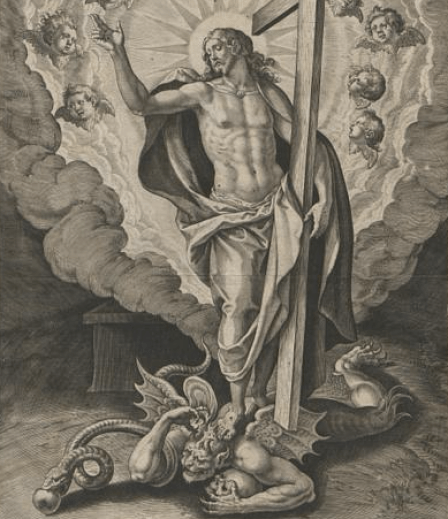
Spoiler alert. If you don’t want to know the resolution to all the twists and turns of the plot line of the Bible do not read on!
Jesus is the hero of the story. He saves the day. As Michael Emlet says, “If you read the Bible from cover to cover you realize that it narrates (proclaims!) a true and cohesive story: the good news that through Jesus Christ God has entered history to liberate and renew the world from its bondage to sin and suffering.”[i] He goes on; God “pursues the restoration of his creation at the cost of his own life. He is making all things new (Rev. 21:5)! That’s the simple and yet profound, life- and world-altering plotline of the Bible.”[ii]
The Bible is chiefly a story about God’s glory being displayed through the recompense of all things wicked, redemption of those made righteous, and finally, the reconciliation of all things in Christ.[iii] The Bible is a true story about God making the world, man messing it up, and God becoming a man to fix the world by not messing up. It is a story of Eden—exile—repeat. It is not until the true Adam, the true and righteous Son of God comes that this process is put to an end. All of Christ’s predeceases fell short; Adam, Noah, Abraham, Saul, David, Solomon, and the lambs, priests, and prophets could not fill Christ’s role.
From the beginning of time and the beginning of God’s word, the Word has been a prominent character in the script (Gen. 1:1; John 1:1). At first, the promised offspring (Gen. 3:15) is vague, in fact, Eve rejoiced because she thought she had the offspring (4:1) but it was all for naught for Cain was of the offspring of the serpent and killed his brother. However, now we have seen that which even the prophets longed to look (Matt. 13:17), we know that all Scripture finds its fulfillment in Jesus who is the long-awaited Christ (2 Cor. 1:20).
When Jesus came the first time, He had no beauty or majesty. When He comes again His face will shine like the sun in full strength (Rev. 1:16). We were cast out of the garden in the beginning but as Jesus said to the thief on the cross, we will be with Him in paradise in the end. Jesus is the linchpin among all the cogs of Scripture. “The trajectory of the arrow shot from the Hebrew Scriptures finds its target (fulfillment) in Jesus of Nazareth.”[iv]
The storyline of the Bible can be understood as creation, fall, redemption, and new creation. We can see the gospel in the storyline of the Bible. God loves us even though we have rebelled against Him. He has provided forgiveness for us through Jesus Christ and if we repent of our sin and trust in Him we will enjoy Him forever in heaven.
Through the creation part of the narrative we see that God made everything (Gen. 1:1; John 1:1-3) and it was good (Gen. 1:4; 10; 12; 18; 21; 25; 31). There was no sin, no death, and no problems before man sinned. Man had perfect fellowship with God.[v]
However, the plot thickens. A cosmic problem is introduced. Through Adam’s fall, we see the collapse of the creation, which explains why everything is no longer good. Man disobeyed and rebelled (Gen. 2:16-17; 3:6) and this brought spiritual and physical death (Gen. 2:17; 3:19), pain (3:16-17), difficulties (3:18-19), and separation from God (3:23-24). This is the bad news. We deserve death and hell.
But there is good news. This is not the end of the story. Even at the beginning of the story, God promised that He would send someone (that is, the Messiah/Christ) to defeat the “bad guy” (that is Satan) of the story (cf. Gen 3:15). In a similar scene, seen throughout the Bible, man’s nemesis is once again at it with him. Satan is tempting not Adam but the second Adam in the wilderness (Luke 4). However, unlike Adam in paradise, the second Adam does not give into the serpent’s temptation although He is in the desert. Jesus was tempted in every way that Adam was, and we are, yet He did not sin (Heb. 4:15) and still He bore our sin upon Himself.
Jesus became man so “that through death he might destroy the one who has the power over death, that is, the devil” (Heb. 2:14). Jesus’ heel was “bruised” at the cross but through that same cross, where He received the bruising, He struck the serpent with a definitive death blow to the head (cf. Gen. 3:15). From the cross, Jesus cried out, “It is finished!” In Jesus’ death, the devil, and death are defeated! He has delivered us from the domain of darkness (Col. 1:13). He disarmed the demonic rulers and authorities and put them to open shame, by triumphing over them through the cross (Col. 2:15).
Jesus is the promised one (Luke 24:27, 44-46; Acts 13:23, 27; 17:3; Rom. 1:2-4; 1 Cor. 15:3-4;) who brings the redemption of all things (cf. Rom. 5:10; Col. 1:20; Titus 2:14; Gal. 3:13; Eph. 1:7, 10). He secures for us an eternal redemption by means of His own blood (Heb. 9:12). Jesus Christ is the solution to the problem; He takes our sin, our problem, upon Himself on the cross. This is the good news; Jesus is the good news! Jesus reversed the curse of sin by becoming a curse for us (Gal. 3:13). Jesus was cast out of the garden so that we could be welcomed back in. Through the one man Adam we all have condemnation yet through the one Man Jesus Christ the grace of God has abounded for many (Rom. 5:12-21). We deserved to be crushed under God’s wrath because of our sin but instead Jesus was crushed in our place (Is. 52:13-53:12). Jesus is the solution to our problem of sin, the sole solution (Jn. 14:6; Act. 4:12). Jesus is the Lamb of God, without blemish, that takes away the sin of the world (John 1:29; Heb. 9:14)!
Jesus is the good news but the good news is not static it goes on and on and on; those in Christ live happily-ever-after. In contrast, God “will gather out of his kingdom all causes of sin and all law-breakers” (Matt. 13:41) and cast them into the pit of eternal fire (Rev. 20:14-15). “They will suffer the punishment of eternal destruction, away from the presence of the Lord and from the glory of his might” (2 Thess. 1:9). However, for those in Christ the story of history will have a happy ending (Rom. 8:29-39).
I concur with what C.S. Lewis says in The Last Battle,
“We can most truly say that they all lived happily ever after. But for them it was only the beginning of the real story. All their life in this world and all their adventures in Narnia had only been the cover and the title page: now at last they were beginning Chapter One of the Great Story which no one on earth has read: which goes on forever: in which every chapter is better than the one before.”[vi]
I believe we, upon arrival to the new Eden, will exclaim with Lewis’ Unicorn:
“I have come home at last! This is my real country! I belong here. This is the land I have been looking for all my life, though I never knew it to now. The reason why we loved the old Narnia [“old creation”] is that it sometime looked a little like this.”[vii]
Through Jesus the Christ we have the unwavering hope of a new creation (2 Peter 3:13). “The creation was subjected to futility” in Adam (Gen. 317-19) but in Christ “the creation itself will be set free from its bondage to corruption and obtain the freedom of the glory of the children of God” (Rom. 8:20-21). As Isaac Watts put it in “Joy to the World,”
“No more let sins and sorrows grow,
Nor thorns infest the ground;
He comes to make His blessings flow
Far as the curse is found,
Far as the curse is found.”
The problem (all of them!) will be fixed and there will be no more sin (Rev. 21:27; 22:3; Matt. 13:41). Everything will be more right than it was ever wrong. We will see that God did, in fact, work all things together for good (Rom. 8:28). Christ will make a new creation and we will be like Him (1 Jn. 3:2; Rom. 8:29; 2 Peter 1:4). “Just as we have borne the image of the man of dust, we shall also bear the image of the man of heaven” (1 Cor. 15:49). God will fulfill our deepest desires and we will finally love the LORD our God with all our heart, soul, mind, and strength when we receive our glorified bodies (Deut. 30:6; Jer. 31:33-34; 32:40; Phil. 3:20-21)! There will be no more pain or problems and God will wipe away all our tears (Rev. 7:17; 21:4). We will once again be in Paradise, the New Jerusalem, and we will have fellowship with God (Rev. 21:3)!
However, this story by its nature, by the fact that it claims to be true, does not leave us alone but calls for a response. We can receive this story or we can reject it outright. God can rewrite us, as it were, into His marvelous script or He can cast us, the unruly “cast,” into hell. We must respond to this story, will we respond rightly? Will we strive to obey the God who reveals Himself? Will we turn to Jesus in faith and repentance?
This is the gospel, the story of all the woes of existence finding their solution in Christ.
____________
[i] Emlet, CrossTalk, 41. A true and cohesive story contained within sixty-six books written by numerous people (with one divine author) in various languages (Hebrew, Greek, and Aramaic) over thousands of years! God’s word about the world being reconciled through the Word is truly amazing!
[ii] Ibid.
[iii] James M. Hamilton Jr. says that “in the broadest terms, the Bible can be summarized in four words: creation, fall, redemption, restoration” (God’s Glory in Salvation through Judgment: A Biblical Theology (Wheaton, IL: Crossway, 2010), 49) but the “ultimate end” of everything is “God’s glory in salvation through judgment.” He goes on to say, “The created realm (creation) is a spectacular theater that serves as the cosmic matrix in which God’s saving and judging glory can be revealed. God’s glory is so grand that no less a stage than the universe—all that is or was and will be, across space and through time—is nescessary for the unfolding of this all-encompassing drama” (Ibid., 53). See also John Piper’s book The Pleasures of God and Jonathon Edwards’ The End for Which God Created the World.
[iv] Emlet, CrossTalk, 47.
[v] Perfect in sense but not like it will be in the new creation; Adam and Eve related to God as creation to Creator and we will relate to God in the new creation as the redeemed to the Redeemer. So we will enjoy a consummated perfect fellowship with God.
[vi] C.S. Lewis, The Last Battle (New York: NY: Harper Collins, 2002), 228.
[vii] Ibid., 213.
to deep darkness the Light

“The people who walked in darkness
have seen a great light;
those who dwelt in a land of deep darkness,
on them has light shone.”
~Isaiah 9:2
This is Christmas

The holy babe in the manger looked not to riches
Nor to fame
But to the cross
To that which He came
This His one purpose
And this His delight
This is what He ever had in His sight
This greatest gift He did bring
Not to the nice who thought they kept the law
But to the naughty
To the wretched that on Him did call
He gave the gift of eternal glory where He’d ever be by their side
This is the Gospel
This is Christmas
The Good News of a Savior for sinful man
Incarnation to New Creation

Just a word and all wonders wrought,
God announced, and behold, it was all good.
Creation had communion with the Creator,
God walked in the Garden.
Yet with Adam the serpent did conspire,
and brought the world into mire.
Beckoned to the grave,
everything disarranged.
The curse burst upon the scene,
but in the midst a seed of hope was seen.
Yes, long of told
,
the Scriptures told
,
of a King who’d come.
In His wake,
death shall quake
,
and the deserts they shall bloom.
Yet, many men came and went,
was the hope of promise spent?
Many lambs, prophets, priests and kings,
yet none with true salvation in their wings.
Darkness for a time,
no prophet’s voice was heard.
Yet in the darkness,
I light it shone,
and it would overcome the darkness.
Behold, O’ world, your Prophet, Priest, and King,
Jesus the Promised seed and Lamb.
The curse brought in shall be expunged;
yes, replunged upon the Son.
Christ was crushed as promised,
but in His crushing, crushed Satan, sin, and death.
Yes, He was cursed to reverse the curse.
He felt our plight to set all things right.
Yes, creation Creator collided
yet we did not hide
for God He brought no wrath,
there was no blood bath,
the world did not implode or explode into non-being.
Instead, angelic greeting:
“Peace on the earth,
goodwill to men”
because the Great I AM is come.
Our Lord, Messiah, Savior in a crib.
Wonderful Counselor,
Prince of Peace,
Bright and Morning Star,
born.
He who lay the foundations of the earth,
laid in a manger.
The Infinite born,
a swaddled babe.
Yes, He that holds the nations in His hand,
grasps His mother’s hand.
He that calls the stars by name,
spoke no name,
nor word.
He formed Himself
in His mother’s womb.
He upheld the nails
that held His hands.
He died for you,
for me.
He became poor
to restore our riches.
Yes, He felt our plight
to set all things right.
He was born to die,
that we might live.
The Deity
incarnate brings
salvation in His wings.
Man once again will be in the Garden
because God’s Son walked from Gethsemane to Golgotha.
No more brier prick or thorn to stick.
All shall be made new.
When our King all subdue,
all shall be made new.
All foes to be forgotten.
Forever banished now.
Satan’s role will be revoked,
the Lord Messiah come.
The demons tremble in His wake;
the blind see,
creation glimmers,
soon the groaning’s cease.
This is the time in between,
the already and not yet.
The Kingdom has come, but not consummated;
it shall be slightly belated.
Peace on the earth,
goodwill to man,
God’s eternal plan in fruition.
The Kingdom has come in God’s Son,
the lion to lay down with the lamb.
No tent or temple,
for the LORD tabernacled.
Yahweh is Messiah.
Immanuel,
born the balm,
for the vacuum of our souls.
Yes, the myth came true in the manger.
God is no longer a stranger,
but makes Himself known in His Son.
Jesus, Joshua’s namesake, true!
The LORD our Savior come!
He was, and is, and is to come.
All things consummate(d) in Him.
Amen.
(click here for audio)
The Present State
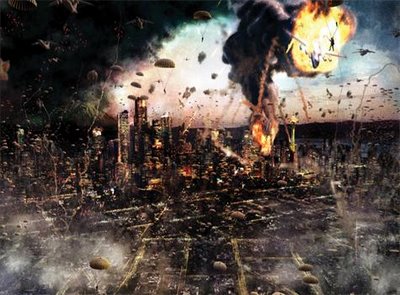
The nations plot and rage
The world goes grinding on
            Many caught in her cogs
            Continually disarranged

The turmoil triumphs
The plague it plunges all

Here we fall
We are the fall
O’ the hell we’ve made!

The world is groaning
I reciprocate her pain

O’ maranatha!
Sin is Not Good #7 (but Jesus is)

Sin’s Solution
In the book of Genesis we read of societal progress. There are advances in technology and the arts. Yet, the problem remains: We have sinful hearts. Thus relationships and truly the world remain fractured. Like humpty dumpty; we can’t put it back together again. The answer to my problem, humanities problem, and the world’s problem is external to us.
One would think that
“Auschwitz destroyed… the idea that European civilization at least was a place where nobility, virtue and humanizing reason could flourish and abound… It seems remarkable that the belief in progress still survives and triumphs… People still continue to this day to suppose that the world is basically a good place and that its problems are more or less soluble by technology, education, ‘development’ in the sense of ‘Westernization.’”[i]
However, today’s problems, like that of all history past, is not solved by advances in technology or even any sort of knowledge or morality. It is solved by a Savior. It is Messiah Jesus that will once and for all eradicate sin and suffering (see e.g. Rom. 11:26-27; Heb. 12:23; 1 Jn. 3:2; Rev. 3:12; 21:1-8, 27; 22:3).
When we control the measures to make a utopian society the way we think it should be, it fails. Whether we control “the stirrings” (e.g. The Giver), emotions (e.g. Equilibrium), everything (e.g. The Lego Movie), or the socioeconomic structure (e.g. The Hunger Games) the result is not paradise; it’s a sort of hell, at least for many. We messed up utopia, we can’t with our fallible minds design a new one. Only our Lord can. He has the only infallible and incorruptible mind. He perfectly balances justice and grace. And He alone can make us and all things new.
So the recent movie and classic The Giver does more than entertain. It teaches us a profound truth, one we would do well to remember: There is no utopian society outside of Christ. We can’t fix it. There have been many botched attempts throughout history. They lay died with their victims.
“Everything is awesome. Everything is cool when you’re part of a team…” As catchy as The Lego Movie song is, it is not exactly right. Everything is not awesome, not yet. However, it will be. But not from our own doing (Notice I am not saying we shouldn’t work for social justice. We should! Yet, it will not bring the ultimate and forever peace that we long for.).
Heaven comes down (Rev. 21:2). We don’t, nor can we, build it here. I am with you and Miss America in saying I desire world peace, yet it won’t ultimately come until our Lord does. When our Lord comes He will wipe away all evil, pain, and tears, not some charismatic leader or government (Rev. 21:1ff). Jesus will make all things new. Jesus will bring utopia.
Maranatha! Come Lord Jesus, come!
Sin is not good. But Jesus is. He will bring the shalom we all desire. Live for Him.
___________________________
[i] N.T. Wright, Evil and the Justice of God, 22-23.
The Shape and Reshaping of Paul’s Understanding of the Messiah (and it’s significance)

First, it is important that we spend some time looking at Phariseism because whatever is said about it will affect what we say about Paul.[1] We can see from the NT witness as well as other texts that Pharisees held considerable influence.[2] Inevitably, Paul was shaped greatly by his Pharisaic training.[3]
Before Paul’s conversion (when he was still known as Saul) he thought of Jesus in light of Deuteronomy 13:1-5. He thought that Jesus was a deceiver that was leading people astray (cf. Jn. 7:12, 32, 47; 9:22; 16:2). Jesus claimed to be something He was not thus He deserved to be killed. Paul thought that anyone that followed after Him likewise “shall be put to death” (Deut. 13:5). Jesus’ followers were in Paul’s mind saying, “Let us go after other gods” (v. 2). He took it upon himself to “purge the evil from [the] midst” (v. 5) of God’s people. Paul was convinced that he “ought to do many things in opposing the name of Jesus of Nazareth” (Acts 26:9) even though it was against his teachers’ advice (5:33ff).
He likely thought that Jesus was a false prophet or dreamer like Theudas (Acts 5:36), the Egyptian (Ant. 20.169-172; J.W. 2.261-263; Acts 21:38),[4] or Judas the Galilean (Acts 5:37). When Paul saw Stephen preaching about Jesus “he realized that the new movement was dangerous as well as blasphemously ridiculous.”[5] Paul, in persecuting “the Way” (Acts 16:17; 19:9, 23; 22:4; 24:14, 22;), saw himself as “offering service to God” (Jn. 16:2).
Surely a crucified man could not be the Messiah (Deut. 21:22-23 cf. Acts 5:30; 10:39; 13:29; Gal. 3:13; 1 Pet. 2:24).[6] Plus, the expectation was a king in the vein of David. A Yehoshu’a that defeats Israel’s enemies not a Yehoshu’a that will be defeated by dying upon a tree. In Paul’s day “Messianic expectation married social discontent. The result was the offspring of anticipation and action.”[7] Not surprisingly many lacked the interpretive key to understand that the Davidic King would also be the Suffering Servant. That key would not come until the Christ Himself revealed it on the Emmaus road (Luke 24). It was not until after Paul received this interpretive key that he knew that Jesus was the true and better Prophet than Moses (Deut. 18:15-22). Jesus had proved Himself by raising from the dead (v. 22). Paul knew that if he did not obey the LORD it would be required of him (v. 19).
Before Paul understood the Kingdom of God was at hand he sought to bring it in with his own hands. He hunted the Crucified One’s followers like animals (Acts 8:1 note διωγμὸς; 22:4 says “to the death;” v. 19 says he even “beat” people), though he likely thought of them as lower than animals. He did all he could to bring havoc on the church (8:2) despite Gamaliel’s advice against such action (Acts 5:34-39; cf. Aboth 4.11). In this Paul acted more in the Shammaites vein than that which he was reared under Gamaliel in the Hillel brand of Pharisaism.[8]
Pharisaism was very influenced by Nehemiah and the reforms that were sought in that book (cf. esp. chs. Neh. 8-13). For instance, Sabbath keeping was very important for Pharisees, and Nehemiah says that wrath was coming upon Israel because they were profaning the Sabbath (Neh. 13:18) and in general the Law that God had given His people. Thus “the Way’s” (cf. Acts 9:2; 19:9, 23; 22:4; 24:14, 22 for “the Way”) emphasis on “the Lord’s Day” (Acts 20:7; 1 Cor. 16:1-2; Rev. 1:10) as opposed to the Sabbath would have also been abhorrent to Pharisaism (Matt. 12:2; Lk. 14:3; Jn. 5:10 cf. Neh. 9:14; 10:31; 13:15-22). It appears that the Pharisees wanted to put into practice the principles laid out especially in Ezra-Nehemiah to bring about a lasting kingdom. The Pharisees like those in Ezra-Nehemiah realized that what had happened to them was a result of their evil deeds and great guilt (Ezra 9:13; Neh. 9:26-27 cf. Deut. 28:15-68; 29:16-28; 31:16-21, 27, 29), and so they covenanted and obligated themselves (cf. Ezra 10:3; Neh. 9:38; 10:29, 32, 35) so that they would stop repeating the cycle of entropy that they were so accustomed to (cf. Neh. 9).[9] They needed the circumcision of the heart, the giving of the Holy Spirit, that only Jesus could bring, though they did not know it (cf. Is. 32:14-16; 44:3; Ezek. 36:26:27; 11:19-20; Jer. 31:33; Joel 2:28; Matt. 3:11; Acts 2:17; Gal. 3:14).
A crucified man from Nazareth did not at first fit Paul’s description of the Messiah,[10] let alone his understanding of monotheism. Paul would have related to Peter when he said, “Far be it from me Lord” that you should suffer (Matt. 16:22 cf. 2 Sam. 7:13, 16; 1 Chron. 17:14; 22:10; Ps. 89:4, 29, 36-37 110:4; Is. 9:7; Ezek. 37:25). Paul with Peter and many others were looking for the One that would deliverer them from oppression, not be delivered into oppression (see again the confusion of the time in John 12:32-34 cf. 3:14; 8:28). Even Simeon saw “the consolation of Israel” and it was revealed to him by the Spirit that Jesus was the Christ (Luke 2:25-26), yet he would not have thought that “salvation” (v. 30) and glory to Israel (v. 32) would have came through the Messiah being cut off.
Thus, in light of Paul’s background, it is very significant that Paul’s vision of the Christ was so radically reshaped. A huge paradigm shift had taken place in his life and view of everything. Paul went from persecuting the people of the “the way,” those who follow Jesus, to following alongside them and eventually leading the charge, yet he had to truly “count the cost.” Paul honestly suffered the loss of all things, and counted them a worthless trash, in order that he may gain Christ.
Paul, in space in time, was transformed by his risen Lord and King. He went from persecutor to persecuted. He went from confining those who confessed Jesus as Lord to preaching nothing but Christ and Him crucified. Once Paul was convinced, he reasoned with others that “Christ died for our sins in accordance with the Scriptures, that he was buried, that he was raised on the third day in accordance with the Scriptures” (1 Cor. 15:3-4[11]). So “Jesus Christ’s resurrection,” for Paul, “represents the hinge of history.”[12] In Jewish thought resurrection is the precursor of the age to come. “Hence, Jesus’ resurrection signaled that the new age has come. God’s saving promises are being realized.”[13]
Significance Paul saw the risen Lord Jesus. Paul, a persecutor of the Church, ended up leading various churches. Paul, who would have known if the whole thing was a hoax, died for His Lord Jesus.
The resurrection happened.
It changed everything for Paul.
Has it changed everything for you?
______________________________________________
[1]N. T. Wright, The New Testament and the People of God vol. 1 in Christian Origins and the Question of God (Minneapolis: Fortress Press, 1992), 181.
[2]Wright, The New Testament and the People of God, 181.
[3]cf. Ibid., 182. Later Wright says that the Pharisee’s “goals were the honour of Israel’s god, the following of his covenant charter, and the pursuit of the full promised redemption of Israel” (Ibid., 189). We see from the NT that this begins to come to fruition in Jesus’ inauguration of the Kingdom of God yet there is a “not yet” aspect to the Kingdom.
[4]See Schreiner, New Testament Theology, 202.
[5]F.F. Bruce, The Spreading Flame vol. 1 in The Advance of Christianity Through the Centuries F.F. Bruce gen. ed. (Grand Rapids: Wm. B Eerdmans Publishing Company, 1958), 83. See Don N. Howell Jr., “Mission in Paul’s Epistles: Genesis, Pattern, and Dynamics” 63-91 in Mission in the New Testament: An Evangelical Approach William J. Larkin, Joel F. Williams eds. (New York: Orbis Books, 1999), 68. Also, N.T. Wright, The Resurrection of the Son of God, 327-28.
[6]cf. Thomas R. Schreiner, Paul, Apostle of God’s in Christ: A Pauline Theology (Downers Grove: IVP Academic, 2001), 75. Truly, “a crucified Messiah was a contradiction in terms for the Jews” (Thomas R. Schreiner, New Testament Theology: Magnifying God in Christ [Grand Rapids: Baker Academic, 2008], 292). Paul himself was among the rulers that “did not recognize him,” the Messiah, nor what the prophets said regarding Him (Acts 13:27). Yet he later was enlightened to the fact that the Scriptures were fulfilled (v. 27b) when Jesus was condemned, i.e. “cursed,” on a tree (v. 29 see also vv. 30-39). Also, Loren T. Stuckenbruck after examining the relevant apocalyptic and early Judaism literature says, “messianic speculation varied from author to author and even within the documents themselves” (“Messianic Ideas in the Apocalyptic and Related Literature of Early Judaism” 112 in The Messiah in the Old and New Testament (Grand Rapids: W. B. Eerdmans Publishing Co., 2007), 90-13.
[7]David P Seemuth, “Mission in the Early Church” in Mission in the New Testament, 51.
[8]See John B. Polhill, Paul and His Letters (Nashville: Broadman and Holman Publishers, 1999), 30.
[9]Moses knows that Israel is going to turn away from LORD (Deut. 28:15-68; 29:16-28; 31:16-21, 27, 29), and says that the ultimate curse will be exile however after exile will come covenant renewal and the perfect keeping of the Torah (30:1-10) (Wright, The New Testament and the People of God, 261). “Covenantal ideas were therefore fundamental to the different movements and currents of thought within second-temple Judaism” (Ibid.). “It was the covenant that drove some to ‘zeal’ for Torah, others to military action, others to monastic-style piety” (Ibid., 262).
[10]Martin Hengel says, “A crucified messiah, son of God or God must have seemed a contradiction in terms to anyone, Jew, Greek, Roman or barbarian, asked to believe such a claim, and it will certainly have been thought offensive and foolish” (Crucifixion John Bowden trans. [Philadelphia: Fortress Press, 1977], 10) as Paul himself later would say (1 Cor. 1:18, 23). See also Ibid., 61-62, and esp. 89. Justin Martyr Apology I ch. 13. Also the Alexamenos graffito shows how foolish many thought it was to worship one that had been crucified. The graffiti depicts a Christian worshiping an image of a man on a cross with a donkey head.
[11] Acts 9:22; 13:16ff; 16:13; 17:3, 17; 18:4-5, 19; 19:8ff; 24:25; 26:6, 22-26; 28:23, 31 cf. 18:28; from the beginning of the church preaching and teaching was integral 2:42. Hengel rightly says Paul considered the “Jewish-Messianic message and its concomitant scriptural evidence… quite important from the very beginning” (Marten Hengel, “Paul in Arabia” Bulletin for Biblical Research 12.1 [2002], 59). Also, in Luke’s “orderly account” that he wrote to Theophilus so that he may have “certainty” (Luke 1:3), he said that Jesus “presented himself alive to them after his suffering by many proofs” (Acts 1:3). I. Howard Marshall sees the spread of the message of Jesus the Christ as the main story-line that the book of Acts is concerned with (Acts, 26).
[12] Schreiner, New Testament Theology, 292 see also 853.
[13] Ibid.
What is so good about Good Friday?

Jesus was crucified on Friday. Good Friday is the day we remember Jesus’ death.
So, what is so good about Good Friday? It almost seems sick to call Good Friday good. If you have a loved one that died you do not celebrate the anniversary of that persons death as good, it was tragic. Why then when referring to the anniversary of Jesus’ death do we call it good? That almost seems sacrilegious.
We call it Good Friday because it truly is good. No, we do not celebrate Jesus’ death per se. Rather we celebrate all that His death accomplished. We celebrate that though He died, and died a terrible death, He said “It is finished,” and it was. We celebrate because He rose victorious over sin and death.
Jesus laid down His life for us to be the wrath absorbing sacrifice. He did this and many more things and that is why the anniversary of Jesus’s death can be said to be good. Actually, in some sense, because Jesus died and conquered death and sin the anniversary of our loved ones death who are in Christ can now be thought of with joy. It too can become a good anniversary.
I want to encourage you to meditate on what Jesus did for you. Think about the cross where Jesus bore the wrath of God that we deserved. I encourage you to read the narrative accounts in the Gospels. When you read it remember who it is that is being mocked, flogged, and crucified. Remember why it is that He suffered in that way and felt the wrath of God; it was not anything that He had done.
Read Isaiah 52:13-53:12 and be amazed at how precisely it describes both the events of the crucifixion and the reason for the crucifixion and this around 700 years before Jesus was born. Jesus was crushed for our sins (Is. 53:5) and thus makes many to be accounted righteous (v. 11), for example. After reading this passage, I composed this attempt at poetry:
Bound by sins darkened glow
In this world of pain and woe
Helpless, hopeless to us He came
And in the midst was slain
Darkest night, the Light extinguished
Will we forever captives be?
Messiah’s mission ends in death?
Where’s the hope of life and peace?
But by power He awaketh
All of death He did breakth
By His death, deaths defeated
Sins depleted of its power
Thus the hour of unrest
Has become our hope, our joy, our rest
For in Christ’s death,
Deaths defeated!
Yes, He burst the bonds that bound Him
And leads many captives in His wake
Yes, from the cross He is victorious
And all of heaven hails He’s glorious!
“Monday Thursday?”
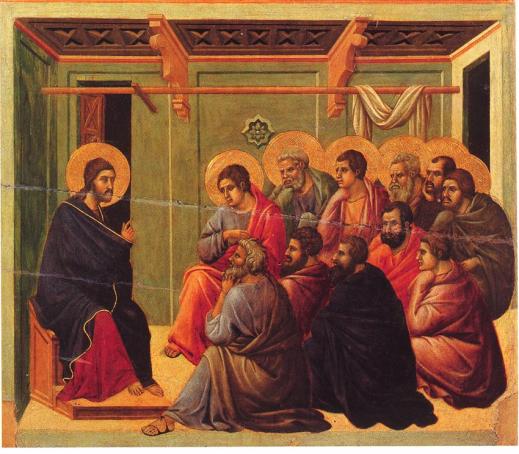
“’Monday’ Thursday? That doesn’t make any sense… Why do we celebrate ‘Monday’ Thursday and why would we celebrate it on Thursday?”
“Muandy Thursday,” not “Monday Thursday,” has to do with remembering what happened on the Thursday before Jesus was crucified. There were a lot of significant things that happened on this Thursday.
Maundy Thursday is known as commemorating variously the day of the Last Supper and the institution of the Lord’s Supper, the foot washing of the disciples, Jesus praying in the garden of Gethsemane, and the betrayal and arrest of Jesus by Judas Iscariot. So we commemorate Maundy Thursday for these reasons. However, why is it called “Maundy Thursday”? What does Maundy mean?
Maundy most likely comes to us from John 13:34 where Jesus says at the Last Supper (on Thursday): “A new commandment I give to you, love one another.” The word for “commandment” in Middle English is maunde, in Old French it’s mandé, and in it’s Latin mandatum. So, in other words, “Maundy Thursday” could be called Commandment Thursday or even, as it is sometimes called, “Covenant Thursday.”
So on Muandy Thursday we think of the command and the covenant. It is important to remember both. So, what was the command? Love one another. That is what we are told to do. And that doesn’t seem that hard, at first. Until we realize that we are given a comparison. The command is that we love one another love even as Jesus has loved us (Jn. 13:34). On Thursday, so many years ago, Jesus gave us a huge “maundy,” command. How can we live up to it? We must remember the amazing context in which it was given.
There were all sorts of events and themes that converged on this weekend in history. The Passover, a historical event in the life of the Jews where they celebrated their spectacular salvation, was celebrated. Yet, we also see that the LORD reaches down to save again, and this time no blood needed to be painted on the door frame. There was no need for a Passover lamb. He had come in the form of a Suffering Servant (cf. e.g. Is. 53).
Jesus brings a New Covenant (Matt. 26:26ff; Mk. 14:22ff; Lk. 22:14ff; 1 Cor. 11:17ff). One that had long since been promised. One that gives His people new hearts, hearts to follow after God (cf. Ezek. 11:19-20; 36:26-27). God takes His peoples sins literally upon Himself (cf. God taking the violations of the covenant upon Himself, Gen. 15; Is. 53; Jer. 34:18). He fulfills the Covenant that His people continually failed to fulfill. Jesus felt the weight of being forsaken. He cried out, “My God, My God, Why have You forsaken Me?!” Jesus was cut off like we deserve to be for breaking His Law.
Understanding the covenant, Jesus’ amazing work of salvation, and understanding what Jesus calls us to is very important and we see them intermingled on Maundy or Covenant Thursday. Jesus fulfills the covenant and His blood is spilled for us, and yet there is still a type of condition to the covenant: we must follow hard after Him.
So, first notice that on Maundy Thursday so many years ago, Peter tells Jesus that he does not want Him to wash his feet (Jn. 13:6). It is striking to me that Jesus says, “If I do not wash you, you have no share with me” (v. 8) and then He goes on to say, “If I then, your Lord and Teacher, have washed your feet, you also ought to wash one another’s feet” (v. 14). So Jesus is saying don’t try and work for your salvation (you can’t) but follow my example and serve others because I have served you.
Works do not save us. We are saved by accepting the work that Jesus did on our behalf, He washed us. And, in fact, if we try to work for our salvation we “have no share with [Jesus] (v. 8). However, that in no way negates the importance of works, to the contrary; it gives works deep significance. We are called to imitate Christ (v. 14-16). Jesus told Peter he could not work for salvation (v. 6-8) but works do have their place. Jesus served Peter (even enabling Peter to serve Him cf. John 1:13; 14:16; Gal. 5:16-24; 2 Peter 1:3; Ezek. 11:19-20; 36:25-27) through the cross and thus Peter served Jesus imitating Him, even to death (cf. John 13:14-16); tradition says, death by upside down crucifixion (cf. John 21:18-19). Peter was saved by trusting Jesus Christ’s all-sufficient service and yet Peter served and imitated Jesus out of a supreme joyous thankfulness (cf. 1 Peter 1:3-9; 2:21-25; 4:13-14).
May we serve in the same way and with the same motivation that Peter did. May we work and serve Christ not to earn right standing before God but, to demonstrate that through Christ’s atoning death we have right standing before God. If we have been declared righteous in Christ then let’s live righteously before Christ (cf. 1 Cor. 1:2). Let’s obey Jesus’ commands in light of His New Covenant.



 in X
in X 
