Mike Kuhn, Fresh Vision for the Muslim World (a book review)

[Kuhn, Mike. Fresh Vision for the Muslim World. Downers Grove, IL: Intervarsity Press, 2009.]
Author Background
Importance of the Book
Overview
Kuhn proceeds then to talk about the theological differences between Christianity and Islam. For instance, “the essence of the Christian faith—God became human being in Christ—is diametrically opposed to Islamic faith” (69). There is also a vast difference in the view of what constitutes humanities problem and thus our view of salvation is different. Islam teaches that “individuals are neither dead in sin nor in need of redemption; rather, they are weak, forgetful, and in need of guidance” (78). The heart of the difference between Islam and Christianity is how man is put right with their Creator (81).
In chapters seven through nine, Kuhn reminds us that Jesus’ concern was not with “the geopolitical state of Israel during his earthly ministry. His concern is with his kingdom—the kingdom of heaven” (120). The place of the state of Israel is a subject filled with tension for many Muslims and Christians alike but it is also a very important and practical subject. So, we must seek God and His Scripture for wisdom, we must understand Jesus’ words (130, 171). Kuhn points out that the need of the entire world is to see “the manifestation of the kingdom of Jesus in his people” (158, italics mine), not in an earthly nation. As we have seen, we are to love our neighbors and part of loving someone is understanding them, their history, their perspective, their past hurts.
Chapter ten talks about jihad and explains that not all Muslims understand jihad in the same way, some have a spiritualized understanding of jihad (e.g. 199). So, it is important to understand that Muslims, like Christians, are not all the same. In fact, “the primary concerns of most Muslims are similar to ours—raising their children, providing for their children’s education, saving for that new car or outfit… We must exercise care not to be monofocal in our understanding of Islam” (187). Chapter eleven challenges us to faithfully speak for Jesus and live for His Kingdom and not our own. In part 5, chapters twelve through thirteen, we see steps to incarnation and what it means to live missionally (see esp. 225).
Evaluation
Stylistically, I appreciate that Kuhn covered many different topics yet did not lose the focus of the book. For example, he introduced incarnation at the beginning (8) and then weaved it through the rest of the book (see e.g. 13, 16, 75, 85. 242). What is needed Kuhn pointed out, though sadly rare, “is an extended hand, a caring smile, someone who is willing to go the extra mile to help someone in need” (259) (cf. Matt. 5:13-16; Jn. 13:35; 1 Cor. 10:33).
I appreciate Kuhn’s reminder that “The kingdom of Jesus as opposed to empire is not concerned in the least about the political boundaries of a country. It is a reality that overlays the political boundaries” (256). We must remember that the Roman Empire came and went, but Jesus’ Kingdom is eternal (254) (cf. Jn. 18:36). Kuhn’s challenge is timely, he says, “if Western Christians are able to bid farewell to our fortress mentality, we will find that our countries have already become exceedingly accessible and potentially fruitful mission fields” (244). Kuhn further points out that if American Christians are overly aligned with their governments’ policies then their missional impact will likely be impacted (241). Instead, as Christians, Jesus should be our King and His policies should hold ultimate sway. The real hope of the Muslim world, and the Western world for that matter, is not democracy, it the diffusion of the good news of Jesus the Christ and the establishment of His reign (218).
Conclusion
As Muslims grow increasingly suspicious and fed up with the violent response of Islamists, they are beginning to look for alternatives. Some are finding their alternative in secularism. Others are turning to materialistic pleasure. Will we as Christ-followers have anything to offer them? (214-15)
C.S. Lewis on the Importance of Reading Old Books

As part of our book diet, C.S. Lewis reminds us to not leave out old books. “It is a good rule, after reading a new book, never to allow yourself another new one till you have read an old one in between. If that is too much for you, you should at least read one old one to every three new ones” (C. S. Lewis, “On the Reading of Old Books”).
Lewis is wise to also say that,
“People were no clever then than they are now; they made as many mistakes as we. But not the same mistakes. They will not flatter us in the errors we are already committing; and their own errors, being now open and palpable, will not endanger us. Two heads are better than one, not because either is infallible, but because they are unlikely to go wrong in the same direction” (C. S. Lewis, “On the Reading of Old Books”).
Quotes on Literature

“When we are at play, or looking at a painting or a stature, or reading a story, the imaginary work must have such an effect on us that it enlarges our own sense of reality.”
~Madeleine L’Engle, Walking on Water
“Students value literature as a means of enlarging their knowledge of the world, because through literature they acquire not so much additional information as additional experience.”
~Marie Rosenblatt, Literature as Exploration
“Literature… serves to deepen and to extend human greatness through the nurture of beauty, understanding, and compassion. In none of these ways, of course, can literature, unless it be the literature of the Christian faith, lead us to the City of God, but it may make our life in the city of man far more a thing of joy and meaning and humanity, and that in itself is no small achievement. Great literature may not be a Jacob’s ladder by which we can climb to heave, but it provides an invaluable staff with which to walk the earth.”
~Roland M. Frye, Perspectives on Man: Literature and the Christian Tradition
“Art is one of the means by which man grabbles with and assimilates reality.”
~Ralph Fox, The Novel and the People
“The primary job that any writer faces is to tell you a story of human experience—I mean by that, universal mutual experience, the anguishes and troubles and gifts of the human heart, which is universal, without regard to race or time or condition.”
~William Faulkner, Faulkner at West Point
“A poem… begins in delight and ends in wisdom [and]… a clarification of life… For me the initial delight is in the surprise of remembering something I didn’t know I knew… There is a glad recognition of the long lost.”
~Robert Frost, “The Figure a Poem Makes”
______________
See Leland Ryken, The Christian Imagination
20+ Proverbs for those Pining for Substances or Porn

- “My son, if sinners entice you, do not consent” (Prov. 1:10 cf. v. 17-18)
- “Do not enter the path of the wicked, and do not walk in the way of the evil. Avoid it; do not go on it; turn away from it and pass on” (Prov. 4:14-15)
- “The iniquities of the wicked ensnare him, and he is held fast in the cords of his sin. He dies for lack of discipline, and because of his great folly he is led astray” (Prov. 5:22-23)
- “Whoever heeds instruction is on the path to life, but he who rejects reproof leads others astray” (Prov. 10:17)
- “Whoever despises the word brings destruction on himself, but he who reveres the commandment will be rewarded” (Prov. 13:13)
- “The teaching of the wise is a fountain of life, that one may turn away from the snares of death” (Prov. 13:14)
- “Whoever walks with the wise becomes wise, but the companion of fools will suffer harm” (Prov. 13:20)
- “The backslider in heart will be filled with the fruit of his ways, and a good man will be filled with the fruit of his ways” (Prov. 14:14)
- “The fear of the LORD is a fountain of life, that one may turn away from the snares of death” (Prov. 14:27)
- “There is severe discipline for him who forsakes the way; whoever hates reproof will die” (Prov. 15:10)
- “Whoever isolates himself seeks his own desire; he breaks out against all sound judgment” (Prov. 18:1)
- “Wine is a mocker, strong drink a brawler, and whoever is led astray by it is not wise” (Prov. 20:1 cf. 23:29-35)
- “One who wanders from the way of good sense will rest in the assembly of the dead” (Prov. 21:16)
- “Whoever loves pleasure will be a poor man; he who loves wine and oil will not be rich” (Prov. 21:17)
- “Let not your heart envy sinners, but continue in the fear of the LORD all the day” (Prov. 23:17)
- “Be not among drunkards or among gluttonous eaters of meat, for the drunkard and the glutton will come to poverty, and slumber will clothe them with rags” (Prov. 23:20-21)
- “A man without self-control is like a city broken into and left without walls” (Prov. 25:28)
- “Like a dog that returns to his vomit is a fool who repeats his folly” (Prov. 26:11)
- “Whoever digs a pit will fall into it, and a stone will come back on him who starts it rolling” (Prov. 26:27)
- “Whoever conceals his transgressions will not prosper, but he who confesses and forsakes them will obtain mercy. Blessed is the one who fears the LORD always, but whoever hardens his heart will fall into calamity” (Prov. 28:13-14)
Book Released! Gospel-Centered War


My book Gospel-Centered War: Finding Freedom from Enslaving Sin just got released! Here are a few of the things people are saying about it.
“As the title of this book makes clear, a gospel-centered approach is, in the long run, the only effective way to combat sin and addiction. Any resource, like this one by Paul O’Brien, which helps us fight our sinful compulsions by means of the gospel of Jesus Christ is one I recommend.”
—Dr. Donald S. Whitney, professor of biblical spirituality and associate dean at The Southern Baptist Theological Seminary
“Gospel-Centered War is for those who struggle with life-dominating sin and for those who counsel them. Instead of simply addressing behavior modification, Paul O’Brien gets to the heart of the matter. This book addresses the issues that provide freedom from destructive, self-defeating behaviors by helping the reader understand how God can change their heart and passions. Read it, devour it, and then be changed from the inside out.”
—Pastor Mike Wilson, Lincoln Heights Baptist Church, Mansfield, Ohio
“Paul is a genuine man of faith who has dedicated his life to Jesus and his calling. As a former heroin addict who was mentored by Paul, I had the privilege to witness his passion for Christ and his desire to help people through God’s word. This book shows that same passion.”
—Ricky Upton, Louisville, KY
Biblical Mysticism?

A Mystic’s Meter
The rhythms of a mystic’s faith are not drudgery upon duty and duty upon drudgery. The mystic’s meter, rather, is delight. Delight in a God they know. Yet, as much freedom as rhythm and cadence have, there is still structure. So, I want to look at the structure of the meter. What cadence does knowing God take?
Is Mysticism Wrong?
Is mysticism wrong? I think a lot depends on how it is defined. If you define mysticism as subjective vain emotional longings, then yes it is wrong. If you define mysticism as unbiblical, then yes it is wrong. If mysticism is set on anything else then God in the face of Christ (2 Cor. 4:6), then yes, mysticism is wrong.
Mysticism, however, is not wrong in itself. It is the focus that can be wrong. It is the information, or perhaps more often, the lack of information, that can be wrong.
Don Whitney instructs us:
“Don’t be deceived by a complex spirituality that gives the appearance of wisdom but doesn’t start with ‘Christ, in whom are hidden all the treasures of wisdom and knowledge’ (Colossians 2:3). And don’t become entangled in any spiritual practices that sound good but incline your mind and heart away from the ‘things that are above’” (“Practice True Spirituality”).[1]
Not All Mysticism is Created Equal
Mysticism does not have “inalienable rights.” That is, not all mysticism is created equal.
Frist, some mysticism is based on illusionary dreams and speculation. However, there is a problem with this (1 Jn. 4:1). Satan parades himself around like an angel of light (2 Cor. 11:14) so that he may devoir like a lion (1 Pet. 5:8). Subjective experiences alone cannot be our guide.[2]
Second, some mysticism contradicts the Word of God. Any word that contradicts His Word should not be our word. God is our authority. And His Word is our authority. There are many other good and important texts but they are not ultimate. They are subordinate.
Third, any form of mysticism that does not prize and exalt Messiah and His work is defective (1 Jn. 4:2). Mysticism is about knowing God. Jesus the Messiah is God in the flesh (Jn. 1:14). It is through Him that we can know God (e.g. 2 Cor. 4:4); that we can go boldly before the throne of grace (Heb. 4:16). Jesus reveals God. If we conceal Him, belittle Him, or don’t rightfully honor Him, we are not practicing mysticism but anti-mysticism; we are concealing God.
Good Mysticism
Mysticism, I believe, at it’s heart, is about knowing God deeply and experientially.[3] So then, how do we know God? We know Him through His Spirit, amen![4] And the Spirit, most typically, uses the means of His own inspired Word, the Bible. We meditate on His Word, as well as other good texts, and God, by the Spirit, reveals Himself to us. Good Christian mysticism thus relies on: 1) The Spirit for illumination, not vain visions or the like (Rom. 8:26; 1 Cor. 2:12-16; Eph. 3:14-19; 1 Jn. 4:1); 2) The inspired Word of God, not primarily other sources (2 Tim. 3:16; 2 Pet. 1:3-4); 3) The Incarnate Son to show us God, and not visions (Jn. 1:1-14; 14:6; 2 Cor. 4:4; Heb. 1:3).
Good biblical mysticism (some may prefer “spirituality”) is about having a deeper sense of God’s truth. It’s seeking for God to open our eyes that we would be deeply impacted by His truth (Ps. 119:18). It is about knowing God’s love that surpasses knowledge that we may be filled with all the fullness of God (Eph. 3:19). It’s about being renewed by the transformation of our minds (Rom. 12:2; Eph. 4:23-24; Col. 3:10). It is about revival.
It short, mysticism does not seek mere knowledge. It seeks to also experience the truth of that knowledge. So, it seeks to taste the sweetness, and not just know hypothetically and intellectually that something is sweet.
Jonathan Edwards words are enlightening:
“There is such a thing as a spiritual and divine light immediately imparted to the soul by God, of a different nature from any that is obtained by natural means… This spiritual light that I am speaking of, is quite a different thing from inspiration: it reveals no new doctrine, it suggests no new proposition to the mind, it teaches no new thing of God, or Christ, or another world, not taught in the Bible, but only gives a due apprehension of those things that are taught in the word of God… There is a difference between having an opinion, that God is holy and gracious, and having a sense of the loveliness and beauty of that holiness and grace. There is a difference between having a rational judgment that honey is sweet, and having a sense of its sweetness.”[5]
Mystics, so to speak, not only want to know that something is sweet, they want to taste it’s sweetness.
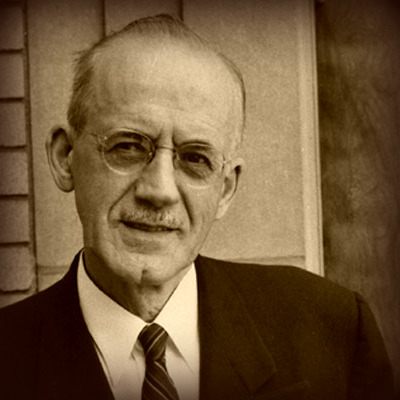
A.W. Tozer: A Good Example of a Good Mystic
James L. Snyder points out that “the word ‘mystic’ did not scare Tozer. The term ‘mysticism’ simply means ‘the practice of the presence of God,’ the belief that the heart can commune with God directly, moment by moment, without the aid of outward ritual. He saw this belief at the very core of real Christianity, the sweetest and most soul-satisfying experience a child of God can know.”[6]
Tozer rightly reminds us—how sad that we need reminded!—that salvation is “not an end but an inception, for now begins the glorious pursuit, the heart’s happy exploration of the infinite riches of the Godhead.”[7] Conversion is meant to lead to communion. Orthodoxy must, if it is to be true orthodoxy, result in doxology. “’You can be straight as a gun barrel theologically,’ Tozer often remarked, ‘and as empty as one spiritually.’”[8]
The true Christian mystic should be heat and light. Heart, head, and hand. He should love the LORD with all that he is, his heart, soul, mind and strength; and his neighbor as himself.
Conclusion
So, you might say, a mystic’s meter, what gives him his aesthetic poetry and music, is knowing God by the Spirit, though the Word, and in Christ. This is where he can find true delight. He can know God and true joy in this rhythmic triad; instead of the clashing and subjective thrashings found elsewhere. A mystic’s meter in sum, should be rhythmic, not chaotic. It should have a distinguished element to it, not destructive and haphazard vague desires. God has, Paul reminds us, revealed Himself; we don’t worship Him as unknown, but as known (Acts 17:23). We can know God truly, if not fully.
Will you seek to know God? Will you dance to the melodious meter? Will you use the means He has given you? Will you be a Christian mystic?
_______________________________________
[1] Don Whitney, “Practice True Spirituality.”
[2] Let it be noted that exceptional things may likely still happen. See 2 Cor. 12:2-4, for example.
[3] Mysticism is “the belief and practice that seeks a personal, experiential… knowledge of God by means of a direct, nonabstract and loving encounter or union with God. Although a psychophysical dimension (including visions, dreams or special revelation) may be part of the mystical experience, this dimension is not necessary. Instead, Christian mystics generally teach that the true test of the experience is the resulting fruit of the Spirit in the mystic’s life” (Pocket Dictionary of Theological Terms, 81). “The mystic,” Tozer said, “differs from the ordinary orthodox Christian only because he experiences his faith down in the depths of his sentient being while the other does not. He is quietly, deeply and sometimes almost ecstatically aware of the presence of God in his own nature and in the world around him” (The Christian Book of Mystical Verse).
[4] Mysticism, at least, true accurate mysticism, can only take place after the regenerating work of the Holy Spirit (see Jn. 3:3).
[5] Jonathan Edwards, “A Divine and Supernatural Light”).
[6] The Life of A.W. Tozer: In Pursuit of God, 155.
[7] The Pursuit of God, 13 cf. Jn. 17:3. Brother Lawrence reminds us that “Many do not advance in the Christian progress because they stick in penances and particular exercises, while they neglect the love of God, which is the end” (Brother Lawrence, The Practice of the Presence of God, 24).
[8] The Life of A.W. Tozer: In Pursuit of God, 155.
You are what you Read

You are what you read. If you don’t read, like if you don’t eat, you may not be a lot.
Of course, as Richard Foster points out in The Celebration of Discipline, there are all sorts of books we can read and learn from. I do not merely mean types or genera’s of literature, I mean there are other things that we can “read” and learn from. Such as the universe and other people. I do not mean, of course, that if you read Crime and Punishment then you’ll be a murderer or if you read Dracula that you’ll be a Vampire. I mean, rather, that what you read, and how you read, will affect your person.
Further, like eating, there is a time for ice cream—and we should enjoy it!—but we must not forget that our diet should not consist of ice cream. We must eat meat and even lima beans from time to time.
As part of our book diet, C.S. Lewis reminds us to not leave out old books. “It is a good rule, after reading a new book, never to allow yourself another new one till you have read an old one in between. If that is too much for you, you should at least read one old one to every three new ones” (C. S. Lewis, “On the Reading of Old Books”).
Lewis is wise to also say that,
“People were no clever then than they are now; they made as many mistakes as we. But not the same mistakes. They will not flatter us in the errors we are already committing; and their own errors, being now open and palpable, will not endanger us. Two heads are better than one, not because either is infallible, but because they are unlikely to go wrong in the same direction” (C. S. Lewis, “On the Reading of Old Books”).
Hobart Mowrer Quote
Atheistic psychologist Hobart Mowrer, who taught at both Harvard and Yale, and was a one-time president of the American Psychological Association, perceptively said:
“For several decades we psychologists looked upon the whole matter of sin and moral accountability as a great incubus and acclaimed our liberation from it as epoch making. But at length we have discovered that to be free in this sense, that is, to have the excuse of being sick rather than sinful, is to court the danger of also becoming lost… In becoming amoral, ethically neutral and free, we have cut the very roots of our being, lost our deepest sense of selfhood and identity, and with neurotics, themselves, we find ourselves asking: Who am I, what is my deepest destiny, what does living mean?” (“Sin, the Lesser of Two Evils,” American Psychologist, 15 (1960): 301-304).
“In becoming amoral, ethically neutral and free, we have cut the very roots of our being, lost our deepest sense of selfhood and identity.”
the answer to what ails us
 “Order in nature depends upon right relationships; to achieve harmony each thing must be in its proper position relative to each other thing. In human life it is not otherwise.
…The cause of all our human miseries is a moral dislocation, an upset in our relation to God and to each other. For whatever else the Fall may have been, it was most certainly a sharp change in man’s relation to his Creator. He adopted to God and altered attitude, and by so doing destroyed the proper Creator-creature relation in which, unknown to him, his true happiness lay. Essentially salvation is the restoration of a right relation between man and his Creator, a bringing back to normal of the Creator-creature relation.
A satisfactory spiritual life will begin with a complete change in relation between God and the sinner; not a judicial change merely, but a conscious and experienced change affecting the sinner’s whole nature. The atonement in Jesus’ blood makes such a change judicially possible and the working of the Holy Spirit makes it emotionally satisfying” (A. W. Tozer, The Pursuit of God, 64).
“God was our original habitat and our hearts cannot but feel at home when they enter that ancient and beautiful abode… While we take to ourselves the place that is His the whole course of our live is out of joint. Nothing will or can restore order till our hearts make the great decision: God shall be exalted above” (A. W. Tozer, The Pursuit of God, 67).
Tozer Treasures
How sad that we who are orthodox, who believe in the word, so often forget of what the word speaks. We must remember, “The Bible is not an end in itself, but a means to bring men to an intimate and satisfying knowledge of God, that they may enter into Him, that they may delight in His Presence, may taste and know the inner sweetness of the very God Himself in the core and center of their hearts” (Tozer, The Pursuit of God, 9).
Tozer rightly reminds us—how sad that we need reminded!—that salvation is “not an end but an inception, for now begins the glorious pursuit, the heart’s happy exploration of the infinite riches of the Godhead” (Tozer, The Pursuit of God, 13 cf. Jn. 17:3).
“Self can fight live unrebuked at the very altar… It can fight for the faith of the Reformers and preach eloquently the creed of salvation by grace, and gain strength by its efforts. To tell all the truth, it seems actually to feed upon orthodoxy [cf. Matt. 16:6; Lk. 11:42] and is more at home in a Bible Conference than in a tavern” (Tozer, The Pursuit of God, 33). This quote should help to keep us in check. We must seek to know our own selves (Prov. 20:27; Rom. 12:3; 1 Cor. 11:28). We must use the mirror of Scripture (Heb 4;12-13; James 1:21-25) and ask God for help (Ps. 26:2; 139:23-24).
“The Christian is too sincere to play with ideas for their own sake. He takes not pleasure in the mere spinning of gossamer webs for display. All his beliefs are practical. They are all geared into his life. By them he lives or dies, stands or falls for this world and for all time to come” (Tozer, The Pursuit of God, 38).



 in X
in X 