Do Calvinists Practice Evangelism?

I was recently asked, “Do ‘Calvinists’ practice evangelism?” I think we see a parallel to this question in the motivation of the Gold Rush. During the Gold Rush, people went West because there was a good chance that they would strike gold. Calvinists, or at least healthy Calvinists, are motivated by this chance of “striking gold” as well. Let me explain…
During the California Gold Rush (1848-55), men and women left everything they knew to go “out West” because they knew that there was a chance—a good chance—that they would strike gold. Clearly, they would not have left family, friends, and security to go West if there was only a random chance of striking gold. However, there was a chance, and so there was a “Gold Rush.”
In total, around 300,000 people saw the potential gold as a great opportunity and set out for California. Men and women left their lives in the East—many times at great cost, sometimes even of life and limb—to travel to the West. This Gold Rush even brought people from as far away as Latin America, Europe, Australia, and Asia. The life of a prospector was a difficult one: the work was hard, the environment was harsh, and there was the constant fear of Indian attack.
God Says There is “Gold” Among the Nations
Paul tells us that he endures everything for the sake of the elect (2 Tim. 2:10). Thus, far from making Paul relax his missionary zeal it encouraged it. In fact, one night the Lord said to him,
“Do not be afraid, but go on speaking and do not be silent… for I have many in this city who are my people.” (Acts 18:9-10)
Paul was encouraged to keep speaking because God had many elect people in the city.
There are elect people among the nations—or “gold”—that only have to hear the gospel of Jesus Christ to be saved. So, it is true that Calvinists believe that God elects people to salvation (see for example Eph. 1:4) but it also true that God uses us as means to bring about that salvation (see Rom. 10:13 for instance). So it is a great evangelistic encouragement to us that there are people ransomed for God from every tribe and language and people and nation (see Rev. 5:9-10). This truth, far from causing us to cease our evangelistic efforts, should cause a type of evangelistic “gold rush.”
One of the greatest encouragements in evangelism and missions is that there is a chance that we will “strike gold.” There is a chance that those to whom we are ministering are of the elect—chosen by God to be saved. Far from discouraging from evangelism, this truth should stir us up all the more to evangelize. When we read the passages we looked at we should see “Gold!” God has not only made evangelism possible, but He has in fact guaranteed that our evangelistic efforts are not in vain, for “He has many people in this city.” Our eyes should light up with the prospect of spiritual riches for us and for those with whom we can share Christ.
So yes, Calvinists do, or should, believe in and practice evangelism.
How is our burden light?

“My yoke is easy, and my burden is light” (Matt. 11:30)
“I am the vine; you are the branches. Whoever abides in me and I in him, he it is that bears much fruit, for apart from me you can do nothing” (Jn. 15:5)
“His commandments are not burdensome” (1 Jn. 5:3)
I don’t want to, as the Pharisees, lay on burdens too hard to bear; especially since I can’t carry them myself. I want us to see that Christ carried our burdens! Christ says His burden is light. John said that Jesus’ “commandments are not burdensome.” Yet, how is this true in light of the all-encompassing call to which He calls us? Does He not tell us to take up our cross and follow Him? How is an instrument of torture light or easy?
Jesus is the image of the glory of God, the exact imprint of His nature; our call to imitate Him is no easy calling. We are to conform our life to His life, and death. So how then could Jesus say, “My yoke is easy, and my burden is light” (Matt. 11:30)? It is because it is in Him that we have fulfilled His commandments and it is through Him that we’re empowered to fulfill His commandments. Our burden is light because Christ took our burden. Our burden is light because through Christ we have the Spirit who helps us. In Jesus, we find “rest for our souls” (v. 29)!
We will with Christian of Pilgrim’s Progress, find our yoke easy and our burden light when at the sight of the cross our burden falls off. When we realize that our true burden, namely sin, has been carried for us by none other than Jesus, the Son of God, we will cry out “His commandments our not burdensome!” They are but an overflow of joy. The grace of the call of Christ bursts all bonds of the burden of the Christian life. We do have burdens, you could say, but we carry them now with joy.[1] We carry them knowing Christ carried our sin on the cross!
While we must be faithful to carry our cross, we do so in light of the fact that Jesus died on the cross for us and bore the wrath of God in our place. We carry our cross, yet not to death but to victory! The cross for the Christian is not a sign of death but of victory. We run the race set before us, yes with a limp at times, but the pain flees, as with any runner, as we gaze upon the prize. Life, and even death, has purpose in and for Christ. Yes, there are many commands in Scripture, but they are blessings. They encourage us on towards joyous Christ-like conformity. It is only when we are in Christ that these commands can begin to be truly obeyed.
Many in the Old Testament saw God’s Law as burdensome. How then did David love and delight in God’s Law? It was because God gave David that delight. In the same way when we are in Christ the Spirit comes to reside in us and changes us. We begin to love the things that God loves. His commands become not merely demands but delights to our soul.
We could talk long about the ills of contemporary Christianity, but what is the prescribed cure? Christ is! It is through Christ that we are once-and-for-all holy in our standing before God and it is through Christ that we become holy, i.e. live holy lives. Christ is the cure. Though, that does not mean that the remedy is simplistic. The prescription for the cure has been wrought in Christ, but ultimate healing won’t come this side of Eden.
We have right standing before God in Christ. No, this does not change the fact that we must still conform ourselves (that is, by God’s empowering) to match our position. But we are right before God!
No, you and I do not rightly evangelize but praise God Jesus did, and now, in Him, it is as if we do evangelize rightly. Are we willing to suffer? Christ did suffer for us! Do you spend your time wisely? Jesus always did what pleased the Father! No, brother and sister we don’t measure up. But Christ does! And in Christ we do! In our call to imitate Christ, we are just to imitate our actual standing before God; we are to, paradoxically, be where we already are.
David Platt has rightly said,
“You will never be radical enough. No matter what you do—even if you sell all your possessions and move to the most dangerous country in the world for the sake of ministry—you cannot do enough to be accepted before God. And the beauty of the gospel is that you don’t have to. God so loved you that, despite your hopeless state of sin, he sent his Son—God in the flesh—to live the life you could not live. Jesus alone has kept the commands of God. He alone has been faithful enough, generous enough, and compassionate enough. Indeed, he alone has been radical enough.”[2]
Interestingly, the way of Christ is at the same time impossible (more than just hard) and tremendously easy. We cannot carry the burden, we cannot bear the cross yet that is why the way of Christ is easy. Because we can do nothing. It is all done in Him. Jesus said, “apart from me you can do nothing.” Thus, the call of Christ is paradoxically impossible and easy.
Our burden is light because Christ carried our burden. He carried our cross. As we see from Isaiah 53, Christ has borne our griefs and carried our sorrows.
“He was wounded
for our transgression;
He was crushed
for our iniquities;
upon Him was the chastisement
that brought us peace,
and with His stripes
we are healed.”
Verse 11 of this chapter says that the Righteous One, Jesus Christ, will make many to be accounted righteous. We are not innately righteous. We have sinned, we do not rightly live for the Lord, yet we are accounted righteous in Christ. We have fulfilled all righteousness, but not in ourselves, but in Christ!
[1] Paul said he had many difficulties, many burdens, on top of all that he had anxiety for all the churches (2 Cor. 11:28 cf. vv.23-28) yet he also said, “We do not lose heart. Though our outer self is wasting away, our inner self is being renewed day by day” (4:16). “For as we share abundantly in Christ’s sufferings, so through Christ we share abundantly in comfort too” (2 Cor. 1:5). In fact, Paul was burdened to death. He said at one point, “We were so utterly burdened beyond our strength that we despaired of life itself.” (2 Cor. 1:8). We learn from 2 Corinthians 1:9-10 that at times we have burdens to teach us to rely on Christ, we learn to give Him our burden and find hope in Him. We carry burdens, but it is different now, we have Christ’s comfort abundantly now!
[2] David Platt, Radical Together, 27.
The Baptism, Filling, and Continual Filling of the Holy Spirit

Baptism of the Holy Spirit
First, I must say, this is a difficult question as there is much disagreement and misunderstanding on the topic. However, it is a very practical and important question.
“Pentecostal and charismatic theology generally maintains that baptism with the Holy Spirit is a second blessing, an experience of God’s grace subsequent to conversion.”[1] However, Allison demonstrates that “the New Testament vividly portrays the initial work involving the Spirit with several interchangeable expressions.”[2] To understand what our term, “baptized in the Spirit,” means we have to look at the extended context in which it is used. We also have to determine if Jesus’ followers were regenerate or not. If we believe that they were already regenerate then our term refers to a second or subsequent work of the Spirit. If they were not already regenerate then it does not refer to a subsequent work but to the conversion work of the Spirit. I believe that Allison has demonstrated that it refers to the conversion work of the Spirit and not to a subsequent work.[3]
If this is true then “baptized in the Spirit” means something akin to regenerated by the Spirit or the initial giving of the Spirit. However, I think this term brings in more meaning.[4] I believe that “baptized in the Spirit” (Matt. 3:11; Mk. 1:8; Lk. 3:16; Jn. 1:33; Acts 1:5; 11:16) means something close to immersed in the Spirit. It has to do with being engulfed in the glory and wonder of God by the Spirit. “Baptized” (Gk. baptizo) means dip, submerge, or plunge. So, the baptism of the Spirit, like the one at Pentecost, is an overwhelming experience (So, the LXX reading of Isaiah 21:4: “My heart wanders, and transgression ‘overwhelms’ [Gk. baptizo] me”).
It also seems that the baptism of the Holy Spirit, in Scripture, has partly to do with being incorporated into the people of God. We see this for example through Paul’s use of a similar phrase. He says, “In one Spirit we were all baptized into one body” (1 Cor. 12:13). Yet, we also saw this at Pentecost: Jew and Gentile, together, we’re baptized in the Spirit. They were brought together through the overwhelming experience of the Spirit.
In Scripture, I think baptism of the Spirit is used to refer to the initial giving and overwhelming effect of the Spirit. The Spirit was poured out and overwhelmed God’s people in accord with Joel 2. However, in popular parlance it has come to mean something else. This is not surprising since many believe that the baptism of the Spirit was and is a subsequent work and not a converting work. It is also not surprising since the term in many ways is synonymous with filled with the Spirit. The term does perhaps especially emphasize the overwhelming effect of the Spirit. So, for instance, I think it would be okay to say, the Great Awakening that Princeton’s Jonathan Edwards was involved in was a type of immersion of the Holy Spirit. People were dipped, as it were, into the reality of God and His truth; they were “baptized by the Spirit.”
Sinclair B. Ferguson has said,
“Revival is the unstopping of the pent-up energies of the Spirit of God breaking down the dams which have been erected against his convicting and converting ministry in whole communities of individuals, as happened at Pentecost and in the ‘awakenings’ which have followed.”[5]
I also believe that Pentecost was unique in some ways. Unique in that it may have been the first time that believers were indwelt by God the Spirit (there is much debate and necessary caveats regarding this statement). There were also prophecies that were fulfilled through Pentecost (Joel 2). It was also a very turbulent time and there was an especially significant need for God to demonstrate that He was behind the New Covenant and the inclusion of the Gentiles (cf. Acts 10:44-48; 11:15-18; 15:8-11). This is not to say, that God does not still work in significant and similar ways. I believe He does at times. I do not believe that the miraculous gifts of the Spirit have seized. This is only to say that we must see the special uniqueness of that time in the life of the Church.
I believe that the baptism of the Holy Spirit is closely related to the filling of the Holy Spirit and may or may not result in the sign gifts of the Spirit. That, briefly, is how I understand the baptism of the Holy Spirit. I would, however, like to further study this subject.
Filling of the Holy Spirit
From the point of our new birth we are filled with the Holy Spirit. We are, amazingly, temples of the Living God (e.g. 1 Cor. 3:16; Eph. 1:13). However, we can still be filled with the Spirit. We need this filling for instance to be powerful witnesses, to put to death the wicked deeds of the body, and to know and love God as we should.
Paul wrote to the saints (who thus were indwelt by the Spirit) at Ephesus (Eph. 1:1) and yet he prayed that they would be filled with all the fullness of God (notice “filled,” “all,” and “fullness”) (Eph. 3:19). He prayed that they would have strength to comprehend the love of Christ that surpasses knowledge, this happens through the Spirit’s power (Eph. 3:16). So, I think the filling of the Spirit has to do with tasting the reality of God’s truth. It is more than cognitive consent.
So, for instance, I think Jonathan Edwards is getting at this when he says, “There is such a thing as a spiritual and divine light immediately imparted to the soul by God, of a different nature from any that is obtained by natural means… There is a difference between having an opinion, that God is holy and gracious, and having a sense of the loveliness and beauty of that holiness and grace. There is a difference between having a rational judgment that honey is sweet, and having a sense of its sweetness.”[6]
Yet, being filled with the Holy Spirit is not just about having this “sense.” It is also about being prepared for significant ministry. However, I think the two tend to go hand in hand. We see this in Scripture; it’s clear in the book of Acts. Many earlier church leaders were “filled with the Holy Spirit” before or as they carried out the Lord’s work (cf. Acts 4:8; 4:31; 7:55; 13:9; 13:52). “Furthermore, the same vocabulary is sometimes used to describe an honorable Christian lifestyle. The table servers (Acts 6:3), as exemplified by Stephan (Acts 6:5), and Barnabas (Acts 11:24) were characterized as being ‘full of the Holy Spirit.’”[7]
So I agree with Allison, I think “the sense of the filling or fullness of the Spirit is being thoroughly and regularly pervaded by or permeated with the Spirit resulting in fruitfulness, seen in productive ministry and proven godly character.”[8] We should all greatly desire, pray for, and seek this filling of the Spirit. We want to both have a sense of the great sweetness of God and His truth (cf. Ps. 34:8; 1 Pet. 2:3) and be empowered for significant ministry to God’s glory.
Continual Filling of the Holy Spirit
I believe that the Spirit fills us through a collaboration of means. He works as we sing songs, and hymns, and spiritual songs (Eph. 5:18-19; Col. 3:16). He speaks through Scripture. He works as we pray (Eph. 1:17ff; 3:16ff). We come to God as our good Father and ask Him to fill us with the Spirit (Lk. 11:5-13). “Sam Storms explains, baptism with the Spirit at salvation ‘does not preclude multiple, subsequent experiences of the Spirit’s activity… The New Testament endorses and encourages multiple subsequent experiences of the Spirit’s power and presence.’”[9] We see this in Scripture. We’ll take our example from Ephesians.
First, Paul says, “Be filled with the Spirit” (Eph. 5:18), he says it as a command, not an option. We must also realize that he says it to believers, believers that are already temples indwelt with the Spirit of God (1 Cor. 3:16; Eph. 1:13 cf. Titus 3:5; Jn. 3:3, 5). So there must be a way that we can be more filled (notice Paul’s language in Eph. 3:19). Second, the tense is present, so we could say that we are called to “keep on being filled with the Spirit.” It is not simply a once and done type of thing. We continually need to pursue the filling of the Spirit. Third, it is in the passive voice, we are filled and we cannot do the filling on our own. The Spirit does the work of filling us and we cannot fabricate or conjure His presence. However, that does not mean that we are inactive in our pursuit of being filled with the Spirit. Remember, Paul says “be filled.” It’s a passive imperative. Thus we pray (Lk. 11:5-13) and we sing (Eph. 5:18-19; Col. 3:16). We kill sin (mortification) and live towards God (vivification). We purify ourselves to be worthy vessels (Rom. 8:4-6; 1 Cor. 3:16-17; 6:19-20; Gal. 5:16-25; 2 Tim. 2:21).
____________________________________________
[1] Gregg R. Allison, “Baptism with and Filling of the Holy Spirit,” 8.
[2] Ibid., 11. Sinclair B. Ferguson also says that “Luke-Acts speaks of being filled with or being full of the Spirit as an ongoing condition, but also describes particular occasions when individuals appear to experience distinct fillings” (The Holy Spirit, 89).
[3] see Ibid., esp. 10-14.
[4] Max Turner gives a good and brief biblical analysis of what the term means to different authors. He says:
“The phrase, ‘baptize in (the) (Holy) Spirit (and fire)’ in the NT is found on the lips of John the Baptist, Jesus (Acts 1:5) and Peter (Acts 11:16) and, perhaps, in the writings of Paul (1 Cor 12:13). It is only just beginning to be realized (cf. Hummel, Fireplace chap. 14) that these usages are not uniform but amount to different metaphors-topic and illustration being subtly different in each case:
(a) John the Baptist uses the phrase as a metaphor for the end-time ‘deluge’ of Spirit-and-fire that will destroy and recreate the world (Mt. 3:11 f.). All will experience that. (b) Jesus uses the same language, this time as a metaphor for the deluge of Spirit experienced by the 120 at Pentecost (Jesus’ re-use of end-time language in connection with events in salvation history is characteristic: cf. his use of ‘kingdom of God’ language at Lk. 11:20 for example). At Acts 1:5 there is no suggestion that any further such mighty deluge of Spirit (before the end) is actually indicated.
(c) Peter (Acts 11:16) sees Cornelius’ experience and ‘remembers’ Jesus’ vivid metaphor. (The inference is that this was not the usual experience and ‘baptize in Spirit’ not the usual language of Peter’s circle: this surprising experience recalled that metaphor.)
In conclusion we can say that the speakers in Luke-Acts use ‘baptize in Holy Spirit’ as a metaphor for being ‘deluged’ or ‘overwhelmed’ by the Spirit (albeit in different ways). Luke, like Josephus (see Turner, ‘Spirit Endowment’ 50ff.), uses ‘baptize’ metaphorically to compare an experience of the Spirit (or wine, or sleep or whatever) with how a deluge or floodtide overcomes and engulfs a man. The phraseology is used to denote a dramatic experience which overwhelms. Few in the NT are described as having such an overwhelmingly powerful experience of the Spirit as to suggest the metaphor (Pentecost and Cornelius in Luke-Acts); and few today have such a powerful experience that this language commends itself.
(d) Paul’s use in 1 Cor. 12:13 ‘for by one Spirit we were all baptized into the one body’ means God, in spirit, ‘immerses’ us into Christ’s body. All experience this, but Paul’s metaphor is not Luke’s. He is using ‘baptize’ language to compare the Spirit’s placing of us into the body of Christ with the way a man immerses or sinks an item into a fluid. The point of comparison is ‘total incorporation’, not ‘overwhelming experience’. Stott, Dunn and Bruner are right to insist (in Pauline terms) that all Christians are baptized by the Spirit into Christ: but they wrongly read Luke’s language this way. Charismatics rightly see that Luke’s phrase denotes overwhelming experience, but wrongly assume Luke thinks it happens to all before the parousia (then, of course, it will happen to all!) and wrongly apply it to many experiences today for which the language can only charitably be called a gross exaggeration.”
[5] Sinclair B. Ferguson, The Holy Spirit, 90.
[6] “A Divine and Supernatural Light.”
[7] Allison, “Baptism with and Filling of the Holy Spirit,” 14.
[8] Ibid., 15.
[9] Ibid., 14.
Are the Gifts of the Spirit for Today? A Brief Exploration
Introduction
“Are the gifts of the Spirit for today?” This is a big question and an important one because it impacts the church, missions, and individual’s spiritual lives. It is an important question because many denominations and individuals are divided over it.
Truly and sadly very often “those who [speak] most loudly of being led by the Spirit [are] the very persons responsible for quenching the Spirit’s work.”[1] Interestingly, this was also true of the Corinthians of Paul’s day. Yet, Paul does not say, “Away with the Spirit!” Instead, he says, “Don’t quench the Spirit” (1 Thess. 5:19)! The Spirit is not the problem; we are.
I think both camps, cessationists (they believe the gifts have seized) and continuationists (they believe the gifts continue), are right on some points and wrong on others. “Error is much more likely to be propagated, when it is mixed with truth. This hides deformity and makes it go down more easily.”[2] Those who believe that the miraculous gifts of the Spirit continue and those that believe they do not both very often sound right. This likely means that both arguments have been construed wrongly.
Neither side is understanding the question rightly. Of course, I will not satisfy everyone, or, perhaps, anyone. But this is my attempt to satisfy myself on this subject. And I hope to bring you along as well.
We will first look at four negative arguments that people make that believe the charismatic gifts have seized. Then we will look at one positive argument in favor of the continuation of the charismatic gifts. I also have included a long excursus that outlines a somewhat chronological example of the ongoing powerful and uncommon work of the Spirit since Pentecost. Finally, we will look at a few practical reflections.
Who is Jesus?


We find a very telling theological statement in the movie Talladega Nights, “I like to think of Jesus as wearin’ a Tuxedo T-shirt, ’cause it says, like, ‘I want to be formal, but I’m here to party too.’ I like to party, so I like my Jesus to party.” We often have self-conceived versions of Jesus. We may not say that we think Jesus is “wearin’ a Tuxedo T-shirt” but we do very often have misconceptions about who Jesus is.
How can we clear up our misconceptions and why is it so vital? It is vital because if we know Jesus, God the Son, then we know the Father because Jesus has made Him known. Jesus is the radiance of the glory of God and the exact imprint of His nature (Heb. 1:3). God’s glory is shown through the heavens (Ps. 19:1-2) but it is most clearly shown through His Son because Jesus is the image of God (2 Cor. 4:4). “The Word [God the Son] became flesh and dwelt among us, and we have seen His glory, glory as of the only Son from the Father, full of grace and truth” (Jn. 1:14). Jesus Himself said, “I and the Father are one” (Jn. 10:30) and He said, “Whoever has seen me has seen the Father” (Jn. 14:9).
If we leave Jesus in the cradle as the incarnate Son we are doing Him an injustice because we are forgetting about His pre-incarnate state. We are forgetting about the riches that He lift in heaven to come to earth (2 Cor. 8:9). We are forgetting that all things were made through Him (Jn. 1:3). We are forgetting that He upholds the universe by the Word of His power (Heb. 1:3). We are forgetting that He is utterly “holy, holy, holy” (Is. 6:3; Rev. 4:8). We are forgetting the respect that is due His Name as YHWH. We must have a biblical perspective of Jesus before we will truly know Him and fall at His feet in worship and amazement. If we do not have a biblical perspective of who God the Son is passages like Philippians 2:6-9 and Colossians 1:15-22 will not rightly amaze us and cause us to weep and worship as we should.
So what will keep us from “Tuxedo T-shirt” misconceptions of Jesus? We must remember that are hearts are desperately wicked and we have a bent towards idolatry. We have a tendency to make gods in our own image; including making Jesus in our image. This is an especially difficult temptation for us because Jesus is in the form of a human. He is fully God and fully human yet we must not error on either side here.
We must know the Word of God; the New Testament and the Old Testament. We must build out view from Scripture not from society, music, movies, our own thoughts, or anything else. We must look at the ways that He has been revealed, not at the ways we would have liked for Him to have been revealed.
The awesome thing is the more we get to know the real Jesus the more we will fall in love with Him and the more we will worship Him as the exalted God. As we see who God is, we will see that gazing upon Him is like seeing a multi-faceted diamond. We can look at any one facet and be endlessly amazed or we can zoom out and see the diamond as a whole and likewise be endlessly amazed. We will now look at different views of Jesus’ work and see different facets and perspectives of who He is and what He has done.
Jesus is the thread weaved all through Scripture. He is the end and the culmination of all the types and shadows in the Old Testament (2 Cor. 1:20). In Sherlock Holmes mysteries there are all sorts of problems put forward but Sherlock Holmes is the one in the end that solves them. In a similar way all the problems presented in the Bible are solved in Jesus. He is what the whole story of the Bible is truly about.
If we get Jesus out of the cradle, off the cross, and in the glory clouds in our minds it will change the way in which we live.[1] The incarnation of Jesus is absolutely vital and we should never play it down and the cross is also absolutely vital and we cannot play it down but we never only see these views of Christ. We must not only see the humble and suffering Jesus but we must also see the exalted Jesus. He is the Lion of the tribe of Judah. He is described in Revelations with flames coming out of His mouth. Jesus could not be bound by the cradle or the cross, may He never be bound there in our minds. He, as C.S. Lewis has said, is not tame but He is good.
A sampling of who Jesus is:
- Jesus is the promised offspring (Gen. 3:15), the long awaited Messiah. He is the son of Adam, the son Abraham, the son of David, the Son of God (Matt. 1:1-16; Luke 3:23-38). He is the offspring that was bruised on the heel by the serpent on the cross but by His death and resurrection He stroke Satan the serpent of old with a death blow by bruising his head (Gen. 3:15; Rom. 16:20). Jesus is the offspring through which the nations are blessed (Gen. 22:18; Gal. 3:16).
- Jesus is the better Adam. Sin came into the world through the one man Adam and it is through the one man Jesus that we can receive the free gift of righteousness (Gen. 3:6; Rom. 5:12; 17).
- Jesus is the creator of all things and it is in Him that all things hold together (cf. Jn. 1:1-14; Col. 1:15-20; Heb. 1:3).
- All through the Old Testament there were lambs sacrificed for intentional sins and even unintentional sins. We know that “without the shedding of blood there is no forgiveness of sins” (Heb. 9:22) and yet “it is impossible for the blood of bulls and goats to take away sins” (Heb. 10:4). So there was a need for a better lamb. Jesus is that lamb. Jesus is the perfect Lamb without blemish that takes away the sin of the world (Jn. 1:29; Rev. 5:9-10; 12).
- Jesus is the true High Priest (Heb. 7:23-28). Jesus went into the holy places not with the blood of animals but with His own blood and thus He secured an eternal redemption (Heb. 9:12). We are as whores (Hosea) but Jesus presents us to God without spot or winkle (Eph. 5:25-27).
- Jesus is a better King and long awaited true King. All the Old Testament kings were let downs and failed. Jesus is Kings of kings and Lord of lords. He is the eternal true King (Phil. 2:9-11)!
- Jesus is perfectly wise. He is wisdom personified, wisdom incarnate, wisdom in flesh. Jesus is the way, the truth, and the life. He always did the right thing He always acted in perfect wisdom.
- Jesus is not tame but He is good (cf. Ex. 19:21-24; Lev. 10:1-3; 2 Sam. 6:6-7; Rev. 1:12-18).
- Jesus is God. He is fully God and fully man. For example He slept in a boat during a storm at sea and then He calmed the storm. Jesus is the radiance of the glory of God and the exact imprint of His nature (Heb. 1:3). God’s glory is shown through the heavens (Ps. 19:1-2) but it is most clearly shown through His Son because Jesus is the image of God (2 Cor. 4:4). “The Word [God the Son] became flesh and dwelt among us, and we have seen His glory, glory as of the only Son from the Father, full of grace and truth” (Jn. 1:14). Jesus Himself said, “I and the Father are one” (Jn. 10:30) and He said, “Whoever has seen me has seen the Father” (Jn. 14:9). Jesus is the Great I AM, YHWH (Is. 40:3-5; Ex. 3:14-15; Jn. 8:58-59; Jn. 18:5-6. Is. 9:6; Lk. 2:11; Is. 7:14; Matt. 1:23).
-
Jesus is all of this and yet He was born of a woman born to die. He was born to be despised and rejected by man. He is being worshiped in heaven right now and always as the angels say “holy, holy, holy…”
Do you know Jesus? Will you worship Him as He deserves?
____________________
[1] Jeff Owens helped me see this in a sermon he preached.
Eschatology and Ethics

Eschatology (i.e. the teaching on end times) is not mainly about charts and predictions. It is about worship, longing, and hoping. It is about crying out, How long, O’ Lord?! (Rev. 6:10) and “Come, Lord Jesus!” (Rev. 22:20). Eschatology is about motivation. Motivation to not live for this world that will soon be dissolved but for one that is unfading (cf. 1 Pet. 1:4; 2 Pet. 3:10-12). When we hope in Christ’s return we have motivation to be pure as He is pure (1 Jn. 3:3). Motivation to labor diligently and constantly because our Master is expected at any time (e.g. Matt. 24:36ff; 25:13; 1 Thess. 5:1-2). We are to constantly remind ourselves of His nearing advent and of the feast we shall share with Him (cf. Matt. 26:29; Mk. 14:25; Lk. 22:16; 1 Cor.11:26; Rev. 19:9).[1]
I do think it is good to be well-informed when it comes to Christ’s return. We should understand the main arguments for the different views on eschatology. However, I don’t think we should be dogmatic about how and when exactly it will happen (cf. e.g. Mk. 13:32). But that it will happen and will be glorious. And that it should motivate us as we seek to live faithful lives here as exiles waiting for our blessed hope.
“It is a pity that the church’s teaching on eschatology, the last days, has been concerned mostly with arguments about the order of events. In Scripture itself, the primary thrust of eschatology is ethical,” says John Frame.[2] I agree with Frame, although that should not be a cop-out for studying the book of Revelations and all the other relevant passages.
Yet, if we are just concerned with revealing that which Jesus said would be unrevealed until He came back then we are in a fruitless pursuit (cf. Matt 24:36; Acts 1:7; 1 Thess. 4:13-5:3). However, I do think it is profitable to have general convictions regarding end times. But, in my opinion, a dogmatic conviction is simply unbiblical and unwise. Most of the Pharisees, for example, were so dogmatic they missed Jesus the Messiah. They were so stuck in their ingrained thoughts (and convictions) that they couldn’t see their long Promised Savior before their eyes. Instead, we should be like the Bereans (Acts 17:11). We should know and search the Scriptures; but we should not have every jot and tittle of eschatology dogmatically lined out to a t.
Seven ways the Main Thrust of Eschatology is Ethical[3]:
- We live in the “already but not yet.” That is, the Kingdom of God has been ushered in but it has not been decisively established yet. “So while we are risen with Christ, we must seek the things that are above (Col. 3:1-4). We have died to sin (v. 3), but we must ‘put to death’ the sins of this life (v. 5). So the Christian life is an attempt, motivated by God’s grace, to live according to the principles of the age to come.”[4]
- Peter reminds us that since the present world will be dissolved we should not then live for this world but the next. And thus have morals shaped by the next Kingdom and not this evil one (2 Peter 3:11; 1 Cor. 7:26, 29).
- We “purify ourselves as He is pure,” why? Because we eagerly await the return of Jesus (Phil. 3:20; 2 Peter 3:12; 1 Jn. 3:3). Thus, we see that eschatology is not about hanging up charts that map out when Jesus will return, we clearly cannot know that, but about being found ready when He does come (Matt. 24).
- We can be sure that since Christ resurrected from the grave and was the “firstfruits” that we also will be raised. Therefore,we are told, to be steadfast, immovable, always abounding in the labor of the Lord, because our labor in the Lord is not in vain (1 Cor. 15:58)! When we remember that we too will be raised and receive glorified bodies and enjoy God forever we are motivated to labor for the Lord.
- “We look to the return of Christ as our deliverance from tribulation and thus a source of hope (Luke 21:28).”[5]
- We must always be ready to meet the Lord, always! This is a great prod to faithfulness ( 24:44; 1 Thess. 5:1-10; 1 Peter 1:7; 2 Peter 3:14).
- We also think of the reward that God will give in heaven and this also encourages us to labor for Him (see for example Matt. 5:12, 46; 6:1; Rom. 14:10; 1 Cor. 3:8-15; James 1:12; Rev. 11:18).
Take Away
1) We should study end times. We need to seek to accurately handle the Word of truth (I speak to myself!). Yet we should not dogmatically hold to our position on this subject.
2) We need to remember, that the end of the story, and the main point of the Revelations, is to show that God through Jesus the Christ is victorious! This truth encouraged John who was exiled on Patmos and all the churches that were being persecuted to whom the letter went. If we read the letter, especially in that context, we will respond, not so much with a certain view of how everything will happen, but by saying, “Come Lord Jesus, come”! And that is the more powerful takeaway from the book.
3) Thus, we need to understand that all talk of end times does, or should, have a very practical thrust.
Conclusion
A person can have charts on the wall, even fairly accurate ones, and yet not have Christ in their heart and exuding out of their heart. If our study of the second coming of Christ and the future Kingdom of God does not have a very practical thrust, I don’t care how much we think we understand eschatology, we don’t understand eschatology. May we meditate on eschatology, but may it change not merely our view of the end times, but our ethics!
_____________________________________________________
[1] “We are called to be a people of memory, who are shaped by a tradition that is millennia older than the last Billboard chart. And we are called also called to be a people of expectation, praying for and looking forward to a coming kingdom that will break in upon our present as a thief in the night” (James K. A. Smith, Desiring the Kingdom, 159).
[2] John Frame, The Doctrine of God, p. 277.
[3] These seven points are taken from John Frame.
[4] Ibid., 277.
[5] Ibid., 278.
What is the Gospel?

It must be understood here that even if all the books ever written were expositions of the gospel they would not begin to reach the summit of all the gospel is. John Piper has demonstrated in his book that God is the Gospel and God is infinite and thus the good news is infinitely and inexhaustibly good and cannot begin to be fully comprehended.[1]
The gospel means good news.[2] It is the announcement of the good news of Christ but as I have said, there is a lot of good news to announce. In fact, a limitless amount of good news. We have, in Christ, reconciliation with God and will with men, we have appeasement from God’s wrath and peace in its place, we have a new heart that loves the Lord, we are holy and being made holy, we will be glorified, we have riches in heaven, we are sons and daughters of God, and this is just the beginning of all the good news that is found in Christ.
In Kevin Deyoung’s and Greg Gilbert’s book What Is the Mission of the Church?, they have a helpful discussion on the wide-angle lens and the zoom-lens aspect of the gospel. When asked, “’What is the whole good news of Christianity?’” they say, “the gospel of the kingdom through the cross.”[3] The good news is legion but it all flows from the good news of Jesus’ death, burial, and resurrection according to the Scriptures (cf. 1 Cor. 15:3-4 and 51-57). I wonder if the reason why we as Americans are sometimes not excited about the gospel of the Kingdom is that we are so enamored by the present earthly kingdom. Though, I do realize that the gospel of the Kingdom has suffered many abuses. The gospel of the Kingdom has an “already/not yet” aspect to it, that must be remembered. Sadly, however, the pendulum often swigs too far in one direction or another.
D. A. Carson in writing on the wide and narrow senses of the gospel shows what a helpful balance looks like:
“There is but one gospel of Jesus Christ. The narrower focus draws you to Jesus—his incarnation, his death and resurrection, his session and reign—as that from which all the elements of what God is doing are drawn. The broader focus sketches in the right dimensions of what Christ has secured. But this means that if one preaches the gospel in the broader sense without also emphasizing the gospel in the more focused sense of what God has done to bring about such sweeping transformation, one actually sacrifices the gospel. To preach the gospel as if this were equivalent to preaching, say, the demands of the kingdom or the characteristics and promises of the kingdom, both now in its inauguration and finally in its consummation, without the making clear what secures the whole, is not to preach the gospel…
The heart of the gospel is what God has done in Jesus, supremely in his death and resurrection. Period. It is not personal testimony about our repentance; it is not a few words about our faith response; it is not obedience; it is not the cultural mandate or any other mandate. Repentance, faith, and obedience are of course essential, and must be rightly related in the light of Scripture, but they are not the good news. The gospel is good news about what God has done.”[4]
________________________________
[1] “The finite cannot take in all of the infinite… The end of increasing pleasure in God will never come. God is inexhaustible, infinite” (John Piper, Taste and See [Colorado Springs: Multnomah Books, 2005], 148). “Here is the way Edwards puts it: ‘I suppose it will not be denied by any, that God, in glorifying the saints in heaven with eternal felicity, aims to satisfy his infinite grace benevolence, by the bestowment of a good [which is] infinitely valuable, because eternal: and yet there never will come the moment, when it can be said, that now this infinitely valuable good has been actually bestowed’ (The End for Which God Created the World, ¶285, in God’s Passion for His Glory [Wheaton: Crossway, 1998], 251).
Moreover, he says, our eternal rising into more and more of God will be a ‘rising higher and higher through that infinite duration, and…not with constantly diminishing (but perhaps an increasing) [velocity] …[to an] infinite height; though there never will be any particular time when it can be said already to have come to such a height’ (God’s Passion for His Glory, 279). It will take an infinite number of ages for God to be done glorifying the wealth of his grace to us—which is to say he will never be done. And our joy will increase forever and ever, Boredom is absolutely excluded in the presence of an infinitely glorious God” (Ibid.).
[2] Knowing that the good news of the gospel encapsulates more than could ever be written down Mark Dever offers this helpful definition: “The good news is that the one and only God, who is holy, made us in his image to know him. But we sinned and cut ourselves off from him. In his great love, God became a man in Jesus, lived a perfect life, and died on the cross, thus fulfilling the law himself and taking on himself the punishment for sins of all those who would ever turn and trust in him. He rose again from the dead, showing that God accepted Christ’s sacrifice and that God’s wrath against us had been exhausted. He now calls us to repent of our sins and to trust in Christ alone for forgiveness. If we repent of our sins and trust in Christ, we are born again into a new life, an eternal life with God” (Mark Dever, The Gospel and Personal Evangelism [Wheaton, IL: Crossway Books, 2007], 43).
[3] What Is the Mission of the Church?: Making Sense of Social Justice, Shalom and the Great Commission (Wheaton, IL: Crossway, 2011), 111.
[4] D. A. Carson, “What is the Gospel?—Revisited” in For the Fame of God’s Name, 161-62.
The Storyline of Scripture
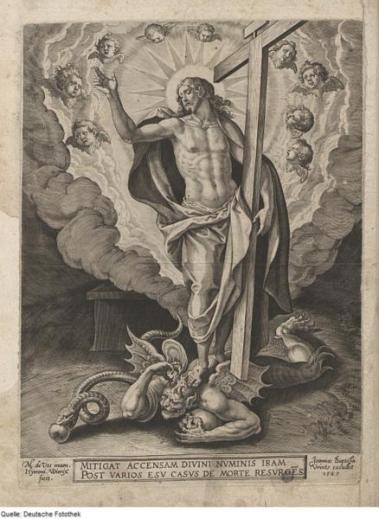
Scene 1 & 2: Creation and Fall
The Bible is a true story about God making the world, man messing it up, and God becoming a man to fix the world by not messing up. It is a story of Eden—exile—repeat. It is not until the true Adam, the true and righteous Son of God comes that this process is put to an end. All of Christ’s predeceases fell short; Adam, Noah, Abraham, Saul, David, Solomon, and the lambs, priests, and prophets could not fill Christ’s rule.
From the beginning of time and the beginning of God’s word, the Word has been a prominent character in the script of history (Gen. 1:1ff; Jn. 1:1ff). At first, the promised offspring (Gen. 3:15) is vague, in fact, Eve rejoiced because she thought she had the offspring (4:1) but it was all for naught for Cain was of the offspring of the serpent and killed his brother. However, now we have seen that which even the prophets longed to look (Matt. 13:17), we know that all Scripture finds its fulfillment in Jesus who is the long awaited Messiah (2 Cor. 1:20).
When Jesus came the first time, He had no beauty or majesty (Is. 53:2). When He comes again His face will shine like the sun in full strength (Rev. 1:16). We were cast out of the Garden in the beginning but as Jesus said to the thief on the cross, we will be with Him in paradise in the end. Jesus is the linchpin among all the cogs of Scripture. “The trajectory of the arrow shot from the Hebrew Scriptures finds its target (fulfillment) in Jesus of Nazareth.”[1]
The Storyline of the Scripture has all sorts of twists and turns, conflicts and resolutions, but the overarching story can be summed up: creation, fall, redemption, and new creation.
Through the creation part of the narrative we see that God made everything (Gen. 1:1ff; Jn. 1:1-3) and it was good (Gen. 1:4; 10; 12; 18; 21; 25; 31). There was no sin, no death, and no problems before man sinned. Man had perfect fellowship with God (cf. Gen. 3:8).[2]
However, the plot thickens. A cosmic problem is introduced. Through man’s fall, we see the collapse of the creation, which explains why everything is no longer good. Man disobeyed and rebelled (Gen. 2:16-17; 3:6) and this brought spiritual and physical death (Gen. 2:17; 3:19), pain (3:16-17), difficulties (3:18-19), and separation from God (3:23-24). This is the bad news. We deserve death and hell.
Scene 3 & 4: Redemption and New Creation
This is not the end of the story. There is good news. Even at the beginning of the story, God promised that He would send someone (i.e. the Messiah/Christ) to defeat the “bad guy” (i.e. Satan) of the story (cf. Gen 3:15). In a similar scene, seen throughout the Bible, man’s nemesis is once again at it with him. Satan is tempting not Adam but the second Adam in the wilderness (Luke 4). However, unlike Adam in paradise, the second Adam does not give into the serpent’s temptation, although He is in the desert. Jesus was tempted in every way that Adam was, and we are, yet He did not sin (Heb. 4:15) and still He bore our sin upon Himself.
Jesus became man so “that through death he might destroy the one who has the power over death, that is, the devil” (Heb. 2:14). Jesus’ heel was “bruised” at the cross but through that same cross, where He received the bruising, He struck the serpent with a definitive death blow to the head (cf. Gen. 3:15). From the cross, Jesus cried out, “It is finished!” In Jesus’ death, the devil, and death are defeated! He has delivered us from the domain of darkness (Col. 1:13). He disarmed the demonic rulers and authorities and put them to open shame, by triumphing over them through the cross (Col. 2:15).
Jesus is the Promised One (Luke 24:27, 44-46; Acts 13:23, 27; 17:3; Rom. 1:2-4; 1 Cor. 15:3-4;) who brings the redemption of all things (cf. Rom. 5:10; Col. 1:20; Titus 2:14; Gal. 3:13; Eph. 1:7, 10).[3] He secures for us an eternal redemption by means of His own blood (Heb. 9:12). Jesus Christ is the solution to the problem; He takes our sin, our problem, upon Himself on the cross. This is the good news; Jesus is the good news![4] Jesus reversed the curse of sin by becoming a curse for us (Gal. 3:13). Jesus was cast out of the garden so that we could be welcomed back in. Through the one man Adam we all have condemnation yet through the one Man Jesus Christ the grace of God has abounded for many (Rom. 5:12-21).We deserved to be crushed under God’s wrath because of our sin but instead Jesus was crushed in our place (Is. 52:13-53:12). Jesus is the solution to our problem of sin, the sole solution (Jn. 14:6; Act. 4:12). Jesus is the Lamb of God, without blemish, that takes away the sin of the world (John 1:29; Heb. 9:14)!
Jesus is the good news but the good news is not static it goes on and on and on; those in Christ live happily-ever-after (see endnote 3). In contrast, God “will gather out of his kingdom all causes of sin and all law-breakers” (Matt. 13:41) and cast them into the pit of eternal fire (Rev. 20:14-15). “They will suffer the punishment of eternal destruction, away from the presence of the Lord and from the glory of his might” (2 Thess. 1:9). However, for those in Christ the story of history will have a happy ending (Rom. 8:29-39).[5]
I concur with what C.S. Lewis says in The Last Battle,
“We can most truly say that they all lived happily ever after. But for them it was only the beginning of the real story. All their life in this world and all their adventures in Narnia had only been the cover and the title page: now at last they were beginning Chapter One of the Great Story which no one on earth has read: which goes on forever: in which every chapter is better than the one before.”[6]
I believe we, upon arrival to the new Eden, will exclaim with Lewis’ Unicorn:
“I have come home at last! This is my real country! I belong here. This is the land I have been looking for all my life, though I never knew it to now. The reason why we loved the old Narnia [“old creation”] is that it sometime looked a little like this.”[7]
Through Jesus the Christ we have the unwavering hope of a new creation (2 Peter 3:13). “The creation was subjected to futility” in Adam (Gen. 317-19) but in Christ “the creation itself will be set free from its bondage to corruption and obtain the freedom of the glory of the children of God” (Rom. 8:20-21). As Isaac Watts put it in “Joy to the World,”
“No more let sins and sorrows grow,
Nor thorns infest the ground;
He comes to make His blessings flow
Far as the curse is found,
Far as the curse is found.”
The problem (all of them!) will be fixed and there will be no more sin (Rev. 21:27; 22:3; Matt. 13:41). Everything will be more right than it was ever wrong. We will see that God did, in fact, work all things together for good (Rom. 8:28). Christ will make a new creation and we will be like Him (1 Jn. 3:2; Rom. 8:29; 2 Peter 1:4). “Just as we have borne the image of the man of dust, we shall also bear the image of the man of heaven” (1 Cor. 15:49). God will fulfill our deepest desires and we will finally love the LORD our God with all our heart, soul, mind, and strength when we receive our glorified bodies (Deut. 30:6; Jer. 31:33-34; 32:40; Phil. 3:20-21)! There will be no more pain or problems and God will wipe away all our tears (Rev. 7:17; 21:4). We will once again be in Paradise, the New Jerusalem, and we will have fellowship with God (Rev. 21:3)![8]
Epilogue
This story by its nature, by the fact that it claims to be true, does not leave us alone but calls for a response. We can receive this story or we can reject it outright. God can rewrite us, as it were, into His marvelous script or He can cast us, the unruly “cast,” into hell. We must respond to this story, will we respond rightly? Will we strive to obey the God who reveals Himself?
I can’t say it better than Michael Hortan. Those of us who have believed this story and are found in Christ,
“God has ‘rescripted’ us and recast us in his story. No longer trying to fit ‘God’ or the gods into our own life story, we become characters in his unfolding drama: seated at the table with Abraham, Isaac, and Jacob. From God’s perspective, our own script was wrong. Regardless of the role we thought we had, our inherited character was that of ‘strangers and to the covenants of promise” who were ‘having no hope … in the world’ (Eph. 2:12). But God calls us, as he did Abram and the disciples, away from our dead-end character. In God’s, our old character dies and a new character emerges who is now given a supporting role in a plot that centers on Christ. As the casting director, the Spirit gives us not only a new identity with new clothes but a new script, with new lines.”[9]
This is the gospel, the story of all the woes of existence finding there solution in Christ.
________________________________________________
[1] Emlet, CrossTalk, 47.
[2] Perfect in sense but not like it will be in the new creation; Adam and Eve related to God as creation to Creator and we will relate to God in the new creation as the redeemed to the Redeemer. Therefore, we will enjoy a consummated perfect fellowship with God.
[3] Jesus has inaugurated the Kingdom of God but there is an already/not yet aspect to it. Although the Kingdom has been ushered in through Christ it will not reach its zenith until Christ’s second coming and the culmination of the new creation. Jesus has saved us and “put away sin by the sacrifice of Himself” (Heb. 9:26) and yet there is still a future aspect to our salvation; He will save us (v. 28).
[4] Luke 2:10-11 says, “I bring you good news of great joy that will be for all people… a Savior, who is Christ the Lord” (or even, LORD!). Matthew 1:24 says, Immanuel (which means, God with us)! Notice the genealogies point to Jesus as being the Christ that was promised to defeat “the Serpent of old” (Matt. 1:1-18; Luke 3:23-38 says, “Jesus… the son of Adam” who will crush Satan under His feet as promised).
[5] Sadly, those who do not have faith in Jesus Christ will be cast into the lake of eternal fire (Dan. 12:2; Matt. 25:46; John 5:28-29; Acts 24:15; Rev. 20:12-13). It should be understood that this is part of God’s reconciliation of the world, but not in redemption, but in recompense. The story for those in Christ is happily-ever-after, even more so than can be imagined, but for those not in Christ the story does not end nicely; in fact, it never ends, but is incomprehensible torment-ever-after. We should never take this part of the story lightly but we must seek to spread the good message of Christ and the hope of a “happily-ever-after.” Look at the difference between God’s people in Isaiah 65:17-25 and the rebellious in 66:24.
[6] C.S. Lewis, The Last Battle (New York: NY: Harper Collins, 2002), 228.
[7] Ibid., 213.
[8] Jesus is surly coming soon (Rev. 22:7, 20), may we be found ready (v. 12; 3:23; Luke 12:47-48; Matt. 16:27; 1 Cor. 3:14-15) and may we respond with John: “Come, Lord Jesus!”
[9] Michael Hortan, The Christian Faith: A Systematic Theology for Pilgrims on the Way, 643.
An Anthology of New Creation

The place is forsaken,
the populous city deserted. (Is. 32:14a cf. 2:11; 5:21)
In that day their strong cities will be like the deserted places, there will be desolation.
For you have forgotten the God of your salvation
and have not remembered the Rock of your refuge;
therefore, though you plant pleasant plants
though you sow and toil,
yet the harvest will flee away
in a day of grief and incurable pain. (Is. 17:9-10 contrast Ezek. 47:1-12)
Until the Spirit is poured upon us from on high,
and the wilderness becomes a fruitful field. (Is. 32:15a)
Then justice will dwell in the wilderness,
and righteousness abide in the fruitful field.
And the effect of righteousness will be peace,
and the result of righteousness, quietness and trust forever.
My people will abide in a peaceful habitation,
in secure dwellings, and in quiet resting places. (Is. 32:16, 17, 18a)
The nations shall beat their swords into plowshares,
and their spears into pruning hooks;
nation shall not lift up sword against nation,
neither shall they learn war anymore. (Is. 2:2 cf. v. 3b, 4)
In that day the LORD will say, “Blessed be Egypt My people, and Assyria the work of My hands, and Israel My inheritance.” (Is. 19:25 cf. vv. 21-25)
The LORD will swallow up death forever;
and the Lord GOD will wipe away tears from all faces,
and the reproach of his people he will take away from all the earth,
for the LORD has spoken.
It will be said on that day,
“Behold, this is our God; we have waited for Him, that He might save us.
This is the LORD; we have waited for Him;
let us be glad and rejoice in His salvation.” (Is. 25:8-9)
For the LORD comforts Zion;
He comforts all her waste places
and makes her wilderness like Eden,
her desert like the garden of the LORD;
joy and gladness will be found in her,
thanksgiving and the voice of song. (Is. 51:3)
Our Messiah brings good news to the poor,
binds up the brokenhearted
the Anointed proclaims liberty to the captives,
opens the prison to those who are bound
He gives beautiful headdress instead of ashes
the oil of gladness instead of mourning
the garment of praise instead of a faint spirit. (Is. 61:1-4)
“For behold, I create new heavens
and a new earth,
and the former things shall not be remembered
or come into mind.
But be glad and rejoice forever
in that which I create;
for behold, I create Jerusalem to be a joy,
and her people to be a gladness.
I will rejoice in Jerusalem
and be glad in My people;
no more shall be heard in it the sound of weeping
and the cry of distress. (Is. 65:17-19 cf. 4:2-6)
There shall be no more a brier to prick or thorn to hurt. (Ezek. 28:24a)
Before My people call I will answer;
while they are yet speaking I will hear.
The wolf and the lamb shall graze together;
the lion shall eat straw like the ox,
and dust shall be the serpent’s food.
They shall not hurt or destroy
in all My holy mountain. (Is. 65:24-25)
You shall be a crown of beauty in the hand of the LORD,
and a royal diadem in the hand of your God.
You shall no more be termed Forsaken,
and your land shall no more be termed Desolate,
but you shall be called My Delight Is in Her,
and your land Married;
for the LORD delights in you,
and your land shall be married.
For as a young man marries a young woman,
so shall your sons marry you,
and as the bridegroom rejoices over the bride,
so shall your God rejoice over you. (Is. 62:3-5)
Zion’s righteousness goes forth as brightness,
And her salvation as a burning torch. (Is. 62:1)
The name of the city from this time on shall be, “The LORD Is There.” (Is. 48:35)
For, the LORD is King. (cf. Is. 33:22)
The government shall be upon His shoulders,
and His name shall be called
Wonderful Counselor, Mighty God,
Everlasting Father, Prince of Peace.
Of the increase of His government and of peace
there will be no end,
on the throne of David and over His kingdom,
to establish it and to uphold it
with justice and with righteousness
from this time forth and forevermore.
The zeal of the LORD of hosts will do this. (Is. 9:6-7 cf. 42:1-4)
Every knee shall bow,
every tongue shall swear allegiance. (Is. 45:23 cf. 49:7; 66:23)
You shall know that I, the LORD, am your Savior
and your Redeemer, the Mighty One of Jacob. (Is. 60:16)
Our LORD says,
“Come, everyone who thirsts.” (Is. 55:1a)
The Grave Necessity for a Hideous Hell

Hell is unashamedly a dreadful doctrine; yet, as we will see, a necessary doctrine.[1] C. S. Lewis’ said,
“There is no doctrine which I would more willingly remove from Christianity than this, if it lay in my power. But it has the full support of Scripture and, specially, of Our Lord’s own words; it has always been held by Christendom; and it has the support of reason.”[2]
We don’t desire controversy for the sake of controversy.[3] Rather, we want to be convinced biblically,[4] logically, and practically that hell is a necessary doctrine.
It is important before considering the evidence to think about our a priori assumptions. For instance, in Harper Lee’s book To Kill a Mocking Bird the correct verdict could not have been given in that context (i.e. Maycomb’s racist white community) because people excluded the possibility that anyone other than the black man, Tom Robinson, was guilty. Despite the strong evidence that Atticus Finch put forward Tom was convicted. Why? Because people were prejudice against the truth. The people’s a priori assumption, that Tom was guilty because he’s black, led them to not honestly look at the evidence and pronounce the correct verdict.
This sadly still happens. It happens in the court of law and it happens when people consider other forms of evidence. This is especially likely to occur when emotional issues are involved. So when people consider what the Bible teaches on certain subjects they come with tinted glasses. One theologian, for instance, admits that he “was led to question the traditional belief in everlasting conscious torment because of moral revulsion and broader theological considerations, not first of all on scriptural grounds.”[6]
John Stott believed in annihilationism. Stott, by his own admission, left the ranks of what is “traditional orthodoxy for most of the church fathers, the medieval theological and the Reformers.” Even as Stott emotionally wrestled with the doctrine of hell he said, “our emotions are a fluctuating, unreliable guide to truth and must not be exalted to the place of supreme authority in determining it. As a committed evangelical, my question must be—and is—not what does my heart tell me, but what does God’s word say?”[7]
As we look at the wrath of God we look from a certain vantage point in the cultural climate in which we live. This inevitably shades our perception of things. One book I read told of a Korean man that struggled not with the wrath of God (and even hell) but with the love and grace of God.[8] This was because he had seen horrible wickedness and clearly understood that wickedness deserves justice.
Timothy Keller tells about a woman that told him that the very idea of a judging God was offensive. Keller responded by asking why she wasn’t offended by the idea of a forgiving God. The woman was puzzled so Keller continued:
“’I respectfully urge you to consider your cultural location when you find the Christian teaching about hell offensive.’ …Westerns get upset by the Christian doctrine of hell, but they find Biblical teaching about turning the other cheek and forgiving enemies appealing. I then asked her to consider how someone from a very different culture sees Christianity. In traditional societies the teaching about ‘turning the other cheek’ makes absolutely no sense. It offends people’s deepest instincts about what is right. For them the doctrine of judgment, however, is no problem at all. That society is repulsed by aspects of Christianity that Western people enjoy, and are attracted by the aspects that secular Westerns can’t stand.”[9]
Many people are chronological or geographical snobs. That is, they have baseless biases and think their place in space and time has the unique vantage point to decipher morals, values, and truth claims of people in different times and cultures than their own. However, why should one think that non-Western cultures are inferior to our own?
The various aspects of the unpopularity of Christianity actually show that it is transcultural. Keller says,
“For the sake of argument, let’s imagine that Christianity is not the product of any one culture but is actually the transcultural truth of God. If that were the case we would expect that it would contradict and offend every human culture at some point, because human cultures are ever-changing and imperfect. If Christianity were the truth it would have to be offending and correcting your thinking at some place. Maybe this is the place, the Christian doctrine of divine judgment.”[10]
Let’s, as Keller says, for the sake of argument, listen to the transcultural truth of Scripture. Let’s not be biased. Let’s take our tinted glasses off and seek to see why hell is necessary.