A (Very) Brief History of Art and the Church [Part I]

The Christian Church has a long and varied heritage when it comes to art.[1] That being the case, it is instructive for us to briefly understand some of the issues involved. This will help us better grasp the Church’s present situation when it comes art.
Christians, at first, as a small unpopular and often persecuted group did not produce works of art that were distinctly Christian or had an impact on secular culture. Early Christian art mainly used pagan vocabulary to express Christian sentiment.[2] “Until roughly A.D. 200 most visual imagery was found in catacombs, the burial places (and sometime hiding places) of Christians.”[3]
“In the third century, as Christianity become more established, marble imagery appeared, though it continued to portray the same images used by the early Christians.”[4] However, the biggest change came with the conversion of Constantine the Great (in 312), the Roman Emperor, and the Edict of Milan (in 313) when Christianity was granted religious toleration within the Roman Empire. After the edict, Christians were free to publically display their faith through art and architecture. After this period we begin to see Christian art flourish.
By 574 we see amazing buildings with huge mosaics depicting scenes from the Old and New Testament being dedicated (like San Vitale). The murals and mosaics were especially important because many people were illiterate and did not have Scripture in their language (e.g. the Mass was in Latin). Although, images were helpful in promoting worship some also saw the use of images as dangerous.
“Images, no matter how discretely chosen, come freighted with conscious or subliminal memories; no matter how limited their projected use, they burn indelible outlines into the mind… Images not only express convictions, they alter feelings and end up justifying convictions.”[5]
One of the dangerous, for some, was the veneration of icons. There are three stages in the development of icons. First, “As the emperor’s image represented the presence of the emperor, Christ’s image, or the image of a saint, came to serve as a kind of ‘proxy’ for their presence.”[6] These images assisted the veneration of the saints. Second, there was a rise in the use of imagery in private devotions. People began to go on pilgrimages to shrines or churches. “The third stage occurred at the end of the seventh century, when portraits or images of Christ and the saints began to appear as isolated frontal figures” and “by the beginning of the eighth century it had become common practice to venerate these images, which meant that honor paid to the image honored the person represented.”[7]
These developments brought controversy to the Church. “The practice in the East of venerating the image of Christ inevitably caused those accustomed to a more symbolic orientation to react. Christians who opposed the use of images in worship generally felt that these objects marginalized the work of Christ.”[8] In fact the controversy got so bad that in 730 Emperor Leo II destroyed the “images of Christ, his mother, and the saints.”[9]
Clearly then, the Church took art and the use of images in various forms very seriously.
“The icon… was much more than an aesthetic image to grace the church and stimulate holy thoughts. It was something that expressed deeply held theological convictions, and it was meant to move the viewer to love and serve God. In many respects, an icon was theology in a visual form, and the practice of making an icon itself represented a spiritual discipline.”[10]
However, did the Church cross the line of making idols that were so clearly and vehemently condemned by the prophets in the Old Testament (e.g. Is. 44:12-20)?
During the Early Renaissance, “a renewal in the arts was closely connected with reform movements that began springing up throughout western Europe.”[11] During this period many massive cathedrals were built (e.g. Salisbury Cathedral and Reims Cathedral).
“These great structures, which must have been extremely impressive amid the modest building around them, not only became the center of the social and religious life of the community but were actually intended to be a microcosm of the world. An image of the last judgment was frequently located over the central portal of the cathedral…, reminding those entering of God’s judgment, which was avoided only by eating the holy Eucharist. The space of the church represented the ‘ark of salvation.’ On either side of the portal were images of the prophets and apostles, on whose word rested the hope of God’s people.”[12]
During this period there were also seeds planted that would eventually rise up and challenge the extravagance of the Church and her art. We see this for example through the work of St. Francis of Assisi and St. Dominic of Spain. For example, Francis and Dominic emphasized simplicity and mission.
Next, we will look at the impact of the Reformation on art within the Church. But at this point, it will be helpful for us to see what we can learn from what we have seen from history so far. So, here are a few questions to consider:
- What are some dangerous to avoid when it comes to art and the church?
- What do you think about the extravagance of the church?
- What concerns should we have?
- What takeaways for our modern context of cinderblocks, cement, lights, and lasers?
- How did art serve the purpose of the early church?
- Can art still serve the purpose of the church? If so, how?
- What should we be cautious of regarding art and the church?
__________________
[1] For a brief and interesting introduction see “The History of Liturgical Art.”
[2] William A. Dyrness, Visual Faith, 26.
[3] Dyrness, Visual Faith 26.
[4] Ibid., 27.
[5] Thomas Matthews, The Clash of the God, 11.
[6] Dyness, Visual Faith, 35.
[7] Ibid., 35.
[8] Ibid., 36.
[9] Ibid., 37.
[10] Ibid., 37.
[11] Ibid., 38.
[12] Ibid., 39-40.
America’s Trump Morality

The difference between Donald Trump and his explicit exploits and many guys on the street is not one of morality. It’s one of power and publicity. Sadly, there are many “average Joe” versions of Donald Trump and Anthony Weiner.[1] I have heard many “men” nearly quote Trump and recount worse exploits in various work environments.
Welcome to America. Welcome to our morality: “Life, Liberty, and the Pursuit of Pleasure,” wherever and however it might be found. This is our county’s mantra, even if not said in so many words.
Much of the American economy is marketed to our lust. Just look at advertising. We all know it, sex sells. Pornography is a booming market and so, sadly, is sex-trafficking.
To hear that Trump has appeared in XXX films and said a lot of bad and very inappropriate stuff is sad. But, it is sadly not surprising.
Are we really shocked by Trump’s inappropriate comments? No. Concerned? Yes.
“Grabbing women by…” whatever is, sadly, much of today’s culture. As a culture, we care about the quick and exciting. We care about bursting bosoms and one night stands. We care about quick fixes, porn, and pleasure at someone else’s expense (especially if no one knows and we can get away with it).
We care about having it our way. We care about following our passions, no matter what they are. We care about people’s freedom to do what feels right. We care about the right for no one to tell us what is right.
Pornography, Tinder, and all the advertisements that feed us represent where we are as a country. It represents the underlying desires of much of America. There’s many mainstream magazines and media forms–Men’s Health, GQ, and many musicians and movies (e.g. Fifty Shades of Grey),–that embody Trump’s morals even if they don’t say it outright.
So, are Trump’s words that surprising? For a presidential candidate, it’s unprecedented but it’s not surprising. That’s where we are as a country. Porn use to be something only under people’s beds and available at seedy XXX theaters but now it’s in our pockets, piped into our living rooms, and greeting us on billboards.[2]
Trump is vocalizing what many men view, say, and others often think. Obviously, I don’t agree with Trump. I think it’s sickening. But I also think we as a country have almost lost grounds on which to critique him. I clearly condemn Trump’s actions but I am afraid that much of America’s moral outrage is a hypocritical contradiction: Trump is made in our own image.
How can America say pornography is perfectly normal and acceptable and yet condemn the person that lives out what is idolized on the screen? You know what I think?! I think that Trump is not the only problem or the biggest problem; he is a harbinger of things to come and an echo of what has gone before. He is a visualization of many people’s secret sins and inner hearts.
Trump is not excused obviously! He is despicable. However, as has been said, “we see that all the time in movies” and we hear it and watch it on our phones. Trump is a problem but he is not the problem. Trump is fruit from what has been sown for quite some time. He is in many ways, I’m afraid, the personification of many people’s dreams.
What is morality after all? Isn’t it might that makes right? And Trump has plenty of “might.” Or if we measure morality by the social construct theory Trump, sadly, wouldn’t be wrong. The social environment has basically said his actions are not wrong time and time again. After all, aren’t we as people just “matter in motion” and isn’t sex just “an exchange of fluids”?[3]
In Trump’s own words “when you’re a star, they let you do it. You can do anything… Grab ’em by the @#$*!…” And sadly, that is often true. We often do anything for a star, or for money. And sadly, when someone “consents,” when someone lets someone else do… or whatever, we look at it as okay because there was consent.
Perhaps, we can all agree that it’s a shame that Trump made those comments since it reflects poorly upon the USA and offends some, but from a moral point of view on what foundation can America criticize him?
This, friend, is our world. This is where we are. And most people are fine with it.
However, doesn’t Trump’s example make it clear that it is wrong to ever look at a woman as an object in that way? Don’t we see how depraved his statement is? Don’t we see how debauched much of American society is?!
Women are not objects. Men are not objects. Pornography is wrong. And by implication, much of our advertising is wrong too. And many of us are wrong. It’s not just Trump. It’s the way we look at the Kardashians. It’s the way we idolize sexy bodies and always having it our way. It’s the way we forget what’s right and just want what we want. The problem is not just external (Trump), it’s likely to a large part internal (in our own heart).
America, wake up! We made Trump. We are Trump and Trump is us. We can’t have our cake and eat it too. We can’t indulge in licentious sexual “freedom” without the forging of certain “fetters.”
John Adams once said, “Our Constitution was made only for a moral and religious people. It is wholly inadequate to the government of any other.” Why did he say that? He said it at least in part because if we are not a moral people, a people who believe in a divinely given morality, then we will elect very corrupt officials. We will create and elect people who reflect our own character.
We will, in the words of the Old Testament prophet Jeremiah, pursue worthlessness, and become worthless (Jer. 2:5).
[[Two Postscripts: Please note that I do not support either candidate. 1) I loathe Hilliary Clinton and her pro-abortion stance (see here for example) and don’t trust her. 2) I don’t trust Trump either. Two verses to consider for those trusting Trump because he will (supposedly) “save” the Supreme Court: Ps. 118:9, “It is better to take refuge in the Lord than to trust in princes [or their modern equivalent]” (cf. Ps. 146:3) and Ps. 40:4, “Blessed is the man who makes the Lord his trust, who does not turn to the proud [certain political candidates], to those who go astray after a lie!” These verses are true even when considering such serious subjects as the future of America and unborn babies.]]
______________________
[1] Actually, it is sadly my own disposition. I am myself not beyond struggling with lust. However, by God’s grace, I am not enslaved to it and loathe porn. I have seen the chaos and curse that sexual sin brings to individuals and society through people close to me.
[2] The porn industry is one of the biggest industries and has the largest presence online. In fact, porn sites get more visitors each month than Netflix, Amazon, and Twitter combined. Pornography is also very potent. I’ve read that it’s as addictive or more addictive as heroin or cocaine. Social media very often, even if it’s not officially labeled pornographic, is teaching and influencing how we think about sex and act out sexually (see e.g. Gail Dines, “Is porn immoral? That doesn’t matter: It’s a public health crisis” in The Washington Post).
[3] E.g. Richard Dawkins has said, “There is a bottom no design, no purpose, no evil, not good, nothing but pointless indifference… We are machines for propagating DNA” (Dawkins, Unweaving the Rainbow).
Sneaky Subtle Stuff

It’s the steady and unnoticed drip that corrodes the foundation.
It’s the subtle stuff that shapes us. What’s imperceptible impacts us. It’s the little things that don’t seem like a big deal that last. Precisely because they seem little.
When we excuse something, because after-all, it’s only small, we often give refuge to an infectious virus that will destroy. Yes, it’s small. But it will kill. And it will be hard to seek out.
Don’t be ok with the unnoticed drip. Don’t give refuge to a virus.
Destroy what in you destroys. Kill sin.
Desert Soul

this land is as dead as my soul
 so purge and make new
 even if it means a knife
 i want life

new life
 spring
 make me clean
 new

i want You
 oh God, rescue me
 i'm drowning
 i don't see the light
 all is night
 an endless cycle down

my soul's diseased
 and I need You please
 because the light is fading
 i'm forgetting You and Your ways
 the Devil's lies seem sweet
 give me swift feet to run
 for I am Your son
 let me not believe his lies
 they are my demise

i need You.
Kim Kardashian, Kanye, Christ, and Snapchat
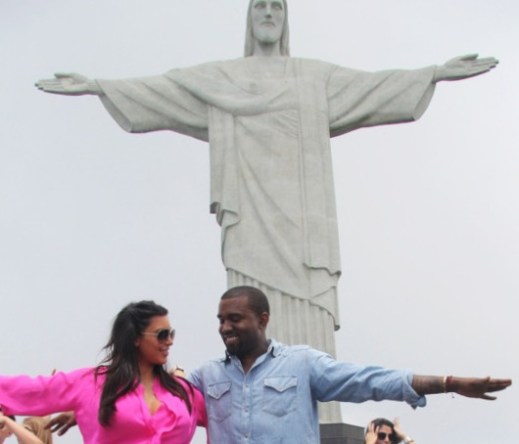
Kim and Kanye are the superstars of Snapchat Stories. It seems like one or both of them always have something going on, from Kim’s body parts to Kanye’s billion dollar (?!) debt. I, however, actually don’t read their Stories or typically any of the Stories. It can be bad enough just looking at the Stories (recall what’s typically featured in reference to Kim). So, why don’t I read the Stories and why does it matter?
Why I Don’t Read the Stories
Well, there are a lot of reasons. I’m busy. That’s an important one. However, I’ll concentrate on three things.
- I need to focus on the Kingdom, not Kim. Seeing Kim and Kanye and reading about their exploits does not help me focus on the Kingdom. Reading about Kanye and his “killer” clothes won’t make me want to invest in the Kingdom but in Kenya’s debt relief program.
- There is news worth reading but it’s typically not on Snapchat Stories. There’s probably something better to read than “Sex Workers Explain How They Deal” and “Kylie Flaunts Under And Overboob.” That being said, I did read an interesting story about the urine content in swimming pools from Snapchat. But typically other news sources are more relevant, even if they are more thought provoking and deep. (On an aside: watch out especially for kiddie pools!)
- I need Christ. Not Kim. Not Kanye. It’s God that “makes known to me the path of life. It’s in His presence that there is fullness of joy. It’s at His right hand that there are pleasures forevermore” (Ps. 16:11).
Why Does it Matter?
It matters for a lot of reasons, again, time is a factor. But I’ll concentrate on three things.
- I need to invest in the treasure that cannot fail or fade but I’m often tempted to get that backwards. Reading about Kim and Kanye’s antics is not helpful in reminding me about what matters.
- Time is precious and there is only so much time to read and watch things. So it makes sense to use our time and even our leisure wisely, and for me that typically doesn’t include Snapchat Stories.
- It matters because I am a new creation called to live as a new creation focused on Christ and His glory (cf. Col. 3:1-17). It matters because there is great joy to be found but that joy is not found in deceitful desires but in the good that God has abundantly provided.
Conclusion
Kim and Kanye are not Christ, so let’s not give them, or anyone else, or anything else, the attention only He deserves.
Fashion, Clothes, & Christ

Clothes and Creation
In the beginning, God created. And His creation was good, even “very good” (Gen. 1:31). We—male and female—were created in the image of God (Gen. 1:27). So we too are creative and that is a good thing. It’s one way that we reflect the image of God.
God is the most majestic musician, supreme sculptor, wowing writer, and awesome artist. And we were created in His likeness. We can look at the flowers of the field and see that God is the most creative creator of clothing. He is the creator that gives creativity. Our creativity is contingent upon the Creator.
Creativity is not bad and creativity when it comes to clothing is not bad. Beauty is not bad. God saw all the good that He made and said “very good”—beautiful. We too can and should create with the goal of saying “beautiful.”
Many critics of Christianity say that Christians are self-loathing and boring. The way that people see Christians can reflect back on the way they conceive of God. Many think of God as a drudge that hates fun and beauty. The Bible, however, says that the body is wonderful (cf. Ps. 139:14). The Bible celebrates beauty and creativity. The Bible shows that God is anything but dull, boring, and against beauty.
Clothes and Communication
Clothes have two main functions. Clothes provide protection, warmth, and modesty. Clothes also communicate things about us. Should we just care about the utility of clothes and not about their beauty and what they communicate?
Clothing can be a form of defiance. It can communicate to people that you don’t care at all about societies accepted norms. Clothes can be, as Steve Turner has said, “a snub to clean and neat conformism.” It was for me when I went through my punk stage (I don’t think I’m fully through it yet). My clothes said, “I’ve seen some stuff and I’m jaded.” My clothes said, “You may have had the perfect little life but I haven’t.”
Clothes communicate. Clothes say, “I don’t care,” “I’m sexy,” “I’m rich,” and so forth. Clothes can communicate that we are respectable and care about beauty. They can show that we are intentional and appreciate quality without communicating pride. Clothes speak but are we aware of what they’re saying?
“We should… be aware of how ideas are communicated through fashion and of the thinking behind the design of clothes. We should be alert to our own motivations for choosing what we wear.”[1]
Fashion is on us and all about us every day so we should be aware of what it’s saying.
Clothes and Conformity
Clothes and culture are in many ways parallel. I think for instance of Marie Antoinette and 18th-century French fashion contrasted with Puritan fashion. Clothes communicate. Clothes reflect the views and convictions of the day. We need to consider this truth and not just conform to the surrounding culture.
As with many things, balance is important. On one side, we can care too much about what we wear. It can consume us and we can find our identity wrapped up in what we wear. On the other side, we can care too little about what we wear and how we look. Steve Turner points out that some
“Christians have often been not merely out of step with fashion but dowdy, boring and unadventurous. Their clothes suggest that they have no pride in their bodies, are content to be disconnected from the times they live in, don’t value creativity or imagination and have no desire to provide aesthetic pleasure for those they meet.”[2]
This should not be the case. God has made a beautiful and creative world. We can image God even in what we wear. For example, God beautifully, creatively, and polychromatically clothes the flowers of the field (Matt. 6:28-29). We too, like the flowers of the field, can point to our creative Creator even in the way that we dress.
In our conversation about clothes and conformity, modesty is a helpful word. For our purposes, modesty means decency in dress. It is behavior, manner, or appearance intended to avoid offense and indecency. It is also the quality of being unassuming or moderate in the estimation of one’s self.
I think Steven Turner maintains a good balance. He says,
“We need on the one hand to avoid dressing in a way that makes it appear that we are ashamed of who we are, take not delight in aesthetics and have a low view of the body, and on the other to avoid wearing clothes designed to encourage sinful pride in ourselves or lust and envy in others.”[3]
We need to ensure our clothes do not send messages that are opposed to what we actually confess and believe.
Clothes and Christ
In my punk rock/heavy metal days (which I have not completely left), my identity was found to a significant degree in my grungy style. I was the angsty skater kid. I was mad at the world, and I was secretly proud of it.
A change happened and it didn’t happen through changing my clothing but it did affect my view of clothing. As I put on more and more of Christ and found my identity in Him, I could literally put off more and more of my grungy clothes and be ok with it. I may not have been able to articulate it but my identity was less and less about any outward style. My identity was in Christ and it eventually worked itself out in tangible ways.
I still like the grungy look and that’s fine. But it is helpful that I can now wear nice pants with my shirt tucked in and I not feel like a sellout. My angst and anger have also been relieved to a great degree.
As Christians, our identity and significance is found in Christ and not in fashion; whatever that fashion is—Nike, Gucci, Ralph Lauren, or Fear of God grunge. Let’s put on Christ and have a Christian perspective as we put on our clothes (cf. Rom. 13:14; Gal. 3:27; Col. 3:1ff).
Conclusion
Clothes are not inherently evil. Beauty is not bad. Care and creativity in regard to clothes is good. We can honor God and even image Him as we intentionally and appropriately dress ourselves. We must, however, seek modesty in our dress and realize that our identity is not dependent upon the shoes on our feet or the hat on our head.
Our identity and significance need to be grounded in Christ and not in clothes.
Questions to Consider
- Can we both be humble and beautiful at the same time with what we wear?
- We can often be tempted to find our identity in what we wear instead of who we are. Is that a temptation for you? If so, how can you fight against that temptation?
- Do you enjoy your clothes as an expression of who you are and of beauty or are clothes merely for protection, warmth, and covering?
- Why do you buy the clothes you buy? Are you trying to impress people and fill a void? Or do you buy clothes for quality, good design, and beauty?
- Do you know that “the prestige given to certain brands is out of all proportion to their usefulness and actual material value”?[4]
- What are you telling others about yourself with what you wear?
- What difference does the social and cultural context make when considering what clothing to wear?
__________________________
[1] Steven Turner, Popcultured: Thinking Christianly About Style, Media and Entertainment (Downers Grove: IVP, 2013), 115.
[2] Ibid., 123.
[3] Ibid., 127.
[4] Ibid., 121. As Time magazine said, “If you’re paying $300 for sunglasses, you’re buying them to look cool and impress people… You’re not buying them for the sake of your eyes’ health” (See Ibid., 121).
Dustin Kensrue – This Is War

Thought provoking song and video.
“This Is War,” Allen Swoope and Dustin Kensrue:
“This is war like you ain’t seen.
This winter’s long, it’s cold and mean.
With hangdog hearts we stood condemned,
But the tide turns now at Bethlehem.This is war and born tonight,
The Word as flesh, the Lord of Light,
The Son of God, the low-born king;
Who demons fear, of whom angels sing.This is war on sin and death;
The dark will take it’s final breath.
It shakes the earth, confounds all plans;
The mystery of God as man.”
“He will wipe away every tear from their eyes, and death shall be no more, neither shall there be mourning, nor crying, nor pain anymore, for the former things have passed away.”
~Revelation 21:4
Maranatha! Come Lord Jesus, Come!

How do you see the world?

We all have dispositions. A certain bent to live one way and not another. We all see the world through a lens. A lens of upbringing, culture, education, and more. We each have a view of the world. This is known as a worldview.
So, what is your worldview? How do you view the world and what are the shapers of that view? These are important questions because, whether we know it or not, we all have a view of the world and what makes up the “good life.” And it is shaped by all sorts of things. But is it shaped by the right things?
Do we get our worldview simply from our parents? Our education? The entertainment we ingest? Everything is speaking to us.
However, are we listening critically or just unconsciously breathing it all in?
The vehicles we drive are all equipped with windshield wipers so that our view will not be obstructed. It is dangerous for yourself and others to drive when you cannot see clearly.
In the same way, it is important that as we drive down the road of life we see things in the correct way. It is important that we have a worldview that is in line with reality and will not send us or others crashing to our deaths.
When traveling down life’s road it is important to consider the destination. There are pertinent life questions that need answered if we are to go down the path of life with direction and intentionality. If we have a correct view of life, i.e. worldview, we will avoid many pitfalls along life’s path.
God is outside time. He is the author of time. The author of the cosmos. And He is also the author of Scripture. We would be wise to get our view of the world from the great Architect. His Word truly is a light to our path (Ps. 119:105). C. S. Lewis said, “I believe in God like I believe in the sun, not because I can see it, but because of it all things are seen.”
How do you see the world? Start by considering these questions:*
- What is reality? What is really real?
- What is the nature of the world around us? Is it chaotic or orderly? Is it all natural or is there supernatural?
- What is a human being?
- What happens to a person at death?
- Why is it possible to know anything at all?
- How do we know what is right and wrong?
- What is the meaning of history?
- What personal, life-orienting core commitments are consistent with this worldview?
- What do you desire? What is your view of the “good life”?
__________________________________
*Cf. James W. Sire, The Universe Next Door (Downers Grove: IVP Academic, 2009).
The Contradiction that is Humanity

East of Eden, this trance in which were caught. Serpents all around, lies within, lies without. Death, death, unspoken though it be, prevails. Prevailing misery, wrapped in supposed ecstasy. Whisper, whisper; slither near, they speak the lies into my ear. Sell it all, the order built tall, fails. Embrace it all, accept all, end null. Trudge on and live and die, for what do we expire? Only all we desire. Endless cycle of misery, never free. Eat the apple, embrace the noose. Slither near, oh yes, my dear. Come here, constrict me. Worthless cycle, the viper of this world, strikes fast yet the venom kills slow. How strange, but the hand that feeds me, bites me. Diluted profit, fruitless field, this the futility that we yield. Strive for the Garden, yet we embrace the curse; oh, the contradiction that is humanity.
East of Eden, for a season, the King will soon return. Every foe vanquished, for every thorn a rose. The King, He soon shall reign! Then, the refrain, forever remain, “life, life!” The serpent is gone, we sing a new song forever of our Savior. We ate of the tree, He died on a tree to be the curse we created, and with His death, death’s defeated.



 in X
in X 