The Subversive Nature of True Art

True beauty and art subvert the lie whispered in the Garden that roars in cacophonous echo today: “You shall be like gods!”
We walk the path that was blazed by our forebears; we autonomously seek for meaning in ourselves. Yet, periodically we stand before a sunset or Mozart or some other masterpiece and our autonomous walk is halted and we know, we intimately know, and even bask in the fact that we are not god and our good is not in autonomy, it is outside of us. We need. We need God.
Caution and Culturing Unborn Baby Body Parts

We live in a country that says, “have it your way.” And if we want warm coffee that’s what we get. But if it’s too hot, we sue. And we win. We live in a country that is extremely cautious about labeling everything; least something so terrible happens as someone burning his tongue.
We live in a country where the height and depth of steps are regulated, where your building and property isn’t up to code if it doesn’t have a certain height of handrail. We are a cautious people.
We enforce speed limits and fine jaywalkers. We take and enforce caution. We have an administration that monitors our food. We do this to protect our tongues, our bellies, and our lives.
Yet, we also throw caution to the wind as a country. We say we don’t know when a human baby becomes a human baby and so abortion has free reign. Somewhere along the way we lost our caution. It seems wiser and more inline with what would seem is the American conviction to say if we don’t know when life begins we should be cautious. After all we enforce the height of handrails and fine jaywalkers so it doesn’t seem so unreasonable to be cautious in regard to the most vulnerable. However, it seems in our country that “have it your way” is more important then caution when it comes to unborn humans.
People so often bring up the fact that “we don’t know when life begins” but in light of the precautions we take all across America that is really a non-issue. Our government regulates where we can cross the road for safeties sake but is not safe or cautious with regard to the “intersection” of abortion. Actually, it would seem we’ve removed all traffic lights. We’re free to “fly on by,” “let come what may.”
We must take “due diligence” in other matters or be held morally responsible, because if we don’t we are morally responsible. To not be “safe” and “cautious” in regard to human life we know (and see though our legal system) isn’t a light thing. In America we have reduced speed limits outside of schools because we desire to do due diligence and protect our children and youth. We enforce those lower speed limits not because we know someone will get killed if we drive above them but because life is precious and thus we take precautions to protect it.
There is such a thing as child endangerment, as there should be. Parents can (rightly) get in trouble for merely endangering their child. Why? Because human lives are innately precious and we must take precautions to protect human life. We do not even have to talk about the destruction of innocent human life; the endangering, or failure to take “due diligence,” be cautious, with human lives alone is a moral atrocity. And yet our country sanctions it and our tax money supports it.
We pay taxes to enforce no jaywalking to protect people from potentially getting hit, we are cautious to enforce lower speed limits outside of schools, and we pay Planned Parenthood $540 million to disregard caution and disassemble human bodies within their mother’s protective womb. We are anything but cautious, in contradiction to so much of the American way, when we literally go into (i.e. proactively act upon) the protective life-sustaining womb and destroy the unborn baby.
The sentence for vehicular manslaughter in a school zone is obviously a worse offense then if the manslaughter happened outside of the school zone. In fact, if the manslaughter happened in a school zone it can take the charge from second degree to first degree. Yet, in the example of the first degree and second degree manslaughter the guilty person did not necessarily proactively act upon or intentionally kill yet they failed to do due diligence and be cautious and thus they are rightly held accountable. In other words, what should stop “pro-choice” people from being “pro-speeding-in-school-zone” people? There are some choices we don’t have. And shouldn’t have. We shouldn’t be able to eradicate millions of people in concentration camps. We shouldn’t have the right, and don’t have the right, to speed in school zones. We shouldn’t, but do, have the right to destroy unborn babies. We sadly have the right to abandon caution and crush small human skulls within the enshrouded womb of their mother.
Some things, we know, we don’t have the right to do, and shouldn’t have the right to do. We are a cautious contradictory people. Will we be “cautious” or will we continue to culture unborn baby body parts?
The Breadth and Width of Musical Expression

It’s important for a painter to paint with a full pallet; yellows, reds, and blues and various types of hues; orange, green, and pink, in short, a full panorama of colors. This allows one to do better justice to reality. If a painter paints for very long and very well, he will eventually use the full range of colors.
Shouldn’t it be the same for musicians? Should not they, at times, have clashing symbols, bludgeoning bass, and frantic whispers? Is not there a time for aggression as well as joy? Soprano singers have their place, that’s true; but left to their own devices they won’t be able to communicate the breadth of the human condition and reality. We need waltzes and swing, we need metal and Mozart, we need jazz and, surprised to say, we need pop. However, that is not to say that all forms or types of music are good. That is not true in the artistic or moral sense. What I mean, rather, is that human experience is so broad that we need lots of “colors” and “easels” to express it. Look at the Psalms. Or look even just at David’s Psalms. David would have understood (and perhaps wrote) pop praise songs akin to what we hear on the radio as well as laments. David did not paint with broad bland strokes but used the appropriate “brush” for the appropriate picture.
I think we see a parallel also in the breadth of literature or genres in Scripture. One genre or form of literature simply won’t do in the communication of truth.[1] In the same way, contemporary Christian music in the vein of CCM, won’t be able to communicate the full breadth of truth in Scripture.[2] There are things worth screaming over and musically weeping over. I, for instance, am personally convinced that Christians need double-bass “fight” songs from time to time. I would argue that some heavy music is better than a lot of the stuff we hear on Christian radio (see here and here).
Popular contemporary Christian music tends to paint with brood bright strokes, using mainly happy and poppy major chords. Dark colors and minor keys seem to be all but forgotten. It’s like they’ve remembered redemption but forgotten the Fall. There are reasons to rejoice. But there are also reasons to weep, and scream. Christianity offers a full-orbed worldview. It deals with the pain and paradoxes of life. Much of contemporary Christian music doesn’t. A lot of secular music deals with angst; and that, that I can relate to. The world has much good in it, yet much bad, we are vying for meaning and redemption, and we have a thirst that can’t be quenched here. Much of contemporary Christian music, through lyrics and arrangement, doesn’t deal with or admit angst. It often seems ingeniune.[3]
Witness the realness and struggles of the Psalms. They are not always just poppy and happy. Sometimes they are, but not always. They incorporate a richer view of what it is to be: Blacks, browns, grays as well as pinks, yellows, and light blues; they use minor as well as major cords. They sing and scream. They cry and rejoice.
“When all Scripture references to music making are combined, we learn that we are to make music in every conceivable condition: joy, triumph, imprisonment, solitude, grief, peace, war, sickness, merriment, abundance, and deprivation. This principle implies that the music of the church should be a complete music, not one-sided or single faceted.”[4]
The Psalms and the Bible broadly communicate and speak to the human condition and I hope more and more Christian art will as well.
Christian music as a role should take into account the major plot turns of Scripture. Neither stuck in the Fall or New Creation. To do justice to Scripture and reality, much of Christian music must expand its scope to include the Fall and the tragic pain and loss that humanity now suffers as a result.
“Modern and postmodern art often claim to tell the truth about the pain and absurdity of human existence, but that is only part of the story. The Christian approach to the human condition is more complete, and for that reason more hopeful (and ultimately more truthful). Christian artists celebrate the essential goodness of the world that God has made… Such celebration is not a form of naive idealism, but of healthy realism. At the same time, Christian artists also lament the ugly intrusion of evil into a world that is warped by sin, mourning the lost beauties of a fallen paradise… There is a sense not only of what we are, but also of what we were: creatures made to be like God… Even better, there is a sense of what we can become. Christian art is redemptive… Rather than giving in to meaninglessness and despair, Christian artists know that there is a way out.”[5]
Hopefully there will be more and more Christian artists that deal with the damning affects of the Fall. That will deal with the angst and anger we often feel. But also the amazing promise of hope, redemption, and shalom through Messiah Jesus. This world is fallen but we must not forget the future, the coming reign of Christ, or what He has already accomplished on the cross.
True Christian expression should take into account the dark night of the soul, the melancholy madness we sometimes feel, as well as exuberant joy. It should recall our suffering Savior on the cross as well as His coming reign in which He’ll slay unrepentant sinners. It should at times acknowledge doubt and affirm belief. It should encompass the whole range of human emotions, various genres of Scripture, and the full sweep of the Christian story and the end (telos) of it all should be the glory of God through the exaltation of Christ.
This then would be real, rich, and weighty musical art. Music that strives, obtains, aches, yearns, realizes, weeps, and rejoices. Music that is accurate and true; music that is richly diverse and leaks over into other genres. Music that reflects the great story that we all find ourselves in—the creation of all things good, the Fall and thus futility we all reckon with, the redemption offered in Christ, and the Judgment and New Creation that awaits. Music that is rich, hopeful, and honest. Music that is hard and peaceful. Music that does justice to the world we live in, in all of its beauty and pain. Music that offers hope and redemption but that’s not naive about pain and pointlessness and suffering.
Music has a distinct ability to distill, channel, and focus truth and beauty into a unified whole so that the result is a type of laser that cuts into our core to wreak havoc and heal. As Augustine said, sounds flow into our ears, and truth streams into our hearts. Music is important and it shapes us.[6] It is thus important that it is done well and shapes us well, to the right end (telos).
________________________________
[1] “When the psalmist says, ‘Sing to him a new song; play skillfully, and shout for passages throughout the Psalms refer to all four main forms of music: strings, woodwinds, brass, and percussion. The ascriptions to the Psalms also contain evocative references to musical tunes, such as “The Death of the Son’ (Ps. 9) and ‘The Lily of the Covenant’ (Ps. 60). The Bible is full of many kinds of music. And as for literature, what further endorsement is needed beyond the Bible itself, which is the world’s richest anthology of stories, poems, historical torical narratives, romances, soliloquies, psalms, laments, prophecies, proverbs, parables, epistles, and apocalyptic visions?” (Philip Graham Ryken. Art for God’s Sake: A Call to Recover the Arts [Kindle Locations 180-185]. Kindle Edition.)
[2] “By continuously ‘praising the Lord’ the CCM artist rarely shows evidence of a comprehensive worldview. In fact, the world is not viewed at all. What is viewed is personal spiritual experience and usually only its more beautiful peaks. The valley of the shadow of death is rarely traversed, nor is the valley of indecision” (Steve Turner, Imagine: a vision for Christians in the arts, 52).
[3] “The problem with some modern and postmodern art is that it seeks to offer truth at the expense of beauty. It tells the truth only about ugliness and alienation, leaving out the beauty of creation and redemption. A good deal of so-called Christian art tends to have the opposite problem. It tries to show beauty without admitting the truth about sin, and to that extent it is false-dishonest about the tragic implications of our depravity. Think of all the bright, sentimental landscapes that portray an ideal world unaffected by the Fall, or the light, cheery melodies that characterize the Christian life as one of undiminished happiness. Such a world may be nice to imagine, but it is not the world God sent his Son to save” (Ryken, Art for God’s Sake, 242-246).
[4] Harold M. Best, Music Through the Eyes of Faith, 186.
[5] Ryken. Art for God’s Sake, 217-227
[6] “Music gets ‘in’ us in ways that other forms of discourse rarely do. A song gets absorbed into our imagination in a way that mere texts rarely do… Song seems to have a privileged channel to our imagination, to our kardia, because it involves our body in a unique way… Perhaps it is by hymns, songs, and choruses that the word of Christ ‘dwells in us richly’” (Smith, Desiring the Kingdom, 171).
The Megalomania of Mass Media

Through Twitter, Instagram, and Facebook (and remember MySpace?) we have a world essentially created in our image. It’s nice. But it also feeds our narcissistic souls.[i] We like what we want and we want what we like; and if you, a certain political agenda, a religious view, or a video, a picture, or an advertisement (the most difficult thing to avoid in our cyber-haven) gets in my way I have the right, without reproach, to scroll on by.
Media brings a form of megalomania but it can also be a monster to meaning. It destroys meaning by stripping it of its context and by placing weighty things into too close a proximity to funny dog videos. When posts about politics, pantiliners, and poodles all show up in our (raging and undirected directed) “stream” then we might be taking in not a stream but a torrent of incoherent information.
It seems that social media has great potential to create an anti-intellectual ivory tower. That is, it distances us from people and what is really going on and allows us to make unsubstantiated comments that haven’t truly been contemplated. If we don’t take in the protein and exercise of hard thought we’re going to be weak. If we feed on what’s frail and fruitless, we will be frail and fruitless.
Tweets and feeds won’t feed us. And we cannot understand politics in sixty-second-sound-bits. Racial reconciliation isn’t and can’t be reconciled, let alone understood, when we merely rely on social media; instead of deep, patient, embodied, social change.
Violence and vengeance, bullying and bad behavior, won’t be solved by ads alone; even if the words are backed by a famous actor, artist, or athlete (that ironically likely undercuts the very thing they’re supposedly trying to communicate).
Further, social media may fool us, but it won’t fill us. We may enjoy Instagram but we weren’t there, we aren’t now, or we didn’t receive enough “stars” (or whatever) to fill out our significance.
The “word” “tweet” is fitting for Twitter because although I myself have a Twitter the whole thing is not congruent. When sentences and phrases are sheared of their context they have about as much meaning as a bird tweeting. So when we “tweet” we may be performing a type of onomatopoeia (an onomatopoeia is a word that phonetically imitates, resembles, or suggests the source of the sound that it describes). That is to say, to tweet is to not say anything; or, at least, anything that is human in an extended rational sense.
As humans we can hear more than “tweet, tweet, tweet.” We can take in and bask in beautiful poetry or follow powerful prose. We can be “intoxicated” in beautiful ways literarily, but not so much if we stick w/ texting & tweeting.
Thankfully Chopin and Beethoven’s media wasn’t a kazoo and a triangle, that media would have greatly hindered them. Could it be that our media is hurting and hindering us? Maybe sometimes we need to even focus on a medium. Maybe even pick up a pencil and paper, put away distractions, and put something powerful and substantial down. Something outside of us, beyond us, and not about us. Maybe it’s time to read a book and get off Facebook.
________________________
[i] In the picture above by Caravaggio (1571-1610), Narcissus gazes at his own reflection and in a similar way we gaze into our computers, phones, and tablets. We narcissistically gaze at our profiles and our worlds that we have created in our image. Could we meet the same fate as Narcissus? Could we drown in a stream of information and technology?
Suffering and Christian Ministry
Did you tackle that trouble that came your way
With a resolute heart and cheerful?
Or hide your face from the light of day
With a craven soul and fearful?
Oh, a trouble’s a ton, or a trouble’s an ounce,
Or a trouble is what you make it,
And it isn’t the fact that you’re hurt that counts,
But only how did you take it?You are beaten to earth? Well, well, what’s that?
Come up with a smiling face.
It’s nothing against you to fall down flat,
But to lie there — that’s disgrace.
The harder you’re thrown, why the higher you bounce;
Be proud of your blackened eye!
It isn’t the fact that you’re licked that counts,
It’s how did you fight — and why?And though you be done to the death, what then?
If you battled the best you could,
If you played your part in the world of men,
Why, the Critic will call it good.
Death comes with a crawl, or comes with a pounce,
And whether he’s slow or spry,
It isn’t the fact that you’re dead that counts,
But only how did you die?(“How Did You Die?” by Edmund Vance Cooke)
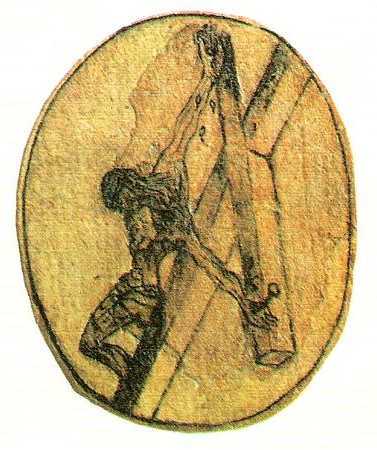
Christian ministry whether pastoral or other is in large part about suffering. We follow the Lord. We deny ourselves. We die. Yet, it is in this way that gates of hell do not prevail against us. It is in this way that the gospel goes forth and prevails. It is in this way, the way of the cross, that we glorify our crucified Messiah and Lord. It is this long painful faithful suffering in the same direction that brings the reward.
And guys we’ll soon be dead, we do this, we labor to the point of exhaustion, we run on, not for an earthly wreath but a heavenly one. We run for the prize. We fight and suffer for the cause, because there is a cause, and it is great.
Look to the reward! Look to the reward! It is great. And go on. Fight the fight of faith. Your labor, though great and beyond your ability, is not in vain. And the God that holds the stars in orbit holds your hand.
Keep the reality of the resurrection before you. Keep Revelation 21 close by. Praise Jesus for drinking down to the dregs the cup of wrath and ask that you would continue to suffer faithfully. Brothers, here we have no home. We’re looking for the one to come.
O’ God, help us. We are weak and weary. We need need You.
Sin Brings a Type of Living Hell

“A trail of mutilated frogs lay along the edge of the island.” This is the sad result of sin. In C. S. Lewis’ book Perelandra, Weston, now the “unman,” leaves a trail of mutilated frogs. Weston is the epicenter of evil. He is whole-hearted evil, a predecessor to the Miserific Vision.
Yet, Weston, the “unman,” is just a concentrated picture of what we saw with Adolf Hitler and his regime. It is a picture from a different angle of the mutilation that lays in the wake of Planned Parenthood. When we anonymously try to create our own utopia we leave a trail of mutilation. Whether we listen to the Nazi idea or the Planned Parenthood idea that says, with our culture, “have it your way,” “listen to your heart,” “do what feels right.” When we “have it our way,” “listen to our heart,” and “do what feels right,” then “might will make right” because there will be no higher authority and we may just have a reincarnation of the atrocities of Dachau and Auschwitz. We might just have people “aborting” the “clump of cells” in their womb because that is just what they want to do, it is what is convenient; we might just have “doctors” sell that “clump of cells” as human organs.
Truly, as much as we think we can, we can’t “have our cake and eat it too.” We can’t indulge in sin and also think it won’t bring consequences. Sin since the beginning has been accompanied with consequences. We can’t, for example, indulge in pornography as individuals or as a society and not have an avalanche of abominations over take us. When we make humans sexual objects to be exploited that is sadly what they become, and so human sex trafficking and child abduction ensue.
To quote an unlikely source, Friedrich Nietzsche says in Beyond Good and Evil that philosophy always creates a world in it’s own image, it cannot do anything different. When we create a world where morality doesn’t exist then in a very real way morality doesn’t exist, at least that’s how people live. In this world each will do what is right in his own eyes, might will make right, and atrocities will flourish. Various attempts at the “Final Solution” will abound, and so will death and desolation.
We reap what we sow philosophically so right now we’re reaping a whole host of debauchery. Could it be that teachings have been tainted and thus a litany of death ensues. Maybe it’s time to re-explore worldviews and their corresponding idea of human flourishing and the ability that they have to match reality to their claims.
Human bodies ripped from the womb, mutilated, and sold, and the world doesn’t bat an eye. Sad; yet sadly not surprising in our naturalistic, hedonistic, secular day. Truly, “Moral decay doesn’t happen in a vacuum. It is supported by the idolatry of the society at any given time, and expressive of its worship, even if such be completely unarticulated.”[i] Moral decay happens when something other then God is our ultimate good, our summum bonum (cf. Rom. 1). Humanity spirals out of control and implodes in on itself whenever we make gods in our own image; whether infanticide in the Roman Empire, Auschwitz during the Nazi regime, or rampant abortion today. When we decipher and dictate anonymously and subjectively what is good and prospering for ourselves and society we damn ourselves and those around us. We, so to speak, eat again of the forbidden fruit and cast ourselves out of Eden. We fall into a pit we ourselves dug. We kill Abel, revel in Babel, and inculcate innumerable evils. We make life a sort of living hell; picture the living, walking, and tortured skeletons engraved in our memories from the horrors of concentration camps.
O’ for the worlds that lay asunder,
for the shalom that is slain.We ingrain habits of unrest,
we fester and pass on spoil.O’ for the earth to break,
for all to be made anew.For the habits in my heart to pour out,
and for living waters to ensue.God this world is broken,
we are altogether damaged and damned.“Destroy the destroyers of the earth”(Rev. 11:18),
destroy what in me destroys.Shalom was slain
but through the slain Messiah (is/will be) renewed.O’ God, Maranatha!
__________________________
[i] Noel Doe, Created for Worship: From Genesis to Revelation to You (Ross-shire, Scotland: Mentor, 2009), 236.
Sin is Not Good #7 (but Jesus is)

Sin’s Solution
In the book of Genesis we read of societal progress. There are advances in technology and the arts. Yet, the problem remains: We have sinful hearts. Thus relationships and truly the world remain fractured. Like humpty dumpty; we can’t put it back together again. The answer to my problem, humanities problem, and the world’s problem is external to us.
One would think that
“Auschwitz destroyed… the idea that European civilization at least was a place where nobility, virtue and humanizing reason could flourish and abound… It seems remarkable that the belief in progress still survives and triumphs… People still continue to this day to suppose that the world is basically a good place and that its problems are more or less soluble by technology, education, ‘development’ in the sense of ‘Westernization.’”[i]
However, today’s problems, like that of all history past, is not solved by advances in technology or even any sort of knowledge or morality. It is solved by a Savior. It is Messiah Jesus that will once and for all eradicate sin and suffering (see e.g. Rom. 11:26-27; Heb. 12:23; 1 Jn. 3:2; Rev. 3:12; 21:1-8, 27; 22:3).
When we control the measures to make a utopian society the way we think it should be, it fails. Whether we control “the stirrings” (e.g. The Giver), emotions (e.g. Equilibrium), everything (e.g. The Lego Movie), or the socioeconomic structure (e.g. The Hunger Games) the result is not paradise; it’s a sort of hell, at least for many. We messed up utopia, we can’t with our fallible minds design a new one. Only our Lord can. He has the only infallible and incorruptible mind. He perfectly balances justice and grace. And He alone can make us and all things new.
So the recent movie and classic The Giver does more than entertain. It teaches us a profound truth, one we would do well to remember: There is no utopian society outside of Christ. We can’t fix it. There have been many botched attempts throughout history. They lay died with their victims.
“Everything is awesome. Everything is cool when you’re part of a team…” As catchy as The Lego Movie song is, it is not exactly right. Everything is not awesome, not yet. However, it will be. But not from our own doing (Notice I am not saying we shouldn’t work for social justice. We should! Yet, it will not bring the ultimate and forever peace that we long for.).
Heaven comes down (Rev. 21:2). We don’t, nor can we, build it here. I am with you and Miss America in saying I desire world peace, yet it won’t ultimately come until our Lord does. When our Lord comes He will wipe away all evil, pain, and tears, not some charismatic leader or government (Rev. 21:1ff). Jesus will make all things new. Jesus will bring utopia.
Maranatha! Come Lord Jesus, come!
Sin is not good. But Jesus is. He will bring the shalom we all desire. Live for Him.
___________________________
[i] N.T. Wright, Evil and the Justice of God, 22-23.
Sin is Not Good #6
Sin Leads to Enslavement
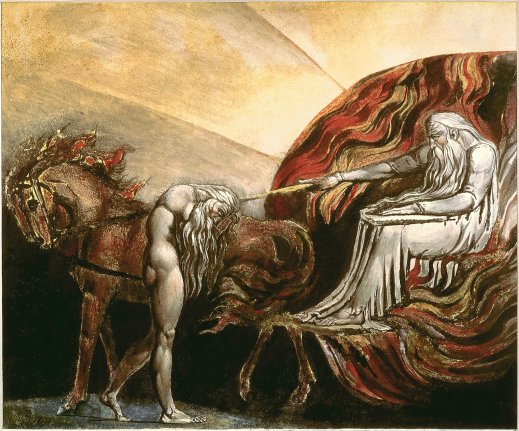
Sin is like Gollum’s ring. It enslaves and destroys. It looks so good but ends in lava.
Truly, “What we revere, we resemble, either for ruin or restoration,”[i] and we all revere something. So “when we speak of ‘worship’ …we are not speaking about an activity of one’s life, but speaking of the activity of one’s life.”[ii]
Thus, “What distinguishes us (as individuals, but also as ‘people’) is not whether we love, but what we love. At the heart of our being is a kind of ‘love pump’ that can never be turned off—not even by sin or the Fall; rather, the effect of sin on our love pump is to knock it off kilter, misdirecting it and getting it aimed at the wrong things.”[iii]
Yet when we aim at the wrong thing, worship the wrong thing, and thus deprive God of His glory, He deprives us of ours[iv] and we end up empty and doing all manner of wickedness. This is woven into the fabric of the universe, our very existence.
We will worship. That’s not the question. The question is who or what will we worship and to what end. What will be the result?
One catechism asks, “With what design did God create man?” The answer: that we should know God, love and glorify Him, and so be happy forever.[v] Truly “God is to be worshipped, not simply because he demands to be, but because this is the proper destiny of his creation.”[vi] Worship is inevitable.[vii] It will and is happening. The question is not will you worship but what? And what will it lead to?
Will it damn you and lead to enslavement; or will it bring eternal shalom and human flourishing (i.e. true cross-cultural human flourishing not the mere individualistic perception of flourishing) (recall Rom. 1 and 6)? Is it true or is it false?
When we worship the LORD we are going with the grid that is innately ingrained within us since the beginning. This is innate within us but it is strangely not natural. We have been dispossessed of where we were, where we should be. Yet, it is where we should be. The worship of the LORD God is true and right but it also works, it is the way it was designed to be (and thus it not surprisingly works that way).
We were made for ineffable joy and thus we not surprisingly seek for it. The thing about the joy we seek (sehnsucht) is that it’s not quite like our hunger, thirst, or other desires; it cannot be filled within the earth. So, apparently, we with our longing seek to fill it with that which cannot fill it. We think that, similar to our other “thirsts,” it too can be quenched here on earth through tangible means. Yet experience, many wise people, and Scripture have exhorted us that that is just not the case. There is a greater thirst within us, yet also a greater quenching. There is joy unimaginable, though now not wholly obtainable.
So, hear Romans 6:20-23: “When you were slaves to sin, you were free from the control of righteousness. What benefit did you reap at the time from the things you are now ashamed of? Those things result in death! But now that you have been set free from sin and have become slaves of God, the benefit you reap leads to holiness, the result is eternal life. For the wages of sin is death, but the gift of God is eternal life in Christ Jesus our Lord.”
Thus, sin is not good because it enslaves and leads to death although it promises life and fulfillment.
________________________________
[i] G. K. Beale, We Become what we Worship: A Biblical Theology of Idolatry (Downers Grove: InterVarsity Press, 2008.).
[ii] Noel Doe, Created for Worship, 20.
[iii] James K. A. Smith, Desiring the Kingdom, 52.
[iv] cf. Noel Doe, Created for Worship, 29.
[v] Longer Catechism of the Eastern Church [1839], question 120.
[vi] Noel Doe, Created for Worship, 39.
[vii] cf. e.g. Noel Doe, Created for Worship, 230, 231.
Sin is Not Good #5
Sin Looks Really Good
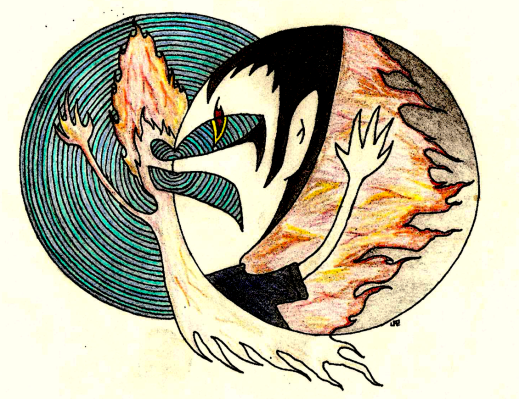
It is a graphic scene, depicted in the most vivid way. A recent celebrated movie shows the character smiling in glee as he takes his own life. This depiction is sad yet we see it week-in and week-out. The movie is The Return of the King and the character is Gollom. Gollom, previously known as Sméagol, use to be a regular hobbit but was corrupted, enslaved by the ring. His infatuation with the ring started slow (a weekend here and there) but ended desperately. Gollom loved and hated the ring. He was torn, he wanted to be free from the ring and yet relentlessly pursued it.
At the end of the movie, Gollom finally has, as he says, “my precious.” But in getting the ring he has destroyed himself and everyone, indeed, everything around him. Yet his refrain is, “my precious.” Gollom’s last scene is one of great joy (for him). Gollom fights Frodo over the ring, another character that was nearly wholly-destroyed by the ring. Gollom is fierce. He wants the ring at any price. He bites off Frodo’s finger and rejoices over his plunder. He embraces his cruel master as his beloved friend. He falls, seemingly, blissfully in the lava and as he sinks he rejoices that he has comfort from pain, he has everything, he has his “precious.” Then he sinks and he and his “precious” are gone.
This scene, though portrayed differently, is a scene I have seen too often. This scene is the climax and conclusion of far too many stories of sin. Sin looks good. It is so sad to see people enraptured in love with their cruel master and executioner.
Sin is ingeniuine. It makes big promises but never delivers. Truly the world and sin “promises happiness, and nothing less… It promises to satisfy our desires, but only increases them; it gives poisoned pills, but wraps them in sugar.”[i]
Satan sells us lies and blinds our eyes. He would have us contended with filth and miss the glorious Lord who is worthy of all praise and can satisfy our longing soul. Truly Satan is crafty and subtle in his lies (recall the way he talked to Eve; Gen. 3:1ff cf. Lk. 4:1). He is a lion that is crouched low (1 Pet. 5:8). We don’t always see him but his desire is to destroy.
Satan is the god of this world (2 Cor. 4:4; Rev. 2:13) and his worship leads to curses and hatred of neighbor. In him is death and he is the futility of man; whoever lives in his influence shall perish and not have life (reverse of Jn. 1:4; 3:16). The world sits on the back of this evil beast of death (cf. Rev. 17:3). The world doesn’t know it but all people follow the course the beast as set, and it’s a funeral procession, that leads to the grave (cf. Eph. 2:1-3).
So Satan, the lord of this age, is rightly called the “deceiver of the whole world,” the “father of lies” (Rev. 12:9; Jn. 8:44 cf. Rev. 13:14; 18:23; 19:20; 20:3; 2 Cor. 11:3; 2 Thess. 2:9-11; 1 Tim. 2:14). He is a dragon that smites many hosts yet not by the fire of his mouth but by the damning effects of his lies. And what do you expect his children to say? “They promise freedom, but they themselves are slaves” (2 Pet. 2:19 cf. Matt. 24:24; Jn. 8:44; Rom. 16:18; Eph. 4:14). Those that know not Christ are blind and would have us wonder around in darkness too (cf. 2 Cor. 4:4-6). Satan and his children boast of good, but it’s all tainted, and leads to death (cf. Prov. 5:1-6; 7).
Thus, sin is not good because although it can look good, it’s not. It damns and destroys the good world God made. The de-creation voice of Satan pulls us toward death and non-being. It may sound good, as it did to Eve, but it is anything but good. It destroys. It curses and creates confusion. It sends us guilty out of Eden, where our good lays, and into Gehenna.
________________________________
[i] Thomas Watson, Heaven Taken by Storm, 44.



 in X
in X 