What is so good about Good Friday?

Jesus was crucified on Friday. Good Friday is the day we remember Jesus’ death.
So, what is so good about Good Friday? It almost seems sick to call Good Friday good. If you have a loved one that died you do not celebrate the anniversary of that persons death as good, it was tragic. Why then when referring to the anniversary of Jesus’ death do we call it good? That almost seems sacrilegious.
We call it Good Friday because it truly is good. No, we do not celebrate Jesus’ death per se. Rather we celebrate all that His death accomplished. We celebrate that though He died, and died a terrible death, He said “It is finished,” and it was. We celebrate because He rose victorious over sin and death.
Jesus laid down His life for us to be the wrath absorbing sacrifice. He did this and many more things and that is why the anniversary of Jesus’s death can be said to be good. Actually, in some sense, because Jesus died and conquered death and sin the anniversary of our loved ones death who are in Christ can now be thought of with joy. It too can become a good anniversary.
I want to encourage you to meditate on what Jesus did for you. Think about the cross where Jesus bore the wrath of God that we deserved. I encourage you to read the narrative accounts in the Gospels. When you read it remember who it is that is being mocked, flogged, and crucified. Remember why it is that He suffered in that way and felt the wrath of God; it was not anything that He had done.
Read Isaiah 52:13-53:12 and be amazed at how precisely it describes both the events of the crucifixion and the reason for the crucifixion and this around 700 years before Jesus was born. Jesus was crushed for our sins (Is. 53:5) and thus makes many to be accounted righteous (v. 11), for example. After reading this passage, I composed this attempt at poetry:
Bound by sins darkened glow
In this world of pain and woe
Helpless, hopeless to us He came
And in the midst was slain
Darkest night, the Light extinguished
Will we forever captives be?
Messiah’s mission ends in death?
Where’s the hope of life and peace?
But by power He awaketh
All of death He did breakth
By His death, deaths defeated
Sins depleted of its power
Thus the hour of unrest
Has become our hope, our joy, our rest
For in Christ’s death,
Deaths defeated!
Yes, He burst the bonds that bound Him
And leads many captives in His wake
Yes, from the cross He is victorious
And all of heaven hails He’s glorious!
“Monday Thursday?”
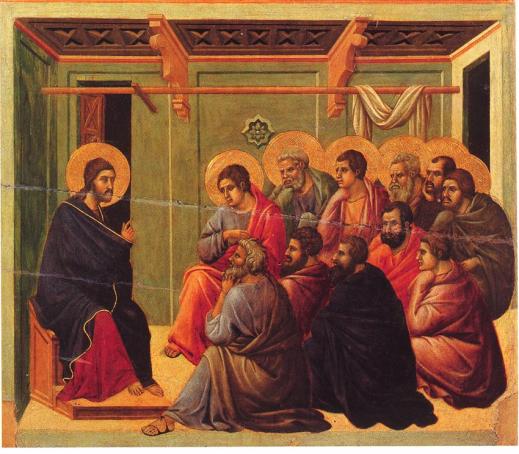
“’Monday’ Thursday? That doesn’t make any sense… Why do we celebrate ‘Monday’ Thursday and why would we celebrate it on Thursday?”
“Muandy Thursday,” not “Monday Thursday,” has to do with remembering what happened on the Thursday before Jesus was crucified. There were a lot of significant things that happened on this Thursday.
Maundy Thursday is known as commemorating variously the day of the Last Supper and the institution of the Lord’s Supper, the foot washing of the disciples, Jesus praying in the garden of Gethsemane, and the betrayal and arrest of Jesus by Judas Iscariot. So we commemorate Maundy Thursday for these reasons. However, why is it called “Maundy Thursday”? What does Maundy mean?
Maundy most likely comes to us from John 13:34 where Jesus says at the Last Supper (on Thursday): “A new commandment I give to you, love one another.” The word for “commandment” in Middle English is maunde, in Old French it’s mandé, and in it’s Latin mandatum. So, in other words, “Maundy Thursday” could be called Commandment Thursday or even, as it is sometimes called, “Covenant Thursday.”
So on Muandy Thursday we think of the command and the covenant. It is important to remember both. So, what was the command? Love one another. That is what we are told to do. And that doesn’t seem that hard, at first. Until we realize that we are given a comparison. The command is that we love one another love even as Jesus has loved us (Jn. 13:34). On Thursday, so many years ago, Jesus gave us a huge “maundy,” command. How can we live up to it? We must remember the amazing context in which it was given.
There were all sorts of events and themes that converged on this weekend in history. The Passover, a historical event in the life of the Jews where they celebrated their spectacular salvation, was celebrated. Yet, we also see that the LORD reaches down to save again, and this time no blood needed to be painted on the door frame. There was no need for a Passover lamb. He had come in the form of a Suffering Servant (cf. e.g. Is. 53).
Jesus brings a New Covenant (Matt. 26:26ff; Mk. 14:22ff; Lk. 22:14ff; 1 Cor. 11:17ff). One that had long since been promised. One that gives His people new hearts, hearts to follow after God (cf. Ezek. 11:19-20; 36:26-27). God takes His peoples sins literally upon Himself (cf. God taking the violations of the covenant upon Himself, Gen. 15; Is. 53; Jer. 34:18). He fulfills the Covenant that His people continually failed to fulfill. Jesus felt the weight of being forsaken. He cried out, “My God, My God, Why have You forsaken Me?!” Jesus was cut off like we deserve to be for breaking His Law.
Understanding the covenant, Jesus’ amazing work of salvation, and understanding what Jesus calls us to is very important and we see them intermingled on Maundy or Covenant Thursday. Jesus fulfills the covenant and His blood is spilled for us, and yet there is still a type of condition to the covenant: we must follow hard after Him.
So, first notice that on Maundy Thursday so many years ago, Peter tells Jesus that he does not want Him to wash his feet (Jn. 13:6). It is striking to me that Jesus says, “If I do not wash you, you have no share with me” (v. 8) and then He goes on to say, “If I then, your Lord and Teacher, have washed your feet, you also ought to wash one another’s feet” (v. 14). So Jesus is saying don’t try and work for your salvation (you can’t) but follow my example and serve others because I have served you.
Works do not save us. We are saved by accepting the work that Jesus did on our behalf, He washed us. And, in fact, if we try to work for our salvation we “have no share with [Jesus] (v. 8). However, that in no way negates the importance of works, to the contrary; it gives works deep significance. We are called to imitate Christ (v. 14-16). Jesus told Peter he could not work for salvation (v. 6-8) but works do have their place. Jesus served Peter (even enabling Peter to serve Him cf. John 1:13; 14:16; Gal. 5:16-24; 2 Peter 1:3; Ezek. 11:19-20; 36:25-27) through the cross and thus Peter served Jesus imitating Him, even to death (cf. John 13:14-16); tradition says, death by upside down crucifixion (cf. John 21:18-19). Peter was saved by trusting Jesus Christ’s all-sufficient service and yet Peter served and imitated Jesus out of a supreme joyous thankfulness (cf. 1 Peter 1:3-9; 2:21-25; 4:13-14).
May we serve in the same way and with the same motivation that Peter did. May we work and serve Christ not to earn right standing before God but, to demonstrate that through Christ’s atoning death we have right standing before God. If we have been declared righteous in Christ then let’s live righteously before Christ (cf. 1 Cor. 1:2). Let’s obey Jesus’ commands in light of His New Covenant.
Will the Real Messiah Please Stand Up?!
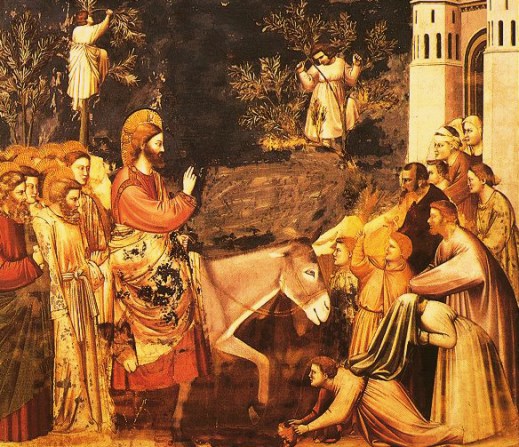
The Triumphant Paradox
Introduction. We find people by characteristics. They’re tall, or funny, or whatever it is… When my wife, Leah, is looking for me in a crowd it is her standard procedure to go around and ask people: “Have you seen my husband, he’s talk, dark, and handsome?” She does this because it is a description of me and will help her find me… 😉
The Messiah was found, or wasn’t found, in the same way. There were certain things people were looking for. Many people had different views on what exactly to look for. In fact, even John the baptizer was confused over who exactly the Christ would be and do (cf. Matt. 11:2ff; Lk. 7:18ff).
We see that there were many converging views throughout Scripture and in other literature around the time. There were many so-called christs or promised ones (that led people astray) (e.g. Acts 5:36; 21:38; Ant. 17:271ff; 20:97-98). Scripture indeed has many promises. How could one person meet them all? In fact, could the Messiah even be a person at all (cf. e.g. Is. 9:6-7; Zech. 2:11)?
A Few Questions. As we look at this text in the surrounding context of the book, the New Testament, and the whole of Scripture a few questions come to mind. What did the Jews expect in regard to the Messiah? Why was Jesus crucified, didn’t many people think He was the Messiah? Where do we see the Jewish expectations for the Messiah in Scripture? Where did the Jewish expectation of peace and victory go? How from a New Testament perspective do we make sense of the fact that the Messiah suffered and died? What did Paul and others say about the Messiah?
Main Point. However, before we get to these questions, or some of them, I think it will be helpful to state what I see as the main point of this passage in light of the whole of Scripture. The main point: Jesus of Nazareth is the long-awaited Messiah and fulfills the messianic prophecies in unexpected and amazing ways.
Messianic Expectations. There are many texts in Scripture that tell us about the expectation of the Messiah. See for instance: 2 Sam. 7:12-13, Ps. 89:3; 132:11, Hos. 3:5, Mic. 5:2, Is. 9:6-7; 11:1, 10; 55:3, Jer. 23:5-6; 30:9; 33:20-22, 25-26, Ezek. 34:23-24; 37:24-25, and Zech. 9:9 which our text highlights. There are also many other texts that are somewhat ambiguous but nevertheless point to the Messiah. The Suffering Servant passage from Isaiah 53 is a powerful passage but many would have been unsure about how it fit into the expectations of the Messiah (see “Jewish Interpretations of Isaiah 53”).
Messianic Expectations as Seen in Zechariah. Many passages also talk about the New Creation which the Messiah will usher in (see An Anthology of New Creation). However, since our passage today mainly deals with Zechariah we will primarily look at the expectations brought up by that book. Here is a tentative list:
- Jerusalem will not have walls because so many people will be in it (Zech. 2:4)
- The LORD will be the wall for Jerusalem and will dwell there (2:5, 10; 8:3)
- The nations shall be the LORD’s people (2:11; 8:22-23) (note the wording in v. 11: The LORD sends the LORD?!)
- The LORD will send His servant the Branch, i.e. the Messiah (3:8 cf. 6:12; Is. 11:1; Jer. 23:5)
- The Branch, the Messiah, shall build the temple of the LORD and rule on the throne (6:12-13)
- The LORD will remove the iniquity of the land on a single day (3:9)
- Jerusalem will be called the faithful city (8:3)
- There shall be great peace (8:12)
- Israel’s enemies will be destroyed (9:1-8; 14:11-15)
- The Promised one will rule “from sea to sea” (9:10)
- The blood of the covenant will set prisoners free (9:11 cf. Lk. 4:18)
- God will pour out fierce recompense on Israel’s enemies and Jerusalem will be inhabited again (12:1-7, 9)
- God’s people will have a spirit of grace poured out on them and will weep over Him who they pierced (12:10: “And I will pour out on the house of David and the inhabitants of Jerusalem a spirit of grace and pleas for mercy, so that, when they look on me, on him whom they have pierced, they shall mourn for him, as one mourns for an only child, and weep bitterly over him, as one weeps over a firstborn”).
- On that day, the day when they weep over Him they pierced, they will be cleansed (13:1)
- God will rid the world of uncleanness (13:2)
- The Shepherd will be struck and the sheep will be scattered (13:7)
- The LORD will be King over the whole earth (14:9 cf. Phil. 2:10-11)
- The world will be a kind of temple (14:20-21)
Text. Here is an anthology of the “Triumphant Entry” texts:
[28] And when he had said these things, he went on ahead, going up to Jerusalem. [29] When he drew near to Bethphage and Bethany, at the mount that is called Olivet, he sent two of the disciples, [30] saying, “Go into the village in front of you, where on entering you will find a colt tied, on which no one has ever yet sat. Untie it and bring it here. [31] If anyone asks you, ‘Why are you untying it?’ you shall say this: ‘The Lord has need of it.’” [32] So those who were sent went away and found it just as he had told them. [33] And as they were untying the colt, its owners said to them, “Why are you untying the colt?” [34] And they said, “The Lord has need of it.” (Lk. 19:28-34 cf. Matt. 21:1-3; Mk. 11:1-6). [4] This took place to fulfill what was spoken by the prophet, saying,
[5] “Say to the daughter of Zion,
‘Behold, your king is coming to you,
humble, and mounted on a donkey,
on a colt, the foal of a beast of burden’” [Zech. 9:9] (Matt. 21:4-5 cf. Jn. 12:14-15).
[6] The disciples went and did as Jesus had directed them. [7] They brought the donkey and the colt and put on them their cloaks, and he sat on them [the cloaks, not the donkeys] (Matt. 21:6-7 cf. Mk. 11:7; Lk. 19:35).
[36] And as he rode along, they [variously described as “most of the crowd,” “many,” and “multitude of disciples“] spread their cloaks on the road. [37] As he was drawing near—already on the way down the Mount of Olives—the whole multitude of his disciples began to rejoice and praise God with a loud voice for all the mighty works that they had seen, [38] saying, “Blessed is the King who comes in the name of the Lord! Peace in heaven and glory in the highest!” (Lk. 19:36-38 cf. Matt. 21:8-9; Mk. 11:8-10; Jn. 12:12-13[1]). [10] And when he entered Jerusalem, the whole city was stirred up, saying, “Who is this?” [11] And the crowds said, “This is the prophet Jesus, from Nazareth of Galilee” (Matthew 21:10-11 cf. Deut. 18:15).
[39] And some of the Pharisees in the crowd said to him, “Teacher, rebuke your disciples.” [40] He answered, “I tell you, if these were silent, the very stones would cry out.”
[41] And when he drew near and saw the city, he wept over it, [42] saying, “Would that you, even you, had known on this day the things that make for peace! But now they are hidden from your eyes. [43] For the days will come upon you, when your enemies will set up a barricade around you and surround you and hem you in on every side [44] and tear you down to the ground, you and your children within you. And they will not leave one stone upon another in you, because you did not know the time of your visitation” (Lk. 19:39-44).
[16] His disciples did not understand these things at first, but when Jesus was glorified, then they remembered that these things had been written about him and had been done to him. [17] The crowd that had been with him when he called Lazarus out of the tomb and raised him from the dead continued to bear witness. [18] The reason why the crowd went to meet him was that they heard he had done this sign. [19] So the Pharisees said to one another, “You see that you are gaining nothing. Look, the world has gone after him” (Jn. 12:16-19).
Explanation of the Text. First, we see that Jesus orchestrated the whole course of events (Lk. 19:28-34 cf. Matt. 21:1-3; Mk. 11:1-6). Truly, no one took Jesus’ life from Him but He laid it down on His own accord (Jn. 10:18). Jesus directed His disciples about what to do. They found the colt just as He said and they did just what He said. Jesus was now bringing in His “hour” by the events that He sets in order here.
Second, the events took place to fulfill Scripture (Zech. 9:9; Matt. 21:4-5 cf. Jn. 12:14-15). So Zechariah 9:9: “Rejoice greatly, O daughter of Zion! Shout aloud, O daughter of Jerusalem! Behold, your king is coming to you; righteous and having salvation is he, humble and mounted on a donkey, on a colt, the foul of a donkey.” And Psalm 118:25-26a is also mentioned: “Save us, we pray, O LORD! O LORD, we pray, give us success! Blessed is he who come in the name of the LORD!” (see also vv. 19-24, 27-29).
Third, the people welcomed Jesus as the Messiah who would bring peace and victory (Lk. 19:36-38 cf. Matt. 21:8-9; Mk. 11:8-10; Jn. 12:12-13). The people call out: “Hosanna to the Son of David!” What does that mean? It is basically a cry for deliverance. It reminds me of when God’s people in slavery in Egypt cried out to God for Him to save them and so God sent Moses. Well, here God’s people are crying out to who they see as the Messiah, the Christ, the Anointed One, the Promised One, the Deliverer, the Rescuer. They’re saying: “Save now! (cf. 2 Sam. 14:4; 2 Kings 6:26; Ps. 118:25) If you’re David’s promised son then start your reign now” (see the significance of Jesus being David’s son, i.e. decedent, in e.g. 2 Sam. 7:12; 1 Chron. 17:10-14; Matt. 1:1, 17; 9:27; 12:23; 15:22; 22:42-45).
We see what the people expected through their words and actions. They not only said “Hosanna!” they also welcomed Jesus as a victorious king with palm-branches (see Lev. 23:40; 2 Kings 9:13; 1 Macc. 13:51; 2 Macc. 10:7). Interestingly, Jesus, though a common name in that time, is the equivalent of Joshua which means “The LORD saves.” The LORD does indeed save, but not in the way that He did through the hands of Joshua in this case.
Many stories have paradoxical elements. What is a paradox? It is something that seems absurd or unreasonable but nevertheless may prove true. It is something that seems like it doesn’t make sense, at least, at first.
So in Tolkien’s famous series you have a little hobbit that defeats smog and really is used to defeat the evil powers. This is a kind of paradox. You don’t expect a little hobbit to do that sort of thing. You don’t expect David to defeat Goliath. You don’t expect the team in the sports movie to win the game because they are not very good and they have never won before… Oh wait, no, you do expect them to win… but you shouldn’t. They always win! But the reason it is a movie is because they shouldn’t win.
So we have a paradox in Scripture that we confront in this text. Jesus does bring victory and peace but not when and how people expected Him to. Jesus crushes Satan, and all wicked powers, by Himself being crushed (cf. e.g. Gen. 3:15).
Fourth, the people were clearly confused as to the identity of the Messiah (cf. Matt. 21:10-11; Jn. 6:15; Lk. 19:39-44), even the disciples (Matt. 16:21-23; Jn. 12:16). Remember Peter, after he had confessed that Jesus was “the Christ, the Son of the living God” (Matt. 16:16), said, “Far be it from you, Lord! This shall never happen to you” (v. 22). Peter said this about Jesus suffering and being killed (v. 21). People just didn’t have a category for how the Messiah would save. Even John the baptizer, who said, “Behold, the Lamb of God who takes away the sin of the world” (Jn. 1:29), said from prison, “Are you the promised one, or should we look for another?” (cf. Matt. 11:2ff; Lk. 7:18ff). No doubt he was confused by the fact that he was in prison and the Kingdom, from his perspective, had not come.
What the Jewish people were looking for was not a Son of David riding on a donkey but on a war horse. Solomon, David’s son was not the Messiah as it turned out, though he had thousands of stalls of horses for his chariots and 12,000 horsemen. Conversely, Jesus didn’t come with horses—or even a horse!—He came on a lowly donkey. Yet, remember that there are problems in trusting in horses (see Deut. 17:16; Is. 31:1-3). Instead of trusting in horses we are to trust in the LORD God (Ps. 20:7). What the Jews were looking for was something more like what will yet come. Revelation tells us about the coming of the white horse (see Rev. 19:11ff).
So, throughout Christendom, today is known as “Palm Sunday,” the day of Jesus’ “Triumphant Entry,” but rather should perhaps be known as “Paradox Sunday” or “Fickle Sunday.” The people ended up saying “we do not want this man to reign over us” (Lk. 19:14 cf. Is. 53:2-3; Jn. 1:10-11). They praise Jesus one day and almost the next are crying: “Crucify him! Crucify him!”
So, how do we understand these things? What about people’s expectations for the Messiah? Did Jesus fulfill them? Will He fulfill them?
The Impact of the Expectations. The people cry out in praise but then just a few days later this man who many people saw as the deliverer was Himself delivered to be crucified on a tree (and cursed is every man hung on a tree, Deut. 21:22-23). How can we make sense of this? How did they make sense of it? How does the New Testament and it’s teachers make sense of it? And how should we make sense of it?
Is Jesus the Messiah? If so, where are all the other promises? Maybe the question should actually be asked differently: If Jesus fulfilled 60 major prophecies and 270 ramifications how could He not be the long awaited Messiah?! It has been said that the probability of one man fulfilling all those prophecies’ is 1 in 100,000,000,000,000,000.
Further, as the Apostle Paul said, “Jesus was declared to be the Son of God… by His resurrection from the dead, Jesus Christ our Lord” (Rom. 1:4). Jesus’ resurrection is the first fruits Paul also explains (1 Cor. 15) which means there is more “fruit” to come (i.e. the resurrection/new life/New Creation). We have also been “sealed with the promised Holy Spirit, who is the guarantee of our inheritance until we acquire possession of it” (Eph. 1:13-14).
Regarding the resurrection, Professor Thomas Arnold who wrote the History of Rome and who was appointed the chair of modern history at Oxford said,
“I have been used for many years to study the histories of other times, and to examine and weigh the evidence of those who have written about them, and I know of no one fact in the history of mankind which is proved by better and fuller evidence of every sort, to the understanding of a fair inquirer, than the great sign which God has given us that Christ died and rose again form the dead.”
After Jesus was taken His Apostles were scared and hid in the upper room. As we know, Peter denied Jesus three times. They too doubted that He was, in fact, the Christ. However, after Jesus’ resurrection, He appeared to the Apostles and many others. After the Apostles saw the resurrected Jesus they were no longer scared, they were emboldened. They believed that Jesus was indeed the Messiah. All of the Apostles died for their beliefs, except John but tradition says he was boiled alive and exiled to the island Patmos. Who would die for a known lie? To what did the Apostles have to gain?
Here is how tradition says the Apostles died:
- Peter- crucified
- Andrew-crucified
- Matthew- the sword
- John- died a natural death after being boiled in oil and exiled
- James, son of Alphaeus- crucified
- Philip- crucified
- Simon- crucified
- Thaddaeus (who replaced Judas Iscariot)- killed by arrows
- James, the brother of Jesus- stoned
- Thomas- spear thrust
- Bartholomew- crucified
- James, the son of Zebedee- the sword
Further, we could discuss that all the promises will be fulfilled. All Scripture, as Paul reminds us, finds it’s yes or fulfillment in Jesus. The war horse, as we saw, will come (cf. Rev. 19). Jesus will bring peace like we have never known, but He will crush any rivals. Jesus will fix all our aches and pains. All things will finally be made new!
Just a word and all wonders wrought
God announced, and behold, it was all good
Creation had communion with the Creator
God walked in the Garden
Yet with Adam the serpent did conspire
And brought the world into mire
Beckoned to the grave
Everything disarranged
Yes, the curse burst upon the scene
But in the midst a seed of hope was seen
Many men came and went
Was the hope of promise spent?
Many lambs, prophets, priests and kings
Yet none with true salvation in their wings
Darkness for a time
No prophet’s voice was heard
Yet in the darkness I Light it shone
And it would overcome the darkness
Behold, O’ world, your Prophet, Priest, and King
Jesus the Promised Seed and Lamb
The curse brought in shall be expunged
Yes, replunged upon the Son
Christ was crushed as promised
But in His crushing, crushed Satan, sin, and death
He was cursed to reverse the curse
He felt our plight to set all things right
The lion to lay down with the lamb,
Because, the Great I AM, was slain
No more brier prick or thorn to stick
All shall be made new
When our King all subdue
All shall be made new
Conclusion. Jesus of Nazareth is the long-awaited Messiah and fulfills the messianic prophecies in unexpected and amazing ways. Further, Messiah Jesus is coming back soon to establish His eternal reign. He will make things finally good, in fact amazingly good beyond what we can understand. Yet, He will also carry out justice beyond what we can understand.
I end by saying: praise Jesus for His amazing work! Hosanna! Maranatha!
___________________________________________
[1] In John 12:13 it says the large crowd “went to meet him.” Andreas J. Kostenberger points out that “’went to meet him’ (rare in biblical literature: in the NT elsewhere only in Matt. 8:34; 25:1; in the LXX only in Judge. 11:34) was regularly used in Greek culture, where such a joyful reception was customary when Hellenistic sovereigns entered a city” (John, 369).
Adam Clarke on Loving God with all our Heart

What is implied in loving God with all the heart, soul, mind, strength, etc., and when may a man be said to do this?
1. He loves God with all his heart, who loves nothing in comparison of him, and nothing but in reference to him: – who is ready to give up, do, or suffer any thing in order to please and glorify him: – who has in his heart neither love nor hatred, hope nor fear, inclination, nor aversion, desire, nor delight, but as they relate to God, and are regulated by him.
2. He loves God with all his soul, or rather, εν ολη τη ψυχη, with all his life, who is ready to give up life for his sake – to endure all sorts of torments, and to be deprived of all kinds of comforts, rather than dishonor God: – who employs life with all its comforts, and conveniences, to glorify God in, by, and through all: – to whom life and death are nothing, but as they come from and lead to God, From this Divine principle sprang the blood of the martyrs, which became the seed of the Church. They overcame through the blood of the Lamb, and loved not their lives unto the death. See Revelation 12:11.
3. He loves God with all his strength (Mark 12:30; Luke 10:27) who exerts all the powers of his body and soul in the service of God: – who, for the glory of his Maker, spares neither labor nor cost – who sacrifices his time, body, health, ease, for the honor of God his Divine Master: – who employs in his service all his goods, his talents, his power, credit, authority, and influence.
4. He loves God with all his mind (intellect – διανοια) who applies himself only to know God, and his holy will: – who receives with submission, gratitude, and pleasure, the sacred truths which God has revealed to man: – who studies no art nor science but as far as it is necessary for the service of God, and uses it at all times to promote his glory – who forms no projects nor designs but in reference to God and the interests of mankind: – who banishes from his understanding and memory every useless, foolish, and dangerous thought, together with every idea which has any tendency to defile his soul, or turn it for a moment from the center of eternal repose. In a word, he who sees God in all things – thinks of him at all times – having his mind continually fixed upon God, acknowledging him in all his ways – who begins, continues, and ends all his thoughts, words, and works, to the glory of his name: – this is the person who loves God with all his heart, life, strength, and intellect. He is crucified to the world, and the world to him: he lives, yet not he, but Christ lives in him. He beholds as in a glass the glory of the Lord, and is changed into the same image from glory to glory. Simply and constantly looking unto Jesus, the author and perfecter of his faith, he receives continual supplies of enlightening and sanctifying grace, and is thus fitted for every good word and work.
~Commentary on the Bible, by Adam Clarke [1831].
Text Courtesy of Internet Sacred Texts Archive.
CommUnity

Introduction. Community or community groups (or however it is worked out for you in your local context) are very important to the life and health of the Church. Community is a critical part of sanctification and growth for a believer and is thus a crucial aspect of our lives. Community groups are simply a tool to encourage biblical and spiritual interaction with each other.
What does “Community” mean? First, it is important to understand what is meant by fellowship or community. Often we think of a fellowship meal: “food, fun, and fellowship.” We even have fellowship halls. So, if asked, “What is fellowship?” We think, Ok, the fellowship hall is by the kitchen and when we use it we are always eating so I guess fellowship is eating, yes, that’s my answer; fellowship is eating.
Community/fellowship (Gk. koinonia) in the New Testament was often used as a general Greek word and was used of a business partnership in which two or more people shared a business and this word was also at times used of a marriage. Koinonia is a common union, interest, participation, and co-operation, it is being together, united. We see many similar ideas through different biblical word pictures. I think of family, body (1 Cor.12:12-27; Eph.1:22-23), and “brother/sister” references for instance.
Created for Community. Where do we get the idea that we are created for community? First, we see it in that we are created in the image of the triune God. God is relational and so are we. Second, man walked with God in the Garden. Third, we also see that it was not good that man should dwell alone. We need each other.
Community Crashed. Where do we see the crash of community? In the Fall. First, man was kicked out of the Garden and separated from God because of sin. Second, there is marital disharmony. Third, Cain kills Abel. And the problem only precipitates with the tower of Babel. Community when not united in Christ but some other cause will only lead to chaos. This is demonstrated throughout history.
Community Recreated through Christ. So how do we have this union or community? We have it in Christ (Rom. 6:4, 6, 11; Gal. 2:20; Eph. 2:4-6; Col. 2:20; 3:3)! We have union with God and each other. What was destroyed in the Fall is remade and being remade through Christ. So, we see that koinonia in Scripture means we have intimacy with Jesus Christ (1 Cor. 1:9), God the Father (1 Jn. 1:3), God the Spirit (2 Cor. 13:14), and each other (2 Cor. 8:4; 1 Jn. 1:7).
Our union one to another is much deeper than merely eating together. It is more intimate and real, it is truly eternal. Further, it is not merely we that are together, we are together with God in Christ. “Here there is not Greek and Jew, circumcised and uncircumcised, barbarian, Scythian, slave, free; but Christ is all, and in all” (Col. 3:11).
Two other powerful texts:
That He might create in Himself one new man in place of the two, so making peace, and might reconcile us both to God in one body through the cross, thereby killing the hostility. And He came and preached peace to you who were far off and peace to those who were near. For through Him we both have access in one Spirit to the Father. So then you are no longer strangers and aliens, but you are fellow citizens with the saints and members of the household of God, built on the foundation of the apostles and prophets, Christ Jesus himself being the cornerstone, in whom the whole structure, being joined together, grows into a holy temple in the Lord. In Him you also are being built together into a dwelling place for God by the Spirit (Eph. 2:15-22).
You are a chosen race, a royal priesthood, a holy nation, a people for His own possession, that You [pl.] may proclaim the excellencies of Him who called you out of darkness into His marvelous light. Once you were not a people, but now you are God’s people; once you had not received mercy, but now you have received mercy. Beloved [that is, the church], I urge you as sojourners and exiles to abstain from the passions of the flesh, which wage war against your soul. Keep your [pl.] conduct among the Gentiles honorable, so that when they speak against you [pl.] as evildoers, they may see your [pl.] good deeds and glorify God on the day of visitation (1 Pet. 2:9-12).
Can you imagine the scene in some of the early churches?
Imagine a converted (and “unclean”) Samaritan woman standing next to an ex-Pharisee. Now imagine that this Pharisee is being taught by a non-Jew. And then walks in the once notorious crew: Neroious the Egyptian and ex-demon-possessed man, Phillirono the Jewish ex-drunk and tax collector, Markus a Roman Centurion that use to exploit his power to have his way with women, Allatu a Babylonian woman and witch, and Simon the Leper. Yet, all these, in Christ, are made new and united! That’s what Scripture says! And that is actually what we see in the Church!
Our union with Christ gives us a realistic expectation for fellowship. We know that we are at the same time saints and sinners. We therefore don’t expect perfection, we expect people’s lives to be a little messy. We expect to be patient with each other and help each other out. We all need grace. And we have all received it in Christ.
When we remember where our community comes from it protects against the error of thinking that fellowship is simply socializing, i.e. food, fun, and football. It also protects us from thinking that in our community groups we will experience heaven on earth. As we understand more and more where our community comes from, we will have more community.
So our communion is much more significant than just eating together, though that can and should be an outworking of our union with Christ as it was in the Early Church. In the book of Acts we see that people from every nation under heaven (Acts 2:5) received the word and were added to the Church (v. 41) and they (the very large and very diverse group) devoted themselves not just to teaching and prayers but also to fellowship and the breaking of bread (v. 42). Also, significantly, one of the qualifications of a pastor/elder is that he be hospitable (Titus 1:8).
Community is Commanded. Community is not just something that has become trendy with the recent popularity of community groups. Community has been around since the world has been around. However, Christians are not just called to any type of community. Christians are called to Christ exalting community (cf. Ps. 133:1; Jn. 17:23; Rom. 12:4, 16; 1 Cor. 1:10; 12:12-13; Gal. 3:26-28; Eph. 2:14; 4:3, 16; Col. 3:13-14; 1 Pet. 3:8). So community groups, or the way that community is worked out in your context, is not just a nice option; it is vital and life giving. God want us all to be in community.
What is a Community Group? A community group is a small group of often diverse people that intentionally share life together in order to encourage each other. Community groups are a pragmatic way that the modern Church has sought to fulfill the various “one another” passages. Remember, the book of Hebrews says to consider, that is, intentionally think about, how to stir each other up to love and good works (Heb. 10:24). Community groups are, as the name would indicate, a good place to practice all the exhortations to community and they are a very good way to stir up each other for good works.
It is through the church that we are “equipped for the work of the ministry” and “built up into Him who is the head.” It is in Christ through connection with the church that individuals within the church our nourished and grow together (Col. 2:19). Perseverance is a community endeavor. We need to be provoked to good works.
On and an aside, it may be helpful to remember the example of Jesus. If anyone did not need fellowship with others it was Jesus. Yet, He spent almost all His time with His followers. He prayed with them, ate with them, walked with them, taught them, and went through life with them.
There are also many “one another” passages that can only be carried out in a small familiar setting. Here is a sampling of the “one another” passages. Think about each of them and about the benefit community groups are to practice all the various aspects of life together.
We are to honor one another (Rom. 13:7). We are to accept one another (Rom. 15:7). We are to bear with one another (Eph. 4:2; Col. 3:13). We are to forgive one another (Eph. 4:32; Col. 3:13). We are to pray for and confess sins to one another (James 5:16). We are to cheer and challenge one another (Heb. 3:13; 10:24-25). We are to admonish and confront one another (Rom. 15:14; Col. 3:16; Gal. 6:1-6). We are to warn one another (1 Thess. 5:14). We are to teach one another (Col. 3:16). We are to bear one another’s burdens (Gal. 6:2). We are to share possessions (Acts 4:32). We are to submit to one another (Eph. 5:21). We are to not gossip, slander, or be fake with one another (Gal. 5:15; Rom. 12:9). These “one anothers” most easily take place in community groups, so please be involved in a Christian community/community group.
Elements of a Community Group. In Acts 2:42 we see a glimpse of what fellowship was like for the Early Church. It says they continually devoted themselves to teaching, fellowship, breaking of bread, and prayer. There are at least seven important elements for community groups.
1) Bible Study: The Early Church was continually devoted to teaching and we also want the Word of God to be central in all we do as a church. It is the Word of God that makes us competent and equipped for every good work (2 Tim. 3:16-17).
2) Prayer: We want our ministry to be saturated in prayer and this is just what we see in Acts. They devoted themselves to prayer (2:42).
3) Hospitality: As we have seen, one of the qualifications for an Elder is that he be hospitable. This points us to its importance. We also remember that the early church also broke bread together. That is, they ate together. This likely includes both regular meals and the Lord’s Supper.
4) Confession and Repentance: This is a sensitive subject and must be done with much wisdom and tact. However, we know from James that we are to confess our sins one to another (5:16) and Galatians chapter six tells us to bear one another’s burdens (6:1-5). There is likely no better place for these things to happen than through community groups.
5) Service: The service that we are to do is varied. We are to do good to all people and especially those in the church. We are to make disciples of all nations. Yet, we are to do those things in community. Yes, we need to do them on large scale as the whole church but it is also helpful to focus on service at a smaller more intimate level.
6) Worship: We as the church must desire and seek for our involvement in community groups to lead individuals to better love the LORD their God with all their heart, soul, mind, and strength.
7) Mission: We want to intentionally stir each other up to love and good works (Heb. 10:24) by being together and devoting ourselves to Scripture and prayer (Acts 2:42) so that the result is mission to the surrounding world (v. 43-47). The purpose of community groups is not so we can create a “Christian ghetto.” We need community so that we won’t be hardened by the deceitfulness of sin (Heb. 3:13) but we also need community so we can be on mission together.
D.A. Carson says,
The heart of true fellowship… is self-sacrificing conformity to a shared vision… Christian fellowship, then, is self-sacrificing conformity to the gospel. There may be overtones of warmth and intimacy, but the heart of the matter is this shared vision of what is of transcendent importance, a vision that calls forth our commitment.[1]
Mission of Community Groups. The mission of community groups is to encourage each other to Christ-like living for the sake of God’s Name among all the nations, to provide intentional outlets for all the “one another passages” in Scripture, to use as a catalyst to reach the lost people around us through intentional relational witness, and to promote more intimate Christian relationships.
Community Group Logistics. The church should desire diverse community groups. That is, we want people to come together in relationship that outside of Christ would likely never partner together for anything. This is for many reasons. Diversity better pictures the Kingdom of God; in heaven there will be people form every tribe, tongue, and nation. If there is diversity in age than what Paul commends in Titus 2 can be put into practice; older men teaching younger men, and older women teaching younger women.
Imagine the scene that I described above again. And remember that the world will know that we are disciples by our love for each other (Jn. 13:35). Our love will show all the more when we are not all the same; when the only thing that could possibly unite us is Christ.
Conclusion. Although, we do not exactly see community groups in Scripture I believe that biblical community is vital to the health of individual Christians and to the corporate life of the church. Thus, I strongly encourage people to be connected to a church and to be involved in a community of believers whether in a community group/small group/cell group or some other intimate gathering. Community groups may not be exactly biblical but they are designed to do biblical, God given, things. I, thus, implore you to be connected to a Christian community/community group. I say this not merely because I think you should, not merely for my own spiritual health, not merely for your own spiritual health, but because I believe that God teaches in Scripture that it is important.
____________________
[1] D. A. Carson, Basics for Believers: An Exposition of Philippians, 16.
Family Worship
Regaining family worship is essential to having a church, culture, and society that lives for the LORD. It is when parents love the LORD their God with all their heart that they will teach their kids God’s truth diligently (see Deut. 6:4-9). I pray that the Church will resolve and say with Joshua, “As for me and my house, we will serve the Lord” (Josh. 24:15).
Family worship does not need to take a lot of time but should be regular and strive to be appropriate for the age groups involved. What do we do in family worship? There are three vital things:
- Read: It is the Word of God that is “profitable for teaching, for reproof, for correction, and for training in righteousness, that the man of God may be complete, equipped for every good work” (2 Tim. 3:16-17). It fun to ask a question about one of the verses that was read or have the child pick one verse to ask about. It is also helpful to teach kids to pray about something that is read in the Bible.
- Pray: We should teach our kids to go to God in prayer. This teaches them reliance on God.
- Sing: We are exhorted all over Scripture to sing songs to the Lord and this is something kids have the tendency to especially enjoy.
Other things that are helpful:
Bible Memory: Almost every night before the kids go to bed we say a Bible verse with them. My son at this time has around fifteen Bible verses memorized. It has been fun hearing him recite the verses and asking to say the Bible verse. He asks to say “the heart one,” referring to Proverbs 3:5-6.
Catechism: Another practice that has been helpful is teaching our kids theological questions and there answers. Uriah is part of the way through the little book at this point. It has been great to see the connections he is already making regarding the things of God because of this practice.
Constant Intentionality: Take every chance you get to teach your kids (Deut. 6:6-9). When the sun is setting overhead tell your kids who made it and praise God for it. When a need arises pray about it and be sure to include the kids.
Resources:
- Child’s Story Bible by Cathrine Vos
- Jesus Story Book Bible by Sally Lloyd-Jones
- Big Truths for Young Hearts by Bruce Ware
- My 1st Book Of Questions and Answers by Carine Mackenzie
- familyworshipproject.com
- Read narrative portions of Scripture or even just retell them. This helps to engage kid’s attention.
- Family Worship: In the Bible, in History & in Your Home by Donald S. Whitney
The Tri-unity of God

Introduction
What does the word “Trinity” mean? And do we even see the doctrine of the Trinity in the Old Testament? Or did it just burst upon the scene with the arrival of Jesus? We will see the answers to these questions, and many more below, but first, why is understanding the doctrine of the Trinity important?
It is important because a biblical understanding of the Trinity keeps us from all sorts of unhealthy, unsound, and damaging teaching. It helps us be able to dialogue with Muslims, Jehovah Witnesses, and Mormons; all of which have divergent views on the doctrine of God.[1]
Further, as we study the doctrine of the Trinity we realize the fact that God is triune has huge implications. We can know God because He has revealed Himself to us. We do not merely know that He’s out there, He’s came here. Jesus exegetes God to us. God has tabernacled among us in Jesus. In Jesus, we see the exact image of God (homoousios). Through the Spirit, we know God because the Spirit gives us His word. However, that is not it. The Spirit of God draws us to Himself. And, wonder of wonder, the Spirit dwells in us! The triune nature of God is very important because it is through the (economic) work of the Trinity that we come to know God.
The triune nature of God is essential to our faith and our salvation. Without the unified work of the three Persons in the one God we would be forever damned. We need a perfect wrath absorbing sacrifice. We need “the blood of Christ, who through the eternal Spirit offered Himself without blemish to God” (Heb. 9:14).
The triune nature of God shows that He is relational, loving, self-giving, and personal. God is not just some distant cosmic force. He has personhood. He has existed in all eternity past in loving relationship, odd to say, with Himself. God actually and amazingly calls us to join in that relationship with Him. He recreates us in His image and welcomes us as His sons and daughters. God welcomes us through communion, and all it represents, to have communion with Himself. God sent His Son, poured out His blood, and His Spirit, in order to welcome us to the feast where we, the Church, shall be His bride. We shall be in a consummated covenant relationship with the King where the story will have an eternal happily-ever-after.
The Trinity also gives fabric and fiber to our human relationships. We have structure and not chaos when we model the Trinity in loving relationship (cf. 1 Cor. 11:3; Eph. 4:4-7).
The Trinity?
The word “Trinity” is not found in the Bible but teaching on the Trinity is. In fact, we see it in the very beginning of the Bible (Gen. 1:1-3; cf. Jn. 1:1-14). “The doctrine of the Trinity teaches both God’s Threeness and his oneness. The adjective triune refers to God as both thee (tri) and one (une).”[2] John Frame says,
“God is one, but somehow also three. This fact is difficult to understand, but it is quite unavoidable in Scripture and central to the gospel. The doctrine of the Trinity attempts to account for this fact and to exclude heresies that have arisen on the subject. Its basic assertion are these: (1) God is one. (2) God is three. (3) The three persons are each fully God. (4) Each of these three persons is distinct from the others. (5) The three persons are related to one another eternally as Father, Son, and Holy Spirit.”[3]
God is One
Monotheists believe that there is only one God and Christians agree. There is only one God. But the One God is three Persons in one God.
We see that God is one through various passages. The Shema, the Jewish and Christian confession from Deuteronomy 6:4-5 says, “Hear, O Israel: The LORD our God, the LORD is one. You shall love the LORD your God with all your heart and with all your soul and with all your strength.” There are also many other passages that we could look at (e.g. Deut. 4:32-35, 39; 32:39; 1 Kings 8:60; Is. 40:18ff; 44:6-8; 45:5-6, 21-22; 46:9; Mk. 12:29; Jn. 17:3; 1 Cor. 8:4-6; 1 Tim. 2:5; James 2:19).
Christians affirm that there is only one God and that God alone must be worshiped (cf. Matt. 6:24; Mk. 12:29; 1 Cor. 10:19-20). Christians affirm the deity of the Father, the Son, and the Holy Spirit. Christians affirm this because it is the teaching of the New Testament but, as we will see, it is also in the Old Testament, though perhaps veiled.
So, let’s look at God’s Three in One nature in the Old Testament.
The Trinity in the Old Testament?
Imagine you walk into your house at night, the lights are off and it’s very dark. Is their furniture in your house? Is their fixtures? Pictures on the wall? A TV?
How do you know? You know because you’ve have seen your house in the light. However, if I came into your house in the dark I would have no idea what, where, or if there was anything in your house. Why? Because I have not seen it in the light.
But just because I do not understand the contents of the room does not change the fact that there are things in the room. Correct?
That is the way it is with the Trinity. The prophets, priests, and kings did not see the doctrine of the Trinity with the same light with which New Testament and post-New Testament believers see it. They longed to see it as we do (Matt. 13:17) but they didn’t. However, that does not mean that it was not there. It was there all along.
So, where is the Trinity in the Old Testament?
Plurals
Sometimes in the OT the LORD’s name is in the plural form. So in Genesis 1:26 the LORD says, “Let us make man in our image” (cf. 3:22; 11:7; Is. 6:8). Also “’Elohim usually takes a singular verb, but it takes plural verbs in Genesis 20:13; 35:7; Exodus; Nehemiah 9:18; and Isaiah 16:6.”[4] Of course, as John Frame points out:
“We should not try to derive any precise doctrinal content from these grammatical peculiarities. In every language, plural forms sometimes denote singular realities (like pants in English). I do think it significant, however, that the writers and characters of the Old Testament, emphatic monotheists that they were, do not object to these plural forms or try to avoid them, even though the language offered them alternatives.”[5]
Divine Persons
In the OT there entities that are identified with the LORD. First, the Spirit comes to mind. We see the Spirit in various places in the OT. The Spirit was hovering over the waters at the beginning of creation (Gen. 1:2 cf. Job 26:13). God uses His Spirit to accomplish His purpose (Ps. 33:6). The Spirit enters the prophets and they speak God’s word (e.g. 2 Sam. 23:2; Ezek. 2:2).
Second, we see the angel of the Lord in the OT. There are many legions of angels and they are obviously not all divine (cf. Rev. 19:10; 22:9). Yet, it seems the angel of the Lord is. For example, in Genesis 22:11-12 the angel of the LORD says that “you have not withheld from Me [i.e. God] your son.” The angel in Genesis 31:11-13 identifies Himself as “the God of Bethel.” Further, “In 32:30, Jacob says of the man (called an ‘angel’ in Hosea 12:4) who wrestled with him that ‘saw God face to face, and my life was spared.’”[6] (cf. Gen. 16:13; Ex. 3:2-6; 23:20-22; Num. 22:35 (with v. 38); Judg. 2:1-2; 6:11 (with v. 14).
Third, we see that the promised Messiah is also said to be divine in some passages. From Isaiah we see that the Servant of the Lord is the one that will atone for people’s sin (Is. 52:13-53:12). Yet, Isaiah also teaches us that only God brings salvation (cf. Is. 43:3, 11; 45:15, 21; 49:26; 59:15-20; 60:16; 63:8). The crucifixion, the form of execution that Jesus endured, “more than any other, had associations with the idea of human sacrifice.”[7] Jesus’ followers came to see parallels between His death and the Suffering Servant of Isaiah 53. Truly Paul echoes Isaiah 53 (cf. esp. v. 11) in 1 Corinthians 5:21 (see also Matt. 8:17; Luke 22:37; Acts 8:32-33; Heb. 9:28; 1 Pet. 2:22, 24-25).
So Richard Bauckman has shown that there was room for Jesus in the Divine identity.[8] So, for instance, Isaiah 9:6-7 says: “For to us a child is born, to us a son is given; and the government shall be upon his shoulder, and his name shall be called Wonderful Counselor, Mighty God, Everlasting Father, Prince of Peace. Of the increase of his government and of peace there will be no end, on the throne of David and over his kingdom, to establish it and to uphold it with justice and with righteousness from this time forth and forevermore. The zeal of the LORD of hosts will do this.” Also see Daniel 7:13-14 (cf. Davidic promises in 2 Sam. 7; 1 Chron. 17).
Psalm 110:1 shows us that “the Old Testament looks forward to a deliverer who is distinct from Yahweh, yet also bear the title of Lord.”[9] Paul, for example, would have looked at Psalm 110:1, one of the most quoted Scriptures in the NT (Matt. 22:44; Mk. 12:36; Lk. 20:42-43; Acts 2:34-35; Eph. 1:20; Col. 3:1; Heb. 1:3, 13; 8:1; 10:12; 12:20), and seen that verse 5 says that Adonai (אֲדֹנָ֥י), which was reserved only for deity in the OT, is in fact the Messiah.
Jeremiah 23:5-6 is a very important text for us as well: “’Behold, the days are coming, declares the LORD, when I will raise up for David a righteous Branch, and he shall reign as king and deal wisely, and shall execute justice and righteousness in the land. In his days Judah will be saved, and Israel will dwell securely. And this is the name by which he will be called: ‘The LORD is our righteousness.’”
Our last passage we’ll look at is Isaiah 33:6: “Come near me and listen to this: ‘From the first announcement I have not spoken in secret; at the time it happens, I am there.’ And now the Sovereign LORD has sent me, with his Spirit.” John Frame points out that “the speaker is Yahweh, as the preceding context indicates. But the verse says that Yahweh has been sent by someone else, called ‘the Sovereign LORD,” together with another called ‘his Spirit. From a New Testament vantage point, we can see this as a Trinitarian passage. Interestingly, the following verse adds, ‘This is what the LORD says—your Redeemer, the Holy One of Israel”[10] (cf. Ps. 45:6-7; Is. 48:16).
The Trinity in the New Testament?
It is important for us to notice that the “doctrine of the Trinity does not appear in the New Testament in the making, but as already made.”[11] The doctrine of the Trinity is more explicit in the NT then in the OT and it seems to of been more accepted then justification by faith apart from works of the Law. In Paul’s writing for instance he argues against both legalism and license but interestingly no NT writing argues for the Trinity; rather, they suppose a Trinitarian understanding of God. Let’s look at a few texts.
There are a few texts that are explicitly Trinitarian and there are others that are more implicit. We will just look at a sampling of passages.
The classic Trinitarian text comes from Matthew 28:19. We are told to baptize “in the name [singular] of the Father and of the Son and of the Holy Spirit.” The baptism of Jesus is also a very important and popular text: “when Jesus was baptized, immediately he went up from the water, and behold, the heavens were opened to him, and he saw the Spirit of God descending like a dove and coming to rest on him; and behold, a voice from heaven said, ‘This is my beloved Son, with whom I am well pleased.’” Here we see God the Father (the first Person of the Trinity) speak to the Son (the second Person of the Trinity) and the Spirit descending (the third Person of the Trinity).
Jesus is God
We see the Trinity very clearly in the High Priestly Prayer of John 17. We see the Trinity in the birth narratives. “Jesus is conceived by the Holy Spirit (Matt. 1:18, 20; Luke 1:35) and thus comes to be ‘God with us’ (Matt. 1:23), ‘the Son of God’ (Luke 1:35).”[12] We see that the Spirit of the LORD was upon the Messiah to proclaim the year of the Lord’s favor (cf. Is. 61:1-2; Luke 4:18-19). We see the Trinity in Peter’s sermon at Pentecost (Acts 2:33, 38-39). We see the Trinity explicitly in Paul’s closing in the Corinthians: “The grace of the Lord Jesus Christ and the love of God and the fellowship of the Holy Spirit be with you all” (2 Cor. 13:14).
We could also look at the use of the word Lord (kyrios) for Jesus when it communicates that He is LORD (e.g. Matt. 21:16/Ps. 8:2; 1 Cor. 1:31/Jer. 9:24). We could look at the Gospel of John’s “I AM” statements (cf. Ex.3:14/Jn. 4:24 “I am [ego eimi], who speaks to you”). See especially John 8:56-58.
The fact that Jesus is God was not only realized very early by the Early Church but articulated very early. So Ignatius of Antioch (c. 50-117) said in his Letter to the Ephesians, “Our God, Jesus the Christ, was conceived by Mary according to God’s plan, both from the seed of David and of the Holy Spirit” (18.2 cf. 19.3; Letter to the Romans, 3.3; Letter to Polycarp, 3.2). Polycarp of Smyrna (c. 69-155) said may “the Son of God Jesus Christ, build you up in faith and truth…, and to us with you, and to all those under heaven who will yet believe in our Lord and God Jesus Christ and in his Father who raised him from the dead (Philippians, 12.2). Justin Martyr (100-165) said “Christ being Lord, and God the Son of God” (Dialogue with Trypho, 128) and he said that he would “prove that Christ is called both God and Lord of hosts” (Dialogue with Trypho, 36).
So to conclude our brief survey:
“The most concise, and arguably most fundamental summary of Old Testament teaching is ‘Yahweh is Lord.’ But the New Testament, over and over again, represents Jesus as Lord in the same way that the Old Testament represents Yahweh as Lord. The most fundamental summary of New Testament teaching is, ‘Jesus Christ is Lord’ (Rom. 10:9; 1 Cor. 12:3; Phil. 2:11)” (DG, 650).
The Spirit is God
It says in Acts 5:3-4 “Peter said, ‘Ananias, why has Satan filled your heart to lie to the Holy Spirit…you have not lied to men but to God.’” Thus, we see that the Holy Spirit is God the third person of the Trinity. Also we see that the Holy Spirit is not some impersonal force but is rightly understood as the third person of the Trinity. The Spirit has personhood, the Spirit can be lied to; one cannot lie to impersonal objects or forces. We also see the Spirit’s personhood in that He teaches (Jn. 14:26), can be blasphemed (Matt. 12:31-32), comforts (Acts 9:31), speaks (Acts 28:25), can be grieved (Eph. 4:30), can be resisted (Acts 7:51), and helps us in our weakness (Rom. 8:26).
Further, as we have briefly seen, Jesus was conceived by (Matt. 1:18, 20; Lk. 1:35), empowered by (e.g. Is. 11:1-2; Acts 10:38), and resurrected by (e.g. Rom. 1:4) the power of the Spirit. The Spirit is also a creating Spirit. In the beginning we see “the Spirit hovering over the waters.” So we see God the Father creates (e.g. Gen. 1:1), the Son creates (e.g. Jn. 1:1-3), and the eternal Spirit also creates (Gen. 1:2; Heb. 9:14). The Spirit also re-creates and brings new life (Jn. 6:63). Regarding the deity of the Holy Spirit we could look at many other texts (cf. Is. 61:1; 63:10; Mt. 12:28; 1 Cor. 3:16; 6:11; Matt. 28:19; Lk. 11:13; Jn. 14:26; 15:26; Rom. 8:26-27; 2 Cor. 13:14; 1 Pet. 1:1-2).
So we see that Scripture teaches us that there are three persons—Father (e.g. Gen. 1:1), Son (e.g. Col. 1:17; Heb. 2:3), and Holy Spirit (e.g. Heb. 9:14)—in the one God (e.g. Deut. 6:4). So Ephesians 4:4-6 says, “There is one body and one Spirit – just as you were called to the one hope that belongs to your call – One Lord, one faith, one baptism, one God and Father of all, who is over all and through all and in all.”
Is the Trinity a Logical Contradiction?
When understood aright, the tri-unity of God really becomes an apologetic point. Because apart from divine foreclosure, how would Jews claim God is triune, three in one? Yet, from the beginning Christians were teaching this. Of course, we’ve seen that the tri-unity of God is in the Old Testament, though in veiled form.
So the Trinity, far from defeating Christianity, is actually an argument in its favor. Something hugely significant had to happen for Jews to start expounding their Monotheism in a Trinitarian way (this is to say nothing of the Sabbath, etc.). Christ clearly showed Himself to be God and promised His followers that they would receive power from on high, the Spirit that had already empowered the prophets of old.
The Trinity isn’t a contradiction or illogical, though it is without precedent. We can talk about three leaf clovers, the three forms of water, and the three-headed dog, Cerberus, which guards hades gate but all these analogues fall short.[13] However, just because something is unprecedented or we don’t understand it doesn’t at all mean something isn’t so. Black holes, for instance, are certainly a mystery but that doesn’t invalidate them.
Light is a helpful example for us. Significantly light has paradoxically been explained by scientists and theorists alike as both a wave and a particle (wave-particle duality). It is not claimed that this is completely understood but it is nevertheless believed. Thus Albert Einstein said, “It seems as though we must use sometimes the one theory and sometimes the other, while at times we may use either. We are faced with a new kind of difficulty. We have two contradictory pictures of reality; separately neither of them fully explains the phenomena of light, but together they do.” So scientists believe and claim things that they don’t fully understand, things that are shrouded in mystery, regarding the natural universe (resonance structures); so who are we to deny mystery when it comes to the supernatural God?!
The person going to a new land for the first time expects to see new things yet they don’t know what and they don’t expect they’ll understand it all. Who are we to look at God any differently? Is it not the height of folly and arrogance to think this way? We realize that there are unprecedented and unclear things that we will see when visiting a new land and culture yet we think we can know what to expect and determine with God? Who are we to say that God cannot be three in one? Are we in the place to judge God? Surely we are not! We can’t or shouldn’t even judge cultures we don’t understand.
A. W. Tozer has said, “Some persons who reject all they cannot explain have denied that God is a Trinity. Subjecting the Most High to their cold, level-eyed scrutiny, they conclude that it is impossible… These forget that their whole life is enshrouded in mystery.”[14] So Albert Einstein has reportedly said:
“We are in the position of a little child entering a huge library filled with books in many different languages. The child knows someone must have written those books. It does not know how. It does not understand the languages in which they are written. The child dimly suspects a mysterious order in the arrangement of the books but doesn’t know what it is. That, it seems to me, is the attitude of even the most intelligent being toward God. We see the universe marvelously arranged and obeying certain laws but only dimly understand those laws.”[15]
We only see dimly. Who are we to say that it is illogical for God to be three in one? Further, it should not surprise us that God would be past finding out (cf. Deut. 29:29; Job 9:10; 36:26; Is. 55:9; Rom. 11:33; 1 Cor. 13:9). He is God. He has created the vast universe that we cannot begin to fathom.
Paul Copan, Professor of Philosophy at Palm Beach Atlantic University, has pointed out that
“while God is one, three self-distinctions exist within the Godhead… Three and one aren’t in contradiction here; to be in conflict, the same category or relationship must be involved. But threeness pertains to persons; oneness pertains to God’s nature or essence. There isn’t one divine nature and three divine natures; there aren’t three persons and one person in the Godhead.”[16]
So, “There’s simply no logical contradiction when Christians say, ‘Three persons, one divine nature.’”[17] The Holy Trinity is indeed a mystery but not an incoherent one.”[18]
In a similar way, the theologian Bruce A. Ware has said,
“God is one in essence or nature, but God is three in person. There is no logical contradiction here even if the concept is beyond our complete comprehension. If God were one in essence and three in essence, or if he were one in person and three in person, then we would have a straightforward contradiction. The so-called doctrine of the Trinity, then, would be total nonsense. But this is not the case. Rather, God’s ‘oneness’ and ‘threeness’ are in different respects or senses. He is one in essence, so the essence of God is possessed fully by each member of Trinity. But he is three in person, so the Father is not the Son or the Holy Spirit, although the Father possesses the identically same nature as does the Son and the Holy Spirit.”[19]
The Essence and Roles of the Persons of the Trinity[20]
Within the Trinity, there may be different functions or tasks of each person in the Godhead but they are in no way out of unison. The word Trinity itself means tri-unity; three in unity. The ontological, essence, or being of the Trinity is the same within all three persons, all are fully God. However, Jesus submits Himself to the Father and the Spirit to both the Father and the Son. They in a way function like a great orchestra playing a wonderful musical piece. They all play the right part at the right time and do it in complete harmony for the betterment of the song. The great song that is sung is of God’s glory in the work of redemption.
Ephesians 1:3 says, “Blessed be the God and Father [first person of the Trinity] of our Lord Jesus Christ [second person of the Trinity]” and later in verse 13 it says that we are sealed with the Holy Spirit [third person of the Trinity]. Here we see some of the functions of the Trinity. We are brought to God so that we can behold His glory through Jesus the Son (Heb 10:19) and then the Spirit is given to us as a guarantee of our inheritance. So within the Trinity there is ontological equality but economic subordination.
“From eternity, the triune God has existed. Indeed, the self-sufficient Trinity of Father, Son, and Spirit have existed in their free, mutual selfgiving and self-receiving love. Relationship or communion is intrinsic to this “household” (or economy) of divine persons who, though distinct from one another, are inseparably united in other-oriented love. This divine inter- (and inner-) connection of mutuality, openness, and reciprocity has no individualistic competition among the family members but only joy, self-giving love, and transparency. Rather than being some isolated self or solitary ego, God is supremely relational in His self-giving, other-oriented nature. Within God is intimate union as well as distinction, an unbreakable communion of persons. The persons of the Godhead can be distinguished but not separated. God is both community and unity.”[21]
Truly, “The beauty of harmony is a beauty of diversity without discord, of distinctiveness without disarray, of complexity without cacophony.”[22]
So the essence of each person of the Trinity is that they are each fully and eternally God. Yet, they have different functions or roles within the history of redemption. Each person—Father, Son, and Spirit—are all fully God yet they are not the same person. The Father is not the Son, the Son is not the Holy Spirit, and so forth. To state it differently: The Father is God, the Son is God, the Holy Spirit is God; and yet there is only one God.[23]

Why is Understanding the Trinity Important?
In the introduction I hinted at some of the reasons understanding the Trinity is important. I will give a few more here. First, as I pointed out before, I think the doctrine of the Trinity actually adds to the validity of the Christian faith because the teaching is so unprecedented. The doctrine of the Trinity though true and biblical is not unequivocal. Why would Jesus’ first follows have said He was God and said the Spirit that indwelt them was God unless something very significant happened that would allow them to say such things? It seems then, that though the Trinity is indeed a mystery it is not illogical (as discussed above) and actually helps to validate the unprecedented nature of what happened with Jesus and His first followers.
Second, when we understand that each person of the Trinity is equally, fully, and eternally divine then we will wonder at the work and roles of each person of the Trinity and the perspective roles given to husbands and wives, for example, will be understood and carried out as they should be. The various parts of the body of the church will also be able to function and operate as they are called to without feeling either prideful or belittled. Subordination is not inferiority, it is Godlike.[24] When we understand that the authority-submission structure pictures the Trinity—who is equal ontologically in essence but distinct in roles, then we see that when we chafe at the role of authority and submission within our lives, whether at church or home, at heart, we chafe at the very nature of God Himself.[25]
Third, when we understand the Trinity we will be amazed and humbled by passages like Philippians 2:5-11 and by the fact that the Holy Spirit lives within us (1 Cor. 3:16). When we understand the fellowship within the Trinity it will be a stimulus for fellowship within our church and community. In fact, as Bruce Ware has said, “God intends that his very nature—yes, his triune and eternal nature—be expressed in our human relationships.”[26]
Fourth, we see communities and societies have a deep need for true fellowship all over the globe. This is because we were created in the image of the triune relational God. So Paul Copan says, “Because a relational God exists and chooses to create humans in His image, relationality is central to our identity as humans.”[27] We are the way we are because we are made in the image of the triune relational God. We also see that our relational desires can be meant in God, He existed in mutual loving existence for all eternity past.
Bruce Ware gives Ten Reason to Focus on the Wonder of the Trinity:[28]
- The doctrine of the Trinity is one of the most important distinguishing doctrines of the Christian faith and therefore is deserving of our careful study, passionate embrace, and thoughtful application.
- The doctrine of the Trinity is both central and necessary for the Christian faith to be what it is. Remove the Trinity, and the whole Christian faith disintegrates.
- Worship of the true living God consciously acknowledges the relationship and roles of Father, Son, and Holy Spirit.
- The Christian’s life of prayer must rightly acknowledge the roles of Father, Son, and Spirit as we pray to Father through the Son, in the power of the Spirit.
- The Christian’s growth in Christlikeness or sanctification is rightly understood and enriched when seen as the work of the triune God.
- The triune relationships of the Father, Son, and Holy Spirit cause us to marvel at the unity of the triune God.
- The triune relationships of Father, Son, and Holy Spirit cause us to marvel at the diversity within the triune God.
- The triune relationships of the Father, Son, and Holy Spirit cause us to wonder at the social relationality of the triune God.
- The triune relationships of the Father, Son, and Holy Spirit cause us to marvel at the authority-submission structure that exists eternally in the three Persons in the Godhead, each of whom is equally and fully God.
- The doctrine of the Trinity—one God existing in three Persons in the ways we have described—provides one of the most important and neglected patterns for how human life and human relationships are to be conducted.
Further, Bruce Ware says:
“To illustrate the significance of the Trinity of our faith, consider just briefly the relation of the doctrine of the Trinity to the Christian understanding of salvation. In order for us sinners to be saved, one must see God at one and the same time as the one judging our sin (the Father), the one making payment of infinite value for our sin (the divine Son), and the one empowering and directing the incarnate—human—Son so that he lives and obeys the Father, going to the cross as a substitute for us (the Holy Spirit). The Christian God, to be savior, must then be Father, Son, and Holy Spirit. That is, our salvation comes as the Father judges our sin in his Son, who became incarnate and lived his life in the power of the Spirit as the perfect and sinless God-man, and accomplished his perfect obedience to the Father through the power of the Spirit. Disregard the Trinity and you necessarily undermine salvation.”[29]
Conclusion
The doctrine of the Trinity is important for various reasons. It is important because God is the Lord of all and we are told to know, love, and worship Him. It is important that we know what He is like as far as we are able. When we understand the Trinity, we will wonder at the fact that Jesus reached out to the leper. He, He that eternally was, is, and will be, spoke to the Samaritan woman at the well (this was unprecedented even for a Rabbi in that time as the text shows). We will tremble to think that we are Temples of God, the Spirit dwells in us.
We should wonder at the glorious Trinity, not stand in judgment. Who are we to say that God cannot be three persons in one God? We must throw our hand over our mouth. We must understand that we cannot understand the incomprehensible.
When thinking of the Trinity far from being puffed up in pride we should explode in benediction: “Praise Father, Son, and Holy Ghost. Amen.”
Endnotes
[1] There are a few common divergent views in regard to the Trinity: First, Trithesim is a heretical view of God. Trithesits do not believe in the triune God who is three persons in one God; instead they believe in three different Gods; Father, Son, and Holy Spirit. Second, Modalism or Sabellianism. Modalists believe that God is not triune but rather that God has come in three different modes or manifestations as Father, Son, and Holy Spirit. So for the modalists there are not three divine persons but only one divine person. Third, Arianism is a heretical view that holds that Jesus was fully human but not fully God. Rather, they believe Jesus was the highest of all created beings.
[2] John Frame, The Doctrine of God¸ 622.
[3] Frame, DG, 621-22.
[4] Frame, DG, 632.
[5] Frame, DG, 632.
[6] Frame, DG, 634.
[7]Martin Hengel, Crucifixion, 87.
[8]See esp. Richard Bauckham, Jesus and the God of Israel (Grand Rapids: Wm. B. Eerdmans Publishing Co., 2008), 19.
[9] Frame, DG, 652.
[10] Frame, DG, 637.
[11] B.B. Warfield, “The Biblical Doctrine of the Trinity,” 143 as quoted in DG, 639.
[12] Frame, DG, 639.
[13] “It may be remarked in reference to them all that they are of little value. They do not serve to make the inconceivable intelligible. The most they can do, is to show that in other spheres and in relation to other subjects, we find a somewhat analogous triplicity in unity. In most cases, however, these illustrations proceed on the assumption that there are mysteries in the Godhead which have no counterpart in the constitution of our nature, or in anything around us in the present state of our existence” (Charles Hodge, Sysetmatic Theology, vol. 1, 478).
[14] A. W. Tozer, The Knowledge of the Holy, 23.
[15] From an interview with Albert Einstein published in G.S. Viereck, Glimpses of the Great, (New York: Macauley, 1930).
[16] Paul Copan, “Is the Trinity a Logical Blunder? God as Three in One,” 211 in Contending with Christianitys Critics.
[17] Ibid., 213.
[18] Ibid., 215. “Christians have long pondered the mystery of the Trinity, and we’re not here trying to demystify the God whose nature and purposes can’t be reduced to tidy formulas or manageable boxes. We should celebrate the unfathomable God, who’s under no obligation to human demands to clarify everything about Himself (Deut 29:29). And why think our puny minds could grasp these “secret things” (NASB) anyway? Paul reminds us that we know partially and lack the clarity about God’s nature and ways (1 Cor 13:9; cf. Isa 55:9). “The great things of the gospel” (as theologian Jonathan Edwards put it) are astonishing, but mystery or partial knowledge doesn’t imply contradiction.” (Ibid., 210).
[19] Bruce Ware, Father, Son, and Holy Spirit, 41.
[20] In some discussions this would be classified as a discussion on the Economic Trinity and Ontological/Immanent Trinity. The economic Trinity has to do with the manifestations of the persons of the Trinity in their unique roles in dealing with creation and particularly in redemption. The ontological/immanent Trinity has to do with the essence of and interworking of the triune God without reference to God’s dealing with creation. So, as we have seen, discussions of the economic Trinity have to do with the different roles of the persons in the Godhead. Whereas, discussions of the ontology of the Trinity have to do with the fact that each person of the Godhead is ontologically equal and divine and relates to the others in mutual love.
[21] Paul Copan, “Is the Trinity a Logical Blunder? God as Three and One,” 209.
[22] Bruce Ware, Father, Son, and Holy Spirit: Relationships, Roles, and Relevance, 135.
[23] So Paul Copan says, “God is one immaterial soul (substance) with three distinct centers of consciousness, rationality, will, and agency (persons) who are deeply and necessarily interconnected, and they share the same unique divine nature” (“Is the Trinity a Logical Blunder? God as Three and One,” 209 in Contending with Christianitys Critics Answering New Atheists and Other Objectors).
[24] Ware quotes P.T. Foryth in Father, Son, and Holy Spirit: Relationships, Roles, and Relevance, 81.
[25] Ware, Father, Son, and Holy Spirit, 73.
[26] Ibid., 132.
[27] Copan, “Is the Trinity a Logical Blunder? God as Three and One,” 209.
[28] Ware, Father, Son, and Holy Spirit, 15-22.
[29] Ibid., 17.
Messy Church

I was reading in Mark 5 today, where Jesus frees a demon-possessed man, and I got thinking about the early church. The early church must have been one messed up church, one messy church, literally dirt on the floors… No really, imagine all the different types of people and all the different types of problems. Ex-demon-possessed-people for instance probably brought with them their unique challenges. Tax collectors were not real popular with people in that day. Then you have Jews and Gentiles fighting, I’m sure, over all types of stuff.
No, they didn’t fight over the color of the carpet. They didn’t have any! But if they had carpet, they would have fought over that too. I guess, what I am trying to tell myself is, they didn’t have it all together. I may think that my church or the Church universal is in shambles at times but the church throughout history has always appeared that way in many areas. I guess that is part of the beauty and wonder of the church.
God said that the gates of hell would not prevail against the Church and it is surely by His power that it has not been overcome. Like Paul says from 1 Corinthians, not many of us were super special by worldly standards. God so often chooses to use a rag-tag bunch, which I am very glad about, because He chooses to use people like me. He also chooses to use messy churches even though they, like the early church, are sometimes both literally and metaphorically messy.
It encourages me to remember that the Church then, as the Church now, will always face both external and internal challenges but will likewise always have Jesus the same Lord ultimately in control. It encourages me that though the church may be messy (and yes in both ways) it is doing ministry. It also reminds me that ministry is not just a church service—a meeting of people to hear a message—it is a group, a gathering, made up of individuals, and individuals with problems.
There are problems to fix, lives to be less messy, floors to mop (yes, we want the church to be presentable), but this is ministry. This is the church, a church that in a lot of ways reflects the biblical early church. Yes, a struggling church, but for a purpose, a grave and glorious purpose.
To sum it all up, I am encouraged by the church, the good and the bad, the messy and the clean. We have life (by the grace of almighty God!), and life is messy. There is a funny verse in Proverbs that says, where no oxen are the turf is clean but there is much increase from the help of an ox. The “turf” is certainly not always clean at church but there, I believe, is a lot being done by Christ’s body, and I praise God for it!
God calls us to be faithful, though we often are few. We must remember the amazing privilege it is to serve the King! Christ is redeeming His bride! Soon His Church shall presented spotless!
Press on toward the goal for the prize of the upward call of God in Christ Jesus!
Faith Works

Faith is Never Alone[1]
Since the Reformation, which we rightly celebrate on October 31, protestants have loved the phrase “faith alone” or in Latin, as is often seen, sola fide. Is this good? Yes it surly is. Yet, with so many things, we must be aware that the pendulum has a tendency to swing further than was intended. We are saved by faith alone but faith is never alone. We see this truth in James very clearly.
James asks, “What good is it, my brothers, if someone says he has faith but does not have works? Can that faith save him?” (2:14). No, that “faith” cannot, because it is no faith at all (cf. v. 17, 26). It is senseless to say to a brother or sister who is poorly clothed and lacking in daily food, “Go in peace, be warmed and filled” (15-16). We may say we care about something but our actions can prove otherwise. We can say we care for our needy brother or sister, but unless we show it then it is likely not the case. It is the same way with faith. We can say we have faith but that does not mean that we do. “Faith by itself, if it does not have works, is dead” (v.17).
We must seek to “show… faith by… works” (v.18) because even the demons believe but that obviously does not mean that they are in Christ; that Jesus is their Savior and Lord. Correct beliefs do not always translate into justifying faith. Abraham is an example of this. He showed his justifying-faith by his works.
“Was not Abraham our father justified by works when he offered up his son Isaac on the altar?” (v. 22). Why did Abraham offer his son on the altar? Abraham offered his son on the altar because he truly believed. “The LORD said to Abram [later Abraham], ‘Go from your country… And I will make of you a great nation… So Abram went as the LORD had told him” (Gen. 12:1-4). Later on in chapter 15 it says, “He [Abram] believed the LORD, and He counted it to him as righteousness” (v. 6). He had faith that God would bless him so he moved (cf. Rom. 4:20-25; Heb. 11:8-9). Likewise, he had faith that the LORD God could even raise Isaac from the dead (Heb. 11:19) so he laid him upon the altar (Gen. 22:1-19).
God tested Abraham’s faith (22:1; Heb. 11:17). Would Abraham’s works back up his faith? God told Abraham to offer his son, his only son, on the altar.[2] When Abraham’s boy asked where the lamb for the burnt offering was. Abraham showed that he had faith by saying, “God will provide for himself the lamb for a burnt offering, my son” (Gen. 22:8). But he also showed that he had faith. He placed his son on the altar and took the knife to slaughter him (vv. 9-10). But the angel of the LORD said, “Abraham, Abraham! Do not lay your hand on the boy… for now I know that you fear God” (vv. 11-12); or now I know that you have genuine faith.
“You see that faith was active along with his works, and faith was completed by his works” (James 2:22). We are saved by faith alone but faith is never alone; we must complete our faith by works. Will we pass the test and show we have faith by completing it; that is, living it out practically (will we sit in the chair)? “The Scripture was fulfilled that says, ‘Abraham believed God, and it was counted to him as righteousness’” (v. 23). That is, Abraham fulfilled or demonstrated his belief by his works. Abraham, “received the sign of circumcision as a seal of the righteousness that he had by faith” (Rom. 4:11). He was righteous “while still uncircumcised” (v. 11) but he fulfilled or demonstrated his righteousness by receiving the sign (good work) of circumcision. He not only had faith but “walk[ed] in the footsteps of the faith” (v. 12).[3]
This is the context that this very controversial verse comes, “You see that a person is justified by works and not by faith alone” (James 2:24).[4] It must first be noted that James and Paul addressed different audiences, with different problems.[5] Paul is coming at the question in an all-together different way than James. Paul’s letter to the Romans is more hypothetical in that Paul is predicting how he believes the Romans will react to what he says and then responds to that. So, in this process Paul assumes there will be those who will go towards legalism and also those who will go to antinomianism. However, James is not responding to those who have a tendency to legalism but those who are (at least in some ways) antinomian.
It is understood that we would confront the two groups differently and this is also the case with James and Paul. James is saying, “Faith and works are closely correlated, in fact, faith will inevitably produce works.” Thomas R. Schreiner has rightly said, “James does not disagree with Paul’s contention that faith alone justifies, but he defines carefully the kind of faith that justifies. Faith that truly justifies can never be separated from works.”[6] James does not mean that we are saved by works but he does not want people to be mere hearers of the word but doers also; in fact, if we are hearers only we are deceiving ourselves (James 1:22-27).[7]
In Genesis chapter 22, Abraham was justified[8] by his works, by offering his son, but his work flowed from his faith because as we saw he had faith years earlier (Gen. 15:6). Faith and works go together. It was by faith that those immortalized in Hebrews 11 carried out their works.
“By faith Abel offered to God a more acceptable sacrifice than Cain… By faith Noah… constructed an ark for the saving of his household… By faith Abraham obeyed when he was called to go out to a place that he was to receive as an inheritance… By faith Abraham, when he was tested, offered up Isaac… By faith Moses… refused to be called the son of Pharaoh’s daughter, choosing rather to be mistreated with the people of God than to enjoy the fleeting pleasures of sin” (Heb. 11: 4, 7, 8, 17, 24-26).[9]
Abraham was justified “in the same way” as Rehab. That is, they both had faith and then acted out that faith. They showed they had real faith because it “was active along with… works” (v. 22). Rehab had heard about the mighty works of the LORD and she had faith, the fear of the LORD had fallen upon her, but she also had works to demonstrate (or justify) her faith (she hide the spies cf. Josh. 2; Heb. 11:31). If faith does not have works then it is no faith at all (James 2:17, 26). “Faith, in both Testaments, is hearing the word of God and doing it.”[10]
Other NT Examples
At times we see Jesus and the apostles saying, “repent”[11] (cf. Luke 13:3, 5; Acts 2:38; 3:19; 17:30) and Paul even told people to “repent and turn to God, performing deeds in keeping with… repentance” (Acts 26:20). Jesus also said, “come to me [faith in action]… and you will find rest for your souls” (Matt. 11:28-30). In repentance, faith and works are tightly connected. You cannot repent without faith and you do not have real faith unless you repent. No one turns from sin to Jesus unless they truly believe, but if they truly believe then they must turn from their sin to Jesus. Faith and works are intricately woven together (We must remember, however, that it is God who grants both faith and works).
Paul calls this the “obedience of faith” (Rom. 1:5; 16:26 see also Acts 6:7) and we see this same concept throughout his writings. In Acts, Paul talks about performing deeds, or works, in keeping with repentance (Acts 26:20). James and Paul do not contradict each other.[12] They simply address different audiences, employ their own style, and explain things using different concepts. For example, Paul talks about us being dead to sin and alive to God. He says we are slaves of righteousness, slaves of God. He says that we must sow (work) to the Spirit if we want to reap eternal life. Paul is not as different from James as many think he is; Paul just emphases the importance of works in a different way (see also 2 Cor. 13:5; Gal.5:19-25).
Also, notice that in the Gospels there are examples of people acting in faith and thus being healed and saved. For instance, the woman that reached out and touched Jesus (Luke 8:42-48 see also Matt. 9:2; Luke 7:36-50; Jn. 6:35, 51; Mark 2:1-5) demonstrated “works” and faith. Jesus in a sense equated the two, the woman “worked” (reached out and touched Jesus) and Jesus said your “faith has made you well.”[13] These passages demonstrate the unity between faith and works. We must also remember that a tree is known by its fruit (Matt. 7:17-20; 12:35; Luke 6:43-45) just as faith is known by its works. Jesus also talks about us bearing much fruit and thus proving to be one of His disciples (John 15:9). John the baptizer, inspired by the Spirit, equates belief and obedience in John 3:36. He says, “Whoever believes in the Son has eternal life; whoever does not obey (you expect to see “believe” here cf. v. 16, 18 but note v. 20-21) the Son shall not see life, but the wrath of God remains on him.” It is those who do the will of God that our heirs (Mark 3:35). We also see a similar thing in Hebrews, Jesus is “the source of eternal salvation to all who obey Him” (5:10).[14]
Jesus teaches that those who merely say they believe by saying “Lord, Lord” will not enter the kingdom of heaven but those that do the will of the Father will enter in (cf. Matt. 7:21). However, Jesus by no means teaches us that we are justified by works (cf. Luke 18:9-14) but that the faith that justifies will be a faith that will unavoidably produce good works (cf. Matt. 7:17-18). Jesus is not merely concerned with right belief because, as we have seen, even the demons belief is orthodox but their belief is obviously not justifying faith for it does not lead to right action or repentance.
D.A. Carson has said,
“What, then, is the essential characteristic of the true believer, the genuine disciple of Jesus Christ? It is not loud profession, nor spectacular spiritual triumphs, nor protestations of great spiritual experience. Rather, his chief characteristic is obedience. The true believers perform the will of their Father… The Father’s will is not simply admired, discussed, praised, debated; it is done. It is not theologically analyzed, nor congratulated for its high ethical tones; it is done.”[15]
He goes on to say,
“It is true, of course, that no man enters the kingdom because of his obedience; but it is equally true that no man enters the kingdom who is not obedient. It is true that men are saved by God’s grace through faith in Christ; but it is equally true that God’s grace in a man’s life inevitably results in obedience.”[16]
Mark 16:16 is also another passage to look at, it says, “whoever believes and is baptized will be saved.”[17] This passage does not teach baptismal regeneration but it does show us that obedience must accompany saving faith. We must remember, however, that just as God speaks all things into existence, He also gives spiritual life ex nihilo, out of nothing. We were dead as dry bones and He spoke life into us through His word. We were dead in our trespasses and sins and desperately wicked and thus we can’t work for salvation (cf. John 1:13; 6:63; Rom. 9:16; Gal. 2:16; Eph. 2:1, 4-5; James 1:18; Ezek. 37:1-14) this is clear, but salvation will necessarily lead to good works. That is why obedience and belief can be so deeply tied together.
The Divines of the Westminster Confession of Faith accurately wrote that:
“Those whom God effectually calleth, he also freely justifieth: not by infusing righteousness into them, but by pardoning their sins, and by accounting and accepting their persons as righteous; not for anything wrought in them, or done by them, but for Christ’s sake alone… Faith, thus receiving and resting on Christ and his righteousness, is the alone instrument of justification: yet is it not alone in the person justified, but is ever accompanied with all other saving graces, and is no dead faith, but worketh by love.”[18]
We are justified by grace alone, through faith alone, but the faith that justifies is never alone, “it is ever accompanied by all other graces.” Or as question 64 of the Heidelberg Catechism says, “It is impossible that those, who are implanted into Christ by a true faith, should not bring forth fruits of thankfulness.”
The last passage I want to look at here is John 13. Peter tells Jesus that he does not want Him to wash his feet (v. 6). It is striking to me that Jesus says, “If I do not wash you, you have no share with me” (v. 8) and then He goes on to say, “If I then, your Lord and Teacher, have washed your feet, you also ought to wash one another’s feet” (v. 14). So Jesus is saying don’t try and work for your salvation (you can’t) but follow my example and serve others because I have served you.
Works do not save us. We are saved by accepting the work that Jesus did on our behalf, He washed us. And, in fact, if we try to work for our salvation we “have no share with [Jesus] (v. 8). However, that in no way negates the importance of works, to the contrary; it gives works deep significance. We are called to imitate Christ (v. 14-16). Jesus told Peter he could not work for salvation (v. 6-8) but works do have their place. Jesus served Peter (even enabling Peter to serve Him cf. John 1:13; 14:16; Gal. 5:16-24; 2 Peter 1:3; Ezek. 11:19-20; 36:25-27) through the cross and thus Peter served Jesus imitating Him, even to death (cf. John 13:14-16); tradition says, death by upside down crucifixion (cf. John 21:18-19). Peter was saved by trusting Jesus Christ’s all-sufficient service and yet Peter served and imitated Jesus out of a supreme joyous thankfulness (cf. 1 Peter 1:3-9; 2:21-25; 4:13-14).
May we serve in the same way and with the same motivation that Peter did. May we work and serve Christ not to earn right standing before God but to demonstrate that through Christ’s atoning death we have right standing before God. If we have been declared righteous in Christ then let’s live righteously before Christ (cf. 1 Cor. 1:2). Let’s show our faith from our works, as Abraham did.
Endnotes
[1] Someone may object that the thief beside Jesus on the cross (and all deathbed conversions) prove that to say that “faith is never alone” is wrong. However, the thief on the cross already began to demonstrate that he had faith and that demonstration would have continued had he lived. There is some fruit that we cannot see right away but in time if the tree is good it will bear good fruit. All fruit is begotten internally but if given time will show externally, that is inevitable.
[2] Though this is not why we are looking at this passage, don’t miss that Jesus is the “only Son” that was slain on the cross for us. Jesus is the offspring in whom all the nations shall be blessed because He, God’s only Son, is the sacrifice that takes away the sin of the world! God did not withhold His only Son! Abraham called the name of that place, “The LORD will provide!” And He did provide! Thank you Jesus!
[3] Here in Romans Paul is combating those that think they can be right before God because they are circumcised but Paul shows that it is not the act or work of circumcision that justifies but that it is faith, however; he never says that the work of circumcision was not crucial for Abraham. He shows that he was justified by faith but that circumcision naturally followed. Simirilly works must naturally follow are faith although we, like Abraham, are justified before works (Rom. 4:10-11).
[4] Paul and James are using the word “justified” in different ways. See endnote 8.
[5] “The issue for Paul was how a person is transferred from the realm of sin and death to the realm of grace and life, the issue for James is the nature of faith. Is it possible to have faith apart from works? Can such faith save a person? For James an abstract notion of faith has no power to save, and it will not stand the test of God’s judgment… James is not so much setting faith and works in opposition to each other as he is arguing a concept of faith that he views as barren because it expresses itself in words but not in deeds. Because this kind of faith cannot save or justify, James affirms that a person is justified by works that manifest faith” (Frank J. Matera, New Testament Theology, 362). Thomas R. Schreiner says, “James addresses a situation different from that of Paul… James responds to antinomianism whereas Paul reacts to legalism” (New Testament Theology, 604).
[6] Thomas R. Schreiner, New Testament Theology, 604
[7] True saving faith is like sitting in a chair. You have to have faith to sit down (believe that it will hold you) but you also have to do something (actually move and sit down). You will never sit unless you believe but if you believe you must sit down or it will show you don’t actually trust the chair.
[8] Note that we are saved by “His own will” (James 1:18) and not by our works because “every good and perfect gift is from above, coming down from the Father” (v. 17 see also Eph. 2:8-9). Also some (e.g. Calvin, Sproul, MacArthur) believe that the word justified is used in two different ways by Paul and James: James uses “justified” (dikaioo) in 2:21; 24 he does not use it with the same meaning that Paul typically does. James means “demonstrated to be righteous,” whereas Paul means, “declared to be righteous.” John MacArthur helps us here:
It is important to understand that the Greek verb dikaioo (justified) has two general meanings. The first pertains to acquittal, that is, to declaring and treating a person as righteous… the second meaning of dikaioo pertains to vindication, or proof of righteousness. It is used in that sense a number of times in the New Testament, in relation to God as well as men. Paul says, “Let God be found true, though every man be found a liar, as it is written, ‘That You may be justified in Your words, and prevail when You are judged’” (Rom. 3:4). He writes to Timothy that Jesus Christ “was revealed in the flesh, was vindicated [from dikaioo] in the Spirit, seen by angels, proclaimed among the nations, believed on in the world, taken up in glory” (1 Tim. 3:16). Jesus comments that “wisdom is vindicated [justified] by all her children’” (Luke 7:35) (John MacArthur, James, 137-38 see also Wayne Gudem’s Systematic Theology, 731 and Calvin’s Institutes, 2:115).
Here is an example the two types of justification. Imagine two men that were tried for a crime. One of the men is proven not guilty by his actions; he demonstrated that he did not commit the crime by who he is and how he lives. He showed that he was just. The other man is not guilty of the crime because a coworker attested that they were working together at the time of the crime. He was declared just. Obviously this analogy breaks down because we did commit the crime. We sinned against a holy God. Nevertheless, I believe we can still show that we are just, even though it is true that we’ve been made just, by living just lives.
[9] This point was brought to light by John Piper’s book Future Grace (154). In the next chapter he goes on to explain that James’ point “is not merely that saving faith is always accompanied by good works. The point is that the faith produces the works” (Ibid., 167-68). Real faith will produce works.
[10] John M. Frame, The Doctrine of the Word of God, 5.
[11] Repent (metanoeite) and repentance (metanoia) means an alteration of mind and purpose that brings a change in life and practice. J. M. Lunde says, “The biblical notion of repentance refers to the radical turning away from anything which hinders one’s wholehearted devotion to God, and the corresponding turning to God in love and obedience” (New Dictionary of Biblical Theology, 726. Italics mine). Here, once again, we see the all-encompassing nature of Christianity. Repentance in a sense is to convert mind, body, soul, and strength (i.e. total devotion) to Christ. Similarly, baptism partly represents living in and for Christ. We have died and our life is hidden with Christ in God (Col. 3:3 see also Rom. 6:4, 11; Gal. 3:27). Romans 7:4 says, we “have died… through the body of Christ… [and have] been raised from the dead (notice baptism language) in order that we may bear fruit for God.” Baptism symbolizes “not only the putting off of sinful habits and passions, but actual death to a former life of evil, and also resurrection to a new life of purity and holiness” (Charles R. Erdman, The Epistles of Paul to the Colossians and to the Philemon [Philadelphia: The Westminster Press, year unknown], 70.).
[12] John Macarthur says in his book Faith Works: The Gospel According to the Apostles [(Dallas: Word Publishing, 1993), 153] that “James is not at odds with Paul. ‘They are not antagonists facing each other with crossed swords; they stand back to back, confronting different foes of the gospel’” [Alexander Ross, “The Epistles of James and John,” The New International Commentary on the New Testament (Grand Rapids, Mich,: Eerdmans, 1954), 53.].
[13] The Greek word seswken can mean “heal” or “save” but I believe it means both in this context; notice Jesus says “go in peace.”
[14] Jesus does say, “If anyone loves me, he will keep my word” (Jn. 14:23) but we don’t keep his word merely through white-knuckling and pulling ourselves up by our bootstraps. Jesus gives us a Helper and empowers us (v. 16). Jesus only says we will keep His word because He first says that He will give us a Helper to enable us to do so. Salvation is God’s work from start to finish (Heb. 12:2). It is only when we abide in Jesus and He abides in us by grace that we bear fruit (Jn. 15:4-5). So although we must bear the fruits of faith even that fruit is a gracious gift and work of God. It is the direct result of being connected to Christ and does not come from good that is intrinsically in us. As Paul reminds us we work with all the power that God works within us (Phil. 2:13). We must be reminded that if we are in Christ there will necessarily be a work within us but this work is by His power. We were made alive by God (Eph. 2:5; Col. 2:13) by connection to Jesus the “true vine” through whom we, the branches, can now bear fruit. Apart from Him we can do nothing (Jn. 15:5)! Notice that we did not connect ourselves to the true vine, we were dead helpless branches on the ground, the vine dresser connected us (v. 1, 16). We did not chose God, He chose us (v. 16). Faith and fruit are both gracious gifts of God.
[15] D. A. Carson, The Sermon on the Mount: An Evangelical Exposition of Matthew 5-7 (Grand Rapids, MI: Baker Book House, 1978), 130.
[16] Ibid., 131.
[17] I realize that many people believe that the “long ending” of Mark was not included in the original autographs. Whether or not that is the case is not what I seek to answer here.
[18] Taken from the Westminster Confession of Faith (italics mine). For scriptural grounds for this statement see: Rom. 8:30; 3:24; 5:15–16; 4:5–8; 2 Cor. 5:19, 21; Rom. 3:22–28; Titus 3:5, 7; Eph. 1:7; Jer. 23:6; 1 Cor. 1:30–31; Rom. 5:17–19; John 1:12; Acts 10:43; Acts 13:38; Phil. 3:9; Eph. 2:7–8; John 6:44–45, 65; Phil. 1:29; John 3:18, 36; Rom. 3:28; 5:1; James 2:17, 22, 26; Gal. 5:6. See also article 4, 6, and 20 of the Augsburg Confession.
Do Calvinists Practice Evangelism?

I was recently asked, “Do ‘Calvinists’ practice evangelism?” I think we see a parallel to this question in the motivation of the Gold Rush. During the Gold Rush, people went West because there was a good chance that they would strike gold. Calvinists, or at least healthy Calvinists, are motivated by this chance of “striking gold” as well. Let me explain…
During the California Gold Rush (1848-55), men and women left everything they knew to go “out West” because they knew that there was a chance—a good chance—that they would strike gold. Clearly, they would not have left family, friends, and security to go West if there was only a random chance of striking gold. However, there was a chance, and so there was a “Gold Rush.”
In total, around 300,000 people saw the potential gold as a great opportunity and set out for California. Men and women left their lives in the East—many times at great cost, sometimes even of life and limb—to travel to the West. This Gold Rush even brought people from as far away as Latin America, Europe, Australia, and Asia. The life of a prospector was a difficult one: the work was hard, the environment was harsh, and there was the constant fear of Indian attack.
God Says There is “Gold” Among the Nations
Paul tells us that he endures everything for the sake of the elect (2 Tim. 2:10). Thus, far from making Paul relax his missionary zeal it encouraged it. In fact, one night the Lord said to him,
“Do not be afraid, but go on speaking and do not be silent… for I have many in this city who are my people.” (Acts 18:9-10)
Paul was encouraged to keep speaking because God had many elect people in the city.
There are elect people among the nations—or “gold”—that only have to hear the gospel of Jesus Christ to be saved. So, it is true that Calvinists believe that God elects people to salvation (see for example Eph. 1:4) but it also true that God uses us as means to bring about that salvation (see Rom. 10:13 for instance). So it is a great evangelistic encouragement to us that there are people ransomed for God from every tribe and language and people and nation (see Rev. 5:9-10). This truth, far from causing us to cease our evangelistic efforts, should cause a type of evangelistic “gold rush.”
One of the greatest encouragements in evangelism and missions is that there is a chance that we will “strike gold.” There is a chance that those to whom we are ministering are of the elect—chosen by God to be saved. Far from discouraging from evangelism, this truth should stir us up all the more to evangelize. When we read the passages we looked at we should see “Gold!” God has not only made evangelism possible, but He has in fact guaranteed that our evangelistic efforts are not in vain, for “He has many people in this city.” Our eyes should light up with the prospect of spiritual riches for us and for those with whom we can share Christ.
So yes, Calvinists do, or should, believe in and practice evangelism.



 in X
in X 