Non-Combatant Chaplaincy: Preserving the Spiritual Mission of Military Ministry
Introduction
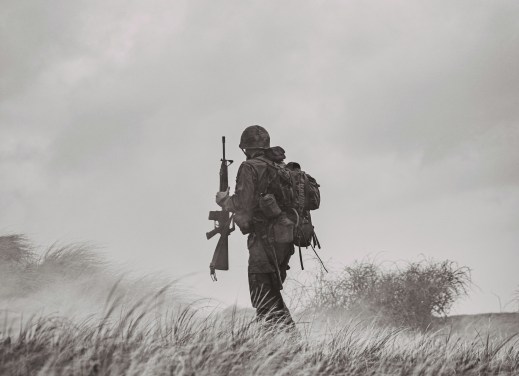
There he was in a blood-spattered Humvee. The ring and roar of mortars, bullets ripping through flesh, and yells. The sights unmentioned and horrible. Why was he there? Why was a chaplain there? This essay explores that question.
Specifically, why would a non-combatant be in the military?[1] What is the ethical framework underpinning the non-combatant status of chaplains, and what are the theological and practical principles that guide ministry in military contexts? Even though there is a long history of chaplains serving as non-combatants, some argue that chaplains should be combatants.[2]
If the war is just—if there are good moral grounds for engaging in combat—then should not the chaplain be the first one willing and able to take up arms and fight? If there is truly just cause, then the chaplain should be willing to lead from the front, right?[3] He or she should not fear death and should have a holy conviction that the war is right.[4]
In fact, Darrell Cole concludes his essay by saying: “Christians who willingly and knowingly refuse to engage in a just war do a vicious thing: they fail to show love toward their neighbor as well as toward God.”[5] So, why are chaplains non-combatants? Because there are other important theological considerations. My thesis is that although there is theological warrant for warfare, the chaplains’ non-combatant status is essential for their role in providing spiritual guidance, moral counsel, and upholding religious freedom within the military. This is the chaplain’s God-given calling, and it must be the focus, not engaging the enemy.
Theological Principles
Some argue that in light of Jesus’ command to love one’s enemies (Matt. 5:38-42) and the value of human life (Gen. 1:26-27), chaplains should not engage in combat. But if that is true for chaplains, why is it not true for all people? What about “Blessed are the peacemakers” (Matt. 5:9)? That is true. And there are times to make peace by striving to righteouslywage war. How does “turning the other cheek” (Matt. 5:39) square with warfare? One answer is that Jesus meant individuals should not take the law into their own hands. What about king David being unable to build the temple because he was a man of war (1 Chron. 22:8; 28:3)? Chaplains are not serving under the old covenant or building a temple.
The Bible does not say it is wrong to wage war, but it does say to serve in the military justly (Lk. 3:14). So, war is not wrong. But there are a few biblical reasons why chaplains should be non-combatants. First, from a Christian perspective, governing authorities should be obeyed (Romans 13:1-7),[6] and chaplains are currently non-combatants. Although, chaplains are allowed to defend themselves.[7]
The most important aspect of the chaplain’s non-combatant status, however, is the chaplain’s particular calling and stewardship to focus on spiritual fitness. Chaplains can best serve military personnel and the mission by being non-combatants. Biblical stewardship is the calling to be faithful with what God has given (Matt. 25:14–46; 1 Cor. 4:2) because He owns and gives every good gift (e.g., Lev. 25:23; 1 Chron. 29:11–12; Ps. 24:1; James 1:17), including our time and talents, and wants them employed to His glory (1 Cor. 10:31). Chaplains have specifically been given the responsibility to provide “religious support and spiritual care” which importantly “ensures all Airmen and their authorized dependents have opportunities to exercise their constitutional right to the free exercise of religion.”[8] That is the important calling chaplains should focus on.
Chaplains focusing on spiritual fitness is absolutely vital. George C. Marshall, who among other things served as the 3rd United States Secretary of Defense, said, “I look upon the spiritual life of the soldier as even more important than his equipment. … The soldier’s heart, the soldier’s spirit, the soldier’s soul are everything. Unless the soldier’s soul sustains him, he cannot be relied upon and will fail himself and his country in the end.”[9]
It should also be considered that military members are literally trained to kill with powerful killing machines. As Samuel Huntington puts it, “They are specialists in the application of violence.”[10] It is thus important that they have moral guidance by their side. Chaplains must advise commanders, guide military members, and restrain unjust actions when needed.[11]
Chaplains being non-combatants allows them to focus on their distinct role of holding the all-important spiritual realities before the military, as well as providing for the free exercise of religion. So, the non-combatant status of chaplains facilitates focusing on morals and morale. These are very worthy goals that make sense of chaplains being non-combatants.[12]
Moral and Ethical Framework
Just war theory best captures the teaching of the Bible. It also allows a much-needed moral and rational framework to evaluate military decisions. Just war theory establishes moral boundaries around military conflict by identifying conditions under which warfare is ethically defensible.[13] There are three main considerations: right to go to war, right conduct in war, and justice after war.[14]
Just war theory is an important theological and ethical foundation because, as has often been said and experienced, “War is hell.” It should not be entered into casually. Also, human life is incredibly, even inestimably, valuable. There must be strong reasons to allow for violence and destruction. Further, all resources are finite, so their destruction should not be taken lightly.
A realistic view of the world will see the clear persistence of evil, and the government’s moral responsibility to defend its people’s lives, property, and social order.[15] The Bible teaches war is, sadly, inevitable in the fallen world (Matthew 24:6-8). What must be asked is how it can be waged justly with minimized destruction.[16] Chaplains have a vast part to play here, and it is another reason why they are non-combatants. Chaplains must reckon with the dark realities of conflict and understand there will be casualties and chaos.[17] In the midst complexity, evil, and gore, they must tenaciously pursue righteousness.
Implications for Chaplaincy Practice
A chaplain’s non-combatant status is important for various reasons. Primarily, it allows them to focus on what they are uniquely trained and equipped to focus on. Chaplains can best support the military mission with God’s word, rather than with a gun. Aquinas, the eminent 13th-century philosopher, believed chaplains should be non-combatants because he did not want warlike pursuits to prevent them from focusing on their God-given jobs.[18]
The non-combatant status also enables chaplains to function as religious leader liaisons and build relationships with indigenous religious leaders.[19] This has proven especially beneficial in some Muslim contexts. Chaplains are often especially respected for trusting God and not wielding a gun. This facilitates promoting peace and reconciliation.
Lastly, all officers, including chaplains, have sworn (or affirmed) to “support and defend the Constitution of the United States against all enemies, foreign and domestic.” The chaplain does this in a unique and powerful way. The chaplain does it from the pulpit and with the pen and by providing for the religious expression of all military members. This is a high ideal. And it is worth chaplains going to battle and being shot at, all the while not carrying a gun because we as a nation believe that all people are created equal and have been “endowed by their Creator with certain unalienable Rights.” One of these rights is the freedom of religion.[20] Chaplains exist, in large part, to help protect First Amendment rights.[21]
Conclusion
The non-combatant status of chaplains is important from a theological and practical standpoint. While one may acknowledge the arguments for chaplains as combatants, chaplains should retain their non-combatant status. This status allows chaplains to focus on their unique calling of spiritual guidance, moral counsel, and upholding religious freedom, which are vital for the well-being of military personnel and the success of the mission. Chaplains are to be faithful stewards ofthe gifts and responsibilities given to them, focusing on their primary calling (2 Corinthians 10:4; 2 Timothy 2:4).
The mission of the chaplain corps is spiritual fitness; spiritual resiliency. It is to “nurture the living, care for the wounded, and honor the dead.” It is not killing the enemy or even defending themselves. That is why chaplains are non-combatants.
We have explored the complex relationship between Christianity and warfare, with a specific focus on the role of chaplains. Some may cite biblical passages advocating for pacifistic peace,[22] but there are times when war is necessary to oppose evil, even while chaplains demonstrate heroism, willing to serve without weapons, to accomplish their important mission of advocating for and facilitating religious freedom and providing spiritual care. Chaplains oppose evil not with a gun but with godly grit.
Why was a chaplain in a blood-soaked Humvee? So, he could wipe up the blood, the tears, and serve for peace as Jesus did. So, he could—in imitation of Jesus—bring to flesh the hope, calm, and peace of God in a cursed, chaotic world. That is why we have chaplains who do not engage in combat. Their focus is daring love, compassion, and peace. Reminders of the good we fight for.
Notes
[1] Chaplains’ noncombatant status stems from the Council of Ratisbon in A.D. 742, prohibiting them from carrying weapons (Michael C. Whittington and Charlie N. Davidson, Matters of Conscience: A Practical Theology for the Evangelical Chaplain Serving in the United States Military [Liberty University Press, 2013], 201–202). “The chaplaincy, it can be argued, has been alive and well either formally or informally for as long as man can imagine. The chaplaincy is as old as war itself.” (Steven A. Schaick, “Examining the Role of Chaplains as Non-Combatants While Involded in Religious Leader Engagement/Liaison,” 1).
[2] For example, Chaplain (Lt. Col.) Joseph Friedman, has said, “The DOD’s insistence on unarmed chaplains does not make sense” (https://www.armyupress.army.mil/Journals/Military-Review/English-Edition-Archives/September-October-2023/Pistol-Packing-Padres/). Friedman says, for example, that when a chaplain is in a combat situation the chaplain becomes a tremendous liability to the combatants around him.
[3] Chaplains are spiritual leaders, that assumes people should follow them. But if chaplains are non-combatants essentilly because it is wrong to engage in combat then it follows that no one, not least the miliatry personel looking to the chaplain’s spiritual leadership, should engage in combat. In other words, if combat is morally and biblically wrong for chaplain’s then it is wrong to all people. It is different, however, if the question is one of prudential wisdom and not transcultural ethics.
[4] Chaplain William Emerson is an example here. In fact, Schaick says, “The Revolutionary War cannot be understood apart from the influence of clergy, many of whom alternated between fighting and preaching for the very freedoms their faith required.” (Schaick, “Examining the Role of Chaplains as Non-Combatants While Involded in Religious Leader Engagement/Liaison,” 2).
[5] Darrell Cole, “Good Wars” https://firstthings.com/good-wars/. He even says, “war-making, when just, can be a form of love” (Ibid.). Jeff Myers simiarly says, “A shameful peace based on nonaction is not to be preferred to a just peace based on action.” (Should Christians Support Israel?: Seeking a Biblical Worldview in an Impossible Situation, 83).
[6] There is clear warrant for civil disobedience in certain limited circumatances: Exodus 1:15-21; Daniel 3:6; Acts 4:19-20; Romans 6:1-2. But the regular pattern is faithful and grateful obedience: Matthew 22:15-22; Romans 13:1-7; 1 Timothy 2:1-2; 1 Peter 2:12-17.
[7] Department of the Air Force Instruction 52-104: 3.2. says “chaplains, as religious personnel, serve exclusively in a humanitarian capacity. Chaplains, therefore, will not engage in activities that could create perceptions of combatant behavior or that compromise the protected status of other chaplains in the field.” But it also says they “have the inherent right of self-defense.”
[8] Air Force Instruction 52-101:1.1.
[9] George C. Marshall, quoted in Donald W. Shea, “A Ministry in the Eye of the Storm,” Army, September 1991, 54.
[10] Samuel Huntington, The Soldier and the State: The theory and politics of civil–military relations, 18.
[11] Jo Brick wisely says that “while legal frameworks are important in regulating behavior, the ethical factors and the question ‘Can I live with myself if I do this?’ are drivers of individual behavior that are more important in complex circumstances. Military professionals must be trained in facing the inevitable dilemmas that arise in the course of military operations. Increasing moral fitness in military professionals is an important means of preventing moral injury. Training in the laws of war is, of itself, not enough. The law is easy; ethics is hard” (Jo Brick, “The Military Profession: Law, Ethics, and the Profession of Arms” in Redefining the Modern Military: The Inersection of Profession and Ethics edited by Nathan K. Finney and Tyrell O. Mayfield (Naval Insitute Press: Annapolis, MD, 2018), 62.
[12] Another important aspect is non-combatant status is supposed to allow chaplains to continue to provide relgious care if detained along with prisoners of war. To retain military religious status, chaplains must belong to a force whose members qualify for prisoners of war status, be designated as exclusive religious personnel, and serve exclusively in a religious capacity. This ability would be compromised if they were to engage in combat which would leave soildeis without much needed spiritual care (Naomi K. Paget and Janet R. McCormack, The Work of the Chaplain (Judson Press, 2006), 45.). One of the problems, however, is that “the purported immunity granted by the conventions has not been exhibited by U.S. enemies in over seventy-five years” (https://www.armyupress.army.mil/Journals/Military-Review/English-Edition-Archives/September-October-2023/Pistol-Packing-Padres/).
[13] See for example Hak Joon Lee, Christian Ethics: A New Covenant Model (Grand Rapids, MI: William B. Eerdmans Publishing Company, 2021), 467–468 and David P. Gushee and Glen H. Stassen, Kingdom Ethics: Following Jesus in Contemporary Context (Grand Rapids, MI: William B. Eerdmans Publishing Company, 2016), 462.
[14] Aquinas, 1274, 2.40.1. Here are the conditions that must be met before starting a war: just cause: Typically self-defense or protecting innocent people from serious harm, legitimate authority: War must be declared by a proper governing body, right intention: The goal should be justice (e.g., peace), not revenge or conquest, last resort: All peaceful options must have been tried first, probability of success: There should be a reasonable chance of achieving the goal, and proportionality: The expected benefits must outweigh the harm. Here are the rules that apply during war: discrimination (distinction): Combatants must distinguish between military targets and civilians, proportionality: The force used must not be excessive relative to the military objective, military necessity: Actions must be necessary to achieve a legitimate military goal, and no inherently evil means: Some methods (e.g., genocide, torture) are forbidden. These principles guide how wars should end and what happens after the war: fair peace terms: Avoid punishing populations excessively, reconstruction: Help rebuild affected societies, accountability: War crimes should be addressed, and the restoration of rights: Aim to reestablish a just political order.
[15] Lee, Christian Ethics, 467.
[16] “Defenders of the Just War tradition regret that they live in a world where they have to kill human beings in order to restrain evil; that is to say, they regret the Fall. But they find it to be even more regretful for Christians to stand idly by while people are being abused and killed unjustly” (Darrel Cole, “Good Wars”).
[17] As John Keegan says so powerfully, “What battles have in common is human: the behaviour of men struggling to reconcile their instinct for self-preservation, their sense of honour and the achievement of some aim over which other men are ready to kill them. The study of battle is therefore always a study of fear and usually of courage, always of leadership, usually of obedience; always of compulsion, sometimes of insubordination; always of anxiety, sometimes of elation or catharsis; always of uncertainty and doubt, misinformation and misapprehension, usually also of faith and sometimes of vision; always of violence, sometimes also of cruelty, self-sacrifice, compassion; above all, it is always a study of solidarity and usually also of disintegration for it is toward the disintegration of human groups that battle is directed” (John Keegan, The Face of Battle).
[18] Aquinas, 1274, 2.40.2. I disagree with Aquinas’ second reason. He says warfare is “unbecoming” because those who give the Eucharist should not shed blood, even if they do so in accordance with just war theory. Perhaps this line of reasoning works in a Catholic theological system but not in mine which has a different view of the priesthood.
[19] Schaick, “Examining the Role of Chaplains as Non-Combatants While Involded in Religious Leader Engagement/Liaison.” This is an important consideration. Donald Rumsfeld once said, “Overall, we are not doing a good job… of trying to include religious leaders to show respect for their faith as part of stability operations” (Donald Rumsfeld, keynote address, Eisenhower National Security Conference, Ronald Reagan Building and International Trade Center, Washington, DC, 25 September 2003).
[20] Protecting this right is vital and we can and should thank God for our freedoms. “Denying religious freedom is a precursor to denying all other freedoms. If the state can put itself in between citizens and God, there is no other part of life within society that the state will not see itself as apt to disrupt and intervene in, either.” (Andrew T. Walker, Faithful Reason: Natural Law Ethics for God’s Glory and Our Good, 286). “The state that recognizes and protects religious freedom is not an omni-competent state, but rather a state that acknowledges the rights of conscience and the prerogatives of the institutions that men and women freely sustain to express and pass on their religious convic-tions. It recognizes its duty to serve, and not to impede, those communities of civil society. Thus the recognition of religious freedom in full is a crucial barrier to the totalitarian temptation that seems to exist in all forms of political modernity” (Evangelicals and Catholics Together, “In Defense of Religious Freedom, ” First Things, March 1, 2012, https:// http://www.firstthings.com/article/2012/03/in-defense-of-religious-freedom. Quoted in Walker, Faithful Reason, 287).
[21] This does not mean, however, that all religious requests will be granted. Commanders must weigh religious freedom with safty and mission impact. As Andrew Walker has said in reference to general soceity: “Restrictions on religious liberty are indeed legitimate insofar as rightly authorized authorities carefully delineate what harms a religion’s adherents pose to society and does not arbitrarily penalize. Public health and public safety cannot countenance threats to sound order under an absolutized appeal to religious liberty” (Faithful Reason, 283).
[22] My advocacy of righteous realism agrees with Andrew T. Walker, who says, “Christian pacifism fails to adequately love one’s neighbor. It is an over-idealized ethic that cannot be reasonably pursued in an age marked by sin” (Walker, Faithful Reason, 272).
*Photo by Eduard Delputte
Morality and Politics in America

John Adams said a long time ago, “Our Constitution was made only for a moral and religious people. It is wholly inadequate to the government of any other.” And the conservative Edmund Burke said, “What is liberty without wisdom, and without virtue? It is the greatest of all possible evils; for it is folly, vice, and madness, without tuition or restraint.” Here are some similar insights Alexis de Tocqueville shared in his book, Democracy in America*:
“Liberty cannot be established without morality, nor morality without faith.”
“Society is endangered not by the great profligacy of a few, but by the laxity of morals amongst all.”
“Liberty cannot be established without morality, nor morality without faith.”
“When a nation[‘s] well of public virtue has run dry: in such a place one no longer finds citizens but only subjects.”
“The health of a democratic society may be measured by the quality of functions performed by private citizens.”
“A nation cannot long remain strong when every man belonging to it is individually weak.”
“What one must fear, moreover, is not so much the sight of the immorality of the great as that of immorality leading to greatness.”
“So religion, which among the Americans never directly takes part in the government of society, must be considered as the first of their political institutions; for if it does not give them the taste for liberty, it singularly facilitates their use of it.”
“Religion is much more necessary in the republic.”
“In order that society should exist, and a fortiori, that a society should prosper, it is required that all the minds of the citizens should be rallied and held together by certain predominant ideas.”**
“Despotism may govern without faith, but liberty cannot… How is it possible that society should escape destruction if the moral tie be not strengthened in proportion as the political tie is relaxed? and what can be done with a people which is its own master, if it be not submissive to the Divinity?”
No matter who ultimately gets elected, if what Adams and Tocqueville said were right, and I think they were, it’s only a matter of time before a pretty significant downfall of America. Many moral dominos have fallen, and I don’t so much mean abortion and gender confusion. I mean the more common and prevalent lack of virtue, which has precipitated more visible concerns. Now the only truth that is readily accepted is that there is no truth, only what is right for the autonomous self. Those were dominos. Those have been falling.
America needs: revival. Not of the Republican Party, but of people set on fire for the true Savior. Revival is what would make people “moral and religious,” as Adams spoke of and which our Nation rests or topples on.
Whatever happens, Christians trust the One who has the government on His shoulders. The One who is “called Wonderful Counselor, Mighty God, Everlasting Father, Prince of Peace.” The One of whom it can be said: “Of the greatness of His government and peace there will be no end. He will reign on David’s throne and over His kingdom, establishing and upholding it with justice and with righteousness from this time forth and forevermore” (Isaiah 9:6-7).
Whatever happens, Christians can trust that God is very adept at using a remnant for His good purposes to highlight His glory and goodness. Perhaps America won’t be saved, but perhaps millions of Americans will be?!
*As an aside, I think it is interesting to note what Tocqueville said about wealth in America remembering that Scripture says, that the love of money is the root of all kinds of evil (1 Tim. 6:10). Many have “noted the American obsession with work and the restless quest for the “almighty dollar” (Tocqueville, Democracy in America). Tocqueville also said, “The love of wealth is . . . to be traced, either as a principal or an accessory motive, at the bottom of all that the Americans do” (Ibid.). As well as, “One must go to America to understand what power material well-being exerts on political actions and even on opinions themselves, which ought to be subject only to reason” (Ibid.).
**Such as the reality of objective truth actually existing.
America’s Trump Morality

The difference between Donald Trump and his explicit exploits and many guys on the street is not one of morality. It’s one of power and publicity. Sadly, there are many “average Joe” versions of Donald Trump and Anthony Weiner.[1] I have heard many “men” nearly quote Trump and recount worse exploits in various work environments.
Welcome to America. Welcome to our morality: “Life, Liberty, and the Pursuit of Pleasure,” wherever and however it might be found. This is our county’s mantra, even if not said in so many words.
Much of the American economy is marketed to our lust. Just look at advertising. We all know it, sex sells. Pornography is a booming market and so, sadly, is sex-trafficking.
To hear that Trump has appeared in XXX films and said a lot of bad and very inappropriate stuff is sad. But, it is sadly not surprising.
Are we really shocked by Trump’s inappropriate comments? No. Concerned? Yes.
“Grabbing women by…” whatever is, sadly, much of today’s culture. As a culture, we care about the quick and exciting. We care about bursting bosoms and one night stands. We care about quick fixes, porn, and pleasure at someone else’s expense (especially if no one knows and we can get away with it).
We care about having it our way. We care about following our passions, no matter what they are. We care about people’s freedom to do what feels right. We care about the right for no one to tell us what is right.
Pornography, Tinder, and all the advertisements that feed us represent where we are as a country. It represents the underlying desires of much of America. There’s many mainstream magazines and media forms–Men’s Health, GQ, and many musicians and movies (e.g. Fifty Shades of Grey),–that embody Trump’s morals even if they don’t say it outright.
So, are Trump’s words that surprising? For a presidential candidate, it’s unprecedented but it’s not surprising. That’s where we are as a country. Porn use to be something only under people’s beds and available at seedy XXX theaters but now it’s in our pockets, piped into our living rooms, and greeting us on billboards.[2]
Trump is vocalizing what many men view, say, and others often think. Obviously, I don’t agree with Trump. I think it’s sickening. But I also think we as a country have almost lost grounds on which to critique him. I clearly condemn Trump’s actions but I am afraid that much of America’s moral outrage is a hypocritical contradiction: Trump is made in our own image.
How can America say pornography is perfectly normal and acceptable and yet condemn the person that lives out what is idolized on the screen? You know what I think?! I think that Trump is not the only problem or the biggest problem; he is a harbinger of things to come and an echo of what has gone before. He is a visualization of many people’s secret sins and inner hearts.
Trump is not excused obviously! He is despicable. However, as has been said, “we see that all the time in movies” and we hear it and watch it on our phones. Trump is a problem but he is not the problem. Trump is fruit from what has been sown for quite some time. He is in many ways, I’m afraid, the personification of many people’s dreams.
What is morality after all? Isn’t it might that makes right? And Trump has plenty of “might.” Or if we measure morality by the social construct theory Trump, sadly, wouldn’t be wrong. The social environment has basically said his actions are not wrong time and time again. After all, aren’t we as people just “matter in motion” and isn’t sex just “an exchange of fluids”?[3]
In Trump’s own words “when you’re a star, they let you do it. You can do anything… Grab ’em by the @#$*!…” And sadly, that is often true. We often do anything for a star, or for money. And sadly, when someone “consents,” when someone lets someone else do… or whatever, we look at it as okay because there was consent.
Perhaps, we can all agree that it’s a shame that Trump made those comments since it reflects poorly upon the USA and offends some, but from a moral point of view on what foundation can America criticize him?
This, friend, is our world. This is where we are. And most people are fine with it.
However, doesn’t Trump’s example make it clear that it is wrong to ever look at a woman as an object in that way? Don’t we see how depraved his statement is? Don’t we see how debauched much of American society is?!
Women are not objects. Men are not objects. Pornography is wrong. And by implication, much of our advertising is wrong too. And many of us are wrong. It’s not just Trump. It’s the way we look at the Kardashians. It’s the way we idolize sexy bodies and always having it our way. It’s the way we forget what’s right and just want what we want. The problem is not just external (Trump), it’s likely to a large part internal (in our own heart).
America, wake up! We made Trump. We are Trump and Trump is us. We can’t have our cake and eat it too. We can’t indulge in licentious sexual “freedom” without the forging of certain “fetters.”
John Adams once said, “Our Constitution was made only for a moral and religious people. It is wholly inadequate to the government of any other.” Why did he say that? He said it at least in part because if we are not a moral people, a people who believe in a divinely given morality, then we will elect very corrupt officials. We will create and elect people who reflect our own character.
We will, in the words of the Old Testament prophet Jeremiah, pursue worthlessness, and become worthless (Jer. 2:5).
[[Two Postscripts: Please note that I do not support either candidate. 1) I loathe Hilliary Clinton and her pro-abortion stance (see here for example) and don’t trust her. 2) I don’t trust Trump either. Two verses to consider for those trusting Trump because he will (supposedly) “save” the Supreme Court: Ps. 118:9, “It is better to take refuge in the Lord than to trust in princes [or their modern equivalent]” (cf. Ps. 146:3) and Ps. 40:4, “Blessed is the man who makes the Lord his trust, who does not turn to the proud [certain political candidates], to those who go astray after a lie!” These verses are true even when considering such serious subjects as the future of America and unborn babies.]]
______________________
[1] Actually, it is sadly my own disposition. I am myself not beyond struggling with lust. However, by God’s grace, I am not enslaved to it and loathe porn. I have seen the chaos and curse that sexual sin brings to individuals and society through people close to me.
[2] The porn industry is one of the biggest industries and has the largest presence online. In fact, porn sites get more visitors each month than Netflix, Amazon, and Twitter combined. Pornography is also very potent. I’ve read that it’s as addictive or more addictive as heroin or cocaine. Social media very often, even if it’s not officially labeled pornographic, is teaching and influencing how we think about sex and act out sexually (see e.g. Gail Dines, “Is porn immoral? That doesn’t matter: It’s a public health crisis” in The Washington Post).
[3] E.g. Richard Dawkins has said, “There is a bottom no design, no purpose, no evil, not good, nothing but pointless indifference… We are machines for propagating DNA” (Dawkins, Unweaving the Rainbow).



