Can we know?

Can we know?
What if I don’t know if God exists?[1] What if I don’t know how to answer the big questions of life? What if I don’t think I’ll ever know?[2] Can we know? If so, how?
If we feel like we can’t be sure, we also can’t be sure about that. That is to say, if we feel like we can’t know, how do we know that?
In talking with people about the big questions of life, they often say they don’t think you can know. They think the big questions of how we got here and what we’re supposed to do while we’re here remain unanswered. We simply can’t know.
I played putt-putt golf with my family today. I enjoy the challenge and I definitely enjoy winning. I don’t like playing putt-putt at courses where skill is not a factor. I don’t like the sidewalls to be made out of rock because then you have no control of how the ball bounces. I don’t like when the course has variables that are out of my control. Today, however, on the last hole I couldn’t even see where the hole was. But I took the time and I walked to the end of the course, past the out house that obstructed my view, and saw the hole. My knowledge of where the hole was didn’t get me a hole-in-one but it did get me to the hole eventually. It helped me get a meager win. I beat my son by one stroke.
Knowledge is important in all areas of life, even putt-putt. It’s not always easy though. But putting in the work and at least trying to walk past the “out houses” that obstruct our view is worth it. If it makes sense in putt-putt—and it does especially if you want to win!—then it makes sense in life.
Can We Know Anything at All?
Wow. That is a super big question. And it’s a question that some people are not asking. That’s problematic and in some ways ignorant. Others, however, are asking that question but they’re asking it in a proud way. That’s also problematic and arrogant.
Let me ask you a question, how do you know your dad is your dad? Some of you will say, “He’s just my dad. He’s always been my dad. I’ve always known him as my dad.”
“But, how do you know you know for sure he’s your dad?”
Others will answer, “I know he’s my dad because my mom told me.” But how do you know your mom’s not lying? Or, how do you know she knows the truth?
Perhaps the only way to know your dad is actually your biological dad is through a DNA test. But could it be the case that the DNA clinic is deceiving you? Is it possible that there’s a big conspiracy to deceive you? What if you are actually part of The Truman Show? Everything is just a big hoax for people’s entertainment? How could you know without a shadow of a doubt that’s not happening? You really can’t. Not 100%.
Thankfully, things do not need to be verified 100% for us to believe it to be true. We can and do have knowledge of all sorts of things that are not proved beyond the shadow of a doubt.
We Can’t Know Everything
We, I hope you can see, can’t know everything. There is healthy humility when it comes to knowledge, just as there’s a healthy level of skepticism. If we think our knowledge must be exhaustive for us to have knowledge, we will never have knowledge. And we will be super unproductive. I, for one, would not be able to go to the mechanic. And that would be bad.
Our knowledge is necessarily limited. We may not like it but that’s the cold hard truth, we must rely on other people. We must learn from other people. There’s a place for us to trust other people and sources. Of course, we are not to trust all people or trust people all the time. But we must necessarily rely on people at points.
Philosophy and the History of Careening Back and Forth Epistemologically
John Frame, the theologian and philosopher, shows in his book, A History of Western Philosophy and Theology, that the history of secular philosophy is a history of humans careening back in forth from rationalism to skepticism and back again. One philosopher makes a case that we can and must know it all, every jot and title. And when they’re proven wrong, the next philosopher retreats to pure epistemological anarchy, claiming we can’t know anything at all. Again, when it’s found out that that view is wrong and we can in fact know things, we swing back the other way. And so, the philosophical pendulum goes and we have people like Hume and people like Nietzsche.
The history of philosophy shows that we should be both skeptical about rationalism and rational about skepticism. Both have accuracies and inaccuracies. Which helps explain the long life of both. We can know things but we can’t know everything or anything fully.
Christians give credible reasons for epistemological suspicion even while giving legitimate reasons for belief. Christians are realists, not rationalists or skeptics. Christians believe we should be skeptical about our rationalism and rational about our skepticism. We can know truly even if not fully in this life. We can know a lot even while we know we can’t know all. Christians hold tenaciously to the bedrock truths of reality, but hold other things loosely.
The Bible and Knowledge
The biblical understanding of knowledge takes both rationalism and skepticism into account and explains how both are partly right and partly wrong. And it explains that though we may not be able to know fully, we can know truly. It also explains that there are more types of knowing than just cognitive and rational. The Bible understands who we are anthropologically and so is best able to reveal the whole truth epistemologically.
The Bible also understands that there is experiential knowing, tasting—experiencing something—and knowing something to be true on a whole different level than mere cognitive knowing.[3] When the Bible talks about “knowing” it’s intimate, tangible, and experiential knowing. For example, it says Adam “knew” his wife and a child was the result of that knowledge. That, my friends, is not mere mental knowledge. It’s lived—intimately experienced—knowledge. It’s knowledge that’s not available without relationship.
Job says it this way, I’ve heard of you but now something different has happened, I’ve seen you (Job 42:5). Jonathan Edwards, the philosopher and theologian, talked about the difference between cognitively knowing honey is sweet and tasting its sweetness. It is a world of difference. The Bible is not about mere mental assent. It is about tasting. Knowing. Experiencing. Living the truth.
The Bible says and shows that Jesus is Himself the way, the truth, and the life. Jesus is what it means to know the truth. He is the truth and shows us the truth. He is truth lived, truth incarnate.
The Bible communicates that some people don’t understand, don’t know the truth. There’s a sense in which if you don’t see it, you don’t see it. If it doesn’t make sense, it doesn’t make sense. The Bible talks about people “hearing” and yet “not hearing” and “seeing” and “not seeing.” Some people believe the gospel and the Bible is foolishness (1 Cor. 2:14). “The god of this world has blinded the minds of the unbelievers” (2 Cor. 4:4).
How Should Christians Pursue Knowledge?
First, our disposition or the way we approach questions is really important. How should we approach questions? What should characterize us?
Humility! Why? Because we are fallible, we make mistakes. However, God does not. Isaiah 55:8-9 says, “For My thoughts are not your thoughts, neither are your ways My ways, declares the LORD. For as the heavens are higher than the earth, so are My ways higher than your ways and My thoughts than your thoughts.”
Also, kindness, patience, and understanding are an important part of humility and asking questions and arriving at answers. So, “Faith seeking understanding,” is a helpful phrase. Christians have faith and reason; faith in reason, and reason for faith.
Second, where do we get answers from? Scripture. Why is this important? Again, I am fallible and you are fallible, that is, we make mistakes. And how should we approach getting those answers? Are we above Scripture or is Scripture above us? Who holds more sway? Scripture supplies the truth to us; we do not decide what we think and then find a way to spin things so that we can believe whatever we want.
Third, community is important. God, for instance, has given the church pastor/elders who are supposed to rightly handle the word of truth and shepherd the community of believers. We don’t decide decisions and come to conclusions on our own. God helps us through Christ’s body the Church.
Fourth, it is important to remember mystery. We should not expect to know all things. We are, once again, fallible. So, we should keep Deuteronomy 29:29 in mind: “The secret things belong to the LORD our God, but the things that are revealed belong to us and to our children forever, that we may do all the words of this law.” There are certain things that are revealed and certain things that are not revealed.
Fifth, our questions and answers are not simply about head knowledge. God doesn’t just want us to be able to talk about theology and philosophy. Deuteronomy 29:29 says, “that we may do…” So, God also cares a whole lot about what we do. Knowledge is to lead to action. We are to be hearers and doers. Christians believe that knowing should absolutely lead to doing, or the thing “known” is not actually known.
Sixth, it’s important to acknowledge there are very big and important questions that are difficult to answer. We should have a sense of our smallness. Again, we should have a certain amount of humility. But that doesn’t mean we can’t find answers. Difficulty answering questions and humility in the face of questions should not be an excuse for digging deep and trying to answer the big questions of life. They’re too important.
Notes
[1] There are multiple things that point us to the existence of God. We now know that the universe had a beginning. Whatever begins to exist has a cause of its beginning. Therefore, the universe has a cause of its beginning. It makes sense that God is that cause. God is the Uncaused Cause. God, being God, is immaterial and outside space and time. Further, if there are laws of physics it would make sense that there is also a law-giver. If not, where did those laws come from? In a similar way, it would seem the fine-tuning of the universe requires a fine-tuner. I’m not trying to be too repetitive but codes like the genetic code can only come from a Coder. Intelligence comes from Intelligence. What explains human consciousness except a Higher Consciousness? If there is a moral law, shouldn’t we expect a Lawgiver? Now, just because God exists doesn’t mean we know God. But if God does exist God would certainly be able to make Himself known. He would be able to communicate in various ways. But God being God, those ways may not fit into the categories we’d expect.
[2] People often refer to themselves as agnostic. Agnostic comes from Greek and means “unknown.” Gnosis means knowledge and the “a” prefix is a negation.
[3] As Blaise Pascal said, “the heart has its reasons which reason knows nothing of.”
*Photo by Paden Johnsen
Somewhat Random Reflections on Knowledge

Here’s some somewhat random reflections on knowledge if you’re interested…
How Can We Know Anything at All?
Wow. That is a super big question. And it’s a question that some people are not asking at all. That’s problematic. And in some ways ignorant. However, others are asking that question but they’re asking it in a proud way. That’s also problematic. And ignorant.
Let me ask you a question, how do you know your dad is your dad? Well, some of you will say, “He’s just my dad. He’s always been my dad. I’ve always known him as my dad.”
But I could say, “But, how do you know you know for sure he’s your dad?”
Others will answer, “I know he’s my dad because my mom told me.” But how do you know your mom’s not lying? Or, how do you know she knows the truth?
Perhaps the only way to know your dad is actually your biological dad is through a DNA test. But could it be the case that the DNA clinic is deceiving you? Is it possible that there’s a big conspiracy to deceive you? What if you are actually part of the Truman Show? Everything is just a big hoax for people’s entertainment?… How could you know without a shadow of a doubt that that’s not happening?
You really can’t. Not 100%.
We Can’t Know Everything
We, I hope you can see, can’t know everything. There’s a healthy level of skepticism, just as there is healthy humility.
Also, if we think our knowledge must be exhaustive for us to have knowledge, we will never have knowledge. And we will be super unproductive. I, for one, would not be able to go to the mechanic. And that would be bad.
Our knowledge is necessarily limited. We may not like it but that’s the cold hard truth, we must rely on other people. We must learn from other people. There’s a place for us to trust other people. Of course, we are not to trust all people or trust people all the time. But we must necessarily rely on people at points.
Philosophy and the History of Careening Back and Forth Epistemologically
John Frame, the theologian and philosopher, shows in his book, A History of Western Philosophy and Theology, that the history of secular philosophy is a history of humans careening back in forth from rationalism to skepticism and back again. One philosopher makes a case that we can and must know it all, every jot and title. And when they’re proven wrong, the next philosopher retreats to pure epistemological anarchy, claiming we can’t know anything at all. Again, when it’s found out that that view is wrong and we can in fact know things, we swing back the other way. And so, the philosophical pendulum goes and we have people like Hume and people like Nietzsche.
The history of philosophy shows that we should be both skeptical about rationalism and rational about skepticism. Both have accuracies and inaccuracies. Which helps explain the long life of both.
The Bible and Knowledge
The biblical understanding of knowledge takes both rationalism and skepticism into account and explains how both are partly right and partly wrong. And it explains that though we may not be able to know fully, we can know truly. It also explains that there are more types of knowing than just cognitive and rational. The Bible not surprisingly understands who we are anthropologically and so is best able to reveal the whole truth epistemologically.
The Bible also understands that there is experiential knowing, tasting—experiencing something—and knowing something to be true on a whole different level than mere cognitive knowing. When the Bible talks about “knowing” it’s intimate, tangible, and experiential knowing. For example, it says Adam “knew” his wife and a child was the result of that knowledge. That, my friends, is not mere mental knowledge. It’s lived—intimately experienced—knowledge. It’s knowledge that’s not available without relationship.
Job says it this way, I’ve heard of you but now something different has happened, I’ve seen you (Job 42:5). Jonathan Edwards, the philosopher and theologian, talked about the difference between cognitively knowing honey is sweet and tasting its goodness. It is a world of difference. The Bible is not about mere mental assent. It is about tasting. Knowing. Experiencing. Living the truth.
The Bible says and shows that Jesus is Himself is the way, the truth, and the life. Jesus is what it means to know the truth. He is the truth and shows us the truth. He is truth lived, truth incarnate.
The Bible communicates that some people don’t understand, don’t know the truth. There’s a sense in which if you don’t see it, you don’t see it. If it doesn’t make sense, it doesn’t make sense. The Bible talks about people “hearing” and yet “not hearing” and “seeing” and “not seeing.” Some people believe the gospel and the Bible is foolishness (1 Cor. 2:14).
How Should Christians Pursue Knowledge?
First, our disposition or the way we approach questions is really important.
How should we approach questions? What should characterize us?
Humility! Why? Because we are fallible, we make mistakes. However, God does not. Isaiah 55:8-9 says, “For My thoughts are not your thoughts, neither are your ways My ways, declares the LORD. For as the heavens are higher than the earth, so are My ways higher than your ways and My thoughts than your thoughts.”
Also, kindness, patience, and understanding are an important part of humility and asking questions and arriving at answers. So, “Faith seeking understanding,” is a helpful and common phrase.
Second, where do we get answers from?
Scripture. Why is this important? Again, I am fallible and you are fallible, that is, we make mistakes. And how should we approach getting those answers? Are we above Scripture or is Scripture above us? Who holds more sway? Scripture supplies the truth to us; we do not decide what we think and then find a way to spin things so that we can believe whatever we want…
Third, community is important.
God, for instance, has given the church pastor/elders who are supposed to rightly handle the word of truth and shepherd the community of believers. We don’t decide decisions and come to conclusions on our own. God helps us through Christ’s body the Church.
Fourth, it is important to remember mystery.
We should not expect to know all things. We are… fallible. So, we should keep Deuteronomy 29:29 in mind: “The secret things belong to the LORD our God, but the things that are revealed belong to us and to our children forever, that we may do all the words of this law.” There are certain things that are revealed and certain things that are not revealed.
Fifth, our questions and answers are not simply about head knowledge.
God doesn’t just want us to be able to talk about theology and philosophy. Deuteronomy 29:29 says, “that we may do…” So, God also cares a whole lot about what we do. Knowledge is to lead to action. We are to be hearers and doers.
True Knowledge Should Truly Humble

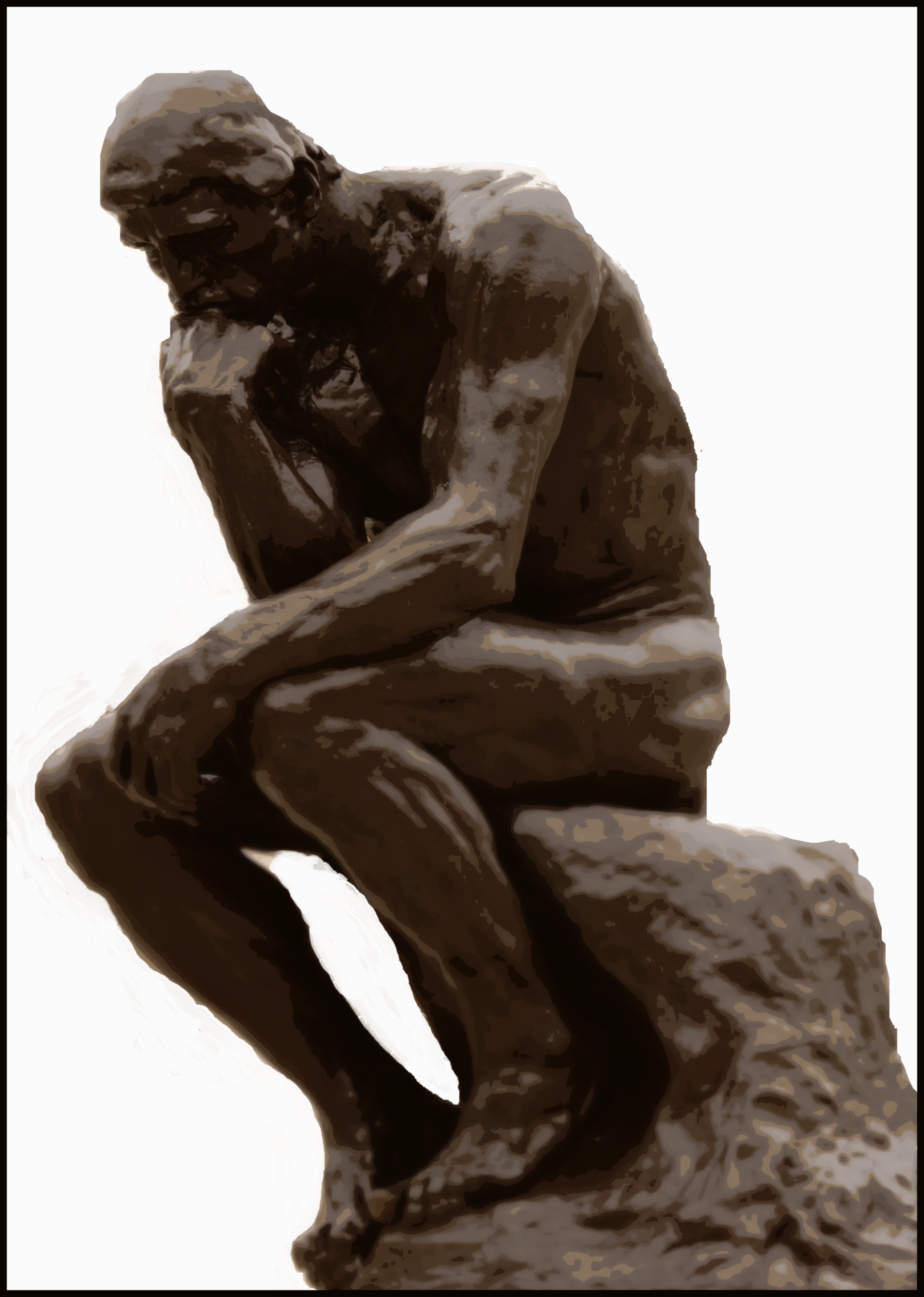
Knowledge[1] is dangerous. Not only the consequence that ideas themselves have but also the tendency that knowledge has to puff up. Truths that should lay us low in humility often conflate our egos. Paradoxically, knowledge is also the very thing that humbles.[2] We may not be proud without knowledge but neither will be humble. We will be ignorant. Knowledge is dangerous. Albeit, a necessary danger.
Knowledge is indispensable to live life rightly. We must understand though, that knowledge is not innate within us. It must be pursued. However, the very fact that knowledge is external should press us to pursue it in humility. It is not ours. We do not have the market on knowledge. Also, if we pursue it arrogantly we will miss much of it (Prov. 3:5-6; 15:14, 22). We should realize that not only is knowledge external from us but so is the desire for knowledge. We should not think we are better than the ignorant because our very desire for knowledge is itself a gift (James 1:17).
The desire for knowledge with the goal of being humbled is good. The fear of the LORD is the beginning of knowledge and humility comes before honor (Prov. 1:7; 9:10; 15:33; Job 28:28). Jesus pronounces woes upon the Pharisees, not for their knowledge, their knowledge is commendable, but on the result that their knowledge had upon them. It did not humble them (Matt 23:5-7, 11-12). The publican had little knowledge but it served to humble him. If we truly understand, if the eyes of our hearts are enlightened, we will praise God and not ourselves. We can have all knowledge but if we have not love, it profits us nothing (1 Cor. 13:1-3).
Thomas A Kempis said in The Imitation of Christ that “On the day of judgment, surely, we shall not be asked what we have read but what we have done; not how well we have spoken but how well we have lived.” That is not to say that knowledge is not important, it is. However, knowledge that does not lead to life change and humility is worthless and condemning. The person that knows the right thing to do and does not do it for that person it is sin (James 4:17). Kempis rightly says, “The more you know and the better you understand, the more severely will you be judged, unless your life is also the more holy. Do not be proud, therefore, because of your learning or skill. Rather, fear because of the talent given you.” God will judge us according to all that He has entrusted to us (see Matt. 25:14-30).
As our minds rise to exalted things, our consciousness of ourselves must fall. Truth humbles, or it is not understood to be truth to ourselves. Again Kempis says,
“What good does it do to speak learnedly about the Trinity if, lacking humility, you displease the Trinity? …I would rather feel contrition than know how to define it. For what would it profit us to know the whole Bible by heart and the principles of all the philosophers if we live without grace and the love of God?”
Knowledge is vital, we cannot serve or know the LORD without it, but knowledge must always humble.
How do we fight the damning affect that knowledge so often has? It all has to do with our motivation from the outset. As J.I. Packer has said, in his classic book Knowing God, “there can be no spiritual health without doctrinal knowledge; but it is equally true that there can be no spiritual health with it, if it is sought for the wrong purpose.”[3] Do we study the Trinity to be in awe and wonder before the God who is three-in-one? Or do we study the Trinity to look astute before our peers? The choices are not restricted to arrogance or ignorance but we have to fight for the last alternative, humility. If we go the way of ignorance we will never know humility, who or what would we be humbled before? And arrogance is the misapplication of knowledge. It is a pursuit of knowledge with the wrong goal in mind. Do we read science journals and Scripture to merely gain knowledge? Or do we do it to be humbled by the God that formed the furthest reaches of the galaxies and yet revealed Himself to us; yea, atoned for our sins (cf. Heb. 1:3)?
Pursue knowledge. Pursue it in whatever field. But do so in humble worship with your ultimate end being to glorify God. May we be amazed by and enraptured in the truths of Scripture as children. May we continually go to God humbly in awe of Him and His truth that is contained everywhere around us for God gives grace to the humble (James 4:6).
~Whatever you study or seek to know, do it all to the glory of God~
______________________
[1] I say “knowledge” and not any specific stream of knowledge because I believe that all truth is God’s truth. What I mean by knowledge is knowledge that is true, true truth, as Schaeffer put it. This could be in the realm of science, math, history, etc. All truth is God’s truth because God upholds the universe by the Word of His power thus all mathematical equations are held together by His hand. Science shows us the extent to which the glory of God is manifested in His universe (as Johannes Kepler said, “science is thinking God’s thoughts after Him”), all history is a story of God unfolding Himself and is actually a testimony of His grace to redeem such as we are.
[2] Richard Baxter rightly says, “If we have any knowledge at all, we must needs know how much reason we have to be humble; and if we know more than others, we must know more reason than others to be humble” (The Reformed Pastor, 144).
[3] J.I. Packer, Knowing God, 22. He further says, “if we pursue theological knowledge for its own sake, it is bound to go bad on us. It will make us proud and conceited” (21). Rather “our concern must be to enlarge our acquaintance, not simply with the doctrine of God’s attributes, but with the living God whose attributes they are” (23).



 in X
in X 