Religion and Obligation – But I don’t want to obey?…
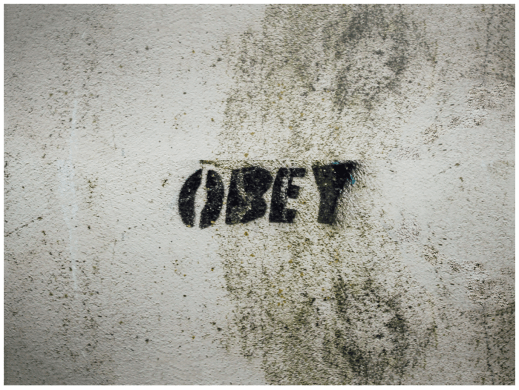
People often don’t like religion because they don’t want to obey
A lot of people react to religion and want nothing to do with it. Not because they’ve considered its truth claims but because they feel it is constricting. Interestingly, we got our modern English word “religion” from the Latin word religio meaning “obligation” or “bond.”
So, it has been recognized for a long time that religion is binding. The question is, why? Why should anyone obey a religion?
If the religion’s truth claims are accurate then there would be a good reason to obey. Otherwise, I’m not going to be bound by a religion just because that’s what my grandma believed… No. If you’re going to tell me what I can do and not do, you better offer some good reasons why I should listen.
God demands obedience
1 Kings 8:60-61 says, “The LORD is God; there is no other. Let your heart therefore be wholly true to the LORD.” It is admittedly a big claim that “the LORD is God,” and He alone. But if that claim is true it seems to make sense that the LORD could demand obedience.
So, the question it seems we need to answer is not: “Should I obey?” But: “Is it true?” A lot of times it seems we’re tempted to go at it a different way. We’re tempted to think: “I don’t want to obey, therefore I won’t consider if it’s true.”
We can see the ridiculousness of that thinking when we apply it to a different context…
Imagine you’re driving on the highway with me. I’m going 95 when the speed limit is 70. You’re concerned because you know there are often speed traps in the area. Also, you don’t want to die. So, you say, “Perhaps you should slow down. There could be a speed trap.”
I, however, am rather content with the speed I am going. But you see a police car ahead. You very kindly warn me: “Um, that’s a police car… See it?! He’s right there! Slow down!”
But I don’t listen. I want to drive fast so I ignore the possibility of a cop car.
Religion and obligation
Ignoring information that might be pertinent because we want to do what we want to do might be problematic. Just because we don’t want there to be a cop to enforce the rules does not at all mean there is no cop.
I understand people not wanting to be obligated by a religion. We all naturally want to be in charge; we want to do what we want to do. We want to be God. But we can’t be God if God is God.
If God is, then God is in charge. He is God. If the religion is real, it necessarily leads to obligation.
That brings up the very important question: “Is God?”
Justice and the Just One

I was considering the word and concept of justice today so I looked up the definition of “justice.” The search returned a few definitions that stuck to me: “moral rightness,” “the quality of being just,” and “moral principle determining just conduct.” To understand or seek justice then, we need to have an idea of what it means to be “just” or “moral.” We have to have a “moral principle” whereby we can measure “just conduct.”
In America today we have calls for justice. Justice is right and good. Christians especially are called to do justice and love mercy (Micah 6:8). Do the majority of Americans, however, know what “moral principle” we are basing our measurements of “just conduct” on? Do most Americans believe that there is a “moral principle” that guides us? If so, can most Americans articulate where our “moral principle” comes from?
It seems to me if the foundation for “moral principle” has eroded then justice does not have a foundation upon which to stand. Thus, I say this not because I am not for justice, I say this because I am for justice.
Perhaps with our calls for justice in America, we should also consider the foundation of justice: moral principle. Perhaps we should consider if justice can have a steady place on which to perch.
Perhaps we should also hear calls to return to moral principle and the bedrock of truth. Without truth, calls for justice ring empty.
I believe there is a basis for justice. Because I believe there is truth.
Jesus Himself actually said, “I am the way, the truth, and the life” (John 14:6). Jesus is truth made tangible. He lived and walked justice. He is in reality what everyone should be and live.
I believe in justice and that we have a “moral principle determining just conduct” because the LORD has given it to us. Because He is righteous and “He loves righteous deeds” (Psalm 11:7) and “hates the wicked and the one who loves violence” (Psalm 11:5).
“O LORD, you hear the desire of the afflicted; You will strengthen their heart; You will incline your ear to do justice to the fatherless and the oppressed, so that man who is of the earth may strike terror no more.”(Psalm 10:17-18).
Why do Black Lives & LGBTQ+ Lives Matter?

Why do black lives and LGBTQ+ lives matter? This is an important question because some people have views that don’t support the idea of lives mattering. For example, Charles Darwin, the most famous proponent of evolution titled his book, On the Origin of Species by Means of Natural Selection, or the Preservation of Favored Races in the Struggle of Life. And in his book, The Decent of Man, he says,
“The Western nations of Europe… now so immeasurably surpass their former savage progenitors [that they] stand at the summit of civilization…. The civilized races of man will almost certainly exterminate and replace the savage races through the world.”
Does a strict Darwinian view of the world lead to all lives mattering? It does not appear so. That’s why this question is important. Why do black lives and LGTBQ+ lives matter?
If we cut off our objective moral legs, we have no way to stand. If we say morality doesn’t matter, then it doesn’t matter. We can’t pick and choose. We can’t both say people are the way they are and have the desires they have and it’s fine and say it’s not okay for people to be certain ways and do certain things. That’s the crucial thing we need to consider.
Black lives matter. LGBTQ+ lives matter. White lives matter. Yes, yes, yes, and yes. But why?
That is a super important question and one that sadly isn’t receiving a lot of sustained thought. Why do black lives matter? Why do lives matter at all? Where do we get this concept? Is it true?
Jesus said, black lives matter.[1] Jesus said, LGBTQ+ lives matter. Jesus said, all lives matter.
“You shall love your neighbor as yourself” (Matthew 22:37-38).
But does Jesus matter? And if He doesn’t on what basis then are we saying all these lives matter? This may seem like a stupid question. We just know all types of lives matter, right? But do we?
The common view that many have is Darwinian evolution, that we came from nothing and we are going to nothing; from purposelessness to purposelessness. Where is meaning, morality, and lives mattering to be found?[2] Is there a basis for human rights?
Also, did the Roman culture, in whose hands Jesus was murdered say, all lives matter?[3] Did Joseph Stalin say all lives matter? Did Friedrich Nietzsche? Did Adolf Hitler? Did Mao Zedong? Is it even possible to say all lives matter or any lives matter when the highest maximum is have it your way and do what’s right for you? Could it be that “just as long as no one gets hurt” has been trampled upon and obliterated by “you can do whatever you want”?  If God is dead, and we killed him, as Nietzsche said, what follows? Perhaps Nietzsche was right, perhaps that makes all things permissible? Each person doing what is right in their own eyes, whatever that might be. Who is anyone, who or what is God, to restrain? …We are who we are and we want what we want and that’s nobodies business, right?
How or where, then, do we get the concept of lives, any lives, ultimately mattering? The concept of lives mattering would be merely imaginary (a social construct). Perhaps good for America right now but not for all people at all times and places.
We can’t deconstruct everything and still have a basis which to say lives matter or to say that we must love others. We can’t both say we can do whatever we want and you can’t do certain things (like be racist or homophobic).
Moral Order

The world has a moral order. Many are unwilling to concede that truth, however. But the world functions as if that is the case. Let’s take my kid’s classroom as an example.
In my kid’s classroom there is a telos, or goal for which the students gather. There are also specific means that are employed to reach that end.
The whole education system is predicated upon the goals of teaching things that are deemed important for the betterment and healthy functioning of the individual student and society. Various means are employed to best meet those goals. There are subtle disagreements of course. For example, people have disagreements over the best forms of discipline. But there is overarching agreement across America.
Think of the quintessential school. Perhaps for you it’s John Adams High from Boy Meets World or maybe Bayside High School from Saved by the Bell. Regardless, there is a quintessential school. There is something that is aimed for, something that is ideal. Read More…
Darwin, Dawkins, and Moral Duty

Dawkins says “justice is a human construct of great importance in human affairs.”[1] And Dawkins believes that there is probably a Darwinian explanation that explains justice. So, our concept of justice is just a convenient Darwinian happenstance. I believe he says “blessed precious mistake” in his book The God Delusion. Of course, Nietzsche would disagree. Nietzsche in On the Genealogy of Morals doesn’t think it’s blessed or precious.
Also, if justice is merely a human construct then the cannibal clan in Cormac McCarthy’s book The Road are not wrong in keeping people locked up in the cellar in order to slaughter and eat.



 in X
in X 