Jesus and Jihad (part one)

Introduction
Islam has many expressions. It is not monolithic. We are wrong if we think we understand Muslims because we have met one or read the Qur’an. That is a simplistic and false understanding. “Islam is a dynamic and varied religious tradition.”[1] In the same way, if you have met a Christian and read the New Testament, for example, that does not mean that you understand Christianity. “The range of contemporary Muslim religiosity varies tremendously. One of the reasons for this is that people understand and ‘use’ religion in a variety of ways; that is true whether we are dealing with Islam or Christianity or any other religion.”[2]
As Christians have different beliefs regarding certain doctrines, Muslims have different beliefs as well. Christianity has many expressions, liberal and fundamental and various particular denominations. In this post (and in part two), we will explore the Islamic understanding of jihad and contrast it with Christianity. Our first observation is to realize the multifaceted nature of our exploration.
Many Expressions of Islam
As we have briefly seen, not all Muslims are the same and not all Muslims understand jihad in the same way. So, some Muslims emphasize the more peaceful passages (e.g. surah 5:32; 2:256; Allah is also repeatedly said to be “most gracious, most merciful”) and that the Qur’an seems to teach to not begin the fight (2:190; 22:39). However, others believe that those who have not confessed Allah and his prophet have already essentially made war with Muslims and should be subjugated.[3] Some Muslims are strict adherents to Islam and some are secular. Muslims are not homogeneous. (For example, we see two very different narrative accounts in Nabeel Qureshi’s, Seeking Allah, Finding Jesus and Mosab Hassan Yousef’s, Son of Hamas). In fact, “not all Muslims believe that the Qurʾān is the literal and inerrant word of God, nor do all of them believe that Islam requires strict conformity to all the religious and moral precepts in the Qurʾān.”[4] We could group Muslims into three broad groups: secular Muslims, traditional Muslims, and fundamentalist Muslims.
13 Questions to Ask about Questionable Matters (from McQuilkin’s Biblical Ethics)

The below is taken from Robertson McQuilkin’s book Biblical Ethics (512-14). I have found these general principles helpful:
- Is it for the Lord? Does it bring praise to him? “So, whether you eat or drink, or whatever you do, do all to the glory of God” (1Cor. 10:31). (See also Rom. 14:6-8)
- Can I do it in his name (on his authority, implicating him)? Can I thank him for it: “And whatever you do, in word or deed, do everything in the name of the Lord Jesus, giving thanks to God for Father through him” (Col. 3:17)
- Can I take Jesus with me? Would Jesus do it? “Whiter shall I go from thy Spirit? Or whither shall I flee from thy presence?” (Ps. 139:7). “Christ… lives in me” should follow his steps” (1 Pet. 2:21). (See also Matt 28:19-20, John 14:16-17, 23.)
- Does it belong in the home of the Holy Spirit? “Do you not know that your body is a temple of the Holy spirit within you, which you have from God? You are not your own; you were bought with a price. So glorify god in your body” (1 Cor. 6:29-20). (See also Eph. 4:30.)
- Is it of faith? Do I have misgivings? “But he who has doubts is condemned, if he eats, because he does not act from faith; for whatever does not proceed from faith is sin” (Rom. 14:23). “Beloved, if our hearts do not condemn us, we have confidence before God” (1 John 3:21).
- Does it positively benefit, build up (not simply, “Is it harmless?”) “Let us then pursue what makes for peace and for mutual upbuilding” (Rom. 14:19). “Let all things be done for edification” (1 Cor. 14:26). (See also Rom. 15:2; 1 Cor. 10:8; Eph. 4:12-16)
- Does it spring from, or lead to, love of this world and its value system? “Do not love the world or the things in the world. If any one loves the world, love for the Father is not in him” (1 John 2:15). (See also Mark 9:47; 11:14-15)
- Does it involve union with an unbeliever? “Do not be mismated with unbelievers. For what partnership have righteousness and iniquity? Or what fellowship has light with darkness?” (2 Cor. 6:14)
- Does it come from or have the potential of leading to bondage? “All things are lawful,’ but not all things are helpful. ‘All things are lawful,’ but not all things build up” (1 Cor. 10:23).
- Is the motive pride, or love? “We know that ‘all of us possess knowledge.’ ‘Knowledge’ puffs up, but love builds up. If any one imagines that he knows something, he does not yet know as he ought to know” (1 Cor. 8:1-2)
- Is a godly mind-set the context of my decision on the matter? “Finally, brethren, whatever is true, whatever is honorable, whatever is just, whatever is pure, whatever is lovely, whatever is gracious; if there is any excellence, if there is anything worthy of praise, think about these things” (Phil. 4:8). (See also Rom. 12:1-2)
- What does the church say about it? “He who thus serves Christ is acceptable to God and approved of men” (Rom. 14:18). “For it has seemed good to the Holy Spirit and to us to lay upon you no greater burden than these necessary things” (Acts 15:28). (See also Rom. 14:16)
- Would I like to be doing this when Jesus comes? “And now, little children, abide in him, so that when he appears we may have confidence and not shrink from him in shame at his coming…. We know that when he appears we shall be like him, for we shall see him as he is. And every one who thus hopes in him purifies himself as he is pure” (1 John 2:28; 3:2-3). (See also Matt. 24:44-51; Luke 23:34-35; 1 Thess. 5:2-4)
Nabeel Qureshi, Seeking Allah, Finding Jesus (a book review)
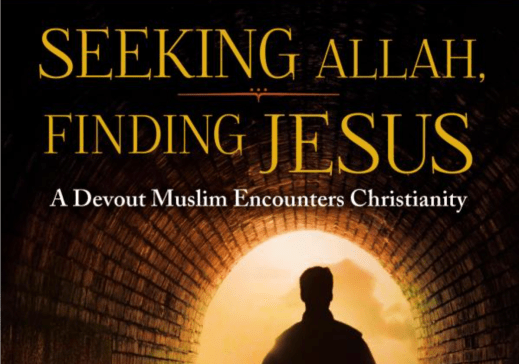
Hearing about Qureshi’ struggle as he thought about what it would mean to convert to Christianity was helpful. It will help me to be appropriately empathetic will discussing Christianity with Muslims. It is helpful to realize that “Muslims often risk everything to embrace the cross” (p. 253). I appreciated hearing his prayer: “O God! Give me time to mourn. More time to mourn the upcoming loss of my family, more time to mourn the life I’ve always lived” (p. 275). I also appreciated what he said about the cost of discipleship: “I had to give my life in order to receive His life. This was not some cliché. The gospel was calling me to die” (p. 278). Read More…
The Day of the LORD and the Decisiveness of the Present Life

What we do in this current life has an eternal impact. The New Testament insists on the decisiveness of this life.[1] In the early church, the “idea that the coming judgment will be based on deeds done in this life was widespread.”[2] For example, “Do not fear those who kill the body but cannot kill the soul. Rather fear him who can destroy both soul and body in hell” (Matt. 10:28).
All through Scripture it talks about the Day of the LORD (sg.).[3] The Bible does not talk about judgments starting at the Great White Throne Judgment (Rev. 20:11ff) and going from there on into eternity where people have multiple chances to repent. That’s why it says, “Behold [ἰδοὺ], now [νῦν] is the day of salvation” (2 Cor. 6:2; cf. Ps. 32:6; Is. 55:6). Acts 17:31 says, God “has fixed a day [sg.] on which He will judge the world in righteousness by a man whom He has appointed; and of this He has given assurance to all by raising Him [i.e. Jesus] from the dead.”
Hebrews says, “it is appointed for man to die once, and after that comes judgment [sg.]” (9:27). Thus, in Scripture, we do not see that people can repent after the Judgment. Actually, to get the idea of repentance after the Judgment you would have to add to Scripture. Yet, listen to Revelation: “I warn everyone who hears the words of the prophecy of this book: if anyone adds to them, God will add to him the plagues described in this book, and if anyone takes away from the words of the book of this prophecy, God will take away his share in the tree of life and in the holy city, which are described in this book” (22:18-19).
Texts Espoused to Teach Universalism

The goal here is not to give an exhaustive commentary on each passage but merely to show that there are very viable interpretations that are faithful to the whole of Scripture and do not lead to universalism.
Is. 45:22-23
“Turn to me and be saved, all the ends of the earth! For I am God, and there is no other. [23] By myself I have sworn; from my mouth has gone out in righteousness a word that shall not return: ‘To me every knee shall bow, every tongue shall swear allegiance.’”
In the LXX (the Greek translation of the Old Testament) απιστραϕητε is an imperative and means “turn around.” It has to do with changing ones beliefs and ways. It translates the Hebrew word (פָּנָה) meaning “turn” which is also in the imperative. So God here is not asking people to turn to Him, He’s commanding it. And it says that all people (from the farthest stretches of the earth) who turn to Him will be saved. But it implies that all who don’t turn to Him (in space in time before the Judgment) will not be saved. So we see precedence for “all” being saved here, that is, if any turn to the Lord from all over the earth they will be saved. Whosoever believes will be saved, Jew or Gentile. It was (in the OT and NT) an amazing thing for Paul for example that Gentiles can now be welcomed in (he called it a mystery). All the uncircumcised, the Egyptians that enslaved Israel, the Babylonians, all people that turn to the Lord (in space in time before the Judgment) will be saved. They will be saved from the terror of the Messiah’s Second Coming and the Final Destruction.
In the context, this passage would strike fear into the hearers, not comfort. This passage is saying, “repent and turn or else!” Further, v. 25 says “all the offspring of Israel shall be justified,” i.e. all those who have faith (see e.g. Rom. 2:28-29; 4:1-16; 9:6), not all without exception. “Yahweh’s speech ends with a prediction of destructive fire for those who do not submit to his reality and reign (Isa 47:14-15)… There is voluntary submission for some and involuntary submission for others.”[1]
The Eternality of Hell

When we interpret “forever” in English, as well as in Greek, context is king. For example, when someone gets back from the DMV and says to us, “that took forever,” what do we interpret that phrase to mean? We take a number of things into account in our interpretation. We understand that it takes a relatively long time at the DMV and we understand that people very often joke about how long it takes at the DMV. We also take into account that the person is standing in front of us saying, “that took forever” which clearly demonstrates that it did not in fact literally take forever.
The person that said “forever” was using it as an expression for “a long time.” However, if that same person said, “God is forever” we would understand that we need to interpret that “forever” differently. Why? Because context is king. And context is telling us that the referent in this case is “God,” not the DMV, and that fact changes the meaning of the word “forever.”
The Bible tells us that certain things are eternal/everlasting. For instance, God is eternal (Rev. 4:9-10), Jesus is alive forevermore (Rev. 1:18), heaven is eternal (Jn. 3:16), and judgment in hell is eternal. If we say judgment in hell is not eternal then we lose grounds for saying that God, Jesus, and heaven are eternal since the same words are explicitly and very intentionally used to express the eternity of each subject under question (and the eternality of hell and heaven are even paralleled in Matthew 25:46).
“Dear God, I want to be very rich…” (and other prayers)

“Dear God, I want to be very rich. I would like a Benz or at least a new Honda Civic with a sweet spoiler and racing stripe…”
Do your prayers sound like that? Probably not. You might prefer a BMW.
Realistically, our prayers don’t very often sound quite like that but sometimes that is about the gist of what we pray for. Stuff, sometimes good stuff, is what occupies the majority of our prayers. I am not saying it is always bad to pray for stuff. I am not saying it is bad for us to pray that our dear Aunt Ruth will get over her cold, we should do that, please do, but we must also pray for other stuff; spiritual stuff.
Two Humanities

All throughout the Bible, from Genesis to Revelation, we see two distinct groups.[1] God has called particular people from all nations. As James Hamilton has said, “People are either seed of the serpent, on the side of the snake in the garden, or seed of the woman, on the side of God and trusting in his promises.”[2]
The careful reader of Scripture can see the enmity between the two seeds in Genesis[3] and in fact through the whole Old Testament. There are physical decedents of Eve that are spiritually seed of the serpent.[4] This is not just something we see in the Old Testament though. We see it through the whole of Scripture (cf. e.g. Matt. 13:38; Jn. 8:44; 1 Jn. 3:8). We see two distinct seeds with two distinct ends from the beginning of Genesis (cf. esp. Gen. 3:15) to the end of Revelation (cf. e.g. Rev. 21).
Notice that in 2 Thessalonians 1:7-10 there are two groups: (1) those who did not believe and thus receive judgment and (2) those who do believe and thus enjoy the presence of God and marvel at Him. And notice Jesus separates the goats from the sheep based on what they did in their earthly lives (Matt. 25:32ff). People are gravely either goat or sheep, wise or fool, darkness or light, faithful or faithless, in Christ or damned.
As I have said, the Bible shows two different humanities, one lost and the other saved, one in heaven and one in hell. This is what we see throughout the story of Scripture and this is what we see reflected in other places in the early church’s teaching. For instance, the Didache (50-120AD) says, “There are two ways, one of life and one of death, and there is a great difference between the two ways” (1:1).[5]
Universalism and Historical Confessional Christianity

As a protestant who believes in sola Scriptura (Scripture alone), I believe that tradition and confessional Christianity does not hold a place above Scripture. However, I do believe it is important and helpful to consider what church history has to say on theological issues. So let’s look briefly at the question of whether or not universalism has been accepted in historical confessional Christianity.
Harold J. Brown makes an interesting point that we should consider. He says,
“curiously enough, it is heresy that offers us some of the best evidence for orthodoxy, for while heresy is often very explicit in the first centuries of Christianity, orthodoxy is often only implicit. If we hope, today, that the orthodoxy we believe is the ‘faith once delivered to the saints’ (Jude v. 3), then it is necessary to assume that it is older than heresy. But heresy appears on the historical record earlier, and is better documented, than most of what the church came to call orthodoxy. How then can heresy be younger, orthodoxy more original? The answer is that orthodoxy was there from the beginning and heresy reflected it. Sometimes one catches a glimpse of another person or object in a mirror or a lake before seeing the original. But the original preceded the reflection, and our perception of it. The same, we could argue, is true of orthodoxy—the original—and heresy—the reflection. The heresy we frequently see first, but orthodoxy preceded it.”[1]
False teachings call into question the pillars of Christianity and so teachers and creeds rise up in protection of the church’s foundational teaching. The doctrine of the Trinity has always been orthodox but there has not always been a creed stating such. The reason for this is because false teaching gives rise to defensive of orthodox teaching. Thus, in history we often see heresy argued before we see orthodoxy defended. Greg A. Allison says that the “issue of the continuation of punishment for the wicked became a point of debate with the theology of Origen”[2] (c. 185-254) so it makes sense that universalism was not formally acknowledged as heresy until later on.
Everett Ferguson says that
“apart from Origen, who entertained the possibility of universal salvation after a period of purification and education of souls in the afterlife, those who spoke to the subject understood an ultimate division of humanity in heaven or hell. The expectation of eternal reward sustained Christian endurance in the face of persecution and other hardships.”[3]
W. G. T. Shedd wrote:
“The common opinion in the Ancient church was, that the future punishment of the impenitent wicked is endless. This was the catholic faith; as much so as belief in the trinity. But as there were some church fathers who deviated from the creed of the church respecting the doctrine of the trinity, so there were some who dissented from it in respect to that of eternal retribution. The deviation in eschatology, however, was far less extensive than in trinitarianism.”[4]
Allison demonstrates in his book Historical Theology: An Introduction to Christian Doctrine that
“from its inception, the church has believed that there will be a final judgment of both believers and unbelievers… On the one hand, this judgment will usher believers into the presence of Christ and the blessedness of heavenly reward forever. On the other hand, following the judgment of condemnation, unbelievers will experience eternal conscious punishment in hell. Only a few Christians deviated from this understanding of the last judgment and eternal punishment.”[5]
A few more examples:
“As regards the fate of the wicked… the general view was that their punishment would be eternal, without any possibility of remission.”[6]
“Everlasting punishment of the wicked always was, and always will be the orthodox theory.”[7]
“The punishment inflicted upon the lost was regarded by the Fathers of the Ancient Church, with very few exceptions, as endless.”[8]
“Church creeds from the early Middle Ages through the Reformation and into the modern era regularly affirmed the eternal punishment of the wicked… The reality of hell and eternal punishment was thought to be as basic to Christian belief as the Trinity and incarnation.”[9]
The Importance of Correct Hermeneutics

If we don’t understand things in their proper context there will be grave results. Let’s look at a few verses as an example and apply a skewed hermeneutical approach and see what the result is.
John 3:16 says, “God sent His Son” and we see that Jesus as God’s son is confirmed in other Scriptures. Take for example Romans 8:32. Or Hebrews 5:8 tells us that although Jesus “was a son, He learned obedience.” Luke 2:42 says that “Jesus increased in wisdom and in stature and in favor with God and man.”
So, it could be argued that Jesus, as God’s Son, was created and had to learn. After all, doesn’t “son” mean “son”?! Isn’t that the clear reading of the text? If the Bible says that Jesus is a “son” and “the firstborn of all creation” does that mean that Jesus is not eternal? Does it mean that He is a created being?
If we just look at the word “son” and extrapolate its meaning without understanding the context and the sense in which the author is using the word we can make very dangerous and false conclusions. Is Jesus a son in the sense of being a created being? No! That is the Arian heresy. We must understand what the author meant and we must use clear texts to help us interpret the less clear. A bad hermeneutical approach will lead to all sorts of false and destructive doctrines.
When looking at any doctrine it is important to understand a number of things. When looking at the sonship of Jesus for example, it is important to know the Old Testament and cultural importance of sonship. It is also important that other Scriptures are factored in. For example, John 1:1-14 and Colossians 1:15-17 show us that Jesus is not created but instead Creator.
So, “the obscure passage must yield to the clear passage. That is, on a given doctrine we should take our primary guidance from those passages which are clear rather from those which are obscure.”[1] Charles Hodge said in his Systematic Theology that
“If the Scriptures be what they claim to be, the word of God, they are the work of one mind, and that mind divine. From this it follows that Scripture cannot contradict Scripture. God cannot teach in one place anything which is inconsistent with what He teaches in another. Hence Scripture must explain Scripture. If a passage admits of different interpretations, that only can be the true one which agrees with what the Bible teaches elsewhere on the same subject.”[2]
Here are some important affirmations for biblical hermeneutics:
- We should affirm the unity, harmony, and consistency of Scripture and declare that it is its own best interpreter.[3]
- We should affirm that any preunderstandings which the interpreter brings to Scripture should be in harmony with scriptural teaching and subject to correction by it.[4]
- We should affirm that our personal zeal and experiences should never be elevated above Scripture (see Rom. 10:2-3).
- We should affirm that texts of Scripture must be interpreted in context (both the immediate and broad context).
- We should affirm that we must only base normative theological doctrine on clear didactic passages that deal with a particular doctrine explicitly. So, we should affirm that we must never use implicit teaching to contradict explicit teaching.
______________________
[1] Bernard Ramm, Protestant Biblical Interpretation: A Textbook of Hermeneutics, 37.
[2] Charles Hodge, Systematic Theology, Vol. 1, Introduction, Chapter VI, The Protestant Rule of Faith.
[3] See “The Chicago Statement on Biblical Hermeneutics,” Article XVII.
[4] See Ibid., Article XIX.



