Why should I believe the Bible? (pt 1)

“Why should I believe the Bible?”
That is a very important question. In the next couple of posts, we will briefly consider various aspects of the Bible so that we are in a better position to answer that question.[1]
First, the Bible is…
Literature
The Bible is a very distinct piece of literature; it is truly unlike any other literary work. It is unique.
The Bible is the best selling book of all time and the most translated book of all time.[2] The figures vary but it is estimated that there are approximately 44 million copies sold each year. The Bible, whatever your opinion about its supernatural nature, should be read by all people. Reading and understanding the Bible is important in part because of the huge cultural impact it has had.[3] “No other book in all human history has in turn inspired the writing of so many books as the Bible.”[4]
So, read the Bible as literature. As C.S. Lewis said, “There is a sense in which the Bible, since it is after all literature, cannot properly be read except as literature; and the different parts of it as the different sorts of literature they are.”
___________________
[1] There are a lot of aspects to look at because, as Ravi Zacharias has said, a worldview is not built on one line of argument, but is built on a connected series of arguments.
[2] “As of September 2016 the full Bible has been translated into 636 languages, the New Testament alone into 1442 languages and Bible portions or stories into 1145 other languages. Thus at least some portion of the Bible has been translated into 3,223 languages” (http://www.wycliffe.net/statistics).
[3] See, as just one example, Martin Luther King Jr.’s “I have a Dream” speech. It alludes to Is. 40:4-5; Amos 5:24; Ps. 30:5; Gal. 3:28.
[4] Bernard Ramm, Protestant Christian Evidences, 239.
Darwin, Dawkins, and Moral Duty

Dawkins says “justice is a human construct of great importance in human affairs.”[1] And Dawkins believes that there is probably a Darwinian explanation that explains justice. So, our concept of justice is just a convenient Darwinian happenstance. I believe he says “blessed precious mistake” in his book The God Delusion. Of course, Nietzsche would disagree. Nietzsche in On the Genealogy of Morals doesn’t think it’s blessed or precious.
Also, if justice is merely a human construct then the cannibal clan in Cormac McCarthy’s book The Road are not wrong in keeping people locked up in the cellar in order to slaughter and eat.
20 Quotes from Gregory Koukl’s Tactics
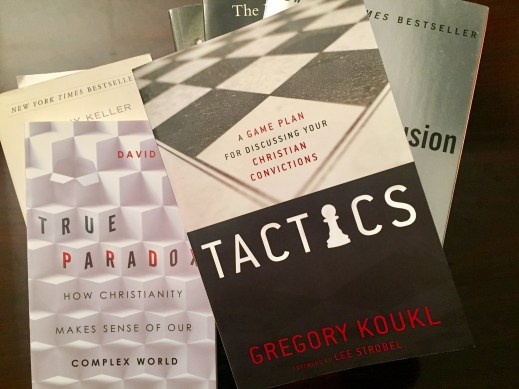
I found Gregory Koukl’s book Tactics helpful. Here‘s a book review to check out and here are some quotes from the book that I enjoyed:
- “Even though there is real warfare going on, our engagement should look more like diplomacy than D-Day” (19).
- “You must be careful not to use your tactics merely to assault others… I am not opposed to being assertive, direct or challenging. However, I never intend to be abrasive or abusive” (27).
- “Always make it a goal to keep your conversations cordial. Sometimes that will not be possible. If a principled, charitable expression of your ideas makes someone mad, there’s little you can do about it. Jesus’ teaching made some people furious. Just make sure it’s your ideas that offended not you, that your beliefs cause the dispute and not your behavior” (31).
- “The ability to argue well is vital for clear thinking. That’s why arguments are good things. Arguing is a virtue because it helps us determine what is true and discard what is false” (33).
- “It doesn’t follow that if God’s Spirit plays a vital role, then reason and persuasion play none” (35) (cf. Acts 17:2-4).
- “Some people think Christians are the only ones who need to answer for their beliefs. Of course, we should be able to give reasons for what we think is true. But we are not the only ones; others should be able to do this, too” (58).
- “Many Challenges to Christianity thrive on vague generalities and forceful but vacuous slogans” (58).
- Ask people for facts to support their conclusions. “Most critics are not prepared to defend their faith” (61).
- “Reversing the burden of proof is not a trick to avoid defending our own ideas. When we give opinions, we have to answer for them just like anyone else. We have a responsibility, but so do they” (65).
- “When someone asks for your personal views about a controversial issue, preface your remarks with a question that sets the stage—in your favor—for your response. Say, ‘You know, this is actually a very personal question you’re asking. I don’t mind answering, but before I do, I want to know if it’s safe to offer my views. So let me ask you a question: Do you consider yourself a tolerant person or an intolerant person on issues like this? Is it safe to give my opinion, or are you going to judge me for my point of view? Do you respect diverse points of view, or do you condemn others for convictions that differ from your own?’ Now when you give your point of view, it’s going to be very difficult for anyone to call you intolerant or judgmental without looking guilty, too” (78).
- “The quickest way to deal with a personal attack is to simply point it out with a question. When someone goes after you rather than your arguments, ask, ‘I’m a little confused about your response. Even if you were right about my character, could you explain to me exactly what that has to do with this issue?’” (79).
- “Think about using the phrase ‘Have you considered’ to introduce your concern, then offering a different view that gently questions the person’s beliefs or confronts weaknesses with his argument… ‘Have you ever considered… that the existence of evil is actually evidence of the existence of God, not against it?’… ‘Have you ever considered… that if Jesus was wrong about being the only way of salvation, it is difficult to call him a good man, a prophet, or a wise religious teacher? What do you think about that problem?’” (84).
- “Can you help me understand this? If there is no evidence that life came from non-life (abiogenesis)—that life spontaneously arose from inanimate matter to kick off the sequence of evolution—and there is much evidence against it, how can we say that Darwinian evolution is fact?” (85)
- “If someone’s thinking is flawed, the key to finding the error is to listen carefully to the reasons and then ask if the conclusions follow from the evidence. Point out errors with questions rather than statements. You might soften your challenge by phrasing your concern as a request for clarification or by suggesting an alternative with the words ‘Have you considered…’ before offering your own ideas” (88).
- “As a general rule, go out of your way to establish common ground. Whenever possible, affirm points of agreement. Take the most charitable read on the other person’s motives, not the most cynical. Treat them the way you would like others to treat you” (95).
- “If all religions are true, then Christianity is true. Yet a central claim of classical Christianity is that other religions are false when taken as a whole. Clearly, Jesus was not a pluralist. Either Christianity is correct that Jesus is God’s Messiah for the world and other religions are deceptions, as Scripture teaches, or Christianity is false and some other view is true. In no case, though, can all religions be true and valid” (119).
- “If you help someone see in advance that the route his map recommends will actually lead him off a cliff, he might consider changing his course. He might even discover he is using the wrong worldview map altogether and exchange it for one that is more reliable” (143).
- “When there is a conflict between methodology and materialism, the philosophy always trumps the facts. Modern science does not conclude from the evidence that design is not tenable” (171).
- “When an academic begins with naturalism, a series of ‘facts’ fall into place before any genuine historical analysis begins… Starting with one’s conclusions, though, is cheating. Nothing has been proved, only assumed” (173).
- “Carnage of unimaginable proportions resulted not from religion, but from institutionalized atheism” (177).
Apologetics Resources

I really enjoy apologetics and believe it’s important that we know why we believe what we believe. Here are some resources I’ve found helpful.
General
Nabeel Qureshi, Seeking Allah, Finding Jesus (a book review)
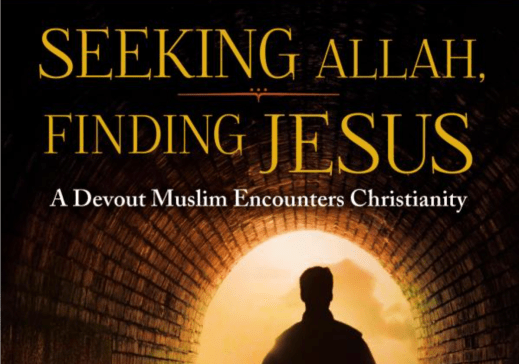
Hearing about Qureshi’ struggle as he thought about what it would mean to convert to Christianity was helpful. It will help me to be appropriately empathetic will discussing Christianity with Muslims. It is helpful to realize that “Muslims often risk everything to embrace the cross” (p. 253). I appreciated hearing his prayer: “O God! Give me time to mourn. More time to mourn the upcoming loss of my family, more time to mourn the life I’ve always lived” (p. 275). I also appreciated what he said about the cost of discipleship: “I had to give my life in order to receive His life. This was not some cliché. The gospel was calling me to die” (p. 278). Read More…
Nietzsche: Prophet of Doom (Part 4)
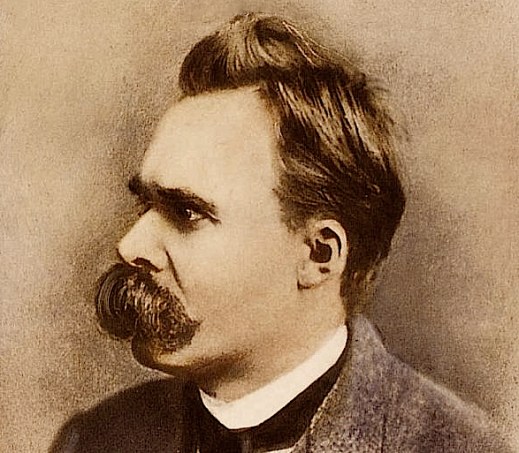
Nietzsche’s Ideal
I want to look at the functionality of Nietzsche’s philosophy. What kind of world does Nietzsche’s philosophy create? Nietzsche’s philosophy creates a world in its own image, one in which people bite and devour each other.
Nietzsche’s philosophy creates all sorts of problems. For example, Nietzsche was not an anti-Semite; he disagreed with his sister and brother-in-law who were. But, it is hard to say upon what grounds. When there is no morality, when “god is dead,” it is hard to criticize morality in other people. Yet, we see him do this time and time again. When we say there is no God, when we say there is no morality, if we are to be consistent we must realize there is no morality and we must come to terms with the world that it creates. So, I am not necessarily pointing out that Nietzsche was wrong, though I think he was, but I want to point out that he and many who have come after him are inconsistent. We cannot hold up Nietzsche’s ideas in the many forms they take and not expect a torrent of injustices to overwhelm us that harken back to Auschwitz.
Nietzsche hated Christianity’s morality that was based, in his opinion, on “pie in the sky.” However, Nietzsche’s morality, or lack thereof, leads to hell here. Nietzsche very likely would not have supported Nazism, and it seems as if he was not anti-Semitic, but many of his writings support the atrocities of the holocaust.
If Nietzsche is right that God is dead then his morality is right as well. That is, there is no right, there is no wrong, there is in sum, no morality. As Ivan Karamazov said in Fyodor Dostoyevsky’s book The Brothers Karamazov, “If God is dead, everything is permitted.” In fact, morality is unhelpful. Nietzsche basically says that morality is nihilistic. He says, “Morality is a way of turning one’s back on the will to existence.”[1]
However, we cannot really live in a world like that, we, at least, would loathe that world. But, that’s the bitter truth if God is dead. If God is dead there is no killing a billion devils. Hell may not then be literal, but hell on earth is. If God is dead, humanity is “free;” free to wallow in its own mire. Free to oppress, free to enslave, free to hate, free to do whatever it is we feel to do, so long as we are more powerful than the powers that be…
So, Nietzsche’s atheistic “morality” might be freeing, if you’re at the top of the food chain. But if you’re a minority or a small off-shoot fringe group that’s not accepted by the powers that be, you are likely to be stubble for the Übermensch’s flame. Freedom it seems only would come to the “god” of this world, the “god” that is strong enough to enslave others (of course you might say, that even that “god” is then enslaved to continually fight for his so-called “godhood”). And so, we see that Nietzsche provides no freedom, he just provides a different master, one that (Romans 6 reminds us) brings a litany of death, debauchery, chaos, and everlasting curse. Nietzsche and his morality—and Darwin and Dawkins[2]—do not finally bring freedom and fun or hope of heaven on earth, they bring a very real type of hell to life on earth; they, when their philosophy is lived out to its logical conclusion, nearly have the power to give demons flesh.[3] They, short of incarnating evil, do image their master the devil. They carry out his deeds by their acts; acts of rape, acts of mutilation, acts of vile debauchery and calculated cruelty, they glory in their shame and they praise and promote those who do the same. They do this because they did not see fit to honor God, they thus become futile in their thinking, and do the works of their father the devil.
My goal is not so much to prove Nietzsche wrong, in my opinion, he has done that himself. My goal is to prove that if “God is dead” it follows that there is no morality and that makes for a terrible world. This is immediately relevant to our current culture. We desire Eden—healthy people and planet, peace, and prosperity—all the while saying there is no God and we can do as we like.[4]
It seems then that Hitler’s Mein Kampf was influenced by Nietzsche’s work. It seems to me that a seed was planted in Nietzsche’s work that Hitler would later cultivate to very destructive ends.[5] Nietzsche may not have foreseen or intended all the Nazi party carried out but it seems that what they did is in line with his thought So, although Nietzsche himself may not have supported the Nazi party, his thought when taken to its logical conclusion, does seem to lead to many of the things that the Nazi party did. Nietzsche, from my reading of him, would certainly have no grounds to criticize anything that they did.
The brutality that Hitler and his regime carried out was necessary as Nietzsche described: “man’s sacrifice en bloc [all together] to the prosperity of one single stronger species of man—that would be progress.”[6] Thus the brutality and sacrifice would be worth it in Nietzsche’s mind because it would bring about a new and better age. Nietzsche, I am sure, could concur with these words from Hitler: “Those who want to live, let them fight, and those who do not want to fight in this world of eternal struggle do not deserve to live.”[7]
Nietzsche said this in Beyond Good and Evil:
The crucial thing about a good and healthy aristocracy… is that it does not feel that it is a function… but rather its essence and highest justification—and that therefore it has not misgivings in condoning the sacrifice of a vast number of people who must for its sake be oppressed and diminished into incomplete people, slaves, tools. Its fundamental belief must simply be that society can not exist for its own sake, but rather only as a foundation and scaffolding to enable a select kind of creature to ascend to its higher task and in general to its higher existence.[8]
As we have said, we can extrapolate, especially with hindsight, that Nietzsche’s philosophy had an impact (though to what degree we cannot say) on Nazism. If there is no right and no wrong, only what is desirable and undesirable for the particular individual, then we allow, even give precedence, for all sorts of moral degradation (because, after all, moral degradation does not actually exist, only the will to power). Thus, we see Nietzsche’s ideal, his philosophy, ultimately promotes violence and all sorts of vile practices.
________________
[1] Friedrich Nietzsche, The Will to Power, par. 11.
[2] Richard Dawkins follows Nietzsche in saying that “In a universe of blind physical forces and genetic replication, some people are going to get hurt, other people are going to get lucky, and you won’t find any rhyme or reason in it, nor any justice. The universe we observe has precisely the properties we should expect if there is, at bottom, no design, no purpose, no evil and no good, nothing but blind, pitiless indifference” (Richard Dawkins, River Out of Eden: A Darwinian View of Life [New York: Basic Books, 1995], 133).
[3] If morality was just a “misfiring” or a “Darwinian mistake,” even a “blessed, precious mistake” (Richard Dawkins, The God Delusion [New York: Mariner Books, 2008], 253) it would not be grounds for living a moral life. Yes, one certainly could still live a moral life, as apparently, Dawkins claims to. He even makes fun of the consideration that people would need a judge in the sky to make us moral. However, Dawkins does not take into account various atheists that attest to the truth that we need a judge in the sky to keep humanity from caring out acts of atrocity on others (cf. e.g. Richard Wurmbrand, Tortured for Christ). If there is no evil, no true transtemporal truth, then there really are no real acts of atrocity. If God is dead, all things are permissible. They may not always be efficient or wise but they are permissible. Efficiency itself becomes the criteria of right and wrong (cite eugenics, euthanasia, Trump’s taxes, etc.). Efficiency becomes a parallel to Nietzsche’s “will to power.” The person that rises above the system (e.g. moral, political), uses the system, or beats the system is the “over-self” that bends the world to its own ends. This is the new “morality,” striving and thriving to subdue life and life’s systems to whatever end is desirable. The true “over-self” may not call themselves a disciple of Nietzsche, it may even be unwise of them to make that claim, but if they live in the ways mentioned above then they are a disciple of Nietzsche even if they don’t know it. They may claim they’re not, they may claim to be pragmatists but they seem to be Nietzsche’s disciples nonetheless.
[4] It reminds me quite a bit of the first sin: forgetting God and doing as we desire. Here we see the danger of autonomous reasoning. From the beginning, even before the Fall, we have been dependent upon God for everything, revelation directing us to know what we should desire. In fact, I think Nietzsche would be happy in that it seems like the only morality today seems to be to do whatever suits the particular individual (unless it infringes upon what someone else wants to do or is really nasty). So, there seems to be no rules, except do not make rules for others or do “really bad things” (like pollution, Christian hypocrisy, and pedophilia).
[5] The Stanford Encyclopedia says “during the 1930s, aspects of Nietzsche’s thought were espoused by the Nazis and Italian Fascists, partly due to the encouragement of Elisabeth Förster-Nietzsche through her associations with Adolf Hitler and Benito Mussolini. It was possible for the Nazi interpreters to assemble, quite selectively, various passages from Nietzsche’s writings whose juxtaposition appeared to justify war, aggression and domination for the sake of nationalistic and racial self-glorification” (Wicks, “Friedrich Nietzsche” in The Stanford Encyclopedia of Philosophy).
[6] Par. 12 of the Second Essay in On the Genealogy of Morality.
[7] Adolf Hitler, Mein Kampf, 289.
[8] Nietzsche, Beyond God and Evil, par. 258. Cf. Darwin’s thoughts on the queen bee. He said, “we ought to admire the savage instinctive hatred of the queen-bee, which urges her instantly to destroy the young queens her daughters as soon as born, or to perish herself in the combat; for undoubtedly this is for the good of the community; and maternal love and maternal hatred, though the latter fortunately is most rare, is all the same to the inexorable principle of natural selection” (Charles Darwin, The Origin of Species [London: Penguin, 1968], 230).
Nietzsche: Prophet of Doom (Part 3)

Nietzsche’s Critique: Christianity is Nihilistic
Nihilism,[1] for Nietzsche, is something that happens when “slave morality”[2] is followed. It seems like Nietzsche is saying that when you follow the Christian teaching then you no longer care about yourself, you put your hope in “pie in the sky,” and you become nothing. Ironically, as we will see, Nietzsche’s philosophy is the ultimate view that leads to nothingness. In his system, there is no ultimate reason for meaning or morality. Thus, what he criticized Christians for is most fully realized in his own position.
Nietzsche is not intending to promote nihilism but sees himself as fighting against it.[3] Nietzsche clearly sees Christianity as nihilistic. He promotes the animal instinct of the will to life, of fighting tooth and nail to exploit whatever can be exploited. In reading Nietzsche, it seems like the ideal world for him would be one in which we live like animals. Nietzsche’s ideal world seems to be a rough and wild animal kingdom where the powerful rule.[4]
Nietzsche concludes that Christianity is nihilistic and believes that the Übermensch who is anti-nihilistic will one day come to save the world.[5] He over and over again, bemoans weak and wicked, guilt ridden, Christianity.[6] He awaits the dawn of the superior man of the future that will deliver the world from its nauseating and nonsensical fascination with compassion and grace.[7]
In On the Genealogy of Morality,[8] Nietzsche says that large birds of prey do nothing wrong in eating and attacking lambs, they are only doing what comes natural to them. The lambs might say that the birds of prey are bad and that whoever is least like them, like a lamb, is good. However, it seems like Nietzsche is saying that that reasoning does not make sense. The lambs are not any better, any more “good,” than the birds of prey. Their criterion of “good” is subjective and they are merely trying to protect themselves by defining “good” as they themselves already are.[9] Within the paragraph Nietzsche says, “a good person is anyone who does not rape, does not harm anyone, who does not attack, does not retaliate, who leaves the taking of revenge to God,… avoids all evil and asks little from life in general.”
It seems like for Nietzsche the “good person,”[10] who does not do bad things, corresponds to the lamb; and the “bad person,” who does bad things like rape and attack, corresponds to the bird of prey. Therefore, Nietzsche seems to be making the point that the “bird of prey,” the so-called “bad person” that rapes, harms, and attacks is really not evil because “evil” after all is something that the “lamb,” the so-called “good person,” made up. Therefore, we see that in a world where God is dead and morality is subjective[11] then there is nothing ultimately wrong with raping, harming, and attacking others.[12] Actually, Nietzsche basically says that the “lambs,” i.e. the early Christians and Jews, made up their morality to get back at the “birds of prey,” the masters that treated them badly.[13]
Plantinga concurs with my observation. He says,
Nietzsche’s… complaint: that religion originates in slave morality, in the ressentment [sic] of the oppressed. As Nietzsche sees it, Christianity both fosters and arises from a sort of sniveling, cowardly, servile, evasive, duplicitous, and all-around contemptible sort of character, which is at the same time envious, self-righteous, and full of hate disguised as charitable kindness. (Not a pretty picture).[14]
Nietzsche said, “I expressly want to place on record that at the time when mankind felt no shame towards its cruelty, life on earth was more cheerful than it is today,… The heavens darkened over man in direct proportion to the increase in his feeling shame at being man.”[15] He is saying that man should not feel shame at “being man,” that is, following his animal instincts (perhaps to rape, harm, and attack like the “bird of prey”). For Nietzsche, it was sermonizing that led the animal “man” to feel ashamed of his instincts.[16]
For Nietzsche, “life functions essentially in an injurious, violent, exploitative and destructive manner, or at least these are its fundamental processes and it cannot be thought of without these characteristics.”[17] Thus, he seems to reason that any system or person that fails to acknowledge this and function in this way is hostile to life and attempts to assassinate the future of man, and follows a path to nothingness.[18] Nietzsche in fact says that “life itself in its essence means appropriating, injuring, overpowering those who are foreign and weaker; oppression, harshness, forcing one’s own forms on others, incorporation, and at the very least, at the very mildest, exploitation.”[19] Nietzsche even says “Perhaps I can even be allowed to admit the possibility that pleasure in cruelty does not really need to have died out.”[20]
Nietzsche said that “people everywhere are rhapsodizing, even under the guise of science, about future social conditions that will have lost their ‘exploitative character’—to my ear that sounds as if they were promising to invent a life form that would refrain from all organic functions.” This seems so apparent to Nietzsche because “the original fact of all history” is that “’Exploitation’ is not part of a decadent or imperfect, primitive society: it is part of the fundamental nature of living things.”[21] Thus, utopia, Eden, heaven, etc. will never be our home. Our nature, since the beginning has been to exploit and Nietzsche would conclude there is nothing wrong with that, it is perfectly normal and realistic.
Nietzsche believes that it is a terrible thing that “the animal ‘man’ is… taught to be ashamed of all his instincts.”[22] Man, at his core, is an animal following his will to life. Christianity, conversely, says we are not animals but that humans, male and female, are created in the image of God and thus have intrinsic worth. We also see that we do not have to follow are base sinful, not merely animalistic, instincts. Nietzsche is hitting on something. We do have instincts, but they come from Adam and the Fall, not animals. Nietzsche’s solution to the inner problem that we all face is wrong as well. The solution is not to give in and forget guilt. The answer is to become a new creation in the better Adam.
_________________
[1] The word “nihilism” comes from the Latin word nihil, which means “nothing.” Nietzsche basically says that nihilism is the predilection for and overvaluation of compassion (see par. 5 in the Preface of On the Genealogy of Morality cf. the end of par. 12 in the First Essay par. 24 in the Second Essay). As Clare Carlisle says, “Although Nietzsche’s philosophy is sometimes mistakenly described as ‘nihilistic’, the opposite is in fact the case, for the purpose of his writing was to halt and to reverse this process of decline” (Clare Carlisle, “Nietzsche’s Beyond Good and Evil: ‘Why insist on the truth?’” in Richmond Journal of Philosophy 4 (Summer 2003). It does seem ironic that Nietzsche’s own philosophy would later be termed nihilistic, which I think is accurate. Nietzsche’s philosophy does lead us to conclude that all values are baseless and that nothing can be known; thus leading us to nihilism. So, although Nietzsche said Christianity was nihilistic, in the final analysis it is his own thought that is. Nietzsche says that Christians have “an imaginary teleology (the “kingdom of God,” “the last judgment,” “eternal life” (The Antichrist, par. 15) and yet Nietzsche has no teleology, Nietzsche is left with nothing—nihilism.
[2] In a sense, so-called “slavery morality” comes from Christ Himself and can be traced all the way back to God the Father. God had pity on Adam and Eve, Israel in Egypt, and on the hopeless state of humanity. Nietzsche is essentially damning humanities only hope of redemption. In fact, the rescue mission included Jesus becoming a man and taking the form of a slave, and dying, dying on a roman cross. Nietzsche who seemed to respect Jesus in many ways hated what Jesus was actually doing. Christ emptied Himself, Christ had pity.
[3] “Pity thwarts the whole law of evolution, which is the law of natural selection. It preserves whatever is ripe for destruction; it fights on the side of those disinherited and condemned by life; by maintaining life in so many of the botched of all kinds, it gives life itself a gloomy and dubious aspect. Mankind has ventured to call pity a virtue (—in every superior moral system it appears as a weakness—); going still further, it has been called the virtue, the source and foundation of all other virtues—but let us always bear in mind that this was from the standpoint of a philosophy that was nihilistic, and upon whose shield the denial of life was inscribed. Schopenhauer was right in this: that by means of pity life is denied, and made worthy of denial—pity is the technic of nihilism. Let me repeat: this depressing and contagious instinct stands against all those instincts which work for the preservation and enhancement of life: in the rôle of protector of the miserable, it is a prime agent in the promotion of décadence—pity persuades to extinction… Of course, one doesn’t say “extinction”: one says “the other world,” or “God” (Nietzsche, The Antichrist, par. 7). One translation says, “pity is the practice of nihilism” (par. 7).
[4] “There is no place in Nietzsche’s picture of the ideal man for pity: pity is nothing more than a morbid fascination with failure. It is the great weakener of the will, and forms the bond between slaves, which perpetuates their slavery” (Roger Scruton, Modern Philosophy: An Introduction and Survey [New York: Penguin Books, 1994], 297).
[5] See par. 24 of the Second Essay in On the Genealogy of Morality.
[6] “I condemn Christianity; I bring against the Christian church the most terrible of all the accusations that an accuser has ever had in his mouth. It is, to me, the greatest of all imaginable corruptions; it seeks to work the ultimate corruption, the worst possible corruption. The Christian church has left nothing untouched by its depravity; it has turned every value into worthlessness, and every truth into a lie, and every integrity into baseness of soul. Let any one dare to speak to me of its “humanitarian” blessings! Its deepest necessities range it against any effort to abolish distress; it lives by distress; it creates distress to make itself immortal… For example, the worm of sin: it was the church that first enriched mankind with this misery!—The “equality of souls before God”—this fraud, this pretext for the rancunes of all the base-minded—this explosive concept, ending in revolution, the modern idea, and the notion of overthrowing the whole social order —this is Christian dynamite… The “humanitarian” blessings of Christianity forsooth! To breed out of humanitas a self-contradiction, an art of self-pollution, a will to lie at any price, an aversion and contempt for all good and honest instincts! All this, to me, is the “humanitarianism” of Christianity!—Parasitism as the only practice of the church; with its anæmic and “holy” ideals, sucking all the blood, all the love, all the hope out of life; the beyond as the will to deny all reality; the cross as the distinguishing mark of the most subterranean conspiracy ever heard of,—against health, beauty, well-being, intellect, kindness of soul—against life itself… .
This eternal accusation against Christianity I shall write upon all walls, wherever walls are to be found—I have letters that even the blind will be able to see… I call Christianity the one great curse, the one great intrinsic depravity, the one great instinct of revenge, for which no means are venomous enough or secret, subterranean and small enough,—I call it the one immortal blemish upon the human race… The transvaluation of all values!…” (Nietzsche, The Antichrist, par. 62).
[7] “Love and compassion, for instance, especially for the weak and sick, was in Nietzsche’s view, contrary to the “life-affirming” philosophy of the Overman” (Richard Weikart, The Death of Humanity: and the Case for Life [Regnery Publishing, 2016], Kindle Locations 3353-3354).
[8] Par.13. Diogenes makes the interesting observation that “Nietzschean genealogy is effective at undermining master narratives precisely because it provides a counternarrative” (Allen Diogenes, Philosophy for Understanding Theology [Atlanta: John Knox Press, 1985], 236-37). David F. Wells believes that Nietzsche’s writing on “slave morality” has had a very large impact. He said that perhaps what laid the groundwork for Nietzsche “becoming the godfather to our morally collapsing world was his contrast between master and slave moralities” (Wells, Losing Our Virtue: Why the Church Must Recover Its Moral Vision, 151).
[9] So the “lamb” (i.e. the Christian and Jew) says, “’Only those who suffer are good, only the poor, the powerless, the lowly are good; the suffering, the deprived, the sick, the ugly, are the only pious people, the only ones saved, salvation is for them alone, whereas you rich, thenoble, and powerful, you are eternally wicked, cruel, lustful, insatiate, godless, you will also be eternally wretched, cursed and damned!’” (Par. 7 in the First Essay of On the Genealogy of Morality). Adolf Hitler said in Mein Kompf that “the Jew knew that by an able and persistent use of propaganda heaven itself can be presented to the people as if it were hell and, vice versa, the most miserable kind of life can be presented as if it were paradise. The Jew knew this and acted accordingly.”
[10] Nietzsche seems to believe that a regressive trait lurks in the “good person.” Morality itself is to blame for man not reaching its highest potential of power and splendor. Morality itself is the danger of dangers (see par. 6 in the Preface of On the Genealogy of Morality).
[11] Jean-Paul Sartre said, “There is this in common between art and morality, that in both we have to do with creation and invention. We cannot decide a priori what it is that should be done” (Sartre, “Existentialism Is a Humanism”). We are “free” to believe and do whatever it is our hands find to do. There is no plum line by which to measure what is morally right and morally wrong and thus, it seems in this view, all things should be permitted. The Lord is dead, in Nietzsche’s thought, so we are lords of our own lives. We decide what is right and we take that path not matter where it leads and no matter what the world says about it.
[12] Yes, it remains true that the “bird of prey” may inconvenience others by his actions and may even reap consequences from his actions but in the final analysis what he did was not evil and thus not really wrong. It should be noted that the bird of prey’s actions will more likely occur when birds of prey are more numerous than lambs; in a system where birds of prey hold sway. This is because the bird of prey will be less likely to have their actions checked by penalties. Benjamin Wiker explains a similar reasoning: “Since the universe is purely material result of chance, it is amoral, a conclusion ultimately drawn from the belief that the universe is not designed (and therefore has no intrinsic moral order) and has no designer (And therefore no extrinsic moral orderer). Given such a universe, it is not difficult to see that the most we could hope for is the maximization of our desire and the minimization of pain” (Benjamin Wiker, Moral Darwinism: How We Became Moral Hedonists [Downers Grove: IVP Academic, 2002], 166). Further, it seems in societies where it is believed that there is no true evil, “bird of prey” actions would be expected as the norm.
[13] Nietzsche said that “Jesus of Nazareth, as the embodiment of the gospel of love, this ‘redeemer’ bringing salvation and victory to the poor, the sick, to sinners—was he not seduction in its most sinister and irresistible form…?” Nietzsche goes on: “Did Israel not reach the pinnacle of her sublime vengefulness via this very ‘redeemer’, this apparent opponent of and disperser of Israel? Is it not part of a secret black art of a truly grand politics of revenge, a far-sighted, subterranean revenge, slow to grip and calculating, that Israel had to denounce her actual instrument of revenge before all the world as a mortal enemy and nail him to the cross so that ‘all the world’, namely all Israel’s enemies, could safely nibble at this bait? And could anyone, on the other hand, using all the ingenuity of his intellect, think up a more dangerous bait?… Israel, with its revenge and revaluation of all former values, has triumphed repeatedly over all other ideals, all nobler ideals.” (Par. 8 in the First Essay of On the Genealogy of Morality cf. par. 9). Later he says that “the Jews were a priestly nation of resentment par excellence” (Ibid., par. 16). See also Nietzsche, The Antichrist, par. 24.
[14] Alvin Plantinga, Warranted Christian Belief (Oxford: Oxford University Press, 2000), 136.
[15] See par. 7 of the Second Essay in On the Genealogy of Morality.
[16] Nietzsche, Second Essay in On the Genealogy of Morality, Par. 7.
[17] Nietzsche, Second Essay in On the Genealogy of Morality, Par. 11.
[18] Cf. par. 11 in Ibid.
[19] Nietzsche, Beyond God and Evil, par. 259.
[20] Nietzsche, On the Genealogy of Morals, par. 7.
[21] Nietzsche, Beyond God and Evil, par. 259.
[22] Nietzsche, On the Genealogy of Morals, par. 7.
Nietzsche: Prophet of Doom (Part 2)

Nietzsche was Right, but He was also very Wrong
What I hope to show in my paper is that Nietzsche’s philosophy was either very accurate or very wrong. That is, Nietzsche’s conclusions if God is “dead” lead inevitably to certain conclusions. In my evaluation, I take three of Nietzsche’s late period writings (1886-88) as my main point of interaction.[1] This is for a two reasons. First, Nietzsche’s writings are large and this paper is not. Second, because his philosophy is more likely to be further established in his later writings.
In Nietzsche’s writings, he shows over and over again that his thought is the converse of Christianity; this is true if we look at his doctrine of eternal recurrence or his writings on slave morality. And as Nietzsche said, philosophy “always creates the world according to its own image, it cannot do otherwise”[2] and for Nietzsche’s thought, when extrapolated and applied, it makes hell. That is what I hope to argue, I hope to show how Nietzsche’s thought, when applied, makes a world in its own image, one that is terrible, filled with war, rape, and violence. I want to show this because I believe it is the inevitable outcome of the path he started. Since the beginning, it has been true that when we turn away from God we turn to our own destruction (Ps. 16:2; Jer. 2:5; Rom. 1; 3:12; etc.).
So, how is Nietzsche right? Nietzsche is right in that he paints a powerful portrait for us of what it means to be given up to our own devices (cf. Rom. 1). Nietzsche shows us the fallout from the Fall of humanity. But, Nietzsche was also gravely wrong. God is not dead!
Nietzsche’s philosophy is most clearly the converse of Christianity. Nietzsche says God is dead.[3] He says there is no truth. He says to assert yourself and make your own way. He says there is no heaven so live each moment today like it will occur eternally. In short, I hope to show that in the throwing off the “shackles” of morality and the hope of heaven Nietzsche has fettered those who follow him to hell on earth. Nietzsche’s writings and subsequent history show us that a world where right and wrong do not exist, is a world where lots of pain and oppression do.[4]
Ideas and beliefs have consequences, profound consequences. Paul says in 1 Corinthians 15 that if Christ has not been raised then let us eat and drink for tomorrow we die. Elijah says in 1 Kings 18:21 that if God is not God then don’t live for Him, live for whatever it is that you believe is true, whether Baal or, I believe he would say, whatever applicable philosophy. So, as we look at Nietzsche’s thought, which is the converse of Christianity, we can begin to understand and better appreciate Christianity.
__________________
[1] That is, Beyond Good and Evil: A Prelude to the Philosophy of the Future (1886), On the Genealogy of Morality (1887), and The Antichrist (1888).
[2] Nietzsche, Beyond God and Evil, par 9.
[3] Friedrich Nietzsche, The Gay Science, par. 108, 125, 343. Cf. e.g. Friedrich Nietzsche, Thus Spake Zarathustra, “Zarathustra’s Prologue,” par. 2 and 3.
[4] “By denying human equality and human rights, and by devaluing the lives of the masses, Nietzsche’s philosophy is really a loveless, forlorn philosophy of death, cruelty, and oppression” (Weikart, Richard, The Death of Humanity: and the Case for Life [Regnery Publishing], Kindle Locations 3394-3395.
Nietzsche: Prophet of Doom (Part 1)
Introduction
What follows is important and relevant for individuals, society, and the world. The water is deep at places but must be forded for us to get to solid ground. The world, I fear, is in a swamp of uncertainty, but the water is rising, every day the need for solid ground is more apparent but harder to reach. Wade through this with me, and perhaps we can find something solid to build upon. Something that will stand through the next wave, whatever that wave may be. As we set out, we will use Friedrich Nietzsche as our marker, though he is no North Star, he helps us map the mire.
First, we should know some about Nietzsche. Friedrich Wilhelm Nietzsche was born on October 15th, 1844 and died on August 25th, 1900. Nietzsche lived a sickly life and died at the age of 55 of pneumonia.[1] Nietzsche’s father was a Lutheran pastor. “Nietzsche’s uncle and grandfathers were also Lutheran ministers, and his paternal grandfather, Friedrich August Ludwig Nietzsche (1756–1826), was further distinguished as a Protestant scholar.”[2] Nietzsche faced many difficulties from a young age. His father died when Nietzsche was only four years old and just six months after the death of his father his younger brother died.
Nietzsche must have been gifted intellectually from a young age. For example, he composed piano, choral, and orchestral music as a teenager. He also received a good education at a first-rate boarding school. As a teenager, he read “David Strauss’s controversial and demythologizing Life of Jesus Critically Examined”[3] and it had a big impact on him. Early on Nietzsche considered himself devout, he was even called “little preacher” when he was young, but eventually, he would deny the faith, though at first not publically.[4]
Second, it should be understood, that in my mind, Nietzsche’s ramblings are closer to rhetoric than to philosophy. Nietzsche often employees ad hominem arguments and attacks a person (e.g. the Apostle Paul[5]) rather than their arguments. Nietzsche also seems fond of constructing straw man fallacies for his argumentative flame.
Third, Nietzsche wrote in a very unique and even enjoyable style. However, his lack of precision in writing is dangerous; people can construe his writings in many ways, and they have. There is much disagreement over Nietzsche and his work, which must to a large degree, must be because Nietzsche seems to have communicated often more like a poet, using words to paint, and not as much for precision.[6] It is true that Nietzsche at times is very hard to discern and it is also true that his body of work is large and there is much disagreement upon what place Nietzsche’s unpublished work should play in Nietzschean scholarship. However, all that being the case, Nietzsche is still responsible for what he wrote and the way he wrote.
Yannick Imbert has said,
In the history of Western thought, Nietzsche most likely holds the distinction of being the most misunderstood and misrepresented philosopher. Understanding him represents a particular challenge for Christians, given Nietzsche’s radical criticism of anything related to Christianity. Let us consider more closely the philosophy of the so-called father of nihilism.[7]
________________
[1] See e.g. D. Demelsoet, K. Hemelsoet, and D. Devreese, “The neurological illness of Friedrich Nietzsche,” 9-16 in Acta neurologica Belgica (April 2008).
[2] Robert Wicks, “Friedrich Nietzsche” in The Stanford Encyclopedia of Philosophy ed. Edward N. Zalta (Fall 2016 Edition)(https://plato.stanford.edu/entries/nietzsche/#Life1844 accessed on December 5th, 2016).
[3] Ibid.
[4] “From his early boyhood, Nietzsche was expected to follow the family tradition and become a minister himself. As late as 1864, when he studied classics and theology at Bonn University, he seems to have adhered to his family’s expectations (if no longer wholeheartedly). When one year later he finally dropped theology, he proved a family crisis” (Jörg Salaquarda, “Nietzsche and the Judaeo-Christian tradition,” 90-118 in The Cambridge Companion to Nietzsche [Cambridge: Cambridge University Press, 1997], 92).
[5] E.g. Nietzsche says, “In Paul is incarnated the very opposite of the “bearer of glad tidings”; he represents the genius for hatred, the vision of hatred, the relentless logic of hatred. What, indeed, has not this dysangelist sacrificed to hatred!… The life, the example, the teaching, the death of Christ, the meaning and the law of the whole gospels—nothing was left of all this after that counterfeiter in hatred had reduced it to his uses. Surely not reality; surely not historical truth!… He simply struck out the yesterday and the day before yesterday of Christianity, and invented his own history of Christian beginnings… The figure of the Saviour, his teaching, his way of life, his death, the meaning of his death, even the consequences of his death—nothing remained untouched, nothing remained in even remote contact with reality. Paul simply shifted the centre of gravity of that whole life to a place behind this existence—in the lie of the “risen” Jesus… The figure of the Saviour, his teaching, his way of life, his death, the meaning of his death, even the consequences of his death—nothing remained untouched, nothing remained in even remote contact with reality. Paul simply shifted the centre of gravity of that whole life to a place behind this existence—in the lie of the “risen” Jesus… What he himself didn’t believe was swallowed readily enough by the idiots among whom he spread his teaching.—What he wanted was power…” (Nietzsche, The AntiChrist, par. 42).
[6] So, Alvin Plantinga has said, Nietzsche “writes with a fine coruscating brilliance, his outrageous rhetoric is sometimes entertaining, and no doubt much the extravagance is meant as overstatement to make a point. Taken overall, however, the violence and exaggeration seem pathological; for a candidate for the sober truth, we shall certainly have to look elsewhere” (Alvin Plantinga, Warranted Christian Belief [Oxford: Oxford University Press, 2000], 136).
[7] Class notes from Yannick Imbert’s lecture in “History of Philosophy and Christian Thought” on Oct. 12th, 2016.
A Brief Defense of the Resurrection

If the resurrection didn’t happen why go to church? Why read the Bible? Why seek to uphold the New Testament ethic?
The launch of the World Wide Web in 1990 changed the world. It led to a wealth of information unprecedented in any other age to include what followed after the creation of the printing press in 1440. The Declaration of Independence, the French Revolution, the first moon landing, the first flight, the Model T, antiseptics, the Industrial Revolution; they changed the world and, one could argue, for the better. However, their significance pales in comparison to the question of the resurrection.
The topic of the resurrection of Jesus of Nazareth is profoundly important. Upon it Christianity, indeed, heaven and hell rest. It is the hinge on which the direction of one’s life hangs, but it is more than that. The resurrection, if it happened, means that the hermeneutic with which we look at the world, even the whole of the universe, must correctly fit that evidence.
It means that all of history—that of the television to that of Tokyo—and everybody—Albert Einstein to Adolf Hitler—hang in the balance. It means that there is a day of reckoning; a day of profound peace and of hell. It means this world will one day finally be great for some and for others it will be the best they’ve known. It means that there is purpose and extreme futility.
It means that the unreal is real. It means that the far out has burst upon the scene. It means that what is seen is not it. It means that there is more. It means that there is meaning and direction to the cosmos. It means history is going somewhere and it is on its way.
If the resurrection happened then that new creation is the most significant thing that has happened since the (literal) beginning of time with the creation of all things. If the resurrection indeed happened then it confirms the words and work of Jesus. If the resurrection happened, it truly changes everything.
Second, it is important to consider arguments for the resurrection because the Bible itself all over the place argues for the resurrection. It’s what the Christian hope is built upon. If it didn’t happen then what are we doing?!
So, many of the sermons in Acts seek to prove that Jesus is the promised Messiah (see Acts 9:22; 13:16ff; 16:13; 17:3, 17; 18:4-5, 19; 19:8ff; 24:25; 26:6, 22-26; 28:23, 31 cf. 18:28; from the beginning of the church preaching and teaching was integral 2:42).[1] Also, Luke wrote an “orderly account” to Theophilus so that he would have “certainty” (Luke 1:3). Luke said that Jesus “presented himself alive to them after his suffering by many proofs” (Acts 1:3).
Peter says “we did not follow cleverly devised myths when we made known to you the power and coming of our Lord Jesus Christ, but we were eyewitnesses of his majesty” (2 Pet. 1:16). John talks about very tangible proof: “…we have heard… we have seen with our eyes, which we looked upon and have touched with our hands… the life was made manifest, and we have seen… that which we have seen and heard we proclaim also to you” (1 Jn. 1:1-3). Even when warned at the cost of punishment Peter and John said in Acts that they could not but speak of what they had seen and heard (Acts 4:20).
The reality of the resurrection is something that is obviously very important to the New Testament authors. It is something that they did not take for granted but gave witness to (cf. e.g. Jn. 19:31-37). The reality of the resurrection is no less important for us today. We must still give testimony to it. We must still give the “many proofs” (cf. Acts 1:3) for it.
Before look at the question: did the resurrection happen? I think it’s important to consider: is it even possible for the resurrection to happen? So, let’s consider the assumptions that we have as we look at the evidence.
Our starting places or assumptions have a big impact on the way we weigh evidence. For instance, in Harper Lee’s book To Kill a Mockingbird the correct verdict could not have been given in that context (i.e. Maycomb’s racist white community) because people excluded the possibility that anyone other than the black man, Tom Robinson, was guilty. Despite the strong evidence that Atticus Finch put forward Tom was still convicted. Why? Because people were prejudice against the truth. The people’s a prior assumption, that Tom was guilty because he’s black, led them to not honestly look at the evidence and pronounce the correct verdict.[4]
This sadly still happens. It happens in the court of law and it happens when people consider the evidence for the resurrection. Atheists and naturalists will obviously claim that Jesus could not raise from the dead because for them that is not even a possible option. It must have been something else. There must be a different explanation. And so, they propound all sorts of other ideas. Yet what they offer does not do justice to all the information.
More common, however, is a more popular form of denial. Either people just say it’s not possible without clearly weighing the evidence or they deny it because of doctrine. That is, they don’t like certain things that the New Testament teaches and realize if they deny the resurrection then they don’t have to worry about any of the other teachings; such as repentance. However, as Timothy Keller has said, “The issue on which everything hangs is not whether or not you like [Jesus’] teaching but whether or not he rose from the dead.”[5]
“For I delivered to you as of first importance what I also received: that Christ died for our sins in accordance with the Scriptures, that he was buried, that he was raised on the third day in accordance with the Scriptures, and that he appeared to Cephas, then to the twelve. Then he appeared to more than five hundred brothers at one time, most of whom are still alive, though some have fallen asleep. Then he appeared to James, then to all the apostles. Last of all, as to one untimely born, he appeared also to me. For I am the least of the apostles, unworthy to be called an apostle, because I persecuted the church of God.”
Notice that this teaching is of “first importance.” There is a lot that we can disagree on but this is not one of those things. This is one of the absolute bare essentials. If we lose this then the whole structure collapses. Also, notice that Paul is delivering something to us that he “received.” Paul is incorporating an earlier confession or tradition that was passed down.[6]
First, Jesus was Crucifixed. Christ died (1 Cor. 15:3). And He died on a cross. This is basically an undisputed fact.[7] Tacitus says:
“Christ, the founder of the name, had undergone the death penalty in the reign of Tiberius, by sentence of the procurator Pontius Pilate, and a pernicious superstition was chekcked for the moment, only to break out once more, not merely in Judea, the home of the disease, but in the capital istelf” (Annals of Imperial Rome xv.44).
The Talmud even reports that Jesus (Yeshu) was hanged (as in on the cross) on the eve of the Passover (b Sanh 43a-b; cf. Justin Martyr Dial. 69) for practicing sorcery (it is important to note that the authorities did not deny that “strange” things accompanied Him).[8] The Jewish historian Josephus says that Pilate condemned Jesus to the cross (Antiquities, Book 18, ch. 3, par. 3). Lucian, a Greek writer of the 2nd century, mentions the crucifixion of Jesus as well (The Death of Peregrine, 11-13).
This is very significant, because to be hung on a tree, to be crucified, was to be cursed in the eyes of the Jews. Paul tells us this (Gal. 3:13) reminding us of Deuteronomy 21:23. How could Christianity develop and believe in a crucified, cursed, carpenter as their long-awaited promised Messiah? What could make sense of the fact that Jesus was crucified and later venerated as the Promised One, indeed, God incarnate?[9] Surely a crucified man could not be the Messiah (Deut. 21:22-23 cf. Acts 5:30; 10:39; 13:29; Gal. 3:13; 1 Pet. 2:24).[10] Plus, the expectation was a king in the vein of David. A Yehoshu’a that defeats Israel’s enemies, not a Yehoshu’a that will be defeated by dying upon a tree.[11]
This makes the existence of the Church all the more amazing. Why would people such as Peter, James, and Paul follow—to death!—someone that was crucified?! What could account for this historical fact? Why would Jews switch their day of worship from Saturday, the Sabbath, to Sunday in light of someone that died a horrible death on the cross?[12] Why would the Church be persecuted for “eating flesh” (i.e. celebrating the Lord’s Supper) if Jesus only died and never raised?
Of course, we know that Jesus, the Messiah, died as the Lamb of God to take away our sins. We see that His death was the fulfillment of passages like Isaiah 53. However, that was not immediately understood. They did not a first understand that the Messiah must suffer many things (cf. e.g. Lk. 18:31-34; 24:11). They did not understand that Jesus’ death was indeed in “accordance with the Scriptures.” Yet, they would understand. So, we see, “Jesus’ resurrection is, in fact, the best explanation for why ancient monotheistic Jews would worship him as divine.”[13]
Second, Jesus was Buried. Jesus was buried (1 Cor. 15:4). Laid in a tomb and later His tomb was found empty. There are multiple attestations of this. The Gospels Matthew, Mark, Luke, and John all tell us about this. Further, they tell us that women were the first people on the scene. This is significant because a woman’s testimony was no good in court in that day.[14] If the empty tomb story would have been made up they would not have chosen women to be the first witnesses to the resurrection. Instead, it would have made sense for them to say that Peter, for instance, was the first person on the scene.
Also, they would not have left any discrepancies in the accounts. However, discrepancies remain. They are not irreconcilable but they remain. If the story of the empty tomb was fabricated the account of it would be much more tidy.[15] Anyhow, if Jesus did not rise from the dead His followers would have no motivation to claim that He did.
One of the theories put forward against the resurrection is that Jesus was not actually dead when He was taken off the cross.[16] However, think of this: Jesus would have been a more horrific image than a zombie. He would have been in no position to convince His disciples that He had rose from the dead. Plus, He would then be a deceiver which greatly conflicts with His amazing ethical teachings.
All of this aside, it is just not possible that Jesus would have lived through the whole ordeal.[17] So William Lane Craig has said that the apparent death theory is foolish when we consider “the beatings of Jesus, His exhausting all-night trial and interrogations, His scourging, His crucifixion, the spear in His side [which serves to demonstrate that He did in fact die], the binding and wrapping of His body in seventy-five pounds of linen and spices, and the cold tomb sealed by a large stone.”[18]
In fact because of the type of beating that Jesus underwent before He was even crucified He could have died even beforehand so there was no way that He would have lived through the crucifixion.[19] Further, the guards though not doctors or scientists likely had as much experience with dead bodies as morticians. They would have known if Jesus was not dead. So Alexander Metherell, who has both a medical degree and a doctorate degree in engineering and has edited five scientific books, has said that “there was absolutely no doubt that Jesus was dead” and “there’s just no way he could have survived the cross.”[20]
People have even claimed that Jesus death was faked. They claim that Jesus was slipped a drug that put Him into a deep stupor (they use Mk. 15:36 as their proof text) so people thought He was dead. However, this theory falls short for a number of reasons. Not least is the fact that had Jesus fell into a deep stupor He would have in fact died. One of the ways, probably the most common way, which people died on the cross was through asphyxiation. Thus if Jesus was drugged He would have certainly died of asphyxiation anyhow.
William Edwards concludes his study “On the Physical Death of Jesus Christ”:
“It remains unsettled whether Jesus died of cardiac rupture or of cardiorespiratory failure. However, the important feature may be not how he died but rather whether he died. Clearly, the weight of historical and medical evidence indicates that Jesus was dead before the wound to his side was inflicted and supports the traditional view that the spear, thrust between his right ribs, probably perforated not only the right lung but also the pericardium and heart and thereby ensured his death. Accordingly, interpretations based on the assumption that Jesus did not die on the cross appear to be at odds with modern medical knowledge.”[21]
Although the “swoon theory” is unbelievable it does lend credibility to the other evidence leading to the resurrection. This is because if someone is willing to claim that Jesus did not die on the cross rather than face the other evidence then the other evidence must be substantial indeed.
So what then is the significance that Jesus was buried and that Paul and the confession stated that? The Heidelberg Catechism says that “His burial testified that He had really died.”[22]
Third, Jesus’ Tomb was Empty. Jesus rose from the dead (1 Cor. 15:4) and thus left an empty tomb. Actually, it was never even claimed that the tomb was not empty. That was not an option that anyone could have claimed because the tomb was empty. Instead, the authorities that wanted to crush the early Christian movement said that the disciples stole Jesus’ body (Matt. 28:13, 15). Yet, that claim is preposterous for a few reasons. For example, Jesus’ followers did not have the motivation or the means to put on such a pointless charade (the penalty for the tomb-breaker was capital punishment, see the Nazareth Inscription). People have also put forward the idea that the women went to the wrong tomb. This view, however, doesn’t hold up to scrutiny either. If the women had gone to the wrong tomb then the authorities would have said so. They did know where the tomb was; they set guards in front of it.
First, we see early attestation that the tomb was empty. Paul quoted an early confession that Jesus was raised (1 Cor. 15:4) which implicitly states that the tomb was empty. We also have other very reliable historical sources that all claim that the tomb was empty.
Second, if the tomb wasn’t empty it would have been impossible for the Christian movement, which is founded on the resurrection, to get started in Jerusalem. Perhaps if the disciples would have moved somewhere else then it would have been possible but not in Jerusalem. People there had certainly seen Jesus teach, die a horrible death, or at least heard rumors about Jesus. Jews and Gentiles alike had reasons for hostility against the radical upstart movement. People didn’t understand Christian teaching and as Jesus predicted it brought division. So if people in Jerusalem could have produced Jesus’ body to shut up the movement before it got off the ground they would have. But they didn’t, because they couldn’t. If the tomb was not empty then there could be no Christian movement; especially in Jerusalem. Paul and the Gospel writers all identify and give names of multiple people that were said to be eyewitnesses of the resurrection. If people wanted to they could question them and determine the validly of their claims. So Craig shows that “the controlling presence of living witnesses would prevent significant accrual of legend.”[23]
Again, and thirdly, the fact that the Gospels tell us that women discovered the empty tomb argues for its validity. This, once again, is because if the Gospel accounts had been made up, they would not have been made up to include women being the witnesses to the empty tomb. Something else to consider looking at is the Shroud of Turin.
Fourth, Jesus Appeared to Many. Jesus appeared too many (1 Cor. 15:5-9). Paul gave a pretty substantial list of witnesses. In fact, Paul basically said, they are still around, here are their names, you can go question them yourself. Actually, that is apparently what Luke did. Luke did a thorough investigation of the whole thing and his final verdict was that the resurrection and thus the Church did indeed happen.
The New Testament lists twelve separate appearances over a forty-day period:[24]
- Mary Magdalene (Jn. 20:10-18)
- Mary and the other women (Matt. 28:1-10)
- Peter (Lk. 24:34; 1 Cor. 15:5)
- Two disciples on the road to Emmaus (Lk. 24:13-35)
- Ten apostles (Lk. 24:36-49)
- Eleven apostles (Jn. 20:24-31)
- Seven apostles (Jn. 21)
- All of the apostles (Matt. 28:16-20)
- Five hundred disciples (1 Cor. 15:6)
- James (1 Cor. 15:7)
- Again to all the apostles (Acts 1:4-8)
- The apostle Paul (Acts 9:1-9; 1 Cor. 15:8; 9:1)
One of Jesus’ followers (likely Mark) fled naked risking great shame (or worse) but was transformed by the good and surprising news of the resurrection (cf. Mk. 14:32-52). Paul, a persecutor of the Church, was radically transformed and ended up being persecuted himself for preaching the truth of Jesus the Christ’s resurrection.
As has been very often pointed out:
“The disciples… went from dejected, dispirited and grieving followers of a crucified rabbi to apostles, those who had beheld the risen Christ and who, on that basis, preached him as Lord of life and the Judge of history… The actual resurrection of Jesus is the best explanation for the disciples’ transformation from cowardice, despair and confusion to confident proclamation and the willingness to suffer persecution, hardship and even martyrdom for the sake of Jesus and his gospel.”[25]
And who would die for a known lie? Who would go to a bloody painful death if it could be avoided simply by denying a lie?
After Jesus was taken His apostles were scared and hid in the upper room. Peter denied Jesus 3 times. After Jesus’ resurrection he appeared to the apostles and many others. After the apostles saw the resurrected Jesus they were no longer scared, they were emboldened. All of the apostles died for their beliefs, except John. Yet, tradition says he was boiled alive and later exiled to the island Patmos. Following is how the apostles died:
- Peter- crucified
- Andrew-crucified
- Matthew- the sword
- John- died a natural death after being boiled in oil and exiled
- James, son of Alphaeus- crucified
- Philip- crucified
- Simon- crucified
- Thaddaeus- killed by arrows
- James, the brother of Jesus- stoned
- Thomas- spear thrust
- Bartholomew- crucified
- James, the son of Zebedee- the sword
Many have contended that the appearances were just hallucinations. However, this theory also falls short for various reasons. Actually, even the Orthodox Jewish scholar Pinchas Lapide, believed that Jesus did in fact rise from the dead even though he didn’t believe that Jesus was the Jewish Messiah. So, for instance, he said, ““When this frightened band of apostles suddenly could be changed overnight into a confident mission society… Then no vision or hallucination is sufficient to explain such a revolutionary transformation.”[26]
Others have put forward the “conspiracy theory” view that says the disciples made up the resurrection story. However, as I said, the Gospel accounts have small, though not contradictory, discrepancies in them. This would not make any sense if the early followers of Jesus got together and fabricated the whole thing. However, it would not make any sense for them to fabricate the whole thing anyhow. What would they gain from such lies?! Nothing. Nothing but persecution and death. So clearly the crucifixion of Jesus was not just some conspiracy theory that some whacks made up to serve their own end.
Can you imagine the disciples saying, in the words of William Lane Craig,
“Let us band together… to invent all the miracles and resurrection appearances which we never saw and let us carry the sham to death! Why not die for nothing? Why dislike torture and whipping inflicted for no good reason? Let us go out to all nations and overthrow their institutions and denounce their gods! And even if we don’t convince anybody, at least we’ll have the satisfaction of drawing down on ourselves the punishment for our own deceit.”[27]
Even mobsters, like Henry Hill and Alphonse D’Arco, from time to time break down and confess what they swore on life and limb they would not confess. Surely Jesus’ followers who had everything to lose and nothing to gain would break down and confess it was a hoax if it was. Thus the “conspiracy theory” fails to meet the demands of the evidence.[28]
Further, Craig points out that “if we distrust these men, then we must distrust all writers of history and records. If we accept the records of secular historians, then we must by the same standard also accept the reliability of the disciples’ testimony to the resurrection.”[29] Similarly, Licona points that “to claim as useless any effort to know the past is not only the death of history but of the legal system too.”[30]
If Jesus Christ has been raised there is purpose and direction to the cosmos; to our life. If Jesus rose from the dead His claim and promises our justified. If Jesus rose then we, who have faith in Him, will also rise. If Jesus rose the Kingdom of God and new creation has broke into this broken world. Truly, “The resurrection of Jesus… is the symbol and starting point of a new world.”[34]
- William Lane Craig, The Son Rises
- Josh McDowell, The New Evidence That Demands A Verdict
- Gary R. Habermas & Michael Licona, The Case for the Resurrection of Jesus
- Lee Strobel, The Case for the Resurrection & The Film Collection
- How has the resurrection changed you?
- How has it changed someone you know or know of? For instance, think of the Apostle Paul.
- How should the fact of the resurrection continue to change you?
- What should you do differently this week in light of the resurrection?
- How can you thank Christ for the resurrection and all that it means?
- Lastly, read 1 Corinthians 15 this week, pray, and think about the importance of the resurrection of Christ.
______________________________
[1] Marten Hengel rightly says Paul considered the “Jewish-Messianic message and its concomitant scriptural evidence… quite important from the very beginning.” (Marten Hengel, “Paul in Arabia” Bulletin for Biblical Research 12.1 [2002], 59).
[2] Licona, The Resurrection of Jesus, 115
[3] Douglas Groothuis, Christian Apologetics: A Comprehensive Case for Biblical Faith, 530. See also e.g. Licona’s discussion of John Dominic Crossan’s view in The Resurrection of Jesus, 44-45 see also 608.
[4] See also John Adams in Licona, The Resurrection of Jesus, 609.
[5] Keller, The Reason for God, 210. Also, William Lane Craig, Reasonable Faith, 279.
[6] Licona says “Paul wrote the letter we now refer to as 1 Corinthians in A.D. 54 or 55. If Jesus died in A.D. 30, we are reading a letter that was written within twenty-five years of Jesus’ death by a major church leader who knew a number of those who walked with Jesus. If this letter contains tradition that Paul has preserved, we are even closer than twenty-five years to the events it claims to report” (The Resurrection of Jesus, 223-24. See 223- 35).
[7] Even John Dominic Crossan says the fact that Jesus was crucified is “as sure as anything historical ever can be” (Jesus: A Revolutionary Biography [San Francisco: HarperCollins, 1991], 145).
[8] See: “Jesus of Nazareth’s Trial in Sanhedrin 43a.”
[9] Martin Hengel says, “A crucified messiah, son of God or God must have seemed a contradiction in terms to anyone, Jew, Greek, Roman or barbarian, asked to believe such a claim, and it will certainly have been thought offensive and foolish” (Crucifixion John Bowden trans. [Philadelphia: Fortress Press, 1977], 10) as Paul himself later would say (1 Cor. 1:18, 23). See also Ibid., 61-62, and esp. 89. Justin Martyr Apology I ch. 13. Also the Alexamenos graffito shows how foolish many thought it was to worship one that had been crucified. The graffiti depicts a Christian worshiping an image of a man on a cross with a donkey head.
[10] cf. Thomas R. Schreiner, Paul, Apostle of God’s in Christ: A Pauline Theology (Downers Grove: IVP Academic, 2001), 75. Truly, “a crucified Messiah was a contradiction in terms for the Jews” (Thomas R. Schreiner, New Testament Theology: Magnifying God in Christ [Grand Rapids: Baker Academic, 2008], 292). Paul himself was among the rulers that “did not recognize him,” the Messiah, nor what the prophets said regarding Him (Acts 13:27). Yet he later was enlightened to the fact that the Scriptures were fulfilled (v. 27b) when Jesus was condemned, i.e. “cursed,” on a tree (v. 29 see also vv. 30-39). Also, Loren T. Stuckenbruck after examining the relevant apocalyptic and early Judaism literature says, “messianic speculation varied from author to author and even within the documents themselves” (“Messianic Ideas in the Apocalyptic and Related Literature of Early Judaism” 112 in The Messiah in the Old and New Testament (Grand Rapids: W. B. Eerdmans Publishing Co., 2007), 90-13.
[11] In Paul’s day “Messianic expectation married social discontent. The result was the offspring of anticipation and action” (David P Seemuth, “Mission in the Early Church” in Mission in the New Testament, 51). People, not least Paul, did not expect a suffering servant that would die a violent death to be the long awaited messiah. They expected a messiah that would bring violence to their oppressors.
[12] See Wright, The Resurrection of the Son of God, 579-80 and Groothuis, Christian Apologetics, 554. “Wright argues that the empty tomb and the postresurrection appearances of Jesus are necessary conditions for the rise of early Christian belief in the resurrection of Jesus” (Licona, The Resurrection of Jesus, 107).
[13] Groothuis, Christian Apologetics, 553.
[14] Cf. e.g. Wright who says “women were simply not acceptable witnesses” (The Resurrection of the Son of God, 607 cf. 326). Also, Craig, The Son Rises, 59-61.
[15] So N.T. Wright has said, “The stories exhibit… exactly that surface tension which we associate, not with tales artfully told by people eager to sustain a fiction and therefore anxious to make everything look right” (The Resurrection of the Son of God, 612).
[16] Or, as Islam teaches, Jesus was not really the one that was crucified. This, though ludicrous, is not any worse than thinking Jesus did not really die. Surah 157-58 says, “And [for] their saying, ’Indeed, we have killed the Messiah, Jesus, the son of Mary, the messenger of Allah.’ And they did not kill him, nor did they crucify him; but [another] was made to resemble him to them. And indeed, those who differ over it are in doubt about it. They have no knowledge of it except the following of assumption. And they did not kill him, for certain.”
[17] To think of it in terms of the miraculous, it would be more miraculous for Jesus to have lived through the crucifixion and what lead up to it then that He was resurrected from the dead.
[18] See his further helpful elaboration in The Son Rises: The Historical Evidence for the Resurrection of Jesus (Eugene, OR: Wipf and Stock Publishers, 2000), 37-40.
[19] Cf. Alexander Metherell, interviewed in Lee Strobel, The Case for Christ, 196.
[20] Alexander Metherell, interviewed in Lee Strobel, The Case for Christ, 200, 202.
[21] William Edwards, M.D., et.al., “On the Physical Death of Jesus Christ,” Journal of the American Medical Association (March 26, 1986), 1463.
[22] Heidelberg Catechism Q & A 41.
[23] Craig, The Son Rises, 106. “Something more than mere curiosity about an ancient puzzle draws our attention to the first centuries of Christian history… whether or not we regard ourselves as Christians or in any way religious, we cannot altogether escape the tectonic shift of cultural values that was set in motion by those small and obscure beginnings” (Wayne A. Meeks, “The Origins of Christian Morality: The First Two Centuries [New Haven: Yale University Press, 1993], 1). “The creation of so many texts and their survival is remarkable and counter-intuitive. Jesus was a Jew, and anti-Semitism was rife in the Greco-Roman world. He came from Nazareth, a tiny village in Galilee, a remote landlocked principality. He was crucified, a brutal and humiliating form of execution reserved for the lowest orders to deter subversives, troublemakers, and slaves like those who followed Spartacus” (Paul W. Barnett, “Is the New Testament Historically Reliable?” 228-29 in In Defense of the Bible).
[24] See Groothuis, Christian Apologetics, 546.
[25] Groothuis, Christian Apologetics, 551.
[26] Pinchas Lapide, The Resurrection of Jesus: A Jewish Perspective (Fortress Press, 1988), 125.
[27] Craig, The Son Rises, 24. Craig says this referencing Eusebius of Caesarea’s argument in Demonstratio evangelica 3. 4, 5.
[28] See Craig, The Son Rises, 23-36 for a concise and pungent argument.
[29] Craig, The Son Rises, 25.
[30] Licona, The Resurrection of Jesus, 95.
[31] Thomas Arnold as quoted in Josh McDowell, The New Evidence that Demands a Verdict, 217.
[32] Licona, The Resurrection of Jesus, 608.
[33] Ibid., 610 cf. 619.
[34] N. T. Wright, Surprised By Hope (San Francisco: HarperOne, 2008), 67.



 in X
in X 