Health and Healing, Sickness and Suffering
Health and Healing, Sickness and Suffering
When it comes to health and healing, and sickness and suffering, there are a lot of questions and a lot of confusion.
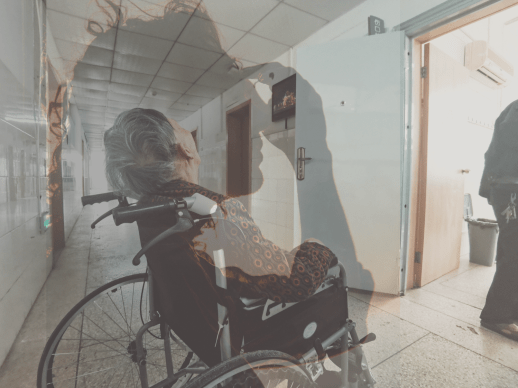
This topic hits home for me because I serve as Care Pastor at Crossroads Church. But, more than that, it hits home because it is home. All the time. My wife has various diagnoses all adding up to making her chronically ill.* That is, she’s sick. She’s sick a lot; more or less all the time.
Does God want us to be healthy and happy? Then why is there suffering and sickness? And why are some people healthy and some people sick? Why is my wife sick? Did she do something to deserve it? Did I do something? Do we lack faith?
The answers to these questions are not simplistic. They are complex. And they are mysterious. It’s always good to remember that God as God is not like us. His ways are higher than our ways, and His thoughts are higher than our thoughts (Is. 55:8-9). That shouldn’t be surprising for us since He’s God, but it is vital that we remember that truth.
So, why sickness and suffering?
Sickness and suffering?
First, we should acknowledge how big and how relevant that question is. People have been asking this question for eons. The Bible gives some very valid and convincing reasons (especially when understand in the context of redemptive history).
Why sickness?
The Fall (sin in general, natural evil)
Sickness was introduced into the world as a result of sin (Gen. 3). When God made the world, it was very good (Gen. 1:31). So, sickness is an intruder. Sickness is not welcome and will not always be in the world. But it is certainly here now. Now in the natural course of the fallen world, people get sick and they die, and people die as a result of old age (Gen. 5 [notice the refrain of “and he died”], 48:1, 21).
Individual Sin (specific personal sin, moral evil)
Sometimes sickness is a result of a specific personal sin (1 Cor. 11:28-30). Of course, all sin leads to separation from God and death. But some sins bring especially pungent consequences. Some sins, as 1 Corinthians says, are against our own bodies (1 Cor. 6:18). Some sickness results from disobeying God (Ex. 15:26). It seems king David himself experienced the physical consequences of sin (Ps. 32:3-4; 38:3-5).
Demonic Forces
From reading the New Testament it seems clear that some sickness is a result of demonic forces. The Gospel of Mark talks about a young boy that has “a spirit that makes him mute” (Mk. 9:17-18 cf. Lk. 11:14). The Gospel of Luke talks about a woman that had a disabling spirit for 18 years (Lk. 13:11). Acts 10:38 tells us that Jesus “went about doing good and healing all who were oppressed by the devil” (cf. Matt. 8:16). Yet, Luke also distinguishes between the casting out of demons and healing (see Lk. 4:40-41) and thus shows that not all sickness is due to demonic forces. When we take into account the points below, it is clear that not all sickness comes from demonic forces.
For God’s Glory
Scripture also explicitly tells us that some sickness is for the glory of God. The most cogent and explicit is the story of the man born blind. Jesus says that the man was not born blind because of sin but instead “so that the works of God would be displayed in him” (Jn. 9:3).
Even the death of Lazarus was for the glory of God, so that Jesus might be glorified through it (Jn. 11:4). And Paul’s “thorn in the flesh,” whatever it was, was so that the power of Christ would rest upon him (2 Cor. 12:7-9).
In these examples, sickness was not a result of sin or a lack of faith. Sickness was for the glory of God.
We don’t always know why
At other times we simply do not know for sure what the reason for the sickness is. In Philippians 2:25-30 we see that Epaphroditus, a faithful co-laborer of Paul, was so sick he nearly died. Yet, we are not given a reason for his sickness. And we have no hint at all that it was because of lack of faith or because of a personal sin. And in 2 Timothy 4:20 we see that Trophimus is left in Miletus.
Paul was an apostle, had faith, and had healed others (Acts 19:11-12; 2 Cor. 12:12) and yet that didn’t guarantee that people—even his close and faithful co-workers—would be healed. We know God, by His Spirit, can heal and we can certainly pray that He will. But prayer and even the gift of healing is not a mechanism that we can simply push and guarantee that healing will be the result. God is sovereign over sickness. And for whatever reason, He doesn’t always heal. We don’t always know, as Paul the Apostle didn’t know, why some are healed, and others aren’t. But, just like Paul, we must trust God. He is good. And He has explicitly and repeatedly demonstrated His goodness.
So, sickness is clearly not always a result of sin or a lack of faith.
What should we do when we’re sick?
Look at James 5:13-18. Notice first that before it talks about healing it talks about patience in suffering (v. 7-11). So, even in the context of asking for healing, there is an expectation of suffering.
Next, notice that whatever situation we are in, good or bad, we are always to go to the LORD in it, with praise or lament (v. 13). Then we see what we are to do if we’re sick. First, we need to realize our need. That is what leads to the calling of the elders. So, humility is necessary. When we are sick, we should realize our need.
Second, we are to realize that our need is not just physical, but spiritual. That is why we call for the “elders of the church.” And that is why we ask for prayer. Prayer is a supernatural beseeching of God; it’s going to God as Father and asking for help.
Third, I think the “anointing” with oil could have at a least a twofold significance. In the Old Testament the king would be anointed with oil and that symbolized the Spirit’s presence and blessing. Oil was also used for medicinal purposes (Mk. 6:13) or used as shorthand for medicine as we see when the Good Samaritan took care of the wounded man (Luke 10:34). Therefore, in anointing with oil we are calling on the Spirit to work and we are also confirming the goodness of medicine and imploring God to make it effective to heal.
Fourth, sickness uniquely reveals that we are but dust, that we soon pass away and are no more (Ps. 39). Yet, the “prayer of faith will save the one who is sick, and the Lord will raise him up” (v. 15), even if it is on the last day that he is raised up (Jn. 6:39-40, 44, 54). I don’t believe this passage means that just because the elders prayed over someone, and they had faith, they will be healed. But I do believe the prayer of faith saves. I believe this because that’s what the Bible teaches elsewhere (Jn. 3:16; 1 Jn. 1:9). Also, as we have said, some sins uniquely lead to sickness. If someone commits one of those sins, they too can be forgiven (v. 15), but that doesn’t necessarily mean they will be healed.
But, fifth, we do have a strong encouragement to confess our sins and pray for one another that we may be healed (v. 16). We know from elsewhere that sin can hinder our prayer (1 Pet. 3:7). It is the prayer of a righteous person that has great power (James 5:16). Just because people are not always healed when we pray does not at all mean they cannot be healed when we pray. James 5:17-18 goes to great lengths to tell us that Elijah was a normal enough guy and yet God moved mightily through his prayers.
So, when we’re sick, we must realize our utter need; we certainly cannot heal ourselves. We should realize the nature of our need as well as who it is we need help from: supernatural help from God. And we should realize that medicine although good, is no good apart from God’s intervening grace. So, even in our use of medicine we must be reliant and thankful to the Lord. If we have unconfessed sin we should confess and repent, knowing that sin can lead to sickness. Lastly, we should pray in faith knowing that God can and does heal.
We should seek the Lord and medical help
I believe that it’s important that we seek the Lord and medical help. We must remember that every good gift comes from the Father (James 1:17). And so, we should receive our Father’s good gifts with thanksgiving (1 Tim. 4:4).
Yet, it is vital that we not just seek out medical help and not seek the help of God. He’s God! He holds every molecule together. It would be utterly foolish to seek out the help from a person who has limited knowledge on a limited number of things, and not seek out God—the All-Knowing-One.
As great as Asa king of Judah was, this was one of his main sins. Second Chronicles 16:12 tells us that “Asa was diseased in his feet, and his disease became severe. Yet even in his disease he did not seek the LORD, but sought help from physicians.” That’s sad. And that’s foolish.
We should not follow Asa’s example. Rather, we should follow what I propose is the biblical example. We should seek the Lord and we should seek out the good physicians He has graciously provided. Paul even tells Timothy to make use of wine for help with a stomach problem (1 Tim. 5:23).
Does God promise health and healing?
Yes and no
In the story of Scripture, the story of Christ’s cosmic rescue, it starts out and the world is flawless, there’s no suffering or sin. But then the cosmic problem comes in. There’s a tear in time, a warp in the world, a curse in the cosmos. And it’s all because of sin.
Yet, the story of Scripture is the story of Jesus—God in flesh—coming to fix the broken world. The story starts in the Garden with God, and it ends in the Garden with God. It starts with no pain, suffering, sin, or sickness, and it ends that way.
Revelations 21 tells us of the glorious reality of God the Father wiping ever tear from all of His children’s faces. We, however, are not at that place in this true cosmic story.
Yes, that will happen—no suffering, sin, sickness, sadness, or death. But we are not there yet.
Yes
Yes, the LORD both forgives iniquities and heals our diseases (Psalms 103:3-5), but that doesn’t mean that the effects will be fully felt at the same time. For instance, the LORD has not yet brought “justice for all the oppressed” (v. 6). But that will happen. Jesus will bring complete justice. Jesus will satisfy His people with good thingsand He will renew our youth (v. 5). But not yet.
We are forgiven and welcomed into the Kingdom in and through Jesus Christ and yet we are not yet in the full realization of the Kingdom. It is true that Jesus has “took our illnesses and bore our diseases” (Matt. 8:16-17; Is. 53:4). And our main illness and disease is that of sin and in taking that on Himself He enables access to the New Creation in which there is no illness or disease.
As Sam Storms has said, “To whatever degree we experience healing in this life, it is the fruit of Christ’s atoning death.” It is by Jesus that we receive the undeserved grace of God, and God taking our illnesses and diseases is certainly undeserved. “But it doesn’t necessarily follow that where there is atonement there is immediate healing.”
That’s a biblical and verifiable reality. Paul, Epaphroditus, Trophimus, and many other faithful Christian brothers and sisters have had their sins bore by Jesus and thus been accounted righteous (Is. 53) and yet died with various sicknesses. Therefore, Jesus’ atoning and propitiatory death does not equal healing in this life.
There’s also another real sense in which “yes, God wants us to be healthy and happy.” That’s part of why God gives His good commands, so that it may go well with us (Deut. 4:40; 5:29, 33; Eph. 6:3). Yet, following God’s commands does not in any way guarantee that things will go well with us from an earthly perspective. Just look at Jesus’ 12 disciples…
No
Does God promise health and healing? No. Not in this life. However, because of the love of God in Christ Jesus we know that in spite of sickness we have a surpassing hope. We know that all things will actually work together for good (Romans 8:28, in context).
“This light momentary affliction is preparing for us an eternal weight of glory beyond all comparison, as we look not to the things that are seen but to the things that are unseen. For the things that are seen are transient, but the things that are unseen are eternal. For we know that if the tent that is our earthly home is destroyed, we have a building from God, a house not made with hands, eternal in the heavens. For in this tent we groan, longing to put on our heavenly dwelling, if indeed by putting it on we may not be found naked. For while we are still in this tent, we groan, being burdened—not that we would be unclothed, but that we would be further clothed, so that what is mortal may be swallowed up by life” (2 Cor. 4:17-5:4).
God does not promise health in healing in this life. In fact, persecution and plague are very likely to await us. That’s what Jesus repeatedly said (see The New Testament on Suffering). Yet, we are “waiting for new heavens and a new earth in which righteousness dwells” (2 Pet. 3:13). This place is not our home. And our current bodies are not our final bodies (1 Cor. 15:35-49).
Conclusion
As you can see, a simplistic answer to the question of sickness and healing will not suffice. Yet, God gives the answer. And the answer is Jesus Christ the Lord. But the answer may be “yes” now, and it may be “no” now, but for all who trust Jesus it’s a “yes” later. Healing will happen. Suffering will cease. But that doesn’t mean it will happen now.
____
*Lyme disease, POTS, EDS. And as of this writing, she has COIVD-19 which is not good to mix in with all of her other health issues.
A Brief Christian Perspective on Psychoactive Medication

Depression, OCD, ADHD, bipolar disorder, are just a few of the things we are taking psychoactive medication for.[1] However, have we given the use of these drugs any thought? That is, if we use them, do we use them with a well-informed understanding? If we do not use them, or believe we should not, do we make the decision on the basis of hard thinking?[2]
I want to look briefly at the question and give you my conclusion. I would also like to know your thoughts. I would also encourage you to do more research on the subject.[3] Of course, as you read my opinion, know that I am not an M.D., PSY.D., Dr., or D.Min.; I’m a blogger that was employed as a heavy equipment operator when I wrote this.[4]
What must we consider as we consider the question of psychoactive medication?
We Must Consider Common Grace
There are many things we can look at regarding common grace. God pours out grace on all men (Ps. 145:9; Matt. 5:45). God has given us many good things to eat (Gen. 1:29). God has given us medicine, coffee, and doctors.[5] He keeps the universe from imploding; which He did not have to do (Heb. 1:2-3; Jn. 1:1-4). God gives some form of conscience to humans (Rom. 2:14-15) which in turn means that generally speaking parents love and provide for their children (Matt. 7:9-10; Acts 14:16-17). God, through various means, has restrained much evil (Gen. 20:6, 1 Sam. 25:26; Rom. 13:1, 6). The world is not as bad as it could be. God has also graciously preserved a semblance of His image in humans (Gen. 9:6: 1 Cor. 11:7). Humanity is not as evil as they could be. In fact, because of common grace, humans can give true, accurate, and even helpful descriptions of reality (think of Edison and Einstein).
As Eric Johnson says, because of common grace “unredeemed humans are capable of accurately understanding aspects of God’s creation (including human nature, psychopathology, and facets of its remediation)—except insofar as it requires spiritual illumination—and this understanding is the gift of God.”[6] John Calvin, also agreed that there is a lot we can gain from unregenerate humanity.[7]
Most evangelicals gratefully, or forgetfully, accept modern medicine (a form of common grace).
Yet, realizing there are extremes and overprescribing of psychoactive medication (laid out well in Carlat’s book Unhinged),[8] why do evangelicals so often, and so easily, disregard psychoactive medication? Is it because they are well-informed? Because if that is the case then fine, let it be disregarded. So long as the decision is justified on the basis of thought; and not vain hearsay.
However, I am led to believe that many are not well-informed on this subject so I will continue. We live in a fallen world and by God’s grace we have been granted medicine to reverse or alleviate some of the impacts of the curse. If there are in fact biological factors involved in someone’s depression, for example, then why not help them with medication (again, a form of common grace)?[9]
Eric Johnson, gives a helpful point. God created marriage and food “to be received with thanksgiving by those who believe and know the truth. For everything created by God is good, and nothing is to be rejected if it is received with thanksgiving, for it is made holy by the word of God and prayer” (1 Tim. 4:3-5). Johnson says, “Paul was admittedly addressing a very different subject than we are, but a legitimate analogy can be drawn. Like food and marriage, medication for a biological problem (such as the improper production of a neurotransmitter)… is not intrinsically evil… On the contrary, when used consciously and explicitly in dependence on God, biological and psychosocial soul-care assistance is ultimately a gift of God.”[10]
God has given us—all of us—minds. And the means by which to explore our minds. Given there is much that is shrouded in mystery. There’s probably less explored between our two ears than in the depth of the ocean and the limitless expanse in space. [11] Yet, we can speculate and know some things. And for that, we must be grateful to God.
Thus, because of common grace, I believe psychoactive medication can be beneficial in certain cases. See below.
We Must Consider that we are Psychosomatic Unities
Many today believe that we consist of mere biology. We, and everything about us, emotions, actions, thoughts, etc., are determined by the determinism of biological and neurological activity. This, as you can imagine, has all kinds of negative implications (e.g. think of the penal system).
Christians, however, believe in the material and also in the nonmaterial. We believe that we have a body and a soul.[12] We are what is known as psychosomatic unities.[13] The body is the vehicle of our soul. It provides the soul a means of expression. The body and soul are so closely tied, perhaps you could say interwoven even, that when the soul is absent from the body the result is death (esp. James 2:26; cf. Gen. 35:18; Ps. 31:5; Lk. 12:20; 23:43, 46; Acts 7:59; Phil. 1:23-24; 2 Cor. 5:8; Heb. 12:23; Rev. 6:9; 20:4). This understanding has historically had implications for various counseling issues and still has implications for us today.[14]
We see in Genesis 2:7 that when God made man He made him out of dust (i.e. material, the body) and He “breathed into his nostrils the breath of life” (i.e. the immaterial, the soul). We are spiritual beings but God has provided us with bodies as our earthly habitation (2 Cor. 5:1ff).[15] We are to be holy in body and soul, Paul tells us (1 Cor. 7:34; 2 Cor. 7:1). This implies that we are body and soul.
There should be certain implications if we believe we are body and soul. For one, we should realize that the body and soul are not unrelated. They have affects upon each other. So, for example, if you go without food or sleep (physical, bodily) you will be more irritable and prone to sin (spiritual, related to the soul). Thus as we minister to people (and think of sanctification for our self) the fact that we are psychosomatic unities should not go forgotten.
“Ministry must address the whole range of human needs if it is to minister to the whole person. God has constituted us as beings who exist as a unity but a complex unity that includes physical, psychological, spiritual, mental, and emotional faculties.”[16]
So, we believe we are soul and body. But, is this what we really believe? If this is what we believe does it show in the way that we minister to people? If we are body and soul (i.e. psychosomatic unities), which Scripture makes clear we are, then why is it wrong to take medication? We take medication if our knees ache, we take medication if we have a headache. So, if we can be fairly sure that medication will help for psychological problems, then why should we not take it?
Thus, because we are body and soul, I believe psychoactive medication can be beneficial in certain cases. See below.
We Must Consider that We are to Have Dominion
Many today believe that man is no different than animals (1 Cor. 15:39). However, it is clear both biblically and logically that we are more. We are sentient and rational beings. We are created in the image of God. We are more than animals, we are to have dominion over the animals.
Our dominion over the earth is derived from the fact that we are created in the image of God (Gen. 1:26-28). That’s why we’re vice-regents. God is Lord over all the earth (cf. Lev. 25:23; Ps. 24:1; 50:10-11; Matt. 5:45; 6:26, 28, 30) yet He has put us over the work of His hands (Ps. 8:6). So man is supposed to work. We see this teaching in Scripture and it is often referred to as the Protestant work ethic (cf. Gen. 1:28; 2:8, 15; 4:17-20; Ps. 128:2; Prov. 12:11; 13:4; 14:23; 16:3; 20:4; 22:29; Eccl. 2:20, 24; 3:22; 9:10; Acts 20:35; 1 Cor. 10:31; 15:58; Eph. 4:28; Col. 3:17, 23; 2 Thess. 3:10; 1 Pet. 4:10-11). We are to subdue the land with our hands and our heads.
We are to bring good out of what was cursed (cf. Gen. 1:26, 28-29; 2:15; esp. 3:23).[17] Of course, we can’t take away all the groaning, only the Lord can ultimately do that (Rom. 8:19ff). However, an implication of our dominion function and work ethic is that if we can relieve some of the strain caused by mental illness we should.
God has said, subdue the earth. Work the earth. Bring good out of what was cursed . God has also said work hard. Do a good job, and do it for my glory. I believe scientists, neurologists, and psychiatrists can do all of these things.[18] I believe God has commanded them to.
Thus, because we called to have dominion and bring good out of what was cursed and because we are to work hard to God’s glory in whatever we do, I believe psychoactive medication can be beneficial in certain cases. See below.
Principals for taking Psychoactive Medication
- We should be fairly sure that the medication will help us before we take it.
- We should understand that psychoactive medications are not the elixir of life. They cannot, nor should we seek for them to, fix all our problems.[19]
- We should understand that they often have negative side effects. We should understand what the possible side effects are and inform those closest to us.
- We should seek the advice of a competent doctor or psychiatrist; preferably with Christian convictions or sympathies.
- We should know the limitations of psychoactive medication. The medication cannot save or sanctify. However, that is not to say that God cannot use the medication to more easily facilitate the process.
- We should receive psychoactive medication, like all medication, with thankfulness. We must consciously thank God for His common grace in the provision of modern science and medicine.[20]
- We should take psychoactive medication, like all medication, in reliance on God asking Him to bless its use.
- We should realize that people, you and me, and even psychiatrists and neurologists, come to the data with a certain worldview bias that shapes the interpretation of things.[21]
- We should realize that the use of psychoactive medication does not do away with the need for reformational counseling (when counseling is needed) and vice versa, the presence of counseling does not mean that medication may not be needed.[22]
- We should understand that sometimes, as Hezekiah says, it is to our benefit that we have great bitterness (Is. 38:17). It just may be the fire alarm of our soul. It may be sounding to warn of imminent danger. Thus, to “smash” the “fire alarm” in this case would likely not be helpful.[23] Instead, we should seek counsel to root out the real underlying heart issue.
- We should understand that there is quite a bit of speculation involved in our understanding of how exactly psychoactive medications work. We cannot, for example, cut a patient’s head wide-open and see what’s going on.[24]
- We should understand that some physical ailments are the result of direct sin in our lives (Ps. 31:10; Prov. 14:30), others are not (e.g. Jn. 9:3), and still other ailments are a complex and interwoven mix of the two. It can be very difficult to know the difference between a spiritual and physical issue.[25]
- We should understand that the issue is complex. We must ask God to guide us with His wisdom. We must also remember His grace and love in the midst of uncertainty.
- We should hope in Jesus in the midst of suffering. It is through Jesus’ death and resurrection that all those who trust in Him have hope of glorified bodies where suffering and sin will be done away with (cf. Rom. 8:29; 1 Cor. 15:35-49; 2 Cor. 3:18; Phil. 3:21; 2 Pet. 1:4; 1 Jn. 3:2). We also have the hope of Jesus wiping every tear from our eyes and making all things new (Rev. 21:1-8).
Conclusion
Mike Emlet agrees that there are times to use medication. He says, “Medications are a gift of God’s grace and they can be used idolatrously. Any good gift can be used in a way that displaces God, his glory and his good purposes and makes something else (comfort, escape, even ‘normality’) more ultimate. We have freedom to use—but not abuse.”[26]
So, my perspective is one of caution and thankfulness. I praise God that He has allowed medication that can relieve great suffering. And I am cautious because we must realize that psychoactive medication is not anyone’s savior and it can be overprescribed. I conclude by echoing Jeremy Pierre’s words:
“Applying this teaching practically is no simple matter. The psychiatric medication industry is largely driven by naturalistic assumptions and compelled by profit margins, and mental illness has been stigmatized in many of our churches. Thinking about how to navigate the process practically would require a discussion beyond the present one.”[27]
Notes
[1] Psychoactive or psychotropic substances can cross the blood-brain barrier and affect brain function. They impact alertness, perception, consciousness, cognition, mood, and behavior. They alter brain function and subsequently behavior (E. John Kuhnley, “Psychopharmacology,” 58 and Frank Minirth “Psychoactive Drugs,” 66 in The Popular Encyclopedia of Christian Counseling).
[2] LifeWay Research has come out with a “Study of Acute Mental Illness and Christian Faith” that helps us to see where American evangelicalism is in regards to this question.
[3] I encourage you to read at least three things; (1) “Listening to Prozac… and to the Scriptures: A Primer on Psychoactive Medications,” by Michael R. Emlet, (2) “Psychiatric Medication and the Image of God,” by Jeremy Pierre, and (3) Blame it on the Brain? Distinguishing Chemical Imbalances, Brain Disorders, and Disobedience, by Edward T. Welch.
[4] I am happy to see that the Association of Certified Biblical Counselors came out with a “Statement Regarding Mental Disorders, Medicine, and Counseling.” I believe that their statement is helpful, biblical, and balanced.
[v] It may be helpful to realize that along with alcohol and nicotine, caffeine is also a type of psychoactive drug. And notice that Paul thus, in a sense, told Timothy something like, take some psychoactive medication (see 1 Tim. 5:23). Some have construed Paul’s words in in 1 Thessalonians 5:23 as showing the importance of whole person care. Paul says, may your whole spirit (the theological), soul (the psychological), and body (the physiological) be blameless (v. 24 may lend to this view because we will in fact be made finally “blameless” in all of these spheres). Also, notice that the Bible does not speak negatively about doctors or medication; Luke himself was a doctor (Matt. 9:12; Col. 4:14; 1 Tim. 5:23).
[6] Johnson, Foundations of Soul Care, 113.
[7] See The Institutes of the Christian Religion 2.1.8; 2.2.18-25. “In reference to the science and philosophy of which he was aware, Calvin argued strongly that Christians are to make constructive use of it. ‘If we regard the Spirit of God as the sole fountain of truth, we shall neither reject the truth itself, nor despise it wherever it shall appear, unless we wish to dishonor the Spirit of God'” (Johnson, “Reformational Counseling: A Middle Way,” 20).
[8] Daniel Carlat, a secular psychiatrist who trained at Harvard Medical School, wrote Unhinged: The Trouble with Psychiatry–A Doctor’s Revelations about a Profession in Crisis (New York: Free Press, 2010). In it he says, “The term ‘chemical imbalance’ is commonly used by laypeople as a shorthand explanation for mental illness. It is a convenient myth because it destigmatizes their condition—if the problem is a chemical imbalance, it is not their fault” (Ibid., 13). Later he says, “When psychiatrists start using what I call neurobabble, beware, because we rarely know what we are talking about” (Ibid., 74-75). Thus Edward T. Welch has said, “As Christians, we can’t just ‘listen to Prozac’; we need a biblically-based philosophy to guide the use or non-use of medications. We need to know not only the ‘what’ and ‘how’ of psychoactive medication use, but also the ‘why’ or ‘why not’ (“Listening to Prozac… and to the Scriptures: A Primer on Psychoactive Medications” in the The Journal of Biblical Counseling, 12). He goes on to say that the medications are “less like ‘smart bombs’ that work with laser precision, and more like conventional bombs with widespread effect on systems of neurotransmitters in the brain” (Ibid.). In fact, “in the majority of trials conducted by drug companies in recent decades, sugar pills have done as well as—or better than—antidepressants” (Shankar Vedantam, “Against Depression, a Sugar Pill Is Hard to Beat,” in Washington Post (May 7, 2002): A01. See also David Powlison, “Biological Psychiatry,” in Journal of Biblical Counseling 17 (Spring 1999). Richard Baxter, writing in the 1600s said, “If other means will not do, neglect not medicine” (“The Cure of Melancholy and Overmuch Sorrow, by Faith”).
[9] It is important to note here what Welch has said. Antidepressants “do seem to work—that is, improve mood and other symptoms of depression—in some people, some of the time, but they certainly are not the ‘silver bullet’ that some make them out to be. Even if we conclude that medications are or might be effective for a particular person, they comprise only a part of the total approach to the person” (“Listening to Prozac… and to the Scriptures,” 16).
[10] Johnson, Foundations, 375-76.
[11] There is still an awful lot that is still a secret. So, for example, in response to a study on a piece of a mouse’s brain the size of a piece of salt, Jeff Lightman, a neuroscientist and Professor at Harvard said, “It’s a wake-up call to how much more complicated brains are than the way we think of them” (“Secrets of the Brain“).
[12] The three contrasting anthropologies are: (1) tracheotomy; humans are made up of three parts, spirit, soul, and body, (2) dichotomy; humans are made up of two parts, soul and body, and (3) monism; humans are simply made up of physical organisms; what is commonly considered soul or mind is rather chemical and neurological processes.
[13] “Scripture does presuppose and explicitly teaches a distinction between the body and the soul—the view known as dichotomy—especially in its affirmation of the soul’s living presence before God at bodily death. However,… this view in no way entails, much less requires, a radical anthropological dualism. In that light, I would prefer a term such as psychosomatic holism, since dichotomy implies that the distinction between soul and body is more basic than its unity. The important point is that human nature is not to be identified exclusively or even primarily with the soul; the ‘real self’ is the whole self—body and soul” (Michael Hortan, The Christian Faith, 377).
[14] Early on various puritan writers knew the significance of the fact that we are psychosomatic unities. Here’s a clip from Jonathan Edwards: “This seems to be the reason why persons that are under the disease of melancholy, are commonly so visibly and remarkably subject to the suggestions and temptations of Satan: that being a disease which peculiarly affects the animal spirits, and is attended with weakness of that part of the body which is the fountain of the animal spirits, even the brain, which is, as it were, the seat of the phantasy. ‘Tis by impressions made on the brain, that any ideas are excited in the mind, by the motion of the animal spirits, or any changes made in the body. The brain being thus weakened and diseased, ’tis less under the command of the higher faculties of the soul, and yields the more easily to extrinsic impressions, and is overpowered by the disordered motions of the animal spirits; and so the devil has greater advantage to affect the mind, by working on the imagination” (The Religious Affections, 289-90). Also, earlier in the same work, he said, “Also, early on Jonathan Edwards realized this. He said, “Such seems to be our nature, and such the laws of soul and body, that there never is any case whatsoever, any lively and vigorous exercise of the inclination, without some effect upon the body.” Thus, he shows the interrelatedness of our body and soul. Richard Baxter, writing in the 1600s said, “If other means will not do, neglect not medicine” (“The Cure of Melancholy and Overmuch Sorrow, by Faith”). Martyn Lloyd-Jones, also considered a puritan in a sense, talked about the physical and the spiritual. And he was a medical doctor and in a sense doctor of theology. Lloyd-Jones said, “You cannot isolate the spiritual from the physical” (Spiritual Depression, 9).
[15] “The body is the material component of human nature distinct from–but intimately linked with–the immaterial component, commonly called the soul (or spirit)” (Gregg R. Allison, “Toward a Theology of Human Embodiment,” 5). It should also be noted that our human bodies are not in themselves bad. The Bible teaches that we will receive resurrection bodies (cf. 1 Thess. 4:13-18; Rev. 21:1-22:5). So the physical is not bad. It is good. But it needs resurrected.
[16] “The Doctrine of Humanity” in A Theology of the Church, 350.
[17] “More than 6,000 years from Eden, God’s creation is marred with many biological defects, including defects of brain structure and function. Sometimes these defects result in alterations in our abilities to reason, think clearly, and accurately perceive reality. In such a state, it is more difficult to discern truth and come to the knowledge of God. To the degree we can intervene with medication and restore the ability to reason clearly and perceive reality accurately, we increase the ability to know God and work with the Holy Spirit to restore the image of God in man. Antipsychotic medications are tools we can utilize to help those suffering with physical brain illness to think and function more clearly” (Timothy R. Jennings, “Antipsychotic Drugs,” in The Popular Encyclopedia of Christian Counseling, 66).
[18] I think Sarah Rainer is a good example of this. See “The Integration of Christianity and Psychology: A guest post by Sarah Rainer“ Jeff Forrey also offers some helpful thoughts on her comments in “A Response to ‘The Integration of Christianity and Psychology: A Guest Post by Sarah Rainer.’”
[19] John Piper has said, “I do not want to give the impression that medication should be the first or main solution to spiritual darkness. Of course, by itself medicine is never a solution to spiritual darkness. All the fundamental issues of life remain to be brought into proper relation to Christ when the medicine has done its work. Antidepressants are not decisive savior. Christ is. In fact, the almost automatic use of pills for child misbehavior and adult sorrows is probably going to hurt us as a society (When the Darkness Will Not Lift: Doing What We Can While We Wait for God, 27).
[20] “Taking depression medication that improves brain function gives God some glory, since God is the ultimate source of all medical improvement, and because he designed brains to function properly. However, if the medication is taken in God’s name, that is, with conscious and explicit gratitude to God (e.g., by thanking God for the creation grace that led to its use), God is given much greater glory, because the biological order is transposed into the spiritual by thanksgiving” (Johnson, Foundations, 374).
[21] As unregenerate humanity wades into the areas where Scripture is more explicitly relevant we will see that they bring more distortions. “Christians ought to expect that human scientific activity will yield some distortions in human understanding, particularly when dealing with the issues of ultimate significance” (Johnson, Foundations, 101). “Counseling concepts, in particular, are loaded with connotations shaped by worldview beliefs” (Ibid., 94 cf. 97).
[22] “Many mild conditions respond to non-medication approaches. For moderate to severe impairment, medication is often necessary. Studies indicate that medication alone may be sufficient for a few individuals. More commonly, an integrative approach is necessary to achieve optimum results” (E. John Kuhnley, “Psychopharmacology” in The Popular Encyclopedia of Christian Counseling, 60).
[23] cf. Jay Adams, Competent to Counsel (Grand Rapids: Zondervan, 1970), 103.
[24] See for example Blaming the Brain: The Truth About Drugs and Mental Health by Elliot Valenstein. On page 65 he gives a helpful and brief overview of his opinion.
[25] See Heath Lambert, “How Can Christians Tell the Difference Between a Spiritual Issue and a Physical One?”
[26] Mike Emlet, “The Doctor is IN – Part 4.”
[27] Jeremy Pierre, “Psychiatric Medication and the Image of God.”



 in X
in X 