A Brief Exploration of Paul’s Use of “All”

There are some things in Paul’s writing that can be hard to understand, as Peter said (2 Pet. 3:16). Here we’re looking at how Paul’s use of “all” can be hard to understand (esp. when it seems like Scripture teaches particular atonement see e.g. Jn. 6:37-39; 10:11, 15; 17:9, 20; Acts 20:28; Rom. 5:8, 10; 2 Cor. 5:21; Gal. 1:4; 3:13; Eph. 1: 3-5, 7; 5:25). Does Paul’s use of “all” have universal implications?[1]
A.A. Hodge’s words are instructive,
“Particular and definite expressions must limit the interpretation of the general ones, rather than the reverse. It is plainly far easier to assign plausible reasons why, if Christ died particularly for his elect, they being as yet scattered among all nations and generations, and indistinguishable by us from the mass of fallen humanity to whom the gospel is indiscriminately offered, he should be said in certain connections to have died for the world or for all, than it can be to assign any plausible reason why, if he died to make the salvation of all possible, he should nevertheless be said in any connection to have died for the purpose of certainly saving the elect.”[2]
It’s important to understand that to Jews all the rest of the world, the whole world, were basically just Gentiles. There were two sets up people in their mind, God’s people and everyone else. So as we think of the use of the words “all” and “world” we must be conscious of how Jews thought about the world and other people groups. Remember, the Jews are the people of promise. No other people in the whole world were. So Thomas R. Schreiner says, “We are apt to forget how shocking the inclusion of the Gentiles was to many in the first century because of our historical distance from the text.”[3]
Notice that Galatians 3:8 says that the OT Scriptures foresaw that God would justify the Gentiles (τα εϑνη). When Paul uses Gentiles here he means not all Gentiles without exception but rather all Gentiles without distinction. That is, Paul is saying that it’s not just Jews that can be justified. It’s not just one other group that can be justified. It’s not just Samaritans and Romans that can be justified but Babylonians, Egyptians, and everyone (i.e. “all,” “world”) can be justified. So, all people (παντα τα εϑνη), that is, all types of people can be justified. That is how Paul is using “all” (παντα).
Also, notice that Greek does not function the same way as English. Greek, for instance, has a different grammatical case system as well as word order. There is also different ways to say “all.” However, I am not saying that Paul did not say all in the passages in question. He did, in fact, say “all.” I only mean that for Paul to say “all” meaning one group in one place and “all” to mean another group in another place (even in very close proximity) may have been completely normal.
“Interpreters commonly assume that a word must have the same meaning it is used within the same context… However, this is not always true. A work in ancient Greek (as well as in modern languages) may very well have different meaning whether uttered in one breath or not.”[4]
Context is king in any language, but especially when written in all-caps with no punctuation.
So although Universalists frequently appeal to “Paul’s use of the word ‘all’ (e.g. in Rom. 5 and 11, and in 2 Cor. 5),” N.T. Wright points out that there is apparently no “realization of the different shades of meaning that must be understood in the particular contexts… The word ‘all’ has several clearly distinct biblical uses (e.g. ‘all of some sorts,’ ‘some of all sorts,’ etc.), and to ignore this frequently-noted fact is no aid to clear thinking.”[5] The word must be understood in context.[6] We must understand not only the immediate context at the sentence level but also how the word is being used at the next level of context (e.g. paragraph, chapter, book, etc.). That is, we need to understand what is being communicated or the argument that is being made (see Figure 1 below).

Figure 1: Understanding Words in Context
In reference to Romans 5:15-19, Schreiner says,
“Paul deliberately used the word all to describe the work of Christ as the second Adam. Our task as readers is to ferret out the significance of this decision. Two reasons for the terminology are possible. First, Paul did not want to use a less-inclusive term because he wanted to emphasize that Christ was as great as Adam. The use of the word all reminds the reader that the grace of Christ is so powerful that it supersedes what Adam did.
Second, one of the prominent themes of Paul’s theology, and of Romans in particular, is the inclusion of the Gentiles. We have seen that the folding of the Gentiles into God’s saving purposes was the distinctive element in Paul’s call to the apostleship. He often emphasizes in Romans that God has called the Gentiles, not just the Jews, to be his people (Rom 1:5, 7, 13-14, 16; 2:11, 26-29; 3:23, 29-30; 4:9-12, 16-17; 9:24-26, 30; 10:11-13, 20; 11:12, 15, 17, 19-20, 30; 15:9-12; 16:26). Recognizing this assists us in comprehending Romans 11:32, “God has enclosed all under disobedience, so that he should show mercy to all.” The first all must include all people without exception, for Paul leaves no room for the idea that some people are obedient and hence need no room for the idea that some people are obedient and hence need no mercy from God! But if the second all is of the same breadth as the first, then Paul is a universalist, teaching that God’s saving mercy will be poured out on every single human being. The interpretation is doubtless attractive, but the context reveals its improbability. Romans 9-11 often speaks of the future punishment of those who are unsaved (Rom 9:3, 6-7, 13, 18, 21-22, 31-33; 10:2-4; 11:7-10, 20-23, 28). These chapters oscillate between the salvation promised for the Gentiles and the salvation pledged to the Jews. Any attentive reader of Romans 11 is aware that it features God’s saving plan relative to both Gentiles and Jews. When Paul says, therefore, that God shows mercy on ‘all,’ the idea is that God’s mercy extends to both Jews and Gentiles, Thus, we need not conclude that ‘all’ refers to all people without exception. More likely, when Paul considers Christ’s work, the referent is all people without distinction. Both Jews and Gentiles are recipients of Christ’s gracious work.”[7]
Schreiner goes on to say,
“Such an interpretation is also a sensible reading of 2 Corinthians 5:14-15. The love of Christ controls Paul, and he concludes that ‘one died for all, therefore, all died’ (2 Cor 5:14). The ‘all’ for whom Christ died are not all without exception but all without distinction, including both Jews and Gentiles… All those for whom Christ died ‘actually’ died—they died in the death of Christ to the power of sin… those living refers to those who are spiritually alive. Those who are spiritually alive are the ‘all’ for whom Christ died in 2 Corinthians 5:14”[8] (cf. Rom. 6).
John Piper helpfully adds to our conversation,
“It would be an incorrect, superficial reading of this text [i.e. 1 Corinthians 15:21-23], as well as Romans 5:17-19, to assume that it is teaching universalism in the sense that all human beings will be saved. The ‘all’ who are acquitted in Romans 5 are defined in Romans 5:17 as ‘those who received the abundance of grace.’ And the ‘all’ who are made alive in 1 Corinthians 15:22 are defined as ‘those who belong to Christ.’ Moreover the other texts cited in this chapter [here are some of them: Dan. 12:2; Matt. 3:12; 18:8; 25:41, 46; Mk. 9:43-48; Rev. 14:11; 19:3; 20:10] make it highly unlikely that Paul means to teach here that all humans are saved.”[9]
Mark Rapinchuk demonstrates
“It seems reasonable to conclude that a major emphasis of Paul’s through out Romans is the universal nature of sin and salvation. But this universal nature is defined as without ethnic distinction rather than without exception. When Paul speaks of “all men” he speaks in the sense of both Jews and Gentiles, not in the sense of every individual. This understanding of “all men” is not only consistent with the use of πάς and άνθρωπος in Biblical Greek, it is entirely consistent with the flow of Paul’s argument and emphasis in Romans.”[10]
We can also look at other examples where it doesn’t make sense to use “all” with the sense of “all without exception.” For instance, did Paul really preach to “all creation” and to the “whole world” (see Col. 1:6, 23)? No. We know that he did not. So “all” does not always mean all without exception. Also when Paul in Acts 22:15 “speaks of being a witness to all people” (πρὸς πάντας ἀνθρὼους), he clearly does not mean all people without exception; ‘all’ refers to the inclusion of the Gentiles in his mission (Acts 22:21).”[11]
Ephesians 5:20 says we are to give “thanks always and for everything to God the Father in the name of our Lord Jesus Christ.” Does “always” (παντων) here mean all times without exception? It doesn’t seem like it. For instance, when Lazarus died we see “Jesus wept,” not “Jesus gave thanks.”
Klyne Snodgrass says this in his commentary on Ephesians,
“When the Bible uses “all” or “every,” we must ask whether it is meant with or without qualification. Paul’s intent is not that we are to be thankful for evil or tragedy. John Stott is correct in saying “everything” in verse 20 is hyperbole. We are not asked to thank God for evil. Rather, we are asked to live out our awareness that all of life, even the “bad,” is lived out under his control and in relation to him.”[12]
Thus we see that “all” does not always (or very often) mean all without exception. The extent of what “all” is meant to convey must be understood through an understanding of the context and the intention of the author.
Thus, Schreiner looking at the context concludes that “the reason Paul can speak of the Christ’s death in expansive, all-inclusive terms in 1 Timothy 2:6 is because he sees his ministry as worldwide (2:7; cf. Acts 22:15), his soteriology is universal in the right sense (2:5; cf. Rom. 3:28-30), and he is confronting an elitist heresy that was excluding certain kinds of people from God’s salvation (1 Tim. 1:4). Paul wants to make it clear: Christ died for all kinds of people, not just some elite group.”[13]
Titus 2:11 says “For the grace of God has appeared, bringing salvation for all people” (᾿Επεφάνη γὰρ ἡ χάρις τοῦ θεοῦ σωτηριος πᾶσιν ἀνθρπὼοις). Some believe that “all people” (πᾶσιν ἀνθρπὼοις) refers to all people without exception, however, it more likely refers to all people without distinction.[14] Schreiner goes on to explain that “a good case can be made for such a judgment, because Paul refers to people from various groups earlier in chapter 2: older men (v. 2), older women (vv. 3-4), younger women, younger men (v. 6), and slaves (vv. 9-10).”[15] We also see in verse 12 and 14 that it talks about “us” and not all without exception. It says Jesus “gave Himself for us [not all without exception] to redeem us from all lawlessness and to purify for Himself a people for His own possession who are zealous for good works” (v. 14). This verse reminds us of 1 Peter 2:8-9 where it talks about two different groups of people. The first group stumbles and disobeys the word because that is what they were destined to do (v.8). The second group is a chosen race, a royal priesthood, a holy nation, a people for God’s own possession (v. 9).
What about Romans 11? Some people use Romans 11 to support their views on universalism. However, as has been said and as John Piper demonstrates, context is king.
“In [Romans] 11:30–31 the two groups in view (Israel and Gentiles) do not have reference to every individual Jew and Gentile that exist. The same corporate groups are in view that have been in view since 11:7. The stumbling (11:11), failure (11:12), rejection (11:15), hardening (11:7, 25), and disobedience (11:30–31) of corporate ethnic Israel lead to the mercy (11:31), salvation (11:11), riches (11:12), reconciliation (11:15), and coming in (11:25) of a “full number” of Gentiles. This in turn leads to the mercy (11:31), acceptance (11:15), and salvation (11:26) of “all Israel,” the same corporate entity that had to be temporarily hardened (11:7, 25) and rejected (11:15)… There is no exegetical warrant for construing the two “all’s” of 11:32 to refer to anything other than the complete number of Jews and Gentiles in the corporate entities referred to throughout the chapter. A universalistic reading of Romans 11:32 is not exegetically defensible.”[16]
Romans 9 should also be looked at. Paul anticipates that God’s righteousness will be called into question. He asks, “Is there injustice on God’s part?” Paul answers, “By no means!” (v.14). God elects and has mercy on whoever He choses (9:11, 15-16). Who are we to tell God what He can and cannot do?! (v. 20). “Has the potter no right over the clay, to make out of the same lump one vessel for honorable use and another for dishonorable use?” (v. 21 cf. 22-23).
Also, remember the way the Jewish community would have understood “all.” For example, let’s briefly look at the last part of Isaiah 66. I would argue that Isaiah has the most eschatology in it of the OT books. Isaiah 66:22:23 says,
“For as the new heavens and the new earththat I makeshall remain before me, says the LORD,so shall your offspring and your name remain.From new moon to new moon,and from Sabbath to Sabbath,all flesh shall come to worship before me,declares the LORD.”
It says, “all flesh shall come to worship before me, declares the LORD.” And it says they shall “remain before me.” Wow! It seems these verses teach universalism! However, remember our phrase: Context is king!
Look at verse 24: “And they [referring to ‘all flesh’ v. 23] shall go out and look on the dead bodies of the men who have rebelled against Me. For their worm shall not die, their fire shall not be quenched, and they shall be an abhorrence to all flesh.” It’s clear here that “all,” even “all flesh,” does not mean all without exception. The Jews reading Romans would have been familiar with this passage and the theology behind it. Also, notice how emphatic verse 24 is and notice how the NT authors picked up on this same language.
On the topic of universal salvation 2 Peter 3:9 is often a favorite verse. It says God does not wish that any should perish, but that all should reach repentance. Yet, we must note the context. The immediate context tells us what God does in response to His desire. It does not say that because He desires that all should reach repentance He will one day mysteriously (and against all the Bible seems to say) pull people out of the hell (into which He cast them) so that they won’t finally perish. Instead, we see, in light of God’s desire, He is patient and does not bring judgment right away (cf. v. 15; Rom. 2:4-11). Yet, nevertheless, heaven and earth are waiting for the “day of judgment and destruction of the ungodly” (2 Pet. 3:7).
So, this text is saying God is patient and does not wish that any should perish so God has refrained His judgment for a time so that all types of people can repent. However, it also reminds people to repent while they still can. It says, “But the day of the Lord will come like a thief…” (v. 10) when it will be too late to repent. “Therefore,” it says, “since you are waiting for these, be diligent to be found by Him without spot or blemish, and a peace” (v. 14).
The second thing to consider with this verse is the two different senses in God’s will. Theologians helpfully and accurately discuss the two different senses in God’s will as the decretive will of God and the permissive (or perceptive) will of God. I suggest John Frame’s treatment in The Doctrine of God.[17]
It seems true in one sense that God desires that none should perish but that all should come to repentance but it is also true that God desires to pour out His wrath on the wicked. See 2 Thessalonians 2:8-12:
“And then the lawless one will be revealed, whom the Lord Jesus will kill with the breath of his mouth and bring to nothing by the appearance of his coming. [9] The coming of the lawless one is by the activity of Satan with all power and false signs and wonders, [10] and with all wicked deception for those who are perishing, because they refused to love the truth and so be saved. [11] Therefore God sends them a strong delusion, so that they may believe what is false, [12] in order that all may be condemned who did not believe the truth but had pleasure in unrighteousness.”
Notice also that Romans 9 tells us that God is glorified through vessels of wrath (ὀργή[18]) prepared for destruction (Rom. 9:22). God has set His affections on some and not on others. And that is His prerogative alone and He is just in all His judgments.[19]
________________________
[1] While the “all” texts do need to be explained “the onus lies with proponents of a universal atonement to explain why Paul would employ limited or definite language, if there really was no limitation in the intended object of the atonement” (Jonathan Gibson, “For Whom Did Christ Die?: Particularism and Universalism in the Pauline Epistles” 293 in From Heaven He Came and Sought Her: Definite Atonement in Historical, Biblical, Theological, and Pastoral Perspective [Wheaton: Crossway, 2013). Further, “Paul has the linguistic arsenal to state unambiguously that there was no one for whom Christ did not die, he chose not to use it. The terms ‘many,’ ‘all,’ and ‘world’ remain undefined and ambiguous, dependent on context for their meaning” (Ibid., 329).
[2] A.A Hodge, The Atonement (1867; repr., London: Evangelical Press, 1974), 425.
[3] Thomas R. Schreiner, Paul, Apostle of God’s Glory: A Pauline Theology, 185. Hedrick explains Paul’s use of “all” in Romans 5:18 by saying that “among other things Paul is combating the ever-present tendency of Jews to regard themselves as being better than Gentiles” (Romans, 183).
[4] S. M. Baugh, A First John Reader: Intermediate Greek Reading Notes and Grammar, 19.
[5] N.T. Wright, “Universalism and the World-Wide Community,” Churchman 89 (July-September 1975), 200.
[6] In understanding the context it is important to understand the Pauline context; that “in the whole of Paul’s preaching it is unthinkable to refer to justification to all men without distinction” (Ridderbos, Paul, 341n32).
[7] Schreiner, Pau l, Apostle of God’s Glory in Christ, 184. See also Schreiner, Romans, 292.
[8] Ibid., 186.
[9] John Piper, Let the Nations be Glad: The Supremacy of God in Missions (Grand Rapids: Baker Books, 1993), 129n20.
[10] Mark Rapinchuk, “Universal Sin and Salvation in Romans 5:12-21” 441 in JETS 42/3 (September 1999) 427-41.
[11] Thomas R. Schreiner, “’Problematic Texts’ for Definite Atonement in the Pastoral and General Epistles.”
[12] Klyne Snodgrass, The NIV Application Commentary: Ephesians, 311.
[13] Schreiner, “’Problematic Texts’ for Definite Atonement.”
[14] Ibid., 8.
[15] Ibid.
[16] John Piper, “Universalism in Romans 9-11?” (http://www.desiringgod.org/articles/universalism-in-romans-9-11).
[17] See 528-42; he even has a section titled “Does God Desire the Salvation of All?”
[18] See William V. Crockett, “Wrath that Endures Forever” in JETS 34/2 (June 1991) 195-202. E.g. “When we examine orgê in Paul we find no reason to assume that it has reformative elements” (198). And on page 199 he says, “orgê in Paul excludes any notion of divine love” (199).
[19] See John Piper, The Justification of God: An Exegetical and Theological Study of Romans 9:1-23 (Grand Rapids: Baker Academic, 1993).
Book Released! Gospel-Centered War


My book Gospel-Centered War: Finding Freedom from Enslaving Sin just got released! Here are a few of the things people are saying about it.
“As the title of this book makes clear, a gospel-centered approach is, in the long run, the only effective way to combat sin and addiction. Any resource, like this one by Paul O’Brien, which helps us fight our sinful compulsions by means of the gospel of Jesus Christ is one I recommend.”
—Dr. Donald S. Whitney, professor of biblical spirituality and associate dean at The Southern Baptist Theological Seminary
“Gospel-Centered War is for those who struggle with life-dominating sin and for those who counsel them. Instead of simply addressing behavior modification, Paul O’Brien gets to the heart of the matter. This book addresses the issues that provide freedom from destructive, self-defeating behaviors by helping the reader understand how God can change their heart and passions. Read it, devour it, and then be changed from the inside out.”
—Pastor Mike Wilson, Lincoln Heights Baptist Church, Mansfield, Ohio
“Paul is a genuine man of faith who has dedicated his life to Jesus and his calling. As a former heroin addict who was mentored by Paul, I had the privilege to witness his passion for Christ and his desire to help people through God’s word. This book shows that same passion.”
—Ricky Upton, Louisville, KY
A Biblical Basis for Social Media?

The genesis of social media was in Genesis. No we don’t see Snapchat or MySpace but we do see the raw material. That is, theologically.
Humanity is made in the image of the triune, relational, three in one God. So we have an innate need for connectivity. We’re hardwired for it. It’s in our internal processing. We are social (media) beings.
We also see that humanity is to subdue the earth. This results in technological advances, even within the book of Genesis (you could consider the naming of the animals “technology”).[1] Of course, Facebook and the invention of the book hadn’t happened. But advances were being made.
Humanity is made in the image of the triune, relational, three in one God. So we have an innate need for connectivity. We’re hardwired for it. It’s in our internal processing. We are social (media) beings.
So we see that the desire to be connected and the desire for technological advances is not inherently bad. A case could be made to say connectivity and technological advances are “very good.” At the very least being connected and using advances is not bad in itself. However we also see something else really important that we must consider from the beginning of Genesis.
The Fall. The Fall didn’t do away with our need to be connected or to make advances and subdue the earth but it did corrupt it.
So what do these observations from Genesis have to do with social media?
It means that there are elements about social media that are good and there are elements about social media that are not good. It means that social media is not wholly good or wholly bad. It means that we must be careful consumers. We must be proactive and evaluative, not inactive and absorptive.
I plan to post more on this subject later but here are some other relevant posts:
“Unrestricted Consumption of Electric Candy Bars”
“The Megalomania of Mass Media”
“Technology: Connected and Out of Touch”
“Delights, Deceits, and Dangers of the Digital Age”
_______________
[1] There were a lot of significant advances that we see in the beginning of Genesis. “Gardening and naming in Genesis 2, farming and clothes making in Genesis 3, city building and harp and pipe playing in Genesis 4, shipbuilding in Genesis 6, altar building in Genesis 8, fruit growing and wine making in Genesis 9, brick baking in Genesis 11, tent making in Genesis 12” (Steve Turner, Popcultured, 43).
The Contradiction that is Humanity

East of Eden, this trance in which were caught. Serpents all around, lies within, lies without. Death, death, unspoken though it be, prevails. Prevailing misery, wrapped in supposed ecstasy. Whisper, whisper; slither near, they speak the lies into my ear. Sell it all, the order built tall, fails. Embrace it all, accept all, end null. Trudge on and live and die, for what do we expire? Only all we desire. Endless cycle of misery, never free. Eat the apple, embrace the noose. Slither near, oh yes, my dear. Come here, constrict me. Worthless cycle, the viper of this world, strikes fast yet the venom kills slow. How strange, but the hand that feeds me, bites me. Diluted profit, fruitless field, this the futility that we yield. Strive for the Garden, yet we embrace the curse; oh, the contradiction that is humanity.
East of Eden, for a season, the King will soon return. Every foe vanquished, for every thorn a rose. The King, He soon shall reign! Then, the refrain, forever remain, “life, life!” The serpent is gone, we sing a new song forever of our Savior. We ate of the tree, He died on a tree to be the curse we created, and with His death, death’s defeated.
Is Love God’s Main Attribute?

“Unequal weights are an abomination to the Lord,” Proverbs tells us (20:10, 23). And this is no less true when it comes to theology. When we give more weight to God’s love then to His other attributes we are not correctly representing who He is. We are being deceiving. Deceit when it comes to earthly treasure is an abomination. How much greater an abomination when He that is infinitely worthy is falsely treated?!
God’s attributes must not be incorrectly understood. The Bible does clearly teach that God is a God of love (e.g. 1 Jn. 4:8) and continued faithfulness or covenant loyalty (Ex. 34:7; Num. 14:18; Deut. 7:9; Ps. 86:15; 119:90; Lam. 3:22-23; Nahum 1:3; 1 Cor. 1:9; 2 Thess. 3:3; Heb. 10:23). However, the Bible also clearly and repeatedly teaches that God is a God of righteous jealousy (Ex. 20:4-6; 34:14; Num. 25:11; Deut. 4:24; 5:8-10; 6:15; 29:20; 32:16, 21; Josh. 24:19-20; 1 Kings 14:22; Is. 42:8; 48:11; Ezek. 8:3-5; 16:38, 42; 23:25; 36:5-7; 38:19; 39:25; Joel 2:18; Nahum 1:2; Zeph. 1:18; 3:8; Zech. 1:14: 8:2; Ps. 78:58; 79:5; 1 Cor. 10:22; James 4:5) and unrestrained wrath (cf. e.g. Is. 13:6-11; Jer. 7:20; Nahum 1:2-8; Matt. 3:12; Rom. 2:5). The Bible clearly shows that God will not clear the guilty that spurn His grace and patience (cf. e.g. Ex. 34:7; Num. 14:18; Deut. 7:9-11; Lam. 3:22-23, 64-66; Nahum 1:3). Further, the Bible never says that love is God’s main attribute or that God has a main attribute. Rather, God is; and He is perfect in all ways. “Attributes,” such as love, wisdom, etc. are anthropological, they are given so that we can understand God. Thus, these attributes should not and cannot be understood when striped from their connection to the whole of who God is.
Also, though God’s attribute of love is clearly and very much on display through the whole of Scripture other attributes, such as God’s holiness (cf. the emphatic “holy, holy, holy” Is. 6:3; Rev. 4:8), could be agued to be God’s central attribute. We also see in different places in Scripture that God pours out judgment on people, clearly not to show His love, but to be glorified (cf. e.g. Ex. 9:13-16, 34-10:2;14:4; 8:13-18; 2 Sam. 24:1, 10-11; 1 Chron. 21:1, 7-8; Is. 6:9-13; Ps. 92:7 [NASB]; Rom. 9:22-24). Actually, we see various times in Scripture that God’s motivation for salvation is His glory (cf. e.g. Ps. 23:3; 25:11; 31:3; Ezek. 36:16-32 [esp. v. 21, 22, 32]; Rom. 9:22-24). James M. Hamilton Jr. persuasively argues that the story of redemption history and the Bible is not about God loving all people without exception but about “God’s Glory in Salvation through Judgment” (the title of his book).[1]
The Universalist extrapolation that since God is love He will not finally allow people to be damned eternally in hell is unfounded. Some Universalists have extrapolated that God’s glory is seen in that He has mercy and compassion and thus will display His glory more when He repeals His judgment on sinners in hell (some wrongly cite Ex. 33:19). However, these Universalists incorrectly understand the Exodus passage. Instead, through a closer look at the text we see that “God’s glory and his name consist fundamentally in his propensity to show mercy and his sovereign freedom in its distribution. Or to put it more precisely, it is the glory of God and his essential nature mainly to dispense mercy (but also wrath, Ex 34:7) on whomever he pleases apart from any constraint originating outside his own will. This is the essence of what it means to be God. This is his name”[2] (cf. Rom. 9:6-24).
God does not bow to any of His “attributes” but He is continually perfect in a unison of perfection. Wrath does not hold a place over love or love over wrath, the Son does not fight with the Father nor the Spirit with the Son, God’s Name and ways are always and forever perfect. His Name, who He is, His character, is holy (cf. Lk. 1:49). He is I AM. We do not determine who He is or what He should do. He is. And He is perfect in all His ways.
So, no. I don’t think love is God’s main attribute.
____________________
[1] See Hamilton’s book length treatment God’s Glory in Salvation through Judgment: A Biblical Theology where he goes from Genesis to Revelation to argue his case or see his much smaller article “The Glory of God in Salvation through Judgment: The Centre of Biblical Theology?” in Tyndale Bulletin 57.1 (2006), 57-84. Also Jonathan Edwards argues the same point in The End for Which God Created the World (see John Piper, God’s Passion for His Glory).
[2] John Piper, The Justification of God: An Exegetical and Theological Study of Romans 9:1-23 (Grand Rapids: Baker Academic, 1993), 88-89. Italics his.
The Storyline of Scripture
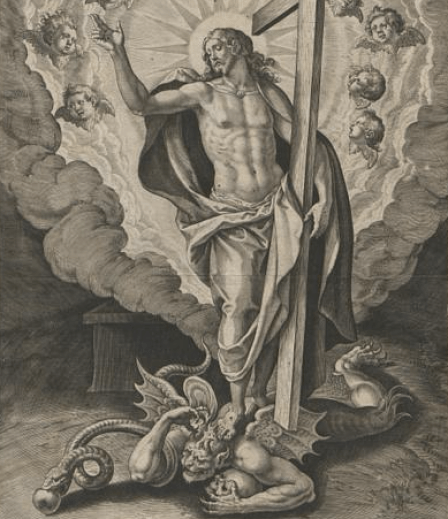
Spoiler alert. If you don’t want to know the resolution to all the twists and turns of the plot line of the Bible do not read on!
Jesus is the hero of the story. He saves the day. As Michael Emlet says, “If you read the Bible from cover to cover you realize that it narrates (proclaims!) a true and cohesive story: the good news that through Jesus Christ God has entered history to liberate and renew the world from its bondage to sin and suffering.”[i] He goes on; God “pursues the restoration of his creation at the cost of his own life. He is making all things new (Rev. 21:5)! That’s the simple and yet profound, life- and world-altering plotline of the Bible.”[ii]
The Bible is chiefly a story about God’s glory being displayed through the recompense of all things wicked, redemption of those made righteous, and finally, the reconciliation of all things in Christ.[iii] The Bible is a true story about God making the world, man messing it up, and God becoming a man to fix the world by not messing up. It is a story of Eden—exile—repeat. It is not until the true Adam, the true and righteous Son of God comes that this process is put to an end. All of Christ’s predeceases fell short; Adam, Noah, Abraham, Saul, David, Solomon, and the lambs, priests, and prophets could not fill Christ’s role.
From the beginning of time and the beginning of God’s word, the Word has been a prominent character in the script (Gen. 1:1; John 1:1). At first, the promised offspring (Gen. 3:15) is vague, in fact, Eve rejoiced because she thought she had the offspring (4:1) but it was all for naught for Cain was of the offspring of the serpent and killed his brother. However, now we have seen that which even the prophets longed to look (Matt. 13:17), we know that all Scripture finds its fulfillment in Jesus who is the long-awaited Christ (2 Cor. 1:20).
When Jesus came the first time, He had no beauty or majesty. When He comes again His face will shine like the sun in full strength (Rev. 1:16). We were cast out of the garden in the beginning but as Jesus said to the thief on the cross, we will be with Him in paradise in the end. Jesus is the linchpin among all the cogs of Scripture. “The trajectory of the arrow shot from the Hebrew Scriptures finds its target (fulfillment) in Jesus of Nazareth.”[iv]
The storyline of the Bible can be understood as creation, fall, redemption, and new creation. We can see the gospel in the storyline of the Bible. God loves us even though we have rebelled against Him. He has provided forgiveness for us through Jesus Christ and if we repent of our sin and trust in Him we will enjoy Him forever in heaven.
Through the creation part of the narrative we see that God made everything (Gen. 1:1; John 1:1-3) and it was good (Gen. 1:4; 10; 12; 18; 21; 25; 31). There was no sin, no death, and no problems before man sinned. Man had perfect fellowship with God.[v]
However, the plot thickens. A cosmic problem is introduced. Through Adam’s fall, we see the collapse of the creation, which explains why everything is no longer good. Man disobeyed and rebelled (Gen. 2:16-17; 3:6) and this brought spiritual and physical death (Gen. 2:17; 3:19), pain (3:16-17), difficulties (3:18-19), and separation from God (3:23-24). This is the bad news. We deserve death and hell.
But there is good news. This is not the end of the story. Even at the beginning of the story, God promised that He would send someone (that is, the Messiah/Christ) to defeat the “bad guy” (that is Satan) of the story (cf. Gen 3:15). In a similar scene, seen throughout the Bible, man’s nemesis is once again at it with him. Satan is tempting not Adam but the second Adam in the wilderness (Luke 4). However, unlike Adam in paradise, the second Adam does not give into the serpent’s temptation although He is in the desert. Jesus was tempted in every way that Adam was, and we are, yet He did not sin (Heb. 4:15) and still He bore our sin upon Himself.
Jesus became man so “that through death he might destroy the one who has the power over death, that is, the devil” (Heb. 2:14). Jesus’ heel was “bruised” at the cross but through that same cross, where He received the bruising, He struck the serpent with a definitive death blow to the head (cf. Gen. 3:15). From the cross, Jesus cried out, “It is finished!” In Jesus’ death, the devil, and death are defeated! He has delivered us from the domain of darkness (Col. 1:13). He disarmed the demonic rulers and authorities and put them to open shame, by triumphing over them through the cross (Col. 2:15).
Jesus is the promised one (Luke 24:27, 44-46; Acts 13:23, 27; 17:3; Rom. 1:2-4; 1 Cor. 15:3-4;) who brings the redemption of all things (cf. Rom. 5:10; Col. 1:20; Titus 2:14; Gal. 3:13; Eph. 1:7, 10). He secures for us an eternal redemption by means of His own blood (Heb. 9:12). Jesus Christ is the solution to the problem; He takes our sin, our problem, upon Himself on the cross. This is the good news; Jesus is the good news! Jesus reversed the curse of sin by becoming a curse for us (Gal. 3:13). Jesus was cast out of the garden so that we could be welcomed back in. Through the one man Adam we all have condemnation yet through the one Man Jesus Christ the grace of God has abounded for many (Rom. 5:12-21). We deserved to be crushed under God’s wrath because of our sin but instead Jesus was crushed in our place (Is. 52:13-53:12). Jesus is the solution to our problem of sin, the sole solution (Jn. 14:6; Act. 4:12). Jesus is the Lamb of God, without blemish, that takes away the sin of the world (John 1:29; Heb. 9:14)!
Jesus is the good news but the good news is not static it goes on and on and on; those in Christ live happily-ever-after. In contrast, God “will gather out of his kingdom all causes of sin and all law-breakers” (Matt. 13:41) and cast them into the pit of eternal fire (Rev. 20:14-15). “They will suffer the punishment of eternal destruction, away from the presence of the Lord and from the glory of his might” (2 Thess. 1:9). However, for those in Christ the story of history will have a happy ending (Rom. 8:29-39).
I concur with what C.S. Lewis says in The Last Battle,
“We can most truly say that they all lived happily ever after. But for them it was only the beginning of the real story. All their life in this world and all their adventures in Narnia had only been the cover and the title page: now at last they were beginning Chapter One of the Great Story which no one on earth has read: which goes on forever: in which every chapter is better than the one before.”[vi]
I believe we, upon arrival to the new Eden, will exclaim with Lewis’ Unicorn:
“I have come home at last! This is my real country! I belong here. This is the land I have been looking for all my life, though I never knew it to now. The reason why we loved the old Narnia [“old creation”] is that it sometime looked a little like this.”[vii]
Through Jesus the Christ we have the unwavering hope of a new creation (2 Peter 3:13). “The creation was subjected to futility” in Adam (Gen. 317-19) but in Christ “the creation itself will be set free from its bondage to corruption and obtain the freedom of the glory of the children of God” (Rom. 8:20-21). As Isaac Watts put it in “Joy to the World,”
“No more let sins and sorrows grow,
Nor thorns infest the ground;
He comes to make His blessings flow
Far as the curse is found,
Far as the curse is found.”
The problem (all of them!) will be fixed and there will be no more sin (Rev. 21:27; 22:3; Matt. 13:41). Everything will be more right than it was ever wrong. We will see that God did, in fact, work all things together for good (Rom. 8:28). Christ will make a new creation and we will be like Him (1 Jn. 3:2; Rom. 8:29; 2 Peter 1:4). “Just as we have borne the image of the man of dust, we shall also bear the image of the man of heaven” (1 Cor. 15:49). God will fulfill our deepest desires and we will finally love the LORD our God with all our heart, soul, mind, and strength when we receive our glorified bodies (Deut. 30:6; Jer. 31:33-34; 32:40; Phil. 3:20-21)! There will be no more pain or problems and God will wipe away all our tears (Rev. 7:17; 21:4). We will once again be in Paradise, the New Jerusalem, and we will have fellowship with God (Rev. 21:3)!
However, this story by its nature, by the fact that it claims to be true, does not leave us alone but calls for a response. We can receive this story or we can reject it outright. God can rewrite us, as it were, into His marvelous script or He can cast us, the unruly “cast,” into hell. We must respond to this story, will we respond rightly? Will we strive to obey the God who reveals Himself? Will we turn to Jesus in faith and repentance?
This is the gospel, the story of all the woes of existence finding their solution in Christ.
____________
[i] Emlet, CrossTalk, 41. A true and cohesive story contained within sixty-six books written by numerous people (with one divine author) in various languages (Hebrew, Greek, and Aramaic) over thousands of years! God’s word about the world being reconciled through the Word is truly amazing!
[ii] Ibid.
[iii] James M. Hamilton Jr. says that “in the broadest terms, the Bible can be summarized in four words: creation, fall, redemption, restoration” (God’s Glory in Salvation through Judgment: A Biblical Theology (Wheaton, IL: Crossway, 2010), 49) but the “ultimate end” of everything is “God’s glory in salvation through judgment.” He goes on to say, “The created realm (creation) is a spectacular theater that serves as the cosmic matrix in which God’s saving and judging glory can be revealed. God’s glory is so grand that no less a stage than the universe—all that is or was and will be, across space and through time—is nescessary for the unfolding of this all-encompassing drama” (Ibid., 53). See also John Piper’s book The Pleasures of God and Jonathon Edwards’ The End for Which God Created the World.
[iv] Emlet, CrossTalk, 47.
[v] Perfect in sense but not like it will be in the new creation; Adam and Eve related to God as creation to Creator and we will relate to God in the new creation as the redeemed to the Redeemer. So we will enjoy a consummated perfect fellowship with God.
[vi] C.S. Lewis, The Last Battle (New York: NY: Harper Collins, 2002), 228.
[vii] Ibid., 213.
This is Christmas

The holy babe in the manger looked not to riches
Nor to fame
But to the cross
To that which He came
This His one purpose
And this His delight
This is what He ever had in His sight
This greatest gift He did bring
Not to the nice who thought they kept the law
But to the naughty
To the wretched that on Him did call
He gave the gift of eternal glory where He’d ever be by their side
This is the Gospel
This is Christmas
The Good News of a Savior for sinful man
Incarnation to New Creation

Just a word and all wonders wrought,
God announced, and behold, it was all good.
Creation had communion with the Creator,
God walked in the Garden.
Yet with Adam the serpent did conspire,
and brought the world into mire.
Beckoned to the grave,
everything disarranged.
The curse burst upon the scene,
but in the midst a seed of hope was seen.
Yes, long of told
,
the Scriptures told
,
of a King who’d come.
In His wake,
death shall quake
,
and the deserts they shall bloom.
Yet, many men came and went,
was the hope of promise spent?
Many lambs, prophets, priests and kings,
yet none with true salvation in their wings.
Darkness for a time,
no prophet’s voice was heard.
Yet in the darkness,
I light it shone,
and it would overcome the darkness.
Behold, O’ world, your Prophet, Priest, and King,
Jesus the Promised seed and Lamb.
The curse brought in shall be expunged;
yes, replunged upon the Son.
Christ was crushed as promised,
but in His crushing, crushed Satan, sin, and death.
Yes, He was cursed to reverse the curse.
He felt our plight to set all things right.
Yes, creation Creator collided
yet we did not hide
for God He brought no wrath,
there was no blood bath,
the world did not implode or explode into non-being.
Instead, angelic greeting:
“Peace on the earth,
goodwill to men”
because the Great I AM is come.
Our Lord, Messiah, Savior in a crib.
Wonderful Counselor,
Prince of Peace,
Bright and Morning Star,
born.
He who lay the foundations of the earth,
laid in a manger.
The Infinite born,
a swaddled babe.
Yes, He that holds the nations in His hand,
grasps His mother’s hand.
He that calls the stars by name,
spoke no name,
nor word.
He formed Himself
in His mother’s womb.
He upheld the nails
that held His hands.
He died for you,
for me.
He became poor
to restore our riches.
Yes, He felt our plight
to set all things right.
He was born to die,
that we might live.
The Deity
incarnate brings
salvation in His wings.
Man once again will be in the Garden
because God’s Son walked from Gethsemane to Golgotha.
No more brier prick or thorn to stick.
All shall be made new.
When our King all subdue,
all shall be made new.
All foes to be forgotten.
Forever banished now.
Satan’s role will be revoked,
the Lord Messiah come.
The demons tremble in His wake;
the blind see,
creation glimmers,
soon the groaning’s cease.
This is the time in between,
the already and not yet.
The Kingdom has come, but not consummated;
it shall be slightly belated.
Peace on the earth,
goodwill to man,
God’s eternal plan in fruition.
The Kingdom has come in God’s Son,
the lion to lay down with the lamb.
No tent or temple,
for the LORD tabernacled.
Yahweh is Messiah.
Immanuel,
born the balm,
for the vacuum of our souls.
Yes, the myth came true in the manger.
God is no longer a stranger,
but makes Himself known in His Son.
Jesus, Joshua’s namesake, true!
The LORD our Savior come!
He was, and is, and is to come.
All things consummate(d) in Him.
Amen.
(click here for audio)
The Precious Truth of God’s Sovereignty

Introduction
The sovereignty of God is perhaps one of the most difficult doctrines in Scripture and yet one of the clearest. However, just because something is hard does not mean that it’s not helpful.
To think about and discuss the sovereignty of God can be challenging but also sweet. I think for instance of the rough shell of a coconut but of the reward contained inside. Or the difficulty of building a house but of the protective refuge you have at its completion. It may at times be difficult to wade through the deep waters of God’s sovereignty but we will never get to the island of peace if we don’t.
Our knowledge of God’s sovereignty is limited but Scripture certainly does not shrink back from saying that God is in absolute control. The Bible is replete with texts that teach us that is LORD of all (see e.g. Dan. 4:35; Is. 40:13,14; Rom. 9:15-18; Eph. 1:5, 11).
The Westminster Confession of Faith says it this way:
“God, the great Creator of all things, doth uphold, direct dispose, and govern all creatures, actions, and things, from the greatest even to the least, by his most wise and holy providence, according to his infallible foreknowledge, and the free and immutable counsel of his own will, to the praise of the glory of his wisdom, power, justice, goodness, and mercy… God, in his ordinary providence, maketh use of means, yet is free to work without, above, and against them, at his pleasure.”
The word “sovereignty” is nowhere in the Bible, yet the teaching is all over the place. We see that God declared the “the end from the beginning and from ancient times things not yet done.” God says “My counsel shall stand, and I will accomplish all My purpose” (Is. 46:10). Daniel tells us that “All the inhabitants of the earth are accounted as nothing, and He does according to His will among the host of heaven and among the inhabitants of the earth; and none can stay His hand or say to Him, ‘What have You done?’” Job tells us that “He is unchangeable, and who can turn Him back? What He desires, that He does. For He will complete what He appoints for me.” Indeed, “Our God is in the heavens; He does all that He pleases,” says the psalmist (Ps. 115:3; cf. 135:6). That is what is meant by the sovereignty of God.
A.W. Tozer said this in his excellent book The Knowledge of the Holy:
“God’s sovereignty is the attribute by which He rules His entire creation, and to be sovereign God must be all-knowing, all-powerful, and absolutely free. The reasons are these:
Were there even one datum of knowledge, however small, unknown to God, His rule would break down at that point. To be Lord over all the creation, He must possess all knowledge. And were God lacking one infinitesimal modicum of power, that lack would end His reign and undo His kingdom; that one stray atom of power would belong to someone else and God would be a limited ruler and hence not sovereign.
Furthermore, His sovereignty requires that He be absolutely free, which means simply that He must be free to His eternal purpose in every single detail without interference. Were He less than free He must be less than sovereign” (Knowledge of the Holy, 115).
God is Meticulously Sovereign
I learned an important thing from a good friend, a young Christian that was struggling with drug addiction. He told me one night he was really upset so he turned on the radio hoping that it would help him. As he turned on the radio he prayed that God would play an awesome song. And my friend’s song came on, and no it wasn’t “My Heart Will Go On” (you know, the Titanic song); instead, his song is “I am Redeemed” by Big Daddy Weave. And it came on not at the end of the song, but at the very beginning. One of the lines he heard, since he heard the whole thing, was: “I’m not who I used to be. I am redeemed.” This song had a big impact on my friend and helped him fight his enslaving sin of drug addiction that night.
Why was the Blind Man Healed Twice?
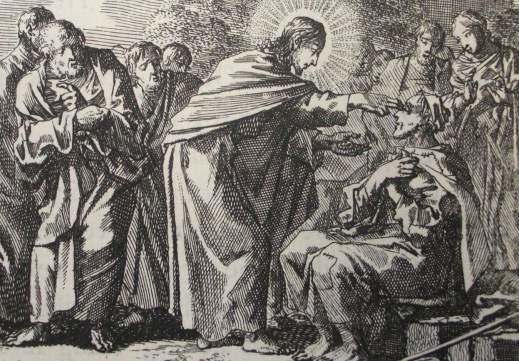
Why would Jesus touch the blind man twice to heal him? Surely He had the power to heal him the first time. So, it would appear to me that there is some significance for why this healing happened this way. Though, in this as with all Scripture we must remember that the hidden things belong to the LORD but the things that have been revealed belong to us (Deut. 29:29). Thus, we cannot take all of the mystery out of this passage but we can offer a few reasons for why this miracle went down as it did (Remember Jesus could have done it much differently cf. Matt. 9:27-31; Jn. 9:1-12). Here is the text under question:
[22]And they came to Bethsaida. And some people brought to him a blind man and begged him to touch him. [23]And he took the blind man by the hand and led him out of the village, and when he had spit on his eyes and laid his hands on him, he asked him, “Do you see anything?” [24]And he looked up and said, “I see people, but they look like trees, walking.” [25]Then Jesus laid his hands on his eyes again; and he opened his eyes, his sight was restored, and he saw everything clearly. [26]And he sent him to his home, saying, “Do not even enter the village.” (Mark 8:14-26)
As with any passage, the context must be considered. This is a cursory look at the passage but we should be able to get at the reason for the double healing. So in the broad context of the New Testament and the Gospels there is quite a lot about spiritual seeing. In Mark chapter four Jesus explains His use of parables. He said (see Mk. 4:10-12) I use parables “so that ‘they may indeed see but not perceive, and may indeed hear but not understand, lest they should turn and be forgiven’” ( cf. Is. 6:9-10).
In the immediate context in chapter 8 we see that Jesus talks about “seeing,” i.e. understanding. He says, “Having eyes do you not see, and having ears do you not hear? And do you not remember? When I broke the five loaves for the five thousand, how many baskets full of broken pieces did you take up?” They said to him, “Twelve.” “And the seven for the four thousand, how many baskets full of broken pieces did you take up?” And they said to Him, “Seven.” And He said to them, “Do you not yet understand?’” (Mk. 8:18-21).
After this the disciples and Jesus (“they”) went to Bethsaida (Mk. 8:22). So there was some time that elapsed between verse 21 and verse 22 in historical reality. Yet Mark places the healing of the blind man directly following the conversation between Jesus and the disciples.
Why? And why such a strange healing? Why would Jesus spit in the blind man’s eyes and yet not completely heal him? Why would he still have poor sight (Mk. 8:24)? Why would Jesus have to touch him again (Mk. 8:25)?
Based on the context I think it reminds us of the disciples and their vision. They “see,” i.e. understand, but their understanding is still very poor. They too will need a second touch. Notice what follows this passage. Jesus asks His disciples, “What do you say that I am?” Peter as the disciples typical spokesman said, “You are the Christ.”
Jesus is essentially asking the disciples, “Do you see, do you understand?” The disciples respond, “Yes, we see you are the Christ.” Yet, they did not know but they didn’t see as clearly as they thought they did. They saw “men , but they look like trees,” you could say (Mk. 8:24). This is proven later especially by the once very vocal Peter as he denies Jesus (Mk. 14:66-72). He truly did not see what it meant for Jesus to be the Christ. He too needed a second touch. He too needed to be healed of his blindness.
Thus I think in retrospect the healing of the blind man in this passage is a type of parable. Jesus asked, “Having eyes do you not see, and having ears do you not hear? And do you not remember?” (Mk. 8:18). The disciple did see and yet they did not see. It is a strange paradox. They had in a sense been healed as the blind man but their vision, their understanding, was still a long way off. Their vision would not be truly “fixed” until they saw the Lord again and He fixed them (Mk. 16:12-14). At the end of Luke, after Jesus’ resurrection, we see that Jesus gave the disciples the correct understanding of the Christ that they lacked (Lk. 24:27, 44-47). After this lens adjustment they could see clearly.
So why was the blind man healed twice? I think to teach something about the disciples. And about us. It appears that way to me based on the immediate context of the passage and the way that blindness and seeing is used in Scripture. It has also been pointed out to me that there is a chiastic structure in this passage. Here’s the diagram:
A: The Apostles don’t see clearly (vv. 14-21)
B: The blind man can’t see clearly (vv. 22-24)
B’: The blind man can see clearly (vv. 25-26)
A’: The Apostles see clearly (vv. 27-30)
We see that the blind man needed a second touch, the Apostles needed a second touch, and we often need second, third, fourth, etc., touches to see as well. We need more contact with Jesus the Lord of life if we are going to see.



