The Thesis and Anti-Thesis on Life and it’s Negation

Life is futile. A senseless waste. We live, we die. That is it.
We squeeze out meaning. Or inject it into our veins. We run, but we know not for what, and then expire. We build our castles and pile up things. Then we die.
The sun rises and sets or spins and spins. Seasons come, seasons go. We grow old. We die. The same remains until the sun burns out and we grow cold.
All is futile.
There is no meaning, accept what we make. So fill your coffer, kill the pain. Feed your pleasure, though a monster it becomes.
Thus is life if there’s no hope beyond the grave.
Yet, if this is the sleepy land and we wait for what is true life then this is but the testing ground. We plant what grows for us there. If we make our meaning here, then we destroy it there. If we are lethargic and vague in pursuit then we’ll obtain the wind.
“Genetic Homosexual?” and our morality…

John is attracted to men. Jane is attracted to women. And so, our cultural says, “Go for it! If that’s the way you feel (the culture’s only form of “objective” truth). After all, that’s the way you were born. It’s in your genes.”
I, Paul, am attracted to women (pl.) and yet I am married, to a singular woman. I also have the tendency, bent, disposition, because of innumerable factors (nature, nurture, etc.) to be angry and act out in anger. If I left myself unchecked and just did whatever I felt like, I, sad to say, would be an abusive adulterer. Something that would not be good for me, my wife, my children, or society.
So, even if I am by nature a genetic abusive adulterer is that ok? Should I be content with that? Promote that?
I do not see how that is admirable. Many people would lead me to believe that is the higher good; to be something akin to animals. To do whatever we want, whatever our natural self would want to do. It sounds like many would sniff the wind and follow their inner impulse. However, does anyone realize that our inner impulse, whatever it might be, will often lead to some very bad places?
We all have many dispositions: selfishness, pride, boastfulness, etc. but that does not make it right; even if natural. If we want to just say that everyone should just do whatever their genetic disposition has given them, then we should just do away with the penal system and society in general. For what, in that line of thought, would allow us justification to repress any inner and natural desire?
Many studies, for instance, show that many drug addicts, whether meth, heroin, or cocaine, have a genetic disposition to drug addiction. However, we don’t say, or most of us don’t say, that drug addiction is okay. Why? Many would say because it harms the body and harms society. Just because someone has a disposition for something does not justify that disposition.
The logic that says homosexuality is fine because people have a disposition towards it is faulty. That just does not follow. People have dispositions in all sorts of ways. But that does not make it morally good.
People say: “To your own self be true” and other such phrases. But where does our deepest self lay? In our pants? Or does our mind and our convictions play a pretty big part? Maybe being “true to our self” also, and more fundamentally, means being true to our convictions, to what we think and believe at the core of our being. If I ask, “Is love more than bodily fluids?” This will be answered not unbiasedly but according to other deeper and more fundamental questions. The real issue at stake in this conversation is about fundamental convictions; how we see the world, our ultimate desires, our view of life and our view of “the good.”
People, for instance, compare sex to eating. Yes, sex is like eating in some ways. It is a natural enough thing (although much more significant psychologically, relationally, etc.), yet if we don’t eat we die. That is not the case with sex. Yet sex, under certain belief systems, e.g. naturalistic hedonism, will be seen as close to ultimate. Whereas the Christian sees sex as a good gift from God. A gift that must be enjoyed in the right way to the right end. In the Christian’s belief system there is something more awesome more significant than sex, infinitely more.
When the Christian, whether their tendency is more towards heterosexual, homosexual, or bisexual temptation, has found that there is something more significant, lasting, and satisfying than sex (yes, something better than sex!) it obviously impacts them. They can be recreated and desire what is more significant than some of their inner dispositions.[1] Through relationships, whether with friends, a spouse, or God, we see that we are not just sexual animals; that is one part of our constitution. It is not, or I don’t think we should let it be, the fundamental and driving part. That view is shallow, problematic, and simply just not accurate to reality.
What we are seeing in our culture is two worldviews colliding. One says we are fundamentally animals and thus expects us to live according to our innate animal desires. And from that worldview, it’s consistent. Only why stop with adultery or homosexuality?… whatever one finds to do, whatever the desire, it should be allowed in that system.[2] The other worldview says we are not animals and we should not live simply according to our desires. Our desires can be wrong, very wrong. The Christian says that we were created in the image of God but have been marred through sin. We need to be remade in God’s image by listening to His Word. The problem happened in the beginning exactly because we were not listening and did what we (wrongly) desired.
Our desire must be shaped, informed, led by He who knows; namely God. God has all wisdom. Not us. He, as our good Father, knows how to give good gifts, even if we think we want something else. He knows what we ultimately need and what will ultimately satisfy.
So, there may be “genetic homosexuals” that are not practicing homosexuals. I myself am a “genetic adulterer” yet, by God’s empowering grace, I am not a practicing adulterer.
___________________________________________
[1] Of course, here, if someone sees humans as fundamentally just sexual animals then what I am saying will be scoffed at. However, I will also rightfully scoff at their shallow, sad, and bankrupt view. If we are mere animals then what of love, what of society, what of the penal system? Obviously, “non-Christian presuppositions will lead to non-Christian interpretations and ultimately to non-Christian conclusions” (Michael J. Kruger, “The Sufficiency of Scripture in Apologetics,” 87 in The Master’s Seminary Journal, Vol. 12, No. 1, Spring 2001). Yet, those conclusions are chaotic, problematic, and wrong.
[2] “Logic, science, and morality make no sense within the non-Christian worldview. For example, how can the atheist justify and explain the origin and universal applicability of moral absolutes? He simply cannot. Consider philosopher William Lane Craig as he explains the impossibility of moral absolutes in an atheist worldview: If there is no God, then any ground for regarding the herd morality evolved by homo sapiens as objectively true seems to have been removed. After all, what is so special about human beings? They are just accidental by-products of nature which have evolved relatively recently on an infinitesimal speck of dust lost somewhere in a hostile and mindless universe and which are doomed to perish individually and collectively in a relatively short time. Some action, say incest, may not be biologically or socially advantageous and so in the course of human evolution has become taboo; but there is on the atheistic view nothing re ally wrong about committing incest. If, as Kurt states, ‘The moral principles that govern our behavior are rooted in habit and custom, feeling and fashion,’ then the non-comformist who chooses to flout the herd morality is doing nothing more serious than acting unfashionably (William Lane Craig, The Indispensability of Theological Meta-Ethical Foundations for Morality, located at http://www.leaderu.com/offices/billcraig/meta-eth.html, 4)” (Michael J. Kruger, “The Sufficiency of Scripture in Apologetics,” 83n35 in The Master’s Seminary Journal, Vol. 12, No. 1, Spring 2001).
Sin is Not Good #3

Sin is Humanities Death Wish
I was always told growing up that it’s not good to do bad things. And for a time I was content with that. It didn’t need to be explained to me. However, as time has gone on and temptations have increased, or at least my perception of them, I find it helpful to understand and remind myself of why “it’s not good to do bad things.”
Obviously, “it’s not good to do bad things” because it doesn’t please God but why doesn’t it please God? Why are bad things bad? We see from reflection on Scripture that bad things are bad because they are not in accord with God’s character and thus apart from being bad they do not finally work with the way things are. In short, they are against the universe. Against existence. Against the way things are. Against the way things work. This is because God is good, supremely good. And creation is thus to operate in a certain way. Sin, evil, and bad are not innate within God’s good creation. They don’t “work” and will one day soon be expelled from the whole system. Then, and only then, will all things be put right and made new.
Thus, “The consequence of human sin is not to be seen as an arbitrarily imposed penalty, like a judge imposing a fine for drunk driving, but rather as an inevitable outworking of the implications of sin.”[i] “Death is not an arbitrary punishment for sin; it is its necessary consequence,” because “the turning away from the living God which constitutes idolatry is the spiritual equivalent of a diver cutting off his own breathing tube.”[ii]
To turn from God, to sin, is not only wrong but also foolish. Why? Because “God is our final good, or maker and savior, the one in whom alone our restless hearts come to rest. To rebel against God is to saw of the branch that supports us.”[iii]
Sin is humanities death wish in everyway.[iv] To be separated from God is to die, physically and spiritually. Human flourishing, true shalom, is bond up with God.[v] Apart from union with God we can seek but we won’t find.
The world is a dichotomy. It’s two paths. The wise and the fool. New creation and de-creation. Damnation and liberation. Life and death. Hell and heaven. Where, in a very real sense, are you going?
Sin is thus not good because it is innately against true human flourishing.[vi] Sin is not good because it is humanities death wish in every sense.
_____________________________
[i] Anthony N. S. Lane, “Lust: the human person as affected by disordered desires” 35 in EQ 78.1 [2006], 21-35.
[ii] N. T. Wright, Evil and the Justice of God, 109.
[iii] Plantinga, Not the Way It’s Supposed to Be, 123. “Sin dissipates us in futile—and self-destructive—projects. Sin hurts other people and grieves God, but it also corrodes us. Sin is a form of self-abuse” (Ibid., 124). “Sin against God is therefore outrageous folly: it’s like pulling the plug on your own resuscitator” (Ibid., 125-26). Thus “because it is futile, because it is vain, because it is unrealistic, because it spoils good things, sin is a prime form of folly” (Ibid., 126). Proverbs 8:35-36 says, “For whoever finds me [i.e. “wisdom” which is the fear of the LORD] finds life and obtains favor from the Lord, but he who fails to find me injures himself; all who hate me love death.”
[iv] “The association of sin with physical and spiritual death runs like a spine through Scripture and Christian tradition” (Cornelius Plantinga, Not the Way It’s Supposed to Be, 47).
[v] “The biblical vision of human flourishing implicit in worship means that we are only properly free when our desires are rightly ordered, when they are bounded and directed to the end that constitutes our good” (Desiring the Kingdom, 176). Likewise John Frame, God’s “law is not arbitrary, but is based on his own nature… His moral standard is simply himself, his person, his nature” (Frame, The Doctrine of God, 448 see also Frame, The Doctrine of the Christian Life, 133-35). G. K. Chesterton said, “God is not a symbol of goodness. Goodness is a symbol of God” (Chesterton, William Blake [London: House of Stratus, 2000], 40).
[vi] “Human flourishing” rather is “the same thing as glorifying God and enjoying him forever” (Plantinga, Not the Way It’s Supposed to Be, 37-38).
Sin is Not Good #2
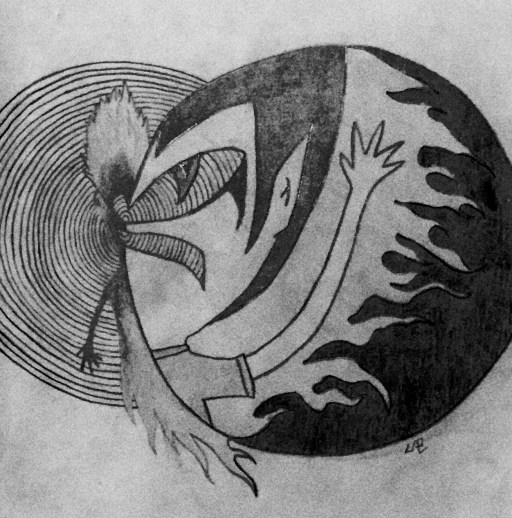
Sin is a Rebellion and a Rampage
Sin is moral. It is an act against God. It is a transgression against God’s law. But not only His law but also His good plan.[i] Sin is not merely moral or highhanded treason it is also a rampage because it is mad; that is foolish, a form of insanity. It goes against good sense. It is a rampage because sin destroys the good.
We have all seen the pain and sorrow that moral derogation has wrought in our lives. We see it for instance in sins of others against us and those close to us, we see it in sins which we have sinned against others, we see it in the world at large (e.g. my parents were divorced, a very close friend of mine was molested as a child, and a friend of mine that struggled with drug addiction committed suicide). There is, for sure, a law written on all our hearts, we go against it to the shame and suffering of humanity; and yet, we all do indeed go against it.
Humanity has and needs a moral standard. This points us to the Creator who gave it to us when He created us in His image. However, it also points us to the Fall. We all fail to measure up to the standard. We can all think of a hypothetical world where everyone followed these standards and where the result was great happiness. Yet, this is not the case. We do not follow these good (innate) standards. How odd. We know the good we ought to do, or at least that there is “a good,” and yet fail to do it.
Sin leads to terrible depraviltiy, hopelessness, and disregard for humanity or anything good. This is vividly portrayed, for example, in Cormac McCarthy’s post-apocalyptic book The Road. We don’t want to suffer what is portrayed there. We don’t even want to think of the horrors of Dachau and Auschwitz. We all know the wickedness of Adolf Hitler, Pol Pot, and Joseph Kony. Yet perhaps their nearly unbelievable atrocities allow us to belittle (in our conscience) our own wickedness. However, even if our sin is so-called “low-grade wickedness” it is the equivalent of their sin, just on a micro level. It has the same seed, though perhaps it hasn’t came to full bloom yet.
What must be realized is that all sin is a movement towards un-creation.[ii] In C.S. Lewis’ words, through sin man becomes the “unman.” Through sin everything that was very good (see Gen. 1:3, 10, 12, 18, 21, 25, 31) becomes cursed instead. Sin covers beauty, boasts in badness, and hides from the supreme joy we all seek. Sin is a rampage.
Sin is a leech and parasite. It lives off of and feeds on life and vitality.[iii] And it kills it. Bleeding it away little by little until the carrier is completely eaten away and destroyed. Note that this death, though complete, can be imperceptible.
Sin leads to de-creation as well as desecration. Humans were made in God’s own image yet through sin that image has literally been put into dirt; man becomes dirt and ashes from whence he came (hence de-creation). From perfection to misdirection, from shalom[iv] to shattering. Everything has come undone. The creation groans with longing. Sin is not merely moral. It is the decay of all things. Sin wrought a wreak and we are still wheeling and writhing in pain.[v]
Thus, sin is not good not only because it is moral rebellion against a good and all-powerful God but also because it is a rampage against His good creation.
_______________________________
[i] “Sin represents an attack upon the harmony of the created order, and not merely a moral lapse” ((Revd Victor James Johnson, “Illustrating Evil – The Effect of the Fall as seen in Genesis 4-11,” 60 in Melanesian Journal of Theology 11-1&2 [1995]). If Jesus is the exact image of God and we were created in God’s image then as we image Jesus—as we are recreated—then we get closer to our beginning, closer to where we were created to be; actually quite a bit beyond that. So in Christ and His truth we are being renewed but through Satan and his lies we are becoming undone. The cosmos is breaking up and will finally be dissolved because of sin and yet remade in and because of Christ.
[ii] “Evil is the force of anti-creation, anti-life, the force which opposes and seeks to deface and destroy God’s good world of space, time and matter, and above all God’s image-bearing human creatures” (N. T. Wright, Evil and the Justice of God, 89)
[iii] “Sin is always the corruption of something good. Its existence is parasitic; it borrows, or rather usurps, its reality from whatever it corrupts” (H. A. G. Blocher, “Sin,” 784 in New Dictionary of Biblical Theology).
[iv] “In the Bible, shalom means universal flourishing, wholeness, and delight… a state of affairs that inspires joyful wonder as its Creator and Savior opens doors and welcomes the creatures in whom he delights. Shalom, in other words, is the way things ought to be” (Cornelius Plantinga Jr., Not the Way It’s Supposed to Be: A Breviary of Sin (Grand Rapids, MI: Eerdmans, 1995), 10; italics original).
[v] Abnormal, sick, unhealthy, dysfunctional, maladjusted, or pathological—“wherever anything wrong exists in the world, anything we experience as antinormative, evil, distorted, or sick there we meet the perversion of God’s good creation” (Walter M. Wolters, Creation Regained, 55).
“…yet to be filled…”

 Today’s culture believes that you can’t be fulfilled unless you can have the “partner” you want, whether male, female, multiple, or in some other combination that is preferred, and yet so many signs tell us that humanity has yet to be fulfilled. Take, for example, all the recent rich and famous people, people that many of us would think would be fulfilled, that have committed suicide or died of drug overdose.
What does all this tell us? Or as Blaise Pascal says,
“What is it then that this desire and this inability proclaim to us, but that there was once in man a true happiness of which there now remain to him only the mark and empty trace, which he in vain tries to fill from all his surroundings, seeking from things absent the help he does not obtain in things present? But these are all inadequate, because the infinite abyss can only be filled by an infinite and immutable object, that is to say, only by God Himself.”
We have eternity in our hearts. We seek for good gifts, that have become tainted fruit, to fulfill. But they can’t, they were never designed to. Legalizing same sex marriage isn’t the solution. Drugs are not, sex is not, success is not… Not kids, money, things, marriage… They all fail. There’s nothing to be finally gained under the sun.
We need that for which our souls were made. We need the LORD. Jesus the promised Messiah alone gives eternal shalom for our souls.
“Where are you?”
“Where are you?”
In the muck and mire.
“Where are you?”
Setting the world on fire.
Wrapped with the serpent.
Damning Eden.
Covering beauty in foliage and the land with shame.
“Where are you?”
I have yet to know.
It is dark. But I love it.
It is dark. I can hide.
(“Pleasures untold await”) I’ll just hide and hear “where are you?”
I’m in the muck and the mire. I’m in the filth I’ve created. I’ll stay here. I’ll wade in pain.
I’ll close my eyes. Shut up my mind. I’ll shut out any glimmer of grace and light.
Night, night; I’m free. Free to walk. Free to stumble. Free from the sun, from the light. O’ night!
“Where are you, Adam?”
“You were in Eden.”
Slave.
Addiction, the affliction we embrace. Drowning in more, yet never full, we consume the poison.
Freedom from the substance, freedom from the porn, is what we yearn, yet ever embrace our shackles.
Numbing ecstasy, this misery. Bound by this high, damaged by this drink.
Party or prison, this prism through which we peer.
Addiction, this affliction, for which we ever yearn. We burn, burn out, and repeat the syndrome.
No end in sight, all is night, an endless cycle down.
Yes, dirt and sand is all this land, as we thirst for peace and joy. An empty well is where we dwell, no thirst is quenched below.
But as I gaze upon Your grave, where for me You bled, my shackles brake and to You take rest from all this hell. Slave to sin, never again; You my Master alone.
Yet why do I embrace this noose that holds me?
Lord, why do I run to a whore when I know all she has in store for me is death?
I see the light, the joy, and close my eyes, and turn away.
Why don’t I stay?
I run to the slaughter but You’ve prepared a feast. I slit my wrist, when for me You bled.
O’ the misery that is me, when I turn away.
Why don’t I stay?
You quench my thirst, all else is empty wells.
Why swallow up this gravel, when You have abounding streams?
O’ the misery that is me, apart from You.
Are you an Animal?

“He is just an animal.” That is not a very nice thing to say. However, sometimes it is not far from the truth. Sin is sub-human. Think of how Professor Weston becomes the “Un-man” in C.S. Lewis’ Perelandra or think of how J.R.R. Tolkien’s Smeagol mutated into Gollum.
God created us in His image. Not in the image of a dog sniffing the air for food or…. God made us to resemble Himself, morally and spiritually. The more sin we live in, the less we are being what God created us to be, and the closer we are to being animals. The way of the fool is the way of the animal: living on instinct and unaware of higher forms of reality.
Are you an animal? That is a strange question. But the Bible talks about people behaving like “irrational animals, creatures of instinct” (2 Peter 2:12). It says that these people have their belly as their god; that is, they instinctively pursue what they crave and their thoughts rise no higher than the earth (Phil. 3:19). Actually, since the fall, that is our default position (Eph. 2:1-3). I, you, John Doe and Jane Doe—everyone—is naturally desperate.
There is a lot wrong with us. But the solution is Jesus. He transforms us. He makes us into His image. He makes us the way we were intended to be. Yet, how are we to be what we are intended to be?
If you have been raised with Christ, seek the things that are above, where Christ is. Set your minds on things that are above, not on things that are on earth (i.e. don’t act like an ignorant animal).
Don’t act like an animal but put to death what is earthly in you: sexual immorality, impurity, lust, evil desire, and materialism, which is idolatry. Because of these the wrath of God is coming. In these you once walked, when you were living in them. But now you must put them all away: anger, wrath, meanness, insult, and rude talk. Don’t act like an animal! But put off the old self with its practices and put on the new self, which is being renewed in knowledge after the image of its creator.
Put on then, as God’s chosen ones, holy and beloved, compassionate hearts, kindness, humility, meekness, and patience, bearing with one another and, if one has a complaint against another, forgiving each other; as the Lord has forgiven you, so you also must forgive. And above all these put on love, which binds everything together in perfect harmony. And let the peace of Christ rule in your hearts, to which indeed you were called in one body. And be thankful. Let the word of Christ dwell in you richly, teaching and admonishing one another in all wisdom, singing psalms and hymns and spiritual songs, with thankfulness in your hearts to God. And whatever you do, in word or deed, do everything in the name of the Lord Jesus, giving thanks to God the Father through him (Col. 3:1-3, 5-10, 12-17).
Be Transformed… By Gospel Motivation


In a previous post I talked about our need for action steps to assist the process of sanctification (i.e. growth in holiness). The first “action step” I want to look at is the most important. If this one isn’t understood the other ones probably won’t see a lot of action. First, an example from Timothy Keller.
“Imagine that a baby bird falls from its nest in the sight of a fox. The bird cannot yet fly (hence the fall), but there is a small protective hole at the base of [a] tree that is within a scurry’s reach. The fox pounces and sets out after the bird. What should the bird do? Of course, it should scamper into the hole to get out of immediate danger. But if as time goes on all the bird ever does is scamper, it will never learn what it has been designed for: to fly. And eventually it will surely be eaten by the predators it was designed to escape.
In the short run, we should simply obey God because it is his right and due. But in the long run, the ultimate way to shape our lives and escape the deadly influence of our besetting sins is by moving the heart with the gospel” (Center Church, 70).
So, the first and most important thing we desire is for our heart to be moved and shaped by the gospel. When we have gospel motivation we will be invigorated, energized, and refreshed for transformation. This is what Paul repeatedly prayed for in others (e.g. Eph. 1:15-23; 3:14-21).
The Bible tells us to do a lot of things and not do a lot of things. It tells us to be a certain type of person and not be a certain type of person. But this can be hard. I remember as I kid being told to do something by my mom. And you know what I would say to my mom after she told me to do something? I would ask, “Why?” I wanted to know how what I was doing made logical sense. Knowing why we are to do something and having motivation to do something is important.
Paul tells the Corinthian church to work hard for the Lord (1 Cor. 15:58). But why? Because Christ has been raised from the dead and they will rise with Him so their faith and their work is not a foolish waste of time but actually makes a lot of sense (cf. 1 Cor. 15:14, 17, 20-22). All over Scripture we are essentially told to be transformed but we are motivated to be transformed by gospel truth (e.g. 1 Kings 8:60-61; 2 Cor. 5:14-15; Eph. 4:1; Col. 3:1-5).
Again, Keller points out something helpful for us:
“Moralistic behavior change bends a person into a different pattern through fear of consequences rather than melting a person into a new shape. But this does not work. If you try to bend a piece of metal without the softening effect of heat, it is likely to snap back to its former position. This is why we see people who try to change through moralistic behaviorism find themselves repeatedly lapsing into sin… But the gospel of God’s grace doesn’t try to bend a heart into a new pattern; it melts it and re-forms it into a new shape. The gospel can produce a new joy, love, and gratitude—new inclinations of the heart that eat away at deadly self-regard and self-concentration” (Center Church, 67).
The first “action step” is to be affected and motivated by the gospel. Of course, this is not something we can conjure up on our own. We need the Holy Spirit to work in us. However, it is vital that we give Him fuel to light our souls a flame. So, first, pray as Paul the Apostle did that God would enlighten our eyes to His truth that it would affect us deep within. Second, consume God’s truth. Read Ephesians and then read it again. Read Desiring God, The Knowledge of the Holy, or some other good Christian book that God can use to awaken your soul.
Basically, we need to stoke the fire of our soul. So, stoke your soul! Be transformed by the renewal of you mind (Rom. 12:2)!
What thoughts do you have? How has the gospel motivated you to be transformed?
A Brief Christian Perspective on Psychoactive Medication

Depression, OCD, ADHD, bipolar disorder, are just a few of the things we are taking psychoactive medication for.[1] However, have we given the use of these drugs any thought? That is, if we use them, do we use them with a well-informed understanding? If we do not use them, or believe we should not, do we make the decision on the basis of hard thinking?[2]
I want to look briefly at the question and give you my conclusion. I would also like to know your thoughts. I would also encourage you to do more research on the subject.[3] Of course, as you read my opinion, know that I am not an M.D., PSY.D., Dr., or D.Min.; I’m a blogger that was employed as a heavy equipment operator when I wrote this.[4]
What must we consider as we consider the question of psychoactive medication?
We Must Consider Common Grace
There are many things we can look at regarding common grace. God pours out grace on all men (Ps. 145:9; Matt. 5:45). God has given us many good things to eat (Gen. 1:29). God has given us medicine, coffee, and doctors.[5] He keeps the universe from imploding; which He did not have to do (Heb. 1:2-3; Jn. 1:1-4). God gives some form of conscience to humans (Rom. 2:14-15) which in turn means that generally speaking parents love and provide for their children (Matt. 7:9-10; Acts 14:16-17). God, through various means, has restrained much evil (Gen. 20:6, 1 Sam. 25:26; Rom. 13:1, 6). The world is not as bad as it could be. God has also graciously preserved a semblance of His image in humans (Gen. 9:6: 1 Cor. 11:7). Humanity is not as evil as they could be. In fact, because of common grace, humans can give true, accurate, and even helpful descriptions of reality (think of Edison and Einstein).
As Eric Johnson says, because of common grace “unredeemed humans are capable of accurately understanding aspects of God’s creation (including human nature, psychopathology, and facets of its remediation)—except insofar as it requires spiritual illumination—and this understanding is the gift of God.”[6] John Calvin, also agreed that there is a lot we can gain from unregenerate humanity.[7]
Most evangelicals gratefully, or forgetfully, accept modern medicine (a form of common grace).
Yet, realizing there are extremes and overprescribing of psychoactive medication (laid out well in Carlat’s book Unhinged),[8] why do evangelicals so often, and so easily, disregard psychoactive medication? Is it because they are well-informed? Because if that is the case then fine, let it be disregarded. So long as the decision is justified on the basis of thought; and not vain hearsay.
However, I am led to believe that many are not well-informed on this subject so I will continue. We live in a fallen world and by God’s grace we have been granted medicine to reverse or alleviate some of the impacts of the curse. If there are in fact biological factors involved in someone’s depression, for example, then why not help them with medication (again, a form of common grace)?[9]
Eric Johnson, gives a helpful point. God created marriage and food “to be received with thanksgiving by those who believe and know the truth. For everything created by God is good, and nothing is to be rejected if it is received with thanksgiving, for it is made holy by the word of God and prayer” (1 Tim. 4:3-5). Johnson says, “Paul was admittedly addressing a very different subject than we are, but a legitimate analogy can be drawn. Like food and marriage, medication for a biological problem (such as the improper production of a neurotransmitter)… is not intrinsically evil… On the contrary, when used consciously and explicitly in dependence on God, biological and psychosocial soul-care assistance is ultimately a gift of God.”[10]
God has given us—all of us—minds. And the means by which to explore our minds. Given there is much that is shrouded in mystery. There’s probably less explored between our two ears than in the depth of the ocean and the limitless expanse in space. [11] Yet, we can speculate and know some things. And for that, we must be grateful to God.
Thus, because of common grace, I believe psychoactive medication can be beneficial in certain cases. See below.
We Must Consider that we are Psychosomatic Unities
Many today believe that we consist of mere biology. We, and everything about us, emotions, actions, thoughts, etc., are determined by the determinism of biological and neurological activity. This, as you can imagine, has all kinds of negative implications (e.g. think of the penal system).
Christians, however, believe in the material and also in the nonmaterial. We believe that we have a body and a soul.[12] We are what is known as psychosomatic unities.[13] The body is the vehicle of our soul. It provides the soul a means of expression. The body and soul are so closely tied, perhaps you could say interwoven even, that when the soul is absent from the body the result is death (esp. James 2:26; cf. Gen. 35:18; Ps. 31:5; Lk. 12:20; 23:43, 46; Acts 7:59; Phil. 1:23-24; 2 Cor. 5:8; Heb. 12:23; Rev. 6:9; 20:4). This understanding has historically had implications for various counseling issues and still has implications for us today.[14]
We see in Genesis 2:7 that when God made man He made him out of dust (i.e. material, the body) and He “breathed into his nostrils the breath of life” (i.e. the immaterial, the soul). We are spiritual beings but God has provided us with bodies as our earthly habitation (2 Cor. 5:1ff).[15] We are to be holy in body and soul, Paul tells us (1 Cor. 7:34; 2 Cor. 7:1). This implies that we are body and soul.
There should be certain implications if we believe we are body and soul. For one, we should realize that the body and soul are not unrelated. They have affects upon each other. So, for example, if you go without food or sleep (physical, bodily) you will be more irritable and prone to sin (spiritual, related to the soul). Thus as we minister to people (and think of sanctification for our self) the fact that we are psychosomatic unities should not go forgotten.
“Ministry must address the whole range of human needs if it is to minister to the whole person. God has constituted us as beings who exist as a unity but a complex unity that includes physical, psychological, spiritual, mental, and emotional faculties.”[16]
So, we believe we are soul and body. But, is this what we really believe? If this is what we believe does it show in the way that we minister to people? If we are body and soul (i.e. psychosomatic unities), which Scripture makes clear we are, then why is it wrong to take medication? We take medication if our knees ache, we take medication if we have a headache. So, if we can be fairly sure that medication will help for psychological problems, then why should we not take it?
Thus, because we are body and soul, I believe psychoactive medication can be beneficial in certain cases. See below.
We Must Consider that We are to Have Dominion
Many today believe that man is no different than animals (1 Cor. 15:39). However, it is clear both biblically and logically that we are more. We are sentient and rational beings. We are created in the image of God. We are more than animals, we are to have dominion over the animals.
Our dominion over the earth is derived from the fact that we are created in the image of God (Gen. 1:26-28). That’s why we’re vice-regents. God is Lord over all the earth (cf. Lev. 25:23; Ps. 24:1; 50:10-11; Matt. 5:45; 6:26, 28, 30) yet He has put us over the work of His hands (Ps. 8:6). So man is supposed to work. We see this teaching in Scripture and it is often referred to as the Protestant work ethic (cf. Gen. 1:28; 2:8, 15; 4:17-20; Ps. 128:2; Prov. 12:11; 13:4; 14:23; 16:3; 20:4; 22:29; Eccl. 2:20, 24; 3:22; 9:10; Acts 20:35; 1 Cor. 10:31; 15:58; Eph. 4:28; Col. 3:17, 23; 2 Thess. 3:10; 1 Pet. 4:10-11). We are to subdue the land with our hands and our heads.
We are to bring good out of what was cursed (cf. Gen. 1:26, 28-29; 2:15; esp. 3:23).[17] Of course, we can’t take away all the groaning, only the Lord can ultimately do that (Rom. 8:19ff). However, an implication of our dominion function and work ethic is that if we can relieve some of the strain caused by mental illness we should.
God has said, subdue the earth. Work the earth. Bring good out of what was cursed . God has also said work hard. Do a good job, and do it for my glory. I believe scientists, neurologists, and psychiatrists can do all of these things.[18] I believe God has commanded them to.
Thus, because we called to have dominion and bring good out of what was cursed and because we are to work hard to God’s glory in whatever we do, I believe psychoactive medication can be beneficial in certain cases. See below.
Principals for taking Psychoactive Medication
- We should be fairly sure that the medication will help us before we take it.
- We should understand that psychoactive medications are not the elixir of life. They cannot, nor should we seek for them to, fix all our problems.[19]
- We should understand that they often have negative side effects. We should understand what the possible side effects are and inform those closest to us.
- We should seek the advice of a competent doctor or psychiatrist; preferably with Christian convictions or sympathies.
- We should know the limitations of psychoactive medication. The medication cannot save or sanctify. However, that is not to say that God cannot use the medication to more easily facilitate the process.
- We should receive psychoactive medication, like all medication, with thankfulness. We must consciously thank God for His common grace in the provision of modern science and medicine.[20]
- We should take psychoactive medication, like all medication, in reliance on God asking Him to bless its use.
- We should realize that people, you and me, and even psychiatrists and neurologists, come to the data with a certain worldview bias that shapes the interpretation of things.[21]
- We should realize that the use of psychoactive medication does not do away with the need for reformational counseling (when counseling is needed) and vice versa, the presence of counseling does not mean that medication may not be needed.[22]
- We should understand that sometimes, as Hezekiah says, it is to our benefit that we have great bitterness (Is. 38:17). It just may be the fire alarm of our soul. It may be sounding to warn of imminent danger. Thus, to “smash” the “fire alarm” in this case would likely not be helpful.[23] Instead, we should seek counsel to root out the real underlying heart issue.
- We should understand that there is quite a bit of speculation involved in our understanding of how exactly psychoactive medications work. We cannot, for example, cut a patient’s head wide-open and see what’s going on.[24]
- We should understand that some physical ailments are the result of direct sin in our lives (Ps. 31:10; Prov. 14:30), others are not (e.g. Jn. 9:3), and still other ailments are a complex and interwoven mix of the two. It can be very difficult to know the difference between a spiritual and physical issue.[25]
- We should understand that the issue is complex. We must ask God to guide us with His wisdom. We must also remember His grace and love in the midst of uncertainty.
- We should hope in Jesus in the midst of suffering. It is through Jesus’ death and resurrection that all those who trust in Him have hope of glorified bodies where suffering and sin will be done away with (cf. Rom. 8:29; 1 Cor. 15:35-49; 2 Cor. 3:18; Phil. 3:21; 2 Pet. 1:4; 1 Jn. 3:2). We also have the hope of Jesus wiping every tear from our eyes and making all things new (Rev. 21:1-8).
Conclusion
Mike Emlet agrees that there are times to use medication. He says, “Medications are a gift of God’s grace and they can be used idolatrously. Any good gift can be used in a way that displaces God, his glory and his good purposes and makes something else (comfort, escape, even ‘normality’) more ultimate. We have freedom to use—but not abuse.”[26]
So, my perspective is one of caution and thankfulness. I praise God that He has allowed medication that can relieve great suffering. And I am cautious because we must realize that psychoactive medication is not anyone’s savior and it can be overprescribed. I conclude by echoing Jeremy Pierre’s words:
“Applying this teaching practically is no simple matter. The psychiatric medication industry is largely driven by naturalistic assumptions and compelled by profit margins, and mental illness has been stigmatized in many of our churches. Thinking about how to navigate the process practically would require a discussion beyond the present one.”[27]
Notes
[1] Psychoactive or psychotropic substances can cross the blood-brain barrier and affect brain function. They impact alertness, perception, consciousness, cognition, mood, and behavior. They alter brain function and subsequently behavior (E. John Kuhnley, “Psychopharmacology,” 58 and Frank Minirth “Psychoactive Drugs,” 66 in The Popular Encyclopedia of Christian Counseling).
[2] LifeWay Research has come out with a “Study of Acute Mental Illness and Christian Faith” that helps us to see where American evangelicalism is in regards to this question.
[3] I encourage you to read at least three things; (1) “Listening to Prozac… and to the Scriptures: A Primer on Psychoactive Medications,” by Michael R. Emlet, (2) “Psychiatric Medication and the Image of God,” by Jeremy Pierre, and (3) Blame it on the Brain? Distinguishing Chemical Imbalances, Brain Disorders, and Disobedience, by Edward T. Welch.
[4] I am happy to see that the Association of Certified Biblical Counselors came out with a “Statement Regarding Mental Disorders, Medicine, and Counseling.” I believe that their statement is helpful, biblical, and balanced.
[v] It may be helpful to realize that along with alcohol and nicotine, caffeine is also a type of psychoactive drug. And notice that Paul thus, in a sense, told Timothy something like, take some psychoactive medication (see 1 Tim. 5:23). Some have construed Paul’s words in in 1 Thessalonians 5:23 as showing the importance of whole person care. Paul says, may your whole spirit (the theological), soul (the psychological), and body (the physiological) be blameless (v. 24 may lend to this view because we will in fact be made finally “blameless” in all of these spheres). Also, notice that the Bible does not speak negatively about doctors or medication; Luke himself was a doctor (Matt. 9:12; Col. 4:14; 1 Tim. 5:23).
[6] Johnson, Foundations of Soul Care, 113.
[7] See The Institutes of the Christian Religion 2.1.8; 2.2.18-25. “In reference to the science and philosophy of which he was aware, Calvin argued strongly that Christians are to make constructive use of it. ‘If we regard the Spirit of God as the sole fountain of truth, we shall neither reject the truth itself, nor despise it wherever it shall appear, unless we wish to dishonor the Spirit of God'” (Johnson, “Reformational Counseling: A Middle Way,” 20).
[8] Daniel Carlat, a secular psychiatrist who trained at Harvard Medical School, wrote Unhinged: The Trouble with Psychiatry–A Doctor’s Revelations about a Profession in Crisis (New York: Free Press, 2010). In it he says, “The term ‘chemical imbalance’ is commonly used by laypeople as a shorthand explanation for mental illness. It is a convenient myth because it destigmatizes their condition—if the problem is a chemical imbalance, it is not their fault” (Ibid., 13). Later he says, “When psychiatrists start using what I call neurobabble, beware, because we rarely know what we are talking about” (Ibid., 74-75). Thus Edward T. Welch has said, “As Christians, we can’t just ‘listen to Prozac’; we need a biblically-based philosophy to guide the use or non-use of medications. We need to know not only the ‘what’ and ‘how’ of psychoactive medication use, but also the ‘why’ or ‘why not’ (“Listening to Prozac… and to the Scriptures: A Primer on Psychoactive Medications” in the The Journal of Biblical Counseling, 12). He goes on to say that the medications are “less like ‘smart bombs’ that work with laser precision, and more like conventional bombs with widespread effect on systems of neurotransmitters in the brain” (Ibid.). In fact, “in the majority of trials conducted by drug companies in recent decades, sugar pills have done as well as—or better than—antidepressants” (Shankar Vedantam, “Against Depression, a Sugar Pill Is Hard to Beat,” in Washington Post (May 7, 2002): A01. See also David Powlison, “Biological Psychiatry,” in Journal of Biblical Counseling 17 (Spring 1999). Richard Baxter, writing in the 1600s said, “If other means will not do, neglect not medicine” (“The Cure of Melancholy and Overmuch Sorrow, by Faith”).
[9] It is important to note here what Welch has said. Antidepressants “do seem to work—that is, improve mood and other symptoms of depression—in some people, some of the time, but they certainly are not the ‘silver bullet’ that some make them out to be. Even if we conclude that medications are or might be effective for a particular person, they comprise only a part of the total approach to the person” (“Listening to Prozac… and to the Scriptures,” 16).
[10] Johnson, Foundations, 375-76.
[11] There is still an awful lot that is still a secret. So, for example, in response to a study on a piece of a mouse’s brain the size of a piece of salt, Jeff Lightman, a neuroscientist and Professor at Harvard said, “It’s a wake-up call to how much more complicated brains are than the way we think of them” (“Secrets of the Brain“).
[12] The three contrasting anthropologies are: (1) tracheotomy; humans are made up of three parts, spirit, soul, and body, (2) dichotomy; humans are made up of two parts, soul and body, and (3) monism; humans are simply made up of physical organisms; what is commonly considered soul or mind is rather chemical and neurological processes.
[13] “Scripture does presuppose and explicitly teaches a distinction between the body and the soul—the view known as dichotomy—especially in its affirmation of the soul’s living presence before God at bodily death. However,… this view in no way entails, much less requires, a radical anthropological dualism. In that light, I would prefer a term such as psychosomatic holism, since dichotomy implies that the distinction between soul and body is more basic than its unity. The important point is that human nature is not to be identified exclusively or even primarily with the soul; the ‘real self’ is the whole self—body and soul” (Michael Hortan, The Christian Faith, 377).
[14] Early on various puritan writers knew the significance of the fact that we are psychosomatic unities. Here’s a clip from Jonathan Edwards: “This seems to be the reason why persons that are under the disease of melancholy, are commonly so visibly and remarkably subject to the suggestions and temptations of Satan: that being a disease which peculiarly affects the animal spirits, and is attended with weakness of that part of the body which is the fountain of the animal spirits, even the brain, which is, as it were, the seat of the phantasy. ‘Tis by impressions made on the brain, that any ideas are excited in the mind, by the motion of the animal spirits, or any changes made in the body. The brain being thus weakened and diseased, ’tis less under the command of the higher faculties of the soul, and yields the more easily to extrinsic impressions, and is overpowered by the disordered motions of the animal spirits; and so the devil has greater advantage to affect the mind, by working on the imagination” (The Religious Affections, 289-90). Also, earlier in the same work, he said, “Also, early on Jonathan Edwards realized this. He said, “Such seems to be our nature, and such the laws of soul and body, that there never is any case whatsoever, any lively and vigorous exercise of the inclination, without some effect upon the body.” Thus, he shows the interrelatedness of our body and soul. Richard Baxter, writing in the 1600s said, “If other means will not do, neglect not medicine” (“The Cure of Melancholy and Overmuch Sorrow, by Faith”). Martyn Lloyd-Jones, also considered a puritan in a sense, talked about the physical and the spiritual. And he was a medical doctor and in a sense doctor of theology. Lloyd-Jones said, “You cannot isolate the spiritual from the physical” (Spiritual Depression, 9).
[15] “The body is the material component of human nature distinct from–but intimately linked with–the immaterial component, commonly called the soul (or spirit)” (Gregg R. Allison, “Toward a Theology of Human Embodiment,” 5). It should also be noted that our human bodies are not in themselves bad. The Bible teaches that we will receive resurrection bodies (cf. 1 Thess. 4:13-18; Rev. 21:1-22:5). So the physical is not bad. It is good. But it needs resurrected.
[16] “The Doctrine of Humanity” in A Theology of the Church, 350.
[17] “More than 6,000 years from Eden, God’s creation is marred with many biological defects, including defects of brain structure and function. Sometimes these defects result in alterations in our abilities to reason, think clearly, and accurately perceive reality. In such a state, it is more difficult to discern truth and come to the knowledge of God. To the degree we can intervene with medication and restore the ability to reason clearly and perceive reality accurately, we increase the ability to know God and work with the Holy Spirit to restore the image of God in man. Antipsychotic medications are tools we can utilize to help those suffering with physical brain illness to think and function more clearly” (Timothy R. Jennings, “Antipsychotic Drugs,” in The Popular Encyclopedia of Christian Counseling, 66).
[18] I think Sarah Rainer is a good example of this. See “The Integration of Christianity and Psychology: A guest post by Sarah Rainer“ Jeff Forrey also offers some helpful thoughts on her comments in “A Response to ‘The Integration of Christianity and Psychology: A Guest Post by Sarah Rainer.’”
[19] John Piper has said, “I do not want to give the impression that medication should be the first or main solution to spiritual darkness. Of course, by itself medicine is never a solution to spiritual darkness. All the fundamental issues of life remain to be brought into proper relation to Christ when the medicine has done its work. Antidepressants are not decisive savior. Christ is. In fact, the almost automatic use of pills for child misbehavior and adult sorrows is probably going to hurt us as a society (When the Darkness Will Not Lift: Doing What We Can While We Wait for God, 27).
[20] “Taking depression medication that improves brain function gives God some glory, since God is the ultimate source of all medical improvement, and because he designed brains to function properly. However, if the medication is taken in God’s name, that is, with conscious and explicit gratitude to God (e.g., by thanking God for the creation grace that led to its use), God is given much greater glory, because the biological order is transposed into the spiritual by thanksgiving” (Johnson, Foundations, 374).
[21] As unregenerate humanity wades into the areas where Scripture is more explicitly relevant we will see that they bring more distortions. “Christians ought to expect that human scientific activity will yield some distortions in human understanding, particularly when dealing with the issues of ultimate significance” (Johnson, Foundations, 101). “Counseling concepts, in particular, are loaded with connotations shaped by worldview beliefs” (Ibid., 94 cf. 97).
[22] “Many mild conditions respond to non-medication approaches. For moderate to severe impairment, medication is often necessary. Studies indicate that medication alone may be sufficient for a few individuals. More commonly, an integrative approach is necessary to achieve optimum results” (E. John Kuhnley, “Psychopharmacology” in The Popular Encyclopedia of Christian Counseling, 60).
[23] cf. Jay Adams, Competent to Counsel (Grand Rapids: Zondervan, 1970), 103.
[24] See for example Blaming the Brain: The Truth About Drugs and Mental Health by Elliot Valenstein. On page 65 he gives a helpful and brief overview of his opinion.
[25] See Heath Lambert, “How Can Christians Tell the Difference Between a Spiritual Issue and a Physical One?”
[26] Mike Emlet, “The Doctor is IN – Part 4.”
[27] Jeremy Pierre, “Psychiatric Medication and the Image of God.”



 in X
in X 