You are what you Read

You are what you read. If you don’t read, like if you don’t eat, you may not be a lot.
Of course, as Richard Foster points out in The Celebration of Discipline, there are all sorts of books we can read and learn from. I do not merely mean types or genera’s of literature, I mean there are other things that we can “read” and learn from. Such as the universe and other people. I do not mean, of course, that if you read Crime and Punishment then you’ll be a murderer or if you read Dracula that you’ll be a Vampire. I mean, rather, that what you read, and how you read, will affect your person.
Further, like eating, there is a time for ice cream—and we should enjoy it!—but we must not forget that our diet should not consist of ice cream. We must eat meat and even lima beans from time to time.
As part of our book diet, C.S. Lewis reminds us to not leave out old books. “It is a good rule, after reading a new book, never to allow yourself another new one till you have read an old one in between. If that is too much for you, you should at least read one old one to every three new ones” (C. S. Lewis, “On the Reading of Old Books”).
Lewis is wise to also say that,
“People were no clever then than they are now; they made as many mistakes as we. But not the same mistakes. They will not flatter us in the errors we are already committing; and their own errors, being now open and palpable, will not endanger us. Two heads are better than one, not because either is infallible, but because they are unlikely to go wrong in the same direction” (C. S. Lewis, “On the Reading of Old Books”).
the answer to what ails us
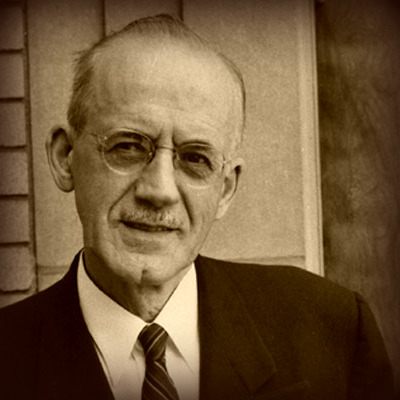
 “Order in nature depends upon right relationships; to achieve harmony each thing must be in its proper position relative to each other thing. In human life it is not otherwise.
…The cause of all our human miseries is a moral dislocation, an upset in our relation to God and to each other. For whatever else the Fall may have been, it was most certainly a sharp change in man’s relation to his Creator. He adopted to God and altered attitude, and by so doing destroyed the proper Creator-creature relation in which, unknown to him, his true happiness lay. Essentially salvation is the restoration of a right relation between man and his Creator, a bringing back to normal of the Creator-creature relation.
A satisfactory spiritual life will begin with a complete change in relation between God and the sinner; not a judicial change merely, but a conscious and experienced change affecting the sinner’s whole nature. The atonement in Jesus’ blood makes such a change judicially possible and the working of the Holy Spirit makes it emotionally satisfying” (A. W. Tozer, The Pursuit of God, 64).
“God was our original habitat and our hearts cannot but feel at home when they enter that ancient and beautiful abode… While we take to ourselves the place that is His the whole course of our live is out of joint. Nothing will or can restore order till our hearts make the great decision: God shall be exalted above” (A. W. Tozer, The Pursuit of God, 67).
Tozer Treasures
How sad that we who are orthodox, who believe in the word, so often forget of what the word speaks. We must remember, “The Bible is not an end in itself, but a means to bring men to an intimate and satisfying knowledge of God, that they may enter into Him, that they may delight in His Presence, may taste and know the inner sweetness of the very God Himself in the core and center of their hearts” (Tozer, The Pursuit of God, 9).
Tozer rightly reminds us—how sad that we need reminded!—that salvation is “not an end but an inception, for now begins the glorious pursuit, the heart’s happy exploration of the infinite riches of the Godhead” (Tozer, The Pursuit of God, 13 cf. Jn. 17:3).
“Self can fight live unrebuked at the very altar… It can fight for the faith of the Reformers and preach eloquently the creed of salvation by grace, and gain strength by its efforts. To tell all the truth, it seems actually to feed upon orthodoxy [cf. Matt. 16:6; Lk. 11:42] and is more at home in a Bible Conference than in a tavern” (Tozer, The Pursuit of God, 33). This quote should help to keep us in check. We must seek to know our own selves (Prov. 20:27; Rom. 12:3; 1 Cor. 11:28). We must use the mirror of Scripture (Heb 4;12-13; James 1:21-25) and ask God for help (Ps. 26:2; 139:23-24).
“The Christian is too sincere to play with ideas for their own sake. He takes not pleasure in the mere spinning of gossamer webs for display. All his beliefs are practical. They are all geared into his life. By them he lives or dies, stands or falls for this world and for all time to come” (Tozer, The Pursuit of God, 38).



 in X
in X 