The Storyline of Scripture
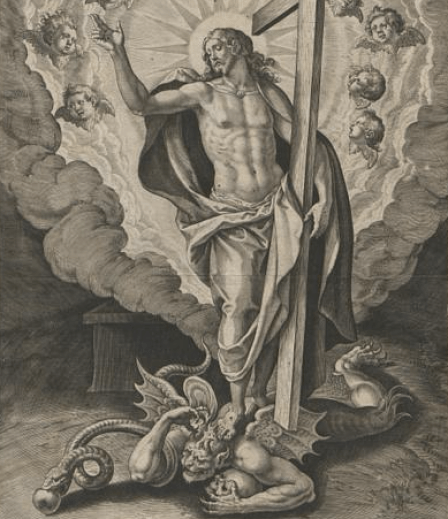
Spoiler alert. If you don’t want to know the resolution to all the twists and turns of the plot line of the Bible do not read on!
Jesus is the hero of the story. He saves the day. As Michael Emlet says, “If you read the Bible from cover to cover you realize that it narrates (proclaims!) a true and cohesive story: the good news that through Jesus Christ God has entered history to liberate and renew the world from its bondage to sin and suffering.”[i] He goes on; God “pursues the restoration of his creation at the cost of his own life. He is making all things new (Rev. 21:5)! That’s the simple and yet profound, life- and world-altering plotline of the Bible.”[ii]
The Bible is chiefly a story about God’s glory being displayed through the recompense of all things wicked, redemption of those made righteous, and finally, the reconciliation of all things in Christ.[iii] The Bible is a true story about God making the world, man messing it up, and God becoming a man to fix the world by not messing up. It is a story of Eden—exile—repeat. It is not until the true Adam, the true and righteous Son of God comes that this process is put to an end. All of Christ’s predeceases fell short; Adam, Noah, Abraham, Saul, David, Solomon, and the lambs, priests, and prophets could not fill Christ’s role.
From the beginning of time and the beginning of God’s word, the Word has been a prominent character in the script (Gen. 1:1; John 1:1). At first, the promised offspring (Gen. 3:15) is vague, in fact, Eve rejoiced because she thought she had the offspring (4:1) but it was all for naught for Cain was of the offspring of the serpent and killed his brother. However, now we have seen that which even the prophets longed to look (Matt. 13:17), we know that all Scripture finds its fulfillment in Jesus who is the long-awaited Christ (2 Cor. 1:20).
When Jesus came the first time, He had no beauty or majesty. When He comes again His face will shine like the sun in full strength (Rev. 1:16). We were cast out of the garden in the beginning but as Jesus said to the thief on the cross, we will be with Him in paradise in the end. Jesus is the linchpin among all the cogs of Scripture. “The trajectory of the arrow shot from the Hebrew Scriptures finds its target (fulfillment) in Jesus of Nazareth.”[iv]
The storyline of the Bible can be understood as creation, fall, redemption, and new creation. We can see the gospel in the storyline of the Bible. God loves us even though we have rebelled against Him. He has provided forgiveness for us through Jesus Christ and if we repent of our sin and trust in Him we will enjoy Him forever in heaven.
Through the creation part of the narrative we see that God made everything (Gen. 1:1; John 1:1-3) and it was good (Gen. 1:4; 10; 12; 18; 21; 25; 31). There was no sin, no death, and no problems before man sinned. Man had perfect fellowship with God.[v]
However, the plot thickens. A cosmic problem is introduced. Through Adam’s fall, we see the collapse of the creation, which explains why everything is no longer good. Man disobeyed and rebelled (Gen. 2:16-17; 3:6) and this brought spiritual and physical death (Gen. 2:17; 3:19), pain (3:16-17), difficulties (3:18-19), and separation from God (3:23-24). This is the bad news. We deserve death and hell.
But there is good news. This is not the end of the story. Even at the beginning of the story, God promised that He would send someone (that is, the Messiah/Christ) to defeat the “bad guy” (that is Satan) of the story (cf. Gen 3:15). In a similar scene, seen throughout the Bible, man’s nemesis is once again at it with him. Satan is tempting not Adam but the second Adam in the wilderness (Luke 4). However, unlike Adam in paradise, the second Adam does not give into the serpent’s temptation although He is in the desert. Jesus was tempted in every way that Adam was, and we are, yet He did not sin (Heb. 4:15) and still He bore our sin upon Himself.
Jesus became man so “that through death he might destroy the one who has the power over death, that is, the devil” (Heb. 2:14). Jesus’ heel was “bruised” at the cross but through that same cross, where He received the bruising, He struck the serpent with a definitive death blow to the head (cf. Gen. 3:15). From the cross, Jesus cried out, “It is finished!” In Jesus’ death, the devil, and death are defeated! He has delivered us from the domain of darkness (Col. 1:13). He disarmed the demonic rulers and authorities and put them to open shame, by triumphing over them through the cross (Col. 2:15).
Jesus is the promised one (Luke 24:27, 44-46; Acts 13:23, 27; 17:3; Rom. 1:2-4; 1 Cor. 15:3-4;) who brings the redemption of all things (cf. Rom. 5:10; Col. 1:20; Titus 2:14; Gal. 3:13; Eph. 1:7, 10). He secures for us an eternal redemption by means of His own blood (Heb. 9:12). Jesus Christ is the solution to the problem; He takes our sin, our problem, upon Himself on the cross. This is the good news; Jesus is the good news! Jesus reversed the curse of sin by becoming a curse for us (Gal. 3:13). Jesus was cast out of the garden so that we could be welcomed back in. Through the one man Adam we all have condemnation yet through the one Man Jesus Christ the grace of God has abounded for many (Rom. 5:12-21). We deserved to be crushed under God’s wrath because of our sin but instead Jesus was crushed in our place (Is. 52:13-53:12). Jesus is the solution to our problem of sin, the sole solution (Jn. 14:6; Act. 4:12). Jesus is the Lamb of God, without blemish, that takes away the sin of the world (John 1:29; Heb. 9:14)!
Jesus is the good news but the good news is not static it goes on and on and on; those in Christ live happily-ever-after. In contrast, God “will gather out of his kingdom all causes of sin and all law-breakers” (Matt. 13:41) and cast them into the pit of eternal fire (Rev. 20:14-15). “They will suffer the punishment of eternal destruction, away from the presence of the Lord and from the glory of his might” (2 Thess. 1:9). However, for those in Christ the story of history will have a happy ending (Rom. 8:29-39).
I concur with what C.S. Lewis says in The Last Battle,
“We can most truly say that they all lived happily ever after. But for them it was only the beginning of the real story. All their life in this world and all their adventures in Narnia had only been the cover and the title page: now at last they were beginning Chapter One of the Great Story which no one on earth has read: which goes on forever: in which every chapter is better than the one before.”[vi]
I believe we, upon arrival to the new Eden, will exclaim with Lewis’ Unicorn:
“I have come home at last! This is my real country! I belong here. This is the land I have been looking for all my life, though I never knew it to now. The reason why we loved the old Narnia [“old creation”] is that it sometime looked a little like this.”[vii]
Through Jesus the Christ we have the unwavering hope of a new creation (2 Peter 3:13). “The creation was subjected to futility” in Adam (Gen. 317-19) but in Christ “the creation itself will be set free from its bondage to corruption and obtain the freedom of the glory of the children of God” (Rom. 8:20-21). As Isaac Watts put it in “Joy to the World,”
“No more let sins and sorrows grow,
Nor thorns infest the ground;
He comes to make His blessings flow
Far as the curse is found,
Far as the curse is found.”
The problem (all of them!) will be fixed and there will be no more sin (Rev. 21:27; 22:3; Matt. 13:41). Everything will be more right than it was ever wrong. We will see that God did, in fact, work all things together for good (Rom. 8:28). Christ will make a new creation and we will be like Him (1 Jn. 3:2; Rom. 8:29; 2 Peter 1:4). “Just as we have borne the image of the man of dust, we shall also bear the image of the man of heaven” (1 Cor. 15:49). God will fulfill our deepest desires and we will finally love the LORD our God with all our heart, soul, mind, and strength when we receive our glorified bodies (Deut. 30:6; Jer. 31:33-34; 32:40; Phil. 3:20-21)! There will be no more pain or problems and God will wipe away all our tears (Rev. 7:17; 21:4). We will once again be in Paradise, the New Jerusalem, and we will have fellowship with God (Rev. 21:3)!
However, this story by its nature, by the fact that it claims to be true, does not leave us alone but calls for a response. We can receive this story or we can reject it outright. God can rewrite us, as it were, into His marvelous script or He can cast us, the unruly “cast,” into hell. We must respond to this story, will we respond rightly? Will we strive to obey the God who reveals Himself? Will we turn to Jesus in faith and repentance?
This is the gospel, the story of all the woes of existence finding their solution in Christ.
____________
[i] Emlet, CrossTalk, 41. A true and cohesive story contained within sixty-six books written by numerous people (with one divine author) in various languages (Hebrew, Greek, and Aramaic) over thousands of years! God’s word about the world being reconciled through the Word is truly amazing!
[ii] Ibid.
[iii] James M. Hamilton Jr. says that “in the broadest terms, the Bible can be summarized in four words: creation, fall, redemption, restoration” (God’s Glory in Salvation through Judgment: A Biblical Theology (Wheaton, IL: Crossway, 2010), 49) but the “ultimate end” of everything is “God’s glory in salvation through judgment.” He goes on to say, “The created realm (creation) is a spectacular theater that serves as the cosmic matrix in which God’s saving and judging glory can be revealed. God’s glory is so grand that no less a stage than the universe—all that is or was and will be, across space and through time—is nescessary for the unfolding of this all-encompassing drama” (Ibid., 53). See also John Piper’s book The Pleasures of God and Jonathon Edwards’ The End for Which God Created the World.
[iv] Emlet, CrossTalk, 47.
[v] Perfect in sense but not like it will be in the new creation; Adam and Eve related to God as creation to Creator and we will relate to God in the new creation as the redeemed to the Redeemer. So we will enjoy a consummated perfect fellowship with God.
[vi] C.S. Lewis, The Last Battle (New York: NY: Harper Collins, 2002), 228.
[vii] Ibid., 213.
Be Transformed by a New Consuming Passion


A Consuming Life Passion?
Instead of feigning for a substance or porn we need to have a new and better all consuming passion. We need to have a new purpose with a new goal as its end. We need a reason to get out of bed in the morning. We need a reason to be.
One of the fundamental questions that psychologists face is what is to be the motivational force in our lives? Is it to get rich? Propagate are genes? To enjoy as much pleasure as we can? What is to be the fuel for the engine of our lives? Do we have anything that can propel us through the sufferings and struggles of life?
This question cries out to be answered, and how it’s answered will have profound implications for the way that we live. Many, I’m sure, are unaware of their motivations and could care less about them. However, I’m sure that this is a great mistake.
The athlete, for instance, competes for a price and are very much aware of what that prize is. We, like the athlete, must not only be aware that there is a prize but what that prize is. We must seek to live with the intentionality of an athlete.
An athlete will discipline their body and bring it under subjection in pursuit of the prize. And when focused on the prize the athlete will gladly do away with hindrances. However, the athlete must have a goal, be competing for a prize, and have an idea of what that prize is if they are to have motivation to compete well.
Christians have Motivation to “Compete”
The language of running the race and competing for a prize were frequently used by the Apostle Paul. He was someone that clearly had a reason for getting out of bed in the morning. He had a consuming passion. He said, “I count everything as absolutely worthless compared to Christ.” Paul suffered the loss of all things in order that he could gain Christ. We also see that Jesus Himself raced the race and endured the cross for the joy that was set before Him.
We too need motivation. We need to be motivated like the Apostle Paul. We need the love of Christ to be the fuel that burns and propels us through the sufferings and struggles of life. Christ alone is sufficient motivation. Christ Jesus, as the Apostle Paul, Augustine, and Brian “Head” Welch, and many others make clear, alone satisfies and is it worth living for.
Here’s Brain “Head” Welch:
Take it from me, nothing you chase after on this earth will satisfy you like a real, everyday intimate relationship with Jesus Christ. Nothing. Trust me. While I was in Korn I had people waiting on me left and right. Anything I wanted, I got. Anywhere I wanted to go, I went. All I had to do was give the word, and it happened. I had the world in the palm of my hand, people; and I have to tell you one last time, there’s nothing there. I promise you. Jesus Christ is the only one that can make you complete. (Save Me from Myself)
The end of the last book of the Bible, the book of Revelation, tells us in chapter 21 what our ultimate goal is. To see God face to face, to be in the eternal temple where He will make all things new. Where He will wipe away every tear from our eye. Where there will be no more pain or crying anymore. Where we will have pleasure forevermore in His presence.
So we see that we have much that God has called us to do. We have much purpose. We have a reason to be. We would do well to set God’s truth before us so that we are motivated to live for the prize.
A verse that God has used to wake me up to the unseen realities and motivate me to purposeful living to His glory is 1 Corinthians 15:58. It says, “Therefore, my beloved brothers, be steadfast, immovable, always abounding in the work of the Lord, knowing that your labor in the Lord is not in vain.” This verse, when understood in the context of chapter 15, shows us that it makes sense for us to be motivated to labor for the Lord because of the reality of the resurrection of Jesus.
The Bible verse that says, “Whether you eat or drink, whatever you do, do you all to the glory of God” is not just a Bible verse. It is not just a good tagline under the name of some private Christian school. It is the way that it makes sense for us to live in light of the glorious gospel.
In a similar way, the oft-quoted phrase “our chief end [or main purpose in life] is to glorify God and enjoy him forever” is not a mere tagline but a phrase that gets at a biblical motivational reality.
Create Your Own Motivational Purpose Statement
We have laid a little bit of groundwork. Now it’s your turn. I want you to write out a biblically infirmed motivational purpose statement for your life.
Just write something down. It does not have to be able to stand the test of time like the Westminster Shorter Catechism on your first attempt. Your purpose statement can adapt and grow as you do.
My own purpose statement is not the best and I certainly could do better about purposely keeping it in my head so that it will be lived out through my hands. However, the purpose behind the statement is not to make it timeless or flawless. It is to be purposeful about our purpose. We have a purpose and it is great. We have a reason to wake up in the morning. A reason to be. I reason to say no to whatever sin it is that calls our name.
Evangelism as an Overflow of Worship

Why do we share the gospel? Because we’re told to? Guilted into it? Or do we share the gospel? Many of us don’t. However, what could motivate us to share the gospel? Guilt? I don’t think that’s the most helpful or biblical motivation.
We share the gospel or should share it because it is the gospel; it is good news! When we have good news will share it. If we like a certain football team, soccer team, or bad mitten team we will be excited if they win and likely even call friends that like the opposing team to brag. If we go to the store and see a certain purse or pair of pants on sale and we buy them we will be excited and even tell someone how much we paid for them. If we go to a new movie or see a show we like we will not hesitate to tell someone about it and that they “have to see it.” We do these things because we’re excited about the “good news.”
I could command you to tell the good news. I could write out the Great Commission right here and just say, “Do it.” But I think if I did that, I would be pulling that text out of context. Notice, before Jesus said His words in Matthew 28:16-20, He first did and said many other things. We find the Great Commission positioned at the end of Matthew. In fact, if my math is correct, there are one thousand and sixty-six verses before it. I believe we must first hear the rest of the book for Jesus’ last charge to be in context; not least of which is Jesus’ death and resurrection. I believe the followers of Christ who were there to hear Jesus’ charge were worshipers (cf. Matt. 28:1; 9: “Mary Magdalene and the other Mary… took hold of his feet and worshiped Him.”). They had not only heard the gospel but had seen it with their own eyes (1 John 1:1-2). They were not given some bland command in the Great Commission but rather it was to them an outlet so that they did not burst.
The singer must sing a song or go mad and the Christian must tell of Christ. Elihu describes well the feelings of compulsion we should have. “The spirit within me constrains me. Behold, my belly is like wine that has no vent; like new wineskins ready to burst. I must speak, that I may find relief” (Job 32:18b-20a).[i] Or Jeremiah says it this way, “If I say, ‘I will not mention him, or speak anymore in his name,’ there is in my heart as it were a burning fire shut up in my bones, and I am weary with holding it in, and I cannot” (20:9).[ii]
2016 and Time

“Time flies,” we say. Time, even as you read this, is tick tick ticking away never to return (are you sure you want to read further?!).
Thinking of the fleeting nature of time can be depressing. Yet, as we think of our limited time it should awaken in us intentionality and seriousness. Of course, that does not mean we shouldn’t have fun. If anything it means we should be more intentional about having fun (Ecclesiastes 2:24).
So as we think of the fleeting nature of time we must not become unhelpfully rigid. We must be intentional and purposeful not only in the good that we want to accomplish but also in the good we want to enjoy.
We must realize that much of American culture is akin to a hamster wheel. There’s many people going and doing but for what? To what end? Is it intentional, calculated, purposeful? Or is to no end (see Eccl. 2:26)?
We must also acknowledge that cultures think of time and promptness differently. Some cultures are more relational then prompt. The issue is not really about how much we do or about what people think about what we do but about being an intentional wise steward of the time that God has given us. This will likely look different in different cultural contexts but the stewardship principal remains.
God does not want us, His servants and workman, to waste the time that He has given us to labor for Him. We can rest from time to time like any worker but we must remember that there will come a time when we can no longer work at all (Jn. 9:4). We must keep in mind the perfect rest (shalom) and reward that He has waiting for His laborers.
In this post we will look at why being conscious of the way we spend our time is important. Jonathan Edwards is especially insightful here because he realized the importance of time (See esp. “The Preciousness of Time and the Importance of Redeeming it”).
The Preciousness of Time
Why is time valuable and precious? Edwards said, “Because a happy or miserable eternity depends on the good or ill improvement of it” for you and for others. “Things are precious in proportion to their importance or to the degree wherein they concern our welfare.”[i]
“Gold and silver are esteemed precious by men; but they are of no worth to any man, only as thereby he has an opportunity of avoiding or removing some evil, or of possessing himself of some good. And the greater the evil is which any man hath advantage to escape, or the good which he hath advantage to obtain, by anything that he possesses, by so much the greater is the value of that thing to him, whatever it be. Thus if a man, by anything which he hath, may save his life, which he must lose without it, he will look upon that by which he hath the opportunity of escaping so great an evil as death, to be very precious. — Hence it is that time is so exceedingly precious, because by it we have opportunity of escaping everlasting misery, and of obtaining everlasting blessedness and glory. On this depends our escape from an infinite evil, and our attainment of an infinite good.”[ii]
For example: The life preservers on the Titanic, “the unsinkable ship,” were not thought of as valuable at the outset of the cruise. People must have thought: What is the need of a life preserver on a ship that won’t sink? But that mindset changed. What was it that brought a new and priceless value to the life preservers? People realized that they were, in fact, not on the unsinkable ship; for it was sinking.
In a short time the value of the life perseveres sky rocketed. The people now clinched the life preservers tight, perhaps even fighting over them, when before they would not even give them a second thought. Just like the passengers treated the life preservers differently once they realized the ship was sinking so we must treat time differently once we see that our lives are fleeting. When we realize that time is precious we will clinch it tight and use it wisely.
Life is transitory and we do not know how long we will live. Our life is just a mist that appears for a little time and then vanishes (James 4:14). Time is so valuable, in part, because it is very short. Our time on earth is but dust in the wind, vapor that is here for a moment, grass that withers in the sun. Our time on earth is short and “the scarcity of any commodity occasions men to set a higher value upon it, especially if it be necessary and they cannot do without it… So time is the more to be prized by men, because a whole eternity depends upon it; and yet we have but a little of time.”[iii]
“Time ought to be esteemed by us very precious, because we are uncertain of its continuance.”[iv] We know that time will end for all people; however, we do not know when. We do not know the date and the time.
Time is valuable because when it is gone you can never get it back. Edwards said,
“There are many things which men possess, which if they part with, they can obtain them again. If a man have parted with something which he had, not knowing the worth of it, or the need he should have of it; he often can regain it, at least with pains and cost… But it is not so with respect to time. When once that is gone, it is gone forever; no pains, no cost will recover it.”[v]
“Once the time of life is gone, when once death is come, we have no more to do with time; there is no possibility of obtaining the restoration of it, or another space in which to prepare for eternity. If a man should lose the whole of his worldly substance, and become a bankrupt, it is possible that his loss may be made up. He may have another estate as good. But when the time of life is gone, it is impossible that we should ever obtain another such time. All opportunity of obtaining eternal welfare is utterly and everlastingly gone.”[vi]
The way we spend our time on earth has eternal consequences. This is not a subject to be taken lightly. “A person cannot do anything to time itself—delay or hasten, save or lose it—much less ‘manage’ it. The challenge is to manage ourselves under the lordship of Jesus Christ, from whom we get our goals and values.”[vii]
May we be intentional and wise stewards of 2016.
________________________
[i]Jonathan Edwards, The Works of Jonathan Edwards:2 Volume Set, (Peabody, Massachusetts: Hendrickson Publishers, 2005), 233.
[ii]Edwards, The Works of Jonathan Edwards, 233.
[iii] Ibid.
[iv] Ibid., 234.
[v] Ibid.
[vi] Ibid.
[vii] Charles E. Hummel, The Freedom from the Tyranny of the Urgent (Downers Grove, IL: IVP Books, 1997, 31.
“Genetic Homosexual?” and our morality…

John is attracted to men. Jane is attracted to women. And so, our cultural says, “Go for it! If that’s the way you feel (the culture’s only form of “objective” truth). After all, that’s the way you were born. It’s in your genes.”
I, Paul, am attracted to women (pl.) and yet I am married, to a singular woman. I also have the tendency, bent, disposition, because of innumerable factors (nature, nurture, etc.) to be angry and act out in anger. If I left myself unchecked and just did whatever I felt like, I, sad to say, would be an abusive adulterer. Something that would not be good for me, my wife, my children, or society.
So, even if I am by nature a genetic abusive adulterer is that ok? Should I be content with that? Promote that?
I do not see how that is admirable. Many people would lead me to believe that is the higher good; to be something akin to animals. To do whatever we want, whatever our natural self would want to do. It sounds like many would sniff the wind and follow their inner impulse. However, does anyone realize that our inner impulse, whatever it might be, will often lead to some very bad places?
We all have many dispositions: selfishness, pride, boastfulness, etc. but that does not make it right; even if natural. If we want to just say that everyone should just do whatever their genetic disposition has given them, then we should just do away with the penal system and society in general. For what, in that line of thought, would allow us justification to repress any inner and natural desire?
Many studies, for instance, show that many drug addicts, whether meth, heroin, or cocaine, have a genetic disposition to drug addiction. However, we don’t say, or most of us don’t say, that drug addiction is okay. Why? Many would say because it harms the body and harms society. Just because someone has a disposition for something does not justify that disposition.
The logic that says homosexuality is fine because people have a disposition towards it is faulty. That just does not follow. People have dispositions in all sorts of ways. But that does not make it morally good.
People say: “To your own self be true” and other such phrases. But where does our deepest self lay? In our pants? Or does our mind and our convictions play a pretty big part? Maybe being “true to our self” also, and more fundamentally, means being true to our convictions, to what we think and believe at the core of our being. If I ask, “Is love more than bodily fluids?” This will be answered not unbiasedly but according to other deeper and more fundamental questions. The real issue at stake in this conversation is about fundamental convictions; how we see the world, our ultimate desires, our view of life and our view of “the good.”
People, for instance, compare sex to eating. Yes, sex is like eating in some ways. It is a natural enough thing (although much more significant psychologically, relationally, etc.), yet if we don’t eat we die. That is not the case with sex. Yet sex, under certain belief systems, e.g. naturalistic hedonism, will be seen as close to ultimate. Whereas the Christian sees sex as a good gift from God. A gift that must be enjoyed in the right way to the right end. In the Christian’s belief system there is something more awesome more significant than sex, infinitely more.
When the Christian, whether their tendency is more towards heterosexual, homosexual, or bisexual temptation, has found that there is something more significant, lasting, and satisfying than sex (yes, something better than sex!) it obviously impacts them. They can be recreated and desire what is more significant than some of their inner dispositions.[1] Through relationships, whether with friends, a spouse, or God, we see that we are not just sexual animals; that is one part of our constitution. It is not, or I don’t think we should let it be, the fundamental and driving part. That view is shallow, problematic, and simply just not accurate to reality.
What we are seeing in our culture is two worldviews colliding. One says we are fundamentally animals and thus expects us to live according to our innate animal desires. And from that worldview, it’s consistent. Only why stop with adultery or homosexuality?… whatever one finds to do, whatever the desire, it should be allowed in that system.[2] The other worldview says we are not animals and we should not live simply according to our desires. Our desires can be wrong, very wrong. The Christian says that we were created in the image of God but have been marred through sin. We need to be remade in God’s image by listening to His Word. The problem happened in the beginning exactly because we were not listening and did what we (wrongly) desired.
Our desire must be shaped, informed, led by He who knows; namely God. God has all wisdom. Not us. He, as our good Father, knows how to give good gifts, even if we think we want something else. He knows what we ultimately need and what will ultimately satisfy.
So, there may be “genetic homosexuals” that are not practicing homosexuals. I myself am a “genetic adulterer” yet, by God’s empowering grace, I am not a practicing adulterer.
___________________________________________
[1] Of course, here, if someone sees humans as fundamentally just sexual animals then what I am saying will be scoffed at. However, I will also rightfully scoff at their shallow, sad, and bankrupt view. If we are mere animals then what of love, what of society, what of the penal system? Obviously, “non-Christian presuppositions will lead to non-Christian interpretations and ultimately to non-Christian conclusions” (Michael J. Kruger, “The Sufficiency of Scripture in Apologetics,” 87 in The Master’s Seminary Journal, Vol. 12, No. 1, Spring 2001). Yet, those conclusions are chaotic, problematic, and wrong.
[2] “Logic, science, and morality make no sense within the non-Christian worldview. For example, how can the atheist justify and explain the origin and universal applicability of moral absolutes? He simply cannot. Consider philosopher William Lane Craig as he explains the impossibility of moral absolutes in an atheist worldview: If there is no God, then any ground for regarding the herd morality evolved by homo sapiens as objectively true seems to have been removed. After all, what is so special about human beings? They are just accidental by-products of nature which have evolved relatively recently on an infinitesimal speck of dust lost somewhere in a hostile and mindless universe and which are doomed to perish individually and collectively in a relatively short time. Some action, say incest, may not be biologically or socially advantageous and so in the course of human evolution has become taboo; but there is on the atheistic view nothing re ally wrong about committing incest. If, as Kurt states, ‘The moral principles that govern our behavior are rooted in habit and custom, feeling and fashion,’ then the non-comformist who chooses to flout the herd morality is doing nothing more serious than acting unfashionably (William Lane Craig, The Indispensability of Theological Meta-Ethical Foundations for Morality, located at http://www.leaderu.com/offices/billcraig/meta-eth.html, 4)” (Michael J. Kruger, “The Sufficiency of Scripture in Apologetics,” 83n35 in The Master’s Seminary Journal, Vol. 12, No. 1, Spring 2001).
The Megalomania of Mass Media

Through Twitter, Instagram, and Facebook (and remember MySpace?) we have a world essentially created in our image. It’s nice. But it also feeds our narcissistic souls.[i] We like what we want and we want what we like; and if you, a certain political agenda, a religious view, or a video, a picture, or an advertisement (the most difficult thing to avoid in our cyber-haven) gets in my way I have the right, without reproach, to scroll on by.
Media brings a form of megalomania but it can also be a monster to meaning. It destroys meaning by stripping it of its context and by placing weighty things into too close a proximity to funny dog videos. When posts about politics, pantiliners, and poodles all show up in our (raging and undirected directed) “stream” then we might be taking in not a stream but a torrent of incoherent information.
It seems that social media has great potential to create an anti-intellectual ivory tower. That is, it distances us from people and what is really going on and allows us to make unsubstantiated comments that haven’t truly been contemplated. If we don’t take in the protein and exercise of hard thought we’re going to be weak. If we feed on what’s frail and fruitless, we will be frail and fruitless.
Tweets and feeds won’t feed us. And we cannot understand politics in sixty-second-sound-bits. Racial reconciliation isn’t and can’t be reconciled, let alone understood, when we merely rely on social media; instead of deep, patient, embodied, social change.
Violence and vengeance, bullying and bad behavior, won’t be solved by ads alone; even if the words are backed by a famous actor, artist, or athlete (that ironically likely undercuts the very thing they’re supposedly trying to communicate).
Further, social media may fool us, but it won’t fill us. We may enjoy Instagram but we weren’t there, we aren’t now, or we didn’t receive enough “stars” (or whatever) to fill out our significance.
The “word” “tweet” is fitting for Twitter because although I myself have a Twitter the whole thing is not congruent. When sentences and phrases are sheared of their context they have about as much meaning as a bird tweeting. So when we “tweet” we may be performing a type of onomatopoeia (an onomatopoeia is a word that phonetically imitates, resembles, or suggests the source of the sound that it describes). That is to say, to tweet is to not say anything; or, at least, anything that is human in an extended rational sense.
As humans we can hear more than “tweet, tweet, tweet.” We can take in and bask in beautiful poetry or follow powerful prose. We can be “intoxicated” in beautiful ways literarily, but not so much if we stick w/ texting & tweeting.
Thankfully Chopin and Beethoven’s media wasn’t a kazoo and a triangle, that media would have greatly hindered them. Could it be that our media is hurting and hindering us? Maybe sometimes we need to even focus on a medium. Maybe even pick up a pencil and paper, put away distractions, and put something powerful and substantial down. Something outside of us, beyond us, and not about us. Maybe it’s time to read a book and get off Facebook.
________________________
[i] In the picture above by Caravaggio (1571-1610), Narcissus gazes at his own reflection and in a similar way we gaze into our computers, phones, and tablets. We narcissistically gaze at our profiles and our worlds that we have created in our image. Could we meet the same fate as Narcissus? Could we drown in a stream of information and technology?
“…yet to be filled…”

 Today’s culture believes that you can’t be fulfilled unless you can have the “partner” you want, whether male, female, multiple, or in some other combination that is preferred, and yet so many signs tell us that humanity has yet to be fulfilled. Take, for example, all the recent rich and famous people, people that many of us would think would be fulfilled, that have committed suicide or died of drug overdose.
What does all this tell us? Or as Blaise Pascal says,
“What is it then that this desire and this inability proclaim to us, but that there was once in man a true happiness of which there now remain to him only the mark and empty trace, which he in vain tries to fill from all his surroundings, seeking from things absent the help he does not obtain in things present? But these are all inadequate, because the infinite abyss can only be filled by an infinite and immutable object, that is to say, only by God Himself.”
We have eternity in our hearts. We seek for good gifts, that have become tainted fruit, to fulfill. But they can’t, they were never designed to. Legalizing same sex marriage isn’t the solution. Drugs are not, sex is not, success is not… Not kids, money, things, marriage… They all fail. There’s nothing to be finally gained under the sun.
We need that for which our souls were made. We need the LORD. Jesus the promised Messiah alone gives eternal shalom for our souls.
Danny MacAskill – “Way Back Home”
Thankful to God for beauty, creativity, and the ability that humans have to do some really cool things.
I have watched this video a bunch of times with my kids and we have received a lot of enjoyment from it. God has blessed humanity with so many good gifts. Smiles, a happy dog, music, children.
A Brief Defense of the Resurrection

If the resurrection didn’t happen why go to church? Why read the Bible? Why seek to uphold the New Testament ethic?
The launch of the World Wide Web in 1990 changed the world. It led to a wealth of information unprecedented in any other age to include what followed after the creation of the printing press in 1440. The Declaration of Independence, the French Revolution, the first moon landing, the first flight, the Model T, antiseptics, the Industrial Revolution; they changed the world and, one could argue, for the better. However, their significance pales in comparison to the question of the resurrection.
The topic of the resurrection of Jesus of Nazareth is profoundly important. Upon it Christianity, indeed, heaven and hell rest. It is the hinge on which the direction of one’s life hangs, but it is more than that. The resurrection, if it happened, means that the hermeneutic with which we look at the world, even the whole of the universe, must correctly fit that evidence.
It means that all of history—that of the television to that of Tokyo—and everybody—Albert Einstein to Adolf Hitler—hang in the balance. It means that there is a day of reckoning; a day of profound peace and of hell. It means this world will one day finally be great for some and for others it will be the best they’ve known. It means that there is purpose and extreme futility.
It means that the unreal is real. It means that the far out has burst upon the scene. It means that what is seen is not it. It means that there is more. It means that there is meaning and direction to the cosmos. It means history is going somewhere and it is on its way.
If the resurrection happened then that new creation is the most significant thing that has happened since the (literal) beginning of time with the creation of all things. If the resurrection indeed happened then it confirms the words and work of Jesus. If the resurrection happened, it truly changes everything.
Second, it is important to consider arguments for the resurrection because the Bible itself all over the place argues for the resurrection. It’s what the Christian hope is built upon. If it didn’t happen then what are we doing?!
So, many of the sermons in Acts seek to prove that Jesus is the promised Messiah (see Acts 9:22; 13:16ff; 16:13; 17:3, 17; 18:4-5, 19; 19:8ff; 24:25; 26:6, 22-26; 28:23, 31 cf. 18:28; from the beginning of the church preaching and teaching was integral 2:42).[1] Also, Luke wrote an “orderly account” to Theophilus so that he would have “certainty” (Luke 1:3). Luke said that Jesus “presented himself alive to them after his suffering by many proofs” (Acts 1:3).
Peter says “we did not follow cleverly devised myths when we made known to you the power and coming of our Lord Jesus Christ, but we were eyewitnesses of his majesty” (2 Pet. 1:16). John talks about very tangible proof: “…we have heard… we have seen with our eyes, which we looked upon and have touched with our hands… the life was made manifest, and we have seen… that which we have seen and heard we proclaim also to you” (1 Jn. 1:1-3). Even when warned at the cost of punishment Peter and John said in Acts that they could not but speak of what they had seen and heard (Acts 4:20).
The reality of the resurrection is something that is obviously very important to the New Testament authors. It is something that they did not take for granted but gave witness to (cf. e.g. Jn. 19:31-37). The reality of the resurrection is no less important for us today. We must still give testimony to it. We must still give the “many proofs” (cf. Acts 1:3) for it.
Before look at the question: did the resurrection happen? I think it’s important to consider: is it even possible for the resurrection to happen? So, let’s consider the assumptions that we have as we look at the evidence.
Our starting places or assumptions have a big impact on the way we weigh evidence. For instance, in Harper Lee’s book To Kill a Mockingbird the correct verdict could not have been given in that context (i.e. Maycomb’s racist white community) because people excluded the possibility that anyone other than the black man, Tom Robinson, was guilty. Despite the strong evidence that Atticus Finch put forward Tom was still convicted. Why? Because people were prejudice against the truth. The people’s a prior assumption, that Tom was guilty because he’s black, led them to not honestly look at the evidence and pronounce the correct verdict.[4]
This sadly still happens. It happens in the court of law and it happens when people consider the evidence for the resurrection. Atheists and naturalists will obviously claim that Jesus could not raise from the dead because for them that is not even a possible option. It must have been something else. There must be a different explanation. And so, they propound all sorts of other ideas. Yet what they offer does not do justice to all the information.
More common, however, is a more popular form of denial. Either people just say it’s not possible without clearly weighing the evidence or they deny it because of doctrine. That is, they don’t like certain things that the New Testament teaches and realize if they deny the resurrection then they don’t have to worry about any of the other teachings; such as repentance. However, as Timothy Keller has said, “The issue on which everything hangs is not whether or not you like [Jesus’] teaching but whether or not he rose from the dead.”[5]
“For I delivered to you as of first importance what I also received: that Christ died for our sins in accordance with the Scriptures, that he was buried, that he was raised on the third day in accordance with the Scriptures, and that he appeared to Cephas, then to the twelve. Then he appeared to more than five hundred brothers at one time, most of whom are still alive, though some have fallen asleep. Then he appeared to James, then to all the apostles. Last of all, as to one untimely born, he appeared also to me. For I am the least of the apostles, unworthy to be called an apostle, because I persecuted the church of God.”
Notice that this teaching is of “first importance.” There is a lot that we can disagree on but this is not one of those things. This is one of the absolute bare essentials. If we lose this then the whole structure collapses. Also, notice that Paul is delivering something to us that he “received.” Paul is incorporating an earlier confession or tradition that was passed down.[6]
First, Jesus was Crucifixed. Christ died (1 Cor. 15:3). And He died on a cross. This is basically an undisputed fact.[7] Tacitus says:
“Christ, the founder of the name, had undergone the death penalty in the reign of Tiberius, by sentence of the procurator Pontius Pilate, and a pernicious superstition was chekcked for the moment, only to break out once more, not merely in Judea, the home of the disease, but in the capital istelf” (Annals of Imperial Rome xv.44).
The Talmud even reports that Jesus (Yeshu) was hanged (as in on the cross) on the eve of the Passover (b Sanh 43a-b; cf. Justin Martyr Dial. 69) for practicing sorcery (it is important to note that the authorities did not deny that “strange” things accompanied Him).[8] The Jewish historian Josephus says that Pilate condemned Jesus to the cross (Antiquities, Book 18, ch. 3, par. 3). Lucian, a Greek writer of the 2nd century, mentions the crucifixion of Jesus as well (The Death of Peregrine, 11-13).
This is very significant, because to be hung on a tree, to be crucified, was to be cursed in the eyes of the Jews. Paul tells us this (Gal. 3:13) reminding us of Deuteronomy 21:23. How could Christianity develop and believe in a crucified, cursed, carpenter as their long-awaited promised Messiah? What could make sense of the fact that Jesus was crucified and later venerated as the Promised One, indeed, God incarnate?[9] Surely a crucified man could not be the Messiah (Deut. 21:22-23 cf. Acts 5:30; 10:39; 13:29; Gal. 3:13; 1 Pet. 2:24).[10] Plus, the expectation was a king in the vein of David. A Yehoshu’a that defeats Israel’s enemies, not a Yehoshu’a that will be defeated by dying upon a tree.[11]
This makes the existence of the Church all the more amazing. Why would people such as Peter, James, and Paul follow—to death!—someone that was crucified?! What could account for this historical fact? Why would Jews switch their day of worship from Saturday, the Sabbath, to Sunday in light of someone that died a horrible death on the cross?[12] Why would the Church be persecuted for “eating flesh” (i.e. celebrating the Lord’s Supper) if Jesus only died and never raised?
Of course, we know that Jesus, the Messiah, died as the Lamb of God to take away our sins. We see that His death was the fulfillment of passages like Isaiah 53. However, that was not immediately understood. They did not a first understand that the Messiah must suffer many things (cf. e.g. Lk. 18:31-34; 24:11). They did not understand that Jesus’ death was indeed in “accordance with the Scriptures.” Yet, they would understand. So, we see, “Jesus’ resurrection is, in fact, the best explanation for why ancient monotheistic Jews would worship him as divine.”[13]
Second, Jesus was Buried. Jesus was buried (1 Cor. 15:4). Laid in a tomb and later His tomb was found empty. There are multiple attestations of this. The Gospels Matthew, Mark, Luke, and John all tell us about this. Further, they tell us that women were the first people on the scene. This is significant because a woman’s testimony was no good in court in that day.[14] If the empty tomb story would have been made up they would not have chosen women to be the first witnesses to the resurrection. Instead, it would have made sense for them to say that Peter, for instance, was the first person on the scene.
Also, they would not have left any discrepancies in the accounts. However, discrepancies remain. They are not irreconcilable but they remain. If the story of the empty tomb was fabricated the account of it would be much more tidy.[15] Anyhow, if Jesus did not rise from the dead His followers would have no motivation to claim that He did.
One of the theories put forward against the resurrection is that Jesus was not actually dead when He was taken off the cross.[16] However, think of this: Jesus would have been a more horrific image than a zombie. He would have been in no position to convince His disciples that He had rose from the dead. Plus, He would then be a deceiver which greatly conflicts with His amazing ethical teachings.
All of this aside, it is just not possible that Jesus would have lived through the whole ordeal.[17] So William Lane Craig has said that the apparent death theory is foolish when we consider “the beatings of Jesus, His exhausting all-night trial and interrogations, His scourging, His crucifixion, the spear in His side [which serves to demonstrate that He did in fact die], the binding and wrapping of His body in seventy-five pounds of linen and spices, and the cold tomb sealed by a large stone.”[18]
In fact because of the type of beating that Jesus underwent before He was even crucified He could have died even beforehand so there was no way that He would have lived through the crucifixion.[19] Further, the guards though not doctors or scientists likely had as much experience with dead bodies as morticians. They would have known if Jesus was not dead. So Alexander Metherell, who has both a medical degree and a doctorate degree in engineering and has edited five scientific books, has said that “there was absolutely no doubt that Jesus was dead” and “there’s just no way he could have survived the cross.”[20]
People have even claimed that Jesus death was faked. They claim that Jesus was slipped a drug that put Him into a deep stupor (they use Mk. 15:36 as their proof text) so people thought He was dead. However, this theory falls short for a number of reasons. Not least is the fact that had Jesus fell into a deep stupor He would have in fact died. One of the ways, probably the most common way, which people died on the cross was through asphyxiation. Thus if Jesus was drugged He would have certainly died of asphyxiation anyhow.
William Edwards concludes his study “On the Physical Death of Jesus Christ”:
“It remains unsettled whether Jesus died of cardiac rupture or of cardiorespiratory failure. However, the important feature may be not how he died but rather whether he died. Clearly, the weight of historical and medical evidence indicates that Jesus was dead before the wound to his side was inflicted and supports the traditional view that the spear, thrust between his right ribs, probably perforated not only the right lung but also the pericardium and heart and thereby ensured his death. Accordingly, interpretations based on the assumption that Jesus did not die on the cross appear to be at odds with modern medical knowledge.”[21]
Although the “swoon theory” is unbelievable it does lend credibility to the other evidence leading to the resurrection. This is because if someone is willing to claim that Jesus did not die on the cross rather than face the other evidence then the other evidence must be substantial indeed.
So what then is the significance that Jesus was buried and that Paul and the confession stated that? The Heidelberg Catechism says that “His burial testified that He had really died.”[22]
Third, Jesus’ Tomb was Empty. Jesus rose from the dead (1 Cor. 15:4) and thus left an empty tomb. Actually, it was never even claimed that the tomb was not empty. That was not an option that anyone could have claimed because the tomb was empty. Instead, the authorities that wanted to crush the early Christian movement said that the disciples stole Jesus’ body (Matt. 28:13, 15). Yet, that claim is preposterous for a few reasons. For example, Jesus’ followers did not have the motivation or the means to put on such a pointless charade (the penalty for the tomb-breaker was capital punishment, see the Nazareth Inscription). People have also put forward the idea that the women went to the wrong tomb. This view, however, doesn’t hold up to scrutiny either. If the women had gone to the wrong tomb then the authorities would have said so. They did know where the tomb was; they set guards in front of it.
First, we see early attestation that the tomb was empty. Paul quoted an early confession that Jesus was raised (1 Cor. 15:4) which implicitly states that the tomb was empty. We also have other very reliable historical sources that all claim that the tomb was empty.
Second, if the tomb wasn’t empty it would have been impossible for the Christian movement, which is founded on the resurrection, to get started in Jerusalem. Perhaps if the disciples would have moved somewhere else then it would have been possible but not in Jerusalem. People there had certainly seen Jesus teach, die a horrible death, or at least heard rumors about Jesus. Jews and Gentiles alike had reasons for hostility against the radical upstart movement. People didn’t understand Christian teaching and as Jesus predicted it brought division. So if people in Jerusalem could have produced Jesus’ body to shut up the movement before it got off the ground they would have. But they didn’t, because they couldn’t. If the tomb was not empty then there could be no Christian movement; especially in Jerusalem. Paul and the Gospel writers all identify and give names of multiple people that were said to be eyewitnesses of the resurrection. If people wanted to they could question them and determine the validly of their claims. So Craig shows that “the controlling presence of living witnesses would prevent significant accrual of legend.”[23]
Again, and thirdly, the fact that the Gospels tell us that women discovered the empty tomb argues for its validity. This, once again, is because if the Gospel accounts had been made up, they would not have been made up to include women being the witnesses to the empty tomb. Something else to consider looking at is the Shroud of Turin.
Fourth, Jesus Appeared to Many. Jesus appeared too many (1 Cor. 15:5-9). Paul gave a pretty substantial list of witnesses. In fact, Paul basically said, they are still around, here are their names, you can go question them yourself. Actually, that is apparently what Luke did. Luke did a thorough investigation of the whole thing and his final verdict was that the resurrection and thus the Church did indeed happen.
The New Testament lists twelve separate appearances over a forty-day period:[24]
- Mary Magdalene (Jn. 20:10-18)
- Mary and the other women (Matt. 28:1-10)
- Peter (Lk. 24:34; 1 Cor. 15:5)
- Two disciples on the road to Emmaus (Lk. 24:13-35)
- Ten apostles (Lk. 24:36-49)
- Eleven apostles (Jn. 20:24-31)
- Seven apostles (Jn. 21)
- All of the apostles (Matt. 28:16-20)
- Five hundred disciples (1 Cor. 15:6)
- James (1 Cor. 15:7)
- Again to all the apostles (Acts 1:4-8)
- The apostle Paul (Acts 9:1-9; 1 Cor. 15:8; 9:1)
One of Jesus’ followers (likely Mark) fled naked risking great shame (or worse) but was transformed by the good and surprising news of the resurrection (cf. Mk. 14:32-52). Paul, a persecutor of the Church, was radically transformed and ended up being persecuted himself for preaching the truth of Jesus the Christ’s resurrection.
As has been very often pointed out:
“The disciples… went from dejected, dispirited and grieving followers of a crucified rabbi to apostles, those who had beheld the risen Christ and who, on that basis, preached him as Lord of life and the Judge of history… The actual resurrection of Jesus is the best explanation for the disciples’ transformation from cowardice, despair and confusion to confident proclamation and the willingness to suffer persecution, hardship and even martyrdom for the sake of Jesus and his gospel.”[25]
And who would die for a known lie? Who would go to a bloody painful death if it could be avoided simply by denying a lie?
After Jesus was taken His apostles were scared and hid in the upper room. Peter denied Jesus 3 times. After Jesus’ resurrection he appeared to the apostles and many others. After the apostles saw the resurrected Jesus they were no longer scared, they were emboldened. All of the apostles died for their beliefs, except John. Yet, tradition says he was boiled alive and later exiled to the island Patmos. Following is how the apostles died:
- Peter- crucified
- Andrew-crucified
- Matthew- the sword
- John- died a natural death after being boiled in oil and exiled
- James, son of Alphaeus- crucified
- Philip- crucified
- Simon- crucified
- Thaddaeus- killed by arrows
- James, the brother of Jesus- stoned
- Thomas- spear thrust
- Bartholomew- crucified
- James, the son of Zebedee- the sword
Many have contended that the appearances were just hallucinations. However, this theory also falls short for various reasons. Actually, even the Orthodox Jewish scholar Pinchas Lapide, believed that Jesus did in fact rise from the dead even though he didn’t believe that Jesus was the Jewish Messiah. So, for instance, he said, ““When this frightened band of apostles suddenly could be changed overnight into a confident mission society… Then no vision or hallucination is sufficient to explain such a revolutionary transformation.”[26]
Others have put forward the “conspiracy theory” view that says the disciples made up the resurrection story. However, as I said, the Gospel accounts have small, though not contradictory, discrepancies in them. This would not make any sense if the early followers of Jesus got together and fabricated the whole thing. However, it would not make any sense for them to fabricate the whole thing anyhow. What would they gain from such lies?! Nothing. Nothing but persecution and death. So clearly the crucifixion of Jesus was not just some conspiracy theory that some whacks made up to serve their own end.
Can you imagine the disciples saying, in the words of William Lane Craig,
“Let us band together… to invent all the miracles and resurrection appearances which we never saw and let us carry the sham to death! Why not die for nothing? Why dislike torture and whipping inflicted for no good reason? Let us go out to all nations and overthrow their institutions and denounce their gods! And even if we don’t convince anybody, at least we’ll have the satisfaction of drawing down on ourselves the punishment for our own deceit.”[27]
Even mobsters, like Henry Hill and Alphonse D’Arco, from time to time break down and confess what they swore on life and limb they would not confess. Surely Jesus’ followers who had everything to lose and nothing to gain would break down and confess it was a hoax if it was. Thus the “conspiracy theory” fails to meet the demands of the evidence.[28]
Further, Craig points out that “if we distrust these men, then we must distrust all writers of history and records. If we accept the records of secular historians, then we must by the same standard also accept the reliability of the disciples’ testimony to the resurrection.”[29] Similarly, Licona points that “to claim as useless any effort to know the past is not only the death of history but of the legal system too.”[30]
If Jesus Christ has been raised there is purpose and direction to the cosmos; to our life. If Jesus rose from the dead His claim and promises our justified. If Jesus rose then we, who have faith in Him, will also rise. If Jesus rose the Kingdom of God and new creation has broke into this broken world. Truly, “The resurrection of Jesus… is the symbol and starting point of a new world.”[34]
- William Lane Craig, The Son Rises
- Josh McDowell, The New Evidence That Demands A Verdict
- Gary R. Habermas & Michael Licona, The Case for the Resurrection of Jesus
- Lee Strobel, The Case for the Resurrection & The Film Collection
- How has the resurrection changed you?
- How has it changed someone you know or know of? For instance, think of the Apostle Paul.
- How should the fact of the resurrection continue to change you?
- What should you do differently this week in light of the resurrection?
- How can you thank Christ for the resurrection and all that it means?
- Lastly, read 1 Corinthians 15 this week, pray, and think about the importance of the resurrection of Christ.
______________________________
[1] Marten Hengel rightly says Paul considered the “Jewish-Messianic message and its concomitant scriptural evidence… quite important from the very beginning.” (Marten Hengel, “Paul in Arabia” Bulletin for Biblical Research 12.1 [2002], 59).
[2] Licona, The Resurrection of Jesus, 115
[3] Douglas Groothuis, Christian Apologetics: A Comprehensive Case for Biblical Faith, 530. See also e.g. Licona’s discussion of John Dominic Crossan’s view in The Resurrection of Jesus, 44-45 see also 608.
[4] See also John Adams in Licona, The Resurrection of Jesus, 609.
[5] Keller, The Reason for God, 210. Also, William Lane Craig, Reasonable Faith, 279.
[6] Licona says “Paul wrote the letter we now refer to as 1 Corinthians in A.D. 54 or 55. If Jesus died in A.D. 30, we are reading a letter that was written within twenty-five years of Jesus’ death by a major church leader who knew a number of those who walked with Jesus. If this letter contains tradition that Paul has preserved, we are even closer than twenty-five years to the events it claims to report” (The Resurrection of Jesus, 223-24. See 223- 35).
[7] Even John Dominic Crossan says the fact that Jesus was crucified is “as sure as anything historical ever can be” (Jesus: A Revolutionary Biography [San Francisco: HarperCollins, 1991], 145).
[8] See: “Jesus of Nazareth’s Trial in Sanhedrin 43a.”
[9] Martin Hengel says, “A crucified messiah, son of God or God must have seemed a contradiction in terms to anyone, Jew, Greek, Roman or barbarian, asked to believe such a claim, and it will certainly have been thought offensive and foolish” (Crucifixion John Bowden trans. [Philadelphia: Fortress Press, 1977], 10) as Paul himself later would say (1 Cor. 1:18, 23). See also Ibid., 61-62, and esp. 89. Justin Martyr Apology I ch. 13. Also the Alexamenos graffito shows how foolish many thought it was to worship one that had been crucified. The graffiti depicts a Christian worshiping an image of a man on a cross with a donkey head.
[10] cf. Thomas R. Schreiner, Paul, Apostle of God’s in Christ: A Pauline Theology (Downers Grove: IVP Academic, 2001), 75. Truly, “a crucified Messiah was a contradiction in terms for the Jews” (Thomas R. Schreiner, New Testament Theology: Magnifying God in Christ [Grand Rapids: Baker Academic, 2008], 292). Paul himself was among the rulers that “did not recognize him,” the Messiah, nor what the prophets said regarding Him (Acts 13:27). Yet he later was enlightened to the fact that the Scriptures were fulfilled (v. 27b) when Jesus was condemned, i.e. “cursed,” on a tree (v. 29 see also vv. 30-39). Also, Loren T. Stuckenbruck after examining the relevant apocalyptic and early Judaism literature says, “messianic speculation varied from author to author and even within the documents themselves” (“Messianic Ideas in the Apocalyptic and Related Literature of Early Judaism” 112 in The Messiah in the Old and New Testament (Grand Rapids: W. B. Eerdmans Publishing Co., 2007), 90-13.
[11] In Paul’s day “Messianic expectation married social discontent. The result was the offspring of anticipation and action” (David P Seemuth, “Mission in the Early Church” in Mission in the New Testament, 51). People, not least Paul, did not expect a suffering servant that would die a violent death to be the long awaited messiah. They expected a messiah that would bring violence to their oppressors.
[12] See Wright, The Resurrection of the Son of God, 579-80 and Groothuis, Christian Apologetics, 554. “Wright argues that the empty tomb and the postresurrection appearances of Jesus are necessary conditions for the rise of early Christian belief in the resurrection of Jesus” (Licona, The Resurrection of Jesus, 107).
[13] Groothuis, Christian Apologetics, 553.
[14] Cf. e.g. Wright who says “women were simply not acceptable witnesses” (The Resurrection of the Son of God, 607 cf. 326). Also, Craig, The Son Rises, 59-61.
[15] So N.T. Wright has said, “The stories exhibit… exactly that surface tension which we associate, not with tales artfully told by people eager to sustain a fiction and therefore anxious to make everything look right” (The Resurrection of the Son of God, 612).
[16] Or, as Islam teaches, Jesus was not really the one that was crucified. This, though ludicrous, is not any worse than thinking Jesus did not really die. Surah 157-58 says, “And [for] their saying, ’Indeed, we have killed the Messiah, Jesus, the son of Mary, the messenger of Allah.’ And they did not kill him, nor did they crucify him; but [another] was made to resemble him to them. And indeed, those who differ over it are in doubt about it. They have no knowledge of it except the following of assumption. And they did not kill him, for certain.”
[17] To think of it in terms of the miraculous, it would be more miraculous for Jesus to have lived through the crucifixion and what lead up to it then that He was resurrected from the dead.
[18] See his further helpful elaboration in The Son Rises: The Historical Evidence for the Resurrection of Jesus (Eugene, OR: Wipf and Stock Publishers, 2000), 37-40.
[19] Cf. Alexander Metherell, interviewed in Lee Strobel, The Case for Christ, 196.
[20] Alexander Metherell, interviewed in Lee Strobel, The Case for Christ, 200, 202.
[21] William Edwards, M.D., et.al., “On the Physical Death of Jesus Christ,” Journal of the American Medical Association (March 26, 1986), 1463.
[22] Heidelberg Catechism Q & A 41.
[23] Craig, The Son Rises, 106. “Something more than mere curiosity about an ancient puzzle draws our attention to the first centuries of Christian history… whether or not we regard ourselves as Christians or in any way religious, we cannot altogether escape the tectonic shift of cultural values that was set in motion by those small and obscure beginnings” (Wayne A. Meeks, “The Origins of Christian Morality: The First Two Centuries [New Haven: Yale University Press, 1993], 1). “The creation of so many texts and their survival is remarkable and counter-intuitive. Jesus was a Jew, and anti-Semitism was rife in the Greco-Roman world. He came from Nazareth, a tiny village in Galilee, a remote landlocked principality. He was crucified, a brutal and humiliating form of execution reserved for the lowest orders to deter subversives, troublemakers, and slaves like those who followed Spartacus” (Paul W. Barnett, “Is the New Testament Historically Reliable?” 228-29 in In Defense of the Bible).
[24] See Groothuis, Christian Apologetics, 546.
[25] Groothuis, Christian Apologetics, 551.
[26] Pinchas Lapide, The Resurrection of Jesus: A Jewish Perspective (Fortress Press, 1988), 125.
[27] Craig, The Son Rises, 24. Craig says this referencing Eusebius of Caesarea’s argument in Demonstratio evangelica 3. 4, 5.
[28] See Craig, The Son Rises, 23-36 for a concise and pungent argument.
[29] Craig, The Son Rises, 25.
[30] Licona, The Resurrection of Jesus, 95.
[31] Thomas Arnold as quoted in Josh McDowell, The New Evidence that Demands a Verdict, 217.
[32] Licona, The Resurrection of Jesus, 608.
[33] Ibid., 610 cf. 619.
[34] N. T. Wright, Surprised By Hope (San Francisco: HarperOne, 2008), 67.
True Knowledge Should Truly Humble


Knowledge[1] is dangerous. Not only the consequence that ideas themselves have but also the tendency that knowledge has to puff up. Truths that should lay us low in humility often conflate our egos. Paradoxically, knowledge is also the very thing that humbles.[2] We may not be proud without knowledge but neither will be humble. We will be ignorant. Knowledge is dangerous. Albeit, a necessary danger.
Knowledge is indispensable to live life rightly. We must understand though, that knowledge is not innate within us. It must be pursued. However, the very fact that knowledge is external should press us to pursue it in humility. It is not ours. We do not have the market on knowledge. Also, if we pursue it arrogantly we will miss much of it (Prov. 3:5-6; 15:14, 22). We should realize that not only is knowledge external from us but so is the desire for knowledge. We should not think we are better than the ignorant because our very desire for knowledge is itself a gift (James 1:17).
The desire for knowledge with the goal of being humbled is good. The fear of the LORD is the beginning of knowledge and humility comes before honor (Prov. 1:7; 9:10; 15:33; Job 28:28). Jesus pronounces woes upon the Pharisees, not for their knowledge, their knowledge is commendable, but on the result that their knowledge had upon them. It did not humble them (Matt 23:5-7, 11-12). The publican had little knowledge but it served to humble him. If we truly understand, if the eyes of our hearts are enlightened, we will praise God and not ourselves. We can have all knowledge but if we have not love, it profits us nothing (1 Cor. 13:1-3).
Thomas A Kempis said in The Imitation of Christ that “On the day of judgment, surely, we shall not be asked what we have read but what we have done; not how well we have spoken but how well we have lived.” That is not to say that knowledge is not important, it is. However, knowledge that does not lead to life change and humility is worthless and condemning. The person that knows the right thing to do and does not do it for that person it is sin (James 4:17). Kempis rightly says, “The more you know and the better you understand, the more severely will you be judged, unless your life is also the more holy. Do not be proud, therefore, because of your learning or skill. Rather, fear because of the talent given you.” God will judge us according to all that He has entrusted to us (see Matt. 25:14-30).
As our minds rise to exalted things, our consciousness of ourselves must fall. Truth humbles, or it is not understood to be truth to ourselves. Again Kempis says,
“What good does it do to speak learnedly about the Trinity if, lacking humility, you displease the Trinity? …I would rather feel contrition than know how to define it. For what would it profit us to know the whole Bible by heart and the principles of all the philosophers if we live without grace and the love of God?”
Knowledge is vital, we cannot serve or know the LORD without it, but knowledge must always humble.
How do we fight the damning affect that knowledge so often has? It all has to do with our motivation from the outset. As J.I. Packer has said, in his classic book Knowing God, “there can be no spiritual health without doctrinal knowledge; but it is equally true that there can be no spiritual health with it, if it is sought for the wrong purpose.”[3] Do we study the Trinity to be in awe and wonder before the God who is three-in-one? Or do we study the Trinity to look astute before our peers? The choices are not restricted to arrogance or ignorance but we have to fight for the last alternative, humility. If we go the way of ignorance we will never know humility, who or what would we be humbled before? And arrogance is the misapplication of knowledge. It is a pursuit of knowledge with the wrong goal in mind. Do we read science journals and Scripture to merely gain knowledge? Or do we do it to be humbled by the God that formed the furthest reaches of the galaxies and yet revealed Himself to us; yea, atoned for our sins (cf. Heb. 1:3)?
Pursue knowledge. Pursue it in whatever field. But do so in humble worship with your ultimate end being to glorify God. May we be amazed by and enraptured in the truths of Scripture as children. May we continually go to God humbly in awe of Him and His truth that is contained everywhere around us for God gives grace to the humble (James 4:6).
~Whatever you study or seek to know, do it all to the glory of God~
______________________
[1] I say “knowledge” and not any specific stream of knowledge because I believe that all truth is God’s truth. What I mean by knowledge is knowledge that is true, true truth, as Schaeffer put it. This could be in the realm of science, math, history, etc. All truth is God’s truth because God upholds the universe by the Word of His power thus all mathematical equations are held together by His hand. Science shows us the extent to which the glory of God is manifested in His universe (as Johannes Kepler said, “science is thinking God’s thoughts after Him”), all history is a story of God unfolding Himself and is actually a testimony of His grace to redeem such as we are.
[2] Richard Baxter rightly says, “If we have any knowledge at all, we must needs know how much reason we have to be humble; and if we know more than others, we must know more reason than others to be humble” (The Reformed Pastor, 144).
[3] J.I. Packer, Knowing God, 22. He further says, “if we pursue theological knowledge for its own sake, it is bound to go bad on us. It will make us proud and conceited” (21). Rather “our concern must be to enlarge our acquaintance, not simply with the doctrine of God’s attributes, but with the living God whose attributes they are” (23).



 in X
in X 