The Slippery Slope, Slopes Both Ways

I’ve often heard the slippery slope argument. If we allow such and such, such and such will follow as a matter of course. If we allow smoking, soon marijuana will be legalized. If we allow this, that will be a reality. If we allow moral decay, moral madness will follow. It seems to me those arguments have proven to be prophetic.
We should consider, however, whether the slippery slope slopes both ways. I am not here saying I know all facts or what happened in each of the following examples, but consider with me.
Here’s part of the transcript from Secrtary of War Pete Hegseth’s recent address to General and Flag Officers at Quantico, Virginia:
We unleash overwhelming and punishing violence on the enemy… We also don’t fight with stupid rules of engagement. We untie the hands of our warfighters to intimidate, demoralize, hunt and kill the enemies of our country. No more politically correct and overbearing rules of engagement, just common sense, maximum lethality and authority for warfighters.
What is a potential problem with “overwhelming and punishing violence” and demoralizing the enemy?[1] Is that one of the principles of The Law of Armed Conflict (LOAC) [2] or Just War Theory[3]? The answer is “No.” Instead, “Proportionality” is. “Overwhelming force” is more in the nuclear war vein. And what would we think if our enemies used that overwhelming force logic on us? Should we so quickly and easily disregard The Law of Armed Conflict and Just War Theory principles? What might that lead to?
Yes, getting illegal drugs and drug dealers off the streets is a good thing, but doing it legally is as well. Illegal drugs, drug dealing, and illegally killing drug dealers are illegal, and for good reason. If we celebrate and overlook the killing of noncombatants, what might we slip into? What might be allowed?
What slippery slope could we be on if we kill or murder noncombatants? At what other times and who throughout history has willy-nilly done this? What precedent does this set? What slippery course could we be setting out for?
What precedent does uncharitable and extreme speech coming from the highest office of leadership create? What’s the trickle-down effect? What are we saying is okay to our kids and the broader society? Where’s the Golden Rule? I realize the President is not the Pastor-in-Chief, but does that therefore mean that his demeanor doesn’t matter? Is that a precedent we want to set, let alone for a President?
I am not saying that masked authorities have apprehended people without legal justification. I have not followed everything with fine-toothed fervor. I do think we as a people should care about this question.
We should care that the law is followed, as people are detained who are in America unlawfully. The law must cut both ways. Further, we should care (Christians should especially care!) that these people (made in the image of God, whatever their crimes) be treated humanely. If we turn a blind eye and don’t care, have we considered what slippery slope we may be on? What about the sacredness of every human life? Could there be a slippery slope concern down the road?
Jesus said, “Take the plank out of your own eye so you can see clearly to help get the speck out of someone else’s eye.” We would be wise to do that. We would be wise to see where we might be missing slippery slopes.
The slippery slope, slopes both ways.
Notes
[1] Here’s an AI introduction and overview: “Starting in September 2025, the U.S. military, under the direction of the Trump administration, initiated a campaign of lethal strikes against boats suspected of trafficking drugs from Venezuela, often using “overwhelming force” to destroy vessels in the Caribbean and Eastern Pacific. This campaign, part of “Operation Southern Spear,” escalated to over 100 people killed in more than 30 strikes by late 2025, with the U.S. justifying the actions as an “armed conflict” against cartel-operated vessels designated as terrorists…
These actions have faced intense scrutiny from international observers, human rights groups, and U.S. lawmakers, who questioned the lack of public evidence and argued that the strikes constitute extrajudicial killings rather than legal, intercepted maritime law enforcement.”
It remains to be seen what will happen with this. But we should care and not just look at the explosions of boats and celebrate. We should care what’s going on legally and what slippery slope we are on if we overlook the rule of law.
[2] Again, here’s an AI introduction and overview: The Law of Armed Conflict (LOAC), or International Humanitarian Law (IHL), is a set of international rules limiting the effects of war for humanitarian reasons. It binds all parties in an armed conflict to protect non-combatants and restrict methods of warfare based on principles of distinction, proportionality, necessity, and humanity.
Key Principles of LOAC
- Distinction: Parties must distinguish between combatants and civilians, and between military objectives and civilian objects.
- Proportionality: Attacks are prohibited if the expected incidental loss of civilian life or damage to civilian objects is excessive in relation to the anticipated direct military advantage.
- Military Necessity: Only measures necessary to achieve a legitimate military purpose and not prohibited by international law are permitted.
- Humanity (Unnecessary Suffering): Weapons or methods that cause superfluous injury or unnecessary suffering to combatants are forbidden.
- Honor (Chivalry): Requires a degree of fairness and mutual respect between opposing forces.
[3] https://tjaglcs.army.mil/Portals/1003/SME/ETHICS/JWT%20Booklet1.pdf
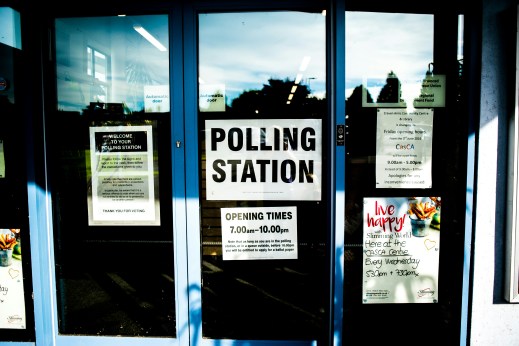
*Photo by Donald Merrill
Should Christians Legislate Morality?

Christians Should Not Enforce “Vertical” Morality
In our modern, pluralistic, and heavily secularized society, John Warwick Montgomery points out that Christians should be particularly cautious not to jeopardize the spread of the gospel by insensitively imposing Christian morality on unbelievers. We must avoid any recurrence of the Puritan Commonwealth, where people are compelled to act externally as Christians regardless of their true faith. Unfortunately, these efforts often lead to the institutionalization of hypocrisy and a decline in respect for genuine Christian values.[1] It can also lead people to a false assurance of a right relationship with God.
Instead, Montgomery says Christians should recognize that Scripture presents two distinct types of moral commands. We see this in the first and second parts of the Ten Commandments.[2] In the first part, we see duties related to God. These commands cover the relationship between individuals and God (“vertical” morality). In the second part, we see duties related to neighbors. These commands cover the relationship between individuals and other people (“horizontal” morality).
Montgomery believes it is crucial not to impose the first part of the Ten Commandments on unbelievers. These commands are:
- “You must not have any other god but Me.”
- “You must not make for yourself an idol.”
- “You must not misuse the name of the Lord your God.”
- “Remember to observe the Sabbath day by keeping it holy.”
Even if Christians are in the majority in a country, they should not impose laws related to the above four commandments. “This is because the proper relationship with God can only be established through voluntary, personal decision and commitment.”[3]
1 Corinthians 5:10 is an important verse for us to consider on this subject as well. Paul argues that avoiding all sinful individuals in the world would mean that Christians would need to “leave the world” entirely, which is an impractical and unrealistic standard. Instead, the church’s primary responsibility is not to judge those outside the faith; it is their duty to judge those who claim to be believers but live in sin within the church.
The Quran says there is no compulsion in religion. Jesus demonstrated that principle. He never forced anyone to follow Him. That’s what we see throughout the New Testament. Christians are to be evangelistic and strive to compel people to see the goodness and glory of Jesus. Still, they are never commanded to command people to bow to Jesus.
Christians Should Work Towards A General “Horizontal” Morality
Christians should, however, encourage people towards general “horizontal” morality. Even while the focus in the New Testament is on the morality of Jesus’ followers, we do see warrant for the promotion of social order and general morality. I think of John the Baptizer and the Apostle Paul, for example (Mark 6:14-20; Matt. 14:1-12; Acts 16:35-39; 24:25; 1 Tim. 2:1-4 also see Rom. 13 and 1 Peter 2). But the letters of the New Testament were written to Christians, telling Christians how to live.
Here’s the second part of the Ten Commandments, which are good for every society to lovingly and practically apply.
- “Honor your father and your mother”
- “You shall not murder”
- “You shall not commit adultery”
- “You shall not steal”
- “You shall not bear false witness against your neighbor”
- “You shall not covet”
These commands are applied in various ways throughout the Bible. For example, the Bible talks about the importance of railings on the top of buildings to protect people from falling off and getting hurt or killed.
But even here, we don’t want to put our hope or emphasis on “horizontal” morality. Part of the point of the law is to point us to our need for Jesus. It is not an end in itself. So, we must remember that mere morality is not the solution.
The Problem of Secularism and Morality
Britannica says secularism is “a worldview or political principle that separates religion from other realms of human existence, often putting greater emphasis on nonreligious aspects of human life or, more specifically, separating religion from the political realm.”
One of the problems with secularism, though, is that it is not set up very well to give us a societal analysis. How is secularism going to provide us with:
- The Ideal of what’s healthy
- Observation of symptoms
- Diagnosis or analysis of the disease/disorder
- Prognosis or prediction of cure/remedy
- Prescription or instruction for treatment/action for a cure
Secularists believe Christians should not legislate morality. They say that religion has no place in government. Christian beliefs are not allowed, but their core beliefs are allowed. But, as Britannica aludes to, secularism is really an ultimate commitment—a whole world-and-life-view.
Even atheism has the markings of a religion. Atheists have a creed. Theirs is just that there is no god. Atheism addresses the ultimate concerns of life and existence and answers the questions of who people are and what they should value. A committed atheist is even unlikely to marry someone outside of their beliefs. Many atheists even belong to a group and may even attend occasional meetings (see e.g., atheists.org) and have their own literature they read that supports their beliefs.
A merely secular society cannot give a moral framework that transcends individual belief systems. We are left with a “might makes right morality.” It seems to me that secularism leaves us with the column on the left, whereas Christianity gives us the column on the right.

I believe we need and should want Christianity to help our nation work towards a general “horizontal” morality. Our Founding Fathers (along with Alexis de Tocqueville), many of whom were deists and not Christians, agree. Yet, Christians should realize that legislating morality is not the answer.
Legislating Morality is Not the Ultimate Solution
Christians both understand that sinners will sin and that morality is good for the nation. Righteousness exalts the land, as Proverbs says (Prov. 14:34). Yet, Christians are compassionate and humble. We realize that we all stumble in many ways, as the letter of James says, but if we can help people from stumbling, that’s good. But Christians don’t confuse the kingdom of man with the Kingdom of God. Christians know that here we have no lasting city, but we seek the City that is to come (Heb. 13:14).
Legislating morality is not the solution; Jesus is. As C.H. Spurgeon said, “Nothing but the Gospel can sweep away social evil… The Gospel is the great broom with which to cleanse the filthiness of the city; nothing else will avail.”
Paul David Tripp has wisely said that “We should be thankful for the wisdom of God’s law, but we should also be careful not to ask it to do what only grace can accomplish.” It is the Spirit of God that transforms, although it is true that He often works through law. We need our rocky hearts to become flesh through the work of the Spirit.
Conclusion
The question of whether Christians should legislate morality reveals the complexities of faith in a diverse and secular society. While Christians are called to embody and promote a morality rooted in their faith, imposing a “vertical” morality can hinder the spread of the gospel, foster hypocrisy, and promote a misunderstanding of genuine faith. Instead, the focus should be on humbly and lovingly encouraging “horizontal” morality—principles that promote societal well-being and can be embraced by individuals regardless of their faith.
As apprentices of Jesus, Christians are primarily called to lead by example and encourage ethical behavior rooted in love and respect for one another. The emphasis should be on exemplifying Jesus’ teachings and fostering relationships that draw others to the faith, rather than seeking to enforce morality. That’s what Jesus Himself did.
By fostering relationships and demonstrating the transformative love of Jesus, Christians can influence the moral fabric of society without simply relying on legislation. True change comes through the work of the Holy Spirit rather than external mandates. In this way, the Christian community can contribute to a more just and moral society while remaining faithful to the fundamental teachings of their faith.
Notes
[1] John Warwick Montgomery,Theology: Good, Bad, and Mysterious, 122.
[2] Often referred to as the First and Second Tables of the Decalogue. The “First Table” consists of commands 1-4 and has to do with people’s relationship with God (vertical relationship). The “Second Table” consists of commands 5-10 and has to do with people’s relationship with other humans (horizontal relationships). The First Table can be summed up by “love God,” and the Second Table can be summed up by “love others.”
[3] Montgomery, Theology: Good, Bad, and Mysterious, 123.
Why care about justice?

Is there motivation for practicing justice? Christianity says, ‘Yes.’ Jesus Christ Himself practiced justice and called His followers to as well. In fact, Jesus taught that what we do for the most down-and-out is viewed as if it’s done for Jesus Himself. And when those in need are spurned it is as if we are spurning the very Lord of the universe.
Christianity gives clear reasons for convictions regarding practicing sacrificial justice for all people—regardless of age, race, creed, or color. That of course doesn’t mean that Christians always carry out the ideal. They don’t. But Christians do have a clear goal for which they are to sacrificially work. Christians are commanded to practice sacrificial justice.
Christians have very strong reasons to practice radical generosity, promote universal equality, provide life-changing advocacy, and take personal responsibility.[1] Messiah Jesus made Himself poor to make people rich (2 Corinthians 8:9). Jesus treated all people—woman or man, slave or free, rich or poor, able or unable—with dignity and love. Jesus is Himself the great advocate and intercessor. And Jesus, instead of leaving us in our suffering and sin, took personal responsibility and suffered in our place. Christians have strong reasons indeed for justice and mercy.
Christianity gives solid and serious reasons for believing in actual human rights. Not only that, but Christianity has “the strongest possible resource for practicing sacrificial service, generosity, and peace-making.” Because at the very heart of Christianity’s view of reality is, as Timothy Keller has said, “a man who died for his enemies, praying for their forgiveness. Reflection on this could only lead to a radically different way of dealing with those who [are] different from them.”[2] Of course, once again, that doesn’t mean that the ideal is always followed.
All Christians should totally agree with Rebecca McLaughlin:
Christians must work for justice for historically crushed and marginalized people, because Jesus came to bring good news to the poor and to set at liberty those who are oppressed. Christians should be the first to fight for racial justice and to pursue love across racial difference, not because of any cultural pressure from outside, but because of scriptural pressure from inside.[3]
Christianity calls Christians to care and to even sacrifice for justice. Christians are to care about justice because Jesus cares about justice.
Jesus, who is God, became flesh, to enter into the broken world to rescue people that needed rescue. He didn’t just sit back and practice ‘clicktivism’ but was crucified. The Bible teaches us that Jesus, the just-one, the one who was right, came so that we could be declared to be right. That is, justified.
Martin Luther King Jr. said, “If we are wrong—Jesus of Nazareth was merely a utopian dreamer and never came down to earth! If we are wrong—justice is a lie.” He also said, “Love is one of the pinnacle parts of the Christian faith. There is another side called justice. And justice is really love in calculation. Justice is love correcting that which would work against love.”[4]
Christians have deep reasons to sacrifice and pursue justice for others because that is what their Savior Himself did. It’s true that “it is one thing to have a general desire for justice, and it’s a very different thing to actually labor self-sacrificially against injustice in ways that effect substantive change.”[5] Christians are called to ‘actually labor self-sacrificially against injustice’ and there are many powerful examples of Christians doing exactly that. One such example is Denis Mukwege, a human rights activist and Nobel Peace laureate, is an advocate and specialist for women who have suffered sexual violence as a weapon of war.
Christians have deep reasons to care about justice. Those who follow Jesus closely are “willing to disadvantage themselves to advantage the community” whereas “the wicked are willing to disadvantage the community to advantage themselves.”[6]
Why care about justice? The Christian should answer because Jesus does! And because Scripture says to.
Speak up for those who cannot speak for themselves, for the rights of all who are destitute. Speak up and judge fairly; defend the rights of the poor and needy (Proverbs 31:8-9).
Do what is just and right. Rescue from the hand of the oppressor the one who has been robbed. Do no wrong or violence to the foreigner, the fatherless or the widow (Jeremiah 22:3).
What does the Lord require of you? To act justly and to love mercy and to walk humbly with your God (Micah 6:8).
Surprisingly the Bible teaches that monetary gifts can be meaningless even when given to the church. It says that gathering together can be worthless and even church celebrations can be hated with all of God’s being (Isaiah 1:14). Why? That is some very strong language. Why does the Bible say that? Because God hates hypocrisy. We can’t say we love God (whom we can’t see) and yet not care for people made in His image (1 John 4:7-21).
It doesn’t make sense for Christians to raise their hands in worship when they are essentially covered in blood. Yet, that’s what it’s like if we don’t seek for justice and care for the oppressed. In fact, rulers are rebels when they don’t defend the cause of the needy (Isaiah 1:23) because that’s one of the roles of rulers (Proverbs 31:8-9).
Notes
[1] See Timothy Keller, “Justice in the Bible.”
[2] Timothy Keller, The Reason for God: Belief in an Age of Skepticism (New York: Penguin Group, 2008), 21. Keller asserts that “the typical criticisms by secular people about the oppressiveness and injustices of the Christian church actually come from Christianity’s own resources for critique of itself” (Timothy Keller, The Reason for God, 61 see 62).
[3] Rebecca McLaughlin, The Secular Creed: Engaging Five Contemporary Claims (Austin, TX: The Gospel Coalition, 2021), 27-28.
[4] Taylor Branch, Parting the Waters: America in the King Years 1954-63 (New York: Simon & Schuster,1988), 141.
[5] Joshua Chatraw and Mark D. Allen, Apologetics at the Cross: An Introduction for Christian Witness (Grand Rapids: Zondervan, 2018), 234.
[6] Bruce K. Waltke, The Book of Proverbs: Chapters 1-15, (Grand Rapids: Wm. B. Eerdmans, 2004), 97.
Photo by Tim Mossholder
Equality: What it is & where it comes from

In the United States equality is at least expressed to be important. Its importance is seen in people’s views and policies on political participation, education access, views on employment and pay, and disability rights. The Civil Rights Movement has shown that equality is valued by many but not all.
What does equality mean and where did the concept of equality come from? It means the state or quality of being equal. Are there good reasons for believing in equality?
The Assumption of Equality is An Assumption
Naturalism, the belief that no God exists, gives no explanation or reason for equality. People who don’t believe in God or the relevance of God might believe in equality but the belief for them is not based on any foundation. The idea of equality is accepted as true without proof or a solid reason to believe it.
Yuval Noah Harari is a historian, philosopher, and author who received a PhD from the University of Oxford and is a lecturer at the Hebrew University of Jerusalem. I appreciate his candor in this quote from his book Sapiens:
We hold these truths to be self-evident, that all men are created equal, that they are endowed by their Creator with certain unalienable rights, that among these are life, liberty, and the pursuit of happiness. According to the science of biology, people were not ‘created’. They have evolved. And they certainly did not evolve to be ‘equal’. The idea of equality is inextricably intertwined with the idea of creation. The Americans got the idea of equality from Christianity, which argues that every person has a divinely created soul, and that all souls are equal before God. However, if we do not believe in the Christian myths about God, creation and souls, what does it mean that all people are ‘equal’? Evolution is based on difference, not on equality. Every person carries a somewhat different genetic code, and is exposed from birth to different environmental influences. This leads to the development of different qualities that carry with them different chances of survival. ‘Created equal’ should therefore be translated into ‘evolved differently.’[1]
So, Harari rewrites the famous line from the Declaration of Independence: “We hold these truth to be self-evident, that all men evolved differently, that they are born with certain mutable characteristics, and that among these are life and the pursuit of pleasure.”[2]
For the naturalist, equality isn’t really a thing. It is a dream wish. Perhaps maybe pleasant make-believe.
Christians have a Foundation for Equality
The Bible teaches the equality of all humans by saying all humans are made in the image of God (Gen. 1:26-27). It also explains that we are all equally fallen. That is, we all sin and do wrong things. Lastly, it says that salvation is freely offered to all through Jesus.[3]
In Dominion: How the Christian Revolution Remade the World, Tom Holland argues that Christianity has profoundly shaped Western civilization, influencing core values like human rights and equality. It may not be consciously recognized but many Christian beliefs our embedded in society. As Harari has said, we “got the idea of equality from Christianity.”
The belief in human equality and rights, equality of men and women, love for foreigners, and care for the poor, weak, and marginalized are specifically Christian beliefs. History shows us that it was only as Christianity spread that these believes became generally accepted. The ancient Greeks and Romans would have laughed at them.[4]
Christian Equality has a lot of Explanatory Power
“We’ve all got both light and dark inside us. What matters is the part we choose to act on. That’s who we really are.” Sirius Black said this to Harry Potter in one of their last meanings. Humans have complexity as J.K. Rowling is so adept at showing. The Bible agrees. We are complex beings. We are all equally made in the image of God, fallen, and redeemable.
The Bible says we all stumble in many ways (James 3:2). We are all broken. Christians are no less complex. Christians are simultaneously sufferers, strivers, sinners, and saints. So, “The line between good and evil is never simply between ‘us’ and ‘them.’ The line between good and evil runs through each one of us.”[5] Or as Dietrich Bonhoeffer said in prison in Nazi Germany, “Nothing that we despise in the other man is entirely absent from ourselves.”[6]
Therefore, in one sense, Christians should be “culturally wary because they know that evil is real, that everyone is a sinner, that no one is beyond a stumble or a scandal, and that human beings are capable of some devious deceptions and horrific thoughts, words, and acts.”[7] Yet, in another sense, Christians should also be cultural optimists “because they know that no matter how grim and hopeless sin makes the world or how wretched sin makes an individual or a group, it does not define us at our deepest level, and it is an imposter that has no ultimate claim on anyone, whoever they may be and whatever they may have done.”[8]
Christianity gives a realistic and complex picture that explains the paradoxical nature of people.
If we lose Jesus, we lose our bases for Equality
I appreciate how Rebecca McLaughlin says it:
Even if historians agree that our moral building blocks came to us from Christianity it’s tempting to think we can keep the values we cherish while gently removing the claims about Jesus Himself. Like easing out a bottom layer Jenga block, perhaps we can build our moral tower higher without belief in God at all. But extracting Jesus from our moral structure isn’t like gently sliding out a Jenga block. It’s like pulling the pin on a grenade. In the resulting explosion we don’t just lose morality, are sense of meaning blows up too.”[9]
This is the case because if Jesus is not real and right, the next most plausible explanation is that of Harari or Nietzsche.
Conclusion
Secular culture assumes equality but gives no basis for it. Christianity, and specifically Jesus, gives a solid footing for equality. Without Jesus equality is on a shoddy structure and is destined to fall. In other words, if Jesus is make-believe so is equality. On the other hand, if Jesus and His ethic are real, we can’t mix and match to our liking. He is either a liar, lunatic, legend, or the Lord. But if He is anything other than the Lord, His emphasis on equality evaporates with Him.
Notes
[1] Yuval Noah Harari, Sapiens: A Brief History of Humankind, 109.
[2] Harari, Sapiens, 110.
[3] See Christopher Watkin, Biblical Critical Theory: How the Bible’s Unfolding Story Makes Sense of Modern Life and Culture, 116.
[4] Rebecca McLaughlin, Is Christmas Unbelievable?
[5] N. T. Wright, Evil and the Justice of God, 38.
[6] Dietrich Bonhoeffer, Letters and Papers from Prison, 10 as quoted in Biblical Critical Theory, 128.
[7] Watkin, Biblical Critical Theory, 168
[8] Ibid.
[9] McLaughlin, Is Christmas Unbelievable?
Photo by Jacek Dylag
Sports Betting: Christians and Gambling?

Sports betting is promoted all over the place. It is estimated that $35 billion will be bet on the 2024 NFL season. That estimate is 30% higher than last year. 38 states have legal betting markets.[1] Ironically, there are all sorts of commercials promoting sports betting and encouraging responsible gambling. If commercials are airing about responsible gambling, that is a clear sign that a lot of people struggle to gamble responsibly. That itself should be a warning.
Christians are to be good stewards of the resources and responsibilities that have been entrusted to them (Genesis 2:15; Luke 16:1-12; 1 Corinthians 4:1-10; 1 Peter 4:10; Titus 1:7). Misuse of resources is a form of theft because it fails to honor God as the ultimate owner and one that has given those resources to be managed well. Christians have been bought with a price, so we are supposed to honor Jesus with our bodies and belongings.
If we have the world’s goods, we should heavily consider whether we are optimally using those resources. As 1 John 3:17 says, “Whoever has this world’s goods, and sees his brother in need, and shuts up his heart from him, how does the love of God abide in him?”
Here are some helpful questions for us to ask as we consider whether or not we should gamble:
- Are you hoping to get rich quick (Proverbs 13:11)?[2]
- Are you gambling because you are covetousness or trusting in wealth (Luke 12:15; 1 Timothy 6:17)
- Is it illegal (Romans 13:1-2)?[3]
- Are you addicted, or could it lead to addiction (Proverbs 6:27; 1 Corinthians 6:12)?
- Are you gambling for your own glory and fulfillment (1 Corinthians 6:20; 10:31)?[4]
- Is it going to cause others to stumble (Romans 14:21; 1 Corinthians 10:31-33)?
- Is it profitable, and does it encourage you to love and do good works (Titus 3:8; Hebrews 10:24)? Will it hinder your motivation to live your life fully for the Lord (Romans 12:1)?
- Will you be unduly tempted to run to it for refuge and a means of peace rather than the Lord who alone gives true peace (Psalm 18:2, 30; John 14:27)?
With all that said, I do not believe the Bible says, “Thou shalt not take part in any type of gambling.” If one considers the above questions and believes it is okay to occasionally gamble conservatively, then that is the individual’s choice. We spend money on entertainment sometimes, and I do not think that is inherently wrong. But I certainly believe we should not take part in gambling lightly.
[1] See David Purdum, “Estimated $35 billion expected to be bet on NFL this season.”
[2] Sadly, gambling tends to prey on the poorest in society (Proverbs 22:16, 22).
[3] It should be realized that some gambling is often associated with organized crime.
[4] “The ‘whatever’ is universal. It includes our eating and drinking, sleeping, waking, bathing, working, marrying, entertaining ourselves—indeed, every human activity. When we glorify God, we are doing right, and when we do not glorify God, we are doing wrong” (John Frame, The Doctrine of the Christian Life, 169).
Should Christians Vote for Christian Values?
Yes but realize…
Voting for Christian values is important. It’s difficult, however, when we cannot be sure elected officials will support Christian values. Politicians blow with the wind of popular opinion.[1] And what if there are potentially Christian values on both sides? Further, what if Christian values are not the most important? What if Christian witness also matters? And what if people find themselves conflicted because they can’t, in good conscience, go with either party?
What if people feel that sometimes Christians have appeared to idolize political leaders and thus compromise Christian witness? We must value Christ and love others like Christ. Those are Christian values that aren’t a matter of conscience.
Also, the good news of Jesus is the power of God to salvation and thus transformation, not Christian morality. When Paul spoke to people in the secular marketplace, he didn’t preach Christian values. He lovingly related to them their need for Jesus.
Voting for Christian values may not be as cut and dry as it used to be. Christian values cut both ways. Christian values say abortion is wrong and honesty and humility are right; it says sexual immorality is wrong and radically loving others is right.
Yes but be aware of hypocrisy
As much as caring about Christian values for our country is a way of caring about people’s good and loving them, I think it is appropriate and commendable. But our concern for Christian values can easily devolve into fear. Are we advocating for Christian values from a place of fear or care? The way that we advocate will reveal a lot about our motivations. When Christians are belligerent and unkind, it appears the motivation is coming from a place of fear and not because they want to love their neighbor and protect them from the consequences of an immoral lifestyle.
Our motivation for voting for Christian values should not be a desire to stay safe or the moral majority. Our motivation should be the good of our neighbor. I believe Christian values are a form of common grace that leads to human and societal flourishing. It makes sense for Christians to want even a secular society to practice Christian values. The expectation, however, should be that secular society will not be inclined to practice those values. Why should Christian values be valuable to nonChristians?
This is especially true when Christians themselves aren’t living out the virtues. When Christians fail to display the fruits of the Spirit, for example, they’re not making a good case for nonChristians living Christian values. What impact might it have if Christians lived a lot more like Jesus? What if Christians were loving, kind, moral, gentle, hospitable, and not fearful? People might be intrigued, and Christian values might be more attractive. It sadly seems like the average Christian will talk about the woes of politics in the world but won’t weep about the prevalence of pornography in the Church.
Perhaps Christians need to focus more on living Christian values than implementing those values for others. If Christians across the USA are not themselves living Christian values, it seems like the height of hypocrisy to force them on others. If Christians across the nation lived like Jesus and practiced Christian values, I believe people would be very interested in Christian values. And more importantly, they would be interested in Christ.
Yes but more is needed than voting
As it is, I feel like Christians trying to pull the spec out of others’ eyes has distracted us from the log in our own eyes. But again, that’s not to say I don’t care about the USA or any other nation practicing Christian values. I would like every nation and everyone to practice Christian values! I want everyone to be like little Jesuses. But judgment starts with the church (1 Peter 4:17). If the Church isn’t healthy and following the Lord Jesus’ commands, maybe that’s the bigger deal. We should want everyone to practice Christian morality, but we shouldn’t expect it. In a sense, we should expect them not to (cf. 1 Corinthians 5:10).[2] Just as the president is not our pastor and chief, Babylon will never be the new Jerusalem. To what degree should we be satisfied enforcing Christian values? I’d much rather the Zeitgeist in the USA be changed, which happens by the Spirit through His people.
I also think it’s a problem when Christians seem to wholesale lineup with one party. Christians should be willing to lovingly critique both the right and the left. If we care about Christian values, it applies to both parties. Just as we want America to practice Christian values, we want politicians from the left and right to practice Christian values. If we call out people on the left (remember Bill Clinton and Monica Lewinsky?), we should be consistent and call out people on the right. If we’re not consistent in our critique, we make it seem like we are not standing on the solid basis of transcultural truth but are biased and trying to protect our preferred political party. Then Christian witness is inconsistent and incongruent.
Also, as the Founding Fathers and Alexis de Tocqueville said in Democracy in America, this country is for a moral people.[3] As John Adams famously said, “Our constitution was made only for a moral and religious people. It is wholly inadequate to the government of any other.” In his farewell address, George Washington said, “Reason and experience both forbid us to expect that National morality can prevail in exclusion of religious principle.” Essentially, when the morality, virtue, and integrity of the people begin to fail, the American experiment will begin to fail. Yet, we can’t change people’s hearts by changing rules. As the University of Pennsylvania seal says, “Laws without morals are useless” (Leges sine moribus vanae). Sure, I believe in good moral laws, but it is short-sighted to think an election can hold off what’s coming down the pike. Many Christians focus too much on politics and not enough on loving hospitality to those who are different than them.
The USA may be helped through voting, but it won’t be saved. We need an overhaul of character and yet at this time, Christians don’t seem to care about character. Many Christians seem to be looking for rescue from the rash and brash.
If we trust a political party to keep back the flood as the damn breaks, we’re trusting in a façade. No political party is the hope of America. If our morality is to truly change, hearts must change. Politics might be able to patch a hole here and there, but our focus must be concentrated where more impact will be felt. Plus, our goal as Christians is not to save America. It sadly seems that a lot of Christians care more about morality than people. It appears like many American Christians want to save America rather than Americans and care more about an earthly country than Jesus’ Kingdom.
Notes
[1] See e.g., https://www.thegospelcoalition.org/article/how-the-gop-became-pro-choice/ and https://wng.org/opinions/the-veepstakes-and-the-sanctity-of-life-1720520906.
[2] “Most of the New Testament’s moral witness is about Christian morality inside the life of the church. But that focus about Christian moral integrity doesn’t welcome moral chaos outside the church” (Andrew T. Walker, Faithful Reason: Natural Law Ethics for God’s Glory and our Good, 68).
[3] Tocqueville, for example, said, “Society is endangered not by the great profligacy of a few, but by the laxity of morals amongst all” and “A nation cannot long remain strong when every man belonging to it is individually weak.” Also, “Without common ideas, there is no common action, and without common action men still exist, but a social body does not. Thus in order that there be society, and all the more, that this society prosper, it is necessary that all the minds of the citizens always be brought together and held together by some principle ideas.”
Photo by Elliott Stallion
What should we do now that Roe v. Wade is overturned?

What should we do now that Roe v. Wade is overturned?
This is a very divisive question. There is celebration and lamentation across the nation. While there is dire disagreement over this topic hopefully both sides can treat each other with dignity and have dialogue where needed.
There were three Justices that did not agree with overturning Roe. Their opinion, known as “the dissent,” talks a lot “about the effects of pregnancy on women, the burdens of motherhood, and the difficulties faced by poor women. These are important concerns. However, the dissent evinces no similar regard for a State’s interest in protecting prenatal life.” Why is no concern shown for “prenatal life,” or what is termed, “potential life”?
As Americans, we have super slow speed limits in school zones. Why? Because we want to protect children. We don’t know for sure that a child will die if we speed but we still have laws and don’t speed—and infringe our freedoms—to protect kids. Why? Because life is precious.
So, even if you believe that life inside of a womb is just “potential life” remember school speed zones. We infringe our freedoms all the time to protect against possible death.
Why do we do that? Because we as a country value life. So, we take precautions and inconveniences to protect it. I believe, as Roe was overturned, we turned back to that precedent. And we as a country became more consistent. And for that, I thank God.
As a Christian, I believe abortion is not morally justifiable so I rejoice at the overturning of Roe v. Wade. But I also realize the massive needs that will quickly be apparent. So, I can somewhat understand my friends that are lamenting. I disagree with them, but I feel for them. I want all those that are feeling burdened to find help.
So, what should we do?
1. Praise the Lord Roe v. Wade has been overturned!
Christians believe in the sanctity of human life—all human life. Abortion is not morally justifiable. Therefore, Christians rejoice in the ruling that was announced on June 24th. The Guttmacher Institute reported 930,160 abortions in 2020 and the CDC reported 625,346 in 2019. We rejoice that the overturning of Roe v. Wade should drastically reduce that number. Christians rejoice because they believe all lives are precious. And so, they shouldn’t be jerks to those who disagree with them. They should know and show that they too have value.
2. Pray for our country that is very divided over this issue and for states that will now have the power to make their own abortion laws.
We should pray and do what we can to see laws passed across the states to protect life. Pray also for peace and that we would be united as states. A recent Gallup survey reports that 52% of Americans consider abortion morally acceptable (though 71% say it shouldn’t be legal in the third trimester).
3. Pray that the Church and communities across America will care for mothers and their babies; that babies that otherwise wouldn’t have been in the world would receive help in the world.
Christians must continue to care for the most vulnerable amongst us. As Roe falls there’s a massive opportunity and need for the Church to rise up and love. The Church has the answer. My we employ our minds, wallets, and houses to tangibly care for those in need.
Because Christians believe in the sanctity of human life and in justice, we also care about the moms that would have had the abortion and we care about the babies that will now be born. In the U.S. in 2017, about 1 in 5 pregnancies ended in abortion. And around 75% of abortion patients in 2014 were poor (income below $15,730 for a family of two) or low-income. This shows the massive needs that will arise in the coming months. Let’s pray. Let’s also consider how we can be part of the solution and love our neighbors well.
The church has a long history of carrying for mothers and children in need.[1] This is because Jesus modeled caring for those in need. That’s a big part of what the good news of Jesus is all about. We are sinners in need of a Savior and Jesus is that savior. And so, we love because He first loved us.
The Bible calls us to action. The Bible calls us to stand up for the oppressed (Is. 1:17) and to speak for those who cannot speak (Prov. 31:8-9 cf. 3:27). Birth rates will go up but so will infant mortality rates. But as more babies are birthed may hearts of compassion and care be birthed. May Christians meet the new challenges with Christ’s tangible love. As Roe v Wade falls, the church must rise.
4. Read the opinion on Dobbs
If you are going to be strongly for or against the ruling it would be wise to know what it says and why. So, I’d encourage you to read the opinion on Dobbs as well as the opinion on Roe. It was certainly helpful for me. The argument in the Dobbs opinion shows that “procuring an abortion is not a fundamental constitutional right because such a right has no basis in the Constitution’s text or in our Nation’s history.”
So, I encourage you to do those four things.
Now on to the work of loving and serving our communities well!
____
[1] “The church responded to the practices of infanticide and exposure through their care of exposed infants. From the earliest days of the Christian church, Christians collected funds for distribution to the poor and sick. As part of their concern for the vulnerable members in their community, the early Christians acted to protect exposed infants… Indeed, the Christian church gained such a reputation for their care of exposed infants that churches became the established site for abandoning infants” (Louise Gosbell, “’As long as it’s healthy’: What can we learn from early Christianity’s resistance to infanticide and exposure?”).
Naturalistic evolution teaches that our sense of morality evolved

Imagine I gave you a pill that made you feel morally obligated to give me money… Kinda random but hear me out. After the pill wore off, what would you think of your moral conviction to give me money? Would you regret it? Question it? Probably both.
That’s what moral conviction is if we’re simply evolved creatures. Why? How is that so?
Naturalistic evolution teaches that our sense of morality evolved
Naturalistic evolution teaches that our sense of morality evolved. That is, our “moral genes” just happened to make us better suited for survival, and thus those with a moral characteristic passed on their “moral genes.” And so, we have morality. But, so the thought goes, just as the Neanderthals died out, morality could have died out. Or certainly, a different form of morality could have won out.
In fact, Charles Darwin says in The Descent of Man that if things had gone differently for humans they could have evolved to be like bees, where “females would, like the worker-bees, think it a sacred duty to kill their brothers, and mothers would strive to kill their fertile daughters.” The atheist Michael Ruse in his book, Taking Darwin Seriously: A Naturalistic Approach to Philosophy, says, “Morality is a collective illusion foisted upon us by our genes.”
So, if we’re simply evolved from monkeys, morality is the equivalent of taking a pill that makes us think certain moral convictions are right. But the reality would be different. We, based on this view, only have those convictions—whatever they are: treat people nice, don’t murder and maim, etc.—because we happed to evolve that way (“took the pill”).
Of course, just because the way that you arrived at a conclusion was wrong, does not mean that your conclusion was wrong. In a test where the answer is A, B, C, or D, I could just choose “C” because it’s my favorite letter. I may be correct in my answer, but I certainly don’t have a solid reason for believing in the validity of my answer. In fact, probability would say my answer is likely wrong.
Another problem with wholesale naturalistic evolution is if we believe it explains everything then it in some ways explains nothing. Gasp. Yeah, that’s not a good thing.
If evolution explains morality, then I’m moral because of evolution which at least in some ways undercuts morality. Some people even say that religious people, like people that believe in Jesus, are religious because they evolved that way. Believing in a higher power brought some type of group identity which led tribes of our ancestors to be more likely to protect each other and thus survive and pass on their genes. And so, religion is the result of random mutational chance.
In fact, you could argue all of our thinking processes are the result of evolution. We’re just matter in motion. We’re all just responding to random whims. From belief in morality to belief in evolution, we’re just evolved to think this way… We can’t do anything about it. It’s programmed into us. It’s the pill we were given…
But if all this is a pill we’re given—what we’ve randomly evolved to think—what should we think?… Isn’t all our thinking just built into us through evolutionary processes?…
Alternatively, Christians believe that humans are created with an innate moral sense.
So, it seems morality is either a fiction with no basis in reality or God created us and explains reality—explains why we have an innate sense that we should treat people nice and not murder and maim.
There are big implications for either view. What is your view? And why?
Does the concept of justice even make sense today?

Humans, I believe, want justice. I believe that is a natural and good desire that is innate within us. Where, however, does the concept of justice come from? How do we know what is right and what is not right? Does the concept of justice even make sense today?
The theme of the day is, “Have it your way,” “Do what’s right for you.” It’s, “You be you.” It’s, “You be happy.” It’s, “Free yourself from the oppressive shackles of society, family, and really any expectation at all.”
Don’t discard what’s valuable
Now, to use a disturbing and fitting analogy, we often sadly throw the baby out with the bathwater. No matter what the baby or the bathwater is. We throw them both out. I don’t think we should completely throw out the baby (of course!). I think there’s some definite truth to “doing what’s right for you,” “being yourself,” “being free from oppressive shackles,” “being happy,” and even “having it your way.”
But, does that mean that there’s not an actual right way to live? Does that mean that the actual best version of yourself might not require humility and the admitting of wrong? Do all restrictions have to be considered oppressive shackles (perhaps a train is most free on the tracks!)?
If there is actual truth and justice it might not just convict the bigoted and intolerant, it might convict me of wrong. If there is such thing as actual wrong, I’m not immune from justice’s scale. I myself could be found and wanting. Perhaps it could be found out that me “having my own way,” is not the way, is not right?
What if there is no actual truth or justice?
If, however, “moral truths” are nothing more than opinions of an individual and are thus infallible then what grounds is there for justice? If we believe in “truth” by majority—truth by popular consensus, then which majority, on which continent, at which time in history? And how is this actually very different than Nazism and “might makes right” morality?
People’s cry for justice would then be nothing more than mere power grabs, people asserting themselves over others. Crying out for justice would be nothing more than enforcing one’s own or a group’s preference on others. That does not seem very tolerant. “Who are you or who are y’all to enforce your opinion on me?”
When we say we can’t actually know what is truly right or wrong it undermines the concept of justice.[1] If we can’t truly know what is just how then can we have justice? If we can know what is just, how? Where do we get this concept of justice from?
So, is there actual truth and justice?
Can we know? Or, are we left in the dark to grope our way?
I believe our flourishing as a society is bound up with the truth. Our happiness is collectively tied to knowing how to live and living that way.
If the majority collectively says there is no actual truth then we will walk in epistemological darkness. And in the darkness, we will fall. We will trip into a thousand blunders.
If we say we cannot know what is truly just, then justice will wane. If there is no just, there is no justice. If there is no conviction that we are at least sometimes wrong, there will be no conviction that anyone is wrong. But, if there is the conviction that we are sometimes wrong, there must be a confession that there is actual truth.
There is a price to moral “freedom.” That cost is to shut the lights off and to walk in darkness.
I believe the concept of truth and justice makes sense today
I believe truth is precious. Although truth at times has rough edges. And at times I collide into it’s jagged ends.
“The modern man in revolt has become practically useless for all purposes of revolt. By rebelling against everything he has lost his right to rebel against anything” (G.K. Chesterton).
“If you see through everything, then everything is transparent. But a wholly transparent world is an invisible world. To ‘see through’ all things is the same as not to see” (C.S. Lewis).
“Believe in truth. To abandon facts is to abandon freedom. If nothing is true, then no one can criticize power, because there is no basis on which to do so. If nothing is true, then all is spectacle. The biggest wallet pays for the most blinding lights” (Timothy Snyder, On Tyranny).
So, truth sometimes tears into us and sometimes hurts because it’s actually there. We get hurt when we act like it’s not. Because it is. We intuitively know this, because we care about justice. We care about people “getting what’s coming to them.” Because the concept of justice makes sense even today?
How, however, can we know the truth? And what hope is there for us who have been measured and found wanting on the scales of justice?
___
[1] Steve Wilkens and Mark L. Sanford, Hidden Worldviews: Eight Cultural Stories That Shape Our Lives, 95.
What we do matters. And that’s good news.

Yesterday I posted a few thoughts about Matthew 16:27 which says “the Son of Man is going to come with His angels in the glory of His Father, and then He will repay each person according to what he has done.”
For a lot of people that may seem very heavy and discouraging. For me, it’s good news. It’s good news because it means there’s meaning. What we do matters.
It makes me think of Albert Camus’s “The Myth of Sisyphus.” In “The Myth of Sisyphus,” Sisyphus has to carry a huge rock up a hill and you know what happens once he does? It rolls right back down the hill… And again and again and again… Basically, Camus is saying life is meaningless and absurd.
And that reminds me of another philosophical work, the book of Ecclesiastes from the Bible. One of the reoccurring phrases in that book is “vanity of vanities.” Is all meaningless? Does what we do matter?
The Bible answers with a resounding “Yes!”
For someone who has wrestled with depression because of perceived purposelessness, it’s good news that what we do matters. It adds pep and purpose to my life… Even if it’s a heavy truth, I’ll take it because it means our lives have weight.
The fact that Jesus will repay each person according to what they have done adds huge significance to our lives. “We’re playing for keeps,” so to speak. Life is the real thing. We should live and enjoy it and we should love God and others. That’s what Ecclesiastes concludes with.
So, I’m thankful for the good news that what we do in life matters. I’m especially mindful of that on the day after Martin Luther King Jr. Day. Martin and the Million Man March mattered. It mattered and racism matters.
It matters that MLK was killed. It matters that MLK peacefully fought for the sanctity of blacks and all people. It matters for a lot of reasons. But for one, it matters because people will give an account for their racism, acts of violence, and even every careless word (Matthew 12:36).
So, as I said, this is heavy and hard. It’s not an easy pill to swallow but it is the medicine we need. We can’t lash out and attack and think it doesn’t matter. Our every action is riddled with significance. That truth, however, shouldn’t cripple us, it should cause us to fly to Jesus who is both our Savior and Sanctifier.
When the options are laid out in front of me, I’ll take actual meaning and significance every time. I don’t want the poisoned sugar pill that says what we do doesn’t really matter. I’ll take the truth even if it’s bitter.
What we do totally matters. It’s hard in some ways to hear that but the alternative is to say it doesn’t matter. And that would be saying nothing matters, there is no meaning.
To close, it seems there are three options:
1) Be crushed by the utter meaninglessness of life (e.g. give up, don’t care) or…
2) be crushed by the utter meaning of life (e.g. try to own everything, try to be the great rescue yourself) or…
3) trust Christ. Christ says there’s meaning and He says there’s hope. What we do matters and we’ve all failed. He, however, didn’t throw in the towel on us. He took up a towel and lived as a servant. He did all the good we should’ve done and didn’t do the bad. And yet He was crushed for us but not under the weight of meaning or meaninglessness but on a cross.
Jesus finished where we bailed, He succeeded where we failed. He’s always right and we’re often wrong. He has a perfect record and He offers it to us.



 in X
in X 