God’s Sovereignty and our Responsibility to Evangelize

Introduction
How should we understand the relationship between God’s sovereignty and our responsibility to evangelize? J.I. Packer’s book, Evangelism and the Sovereignty of God, is a helpful book for those considering this important question.
God’s Sovereignty and our Responsibility
Packer gives various examples of the sovereignty of God. He points out that just by praying to God we acknowledge His sovereignty.[1] Packer points out that God’s sovereignty and man’s responsibility are taught side by side in Scripture.[2] And “far from making evangelism pointless, the sovereignty of God in grace is the one thing that prevents evangelism from being pointless. For it creates the possibility—indeed, the certainty—that evangelism will be fruitful.”[3]
God’s sovereignty is a great means of encouragement to us in our evangelism. Packer helpfully says that in our evangelism we
have every reason to be bold, and free, and natural, and hopeful of success. For God can give His truth an effectiveness that you and I cannot give it. God can make His truth triumphant to the conversion of the most seemingly hardened unbeliever. You and I will never write off anyone as hopeless and beyond the reach of God if we believe in the sovereignty of His grace.[4]
So, we are responsible for sharing the gospel but God is sovereign. A proper understanding of God’s sovereignty and our responsibility is important and practical. It is important for us to realize, as Packer says, that “it is God who brings men and women under the sound of the gospel, and it is God who brings them to faith in Christ. Our evangelistic work is the instrument that He uses for this purpose, but the power that saves is not in the instrument: It is in the hand of the One who uses the instrument.”[5] So, “the belief that God is sovereign in grace does not affect the necessity of evangelism.”[6] Will Metzger, in agreement with Packer says, “We should not consider… sovereignty and responsibility as enemies but rather see them the way the Bible does—as friends!”[7] So, God’s sovereignty and man’s responsibility may seem at odds but they are really not, although we may not understand.[8] We must remember that the secret things belong to the LORD but the things that have been revealed belong to us that we may do what God has called us to do (see Deut. 29:29).
Marijuana and Me?

What should we think about marijuana use?
What we think about marijuana and its use will be determined by the commitments that we hold or what is often referred to as a worldview. I am not a relativist, I believe in objective truth, yet the way we see the world (our worldview) will determine the way we think about marijuana. So, it’s important to understand that the way we come to the question will make a difference in the way that we answer the question.
Marijuana And America
It’s reported that George Washington grew hemp and employed it (notice I didn’t say “smoked it”) along with other Founding Fathers, such as Thomas Jefferson.[1] And a few Presidents have admitted to smoking marijuana.[2] News sources say that support for legalization is at an all-time high (no pun intended).[3]
Marijuana, whatever we think about it, is all over the place. It’s legal in some places and in most places people are living like it’s legal. And very soon it may be legal all across the country (my issue here is not to discuss whether or not it should be legalized). The question for the Christian is more than a question of legalization and cultural acceptance. The issue has to do with whether or not we believe God would be pleased with our use of marijuana.
This question will need to take into account legalization and even cultural acceptance but is not ultimately based on either of those considerations. That’s why I said the way we come to the question is really important. What is guiding us as we look at the question of marijuana use? If it is just our feelings and the surrounding culture then that will lead to one set of conclusions. If it is the Word of God, however, it will likely lead to a different set of conclusions.
So, let’s look at what the Bible says.
Marijuana And The Bible
I have talked to a lot of people that boast about marijuana’s many benefits in recreational use. Some will even bring up Genesis 1:29 that says that God made every plant on the earth that produces seed and then says we “shall have them for food.” So, people ask, “Doesn’t that count for marijuana?! Didn’t God make it to be enjoyed? Shouldn’t we just receive it with thanksgiving (1 Tim. 4:3-5)?”
Drinking and Smoking

Jesus turned water into wine and drank wine Himself (Jn. 2:1-12; Matt. 26:27). Jesus the perfect Son of God drank, so can we drink wine, beer, whiskey, vodka, rum, and what not, as we like? Here are some things to consider:
- Romans 13:1 says, “Let every person be subject to the governing authorities. For there is no authority except from God.” So first, do not drink if you are under the legal age. Do not smoke if you are under the legal age. Do not smoke things if they are illegal.
- Romans 13:13-14 says, “Let us walk properly…not in…drunkenness…but put on the Lord Jesus Christ, and make no provision for the flesh, to gratify its desires.” Second, we are to put on the Lord Jesus Christ, that is, we are to be like Him and not be alcoholics. Exciplity we are told to not get drunk (Eph. 5:18). This text applies to more than just alcohol. It also applies other things such as pot, even legalized pot (though see here for my views on psychoactive medication). However, realize you don’t find a command for complete abstinence from alcohol.
- Galatians 5:19-21 says, “Now the works of the flesh are evident… drunkenness… and things like these. I warn you, as I warned you before, that those who do such things will not inherit the kingdom of God (see also 1 Cor. 6:9-11). We need to, third, cultivate the works of the Spirit like love, joy, peace, and patience, not the works of the flesh. However, that does not make having a drink wrong for everyone, though drunkenness is wrong for everyone.
- Proverbs 31:4b-5 says, “It is not for kings to drink wine, or for rulers to drink strong wine, lest they drink and forget what has been decreed and pervert the rights of all the afflicted.” Fourth, we see that it is a good principle for those who are in places of authority to not drink. This is so they do not mess everything up by being drunken and foolish. In the Bible priests (Lev. 10:8-10 ), Nazarites (Num. 6:3-4 ), and John the Baptizer (Lk. 1:15 ) were not to drink. They were likely not permitted to drink for the same reason kings and rulers shouldn’t drink, so they won’t “drink and forget what has been decreed and pervert the rights of the afflicted.”
Ecclesiastes: Necessary Destruction

A treatise on vanity. That is basically the book of Ecclesiastes. What a depressing book. How is a book like that ever to be read and enjoyed, especially with our modern sensibilities? We need stuff that will make us feel good even if it is not the truth, right? Isn’t that what we need? That, at any rate, is what much of society would have us believe.
At first glance, it seems that the book of Ecclesiastes is a book that would throw you into nihilistic depression just short of suicidal. So what use has it in Scripture? Or, what, at least, use do we have for it today?
Well, it does no good to build upon a shoddy and cracked foundation. We can build all we want but all we do is for naught if the building will never truly stand. If we are to truly build something that is worth anything we must start anew. We must strip it down to the bedrock. To say that all is vanity is to say that all is cracked, you cannot build upon it. That is not to say that these things are inherently bad, they are not. But for us to understand these things, whatever they may be for you, we must first know they are desperately cracked. They can never hold anything of substance. They can truly never be built upon. They can’t hold the weight. Thus, if we experience discomfort from Ecclesiastes it is the doctor’s scalpel. It is the necessary pain for the healing of our life.
Reflections on “the problem of evil”

I have been reflecting on Uncle Tom’s Cabin, it has made me think about “the problem of evil.” In fact, at the end of the book Tom himself, one of the spiritual heroes of the book, is wrestling with the problem himself. In the book, there are all sorts of terrible realities that represent actual events. Injustice after injustice happen to the people in the story, and again, these stories are based on actual real life events.
One could try to do away with these sad and confused thoughts by just saying that slavery ended long ago. However, this does not solve the problem. Evil continues, injustice continues, ramifications continue. Further, there is still slavery. There is still abuse. Some live life as a mere dash in-between agony and futility. That is all they know, tossed on an endless wave of seemingly nothingness. So one does not escape the question by saying things are now good, or at least not so bad. What then is the answer to the pain, the suffering, the injustice?! Why do people, millions of people, live painful lives, just to die in greater pain?
The Crash of the American Church?

Research shows that the “evangelical church” lost around 10 percent of her people in the last decade. There are many factors that are involved that have resulted in this decline. Further, most churches that are growing are just taking people from other churches, not converting people. The Great Evangelical Recession explores the factors involved in the decline of the church and offers suggestions for the future. I found the book helpful and thought-provoking.
Jesus and Jihad (part two)

Jesus and Jihad
I talked to a Muslim friend recently that said Islam and Christianity are ninety-six percent the same. I strongly disagree with him and believe most informed Muslims would as well. There is an irrevocable difference between Christianity and Islam. Some Christian missionaries go and die if need be, whereas some Muslim “missionaries” go and kill if need be. This is because Jesus died and said take up your crosses whereas Muhammad killed and said take up your swords. Jesus promises salvation through justification; Muhammad claims it comes through jihad.
It is important to understand that Jesus (Isa in the Qur’an) is quite prominent in the Qur’an and is held to be a prophet. The Qur’an assumes that its readers will have a working knowledge of Jesus and His teaching (cf. Surah 2:136; 4:29; 5:46). Islam even teaches that Jesus will return and carry out justice and “break the cross.”[1] However, there is a very large contrast between what the Qur’an teaches about religious use of violence and what Jesus teaches on violence. So, let’s look at what Jesus has to say about violence.
Jesus and Jihad (part one)

Introduction
Islam has many expressions. It is not monolithic. We are wrong if we think we understand Muslims because we have met one or read the Qur’an. That is a simplistic and false understanding. “Islam is a dynamic and varied religious tradition.”[1] In the same way, if you have met a Christian and read the New Testament, for example, that does not mean that you understand Christianity. “The range of contemporary Muslim religiosity varies tremendously. One of the reasons for this is that people understand and ‘use’ religion in a variety of ways; that is true whether we are dealing with Islam or Christianity or any other religion.”[2]
As Christians have different beliefs regarding certain doctrines, Muslims have different beliefs as well. Christianity has many expressions, liberal and fundamental and various particular denominations. In this post (and in part two), we will explore the Islamic understanding of jihad and contrast it with Christianity. Our first observation is to realize the multifaceted nature of our exploration.
Many Expressions of Islam
As we have briefly seen, not all Muslims are the same and not all Muslims understand jihad in the same way. So, some Muslims emphasize the more peaceful passages (e.g. surah 5:32; 2:256; Allah is also repeatedly said to be “most gracious, most merciful”) and that the Qur’an seems to teach to not begin the fight (2:190; 22:39). However, others believe that those who have not confessed Allah and his prophet have already essentially made war with Muslims and should be subjugated.[3] Some Muslims are strict adherents to Islam and some are secular. Muslims are not homogeneous. (For example, we see two very different narrative accounts in Nabeel Qureshi’s, Seeking Allah, Finding Jesus and Mosab Hassan Yousef’s, Son of Hamas). In fact, “not all Muslims believe that the Qurʾān is the literal and inerrant word of God, nor do all of them believe that Islam requires strict conformity to all the religious and moral precepts in the Qurʾān.”[4] We could group Muslims into three broad groups: secular Muslims, traditional Muslims, and fundamentalist Muslims.
Nabeel Qureshi, Seeking Allah, Finding Jesus (a book review)
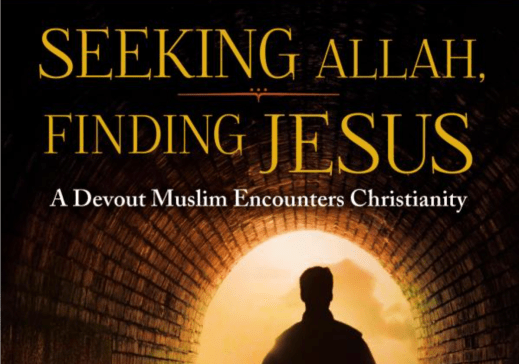
Hearing about Qureshi’ struggle as he thought about what it would mean to convert to Christianity was helpful. It will help me to be appropriately empathetic will discussing Christianity with Muslims. It is helpful to realize that “Muslims often risk everything to embrace the cross” (p. 253). I appreciated hearing his prayer: “O God! Give me time to mourn. More time to mourn the upcoming loss of my family, more time to mourn the life I’ve always lived” (p. 275). I also appreciated what he said about the cost of discipleship: “I had to give my life in order to receive His life. This was not some cliché. The gospel was calling me to die” (p. 278). Read More…
The Day of the LORD and the Decisiveness of the Present Life

What we do in this current life has an eternal impact. The New Testament insists on the decisiveness of this life.[1] In the early church, the “idea that the coming judgment will be based on deeds done in this life was widespread.”[2] For example, “Do not fear those who kill the body but cannot kill the soul. Rather fear him who can destroy both soul and body in hell” (Matt. 10:28).
All through Scripture it talks about the Day of the LORD (sg.).[3] The Bible does not talk about judgments starting at the Great White Throne Judgment (Rev. 20:11ff) and going from there on into eternity where people have multiple chances to repent. That’s why it says, “Behold [ἰδοὺ], now [νῦν] is the day of salvation” (2 Cor. 6:2; cf. Ps. 32:6; Is. 55:6). Acts 17:31 says, God “has fixed a day [sg.] on which He will judge the world in righteousness by a man whom He has appointed; and of this He has given assurance to all by raising Him [i.e. Jesus] from the dead.”
Hebrews says, “it is appointed for man to die once, and after that comes judgment [sg.]” (9:27). Thus, in Scripture, we do not see that people can repent after the Judgment. Actually, to get the idea of repentance after the Judgment you would have to add to Scripture. Yet, listen to Revelation: “I warn everyone who hears the words of the prophecy of this book: if anyone adds to them, God will add to him the plagues described in this book, and if anyone takes away from the words of the book of this prophecy, God will take away his share in the tree of life and in the holy city, which are described in this book” (22:18-19).



 in X
in X 