The Slippery Slope, Slopes Both Ways

I’ve often heard the slippery slope argument. If we allow such and such, such and such will follow as a matter of course. If we allow smoking, soon marijuana will be legalized. If we allow this, that will be a reality. If we allow moral decay, moral madness will follow. It seems to me those arguments have proven to be prophetic.
We should consider, however, whether the slippery slope slopes both ways. I am not here saying I know all facts or what happened in each of the following examples, but consider with me.
Here’s part of the transcript from Secrtary of War Pete Hegseth’s recent address to General and Flag Officers at Quantico, Virginia:
We unleash overwhelming and punishing violence on the enemy… We also don’t fight with stupid rules of engagement. We untie the hands of our warfighters to intimidate, demoralize, hunt and kill the enemies of our country. No more politically correct and overbearing rules of engagement, just common sense, maximum lethality and authority for warfighters.
What is a potential problem with “overwhelming and punishing violence” and demoralizing the enemy?[1] Is that one of the principles of The Law of Armed Conflict (LOAC) [2] or Just War Theory[3]? The answer is “No.” Instead, “Proportionality” is. “Overwhelming force” is more in the nuclear war vein. And what would we think if our enemies used that overwhelming force logic on us? Should we so quickly and easily disregard The Law of Armed Conflict and Just War Theory principles? What might that lead to?
Yes, getting illegal drugs and drug dealers off the streets is a good thing, but doing it legally is as well. Illegal drugs, drug dealing, and illegally killing drug dealers are illegal, and for good reason. If we celebrate and overlook the killing of noncombatants, what might we slip into? What might be allowed?
What slippery slope could we be on if we kill or murder noncombatants? At what other times and who throughout history has willy-nilly done this? What precedent does this set? What slippery course could we be setting out for?
What precedent does uncharitable and extreme speech coming from the highest office of leadership create? What’s the trickle-down effect? What are we saying is okay to our kids and the broader society? Where’s the Golden Rule? I realize the President is not the Pastor-in-Chief, but does that therefore mean that his demeanor doesn’t matter? Is that a precedent we want to set, let alone for a President?
I am not saying that masked authorities have apprehended people without legal justification. I have not followed everything with fine-toothed fervor. I do think we as a people should care about this question.
We should care that the law is followed, as people are detained who are in America unlawfully. The law must cut both ways. Further, we should care (Christians should especially care!) that these people (made in the image of God, whatever their crimes) be treated humanely. If we turn a blind eye and don’t care, have we considered what slippery slope we may be on? What about the sacredness of every human life? Could there be a slippery slope concern down the road?
Jesus said, “Take the plank out of your own eye so you can see clearly to help get the speck out of someone else’s eye.” We would be wise to do that. We would be wise to see where we might be missing slippery slopes.
The slippery slope, slopes both ways.
Notes
[1] Here’s an AI introduction and overview: “Starting in September 2025, the U.S. military, under the direction of the Trump administration, initiated a campaign of lethal strikes against boats suspected of trafficking drugs from Venezuela, often using “overwhelming force” to destroy vessels in the Caribbean and Eastern Pacific. This campaign, part of “Operation Southern Spear,” escalated to over 100 people killed in more than 30 strikes by late 2025, with the U.S. justifying the actions as an “armed conflict” against cartel-operated vessels designated as terrorists…
These actions have faced intense scrutiny from international observers, human rights groups, and U.S. lawmakers, who questioned the lack of public evidence and argued that the strikes constitute extrajudicial killings rather than legal, intercepted maritime law enforcement.”
It remains to be seen what will happen with this. But we should care and not just look at the explosions of boats and celebrate. We should care what’s going on legally and what slippery slope we are on if we overlook the rule of law.
[2] Again, here’s an AI introduction and overview: The Law of Armed Conflict (LOAC), or International Humanitarian Law (IHL), is a set of international rules limiting the effects of war for humanitarian reasons. It binds all parties in an armed conflict to protect non-combatants and restrict methods of warfare based on principles of distinction, proportionality, necessity, and humanity.
Key Principles of LOAC
- Distinction: Parties must distinguish between combatants and civilians, and between military objectives and civilian objects.
- Proportionality: Attacks are prohibited if the expected incidental loss of civilian life or damage to civilian objects is excessive in relation to the anticipated direct military advantage.
- Military Necessity: Only measures necessary to achieve a legitimate military purpose and not prohibited by international law are permitted.
- Humanity (Unnecessary Suffering): Weapons or methods that cause superfluous injury or unnecessary suffering to combatants are forbidden.
- Honor (Chivalry): Requires a degree of fairness and mutual respect between opposing forces.
[3] https://tjaglcs.army.mil/Portals/1003/SME/ETHICS/JWT%20Booklet1.pdf
*Photo by Donald Merrill
Patriotism, Nationalism, and Christianity
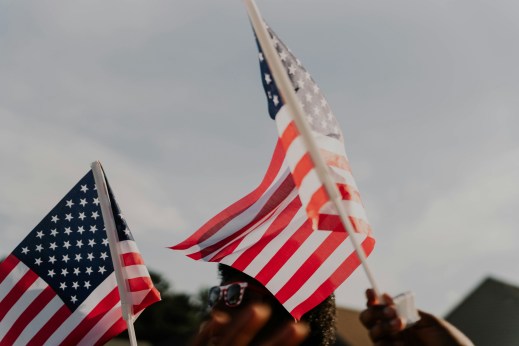
Too often, American Christians come off as nationalistic. What is nationalism, and why is it problematic?
I love America. I served in the Army National Guard for 9 years and now serve in the Air National Guard as a chaplain. I have sworn to defend the Constitution from all enemies, foreign and domestic. I do not take this lightly. I deem the ideals in the Constitution, the Declaration of Independence, and the Bill of Rights, and the freedoms and flourishing flowing from them, as worthy of protection, even calling forth the sacrifice of my life and limbs. So, I would say I am a patriot but not a nationalist.
With anything, definitions matter. The way we define patriotism and nationalism will helpfully contrast them for our purposes. There is a healthy kind of love for country and an unhealthy, biased, and blind kind. There is also a Christian kind of love for one’s country. As well as a sub-Christian love for one’s country in which the country plays a bigger role and occupies greater space in one’s affections, allegiance, hopes, and fears than it should.
Patriotism
Stephen Nathanson defines patriotism as involving:
- Special affection for one’s own country
- A sense of personal identification with the country
- Special concern for the well-being of the country
- Willingness to sacrifice to promote the country’s good[1]
It is shown through civic virtues, national loyalty, and contributions to the country’s well-being. It involves participating in democracy, respecting national symbols, and supporting fellow citizens. Serving in the military or government, voting, paying taxes, obeying the law, and learning about and respecting the country’s history and founding principles are all patriotic. All of these things are good and honorable. There is nothing wrong with being a Christian and being patriotic.
Patriotism does not confuse the city of man with the City of God. Patriotism leaves room for serious criticism of one’s country. Patriotism is not naive.
Patriotism does not mean promoting one’s country’s interests under any circumstances and by any means. The patriot can and should recognize a higher moral principle above that of one’s own nation. A patriot does not need to and must not lose his prophetic voice. A patriot may fight for his country, but also demand that the war is just.
Nationalism
The Merriam-Webster dictionary defines nationalism as an ideology that elevates one nation or nationality above all others and places primary emphasis on promoting its culture and interests rather than those of other nations or nationalities. I would further add, from a Christian perspective, that we consider this definition in relation to God’s Kingdom. Patriotism has its rightful place and perspective within our earthly nation. But with nationalism, the nation occupies a bigger place in hearts, minds, and allegiance than is warranted. “Patriotism that loses perspective and offers our highest loyalty to a specific state is an evil and destructive thing. In essence, nationalism is the imbalanced and distorted form of something that is good—patriotism.”[2]
| Healthy Patriotism | Unhealthy Nationalism |
| America < Jesus’ Kingdom | America > Jesus’ Kingdom |
| Subservient to King Jesus and His policies | Subservient to the President and his policies |
| Ultimately concerned about Jesus’ transnational Kingdom | Ultimately concerned about America |
| Eschatology: Hope in Jesus | Eschatology: Hope in American greatness |
| The fall/problem: everyone are sinners in need of Jesus and His love and truth (right and left) and Satan is set to destroy everyone (right and left) | The fall/problem: The left (or the right) are the problem. If we can deal with them, this nation will be back to its original state (Eden/Promised Land)[3] |
| Savior/messiah: Jesus who fixes the problem of sin, is truth incarnate and thus shows us how to live—lives of love. And who will ultimately destroy Satan, sin, and death. | Savior/messiah: a strong political leader who will fix what is broken (and remember the other side is what is broken) |
| Loves everyone. Wisely, carefully, and considerately protects America. | Loves America. Brashly and thoughtlessly does whatever it thinks is in the interest of America. |
| Open to critique and correction. Not naive. Prophetic voice remains. | No critique or correction. No place for the prophetic voice. |
Powerful Push Towards Nationalism
Any powerful nation will push towards nationalism. Of course, no nation says, “We are a variable and artificial entity that sometimes fails in our moral duties, but we want your allegiance in order to increase our power and security.” Instead, God is often co-opted to bolster the country’s standing in the eyes of the people. That is why people who are nationalistic tend to be religious. A link has been made between one’s nation and one’s God.
We see the messianic undertones all over the place, from “Obamacare” to “TrumpRX.” We can trust the Führer to provide what we need. The president is my shepherd, I shall not want. The president leads me to prosperity. The President is here; I will fear no enemy.
The immense power, rich history, and traditions of the United States can inadvertently foster nationalistic tendencies. While the story of the United States, on balance, is predominantly positive, this goodness can be perilous. Nationalism becomes alluring when nations possess sufficient strength or goodness to garner deep loyalties.[4] This can facilitate false beliefs and narratives, and promote placing hope where it should not be placed.
Our nation’s “superpower status and the longevity of our political system provide a potent seedbed for nationalist ideas. When this is combined with a rather widespread belief that the United States is (or in some cases, was) a Christian nation, nationalism becomes a seductive worldview for Christians.”[5]
One of my major critiques of nationalism is that it takes something that may very well be good, or even very good, and transforms it into an absolute good.[6] Of course, every culture and nation has some redeemable qualities. And “It is indisputable that different nations reflect varying degrees of Christian influence in their histories.”[7]

But no nation is God’s ideal. No nation will ever bring heaven to earth. That is a utopian concept. The New Jersusalem will come down from and by God from heaven (Revelation 21:2).
The reality is, however, there will always be temptation to place our hope in govermental powers on earth. Christians must remember that Revelation warns us against the sin of nationalism. We must not put our hope in Babylon. Babylon will fall (Revelation 17-18).
Christianity
The only nationalism the Christian should be about is trans-nationalism: Jesus and His eternal Kingdom made up of people from every tribe, language, nation, and tongue. Christianity is transcultural and transnational.[8] Christianity is not America, and it’s not American. Jesus was a Middle Eastern Jewish carpenter who was crucified. “Jesus people” have historically transformed culture sacrificially and lovingly from the margins.
Christianity is not about my church or your church, this country or that country; it’s about the whole universe being subservient to Jesus. Jesus is the Boss before whom every being in the entire universe will be made to bow. Jesus is bigger than politics. “The Christians primary solidarity is not with those who pledge alliagnce to a particular flag but those who confess Jesus as Lord regardless of their nationality.”[9]
Christianity is political, but it is first and foremost about Jesus reigning in individual hearts and lives; and Jesus’ command is summed up in this: love the LORD (YHWH) with every fiber of your being—material and immaterial—and others as yourself. Jesus will soon reign on this very earth. Christians are about that political reign not by getting overly caught up in earthly politics, but by ensuring they themselves are following Jesus the King and helping others to see who He is and bow before Him.
People will not bow their head, heart, and hands (and morality) before Him until they know and love Him. Christians are not about outward conformity but conformity from the heart. And that happens through love by the Spirit.
One of the death knells of nationalism is the historical perspective that remembers the transitory nature of nations. Nationalism is short-sighted and wrong in its diagnosis and offer of a cure. It’s demonic because it distracts from the real hope of Jesus. Nationalism is also deeply off base because, as Brenda Salter-McNeil has said, ”Cultural difference and diversity was always a part of God’s original plan for human beings. No one culture, people, or language can adequately reflect the splendor of God.” Nationalism and Christianity don’t go together.
Some people might respond…
Some people might respond: “Your unrealistic or unfaithful talking about all the high-fluent Jesus’ Kingdom stuff… You are unrealistic and should care about America. Don’t you care about our kids‽ Don’t you see the moral collapse of the nation‽”
First, I do care about America, and I do things for the betterment of America. As stated above, I am in the Air Force. I also vote and carryout other civic duties, volunteer, serve my local community as a pastor and hospice chaplian.
Second, Colossians 3 says “Set your mind on things which are above, not on things which are on the earth.” This and other Scriptures demonstrate that our first focus as Christians should be Jesus’ eternal Kingdom and our heavenly citenzenship (Philippians 3:20). This positions us to be more profitable people in whatever earthly kingdom we find ourselves.
Third, the hope of America is a person. And that person is Jesus. It’s not any other person or policy. It’s not morality. The hope of America is not America. Jesus, that’s who we all need: His person and policy.
Yes, I know we can’t actually vote for Jesus. Yes, I know the President is not the “pastor and chief.” But yes, the diagnosis and what we think is the cure for this country radically matters. A lot of people seem to be “practical nationalists” even if they say they aren’t.
Fourth, we can’t piecemeal take God’s word. God’s word that says, “thou shalt not commit adultery,” thus condemning homosexuality and pornography, also says, “love your enemies” and “pray for those who spitefully use you.” Sometimes political opponents don’t take into account the whole counsel of God or the weightier matters of the law.
How can we hold to the sacredness of the family with one breath but with the next belittle and objectify women or put down people of different nationalities—people made in the image of God for whom Jesus died? Don’t we get the value of the family and the value of all humans from the same place?
If God’s word, the truth, is our mother, then the indoctrination of the internet should not be our father. We should keep suckling from the same source, that of love and truth, not one mixed with poisonous lies. We should keep in mind that this world’s wisdom is mixed with the serpent’s bite of devilish deceit.
The God of moral order is also the God of sacrificial love. We can’t have actual moral order and the flourishing it promises without the accompanying love. It’s a fool’s errand to think we can have the heads of the quarter without taking the tales’ side too.
Conclusion
So, as a Christian, I do not believe there should be any connection between Christianity and nationalism. I do, however, think there is a clear place for appropriate patriotism.
Patriotism has warrant in Scripture. Patriotism realizes that the freedoms, blessings, and prosperity we have as a nation are a stewardship from God, which is meant to be wisely managed. Patriotism realizes the freedoms we enjoy are not free and they are not just to be enjoyed but leveraged for higher purposes. Patriotism realizes that freedoms are meant to be protected along the lines laid out in the just war literature.[10]
Patriotism realizes that the government is not infallible but is under the higher government of someone higher. Patriotism praises God for the country in which God has placed us, but has no illusions of perfection or the possibility of perfection.[11]
Psalm 23 is not just a funeral poem. It’s political. YHWH is my shepherd. He leads and I follow Him. He is the great shepherd who shows His love by laying His life down for His sheep. It is He—King Jesus—who brings eternal goodness, prosperity, and flourishing; not any earthly ruler.
“Trust in Him at all times. Pour out your heart to Him, for God is our refuge. Common people are as worthless as a puff of wind, and the powerful are not what they appear to be. If you weigh them on the scales, together they are lighter than a breath of air… Power, O God, belongs to You; unfailing love, O Lord, is Yours. Surely You repay all people according to what they have done.” (Ps. 62:8-9, 11b-12)
Notes
[1] https://plato.stanford.edu/entries/patriotism/
[2] Steve Wilkens and Mark L. Sanford, Hidden Worldviews: Eight Cultural Stories That Shape Our Lives, 62.
[3] “The supposed antidote for the nation’s ills is sought by a recovery of some golden age within our national history when those things did not exist. Usually, this blessed and right time is not specifically identified, but it often looks a lot like the world the Cleaver family inhabited” (Hidden Worldviews, 70). “Several problems emerge immediately from this idea. First, when “golden eras” are defined by a narrowly construed set of issues, they quickly take on a mythical character in which all the blemishes of that gilded age are ignored or glossed over. Thus, it is common to hear a desire to return to the Christianity of our founding fathers without recognizing that many of them were deists who talked a lot about God but were hostile toward Christianity. A second problem is that we run the risk of turning God into a vending machine with the idea that he will provide us with the national protection, status and well-being if we behave in proper ways. Finally, our return to God’s favor is generally thought to be orchestrated by political actions that will get us back on the right cultural and moral track. In each case, Christians are tempted to rely on political methods and goals to define our mission” (Hidden Worldviews, 70).
[4] Wilkens and Sanford, Hidden Worldviews: Eight Cultural Stories That Shape Our Lives, 65.
[5] Wilkens and Sanford, Hidden Worldviews, 62.
[6] Wilkens and Sanford, Hidden Worldviews, 73.
[7] Wilkens and Sanford, Hidden Worldviews, 75. It should also be noted that “Much of what we believe to be true, good or just proper manners is not filtered through conscious decision-making processes, but is a matter of absorption… Greater awareness of differences between cultures can remind us of the relativity of one’s own national traditions, ideas and assumptions” (Hidden Worldviews, 73).
[8] “Nationalism ignores the transnational nature of Christianity. Perhaps one of the most overlooked lessons in Scripture’s account of Pentecost (Acts 2) is that Christianity is not the sole possession of any particular nation. Instead, God’s new work now transcends old boundaries and encompasses all the nations” (Wilkens and Sanford, Hidden Worldviews, 75).
[9] Wilkens and Sanford, Hidden Worldviews.
[10] See Eric Patterson’s book A Basic Guide to the Just War Traditionfor a good book on the subject.
[11] There is thankfulness and humility so there can be, when appropiate, partnerships with other nations.
*Photo by Janay Peters
Should Christians Legislate Morality?

Christians Should Not Enforce “Vertical” Morality
In our modern, pluralistic, and heavily secularized society, John Warwick Montgomery points out that Christians should be particularly cautious not to jeopardize the spread of the gospel by insensitively imposing Christian morality on unbelievers. We must avoid any recurrence of the Puritan Commonwealth, where people are compelled to act externally as Christians regardless of their true faith. Unfortunately, these efforts often lead to the institutionalization of hypocrisy and a decline in respect for genuine Christian values.[1] It can also lead people to a false assurance of a right relationship with God.
Instead, Montgomery says Christians should recognize that Scripture presents two distinct types of moral commands. We see this in the first and second parts of the Ten Commandments.[2] In the first part, we see duties related to God. These commands cover the relationship between individuals and God (“vertical” morality). In the second part, we see duties related to neighbors. These commands cover the relationship between individuals and other people (“horizontal” morality).
Montgomery believes it is crucial not to impose the first part of the Ten Commandments on unbelievers. These commands are:
- “You must not have any other god but Me.”
- “You must not make for yourself an idol.”
- “You must not misuse the name of the Lord your God.”
- “Remember to observe the Sabbath day by keeping it holy.”
Even if Christians are in the majority in a country, they should not impose laws related to the above four commandments. “This is because the proper relationship with God can only be established through voluntary, personal decision and commitment.”[3]
1 Corinthians 5:10 is an important verse for us to consider on this subject as well. Paul argues that avoiding all sinful individuals in the world would mean that Christians would need to “leave the world” entirely, which is an impractical and unrealistic standard. Instead, the church’s primary responsibility is not to judge those outside the faith; it is their duty to judge those who claim to be believers but live in sin within the church.
The Quran says there is no compulsion in religion. Jesus demonstrated that principle. He never forced anyone to follow Him. That’s what we see throughout the New Testament. Christians are to be evangelistic and strive to compel people to see the goodness and glory of Jesus. Still, they are never commanded to command people to bow to Jesus.
Christians Should Work Towards A General “Horizontal” Morality
Christians should, however, encourage people towards general “horizontal” morality. Even while the focus in the New Testament is on the morality of Jesus’ followers, we do see warrant for the promotion of social order and general morality. I think of John the Baptizer and the Apostle Paul, for example (Mark 6:14-20; Matt. 14:1-12; Acts 16:35-39; 24:25; 1 Tim. 2:1-4 also see Rom. 13 and 1 Peter 2). But the letters of the New Testament were written to Christians, telling Christians how to live.
Here’s the second part of the Ten Commandments, which are good for every society to lovingly and practically apply.
- “Honor your father and your mother”
- “You shall not murder”
- “You shall not commit adultery”
- “You shall not steal”
- “You shall not bear false witness against your neighbor”
- “You shall not covet”
These commands are applied in various ways throughout the Bible. For example, the Bible talks about the importance of railings on the top of buildings to protect people from falling off and getting hurt or killed.
But even here, we don’t want to put our hope or emphasis on “horizontal” morality. Part of the point of the law is to point us to our need for Jesus. It is not an end in itself. So, we must remember that mere morality is not the solution.
The Problem of Secularism and Morality
Britannica says secularism is “a worldview or political principle that separates religion from other realms of human existence, often putting greater emphasis on nonreligious aspects of human life or, more specifically, separating religion from the political realm.”
One of the problems with secularism, though, is that it is not set up very well to give us a societal analysis. How is secularism going to provide us with:
- The Ideal of what’s healthy
- Observation of symptoms
- Diagnosis or analysis of the disease/disorder
- Prognosis or prediction of cure/remedy
- Prescription or instruction for treatment/action for a cure
Secularists believe Christians should not legislate morality. They say that religion has no place in government. Christian beliefs are not allowed, but their core beliefs are allowed. But, as Britannica aludes to, secularism is really an ultimate commitment—a whole world-and-life-view.
Even atheism has the markings of a religion. Atheists have a creed. Theirs is just that there is no god. Atheism addresses the ultimate concerns of life and existence and answers the questions of who people are and what they should value. A committed atheist is even unlikely to marry someone outside of their beliefs. Many atheists even belong to a group and may even attend occasional meetings (see e.g., atheists.org) and have their own literature they read that supports their beliefs.
A merely secular society cannot give a moral framework that transcends individual belief systems. We are left with a “might makes right morality.” It seems to me that secularism leaves us with the column on the left, whereas Christianity gives us the column on the right.

I believe we need and should want Christianity to help our nation work towards a general “horizontal” morality. Our Founding Fathers (along with Alexis de Tocqueville), many of whom were deists and not Christians, agree. Yet, Christians should realize that legislating morality is not the answer.
Legislating Morality is Not the Ultimate Solution
Christians both understand that sinners will sin and that morality is good for the nation. Righteousness exalts the land, as Proverbs says (Prov. 14:34). Yet, Christians are compassionate and humble. We realize that we all stumble in many ways, as the letter of James says, but if we can help people from stumbling, that’s good. But Christians don’t confuse the kingdom of man with the Kingdom of God. Christians know that here we have no lasting city, but we seek the City that is to come (Heb. 13:14).
Legislating morality is not the solution; Jesus is. As C.H. Spurgeon said, “Nothing but the Gospel can sweep away social evil… The Gospel is the great broom with which to cleanse the filthiness of the city; nothing else will avail.”
Paul David Tripp has wisely said that “We should be thankful for the wisdom of God’s law, but we should also be careful not to ask it to do what only grace can accomplish.” It is the Spirit of God that transforms, although it is true that He often works through law. We need our rocky hearts to become flesh through the work of the Spirit.
Conclusion
The question of whether Christians should legislate morality reveals the complexities of faith in a diverse and secular society. While Christians are called to embody and promote a morality rooted in their faith, imposing a “vertical” morality can hinder the spread of the gospel, foster hypocrisy, and promote a misunderstanding of genuine faith. Instead, the focus should be on humbly and lovingly encouraging “horizontal” morality—principles that promote societal well-being and can be embraced by individuals regardless of their faith.
As apprentices of Jesus, Christians are primarily called to lead by example and encourage ethical behavior rooted in love and respect for one another. The emphasis should be on exemplifying Jesus’ teachings and fostering relationships that draw others to the faith, rather than seeking to enforce morality. That’s what Jesus Himself did.
By fostering relationships and demonstrating the transformative love of Jesus, Christians can influence the moral fabric of society without simply relying on legislation. True change comes through the work of the Holy Spirit rather than external mandates. In this way, the Christian community can contribute to a more just and moral society while remaining faithful to the fundamental teachings of their faith.
Notes
[1] John Warwick Montgomery,Theology: Good, Bad, and Mysterious, 122.
[2] Often referred to as the First and Second Tables of the Decalogue. The “First Table” consists of commands 1-4 and has to do with people’s relationship with God (vertical relationship). The “Second Table” consists of commands 5-10 and has to do with people’s relationship with other humans (horizontal relationships). The First Table can be summed up by “love God,” and the Second Table can be summed up by “love others.”
[3] Montgomery, Theology: Good, Bad, and Mysterious, 123.
Jesus is the foundation, not “free love” or “forced law”

Why do you call me ‘Lord, Lord,’ and not do what I tell you? Everyone who comes to me and hears my words and does them, I will show you what he is like: he is like a man building a house, who dug deep and laid the foundation on the rock. And when a flood arose, the stream broke against that house and could not shake it, because it had been well built. But the one who hears and does not do them is like a man who built a house on the ground without a foundation. When the stream broke against it, immediately it fell, and the ruin of that house was great (Luke 6:46-49).
To oversimplify, it seems to me that Christians who lean towards the conservative right could be liable to overly rejoice when moral ground is gained. On the other hand, more liberal-leaning Christians may be tempted to be overly distraught with certain people’s elections.
The reality is, however, that Jesus is the foundation—He is the solid ground. Everything else is sinking sand. Everything.
As Christians, may we not sing moralities praise or prosperities praise! No. Just Jesus’! Sure, prosperity is a blessing and a stewardship and I definitely believe it’s better to have a moral nation rather than an immoral one. But still, let’s keep our focus where our focus should lie: Christ and His Kingdom.
To oversimplify (again!), if one society leans towards “free love” and license (licentiousness), and one towards “forced law” and legalism, the ramifications will obviously be different but neither will be wholly good. The only truly good society is one built on Jesus. Now, of course, the full realization of that Kingdom is in the future (already/not yet).[1]
But we should faithfully work within our current “kingdoms,” and work for their prospering (Jeremiah 29:7). We shouldn’t be overly pessimistic or optimistic. We should think with sober and realistic judgment. And we should ever look to Jesus and His word and radically love and trust Him so we’re not hoodwinked (Revelation 2:4).

Sometimes the “free love” side rejoices when people have the freedom to make whatever choices they want, whatsoever those choices are. The “free love” side seems to see this “freedom” to align with love. On the other hand, Christians who lean towards the “forced law” side, see the enforcement of morality as good because law is good.
But Jesus talked about the law of Christ. He talked about the law of liberty. Jesus talked about something different from either one of those paradigms. We see this “law of love” in a few different places in Scripture.
- Starting in Deuteronomy 6:5 and 18, God says, “You shall love the Lord your God with all your heart and with all your soul and with all your might… you shall do what is right and good in the sight of the Lord.”
- In Matthew 22:37–40, Jesus states that the two greatest commandments are to love God and love your neighbor as yourself.
- In John 13:34 Jesus says, “A new commandment I give to you, that you love one another, even as I have loved you.”
- Romans 13:8 and 10 says, “Owe no one anything, except to love each other, for the one who loves another has fulfilled the law… Love does no wrong to a neighbor; therefore love is the fulfilling of the law.
- Galatians 5:14 says about the same thing: “The whole law is fulfilled in one word: ‘You shall love your neighbor as yourself.'”
- James 2:8–9 shows us that the royal law of love is to love your neighbor as you love yourself.
Jesus isn’t building a “free love” or a “forced law” structure. Jesus explodes both of those paradigms as wrong and shortsighted. As Christians, we are to be about the Jesus structure, Jesus’ Kingdom. A whole different way of being human.
Jesus wasn’t with the Pharisees rejoicing at morality. Though, He did say you should do as they do—i.e., be moral (Matthew 23:3).[2] But Jesus wasn’t just super stoked at morality for morality’s sake. He didn’t act like morality itself was the cure to all that ails society (I know this sounds strange but hear me out).
But Jesus did talk about law. He fulfilled it! He also talked about and showed love. What Jesus got at, and the level we need to most care about, is the heart!
Jesus is the tightrope. We stand on Him or else! It’s perilous on either side. The solution is not merely “love” or “law.” It’s something altogether different. It’s the law of love.
Jesus is the way, the truth, the life. Until individuals in society have their houses firmly built on Him “love” and “law” are both sand and the house is destined to fall.
Let’s rejoice at what God rejoices at. We’re told God rejoices when a sinner comes to Him for salvation. God throws a party when that happens! God doesn’t throw a party when someone allows someone else to “follow their own heart,” whatever it is their heart says. God also doesn’t throw a party when someone is more morally upstanding than someone else. Actually, God says, “Woe to you hypocrites!” God rejoices, rather, when those who are utterly needy see their need and turn to Him. He rejoices when people build their everything on Jesus.
Are moral laws good for society? Is love good for society? Yes and yes! With Jesus they are. When Jesus defines law and love, yes. But where Jesus is not King, Satan reigns.[3] There have been nations that have been considered quite moral. Many Muslim countries are “moral” and Nazi Germany was even moral in many ways. But “moral” is not the Christian’s ultimate desire.
We pray “Thy Kingdom come, Thy will be done, on earth as it is in heaven.” Heaven is not just moral, however. Heaven is a world of love. But it’s not “love” in the sense of the culture of the French Revolution.
We’d be wise to remember these words from that old hymn, “How Firm A Foundation”:
How firm a foundation, ye saints of the Lord,
Is laid for your faith in His excellent word!
What more can He say than to you He hath said,
To you who for refuge to Jesus have fled?Fear not, I am with thee, O be not dismayed,
For I am thy God, and will still give thee aid;
I’ll strengthen thee, help thee, and cause thee to stand,
Upheld by My righteous, omnipotent hand.When through the deep waters I call thee to go,
The rivers of sorrow shall not overflow;
For I will be with thee, thy troubles to bless,
And sanctify to thee thy deepest distress.When through fiery trials thy pathway shall lie,
My grace, all sufficient, shall be thy supply;
The flame shall not hurt thee; I only design
Thy dross to consume, and thy gold to refine.E’en down to old age all My people shall prove
My sovereign, eternal, unchangeable love;
And then, when grey hairs shall their temples adorn,
Like lambs they shall still in My bosom be borne.The soul that on Jesus hath leaned for repose,
I will not, I will not desert to his foes;
That soul, though all hell should endeavor to shake,
I’ll never, no, never, no, never forsake!
Whether the dictatorship of oppressive law or the rage and licentiousness of the masses, the Christian’s hope is this: we have a firm foundation on the Lord. If to Jesus we have fled, no tempest can touch us. No breach can be made. We are loyal to the Lord of angelic armies, the King of kings, and the Lord of lords. The path to victory may lay in the grave, we’re not promised the road will be easy, but as sure as we’re planted we will rise.
The soul that on Jesus hath leaned for repose,
I will not, I will not desert to his foes;
That soul, though all hell should endeavor to shake,
I’ll never, no, never, no, never forsake!
So, let come what may! This world’s awash in sand but we’re built on the Stone! Let’s rejoice not in so-called “law” or “love,” but in Christ! And let’s ourselves live the law of love. A more moral culture is great but may we never forget we need Jesus!
As Christians, let’s build our house on Jesus the Rock and not just hear His word but do what He says (Luke 6:47). Let’s articulate and live a positive vision of life that calls us forward.[4] Let’s actually be what Jesus has called us to be. Let’s be salt in a world of decay, loving light in a world of darkness.
Notes
[1] The “already/not yet” theological concept refers to the idea that Christians already possess spiritual blessings, but they are not yet fully experiencing the complete consumption of those blessings.
[2] Jesus says, “Do and observe whatever they tell you, but not the works they do. For they preach, but do not practice.”
[3] Obviously, Jesus is King of kings and Lord of lords, and there is no being in the universe who will not bow before Him. But Satan is the god of this world and we can’t serve two masters (2 Cor. 4:4; Matt. 6:24). So, it would seem, that people are either ultimately following Jesus or following Satan.
[4] “As Christian theologians, we are not followers of John the Baptist, the prophet of national repentance, but of Jesus Christ, the bringer of good news to the whole world. The core of our response toward moral decline—where and when it exists—should be to articulate a positive vision of life that calls us forward” (Miroslav Golf and Matthew Croasmun, For the Life of the World: Theology That Makes a Difference).
Photo by Julian Gentile
Should Christians Vote for Christian Values?
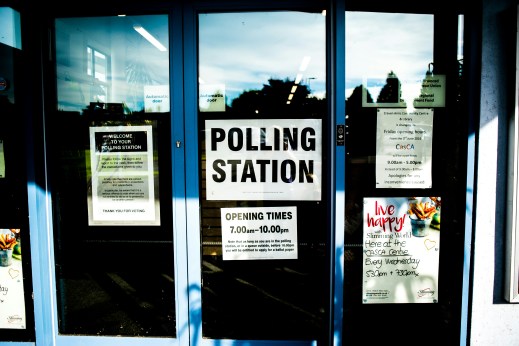
Yes but realize…
Voting for Christian values is important. It’s difficult, however, when we cannot be sure elected officials will support Christian values. Politicians blow with the wind of popular opinion.[1] And what if there are potentially Christian values on both sides? Further, what if Christian values are not the most important? What if Christian witness also matters? And what if people find themselves conflicted because they can’t, in good conscience, go with either party?
What if people feel that sometimes Christians have appeared to idolize political leaders and thus compromise Christian witness? We must value Christ and love others like Christ. Those are Christian values that aren’t a matter of conscience.
Also, the good news of Jesus is the power of God to salvation and thus transformation, not Christian morality. When Paul spoke to people in the secular marketplace, he didn’t preach Christian values. He lovingly related to them their need for Jesus.
Voting for Christian values may not be as cut and dry as it used to be. Christian values cut both ways. Christian values say abortion is wrong and honesty and humility are right; it says sexual immorality is wrong and radically loving others is right.
Yes but be aware of hypocrisy
As much as caring about Christian values for our country is a way of caring about people’s good and loving them, I think it is appropriate and commendable. But our concern for Christian values can easily devolve into fear. Are we advocating for Christian values from a place of fear or care? The way that we advocate will reveal a lot about our motivations. When Christians are belligerent and unkind, it appears the motivation is coming from a place of fear and not because they want to love their neighbor and protect them from the consequences of an immoral lifestyle.
Our motivation for voting for Christian values should not be a desire to stay safe or the moral majority. Our motivation should be the good of our neighbor. I believe Christian values are a form of common grace that leads to human and societal flourishing. It makes sense for Christians to want even a secular society to practice Christian values. The expectation, however, should be that secular society will not be inclined to practice those values. Why should Christian values be valuable to nonChristians?
This is especially true when Christians themselves aren’t living out the virtues. When Christians fail to display the fruits of the Spirit, for example, they’re not making a good case for nonChristians living Christian values. What impact might it have if Christians lived a lot more like Jesus? What if Christians were loving, kind, moral, gentle, hospitable, and not fearful? People might be intrigued, and Christian values might be more attractive. It sadly seems like the average Christian will talk about the woes of politics in the world but won’t weep about the prevalence of pornography in the Church.
Perhaps Christians need to focus more on living Christian values than implementing those values for others. If Christians across the USA are not themselves living Christian values, it seems like the height of hypocrisy to force them on others. If Christians across the nation lived like Jesus and practiced Christian values, I believe people would be very interested in Christian values. And more importantly, they would be interested in Christ.
Yes but more is needed than voting
As it is, I feel like Christians trying to pull the spec out of others’ eyes has distracted us from the log in our own eyes. But again, that’s not to say I don’t care about the USA or any other nation practicing Christian values. I would like every nation and everyone to practice Christian values! I want everyone to be like little Jesuses. But judgment starts with the church (1 Peter 4:17). If the Church isn’t healthy and following the Lord Jesus’ commands, maybe that’s the bigger deal. We should want everyone to practice Christian morality, but we shouldn’t expect it. In a sense, we should expect them not to (cf. 1 Corinthians 5:10).[2] Just as the president is not our pastor and chief, Babylon will never be the new Jerusalem. To what degree should we be satisfied enforcing Christian values? I’d much rather the Zeitgeist in the USA be changed, which happens by the Spirit through His people.
I also think it’s a problem when Christians seem to wholesale lineup with one party. Christians should be willing to lovingly critique both the right and the left. If we care about Christian values, it applies to both parties. Just as we want America to practice Christian values, we want politicians from the left and right to practice Christian values. If we call out people on the left (remember Bill Clinton and Monica Lewinsky?), we should be consistent and call out people on the right. If we’re not consistent in our critique, we make it seem like we are not standing on the solid basis of transcultural truth but are biased and trying to protect our preferred political party. Then Christian witness is inconsistent and incongruent.
Also, as the Founding Fathers and Alexis de Tocqueville said in Democracy in America, this country is for a moral people.[3] As John Adams famously said, “Our constitution was made only for a moral and religious people. It is wholly inadequate to the government of any other.” In his farewell address, George Washington said, “Reason and experience both forbid us to expect that National morality can prevail in exclusion of religious principle.” Essentially, when the morality, virtue, and integrity of the people begin to fail, the American experiment will begin to fail. Yet, we can’t change people’s hearts by changing rules. As the University of Pennsylvania seal says, “Laws without morals are useless” (Leges sine moribus vanae). Sure, I believe in good moral laws, but it is short-sighted to think an election can hold off what’s coming down the pike. Many Christians focus too much on politics and not enough on loving hospitality to those who are different than them.
The USA may be helped through voting, but it won’t be saved. We need an overhaul of character and yet at this time, Christians don’t seem to care about character. Many Christians seem to be looking for rescue from the rash and brash.
If we trust a political party to keep back the flood as the damn breaks, we’re trusting in a façade. No political party is the hope of America. If our morality is to truly change, hearts must change. Politics might be able to patch a hole here and there, but our focus must be concentrated where more impact will be felt. Plus, our goal as Christians is not to save America. It sadly seems that a lot of Christians care more about morality than people. It appears like many American Christians want to save America rather than Americans and care more about an earthly country than Jesus’ Kingdom.
Notes
[1] See e.g., https://www.thegospelcoalition.org/article/how-the-gop-became-pro-choice/ and https://wng.org/opinions/the-veepstakes-and-the-sanctity-of-life-1720520906.
[2] “Most of the New Testament’s moral witness is about Christian morality inside the life of the church. But that focus about Christian moral integrity doesn’t welcome moral chaos outside the church” (Andrew T. Walker, Faithful Reason: Natural Law Ethics for God’s Glory and our Good, 68).
[3] Tocqueville, for example, said, “Society is endangered not by the great profligacy of a few, but by the laxity of morals amongst all” and “A nation cannot long remain strong when every man belonging to it is individually weak.” Also, “Without common ideas, there is no common action, and without common action men still exist, but a social body does not. Thus in order that there be society, and all the more, that this society prosper, it is necessary that all the minds of the citizens always be brought together and held together by some principle ideas.”
Photo by Elliott Stallion
What should we do now that Roe v. Wade is overturned?

What should we do now that Roe v. Wade is overturned?
This is a very divisive question. There is celebration and lamentation across the nation. While there is dire disagreement over this topic hopefully both sides can treat each other with dignity and have dialogue where needed.
There were three Justices that did not agree with overturning Roe. Their opinion, known as “the dissent,” talks a lot “about the effects of pregnancy on women, the burdens of motherhood, and the difficulties faced by poor women. These are important concerns. However, the dissent evinces no similar regard for a State’s interest in protecting prenatal life.” Why is no concern shown for “prenatal life,” or what is termed, “potential life”?
As Americans, we have super slow speed limits in school zones. Why? Because we want to protect children. We don’t know for sure that a child will die if we speed but we still have laws and don’t speed—and infringe our freedoms—to protect kids. Why? Because life is precious.
So, even if you believe that life inside of a womb is just “potential life” remember school speed zones. We infringe our freedoms all the time to protect against possible death.
Why do we do that? Because we as a country value life. So, we take precautions and inconveniences to protect it. I believe, as Roe was overturned, we turned back to that precedent. And we as a country became more consistent. And for that, I thank God.
As a Christian, I believe abortion is not morally justifiable so I rejoice at the overturning of Roe v. Wade. But I also realize the massive needs that will quickly be apparent. So, I can somewhat understand my friends that are lamenting. I disagree with them, but I feel for them. I want all those that are feeling burdened to find help.
So, what should we do?
1. Praise the Lord Roe v. Wade has been overturned!
Christians believe in the sanctity of human life—all human life. Abortion is not morally justifiable. Therefore, Christians rejoice in the ruling that was announced on June 24th. The Guttmacher Institute reported 930,160 abortions in 2020 and the CDC reported 625,346 in 2019. We rejoice that the overturning of Roe v. Wade should drastically reduce that number. Christians rejoice because they believe all lives are precious. And so, they shouldn’t be jerks to those who disagree with them. They should know and show that they too have value.
2. Pray for our country that is very divided over this issue and for states that will now have the power to make their own abortion laws.
We should pray and do what we can to see laws passed across the states to protect life. Pray also for peace and that we would be united as states. A recent Gallup survey reports that 52% of Americans consider abortion morally acceptable (though 71% say it shouldn’t be legal in the third trimester).
3. Pray that the Church and communities across America will care for mothers and their babies; that babies that otherwise wouldn’t have been in the world would receive help in the world.
Christians must continue to care for the most vulnerable amongst us. As Roe falls there’s a massive opportunity and need for the Church to rise up and love. The Church has the answer. My we employ our minds, wallets, and houses to tangibly care for those in need.
Because Christians believe in the sanctity of human life and in justice, we also care about the moms that would have had the abortion and we care about the babies that will now be born. In the U.S. in 2017, about 1 in 5 pregnancies ended in abortion. And around 75% of abortion patients in 2014 were poor (income below $15,730 for a family of two) or low-income. This shows the massive needs that will arise in the coming months. Let’s pray. Let’s also consider how we can be part of the solution and love our neighbors well.
The church has a long history of carrying for mothers and children in need.[1] This is because Jesus modeled caring for those in need. That’s a big part of what the good news of Jesus is all about. We are sinners in need of a Savior and Jesus is that savior. And so, we love because He first loved us.
The Bible calls us to action. The Bible calls us to stand up for the oppressed (Is. 1:17) and to speak for those who cannot speak (Prov. 31:8-9 cf. 3:27). Birth rates will go up but so will infant mortality rates. But as more babies are birthed may hearts of compassion and care be birthed. May Christians meet the new challenges with Christ’s tangible love. As Roe v Wade falls, the church must rise.
4. Read the opinion on Dobbs
If you are going to be strongly for or against the ruling it would be wise to know what it says and why. So, I’d encourage you to read the opinion on Dobbs as well as the opinion on Roe. It was certainly helpful for me. The argument in the Dobbs opinion shows that “procuring an abortion is not a fundamental constitutional right because such a right has no basis in the Constitution’s text or in our Nation’s history.”
So, I encourage you to do those four things.
Now on to the work of loving and serving our communities well!
____
[1] “The church responded to the practices of infanticide and exposure through their care of exposed infants. From the earliest days of the Christian church, Christians collected funds for distribution to the poor and sick. As part of their concern for the vulnerable members in their community, the early Christians acted to protect exposed infants… Indeed, the Christian church gained such a reputation for their care of exposed infants that churches became the established site for abandoning infants” (Louise Gosbell, “’As long as it’s healthy’: What can we learn from early Christianity’s resistance to infanticide and exposure?”).
What if Satan wants to destroy the Church more than the country?

In the book of Revelation the Church is not called to react to the End or the antichrist by moralistic, militaristic, or political means. The Church is called to return to Messiah Jesus, remembering that those who continue faithful to the End will receive the “crown of life.” The way of resistance of evil, is the way of Christ. That is, loving Christ Jesus, and loving others. Taking up our crosses and following Jesus and loving others, even when it hurts, is a sure sign that we don’t and won’t have the “mark of the beast.”
What if the clearest mark of the beast is the mark of hatred and hostility? Many have thought it stood for Nero (the numerical value of 666), and perhaps it did in a way. He was, as history showed, marked by the beast. He was, as history showed, like his father the devil. He was proud and unloving, destructive and devilish.
Is not the mark of the Messiah, the mark of beatific love?1 Do not His followers, follow Him? If Jesus is love, should not His followers be loving?!2
“Love is patient, love is kind. It does not envy, it does not boast, it is not proud. It does not dishonor others, it is not self-seeking, it is not easily angered, it keeps no record of wrongs. Love does not delight in evil but rejoices with the truth. It always protects, always trusts, always hopes, always perseveres” (Corinthians 13:4-7).
And would it not make sense that the converse also follows? If the mark of the Messiah is true sacrificial love, is not the mark of the antichrist hatred? And what if the serpent of old, the father of lies, the great deceiver, is adept at what he does? And what if he wants to destroy and divide even what Messiah Jesus died to bring together? And what if he even uses the means of media and the marketplace and various views on certain medical opinions regarding COVID-19? What if?…
And what if the worst thing that can happen to Christians is not that they’d lose earthly freedom(s), but that they’d lose heavenly crowns? not that their earthly country would be divided, but that their heavenly one would be? not that they’d have to wear a mask, but that they’d have a mask put over their eyes? What if Satan’s not primarily trying to destroy a country, but what if he desires to destroy Christians and Christian witness? What if Satan doesn’t want the nation to descend into debauchery, but wants Christians to be desensitized to their hatred and fear?
Revelation also talks a lot about Babylon. Babylon was what a lot of people cared about and had their hopes fixed on. However, Christians, are marked by and are members of a different city. Christians have their hope wrapped up in a city, but it’s a different city, a city that comes down from heaven, a city that couldn’t be built here. It’s beyond and better than here.
Christians live, labor, and love in Babylon, but they’re waiting for something better. They’re waiting for Jerusalem to come down.
Christian brothers and sisters, are you showing the mark of your Savior? The characteristics of Christ? The mark of your true city? Or, are you too wrapped up here? Are you betting on Babylon3 or are you “looking forward to the city with foundations, whose architect and builder is God”?!
We, as Christians, are sojourners here in Babylon. Our time is short. Let’s be a blessing as Scripture exhorts us (Jeremiah 29:7). But, let’s remember, any castle we build with our hoarded cash, will soon wash away with the tide of time. Let’s not lay up hoards here or place our hope here. But in heaven.
1 Ephesians 1:13 tells us that all who are in Messiah Jesus have been sealed (or marked?!) with the promised Holy Spirit. Notice also that it is the Holy Spirit in Jesus followers who produces the fruits of the Spirit, one of those fruits being love.
2 God alone provides access to the Garden of Eden and the pathway there is through the Golgotha of sacrificial love.
3 If politics has you overly down, perhaps it’s because you placed your hope in a ship that must inevitably sink.
Morality and Politics in America

John Adams said a long time ago, “Our Constitution was made only for a moral and religious people. It is wholly inadequate to the government of any other.” And the conservative Edmund Burke said, “What is liberty without wisdom, and without virtue? It is the greatest of all possible evils; for it is folly, vice, and madness, without tuition or restraint.” Here are some similar insights Alexis de Tocqueville shared in his book, Democracy in America*:
“Liberty cannot be established without morality, nor morality without faith.”
“Society is endangered not by the great profligacy of a few, but by the laxity of morals amongst all.”
“Liberty cannot be established without morality, nor morality without faith.”
“When a nation[‘s] well of public virtue has run dry: in such a place one no longer finds citizens but only subjects.”
“The health of a democratic society may be measured by the quality of functions performed by private citizens.”
“A nation cannot long remain strong when every man belonging to it is individually weak.”
“What one must fear, moreover, is not so much the sight of the immorality of the great as that of immorality leading to greatness.”
“So religion, which among the Americans never directly takes part in the government of society, must be considered as the first of their political institutions; for if it does not give them the taste for liberty, it singularly facilitates their use of it.”
“Religion is much more necessary in the republic.”
“In order that society should exist, and a fortiori, that a society should prosper, it is required that all the minds of the citizens should be rallied and held together by certain predominant ideas.”**
“Despotism may govern without faith, but liberty cannot… How is it possible that society should escape destruction if the moral tie be not strengthened in proportion as the political tie is relaxed? and what can be done with a people which is its own master, if it be not submissive to the Divinity?”
No matter who ultimately gets elected, if what Adams and Tocqueville said were right, and I think they were, it’s only a matter of time before a pretty significant downfall of America. Many moral dominos have fallen, and I don’t so much mean abortion and gender confusion. I mean the more common and prevalent lack of virtue, which has precipitated more visible concerns. Now the only truth that is readily accepted is that there is no truth, only what is right for the autonomous self. Those were dominos. Those have been falling.
America needs: revival. Not of the Republican Party, but of people set on fire for the true Savior. Revival is what would make people “moral and religious,” as Adams spoke of and which our Nation rests or topples on.
Whatever happens, Christians trust the One who has the government on His shoulders. The One who is “called Wonderful Counselor, Mighty God, Everlasting Father, Prince of Peace.” The One of whom it can be said: “Of the greatness of His government and peace there will be no end. He will reign on David’s throne and over His kingdom, establishing and upholding it with justice and with righteousness from this time forth and forevermore” (Isaiah 9:6-7).
Whatever happens, Christians can trust that God is very adept at using a remnant for His good purposes to highlight His glory and goodness. Perhaps America won’t be saved, but perhaps millions of Americans will be?!
*As an aside, I think it is interesting to note what Tocqueville said about wealth in America remembering that Scripture says, that the love of money is the root of all kinds of evil (1 Tim. 6:10). Many have “noted the American obsession with work and the restless quest for the “almighty dollar” (Tocqueville, Democracy in America). Tocqueville also said, “The love of wealth is . . . to be traced, either as a principal or an accessory motive, at the bottom of all that the Americans do” (Ibid.). As well as, “One must go to America to understand what power material well-being exerts on political actions and even on opinions themselves, which ought to be subject only to reason” (Ibid.).
**Such as the reality of objective truth actually existing.
A few helpful resources before you vote…

Here are some resources and quotes I’ve found helpful in thinking about this years election…
I highly suggest that you check out Jonathan Leeman’s article: “What Makes a Vote Moral or Immoral? The Ethics of Voting.” And I found Justin Taylor’s article “The Case Against Pro-Lifers Voting for Joe Biden” helpful too. Taylor quotes John Piper: “No endorsement of any single issue qualifies a person to hold public office. Being pro-life does not make a person a good governor, mayor, or president. But there are numerous single issues that disqualify a person from public office.”
I recently read David Platt’s helpful book, Before You Vote: Seven Questions Every Christian Should Ask. You should buy it right now on Kindle. Here are a bunch of quotes from that book:
“This world is not a democracy. This world is a monarchy, and God is the King.”
“In the end, what’s most important, and what I am definitively advocating for based on God’s Word, is the realization that how we use our vote is a matter of faithfulness before God. For our vote is a unique privilege and responsibility that God has entrusted to us by his grace, and God calls us to use every means of grace he grants us to love him above all and love our neighbors as ourselves.”
“Even if we lose every freedom and protection we have as followers of Jesus in the United States, and even if our government were to become a completely totalitarian regime, we could still live an abundant life as long as we didn’t look to political leaders, platforms, or policies for our ultimate security and satisfaction. We can still have hope, peace, joy, and confidence regardless of what happens in our government, as long as… we look to Jesus alone for these things, and all of our hope hinges on him.”
“We are not worried or panicked about elections, no matter how important they may seem… Instead, we seek the kingdom of Jesus and his sinless righteousness with true peace and total confidence in his supreme reign. After all, we know that throughout history, leaders have risen and fallen. Presidents have come and gone. Through it all, one King alone has remained constant, and he is not up for election. Regardless of what president is chosen in our country, Jesus will be in control of it all.”
“According to God,… my concern in voting should not just be for me and my children but also for others and their children.”
“A clear takeaway from the book of Jonah is that we are to work for the spread of God’s love in all nations more than we are to seek safety, security, prosperity, and comfort in our own nation.”
“By God’s grace, we have been given so much as citizens of the United States of America. For all that God has granted us, we should be deeply grateful. At the same time, we follow a King who commands us to lay down our rights and use the grace he has given to love our neighbors as ourselves. This, after all, is the essence of the gospel that has saved us.”
Christian Status

As Christians, Jesus is emphatically our Leader and Lord and His Kingdom is not of this world. His Kingdom is an everlasting Kingdom made up of people from Sierra and Senegal, Armenia and America, China and Czechia, Portugal and Pakistan, Mexico and Mali (and many many more). America is not and never will be Israel. And the paradigms and parallels that we try to place on America that are meant for God’s people will never work because they are not theologically accurate.
Christians belong to an entirely different kingdom. Jesus’ Kingdom is not of this world. The paradigms that people have that have Americans or Christian Americans as the promised people is gravely wrong. God’s promise to bless the nations is not a promise to America, it is a promise fulfilled in The Son of Abraham, Jesus. All the nations of the earth are blessed in and through Him.
Christian citizenship and allegiance first belongs to our Lord Jesus’ Kingdom, and only secondarily to any merely earthly kingdom. Our hope also needs to visibly be in the Lord Jesus, the supreme Lord of the universe that actually suffered as a servant for His subjects, and not in any earthly power. We work for change and we work with sacrificial love, but we do not have our hope wrapped up here.
As Christians, it is also important to remember, we work primarily at the heart level as Jesus did, and as surgeons do, not mainly on the symptoms level. Our overarching desire is to change the cause, pull the root. We believe primarily in transformation from the inside out and not mainly in the mere reformation of society. We don’t want to rearrange the furniture on the Titanic, we want as many passengers rescued as possible. We don’t mainly want to save America, we mainly want Americans saved. So, even while we work for progress on the policies we believe in, our hope is not in them. We know, as it says in the book of Revelation, the new Jerusalem comes down out of heaven; it is not constructed here (21:2).
The Christian hero and hope is a seemingly powerless middle-eastern refugee carpenter with olive skin that was crucified as a criminal and rejected outcast. That’s who Christians identify themselves with and place all of their hope in. Not in the seemingly powerful people, politicians, or political parties who have technology and Ph.D.’s, money and influence, beauty and charisma.
Further, we should not even lead people to believe that our hope is in people or any earthly power. “The hope within us” that is supposed to be communicated and seen is that Christ is Lord (1 Peter 3:15). It may not always look like He is in the world around us, but the reality is that He is. Jesus rose from the dead and demonstrated in space and time that He is Lord and He is coming back soon. It is also important to remember that when we tell people about our hope in Messiah Jesus, that we do so “with gentleness and respect” (1 Peter 3:15).
When the onlooking world sees Christians, they should see we have hope that transcends this world. “Christ in us”—not a mere person, policy, or political party—is the “hope of glory” (Col. 1:27). The exiles spoken of in Hebrews made it clear (11:14) that “they were longing for a better country—a heavenly one. Therefore God is not ashamed to be called their God” (11:16). May that be clear for us too! May we make it abundantly clear that we are looking for and longing for the country the Lord has prepared for us (v. 14).



 in X
in X 