The Work of the Spirit | pt. 10
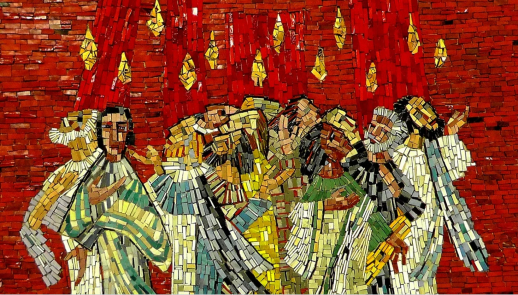
Tongues
Tongues are used in a few overlapping ways in Scripture and should be pursued and practiced as outlined in the Bible. Scripture shows us that the problem is not tongues but the abuse of the gift of tongues.[1] I think it should be admitted that even if we do not completely understand the gift of tongues we should not forbid their practice in private or publically when interpreted (1 Cor 14:27-28) because Paul explicitly says “do not forbid speaking in tongues” (v. 39).
Paul actually tells people to be ready to share a tongue (1 Cor 14:26) and he says, “I want you all to speak in tongues” (v. 5). Further, Paul tells us that he spoke in tongues more than all the Corinthians (v. 18).[2] Paul said all of this even though “one who speaks in a tongue speaks not to men but to God; for no one understands him, but he utters mysteries in the Spirit” (v. 2). Therefore, even though tongues are unintelligible to the human mind unless one is given the gift of interpretation (12:10), to speak in tongues is not wrong or bad (see 14:39); although, it should not be done publicly unless there is an interpreter (v. 28).
Many believe that tongues simply refer to a foreign human language (e.g. Ferguson, MacArthur).[3] Michael Horton says, “We should… understand ‘tongues’ as synonymous with natural languages, which some were miraculously gifted to speak and others to interpret.”[4] This understanding of tongues is simplistic and wrong for at least three reasons. (1) Tongues are used to speak to God. Paul says, the “one who speaks in a tongue speaks not to men but to God; for no one understands him, but he utters mysteries in the Spirit” (v. 2). In this way tongues, at least the way tongues are used here, may be similar to the groans that Romans speaks of (Rom 8:26-27). (2) If tongues are interpreted they seem to function in a similar way as prophecy thus they are different than a foreign speaker coming into a meeting that needs to be interpreted. (3) Paul says there are different types of tongues (1 Cor 12:10, 28). It seems that tongues (glossia) are used in overlapping ways in Scripture. R. P. Spittler points out that in Scripture we see that tongues refer to three types of overlapping phenomena. He says,
‘Kinds of tongues’ (génê glôssôn, 1 Cor. 12:10, 28) can refer to anything on a glossolalic continuum ranging from (1) prayer ‘with groans that words cannot express’ (Rom. 8:26, NIV; preferable to RSV ‘sighs too deep for words’), through (2) tongues speech in a controlled ecstatic jargon that ‘no one understands’ by someone who ‘utterers mysteries to God’ (1 Cor. 14:2), to (3) charismatic use of a recognizable language never learned by the speaker (Acts 2:8).[5]
Regarding tongues, it must also be pointed out that though tongues are good gifts that are given by the Spirit, tongues are not the marker of maturity. Further, tongues are not linked to a “second blessing” or to being filled with the Spirit.[6] Lastly, it must be understood that even if we do not understand something in Scripture does not mean it is wrong or that it does not continue. I, for example, do not understand, the seraphim. But I believe in them. In the same way, just because we may not understand every aspect of tongues does not mean that tongues do not still or cannot function as a blessing to the Church.
Here is a summary of what 1 Corinthians says regarding the gifts of tongues:
(1) There seem to be various kinds of tongues (1 Cor 12:10. 28 cf. 13:1; Acts 2:4).
(2) Tongues are unintelligible and unedifying to the group (1 Cor. 14:2-4, 6, 19) but are edifying to the speaker (v. 4).
(3) Tongues are not a foreign langue but are addressed to God (at least this is the case in 1 Corinthians) (vv. 2, 14-17).
(4) Tongues are not to be shared publically unless interpreted (1 Cor 14:6, 13, 26-33 cf. Acts 19:6).
(5) Tongues themselves are not forbidden but actually encouraged (1 Cor 14:5, 26).
(6) The regulations of tongues show that the tongues speaker is not in “ecstasy” or “out of control” (vv. 27-28).[7]
Rule #1: God is first, so make sure He’s first in your life.

“And God spoke all these words: I am the Lord your God, who brought you out of Egypt, out of the land of slavery. You shall have no other gods before me” (Exodus 20:1-3).
For the next couple of weeks, we’re going to be looking at rules, the Ten Commandments. Yeah! Just what everyone wants to look at! Rules! I’m sure you’re giddy with delight.
Maybe not.
Rules often have a bad reputation. They have for me in the past. Let me ask you though, have you heard of Thomas the Train? Thomas was a train. A blue train to be exact, and a happy train most of the time. But Thomas wanted to be free. He wanted to be free from the restrictions of the train track. He was unhappy because wanted to roam in the open countryside.
One day he got fed up. He made a break for it. He was going to go off the restrictive tracks once and for all! He was going to know freedom.
So, he did. He went of the tracks. He was finally free from the railroad tracks!
What do you think Thomas’ “freedom” was like?…
It was crushing. Literally, crushing. He couldn’t move. He was stuck.
He was somewhere where he wasn’t meant to be.
We often have…
Concern about Rules
We don’t like rules. But rules are good. Have you ever played the card game Mao? It’s a game with unspoken rules. It’s really hard to play because you don’t know the rules but get penalized when you break them. Rules are good because they keep things the way they’re supposed to be kept. They keep Thomas on the tracks so that he is free to come and go, free to be what he is supposed to be. It’s also good to know the rules so you’re not “penalized” for something you didn’t know.
The Work of the Spirit | pt. 9
Fallible Apostles
Fallible apostles exist and are gifted men of God. Many church planters, for example, may have the gifts of an apostle but they do not have authority over others even while they may have much influence. This is because whereas the gift of the apostle continues the office does not.[1]
Sometimes cessationists make the argument that all continuationists believe that at least the gift of the apostle has ceased.[2] I disagree with that caricature; I believe the office of Apostle has ceased.[3] There were other apostles in the New Testament, apparently, they were gifted, and that type of apostle is still around. Obviously, no one else fits the requirement of an Apostle and thus no one should hold the office of an Apostle but that does not, therefore, mean that there are none with the grace gift of an apostle.
As we saw above, MacArthur has tried to show that the rule of apostle has ceased and so then that means that the gifts have ceased. MacArthur does not, however, succeed at what he set out to accomplish. After all, Stephan, for example, was not an Apostle and yet he performed great signs and wonders (Acts 6:8 and perhaps Timothy cf. 1 Tim 4:14; 2 Tim 1:6; 1 Thess 5:19-23; cf. Acts 8:6–7; 9:17–19; 10:44–46; 11:27-30; 19:6–7; 21:9-11).[4] So even if there are no more Apostles that does not mean that there are not still miraculous gifts. However, I do believe there are still apostles (I am not referring to the capital “A” Apostles here, I do believe they have ceased. No one today can meet their qualifications[5]).
But, the role of apostle still continues.[6] Ephesians tells us that Jesus “gave the apostles, the prophets, the evangelists, the shepherds and teachers, to equip the saints for the work of ministry, for building up the body of Christ, until we all attain to the unity of the faith and of the knowledge of the Son of God, to mature manhood, to the measure of the stature of the fullness of Christ” (Eph 4:11-13). We have these five types of leaders (i.e. apostles, prophets, evangelists, shepherds, and teachers) for how long? Paul says, essentially, until perfection (this sounds similar to 1 Cor 13:10), until “the fullness of Christ.” Further, there is no reason to think that we get to keep three of the five types of leaders and lose two (i.e. the apostles and prophets).
When we take these verses into consideration, there is no reason to think that just because the Apostles were the foundation of the church (Eph 2:20) that that means that there are no longer those today that can at times, according to the will of God, perform miraculous signs. Regarding Ephesians 4, Markus Barth rightly points out that it “does not contain the faintest hint that the charismatic character of all church ministries was restricted to a certain history and was later to die out.”[7] In fact, he says, “Ephesians distinctly presupposes that living apostles and prophets are essential to the church’s life.”[8]
Revelation: Triumph of the Lamb

Dennis E. Johnson’s book, Triumph of the Lamb: A Commentary on Revelation, has a lot of important and relevant things to teach us. Here are a few highlights from the introduction…
1. Revelation Is Given to Reveal.
2. Revelation Is a Book to Be Seen.
“One of the key themes of the book is that things are not what they seem. The church in Smyrna appears poor but is rich… What appear to the naked eye, on the plane of human history, to be weak, helpless, hunted, poor, defeated congregations of Jesus’ faithful servants prove to be the true overcomers who participate in the triumph of the Lion who conquered as a slain Lamb. What appear to be the invincible forces controlling history—the military-political-religious-economic complex that is Rome and its less lustrous successors—is a system sown with the seeds of its self-destruction” (p. 9).
3. Revelation Makes Sense Only in Light of the Old Testament.
“The ancient serpent whose murderous lie seduced the woman and plunged the world into floods of misery (Gen. 3:1) is seen again, waging war against the woman, her son, and her other children—but this time his doom is sure and his time is short (Rev. 12; 20)” (p, 13).
4. Numbers Count in Revelation.
For example, “The number seven symbolizes the Spirit’s fullness and completeness” (p. 15).
5. Revelation Is for a Church under Attack.
“Our interpretation of Revelation must be driven by the difference God intends it to make in the life of his people. If we could explain every phrase, identify every allusion to Old Testament Scripture or Greco-Roman society, trace every interconnection, and illumine every mystery in this book and yet were silenced by the intimidation of public opinion, terrorized by the prospect of suffering, enticed by affluent Western culture’s promise of ‘security, comfort, and pleasure,’ then we would not have begun to understand the Book of Revelation as God wants us to… Always, in every age and place, the church is under attack. Our only safety lies in seeing the ugly hostility of the enemy clearly and clinging fast to our Champion and King, Jesus” (19).
6. Revelation Concerns “What Must Soon Take Place.”
7. The Victory Belongs to God and to His Christ.
“Revelation is pervaded with worship songs and scenes because its pervasive theme—despite its gruesome portrait of evil’s powers—is the triumph of God through the Lamb. We read this book to hear the King’s call to courage and to fall down in adoring worship before him” (p. 23).
The Work of the Spirit | pt. 8
Prophecy
The ministry of a prophet does not contradict or add to Scripture but if truly from God is infallible. This is very controversial but it seems to be the correct conclusion when we unbiasedly consider the biblical evidence. It is helpful here to consider what Sam Storms has said, “If noncanonical revelation was not a threat to the ultimate authority of Scripture in its emerging from, neither should it pose a threat to Scripture in its final form.”[1] Many, however, do not buy that.
For example, John MacArthur says, “extrabiblical revelation always leads to error!”[2] Then he proceeds to look at cults and mentions the Book of Mormon as an example. It is true that there are many false claims to revelation but that in itself does not mean that there is not still revelation. If we truly believe in solo Scriptura we need to show where the Bible says there is no longer revelation.
Schreiner, in his helpful book Spiritual Gifts, argues that prophecy no longer continues because the prophecy in the New Testament was infallible and what is happening now is not infallible.[3] He never demonstrates, however, that all of what is called “prophecy” today is not at least in some cases from God and thus infallible. Further, this is not an argument grounded in Scripture. Instead, Schreiner is simply making an assertion about all modern claims to prophecy.[4] That, we should see, is a big sweeping claim.
I believe Schreiner actually helps the case for the continuance of prophecy because he makes a strong argument that not all prophecy is inscripturated. That is a big part of what I believe regarding prophecy. I believe infallible prophecy continues today but just like in the Old and New Testaments, not all infallible prophecy is included within the canon.
Schreiner shows that New Testament prophecy does not differ from Old Testament prophecy.[5] He says,
New Testament prophets spoke authoritatively and with complete truth to the situations in their churches. The fact that most prophecies weren’t written down and preserved is completely irrelevant as far as the truth of the prophecies is concerned. It is a category mistake to think that if prophecies are without error, then they must be written down and included in the Scriptures. And it doesn’t logically follow that prophecies must contain errors if they aren’t preserved and written down. God spoke authoritatively and truly through the prophets, even if their prophecies weren’t recorded and preserved. They spoke the infallible word of God to their contemporaries, who needed to hear these true and authoritative words of God.[6]
Further, in chapter 7, Schreiner makes a convincing case for infallible prophecy. He argues that “the idea that New Testament prophecies are mixed with error is mistaken.”[7]
I believe that what the prophets of today share is similar to what Agabus shared. Of course, some claim that Agabus’ prophecy in Acts 11 was wrong. They, however, are mistaken.[8] Ferguson concludes, “Paul’s testimony assumes its accuracy. We have no reason to believe that Agabus’ prophecy failed. Luke gives no indication that Paul thought it had done so.”[9]
Prophecy is never produced by human will[10]; instead, the person with the prophecy speaks what God gives them to say by the Spirit (2 Pet 1:20-21).[11] Thus, prophecy is infallible because prophecy gives the words of God and God always speaks the truth (Titus. 1:2; John 17:3,17; Heb 6:18; Prov 30:5).[12] Of course, we can misunderstand or disobey but God’s words are always without error.
So we see prophecy in the New Testament was both accurate and highly significant for the actions of the church[13] but it was not on par with Scripture in the sense that it was not to be inscripturated.[14] It is not the type of revelation to be inscripturated. It is not didactic revelatory teaching but pertains to the local body or a local situation. As in disclosing someone’s heart (as in the Spurgeon’s real-life example[15]) and that encourages the local body because they see the Lord at work. It is not something that would add to the canon.
The Work of the Spirit | pt. 7
The Gifts Must Function in Accordance with Scripture
When the gifts of the Spirit are carried out and employed within the parameters of Scripture then a lot of the concerns that cessationists have should be able to be set aside. So, first, let us consider some of the parameters that Scripture puts in place for us. The gifts must function in a way that serves others (1 Pet 4:10-11), edifies (1 Cor 14:3, 12), is clear and ordered, not confusing or chaotic (14:23, 29, 33, 40), is loving (1 Cor. 13),[1] and exalts Christ (Eph 3:21; 1 Cor 12:3).[2]
Scripture further says that tongues must be interpreted if they are shared in the gathering (1 Cor 14:27-28), prophecy must be weighed (v. 29 cf. 1 John 4:1; John 7:24), only two or at most three prophecies or tongues can be shared at a public gathering (1 Cor 14:27-29), and all things should be carried out in an orderly way (vv. 30-33, 40) for the express and emphatic purpose of building up the body of Christ (e.g. v. 12). Paul says, “When you come together, each one has a hymn, a lesson, a revelation, a tongue, or an interpretation” (v. 26). Why? “For building up” (v. 26). Thus, Paul tells us to “earnestly desire” (12:31; 14:1, 39) the Spirit-empowered gifts and “strive to excel in building up the church” (14:12).
Second, let’s ensure we have a biblical understanding regarding the more controversial issues related to the gifts of the Spirit. I created an acronym to help us consider this subject more effectively. The acronym is G.I.F.T.S. Here is a summary of the acronym:
- God continues to give gifts to build up the church.
- Individuals with the gift of prophecy do not contradict or add to Scripture but if what they share is truly from God then it is infallible.
- Fallible apostles still exist and are gifted men of God but the office of Apostle does not continue.
- Tongues are used in two overlapping ways in Scripture and should be pursued and practiced as outlined in the Bible.
- Scripture is to always be obeyed as the final authority.
We will now look at each of those bullet points in order.
The Work of the Spirit | pt. 6
You can see the previous post in the series here.
There is no exegetical reason for believing the gifts have ceased. Ninth, despite what many believe, there is no convincing exegetical argument for the cessation of the grace gifts.[1] 1 Corinthians 13:10 plays a prominent role in many cessationists’ arguments. It did for me when I was taught as a kid. There is another hermeneutical issue, however. Thomas R. Schreiner says,
To see ‘the perfect’ as referring to the New Testament canon is an example of anachronism…
Instead of referring to spiritual maturity or to the canon of the New Testament, ‘the perfect’ most likely refers to the second coming of Christ, the end of the age. The perfect is equivalent with seeing God face to face (1 Cor. 13:12).[2]
John MacArthur says although many “scholars [e.g. B.B. Warfield, Richard Gaffin, Robert Thomas, Thomas Edgar, Simon J. Kistemaker] disagree on the identification of the ‘perfect,’ they all reach the same conclusion—namely, that the miraculous and revelatory gifts have ceased.”[3] He goes on to say that “we must look elsewhere than 1 Corinthians 13:10, to passages like Ephesians 2:20, where Paul indicated that both the apostolic and prophetic offices were only for the foundational age of the church.”[4]
Many, such as John MacArthur, Richard B. Gaffin, along with Schreiner, end up making the argument that the gifts of the Spirit have ceased because they claim, otherwise, the canon of Scripture would be in jeopardy.[5] That, however, is rather a different issue than if the gifts of the Spirit continue or not. For one, the canon of Scripture, as well as the very existence of the Church, has been in jeopardy since the outset. The way to defend Scripture, as well as the church, is a more robust understanding of what Scripture teaches, not fear.
The Work of the Spirit | pt. 5
You can see the previous post in this series here.
Gifts of the Spirit confirm the gospel. Fourth, the gifts of the Spirit serve to authenticate the gospel message (e.g. Rom 15:18-19[1]) and that is still necessary especially in certain contexts but that is not the exclusive reason that God gave the gifts of the Spirit. D.A. Carson correctly points out that just “because miraculous signs have a distinctively attesting role in some instances, it does not follow that this is the only role they play.”[2] Although some assert that the gifts of the Spirit ceased with the closing of the canon they make that claim without biblical warrant. As Carson says, “There is no exegetical warrant for thinking certain classes of the Spirit’s manifestations cease once the crucial points of redemptive history have passed.”[3]
Gifts of the Spirit are poured out in the last days. Fifth, the gifts of the Spirit are part of what it means to be in the last days and we are in the last days.[4]
Cessationists who claim that the healings of Jesus and the apostles where merely authenticating signs of their status as bearers of canonical revelation misunderstand Jesus’ own explanation of them. For Jesus, they are rather expressions of the liberating reign of God, bursting into history, and it is as such that they attest the message of the kingdom.[5]
The gifts of the Spirit are to be expected because they indicate the presence of the Kingdom in the last days. The presence of the Holy Spirit is a sign of the new covenant.
The Work of the Spirit | pt. 4
You can see the previous post here.
There is no indication that the gifts would cease before Christ’s second coming. The Bible never indicates the cessation of the grace gifts until the return of Jesus, this is the second reason I believe in their continuance. There is no indication in the New Testament that the gifts would cease before the coming of Christ. Of course, it is possible that they could just fade out but we would not expect that to be the case from reading the Bible. Jack Deere contends that “If you were to lock a brand-new Christian in a room with a Bible and tell him to study what the Scriptures have to say about healing and miracles, he would never come out of the room a cessationist.”[1]
In 1 Corinthians 1, it seems to indicate the expectation that the gifts will continue until the coming of Christ. If you read the letter as the first recipients would have there is nothing at all that would make you think otherwise. In 1 Corinthians 1:7, Paul says, “…you are not lacking in any gift[2], as you wait for the revealing of our Lord Jesus Christ.” Notice it says “any gift” and it seems as if the gifts will continue until the revealing of the Lord Jesus Christ. That seems to clearly indicate that the gifts of the Spirit will continue until Jesus returns.
Paul, thus, seems to believe that all of the gifts will not be lacking until “the revealing of our Lord Jesus Christ” (1 Cor 1:7). Paul expects that those who are witnesses of Christ[3] will have the spiritual gifts available to them until “the perfect comes” (cf. 13:8-12), that is “the revealing of our Lord Jesus Christ” (1:7).[4] It is also important to note that in the context of 1 Corinthians, “spiritual gifts” (χαρίσματι cf. HCSB, NLT, NIV, Rom 1:11) cannot be limited to encouragement and the like but must also include what is considered the “charismatic gifts.”[5]
The Work of the Spirit | pt. 3
In the last post, we looked at “God the Spirit and the Filling of the Spirit.” In this post, we will be looking at…
Grace Gifts
Next, we need to understand that God the Spirit gives “grace gifts.”[1] God’s abundant grace that we see demonstrated all throughout redemptive history issues in grace gifts.[2] God expresses His grace concretely in the rich number of grace gifts He bestows upon the Church for its upbuilding.[3] Schreiner observes this and says, “I would define spiritual gifts as gifts of grace granted by the Holy Spirit which are designed for the edification of the church.”[4]
The Spirit was vital at the beginning of the church and He continues to be on through to the consummation. He brought the birth of the Church, He hovered over the Church like He hovered over the water at the beginning. The Spirit does not bring charismatic chaos but the creation of order. That was the Spirit’s work at the beginning and it is the Spirit’s work today. There is no biblical warrant for believing in some big discontinuity between the work of the Spirit then and the work of the Spirit now in the last days. Actually, Scripture says, “in the last days I will pour out my Spirit on all flesh” (Acts 2:17). We are in those latter days today and we still need the empowering presence of the Spirit.
The hodgepodge, unlearned, and often unimpressive group of Jesus followers did not see the messianic movement die. Instead, the people of the way (Acts 9:2) actually exploded in growth, this group of people that followed a crucified and cursed man who claimed to be God, this group of people who had no leader on earth. How did this group survive let alone thrive?
Because Jesus did not leave His disciples without what they needed. Jesus sent the Helper.
Jesus said, that it was better that He go. That seems shocking. As it should. And as it did for the first disciples. We are left asking, how could it be better that Jesus’ bodily presence not be with us?
Thankfully Jesus answers that question. He tells us that He will not leave us as orphans. He gives us the Helper, the Holy Spirit, to be with us (See John 14).
The Grace Gifts Continue Today
“You shall receive power when the Holy Spirit comes upon you; and you will be My witnesses” (Acts 1:8[5]). Will we? Will we receive power?



 in X
in X 