Noah’s Ark and the Bible’s Narrative Arc

“…the whole earth was filled with violence. And God saw the earth, and behold, it was corrupt, for all flesh had corrupted their way on the earth” (Gen. 6:11b-12).
The story of Noah and his ark has always been a difficult story. Knowing the context of the story is helpful though.
So, what was going on before God destroys the world with a flood?
Well, just a few chapters earlier we see that God made an incredibly good and beautiful creation (see e.g. Gen. 1:31). We see God made people–all people–with dignity and worth (Gen. 1:26-27; 5:1-2). We see God gave people good things to do (Gen.1:28).
But, we also see, humans didn’t listen. We see that in the Fall of humanity (Gen. 3), the first murder (Gen. 4:8), and the growing corruption and violence (Gen. 6:5). In Genesis, we go from God and good creation to growing corruption very quickly (that’s also representational of my own tendency).
It was not God who “paved paradise and put up a parking lot.” That’s what humans had already done. Humans damaged and defiled the very thing that would have brought them endless delight. Humans turn from fresh fulfilling water to putrid puddles.
But, that’s not it. Humans also hate. They hate humans that were made with the dignity of God. They hate and they hurt. They abuse and injure. And even kill.
Before God destroyed the world in the flood, humans destroyed the world with their sin. In God’s act of destruction, He was actually bringing a type of deliverance. He could have, and in a sense considered, destroying the world completely (Gen. 6:6-7).[1]
Yet, God worked through Noah, a mediator (Gen. 6:8ff)[2], as He does, to bring salvation through judgment.[3] God provided a type of rescue when wrath was deserved.
Ultimately we know, the God-Man, Jesus Christ, took the wrath of God and the violence of the world on Himself. When we understand the whole context of the story of Noah’s ark, we see it is not God at fault. He is not the guilty party for the destruction of the world.
Instead, we see we are at fault. We carry out atrocities. We turn from God, where alone there is life, to trifles and trivialities. We hate humans, who have eternal value and being, and love things that perish in a moment.
When the story of Noah’s ark is understood in context, from the perspective of the whole of redemptive history, we see how amazing it is that the LORD is both just and the justifier of the one who trusts in Jesus alone for rescue (see Rom. 3:25-26).
Will sin be possible in heaven?

To answer the question will sin be possible in heaven, there are a number of passages we should look at.
“…the assembly of the firstborn who are enrolled in heaven, and to God, the judge of all, and to the spirits of the righteous made perfect“ (Hebrews 12:23).
“…those whom He foreknew He also predestined to be conformed to the image of His Son…” (Romans 8:29).
“No longer will there be anything accursed, but the throne of God and of the Lamb will be in it, and his servants will worship Him” (Revelation 22:3).
“…nothing unclean will ever enter it, nor anyone who does what is detestable or false, but only those who are written in the Lamb’s book of life” (Revelation 21:27).
“The one who conquers, I will make him a pillar in the temple of my God. Never shall he go out of it, and I will write on him the name of my God…” (Revelation 3:12).
“I will plant them on their land, and they shall never again be uprooted out of the land that I have given them…” (Amos 9:15).
Christians will be made “made perfect” (Heb. 12:23). They will be “conformed into the image” of Jesus (Rom. 8:29). It may be that Christians can sin, but won’t sin because they will not want to sin.
When Christians see Jesus, they shall be like Him (1 John 3:2). That is the sense in which Christians will be unable to sin (non posse peccare, as Augustine said). Christians will be like Christ!
So, no. Ultimately, Christians will not be able to sin in heaven. But it won’t be from an external constraint but from internal renewal.
Christians will finally completely have their affections rightly aligned with reality. Christians will love the LORD their God with all their heart, soul, mind, and strength.
In the shelter of the Most High

Sunday morning in church we were looking at Luke chapter one and my attention was drawn to verse 35. The angel said to Mary, “the power of the Most High will overshadow you.”1
This phrase brings us to Psalm 91 verse 1: “Those who live in the shelter of the Most High will find rest in the shadow of the Almighty. “
If we go on and read the entire Psalm. We have some serious food for thought regarding the present situation we are in regarding COVID.
“For he will rescue you from every trap and protect you from deadly disease” (v. 3).
“Do not dread the disease that stalks in darkness” (v. 6).
“No plague will come near your home” (v. 10).
“The Lord says, “I will rescue those who love me” (v. 14).
There are many other promises in this powerful Psalm but the one regarding disease and plague stands out. These promises are contingent on sheltering in the shadow of the Almighty.
So does this mean no true believers in the Almighty will get COVID? We know this is not true. Many believers have contracted COVID and been healed—100% recovery rate. Some recovered on this planet in this time and space and others are now experiencing the ultimate recovery and healing—instant healing—in eternity. In thinking of a friend with COVID, he will be healed; it is a confirmed fact, one way or the other he will be healed. The Almighty has said so—Psalm 91 ends with the final and ultimate shelter: “and give them my salvation”.
So what does it mean to shelter in the shadow of the Almighty? To me sheltering in the shadow of the Almighty means being always conscious of God’s presence and “shadow” around me. He is always there and by faith, I see His shadow. He has said, “I will never live you nor forsake you.”
Isaiah put it this way, “You will keep in perfect peace all who trust in You, all whose thoughts are fixed on You! Trust in the Lord always, for the Lord God in the eternal Rock” (Is. 26:3-4).
To abide in the shadow of the Almighty means to have our heart, minds, and faith fixed, fastened securely to the promises of the Almighty. Not fixed ultimately on medical science, our insurance policy, the government, our diet and health regiment, a vaccine, but fixed on the Almighty.
My prayer for all of us this season will be that we are sheltering under the Almighty—not mainly sheltering in place but under the shadow of the Almighty.
1 Using the New Living Translation for all of this.
What Made Mary Special?

What made Mary special? Was there something in her background that made God choose her? Did she have a high place in society?
Let’s look at some background to try to answer those questions.
Mary was a young girl (maybe as young as thirteen) from an obscure town. Actually, when one of Jesus’ future disciples heard where Jesus was from he said, “Nazareth?! Can anything good come from there?”
The person Mary was engaged to be married to was a not a wealthy man. He was a carpenter. Mary likely had a hard but normal upbringing. Mary’s name in Hebrew (“Miriam”) could be connected to the Hebrew word for “bitter.” It’s not hard to imagine that Mary had already faced much in her life that was bitter and in her lifetime she certainly would.
So, Mary’s background, upbringing, and social status did not make Mary special. What made Mary special? What does the Bible say?
Luke chapter 1 (specifically verses 26-56) is where we see the most about Mary. We can make a few observations from this passage and see why Mary was special.
1) Mary was Favored by God
Mary was favored by God (Lk. 1:28,29,30). What does that mean? The word favored here means that Mary received grace, not that she is a source of grace for others. The favor Mary received was unmerited.
So, was Mary normal? In some ways, yes. You might even say, plain. Mary herself says that she was of “humble estate” (Lk. 1:48; 52).[1] However, as John MacArthur says, “She was the one sovereignly chosen by God—from among all the women who have ever been born—to be the singular instrument through which He would at last bring the Messiah into the world.”[2] So, was she normal? Yes and no.
Quotes from The Christian Faith by Michael Horton
“A mystery is inexhaustible, but a contradiction is nonsense. For example, to say that God is one in essence and three in persons is indeed a mystery, but it is not a contradiction. Believers revel in the paradox of the God who became flesh, but divine and human natures united in one person is not a contradiction. It is not reason that recoils before such miracles as ex nihilo creation, the exodus, or the virginal conception, atoning death, and bodily resurrection of Jesus Christ. Rather, it is the fallen heart of reasoners that refuses to entertain even the possibility of a world in which divine acts occur” (Michael Horton, The Christian Faith, 101).
“Faithful reasoning neither enthrones nor avoids human questioning. Rather, it presupposes a humble submission to the way things actually are, not the way we expect them to be. Faithful reasoning anticipates surprise, because it is genuinely open to reality. If reality is always exactly what we assumed, then the chances are good that we have enclosed ourselves in a safe cocoon of subjective assertions. Unbelief is its own form of fideism, a close-mindedness whose a priori, untested, and unproven commitments have already restricted the horizon of possible interpretations” (Horton, The Christian Faith, 102).
“Ethical imperatives are extrapolated from gospel indicatives. The gospel of free justification liberates us to embrace the very law that once condemned us” (Ibid., 640).
“In the Greek language we must differentiate between the indicative mood, which is declarative (simply describing a certain state of affairs), and the imperative mood, which sets forth commands). For example, in Romans Paul first explains who believers were in Adam and their new status in Christ (justification) and then reasons from this indicative to the imperatives as a logical conclusion: ‘Do not present your members to sin as instruments for unrighteousness, but present yourselves to God as those who have been brought from death to life…’ (Ro 6:13). He concludes with another imperative (command), but this time it is really an indicative: ‘For sin will have no dominion over you, since you are not under law but under grace’ (v.14)” (Ibid., 649).
“Where most people think that the goal of religion is to get people to become something that they are not, the Scriptures call believers to become more and more what they already are in Christ” (Ibid., 652).
“Although we cannot work for our own salvation, we can and must work out that salvation in all areas of our daily practice. When God calls, ‘Adam, where are you?’ the Spirit leads us to answer, ‘In Christ’ (Ibid., 662).
“It is crucial to remind ourselves that in this daily human act of turning, we are always turning not only from sin but toward Christ rather than toward our own experience or piety” (Ibid., 663).
10 Quotes from John Piper’s book, Future Grace

“The commandments of God are not negligible because we are under grace. They are double because we are under grace” (John Piper, Future Grace, 168).
“The way to fight sin in our lives is to battle our bent toward unbelief” (Piper, Future Grace, 219).
“The faith that justifies is a faith that also sanctifies… The test of whether our faith is the kind of faith that justifies is whether it is the kind of faith that sanctifies” (Ibid., 332).
“The blood of Christ obtained for us not only the cancellation of sin, but also the conquering of sin. This is the grace we live under—the sin-conquering, not just sin-canceling, grace of God (Ibid., 333).
“The problem with our love for happiness is never that its intensity is too great. The main problem is that it flows in the wrong channels toward the wrong objects, because our nature is corrupt and in desperate need of renovation by the Holy Spirit” (Ibid., 397).
“The role of Gods Word is to feed faith’s appetite for God. And, in doing this, it weans my heart away from the deceptive taste of lust” (Ibid., 335)
“It is this superior satisfaction in future grace that breaks the power of lust. With all eternity hanging in the balance, we fight the fight of faith. Our chief enemy is the lie that says sin will make our future happier. Our chief weapon is the Truth that says God will make our future happier. We must fight it with a massive promise of superior happiness. We must swallow up the little flicker of lust’s pleasure in the conflagration of holy satisfaction” (Ibid., 336).
“There are no closed countries to those who assume that persecution, imprisonment and death are the likely results of spreading the gospel. (Matthew 24:9. RSV)” (Ibid., 345).
“Perseverance in faith is, in one sense, the condition of justification; that is, the promise of acceptance is made only to a persevering sort of faith, and the proper evidence of it being that sort is its actual perseverance” (Piper, Future Grace, 26 quoting Jonathan Edwards).
“Humility follows God like a shadow” (Ibid., 85).
How to Evaluate Christian Leaders?

Recently, I’ve seen a lot of Christian leaders be criticized or criticize, and even call other Christian leaders names because of disagreement on such things as politics, the pandemic, and policies regarding justice. And not surprisingly, those who are not leaders are also jumping into the fray and lobbing grenades too.
How many people, however, actually think through the appropriate way to evaluate Christian leaders? And how many people know what reasons Scripture gives for concern? How many Christians have a sort of theological triage they use to evaluate and make these important decisions?
There are doctrines of “prime importance and great weight” that we must insist on.[1] “There is a time to fight. There are certain hills that must not be surrendered, even if the cost is losing our lives.”[2] Some of the hills that we must be willing to die on are the deity, life, death, resurrection, and Second Coming of the Lord Messiah Jesus.
Other doctrines, beliefs, and convictions are, or should be, a little further down the list of importance. Just as a doctor would jump to help the patient with a gunshot wound to the chest before she would help someone with a broken pinky finger. It is not that the pinky finger is not important; it is that the gunshot wound is more important and dire.
So, let’s look at some biblical criteria by which to evaluate Christian leaders. It should be understood that these criteria do not have the same weight. The criteria of “Christology,” for example, should be given more weight of importance than “Clarity.”
1. Christology (& sound doctrine)
Christian leaders have the duty to communicate God’s transforming truth, exalt Jesus Christ, teach the Bible so that people understand and apply what God has said, and encourage conformity to Christ (see e.g. Neh. 8:7-8; 1 Tim. 3:2). Faithfulness to the revelation of God and preaching Christ are paramount (Col. 1:28). If the word of God and Jesus the Messiah are not being preached then you have reason for concern.
If false or unhealthy things are said or taught about God, His word, or Jesus the Messiah then you have great reason for concern and should share your concern and likely leave that individual’s leadership. It is important that we are aware that leaders sometimes don’t preach the truth. Peter told us that there will be false teachers among us, who will secretly bring in destructive heresies, even denying the Master who bought us (2 Pet. 2:1).
“If anyone teaches a different doctrine and does not agree with the sound words of our Lord Jesus Christ and the teaching that accords with godliness, he is puffed up with conceit and understands nothing. He has an unhealthy craving for controversy and for quarrels about words, which produce envy, dissension, slander, evil suspicions” (1 Tim. 6:3-4).
So, in evaluating a Christian leader, ask yourself:
- “Does this person preach/teach true, healthy doctrine? Does this person preach/teach the goodness and glory of Messiah Jesus?”
Don’t ask:
- “Do I like the style etc. of the person?”
See also: Deut. 13:1-5; 1 Jn. 4:1-3; 1 Cor. 12:3; Col. 1:28; 2:8 2 Thess. 2:15; 1 Tim. 1:10; 2 Tim. 1:13; 4:3; Titus 1:9, 13.
2. Character
The leaders own life should be in order. That is, the leader should have Christ-like character. Leaders and teachers can “profess to know God” and yet “deny Him by their works” (Titus 1:16). That’s partly why it’s so important that Christian leaders meet the biblical qualifications (1 Tim. 3:1-13; Titus 1:1-9).
Disagreement Over Doctrine

Doctrine matters. Doctrine can cause delight or be very damaging. And sadly, false doctrine is more common than many people realize.
It’s not just me that says deception and damaging doctrine is prevalent though. That’s what Scripture says (see Matt. 24:11, 24; Mk. 13:22; Acts 28:31). False teaching is not a small concern. There is false teaching that is the doctrine of demons (1 Tim. 4:1). Remember, as Ephesians 6:12 says, we are at war not with humans but with unseen spiritual powers. This is serious. Paul says this will happen in “later times.” That’s where we are now. We are in the last days, the days in between the Ascension and the Return of Jesus Christ.
It’s helpful here, however, to consider that not everything we disagree with is the “doctrine of demons.” So, it helpful for us to consider “theological triage.” There are some teachings that are especially connected to the good news of Jesus Christ and there are other things that are further down the list of importance.

There are some things that are absolutes, like the deity and full humanity of Jesus Christ, the Trinity, and the authority of Scripture. There are, however, things that are less critical when it comes to theological triage. For example, what we believe about the end times is not as critical as what we believe about Jesus and how people are saved.
Read More…Encouragement in Exile (A Sermon)
Intro
I want to say at the start that I understand it can be hard to sit there and be engaged. I’ve been there. I want to challenge you, however, to lean in and listen. The events we’re talking about here may be some 2500 years in the past but they have amazing significance today.
Plus, the book of Esther is an amazing book. It is a true work of literature. There is a heroine, suspense, irony, reversal, and surprising coincidences. Basically everything you’d want in a story.
Setting: Exile
The book of Esther tells “the story of events surrounding the rescue of the nation of Israel from the threat of extinction while it was in exile in Persia… The more profound and universal purpose of the story is to explain how God’s providence can protect his people.”[1]
Whoever you are, wherever you come from, and no matter where you are spiritually, this year has likely brought many challenges to you. I believe the book of Esther offers some much-needed perspective on things.
Chapters 1-2
As we saw the last two weeks, God’s people are in exile, under the reign of king Ahasuerus. Ahasuerus, as the King of Persia, has a ton of wealth. So he shows his wealth by having a party for 180 days (1:4).[2] With that much partying it is no wonder that he seems to be somewhat of a drunk and pushover. However, it appears that he’s trying to combat his pushover persona (but not his potential alcoholism!) with the help of his friends and so he makes an example of his wife Vashti who did not obey his every whim.
In Herodotus’ Histories, it says that that the “king of Persia could do anything he wished.”[3] And so, that’s what he did. He gets rid of his old wife and throws a lavish beauty pageant to find the most beautiful and pleasing bride in the kingdom (2:2-4). In somewhat of a Cinderella story, the king “fell in love” with Esther or at least more than all the other women and so he put the royal crown on her head and made her queen (v. 17).
Esther’s Exile
Israel is in Exile. God’s people are not in the Promised Land. They have a foreign ruler. And can you imagine, that ruler was allowed to do “anything he wished.”
Our Exile
We too are in exile, we too are not home. It may be different than Esther’s exile but we are in exile too. We see this truth in Scripture in various places. For instance, 1 Peter 1:1 talks about us being “elect exiles” and verse 17 tells us how we are to conduct ourselves throughout the time of our exile. First Peter 2:11 says, “Beloved, I urge you as sojourners and exiles to abstain from the passions of the flesh, which wage war against your soul.” Philippians 3:20 reminds us “our citizenship is in heaven, and from it we await a Savior, the Lord Jesus Christ.” Hebrews 13:14 says that “here we have no lasting city, but we seek the city that is to come.”
So, just as Esther was in exile, we as Christians are in exile too. This book is relevant and has a lot to encourage us in the midst of the challenges of exile.
More and more our exile is a very visible reality. The Public Religion Research Institute did a study on religious affiliation in America. Here are their findings:
“The American religious landscape has undergone substantial changes in recent years… One of the most consequential shifts in American religion has been the rise of religiously unaffiliated Americans… In 1991, only six percent of Americans identified their religious affiliation as ‘none,’ and that number had not moved much since the early 1970s. By the end of the 1990s, 14% of the public claimed no religious affiliation. The rate of religious change accelerated further during the late 2000s and early 2010s, reaching 20% by 2012. Today, one-quarter (25%) of Americans claim no formal religious identity, making this group the single largest ‘religious group’ in the U.S.”[4]

The study also found “about two-thirds (66%) of unaffiliated Americans agree ‘religion causes more problems in society than it solves.” They also “reject the notion that religion plays a crucial role in providing a moral foundation for children.”[5]
It is not just America, however, that is becoming increasingly less affiliated. The Church in America also has less and less commitment.
One recent study conducted by Barna Group for the book Faith for Exiles found that out of the around 1,500 people between the ages of eighteen and twenty-nine that grew up in the church (as Christians) the majority no longer go to church. 22% are now considered “ex-Christians.” 30% may identify themselves as Christians but they no longer go to church. 38% describe themselves as Christians and have attended church at least once in the last month but do not have the core beliefs or behaviors associated with being a disciple of Jesus. Only 10% were found to be regularly involved in the life of the church, trust in the authority of Scripture, affirm the death and resurrection of Jesus, and express a desire for their faith to impact their world.

Dedicated Christians are more in more considered odd. Christians are more and more on the fringes of society. If things don’t change, these trends will just continue in the future. The reality of our exile status will be felt more and more.
So, friends, Esther has a lot to teach us about our exile. Let’s go to the first scene…
1. Haman’s Plot (Ch. 3)
Scene 1 starts with Haman, the antagonist or bad guy of the story,[6] being promoted (3:1). It seems like he’s promoted because the beauty pageant was his idea.
Haman soon became furious at a Jewish man named Mordecai because he would not bow down to him. But instead of just taking it out on him, Haman wanted to destroy all the Jews throughout the whole kingdom (3:5-6). So, we see a big problem introduced in the plot.
Haman decided which day the Jews should be destroyed on by casting a lot. Lot is the word “pur,” so that’s where the name Purim, the Jewish holiday, comes from. Because Haman cast lots to decide what day the Jews would be destroyed on. However, as Proverbs 16:33 reminds us the lot (pur) is cast into the lap, but its every decision is from the Lord. And so we see, even when the name of the LORD is not mentioned we see God is sovereign over human affairs and He will keep His promises to protect and bless His people. He will not let His people be wiped out.
Haman was so eager to destroy the Jews that he offered to pay the king ten thousand silver talents, the
equivalent of eighteen million dollars today,[7] of his own money if the king would allow him to destroy the Jews. The king agreed and a decree was sent and Haman and the king sat down to drink (again).
Then in Esther 3:13-15 it says, “Letters were sent by couriers to all the king’s provinces with instruction to destroy, to kill, and to annihilate all Jews, young and old, women and children, in one day, the thirteenth day of the twelfth month, which is the month of Adar, and to plunder their goods. A copy of the document was to be issued as a decree in every province by proclamation to all the peoples to be ready for that day. The couriers went out hurriedly by order of the king, and the decree was issued in Susa the citadel.”
Things clearly are not looking good. What can possibly be done? Let’s look next at…
2. Esther’s Plan (Ch. 4-5)
In scene 2 we see Mordecai appeal to Esther (Ch. 4). Mordecai hears about Haman’s plot to kill the Jews and so he talks to Esther about it. Mordecai says, in Esther 4:12-14, “Do not think that in the king’s palace you will escape any more than all the other Jews. If you keep silent at this time, relief and deliverance will come for the Jews from another place, but you and your father’s house will perish. And who knows whether you have not come to the kingdom for such a time as this?” (4:12-14)
Imagine how scary that must have been for Esther. She could be totally rejected, she could be killed. Yet she moved forward. She just had one thing to say to Mordecai. She said: “Hold a fast on my behalf, and do not eat or drink for three days, night or day. I will also fast. Then I will go to the king, though it is against the law, and if I perish, I perish” (4:15-16).
In the next scene, scene 3, we see Esther before the king (Ch. 5:1-8). Esther has her first banquet with the King. Esther goes to the king and says, “Please join me for a feast that I prepared and invite your friend Haman too” (5:4). Then, at the feast, Esther says let’s feast again tomorrow and we’ll talk more then (5:8).
(It’s funny, is Esther delaying? Is she nervous? Is she buttering him up? We don’t know…)
In scene 4 we see Haman’s exaltation and anger (Ch. 5:9-14). After the feast, Haman leaves and he is joyful and glad. But then he sees Mordecai on the way home and he doesn’t rise in respect before him or tremble before him. And so Haman is ticked off and his wrath is renewed (5:9).
Haman was able to contain himself, however, and made it home. When Haman was home he had his friends over and was talking with them and his wife. He was recounting how good everything was going and he told them that he even got to hangout with the king and his new bride (5:12). “However,” he said, “It’s all pointless to me, so long as I see Mordecai still alive” (cf. 5:13).
So, his wife and friends said, “Build a frame six-stories high and have Mordecai executed on it.” When Haman heard that idea, he said, “That’s it!” And with great excitement he had the structure built so that the entire city could see Mordecai his enemy impaled.
Haman was haughty. He thought he could have Mordicai and all the Jews murdered and get away with it. But, next we see…
3. Haman’s Downfall (Ch. 6-7)
In scene 5 we see Mordecai’s triumph and Haman’s fall (Ch. 6-7). As we flash to scene 5, we see Esther getting herself together and preparing for her talk with the king.
But, the king couldn’t sleep. So, he did what any self-respecting king would do, he asked for a bedtime story.
The king gave orders for the book of memorable deeds to be brought and read to him (6:1).[8] And before the
king got bored and fell asleep the story was recounted how Mordecai protected the king from an assassination attempt (6:1-2).
And the king said, “What honor or distinction has been given to Mordecai for what he did?” The king was told that “Nothing had been done” (v. 3).
That’s when, guess who walked in?…
Haman walks into the king’s palace to speak to the king about having Mordecai impaled.
However, before Haman could ask his question, the king asked him a question. The king said to Haman: “What should be done to the man whom the king wants to honor?” (v. 6)
And Haman thought to himself, “Who would the king want to honor more than me?!” (v. 6).
So Haman said to the king, in 6:6-9, “For the man whom the king wants to honor, I would get the royal robes out, and the best horse that the king has, and your favorite royal crown. And I would give it to him. And I would have a parade for him and lead him through the street and say: ‘This is what happens to the person that the king wants to honor!’”
Then the king said to Haman, “Great! Good ideas! Now hurry; and go do all that you just said for Mordecai the Jew! Do everything that you just said! (v. 10)
Wow.
Haman clearly is not doing very well.
Haman eventually goes home (“rough day at the office”). And his wife and friends concur that this is not a good situation… Obviously.
Haman can’t hide in shame. He has a feast to attend, Esther’s special feast to which he is a very special guest.
At the feast, Esther makes a request of the king. She says, in chapter 7 verse 4, “Please let me keep my life and the life of my people.” “For we have been sold, I and my people, to be destroyed, to be killed, and to be annihilated” (7:4).
Then king Ahasuerus said to queen Esther, “Who is he, and where is he, who has dared to do this?!” And Esther said, “A foe and enemy! [Pause for effect…] This wicked Haman!” (7:6)
Then Haman was terrified before the king and the queen.
The king stood up in his anger from his wine-drinking and went into the palace garden, but Haman stayed to beg for his life from queen Esther. But, the king returned from the garden just as Haman was falling on
the couch where Esther was. And the king said, “Will he even assault the queen in my presence?!” (7:8)
At this point, Haman had no hope.
One of the servants said, “The six-story structure that Haman prepared for Mordecai is standing at Haman’s house ready to go.” (7:9)
And so, Haman was executed on the stand that he had prepared for Mordecai (7:10).[9]
Wow. What a reversal. What unexpected deliverance. Of course, the stories not quite through but that’s all we’re covering until next week. So, let’s look at the…
Closing Scene (Takeaways Until Next Time)
There is so much to be gleaned. There are four takeaways I want to spend the remainder of time looking at.
1. God uses People
Esther is the unexpected star of the story. Ironically, Esther means, “star” and she was the star. There are 37 references to Esther by name. “Esther is an orphaned, exiled female. She is a most unlikely leader. Her only qualification is that she has won a beauty contest. Yet she joins a long line of unlikely heroes in the history of Israel.”[10]
God uses unlikely people and deliverers in unexpected ways. It’s actually kind of His standard operating procedure. God used Moses, a man with a stammering tongue. God anointed David to be king, the youngest and most unexpected of his brothers. God uses small armies to bring deliverance. God puts His treasure in jars of clay so that it will be clear that the power and glory belong to Him (see e.g. 2 Cor. 4:7). And God uses the foolishness of the cross to bring salvation and shame the “wise” (see 1 Cor. 1:18-31).
Where did the rescue come from? Esther? Mordecai? Xerxes? God? God uses means to accomplish His ends!
What we do matters. Our lives and our decision matter eternally. They ripple through the corridors of time. There was and never will be a meaningless moment. John S. Dickerson in his book,The Great Evangelical Recession, has said:
“The stakes are eternal. The victims or victors are not organizations or churches, but souls that will live forever… We can feel a bit like Frodo, the hobbit, in The Lord of the Rings. We are tiny creatures entrusted with an impossible task—to rescue humanity from unthinkable evil… All we have to decide is what to do with the time that is given to us.”[11]
My family used to live in the D.C. area. We saw where the plane hit the Pentagon on September 11th. Leah and I have been to New York city and have seen where the Twin Towers used to be. We have been by the monument in Pennsylvania that commemorates the passengers in the plane that went down in on September the 11th instead of careening into the White House.
Think about the decisions that were made in that plane on that fateful day. Think about the weightiness of those decisions. Think about the effect of those decisions upon themselves and upon all of America.
We don’t often see the impact of our decisions that starkly but what we do or don’t do matters. It matters for us. It matters for others.
What we do matters. It matters eternally. God uses mere humans as His mouthpiece. God uses humans to do His will.
Friends, our lives matter, our actions matter, our voices matter.
If we knew a millionth of the magnitude of our lives we’d be moved to wonder. Our lives and our every action have significance because this world and this life is not all there is.
And for Christians, this is multiplied ten-fold. We are mouthpieces, ambassadors, commissioned by the one true God.
God gives us wit, wisdom, and human will. Will we use what God has given us? Will we rise to the occasion and work to reach this lost world with the good news of Jesus? Or, will we just sit back? As we’ve seen with Esther, it won’t be easy and it will be scary but who knows whether you have not come to this place in your life and this place in history for such a time as this (cf. 4:14)?!
Friends, let’s live fierce purposeful lives because we have purpose. Our lives matter more than we can know.
That, too me, is very challenging and very encouraging. The other side of the coin, however, is very comforting and encouraging too. Let’s look at that now…
2. God is Sovereign
Haman has such hatred of the Jews he contrives of a pogrom and even bribes the king the modern equivalent of somewhere around $18,000,000 so that he can exterminate them. It does not look like rescue is going to come. How could it when the wicked one in power is willing to go to such lengths to destroy?! What hope was there really?…
Friends, if God’s not sovereign and He doesn’t save then that leaves it to you to save and be sovereign. If God is not Lord, then you have to be lord. It falls to you. Everything falls to you. You then have to govern the universe, at least your universe. You then have to rescue yourself or there will be no rescue…
In Esther there are 250 appearances of the Hebrew word for “king” or “to rule” and zero explicit references to God. The only other book that doesn’t explicitly mention God is the Song of Songs. In Esther it looks like Satan, “the ruler of this world” (Jn. 12:31 cf. Eph. 2:2), is in charge. But, he’s not. There’s someone unseen and unmentioned who really rules. And it’s Yahweh, the Creator and all-powerful One. He is God. He is in charge. We may not see Him. But we know Him. And we know He’s the boss.
The truth is though, from our perspective God is often not in view. We don’t see Him. And it looks like there is no hope. No rescue. We only see ourselves and earthly rulers. We either tremble in fear or we place our hope in them or we do both. We often think about earth and those who seemingly rule on earth. But the reality is, as Esther shows us, that there is someone orchestrating everything behind the veil…
In the book of Esther we see that God is present even when it seems like He’s not. “The book of Esther asks us to trust in God’s providence even when we can’t see it working. That requires a posture of hope, to believe that, no matter how horrible things get, God is committed to redeeming his good world and overcoming evil.”[12]
And so, we need to trust like Mordecai. We must not bow down to any earthly powers. And we need to fast and pray and ask others to fast and pray in times of need. We need to rely on God even when He seems absent. We need to lay our lives down in service to God with a heart that says, “If I perish, I perish” (Esther 4:16). Especially as we consider that Jesus did perish to purchase our salvation.
As Mark Dever has said, “How could little orphan Esther end up as queen, Mordecai as prime minister, and the exiled Jewish people in prosperity, popularity, and safety!”[13] Only because God is the one truly on the throne of the universe. How could salvation come through the death of Messiah Jesus, because Jesus is Lord and the Son of God.
Our hope is in a Ruler, in a King. But, He is no earthly ruler. He is the King of kings, and Lord of lords. He is the one and only Sovereign. As David Platt has said, “This world is not a democracy. This world is a monarchy, and God is the King.”
Sometimes when things look the worst, is when God shows His power the most. Actually, at the end of all things, when Jesus comes back, things are going to look very bad and be very bad. But then Jesus is going to show up on the scene. And He’s going to vanquish His foes. He will arrive not on a lowly donkey but on a white horse of war. He will destroy His enemies with the sword of His mouth (Rev. 1:16; 19:15, 21). There will be no Haman, no human, and no supernatural force to stand in His way.
Elliot Clark said this in his helpful book, Evangelism as Exiles:
“Hope for the Christian isn’t just confidence in a certain, glorious future. It’s hope in a present providence. It’s hope that God’s plans can’t be thwarted by local authorities or irate mobs, by unfriendly bosses or unbelieving husbands, by Supreme Court rulings or the next election. The Christian hope is that God’s purposes are so unassailable that a great thunderstorm of events can’t drive them off course. Even when we’re wave-tossed and lost at sea, Jesus remains the captain of the ship and the commander of the storm.”[14]
That leads us to our next consideration…
3. God Punishes His Enemies
Another important thing Esther teaches us is that God always punishes His enemies. We also see that God will certainly deliver His people.[15] Therefore, we can be comforted in our struggles, courageous in our obedience, and confident and joyful in our waiting.[16]
It must be said, however, that if you are an enemy of God, that is bad news. The worst news.
But we can have hope. Even though we’re all naturally enemies of God because of our wrongdoing. We can have hope because…
4. God Saves in Unexpected Ways
The book of Esther amazingly goes from fast to feast! God brings about all sorts of unlikely plot twists. Here’s a picture that shows us the plot of Esther:

God rescues in unexpected ways. He always has.
The story of Esther is intricately and intrinsically linked to the cosmic story of rescue. It is through the deliverance that happens in the book of Esther that the deliverance from Messiah Jesus can happen. If Haman’s pogrom would have succeeded then God’s promise would not have. God, however, keeps His promises. He did and will provide the rescue we all need. Jesus, the Messiah, the Promised One, was born of a woman, as a Jew, and a descendent of David. Jesus did strike a death blow to Satan, the serpent of old, when He died on the cross and rose victorious over death and sin, and He soon will send Satan to the fiery pit.
So, just as Esther brought rescue, Jesus brings eternal rescue. Esther and Jesus are similar in some ways but also very different. Unlike Esther, Jesus had “no beauty that we should desire Him. He was despised and rejected” (Is. 53.2-3). And unlike Esther who brought an amazing plot reversal akin to resurrection, Jesus actually brought resurrection, and final victory over Satan, sin, and death. So, Esther is good and we’re thankful for her but Jesus is clearly much better.
Esther brought reversal—from Jewish destruction to Jewish deliverance, from Mordecai being impaled high above the crowd to Haman being impaled high above the crowd, from a pogrom against the Jews to Jewish peace. But Jesus brings ultimate reversal. The dead shall rise. In the end, the last shall be first, and the first last. Those who weep will be comforted and rejoice.
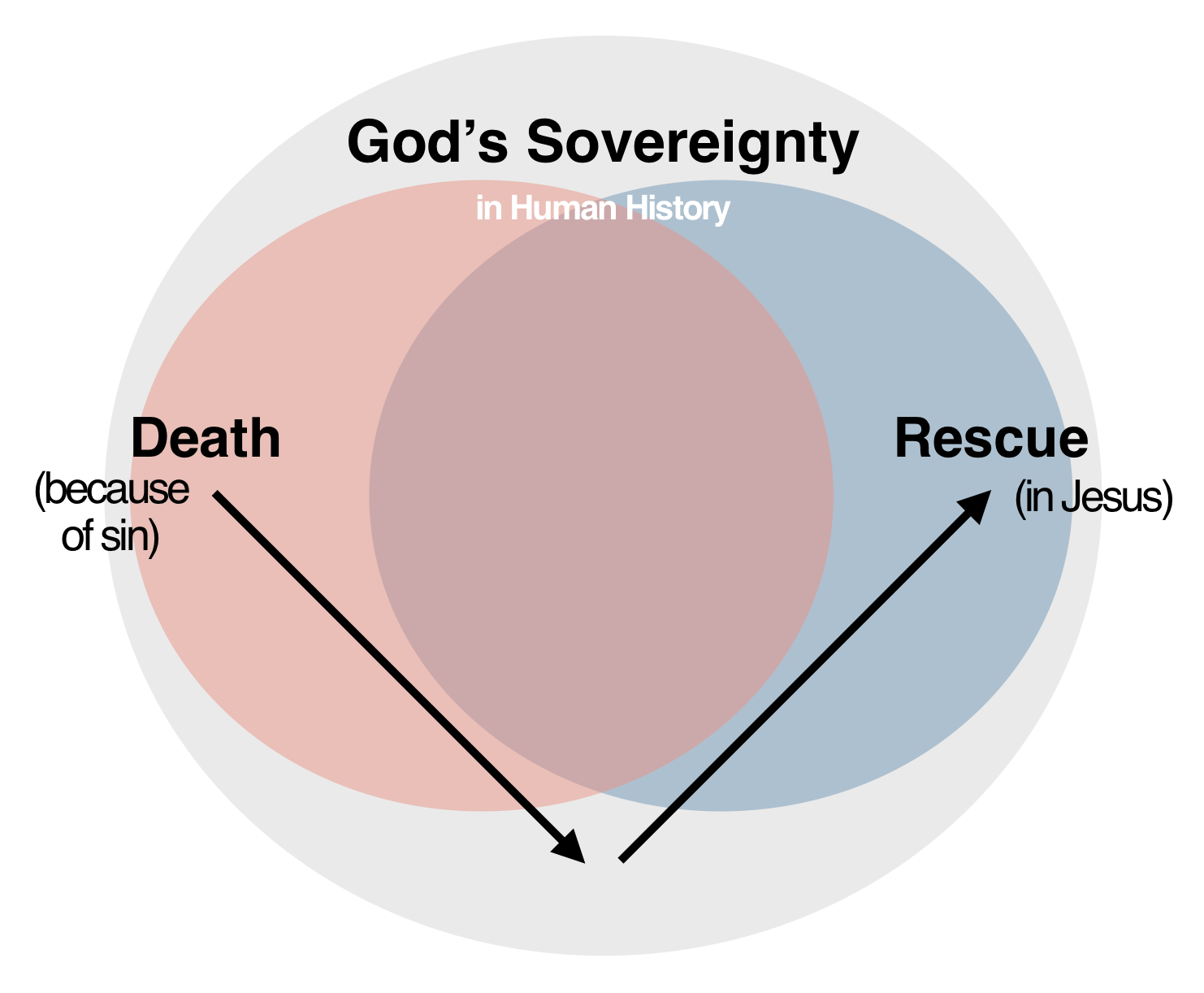
The ultimate reversal is that victory comes through the cross. God works, and has always worked, in unexpected and glorious ways.
Lee Beach, the author of The Church in Exile, has said, God “is able to use marginalization and weakness for his missional purposes, and the church in the post-Christendom age needs to embrace this very Esther-like perspective at its core as it seeks to be the people of God in a foreign culture.”[17]
Conclusion
So friends, even as we face challenges in the changing world that we find ourselves in, we know that we serve the LORD who is all-powerful even when we can’t see Him. Even when we can’t see Him present, we can trust His promise. He will be with us. He will help us.
We know that He, in Messiah Jesus, has already provided the rescue we most need. So, we continue to live faithful lives in hope and trust.
Lastly, I have a challenge for you. One recent study by the Pinetops Foundation has said, “The next 30 years will represent the largest missions opportunity in the history of America. It is the largest and fastest numerical shift in religious affiliation in the history of this country… 35 million youth raised in families that call themselves Christians will say that they are not by 2050.”[18] What if God strategically raised you up for such a time as this? What if God want you to be on mission in exile?
To be honest, I don’t know what God is calling me to do about this. I don’t know what he’s calling you to do about this. But, perhaps, God has brought you to this point for such a time as this (cf. 4:14)? I want to take some time for us to pray and reflect on what God is leading us to do about the 35 million youth raised in Christian homes that are projected to leave the path of life for the path of destruction.
Esther took her life in her own hands, risked it all. What might God be calling you to?
Let’s take some time and ask our Father what He would have us do.
[1] Ryken, Ryken, Wilhoit, Ryken’s Bible Handbook, 207.
[2] Of course, it may not mean that the party was 180 consecutive days.
[3] Herodotus, Histories, 3.31.
[4] https://www.prri.org/wp-content/uploads/2016/09/PRRI-RNS-Unaffiliated-Report.pdf.
[5] Ibid.
[6] Haman is an Agagite which means he was a Canaanite which were longtime enemies of the Israelites. This comes into the plot of the story later on but this point is not made explicit.
[7] Charles F. Pfeiffer, Old Testament History, 489. That book, however, was published in 1973 so the figure would be higher today.
[8] Herodotus talks about such a book in Histories 8.85, 90.
[9] “Reversal seems the most important structural theme in Esther” (Dumbrell, Faith of Israel, 300 as quoted in Schreiner, The King in His Beauty, 224).
[10] Lee Beach, The Church in Exile, 79.
[11] John S. Dickerson,The Great Evangelical Recession, 126.
[12] Illustrated Summaries of Biblical Books by the Bible Project. “Even though God is never mentioned, Yahweh is King, and the Jews are his people. No plot to annihilate them will ever succeed, for Yahweh made a covenant with Israel and will fulfill his promises to them. The serpent and his offspring will not perish from the earth until the final victory is won, but they will not ultimately triumph. The kingdom will come in its fullness. The whole world will experience the blessing promised to Abraham” (Thomas R. Schreiner, The King in His Beauty, 225).
[13] Dever, The Message of the Old Testament, 462.
[14] Elliot Clark, Evangelism as Exiles, 42.
[15] See Dever, The Message of the Old Testament, 457ff.
[16] See Ibid.
[17] Beach, The Church in Exile, 79.
[18] “The Great Opportunity: The American Church in 2050,” 9. This is a study put out by the Pinetops Foundation.
Rule #8: Respect and don’t steal other’s property.

“You shall not steal” (Ex. 20:15).
We might be tempted to think that stealing isn’t relevant to us. We know it’s wrong and we don’t do it but that just might not be the case.
I was convicted of stealing when I was in college… I was stealing and I went to a Christian college. What was I stealing do you think?… Music. I was pirating music…
There are a lot of things people do that often is not considered stealing when it really is.
So, what does God say about stealing?…
1) What does God says about stealing?
God says, “You shall not steal” (Ex. 20:15). So, what does it mean to steal? It means to take something that doesn’t belong to you or to receive something in an unlawful way.
Even taking supplies from the church, from a hospital, or even a hotel is stealing. I read, “one hotel reported in its first year of business having to replace thirty-eight thousand spoons, eighteen thousand tiles, three hundred and fifty-five coffee pots… one hundred Bible!”[1]
So, there is all sorts of ways that stealing happens. “You don’t need to put panty hose over your face and sneak into a house to be a thief. You can steal in broad daylight, in the marketplace, whenever you defraud or deceive. ”[2] Scripture demands honesty in all our dealings no matter how small and insignificant they may seem (see e.g. Lev. 19:35; Deut. 25:15).
Stealing is more of a problem then it might at first seem. There is stealing, for example, on both sides of credit cards. “In recent decades credit card debt has risen from five billion to more than five hundred billion dollars.”[3] Not only that, but “each year Americans spend more money on various forms of gambling than they do on food or clothing.”[4]
One catechism says, “God forbids not only outright theft and robbery, but also such wicked schemes and devices as false weights and measures, deceptive merchandising, counterfeit money, and usury; we must not defraud our neighbor in any way, whether by force or by show of right. In addition God forbids all greed and all abuse or squandering of his gifts.”[5]
The Ten Commandments are hard but good. They function like a mirror. They show us our sin.
Read More…


