The Thesis and Anti-Thesis on Life and it’s Negation

Life is futile. A senseless waste. We live, we die. That is it.
We squeeze out meaning. Or inject it into our veins. We run, but we know not for what, and then expire. We build our castles and pile up things. Then we die.
The sun rises and sets or spins and spins. Seasons come, seasons go. We grow old. We die. The same remains until the sun burns out and we grow cold.
All is futile.
There is no meaning, accept what we make. So fill your coffer, kill the pain. Feed your pleasure, though a monster it becomes.
Thus is life if there’s no hope beyond the grave.
Yet, if this is the sleepy land and we wait for what is true life then this is but the testing ground. We plant what grows for us there. If we make our meaning here, then we destroy it there. If we are lethargic and vague in pursuit then we’ll obtain the wind.
Our Chronological and Geographical Snobbery and Our Need for a Standard Beyond Ourselves

Science is about what is and can never be about what ought be. Thus, left to our own devices, left to science and our subjective view of what ought to be, we are left with a “might makes right” morality. We are left to Nietzsche and Nazism, to Stalin and suffering. We need a standard that science with all its greatness cannot give us. We need a salvation that science with all its greatness cannot give us. Science, what is, without what ought be, a moral standard beyond us, will inevitably lead to the moral atrocities committed in concentration camps.
Hitler and Nazism justified extermination camps based on what they thought was a good rationale. The U.S. Supreme Court ruling on Dread Scoot vs. Sandford shows that humans are not omniscient. Even now in the 21st century. We will continue to make grave mistakes if we continue in our historical snobbery and arrogant pride and disregard all previous history. As we say “we’ve arrived, we know,” we quote many dead civilizations. I guess we might say with those civilizations, “we’ve arrived” …to our tomb.
We can look down our nose at the Aztecs for their bloody sacrifices. But then, they didn’t know any better. We can look in disdain at Baal worshipers and their practice of baby sacrifice. Perhaps we can even look to Africa, India, and Islam and disdain some of their practices. But, here in the States, here where we lay more babies down each day then what the U.S. lost on D-Day, here where “have it your way” is the moral mantra, here there is nothing to be gained. We’ve arrived. We don’t need a moral compass. We are the moral compass.
We’ll follow our impulses. “Might will make right” and “have it your way” will hold sway. We’ll wade in blood. We’ll turn away. Until we drown.
We don’t need the light of history or God’s word. We are god. We make the rules.
We walk in the darkness we’ve created (cf. Is. 59:10ff). We walk on bodies through the cemetery we’ve created. No wonder we don’t want a light.
Is it not plain that we need Truth, Jesus the Lord of life and the Great Light of the world, to shine away our darkness (Is. 35:5)? We need the Lamb to set on the throne and be our Shepherd (Rev. 7:14-17). All other leaders fail. Scientists and Presidents cannot and will not bring salvation or what finally ought be. The One in the beginning that said it was very good (Gen. 1:31) alone can make it good again (Rev. 21:1ff). The LORD in the face of Jesus Messiah is our sure hope.
Sin is Not Good #2
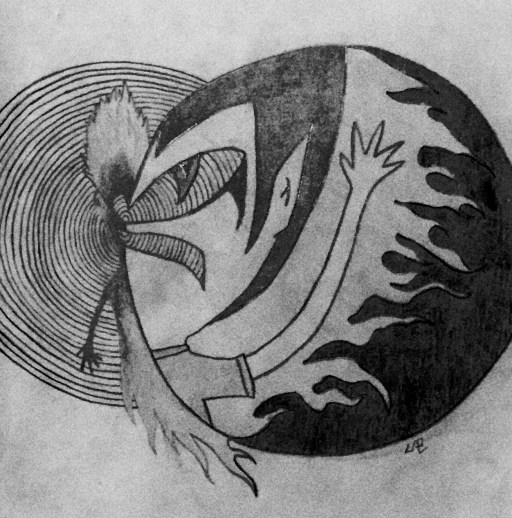
Sin is a Rebellion and a Rampage
Sin is moral. It is an act against God. It is a transgression against God’s law. But not only His law but also His good plan.[i] Sin is not merely moral or highhanded treason it is also a rampage because it is mad; that is foolish, a form of insanity. It goes against good sense. It is a rampage because sin destroys the good.
We have all seen the pain and sorrow that moral derogation has wrought in our lives. We see it for instance in sins of others against us and those close to us, we see it in sins which we have sinned against others, we see it in the world at large (e.g. my parents were divorced, a very close friend of mine was molested as a child, and a friend of mine that struggled with drug addiction committed suicide). There is, for sure, a law written on all our hearts, we go against it to the shame and suffering of humanity; and yet, we all do indeed go against it.
Humanity has and needs a moral standard. This points us to the Creator who gave it to us when He created us in His image. However, it also points us to the Fall. We all fail to measure up to the standard. We can all think of a hypothetical world where everyone followed these standards and where the result was great happiness. Yet, this is not the case. We do not follow these good (innate) standards. How odd. We know the good we ought to do, or at least that there is “a good,” and yet fail to do it.
Sin leads to terrible depraviltiy, hopelessness, and disregard for humanity or anything good. This is vividly portrayed, for example, in Cormac McCarthy’s post-apocalyptic book The Road. We don’t want to suffer what is portrayed there. We don’t even want to think of the horrors of Dachau and Auschwitz. We all know the wickedness of Adolf Hitler, Pol Pot, and Joseph Kony. Yet perhaps their nearly unbelievable atrocities allow us to belittle (in our conscience) our own wickedness. However, even if our sin is so-called “low-grade wickedness” it is the equivalent of their sin, just on a micro level. It has the same seed, though perhaps it hasn’t came to full bloom yet.
What must be realized is that all sin is a movement towards un-creation.[ii] In C.S. Lewis’ words, through sin man becomes the “unman.” Through sin everything that was very good (see Gen. 1:3, 10, 12, 18, 21, 25, 31) becomes cursed instead. Sin covers beauty, boasts in badness, and hides from the supreme joy we all seek. Sin is a rampage.
Sin is a leech and parasite. It lives off of and feeds on life and vitality.[iii] And it kills it. Bleeding it away little by little until the carrier is completely eaten away and destroyed. Note that this death, though complete, can be imperceptible.
Sin leads to de-creation as well as desecration. Humans were made in God’s own image yet through sin that image has literally been put into dirt; man becomes dirt and ashes from whence he came (hence de-creation). From perfection to misdirection, from shalom[iv] to shattering. Everything has come undone. The creation groans with longing. Sin is not merely moral. It is the decay of all things. Sin wrought a wreak and we are still wheeling and writhing in pain.[v]
Thus, sin is not good not only because it is moral rebellion against a good and all-powerful God but also because it is a rampage against His good creation.
_______________________________
[i] “Sin represents an attack upon the harmony of the created order, and not merely a moral lapse” ((Revd Victor James Johnson, “Illustrating Evil – The Effect of the Fall as seen in Genesis 4-11,” 60 in Melanesian Journal of Theology 11-1&2 [1995]). If Jesus is the exact image of God and we were created in God’s image then as we image Jesus—as we are recreated—then we get closer to our beginning, closer to where we were created to be; actually quite a bit beyond that. So in Christ and His truth we are being renewed but through Satan and his lies we are becoming undone. The cosmos is breaking up and will finally be dissolved because of sin and yet remade in and because of Christ.
[ii] “Evil is the force of anti-creation, anti-life, the force which opposes and seeks to deface and destroy God’s good world of space, time and matter, and above all God’s image-bearing human creatures” (N. T. Wright, Evil and the Justice of God, 89)
[iii] “Sin is always the corruption of something good. Its existence is parasitic; it borrows, or rather usurps, its reality from whatever it corrupts” (H. A. G. Blocher, “Sin,” 784 in New Dictionary of Biblical Theology).
[iv] “In the Bible, shalom means universal flourishing, wholeness, and delight… a state of affairs that inspires joyful wonder as its Creator and Savior opens doors and welcomes the creatures in whom he delights. Shalom, in other words, is the way things ought to be” (Cornelius Plantinga Jr., Not the Way It’s Supposed to Be: A Breviary of Sin (Grand Rapids, MI: Eerdmans, 1995), 10; italics original).
[v] Abnormal, sick, unhealthy, dysfunctional, maladjusted, or pathological—“wherever anything wrong exists in the world, anything we experience as antinormative, evil, distorted, or sick there we meet the perversion of God’s good creation” (Walter M. Wolters, Creation Regained, 55).
Dispossessed

Deconstruction,
interruption of joy
This the plane on which we play
We search for joy
yet buy into a ploy
(that retards our chase)
Oh this race,
we’re broken
Rocked and writhing from the Fall
We crawl into the grave,
disarranged
We buy into the lie
and then we sell it
We run, and run, and run
and fall into the pit we dug
We raze shalom
and raise Sheol
We damn the good
and embrace Gehenna
We are surely dispossessed,
East of Eden
Learning from Literature: Uncle Tom’s Cabin

This is a gripping book in many ways. I think every American should read it. It has brought me to tears on more than one occasion. History is an important teacher. It can smack you in the face with past realities so that you don’t get smacked in the face by present ones. We, as Christians, must be discerning, and realize that the same foil may come in a different guise.
Uncle Tom’s Cabin reminds us that Scripture is often interpreted in the darkness of cultural situations without the light of a clear and unbiased perspective. As soon as society changes so will the interpretation of the text. Where are the Harriet Beecher Stowes who will stand up for what the text is saying however unpopular it may be? As Stowe said, if the cotton trade was no longer needed people’s understanding on slavery would be changed, there previous “understanding” would no longer be needed.
Of course, the issue then was slavery but Stowe makes a valid point for any day. Hermeneutics (i.e. the science of interpretation) seeks to understand what the text means.[1] However, we often view the text in light of our own context instead of the original context. We interpret texts many times to mean what we want them to mean and not what they really mean. We put a spin on things to suite ourselves. It is much like what the media can do with a sound bit. If you look at words out of their context, you can make them mean almost whatever what you want. We should take hints from history and seek to not make the same blunders.
What texts or issues do we dismiss outright or misinterpret to our benefit? Who or what are you avoiding listening to or reading? I am inclined to think that our (my!) use (or ill use) of money is one area where we tend to reinterpret Scripture.[2] Or what about God’s command for us to be holy? It’s pretty easy to knock that command down to moral, isn’t it? We think: other people watch this movie, even other “good” people. Yet, did you see where the thinking went wrong? We are not merely commanded to be good, moral, or culturally acceptable; we are called to be set apart as God’s own people. God’s holiness is our standard. Not our neighbors.
________________
[1] Which implies application. You don’t truly understand something until you understand how it applies… further, you might say you don’t truly understand something until it is applied. At least, I think this is the case with Scripture.
[2] I realize that there has been a lot of harm done in this area by people laying legalistic blanket commands that are neither helpful nor biblical. Yet, the Bible and Jesus do speak much of, and strongly about, wealth and the stewardship that we have of it. So what I am saying is we must make sure that we are not just dismissing texts on wealth and the right use of wealth but honestly evaluating what God is calling us to. It is too easy, as history demonstrates, to be blinded by the now. This applies to wealth, it applies to many things.
True Knowledge Should Truly Humble

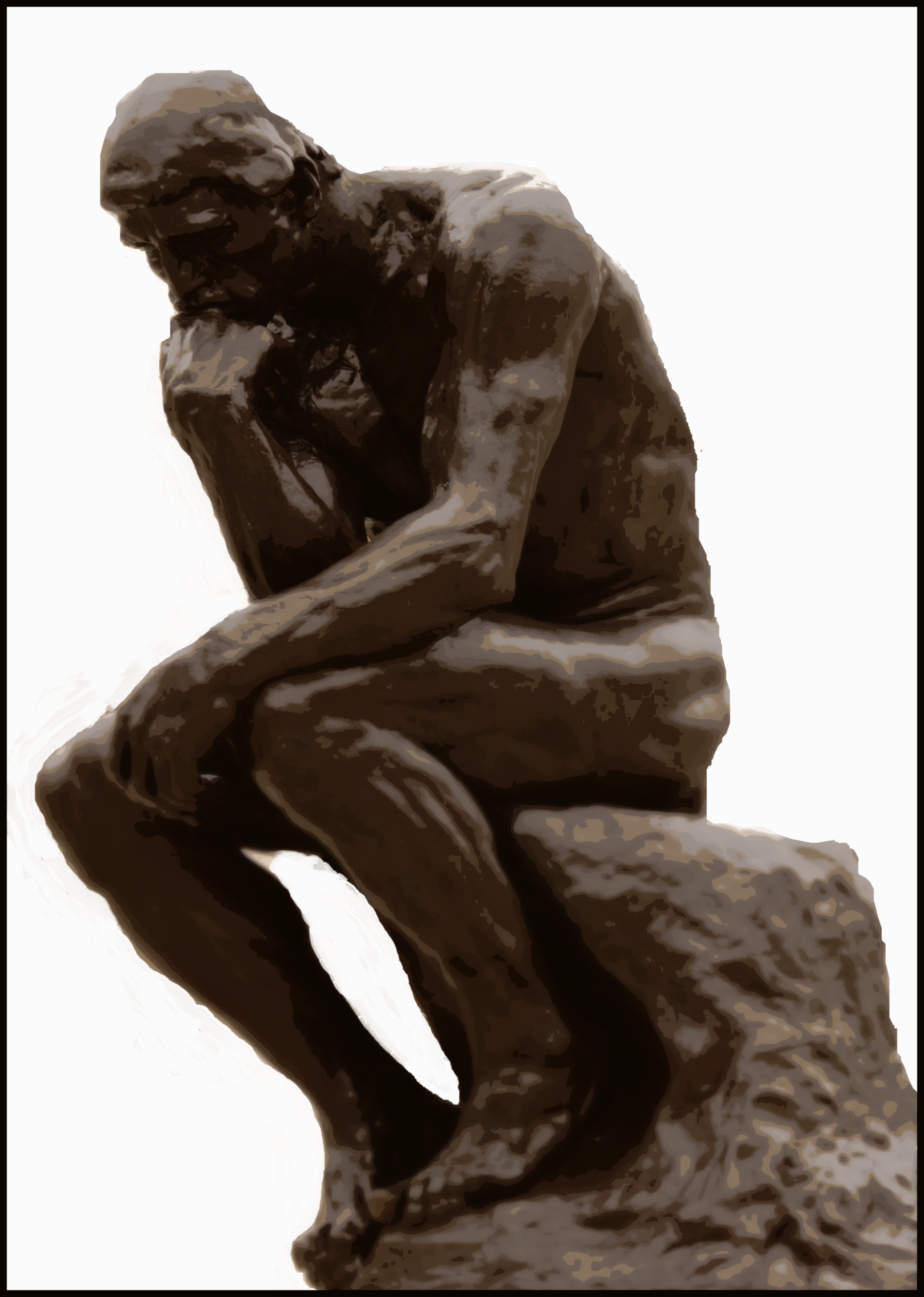
Knowledge[1] is dangerous. Not only the consequence that ideas themselves have but also the tendency that knowledge has to puff up. Truths that should lay us low in humility often conflate our egos. Paradoxically, knowledge is also the very thing that humbles.[2] We may not be proud without knowledge but neither will be humble. We will be ignorant. Knowledge is dangerous. Albeit, a necessary danger.
Knowledge is indispensable to live life rightly. We must understand though, that knowledge is not innate within us. It must be pursued. However, the very fact that knowledge is external should press us to pursue it in humility. It is not ours. We do not have the market on knowledge. Also, if we pursue it arrogantly we will miss much of it (Prov. 3:5-6; 15:14, 22). We should realize that not only is knowledge external from us but so is the desire for knowledge. We should not think we are better than the ignorant because our very desire for knowledge is itself a gift (James 1:17).
The desire for knowledge with the goal of being humbled is good. The fear of the LORD is the beginning of knowledge and humility comes before honor (Prov. 1:7; 9:10; 15:33; Job 28:28). Jesus pronounces woes upon the Pharisees, not for their knowledge, their knowledge is commendable, but on the result that their knowledge had upon them. It did not humble them (Matt 23:5-7, 11-12). The publican had little knowledge but it served to humble him. If we truly understand, if the eyes of our hearts are enlightened, we will praise God and not ourselves. We can have all knowledge but if we have not love, it profits us nothing (1 Cor. 13:1-3).
Thomas A Kempis said in The Imitation of Christ that “On the day of judgment, surely, we shall not be asked what we have read but what we have done; not how well we have spoken but how well we have lived.” That is not to say that knowledge is not important, it is. However, knowledge that does not lead to life change and humility is worthless and condemning. The person that knows the right thing to do and does not do it for that person it is sin (James 4:17). Kempis rightly says, “The more you know and the better you understand, the more severely will you be judged, unless your life is also the more holy. Do not be proud, therefore, because of your learning or skill. Rather, fear because of the talent given you.” God will judge us according to all that He has entrusted to us (see Matt. 25:14-30).
As our minds rise to exalted things, our consciousness of ourselves must fall. Truth humbles, or it is not understood to be truth to ourselves. Again Kempis says,
“What good does it do to speak learnedly about the Trinity if, lacking humility, you displease the Trinity? …I would rather feel contrition than know how to define it. For what would it profit us to know the whole Bible by heart and the principles of all the philosophers if we live without grace and the love of God?”
Knowledge is vital, we cannot serve or know the LORD without it, but knowledge must always humble.
How do we fight the damning affect that knowledge so often has? It all has to do with our motivation from the outset. As J.I. Packer has said, in his classic book Knowing God, “there can be no spiritual health without doctrinal knowledge; but it is equally true that there can be no spiritual health with it, if it is sought for the wrong purpose.”[3] Do we study the Trinity to be in awe and wonder before the God who is three-in-one? Or do we study the Trinity to look astute before our peers? The choices are not restricted to arrogance or ignorance but we have to fight for the last alternative, humility. If we go the way of ignorance we will never know humility, who or what would we be humbled before? And arrogance is the misapplication of knowledge. It is a pursuit of knowledge with the wrong goal in mind. Do we read science journals and Scripture to merely gain knowledge? Or do we do it to be humbled by the God that formed the furthest reaches of the galaxies and yet revealed Himself to us; yea, atoned for our sins (cf. Heb. 1:3)?
Pursue knowledge. Pursue it in whatever field. But do so in humble worship with your ultimate end being to glorify God. May we be amazed by and enraptured in the truths of Scripture as children. May we continually go to God humbly in awe of Him and His truth that is contained everywhere around us for God gives grace to the humble (James 4:6).
~Whatever you study or seek to know, do it all to the glory of God~
______________________
[1] I say “knowledge” and not any specific stream of knowledge because I believe that all truth is God’s truth. What I mean by knowledge is knowledge that is true, true truth, as Schaeffer put it. This could be in the realm of science, math, history, etc. All truth is God’s truth because God upholds the universe by the Word of His power thus all mathematical equations are held together by His hand. Science shows us the extent to which the glory of God is manifested in His universe (as Johannes Kepler said, “science is thinking God’s thoughts after Him”), all history is a story of God unfolding Himself and is actually a testimony of His grace to redeem such as we are.
[2] Richard Baxter rightly says, “If we have any knowledge at all, we must needs know how much reason we have to be humble; and if we know more than others, we must know more reason than others to be humble” (The Reformed Pastor, 144).
[3] J.I. Packer, Knowing God, 22. He further says, “if we pursue theological knowledge for its own sake, it is bound to go bad on us. It will make us proud and conceited” (21). Rather “our concern must be to enlarge our acquaintance, not simply with the doctrine of God’s attributes, but with the living God whose attributes they are” (23).
Scripture is Sufficient to Address our Problems

The Bible gives us more than mere commands. It gives us the proper lens whereby to understand life.[1] The psalmist says that God’s Word is a light to our path (Ps. 119:105; cf. Ps. 1; 119:44-45; Prov. 6:23; 2 Tim. 3:15-17; 1 Peter 1:23; 2 Peter 1:3-4).
What does it mean that God’s Word is a light to our path? Here’s a friend’s story. It was dark and pine trees overhung and blocked any light from wandering onto the path. The moon and stars may have been bright but you couldn’t tell.
My friend was camping with some guys. It was late. Everyone was in for the night. But he had to go to the bathroom. Luckily he had a flashlight. He made it to the potter-pot, over a football field length away, with no problems. On the way back, however, the light flickered and went out.
My friend was in trouble. But he thought if he just walked slowly he would be ok. He would softly pat the ground in front of him and once he was convinced it was the road he would continue. Well, after walking like this for a while he became pretty comfortable and confident. He began to walk faster.
He was making good time walking. When he walked right off the road. He tripped on something, maybe a skunk for all he knew, and fell down a hill. Luckily he didn’t fall all the way down the hill. He was stopped by a tree. Actually, he was stopped pretty abruptly. Eventually, he regained his composure and crawled back up the hill.
After about an hour his friends were wondering where he was. So they sent out a “search party.” They found my friend crawling in the wrong direction. He was a little bruised and battered. But his pride was worse off.
My friend now knows the vital importance of having a light to light the path!
Having a “light” is no less important in life. It is actually more important, a lot more. There is more to fear than a tree or being found by your friends crawling in the wrong direction.
It is wrong to approach the Bible like a magic encyclopedia. It does not address every issue. Or, at least, not in the same way. However, it is fundamental to every issue. It gives the foundation on which to build. It is the ever-present and needed North Star. It is the compass pointing the way.
However, as John Piper works out in his article “Thoughts on the Sufficiency of Scripture”:
The sufficiency of Scripture does not mean that the Scripture is all we need to live obediently. To be obedient in the sciences we need to read science and study nature. To be obedient in economics we need to read economics and observe the world of business. To be obedient in sports we need to know the rules of the game. To be obedient in marriage we need to know the personality of our spouse. To be obedient as a pilot we need to know how to fly a plane. In other words, the Bible does not tell us all we need to know in order to be obedient stewards of this world.[2]
Scripture is not all we need. But we surely need it! And we especially need it to address moral and spiritual issues.
Eric Johnson points out that Paul “does not say that the Scripture contains all the soul-care information there is—all the knowledge that God has regarding the care of souls—or that all extrabiblical information that bears on human nature and counseling is irrelevant or useless or sin.”[3] Instead, he says, “The Bible contains what might be called the first principles of soul care—the most important truths for the maturation of the soul—and so it provides the God-breathed foundation for a radically Christian model of soul-healing.”[4]
So, how then is Scripture sufficient to address our problems?
First, Scripture gets to the most fundamental and important questions in all of the universe. It answers the questions: Does God exist, How did we get here, What is wrong with the world, what should we do with our life, what happens after this life, and other massive and important questions.
Second, Scripture tells us how we can receive salvation in Christ and live in Christ.[5] Thus the Bible tells us how to be transformed. David Powlison says, “The gospel of Jesus Christ is as wide as human diversity and as deep as human complexity. The Scriptures that bear witness to this Christ in the power of His Spirit are sufficient to cure souls.”[6]
Third, and something I have hinted at, the Bible gives us a lens in which to see the world. It is, again, the light to our path. John Calvin used the illustration of spectacles to explain this (Institutes 1.6.1). He said that the Bible is not only what we read, but what we read with. We use its pages as spectacles to view and read the world and the knowledge God has distributed throughout it.
Though Scripture may not be the only helpful text, it is the only necessary text. Further, and not surprisingly, God’s Word must be the authoritative text. God’s Word is the last word. That is not to say, however, that there are no other helpful resources. There certainly are. And it is in wisdom to make use of them. But, let it be clear, they must always be subordinate to the Word of the LORD.
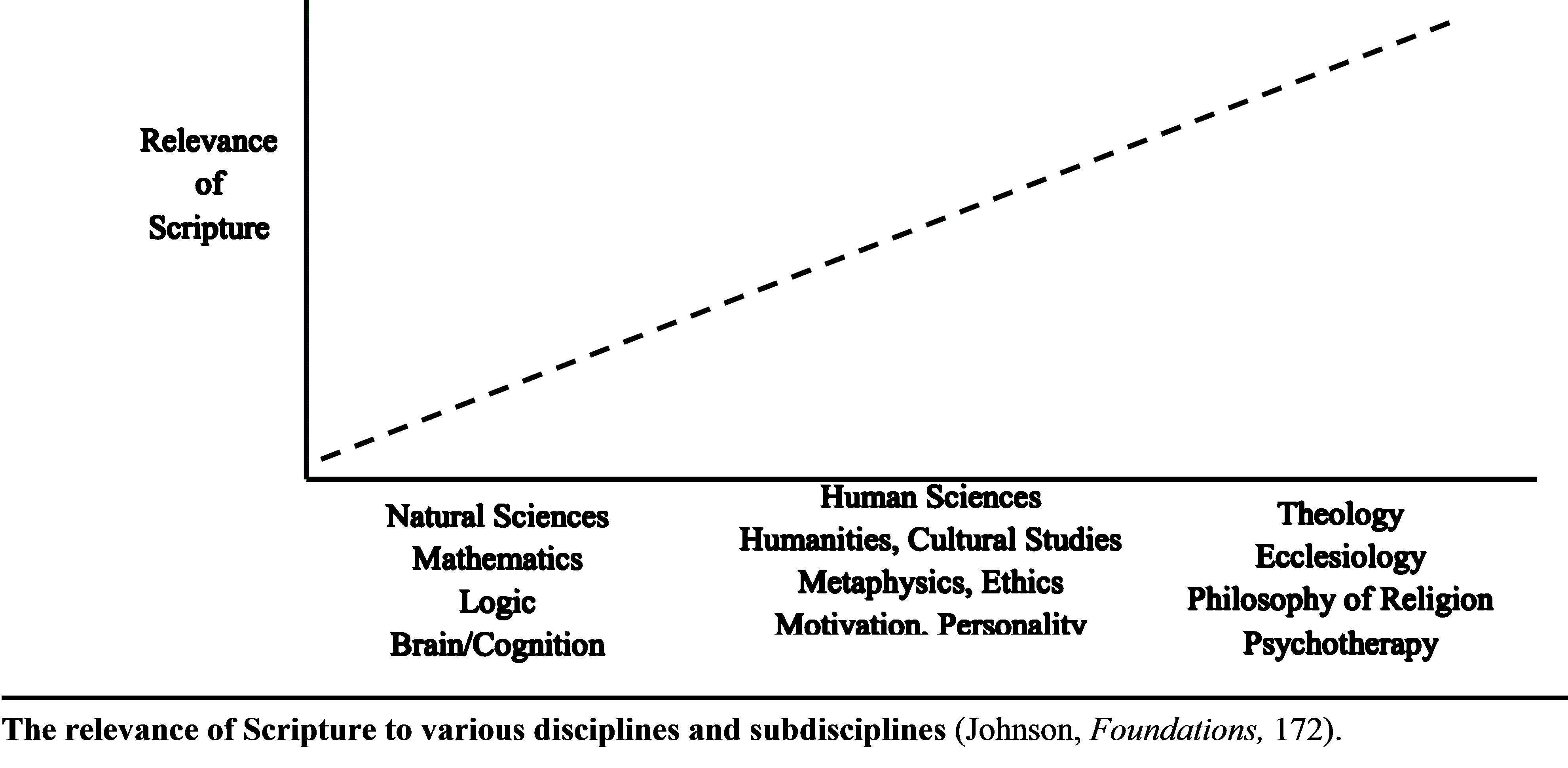
God’s truth, as truth, is invaluable. God’s truth, as truth, is also immensely practical. It is practical for addiction.[7] It is even practical for aviation. Though, as the figure above points out, Scriptures relevance various depending on the topic. Scripture has less relevance in aviation. Yet, even in aviation Scripture is still important. For instance, it is through Scripture that we see that there is a God that rules the cosmos and thus we have laws that govern the realm in which we live. Laws that allow for flight under certain conditions. We see that the pilot must strive to be the best pilot he can be to the glory of God. We see that the pilot must praise the Lord who made the expansive world in which he lives. So we learn a few things that apply to aviation. However, we are not taught how to fly a plane. We are not taught how much fuel a plane will consume under various operating conditions.
Scripture does and does not address every relevant fact in the universe. It does address everything in that through Scripture we know the beginning and telos (goal) of all things. Yet, if obviously does not address every single datum of information. What it does is grander. More useful even.
The Word of God is truth. Guides us in truth. Makes us holy (Jn. 17:17). I realize this is not an apologetic,[8] but I can’t help but say with C. S. Lewis that I believe in Christianity and the Bible as I believe that the sun has risen. Not only because I see it, but because by it I see everything else.[9] “To the man enlightened by the Spirit, Scripture is no longer a bewildering jumble of isolated items… Part chimes in with part, Scripture meshes with Scripture, and the unified bearing of the whole Bible becomes apparent. The accompanying experience of the ‘taste’, or ‘flavour’ of spiritual realities is immediate and ineffable.”[10] Again, this is not something I can prove, it is a work of the Spirit. God the Spirit transforms by means of the Word of God. This is the biggest testimony of the sufficiency of Scripture; whether or not there is irrevocable evidence to prove it.
I will further say, that because God’s Word is truth, it gives us an accurate view of reality and of ourselves in that reality. “A true self-understanding is only possible in response to the word of God.”[11] Without God’s Word we are left to our own devices. We are left relying on a desperately wicked heart (Jer. 17:9). “Understanding Scripture promotes our understanding of God, ourselves and the way of salvation, so it is indispensable for our psychospiritual well-being (and for Christian soul care).”[12]
Look at what a proper, biblical understanding of our identity does: The Christian religion alone expels both the vice of pride and despair through the simplicity of the Gospel.
For it teaches the righteous, whom it exalts, even to participation in divinity itself, that in this sublime state they still bear the source of corruption, which exposes them throughout their lives to error, misery, death and sin; and it cries out to the most ungodly that they are capable of the grace of their redeemer. Thus, making those whom it justifies tremble and consoling those whom it condemns, it so nicely tempers fear with hope through dual capacity, common to all men, for grace and sin, that it causes infinitely more dejection than mere reason, but without despair, and infinitely more exaltation than natural pride, but without puffing us up. This clearly shows that, being alone exempt from error and vice, it is the only religion entitled to reach and correct mankind.[13]
So, as Eric Johnson has rightly pointed out the Bible claims to be and is a soul-care book.[14] “The Old and New Testament Scriptures together… have a virtue-shaping function… With the Holy Spirit’s aid, the Word of God reconfigures the minds of believers, recalibrates their hearts and reshapes their lives, moving them, communally, into an increasingly theocentric way of life.”[15]
God’s Word is truth and we are sanctified by it (Jn. 17:17). God’s Word is relevant. God’s Word is practical. God’s Word is sufficient.
_________________________________
[1] Michael Hortan says that “Theology is the lived, social, and embodied integration of drama (story), doctrine, doxology, and discipleship. I am suggesting that hearing the covenantal Word of our Lord is the source of that dethronement of the supposedly sovereign self and of the integration that subverts the disintegrating logic of Western dualism and individualism” (87). He goes on to say, “The ultimate goal of theology is practical—namely, to reconcile sinners to God in Christ and to restore them to communion with God and each other in true worship” (96).
[2] John Piper, “Thoughts on the Sufficiency of Scripture: What it Does and Doesn‟t Mean.”
[3] Foundations of Soul Care, 119.
[4] Ibid.
[5] Here are some relevant statements on Scripture: The Westminster Confession of Faith says, “The whole counsel of God concerning all things necessary for his own glory, man’s salvation, faith and life, is either expressly set down in Scripture, or by good and necessary consequence may be deduced from Scripture: unto which nothing at any time is to be added, whether by new revelations of the Spirit, or traditions of men. Nevertheless, we acknowledge the inward illumination of the Spirit of God to be necessary for the saving understanding of such things as are revealed in the Word: and that there are some circumstances concerning the worship of God, and government of the church, common to human actions and societies, which are to be ordered by the light of nature, and Christian prudence, according to the general rules of the Word, which are always to be observed” (1.6). “The Scriptures of the Old and New Testament were given by inspiration of God, and are the only sufficient, certain and authoritative rule of all saving knowledge, faith and obedience” (Abstract of Principals). “The Holy Scripture is the only sufficient, certain, and infallible rule of all saving knowledge, faith, and obedience” (The Baptist Confession of Faith [1689]). “We affirm that Scripture, having been given by divine inspiration, is infallible, so that, far from misleading us, it is true and reliable in all the matters it addresses” (XI of the Chicago Statement on Biblical Inerrancy). Wayne Grudem says, “The sufficiency of Scripture means that Scripture contained all the words of God he intended his people to have at each stage of redemptive history, and that it now contains all the words of God we need for salvation, for trusting him perfectly, and for obeying him perfectly” (Systematic Theology, 127). John Frame says “Scripture contains all the divine words needed for any aspect of human life” (John Frame, DWG, 220). He goes on, “Theology is the application of Scripture, by persons, to every area of life” (DWG, 276). I think especially helpful here is David Powlison’s article “Affirmations and Denials: A Proposed Definition of Biblical Counseling” in JBC 19 (2000): 18-25. Also see “On The Sufficiency of Scripture in a Therapeutic Culture” adopted by the Southern Baptist Convention.
[6] David Powlison, “The Sufficiency of Scripture to Diagnose and Cure Souls,” 13.
[7] Scripture surely speaks to the problem of addiction. Interestingly you could put a passage of Scripture alongside each step of many of the Twelve Step Programs. In many ways that is exactly what Celebrate Recovery has done.
[8] In defensive of Scripture I have found Frame, DWG helpful.
[9] Is Theology Poetry?”, The Weight of Glory and Other Addresses.
[10] J.I. Packer, A Quest for Godliness: The Puritan Vision of the Christian Life (Wheaton: Crossway, 1990), 92.
[11] Johnson goes on to say, “Scripture teaches that sanctification involves repentance and forgiveness of sins in Christ… and only within that context can genuine soul-healing occur. God’s word radically changes one’s perspective on one’s psychological predicament” (Ibid. 75).
[12] Johnson, Foundations, 38.
[13] Blaise Pascal, Pensees, 68.
[14] Foundations of Soul Care, 28 see also ch. 2. He says “The Bible is the primary soul care text for the Christian community” (Ibid., 18 italics mine). He says “primary” because he understands that other sources, even secular sources, can be helpful.
[15] Johnson, Foundations, 33.



 in X
in X 