Equality: What it is & where it comes from

In the United States equality is at least expressed to be important. Its importance is seen in people’s views and policies on political participation, education access, views on employment and pay, and disability rights. The Civil Rights Movement has shown that equality is valued by many but not all.
What does equality mean and where did the concept of equality come from? It means the state or quality of being equal. Are there good reasons for believing in equality?
The Assumption of Equality is An Assumption
Naturalism, the belief that no God exists, gives no explanation or reason for equality. People who don’t believe in God or the relevance of God might believe in equality but the belief for them is not based on any foundation. The idea of equality is accepted as true without proof or a solid reason to believe it.
Yuval Noah Harari is a historian, philosopher, and author who received a PhD from the University of Oxford and is a lecturer at the Hebrew University of Jerusalem. I appreciate his candor in this quote from his book Sapiens:
We hold these truths to be self-evident, that all men are created equal, that they are endowed by their Creator with certain unalienable rights, that among these are life, liberty, and the pursuit of happiness. According to the science of biology, people were not ‘created’. They have evolved. And they certainly did not evolve to be ‘equal’. The idea of equality is inextricably intertwined with the idea of creation. The Americans got the idea of equality from Christianity, which argues that every person has a divinely created soul, and that all souls are equal before God. However, if we do not believe in the Christian myths about God, creation and souls, what does it mean that all people are ‘equal’? Evolution is based on difference, not on equality. Every person carries a somewhat different genetic code, and is exposed from birth to different environmental influences. This leads to the development of different qualities that carry with them different chances of survival. ‘Created equal’ should therefore be translated into ‘evolved differently.’[1]
So, Harari rewrites the famous line from the Declaration of Independence: “We hold these truth to be self-evident, that all men evolved differently, that they are born with certain mutable characteristics, and that among these are life and the pursuit of pleasure.”[2]
For the naturalist, equality isn’t really a thing. It is a dream wish. Perhaps maybe pleasant make-believe.
Christians have a Foundation for Equality
The Bible teaches the equality of all humans by saying all humans are made in the image of God (Gen. 1:26-27). It also explains that we are all equally fallen. That is, we all sin and do wrong things. Lastly, it says that salvation is freely offered to all through Jesus.[3]
In Dominion: How the Christian Revolution Remade the World, Tom Holland argues that Christianity has profoundly shaped Western civilization, influencing core values like human rights and equality. It may not be consciously recognized but many Christian beliefs our embedded in society. As Harari has said, we “got the idea of equality from Christianity.”
The belief in human equality and rights, equality of men and women, love for foreigners, and care for the poor, weak, and marginalized are specifically Christian beliefs. History shows us that it was only as Christianity spread that these believes became generally accepted. The ancient Greeks and Romans would have laughed at them.[4]
Christian Equality has a lot of Explanatory Power
“We’ve all got both light and dark inside us. What matters is the part we choose to act on. That’s who we really are.” Sirius Black said this to Harry Potter in one of their last meanings. Humans have complexity as J.K. Rowling is so adept at showing. The Bible agrees. We are complex beings. We are all equally made in the image of God, fallen, and redeemable.
The Bible says we all stumble in many ways (James 3:2). We are all broken. Christians are no less complex. Christians are simultaneously sufferers, strivers, sinners, and saints. So, “The line between good and evil is never simply between ‘us’ and ‘them.’ The line between good and evil runs through each one of us.”[5] Or as Dietrich Bonhoeffer said in prison in Nazi Germany, “Nothing that we despise in the other man is entirely absent from ourselves.”[6]
Therefore, in one sense, Christians should be “culturally wary because they know that evil is real, that everyone is a sinner, that no one is beyond a stumble or a scandal, and that human beings are capable of some devious deceptions and horrific thoughts, words, and acts.”[7] Yet, in another sense, Christians should also be cultural optimists “because they know that no matter how grim and hopeless sin makes the world or how wretched sin makes an individual or a group, it does not define us at our deepest level, and it is an imposter that has no ultimate claim on anyone, whoever they may be and whatever they may have done.”[8]
Christianity gives a realistic and complex picture that explains the paradoxical nature of people.
If we lose Jesus, we lose our bases for Equality
I appreciate how Rebecca McLaughlin says it:
Even if historians agree that our moral building blocks came to us from Christianity it’s tempting to think we can keep the values we cherish while gently removing the claims about Jesus Himself. Like easing out a bottom layer Jenga block, perhaps we can build our moral tower higher without belief in God at all. But extracting Jesus from our moral structure isn’t like gently sliding out a Jenga block. It’s like pulling the pin on a grenade. In the resulting explosion we don’t just lose morality, are sense of meaning blows up too.”[9]
This is the case because if Jesus is not real and right, the next most plausible explanation is that of Harari or Nietzsche.
Conclusion
Secular culture assumes equality but gives no basis for it. Christianity, and specifically Jesus, gives a solid footing for equality. Without Jesus equality is on a shoddy structure and is destined to fall. In other words, if Jesus is make-believe so is equality. On the other hand, if Jesus and His ethic are real, we can’t mix and match to our liking. He is either a liar, lunatic, legend, or the Lord. But if He is anything other than the Lord, His emphasis on equality evaporates with Him.
Notes
[1] Yuval Noah Harari, Sapiens: A Brief History of Humankind, 109.
[2] Harari, Sapiens, 110.
[3] See Christopher Watkin, Biblical Critical Theory: How the Bible’s Unfolding Story Makes Sense of Modern Life and Culture, 116.
[4] Rebecca McLaughlin, Is Christmas Unbelievable?
[5] N. T. Wright, Evil and the Justice of God, 38.
[6] Dietrich Bonhoeffer, Letters and Papers from Prison, 10 as quoted in Biblical Critical Theory, 128.
[7] Watkin, Biblical Critical Theory, 168
[8] Ibid.
[9] McLaughlin, Is Christmas Unbelievable?
Photo by Jacek Dylag
Is the Bible Reliable?

Christians believe that the original manuscripts of the Bible give us God’s authoritative words, and we have very accurate copies of those original manuscripts. As the Bible says, God’s word will not pass away (Psalm 119:89; Isaiah 40:8; Luke 21:33; 1 Peter 1:23, 25).
We do not have an original copy of any piece of the New Testament (an “autograph manuscript”). The process known as textual criticism, however, helps us get back to what was originally written. What would have happened with the original writings of the New Testament, the autograph manuscripts, is they would have been carefully and painstakingly copied and then passed on to the next group of early Christians to carefully copy. These copies would have then been copied as well. Eventually, the original writing would get worn and torn.
We do not have original copies, but we have manuscripts that are very close to the date of the autographs. One of the amazing things about the New Testament is the sheer number of copies we have as well as how close they are to the original manuscripts, both in accuracy and date.
There are three main types of manuscript variants. Daniel Wallace, a specialist in Koine Greek and New Testament textual criticism, says that over 99 percent of textual variants don’t affect the meaning of the text, are not viable, or “don’t have any likelihood of going back to the original, or both.”[1] The largest category is spelling difference. “This accounts for over 75% of all textual variants.”[2] The second “largest category involves synonyms, word order, or articles with proper nouns.”[3] Neither of these categories impacts the message of the text in any meaningful way. There is a third and much smaller category, however, in which the meaning of the text can be affected. Two examples are the long ending of Mark (Mark 16:9-20) and the woman caught in adultery (John 7:53-8:11). In this third category, manuscript evidence must be weighed and considered. But even in this last category, no Christian doctrine is changed. Even Bart Ehrman, a popular New Testament scholar who is not a Christian, has written, “Essential Christian beliefs are not affected by textual variants in the manuscript tradition of the New Testament.”[4]
We can be sure that we accurately have the words of God, but in a few places, we have needed to get back to the words of God, so we have had to trim back what is not supported by the manuscript evidence. So again, that’s what there are notes in most Bibles about the long ending of Mark and the woman caught in adultery.[5]
It should also be understood that “many textual variants exist simply because many ancient manuscripts exist. The amount of the manuscript evidence is one thing that makes the New Testament stand out among other works of antiquity.”[6] Other ancient works are supported by a dearth of manuscripts. Of course, with fewer manuscripts, you have fewer variants, but you also have less evidence to weigh to get you back to the original work.
The Bible’s number of manuscripts is especially impressive considering the Roman emperor Diocletian’s “Edict against the Christians” during the Great Persecution. In Eusebius’ Church History, he talks about the edict “commanding that the churches be leveled to the ground” and the Scriptures be destroyed by fire.[7]
So, is the Bible historically reliable? The Bible reports actual historical events and the manuscripts for the Bible are very reliable. Nothing in ancient literature matches the historical documentation of the Bible. Nothing comes close.
Compared with other ancient writings, the Bible has more manuscript evidence to support it than any ten pieces of classical literature combined.[8]
The reliability of the New Testament history is overwhelming when compared to that of any other book from the ancient world.[9]
The New Testament is easily the best-attested ancient writing in terms of the sheer number of documents, the time span between the events and the documents, and the variety of documents available to sustain or contradict it. There is nothing in ancient manuscript evidence to match such textual availability and integrity.[10]
Christians can be confident that most English translations of the Bible are fair representations of what the biblical authors wrote. A vast number of variants exist only because a vast number of ancient, hand-copied manuscripts exist. No textural variant anywhere calls any essential Christian doctrine into question or indicates completely different, competing theologies among the New Testament authors. We have not lost the message of the text. God has preserved his Word, and the text’s wording is trustworthy.[11]
In comparison with the average ancient Greek author, the New Testament copies are well over a thousand times more plentiful. If the average-sized manuscript were two and one-half inches thick, all the copies of the works of an average Greek author would stack up four feet high, while the copies of the New Testament would stack up to over a mile high![12]
Here’s a table[13] so you can see a visual representation of the manuscript data:

Therefore, “to be skeptical of the resultant text of the New Testament books is to allow all of classical antiquity to slip into obscurity, for no documents of the ancient period are as well attested bibliographically as the New Testament.”[14]
The Bible is historically accurate and other historical works collaborate information we see from the Bible. Tacitus, a first-century historian, wrote this about the early Jesus movement:
Therefore, to scotch the rumour, Nero substituted as culprits, and punished with the utmost refinements of cruelty, a class of men, loathed for their vices, whom the crowd styled Christians. Christ, the founder of the name, had undergone the death penalty in the reign of Tiberius, by sentence of the procurator Pontius Pilatus, and a pernicious superstition was checked for the moment, only to break out once more, not merely in Judea, the home of the disease, but in the capital itself, where all things horrible or shameful in the world collect and find a vogue.[15]
Thus, early non-Christian sources support the main details about Jesus. The authors of the New Testament were either eyewitnesses to Jesus themselves or interviewed eyewitnesses, so we have accurate historical accounts about Jesus (e.g., Lk. 1:1-4; 2 Pet. 1:16; 1 Cor. 15:1-8; 1 Jn. 1:1-3).
There are reasons to trust the Bible from an archeological (and even an astronomical[16]) perspective as well. For years, many people thought the Hittites the Old Testament talks about did not exist. However, archaeological research has since revealed that the Hittite civilization did exist. There are many similar examples.
Various inscriptions support things we see in the Bible. The Pool of Siloam, once doubted, has been found. The James Ossuary seems to support facts about Jesus’ family. The Shroud of Turin, though debated, is potential “hard evidence.” In fact, “No book from ancient times has more archaeological confirmation than the Bible.”[17]
The death, burial, and resurrection of Jesus are attested by various historical accounts. I believe a persuasive argument can be made for the validity of the actual physical resurrection of Jesus of Nazareth. I believe the resurrection of Jesus best explains why the disciples were willing to die for their claim that Jesus was the resurrected Messiah and why the Jews would switch from gathering for worship on the Sabbath (on Saturday) to gathering on the Lord’s Day (Sunday, the day Jesus rose from the dead). I think it best explains why people, including Jews, would worship Jesus. It best explains all of it; the church,[18] the New Testament, and various parts of the Old Testament. So, we can trust the Bible to give us accurate historical accounts.
Notes
[1] Darrell L. Bock and Mikel Del Rosario, “The Table Briefing: Engaging Challenges to the Reliability of the New Testament” in Bibliotheca Sacra (vol. 175, January-March, 2018), 98.
[2] Darrell L. Bock and Mikel Del Rosario, “The Table Briefing: Engaging Challenges to the Reliability of the New Testament” in Bibliotheca Sacra, 98.
[3] Bock and Rosario, “The Table Briefing: Engaging Challenges to the Reliability of the New Testament” in Bibliotheca Sacra, 98.
[4] Bart Ehrman, Misquoting Jesus, 252.
[5] “The New Testament grew in size from the earliest copies to the latest copies—fourteen hundred years later –by about 2 percent. That is a remarkably stable transmissional process” (J. Ed Komoszewski, M. James Sawyer, Daniel B. Wallace, Reinventing Jesus: How Contemporary Skeptics Miss the Real Jesus and Mislead Popular Culture [Grand Rapids: Kregel Publications, 2006], 55).
[6] Bock and Rosario, “The Table Briefing: Engaging Challenges to the Reliability of the New Testament,” 99.
[7] Eusebius, Church History, 8.2.4.
[8] Josh McDowell, The New Evidence that Demands A Verdict, 9.
[9] The Popular Handbook of Archaeology and the Bible, 131.
[10] Ravi Zacharias, Can Man Live Without God?, 162.
[11] Bock and Rosario, “The Table Briefing: Engaging Challenges to the Reliability of the New Testament,” 104-05.
[12] J. Ed Komoszewski, M. James Sawyer, Daniel B. Wallace, Reinventing Jesus: How Contemporary Skeptics Miss the Real Jesus and Mislead Popular Culture (Grand Rapids: Kregel Publications, 2006), 82.
[13] See Josh McDowell, Evidence the Demands a Verdict, (San Bernadino, CA: Here’s Life, 1972). Homer’s Illiad is the best-attested ancient work after the New Testament.
[14] John Warwick Montgomery, History and Christianity, 29. “Since scholars accept as generally trustworthy the writings of the ancient classics even though the earliest MSS were written so long after the original writings and the number of extant MSS is in many instances so small, it is clear that the reliability of the text of the N. T. is likewise assured” (J. Harold Greenlee, Introduction to New Testament Textual Criticism, 16).
[15] Tacitus, Annals 15.44. There are other examples we could look at. A Rabiniac writing says, ““Jesus was hanged on Passover Eve. Forty days previously the herald had cried, ‘He is being led out for stoning, because he has practiced sorcery and led Israel astray and enticed them into apostasy. Whoever has anything to say in his defence, let him come and declare it.’ As nothing was brought forward in his defence, he was hanged on Passover Eve” (Sanhedrin 43).
[16] “Astronomical records show that there were several significant celestial events around the time of Jesus’ birth” (Paul W. Barnett, “Is the New Testament Historically Reliable?” 246 in In Defense of the Bible. See esp. The Great Christ Comet). This is significant because of the “star” (or comet?) that was connected to Jesus the Messiah’s coming.
[17] The Popular Handbook of Archaeology and the Bible, 139.
[18] For example, “The creation of so many texts and their survival is remarkable and counter-intuitive. Jesus was a Jew, and anti-Semitism was rife in the Greco-Roman world. He came from Nazareth, a tiny village in Galilee, a remote landlocked principality. He was crucified, a brutal and humiliating form of execution reserved for the lowest orders to deter subversives, troublemakers, and slaves like those who followed Spartacus” (In Defense of the Bible, 228-29).
Photo by Priscilla Du Preez 🇨🇦
Is Christmas True?
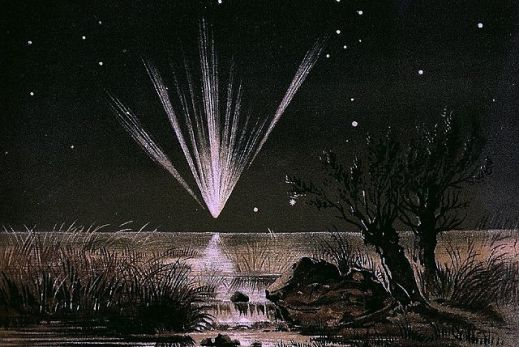
Is Christmas true? Or should we assume Christmas is just a fairytale like Santa Claus?
Our starting places or assumptions have a big impact on the way we weigh evidence. For instance, in Harper Lee’s book, To Kill a Mockingbird the correct verdict could not have been given in that context (i.e., Maycomb’s racist white community) because people excluded the possibility that anyone other than the black man, Tom Robinson, was guilty. Despite the strong evidence that Atticus Finch put forward, Tom was still convicted. Why? Because people were prejudiced against the truth. The people’s a priori assumption, that Tom was guilty because he’s black, led them to not honestly look at the evidence and pronounce the correct verdict.
This sadly still happens. It happens in the court of law and it can happen when people consider evidence about Jesus too. But, if God exists and wants to be born as a baby, as Christmas says, then certainly God can do that.
The Bible says Christmas is true. It even says the “star” guiding the Wisemen is true. Are there actual reasons for believing in the historical accuracy of Christmas? I believe so. But will people openly weigh the evidence?
Honestly, there’s a lot to look at. Here I’ll just share two pieces to consider.
Jesus’ Biographies
Although the Gospel accounts in the Bible may not be exactly like our biographies today, they really are biographies. Or they certainly claim to be. They purport to give actual history about Jesus of Nazareth. The Bible has four historical biographies about Jesus, often referred to as the Gospels.[1] Two of them explicitly claim to tell us what Jesus actually did and said, and they claim to be based on eyewitness testimony (Luke 1:1-4; John 21:20-24). And so, Justin Martyr, a second-century Christian writer and philosopher, referred to the Gospels as “the memoirs of His apostles.”
This is what Luke says:
Inasmuch as many have undertaken to compile a narrative of the things that have been accomplished among us, just as those who from the beginning were eyewitnesses and ministers of the word have delivered them to us, it seemed good to me also, having followed all things closely for some time past, to write an orderly account for you, most excellent Theophilus, that you may have certainty concerning the things you have been taught (Lk. 1:1-4).
Luke is basically making the claim to be a journalist or historian.
The Gospels place themselves in a historical context. They don’t start with imaginary elements. There is no “once upon a time.” Instead, they give us identifiable time stamps. They say things like: “Augustus was emperor of Rome,” “Quirinius was governor of Syria,” “Pilate was governor of Palestine,” “Herod was king of the Jews,” and “Joseph of Arimathea was a member of the Sanhedrin” (e.g., Matt. 2:1; 27:2; Mk. 15:1, 43; Lk. 2:1-2; Jn. 19:38). These were not made-up people or made-up positions. They repeat historical realities because the Gospels claim to be historical documents.
Many of the events that the New Testament writers wrote about were well-known. The Apostle Paul could tell king Agrippa: I am persuaded that none of these things has escaped your notice, since these things have not been done in a corner(Acts 26:26). The early Jesus followers did not follow cleverly devised myths about the Lord Jesus Christ but claimed to be eyewitnesses (2 Pet. 1:16).
C.S. Lewis knew a lot about legends and he didn’t think the Gospels read like legends. In Lewis’ own words: “Now, as a literary historian, I am perfectly convinced that whatever else the Gospels are they are not legends. I have read a great deal of legend and I am quite clear that they are not the same sort of thing.”[2]
The “Star” of Bethlehem
Matthew’s telling of the story of Jesus includes a lot about a “star.” But if you read the account, he says things about the “star” that do not make sense if he is talking about a literal star. The way he describes what the “star”[3] does would not make sense unless he was knowledgeably aware of the peculiar movements it made. The star was “His star” and it “rose,” “appeared,” “went before them,” and rested “over the place where the child was.”
The sign in the heavens convinced the Babylonian magi—the NASA of the day—to pay a visit to Jesus. They were aware of the Jewish promise of a coming King and what was transpiring in the sky made them think something very significant was happening.[4]
What did the Wisemen see? This would be super random to include in a story about Jesus unless the writer knew it to be factual and significant. Otherwise, the writer could have said something simpler: “a bright and mysterious light shown down on the blessed child.” Instead, the author describes the movements of a beautiful comet, something like the Great Comet of 1811. The potential issue with describing something so seemingly outrageous is that it’s visible to a lot of people. Many people could have come forward and said there was never anything in the sky like that. But that didn’t happen. Instead, later on, Origen rightly identifies the “star” as a comet.
Here’s what Origen said (circa 248):
The star that was seen in the east we consider to have been a new star, unlike any of the other well-known planetary bodies. Yet, it had the nature of those celestial bodies that appear at times, such as comets…. It has been observed that, on the occurrence of great events, and of mighty changes in earthly things, such stars are apt to appear, indicating either the removal of dynasties or the breaking out of wars. … There is a prophecy of Balaam recorded by Moses to this effect: ‘There will arise a star out of Jacob, and a man will rise up out of Israel.’
Ignatius said (circa 105), “The light from this star was inexpressible, and its uniqueness struck men with astonishment.”
So, unless this event with the Wisemen and Comet happened, what would one gain by fabricating the story? The Babylonian Wisemen would not be popular with the Jewish people. The Babylonians took Jewish people into exile and were idolaters and the Wisemen were seen as magicians who practiced sorcery against the LORD’s command (Deut. 18:10–12; Mal. 3:5; Gal. 5:19–21). And so, the God/child receiving charity from such people would probably not be seen positively.
If your premise is that the whole story was fabricated and made up to fool people, why would the author have risked claiming such a visible and verifiable phenomenon? On the other hand, if you look at Matthew as a historical work, there’s nothing that should be excluded outright. For one, Matthew certainly gets king Herod’s personality right. The historian Josephus recorded what a gruesome man Herod the Great was. He put his favorite wife to death as well as three of his sons and killed other family members too.
The slaying of the 15 to 35 babies, known as “the Massacre of the Innocents,” referred to in Matthew 2 may not be mentioned in other surviving historical accounts but it is in keeping with what we know of Herod.[5] And again, why mention this historical datum if it wasn’t accurate? Wouldn’t it be possible as the account of Jesus circulated for someone from Bethlehem to hear about the account of the massacre? Wouldn’t the story of Jesus be on unstable footing if just one lie was found out? Why then would the author take such risks?
Imagine I wanted to lie and make you think I’m good at baseball. There are all sorts of ways I could do that. I could say, “I’m really good at baseball.” I could say, “I played college baseball.” But the more specific and fantastic I get about my lie the higher the risk. If I say, “I played baseball for the Yankees” you’re going to have lots of questions and you’re probably going to seek out verification. A nondescript lie is a lot safer and can still accomplish my purpose of making you think I’m good at baseball. The claims about Jesus are not like that. They are distinctive. They—especially in the first century—are falsifiable.
The biographies of Jesus go beyond saying “Jesus was good at baseball,” and even beyond saying “Jesus played shortstop for the Yankees and batted cleanup.” They give loads of information that could have been found to be false but were never proved to be false. Again, why include so much fantastical false information? And remember, the Jesus movement didn’t take decades to form.
Anyhow, I’m trying to stop writing… There are many reasons to believe Christmas is a true story. We’ve very briefly considered two.
Notes
[1] Gospel means “good news.” In Greek, it is euangélion (εὐαγγέλιον) and it is where my daughter, Evangelina, gets her name from.
[2] C.S. Lewis, “What are we to make of Jesus Christ?,” 169 in God in the Dock.
[3] “Star” here is the English translation of the Greek word aster (ἀστήρ), and it’s where we get our English word “asteroid.” Aster can refer to various lights in the sky.
[4] See Colin R. Nicholl, The Great Christ Comet: Revealing the True Star of Bethlehem (Crossway: Wheaton, IL, 2015).
[5] Remember the infant mortality rate would have been high in that day and the massacre was all boys aged two and below so the number would have likely been relatively low for someone like Josephus to report
Does Satan exist? And if so…

Does Satan exist? There is trouble for us if Satan exists and if he does not exist. Let me explain…
𝐈𝐟 𝐒𝐚𝐭𝐚𝐧 𝐝𝐨𝐞𝐬 𝐧𝐨𝐭 𝐞𝐱𝐢𝐬𝐭
If Satan does not exist, how then do we think about the existence of evil? If God is dead, as Nietzsche argued and many have quipped, then so is Satan, and so is our concept of good and evil. Personal likes and dislikes, yes, we still have individual tastes and preferences. Some people like lima beans, some don’t. Some think murder is in good taste, and others don’t. But there is no moral high ground, no actual good and evil.[2]
Andrew Delbanco wrote a book called The Death of Satan. In it, he explains that evil used to “have a face, a name, an explanation.”[1] But now, modern refined humanity doesn’t believe in an evil force at work in the world. Yet, this hasn’t been the case for most of history or even for most people across the globe, even now.
Germany went from being the most sophisticated culture to being a killing culture. They went from a people of art, architecture, and invention to the mass murder of some six million Jews. If evil and Satan don’t exist, then we can’t say the mass murder of millions is evil. We can say we personally don’t like mass murder, but we can’t call it “evil.” That’s problematic.
“We live in the most brutal century in human history.” “The work of the devil is everywhere, but no one knows where to find him.” We have a crisis in our culture. We experience evil, but many don’t believe in actual evil. “We feel something that our culture no longer gives us the vocabulary to express.”[3]
If Satan and evil don’t exist, then it’s bad because there is no real category for “bad.” Then there is no explanation for the things that seem evil; they would then just be, be a regular part of the world. Seemingly evil experiences would just be normal. The way the world is. Also, if evil is not real, it can’t be overcome, defeated, or done away with.
“Don’t be evil” used to be Google’s corporate motto. It’s not now. Did they change their motto because there is no longer a real category of “evil”? If evil is not a real category, people can’t be evil.
𝐈𝐟 𝐒𝐚𝐭𝐚𝐧 𝐝𝐨𝐞𝐬 𝐞𝐱𝐢𝐬𝐭
The truth is, however, it sure seems like evil and Satan exist. I’m reading The Others Within Us: Internal Family Systems, Porous Mind, and Spirit Possession. It’s essentially about what various cultures have to say about spirit possession. The author says spiritual possession is found in every major world religion. One of the researchers cited did a study in 488 societies worldwide and found that it is “probably universal and occurs in all societies.”[4] The book said, “spirit possession often gives the possessed physical abilities that are not explainable.” I have credible friends who have told stories of people who were out of their mind, were not on drugs, yet possessed physical strength not explainable from a merely material perspective. Could what they witnessed be spirit possession?
We are very likely to be outwitted by Satan and his fellow conspirators when we are unaware of their schemes, let alone their existence. As the movie The Usual Suspects says, “The greatest trick the Devil ever pulled was convincing the world he didn’t exist.”
In Harry Potter, “Voldemort, Lucius Malfoy, and their associates are bent on hating and destroying the stability and structures of the wizard world. Dumbledore, Hagrid, Harry, and their friends are committed to saving them.”[5] In the real world, there’s also a battle going on. We’re in trouble if we’re unaware.
The world is at war. There is an enemy always seeking to harm. We are in a world of magic, good and bad. As C.S. Lewis has said, “There is no neutral ground in the universe. Every square inch, every split second is claimed by God, and counterclaimed by Satan.” But the Bible says that the boss of the universe is good. And that’s a good thing. The sinister Satan will finally and decisively be defeated, never to work his woe again. If Satan and evil exist, it’s bad because Satan and evil are bad. It’s bad because there are actors in our world who want to inflict harm and intentionally destroy.
(𝐒𝐨𝐦𝐞 𝐨𝐟) 𝐖𝐡𝐚𝐭 𝐭𝐡𝐞 𝐁𝐢𝐛𝐥𝐞 𝐬𝐚𝐲𝐬 𝐚𝐛𝐨𝐮𝐭 𝐒𝐚𝐭𝐚𝐧 & 𝐄𝐯𝐢𝐥
The Bible makes sense of the weird wild world we inhabit. The Bible is a big, amazing story. It surpasses Marvel and the Lord of the Rings. It tells us about God making the universe. It tells us about spiritual beings rebelling against God and starting a cosmic battle.
The Bible says in our world there is not one actor—humanity, but three—God, spiritual beings, and humans. Christians both believe in actual evil and resistance to evil. There’s a danger to not believing in actual evil; if there’s no evil, evil can’t be resisted. If there is no evil, individuals might label this or that thing “bad” or “good” but that’s just opinion.
For Christians, the understanding of evil and Satan is not simplistic. In regards to human beings, there’s not a clear-cut divide between good and evil. I want to do good but often do bad (Rom. 7:15-20). We all stumble in many ways (James 3:2). Yet, there is something beyond human dysfunction. “For we wrestle not against flesh and blood, but against principalities, against powers, against the rulers of the darkness of this world, against spiritual wickedness in high places” (Eph. 6:12).
The Bible says we are in a world where sinister evil lurks. But it also tells us about God’s rescue mission in Christ Jesus. Jesus fought the evil enemy, He defeated and cast out the great dragon’s evil henchmen. Jesus casts out demons like light expels darkness. Jesus, in contrast, to other exorcists “is presented as an authority in control of the unclean spirits. He typically rebuked and commanded them. He relied on the spirit of God and did not use charms or talismans or magical papyri, which were common in his day. He sent out his disciples, clearly stating that he gave them the authority and power to control demons.”[6]
There will come a day when every being will bow, and every entity in the entire universe will publicly acknowledge that Jesus is Lord (Phil. 2:10-11). As humans confess with every breath that we need air, it will be abundantly and eternally clear that Jesus is the boss of every creature. We can withstand anything the world throws at us, not in our power, but through the power of Jesus (Rom. 8; Eph. 6:10).
[1] Andrew Delbanco, Death of Satan, 4.
[2] See J. Daniel McDonald, “Natural Selection and an Epistemology of Evil: An Incompatible Pair.”
[3] Andrew Delbanco, The Death of Satan, 9.
[4] Robert Falconer, The Others Within Us: Internal Family Systems, Porous Mind, and Spirit Possession.
[5] John Killinger, God, The Devil, and Harry Potter, 178.
[6] Falconer, The Others Within Us.
Should Christians Vote for Christian Values?

Yes but realize…
Voting for Christian values is important. It’s difficult, however, when we cannot be sure elected officials will support Christian values. Politicians blow with the wind of popular opinion.[1] And what if there are potentially Christian values on both sides? Further, what if Christian values are not the most important? What if Christian witness also matters? And what if people find themselves conflicted because they can’t, in good conscience, go with either party?
What if people feel that sometimes Christians have appeared to idolize political leaders and thus compromise Christian witness? We must value Christ and love others like Christ. Those are Christian values that aren’t a matter of conscience.
Also, the good news of Jesus is the power of God to salvation and thus transformation, not Christian morality. When Paul spoke to people in the secular marketplace, he didn’t preach Christian values. He lovingly related to them their need for Jesus.
Voting for Christian values may not be as cut and dry as it used to be. Christian values cut both ways. Christian values say abortion is wrong and honesty and humility are right; it says sexual immorality is wrong and radically loving others is right.
Yes but be aware of hypocrisy
As much as caring about Christian values for our country is a way of caring about people’s good and loving them, I think it is appropriate and commendable. But our concern for Christian values can easily devolve into fear. Are we advocating for Christian values from a place of fear or care? The way that we advocate will reveal a lot about our motivations. When Christians are belligerent and unkind, it appears the motivation is coming from a place of fear and not because they want to love their neighbor and protect them from the consequences of an immoral lifestyle.
Our motivation for voting for Christian values should not be a desire to stay safe or the moral majority. Our motivation should be the good of our neighbor. I believe Christian values are a form of common grace that leads to human and societal flourishing. It makes sense for Christians to want even a secular society to practice Christian values. The expectation, however, should be that secular society will not be inclined to practice those values. Why should Christian values be valuable to nonChristians?
This is especially true when Christians themselves aren’t living out the virtues. When Christians fail to display the fruits of the Spirit, for example, they’re not making a good case for nonChristians living Christian values. What impact might it have if Christians lived a lot more like Jesus? What if Christians were loving, kind, moral, gentle, hospitable, and not fearful? People might be intrigued, and Christian values might be more attractive. It sadly seems like the average Christian will talk about the woes of politics in the world but won’t weep about the prevalence of pornography in the Church.
Perhaps Christians need to focus more on living Christian values than implementing those values for others. If Christians across the USA are not themselves living Christian values, it seems like the height of hypocrisy to force them on others. If Christians across the nation lived like Jesus and practiced Christian values, I believe people would be very interested in Christian values. And more importantly, they would be interested in Christ.
Yes but more is needed than voting
As it is, I feel like Christians trying to pull the spec out of others’ eyes has distracted us from the log in our own eyes. But again, that’s not to say I don’t care about the USA or any other nation practicing Christian values. I would like every nation and everyone to practice Christian values! I want everyone to be like little Jesuses. But judgment starts with the church (1 Peter 4:17). If the Church isn’t healthy and following the Lord Jesus’ commands, maybe that’s the bigger deal. We should want everyone to practice Christian morality, but we shouldn’t expect it. In a sense, we should expect them not to (cf. 1 Corinthians 5:10).[2] Just as the president is not our pastor and chief, Babylon will never be the new Jerusalem. To what degree should we be satisfied enforcing Christian values? I’d much rather the Zeitgeist in the USA be changed, which happens by the Spirit through His people.
I also think it’s a problem when Christians seem to wholesale lineup with one party. Christians should be willing to lovingly critique both the right and the left. If we care about Christian values, it applies to both parties. Just as we want America to practice Christian values, we want politicians from the left and right to practice Christian values. If we call out people on the left (remember Bill Clinton and Monica Lewinsky?), we should be consistent and call out people on the right. If we’re not consistent in our critique, we make it seem like we are not standing on the solid basis of transcultural truth but are biased and trying to protect our preferred political party. Then Christian witness is inconsistent and incongruent.
Also, as the Founding Fathers and Alexis de Tocqueville said in Democracy in America, this country is for a moral people.[3] As John Adams famously said, “Our constitution was made only for a moral and religious people. It is wholly inadequate to the government of any other.” In his farewell address, George Washington said, “Reason and experience both forbid us to expect that National morality can prevail in exclusion of religious principle.” Essentially, when the morality, virtue, and integrity of the people begin to fail, the American experiment will begin to fail. Yet, we can’t change people’s hearts by changing rules. As the University of Pennsylvania seal says, “Laws without morals are useless” (Leges sine moribus vanae). Sure, I believe in good moral laws, but it is short-sighted to think an election can hold off what’s coming down the pike. Many Christians focus too much on politics and not enough on loving hospitality to those who are different than them.
The USA may be helped through voting, but it won’t be saved. We need an overhaul of character and yet at this time, Christians don’t seem to care about character. Many Christians seem to be looking for rescue from the rash and brash.
If we trust a political party to keep back the flood as the damn breaks, we’re trusting in a façade. No political party is the hope of America. If our morality is to truly change, hearts must change. Politics might be able to patch a hole here and there, but our focus must be concentrated where more impact will be felt. Plus, our goal as Christians is not to save America. It sadly seems that a lot of Christians care more about morality than people. It appears like many American Christians want to save America rather than Americans and care more about an earthly country than Jesus’ Kingdom.
Notes
[1] See e.g., https://www.thegospelcoalition.org/article/how-the-gop-became-pro-choice/ and https://wng.org/opinions/the-veepstakes-and-the-sanctity-of-life-1720520906.
[2] “Most of the New Testament’s moral witness is about Christian morality inside the life of the church. But that focus about Christian moral integrity doesn’t welcome moral chaos outside the church” (Andrew T. Walker, Faithful Reason: Natural Law Ethics for God’s Glory and our Good, 68).
[3] Tocqueville, for example, said, “Society is endangered not by the great profligacy of a few, but by the laxity of morals amongst all” and “A nation cannot long remain strong when every man belonging to it is individually weak.” Also, “Without common ideas, there is no common action, and without common action men still exist, but a social body does not. Thus in order that there be society, and all the more, that this society prosper, it is necessary that all the minds of the citizens always be brought together and held together by some principle ideas.”
Photo by Elliott Stallion
Is the world broken?

Have you ever thought about the problem of evil and suffering? Have you ever asked, “Why is the world so cruel?”
My daughter came to me crying. “Why do Mom and Lyla have to be sick? If God exists and is good, why is there suffering?”
As I thought about how to answer, tears came to my eyes and an image came to my mind, a shattered platter. By looking at the shattered shards you could tell the platter used to be ornate and beautiful. Upon reflection, that seems like an accurate picture of the world. It certainly seems broken, but yet it has clear traces of beauty.
What happened? How did the platter get that way? If the platter is broken, it seems to make sense that it was previously whole. Otherwise, it would not be broken; it would just be. The shattering, the brokenness, is just the way the world is. There, then, was no previous better state, nor should we expect a future better state.
So either the brokenness of the world assumes a previous state of the world that was whole and good, or there is no wholeness, only shattered shards that were never part of a whole and never will be. Everything is either light with little pockets of darkness, or everything is darkness with little pockets of light.1
Are beauty, goodness, and love innate, or are they random meaningless sparks in a universe that is growing cold? A world without God may have a few pockets of light, but chaos should be expected.2 If God exists, however, and Christianity is true, then chaos is not the final state of the world.
We intuitively sense that the world is broken. We feel it in our bones metaphorically, and some of us feel it literally. How could the world be broken if it was not at some point whole? It seems, therefore, we can make a deduction from the broken state of the world to the original good design. Or else our hope and intuitive sense that something is wrong is wrong.
Whole
The Bible says God created the world whole. The original creation was very good (Genesis 1:31). The platter was ornate and beautiful, so to speak. No disease or need for dentures. No sin or suffering. No turmoil or tears. No fighting or fears. No death and no destruction.
Christians believe “the bedrock reality of our universe is peace, harmony, and love, not war, discord, and violence. When we seek peace, we are not whistling in the wind but calling our universe back to its most fundamental fabric.”3 Christians believe in evil, and they believe it’s a problem. The world was not supposed to be a place of suffering. Evil and suffering are not a hoax, but they don’t have a place in God’s good intentions. The world is broken.
Broken
The platter shattered. The world broke. Sin unleashed suffering, disease, destruction, and death. The brokenness of the world and the messed up nature of humans are teachings of Christianity that can be confirmed by turning on the news.
Christianity explains the origin of the problem of evil and suffering and makes it clear that it is a problem. That is, Christianity says suffering is not innate in the way the world was supposed to be. And Christianity traces the problem of suffering to a historical cause.
Christianity not only says there’s something wrong with the world, it says there is something wrong with humans, with you, and with me.4 It’s not easy to admit our faults, but to deny there is anything wrong with humanity is to say that this is as good as it gets.5 That, also, is not a happy conclusion. Better to face reality head-on than to stumble in a land of make-believe.
Naturalism, in contrast, does not seem to give a sufficient answer, other than suffering is just the way of the world. We’re essentially animals, so we’re going to be animalistic, and so suffering will result. We’re in a world of chaos and chance, so the world will be chaotic. There is no real problem of suffering, there’s an expectation of suffering. Or, there should be. And for naturalists, there is no category for evil.6 Evil gives off no kinetic energy. There is no entity to evil. Various people may have opinions, likes, and dislikes, but from a strictly naturalistic perspective, there is no evil.
Another problem is that “modernity cannot understand suffering very deeply because it does not believe in suffering’s ultimate source.”7 Modernity will then never find the true answer to suffering. If I fix a leaky sink in my house because I notice a puddle and mold, that may be helpful, but it will not fix the problem if the problem is a leak in the roof. If we don’t know the origin of a problem, there is no hope of fixing the problem. We will be left with external shallow bandages. As I say elsewhere, naturalism cannot truly identify evil as a problem because evil, for naturalism, does not exist. If evil is not seen as a real problem then it certainly can’t be solved.
As Peter Kreeft has said, “If there is no God, no infinite goodness, where did we get the idea of evil? Where did we get the standard of goodness by which we judge evil as evil?”8 Or here’s how C.S. Lewis said it: “My argument against God was that the universe seemed so cruel and unjust. But how had I got this idea of just and unjust? A man does not call a line crooked unless he has some idea of a straight line. What was I comparing the universe to when I called it unjust.”9
The Bible says sin and suffering are not original to the world; sin and suffering have a beginning in history, and they are not a feature of humanity or the world as originally created.10 That is good news. We do not have to be left in our broken state. We sense that not all is right in the world or in our own hearts and lives. The Bible agrees. Yet, that is not all; it says there is a solution.
The Broken Healer
While writing this, my daughter came into the room and said her bones hurt. That is part of her condition. She has CRMO, which stands for chronic recurrent multifocal osteomyelitis. Basically, her body attacks her own bones, inflammation causes liaisons and fractures her bones, which can lead to deformity. It could stop harming her body when she stops growing, or it could continue her whole life. She currently gets infusions at Nationwide Children’s Hospital in hopes of putting it in remission.
How does Jesus relate to her pain? As Jesus’ biographies relate, “Jesus on the night that He was betrayed took the bread and broke it and said, ‘This is my body which is broken for you’” (1 Corinthians 11:23-24). Jesus was broken for her. Jesus’ bones did not break (John 19:36; Exodus 12:46; Psalm 34:20), but His body did. He did writhe in pain. Jesus may not heal all our brokenness now, but He was broken so that the fractured world could be healed.
The Bible says God took on human flesh (John 1:1-3, 14) partly to experience suffering Himself. God, therefore, understands suffering, “not merely in the way that God knows everything, but by experience.”11 Jesus became fully human in every way so that He could be faithful and merciful, and provide rescue and forgiveness to people (Hebrews 2:17). The Bible may not completely answer the mystery of suffering and evil, but it does give an answer: Jesus. Amid the struggles and psychological storms of life, the cross of Christ is a column of strength and stability. It signals out to us in our fog: “I love you!” The cross is the lighthouse to our storm-tossed souls.
Christianity teaches that the Potter made the platter and was heartbroken over it breaking. So, because of His love for the platter, the Potter allowed Himself to be broken to fix the broken platter (John 3:16). The Bible does stop with the Potter being broken. The Bible concludes with resurrection. Jesus dies, yes. But He does not stay dead. The shattered shards are mended and whole. Jesus is the foretaste, and His rising proves that the whole world will be put back together.
Healed and Whole
The mathematician, scientist, and philosopher Blaise Pascal wrote this thought, which, at first, is a little confusing: “Who would think himself unhappy if he had only one mouth, and who would not if he had only one eye? It has probably never occurred to anyone to be distressed at not having three eyes, but those who have none are inconsolable.”
What does Pascal mean by this? He means that we only miss something if it’s missing. We only miss something if it’s gone. We don’t notice an absence of things that were never there. Hunger points to food, thirst points to water, and a sense of brokenness points to a previous wholeness. As Peter Kraft has said, “We suffer and find this outrageous, we die and find this natural fact unnatural.” Why do we feel this way? “Because we dimly remember Eden.”12
Within our very complaint against God, there is a pointer to God and the reality of Christianity. Christianity gives a plausible explanation as to how the brokenness of the world happened in space and time history. But it also gives us a credible solution; the Potter who made the world and died for the world, promises to one day fix the world.
Christianity gives a logically consistent explanation for the brokenness of the world. And it supplies the solution. We certainly long to be healed and whole. Every dystopia, true and fictional, starts with a desire for utopia. But inevitably dissolves into dystopia. Jesus, however, is not only all-powerful and thus able to bring about a different state of things, He is also all-good so He actually can bring about a utopia. He can heal and make the world whole.
The Bible says that the Potter who formed the platter will reform and remake it in the end. The shattered shards will be put back in place, and everything will be mended and whole. The last book of the Bible says this:
‘Look! God’s home is now among people! God will live together with them. They will be his people. God himself will be with them and he will be their God. God will take away all the tears from their eyes. Nobody will ever die again. Nobody will be sad again. Nobody will ever cry. Nobody will have pain again. Everything that made people sad has now gone. That old world has completely gone away.’ God, who was sitting on the throne, said, ‘I am making everything new!’ (Revelation 21:3-5)
For now, we make mosaics out of the shattered shards of life. We paint as best we can with the canvas and colors we have.
Conclusion
We started with a few questions. Here are a few to consider at the end. What if you are not the only one that has walked your path of pain? What if you are not the only one that has faced your terrible trauma? What if there was someone who, because of their experience, knowledge, wisdom, empathy, sympathy, and their own suffering of trauma, could relate to all that you have gone through? What if that person loved you? What if they wanted to help you heal from your pain and protect you? What if they would go to any length to free you from what you have suffered?
What if the problem of evil gives a plausible argument for the reality of Christianity? What if naturalism does not even have a way to believe in the reality of evil? What if we do not like God because of all the bad things in the world, but God Himself actually took the bad things of the world on Himself to fix the broken world?
What if Jesus was shattered so that one day you could be mended and whole? And what if He promises to help pick up the pieces and make a masterful mosaic?
Photo by Evie S.
- Peter Kreeft, Making Sense Out of Suffering. ↩︎
- As Christopher Watkin has said, “in a world without the sort of god the Bible presents, there is no necessary stability to reality because nothing underwrites or guarantees the way things are” (Biblical Critical Theory: How the Bible’s Unfolding Story Makes Sense of Modern Life and Culture, 225). ↩︎
- Watkin, Biblical Critical Theory: How the Bible’s Unfolding Story Makes Sense of Modern Life and Culture, 55. ↩︎
- As N. T. Wright has said, “The ‘problem of evil’ is not simply or purely a ‘cosmic’ thing; it is also a problem about me” (N. T. Wright, Evil and the Justice of God, 97). ↩︎
- Watkin, Biblical Critical Theory, 166. ↩︎
- Consider that “Physics can explain how things behave, but it cannot explain how they ought to behave. If the universe is the result of randomness and chance, there’s no reason to think things ought to be one way as opposed to another. Things just are.” (Michael J. Kruger, Surviving Religion 101: Letters to a Christian Student on Keeping the Faith in College, 116-17). ↩︎
- Peter Kreeft, Making Sense out of Suffering. ↩︎
- Ibid. ↩︎
- C. S. Lewis, Mere Christianity (London: Fontana, 1959), 42. ↩︎
- See Watkin, Biblical Critical Theory, 168. ↩︎
- D.A. Carson, How Long, O Lord?: Reflections on Suffering & Evil, 179. ↩︎
- Kreeft, Making Sense out of Suffering. ↩︎
Religion and Obligation – But I don’t want to obey?…

People often don’t like religion because they don’t want to obey
A lot of people react to religion and want nothing to do with it. Not because they’ve considered its truth claims but because they feel it is constricting. Interestingly, we got our modern English word “religion” from the Latin word religio meaning “obligation” or “bond.”
So, it has been recognized for a long time that religion is binding. The question is, why? Why should anyone obey a religion?
If the religion’s truth claims are accurate then there would be a good reason to obey. Otherwise, I’m not going to be bound by a religion just because that’s what my grandma believed… No. If you’re going to tell me what I can do and not do, you better offer some good reasons why I should listen.
God demands obedience
1 Kings 8:60-61 says, “The LORD is God; there is no other. Let your heart therefore be wholly true to the LORD.” It is admittedly a big claim that “the LORD is God,” and He alone. But if that claim is true it seems to make sense that the LORD could demand obedience.
So, the question it seems we need to answer is not: “Should I obey?” But: “Is it true?” A lot of times it seems we’re tempted to go at it a different way. We’re tempted to think: “I don’t want to obey, therefore I won’t consider if it’s true.”
We can see the ridiculousness of that thinking when we apply it to a different context…
Imagine you’re driving on the highway with me. I’m going 95 when the speed limit is 70. You’re concerned because you know there are often speed traps in the area. Also, you don’t want to die. So, you say, “Perhaps you should slow down. There could be a speed trap.”
I, however, am rather content with the speed I am going. But you see a police car ahead. You very kindly warn me: “Um, that’s a police car… See it?! He’s right there! Slow down!”
But I don’t listen. I want to drive fast so I ignore the possibility of a cop car.
Religion and obligation
Ignoring information that might be pertinent because we want to do what we want to do might be problematic. Just because we don’t want there to be a cop to enforce the rules does not at all mean there is no cop.
I understand people not wanting to be obligated by a religion. We all naturally want to be in charge; we want to do what we want to do. We want to be God. But we can’t be God if God is God.
If God is, then God is in charge. He is God. If the religion is real, it necessarily leads to obligation.
That brings up the very important question: “Is God?”
Naturalistic evolution teaches that our sense of morality evolved

Imagine I gave you a pill that made you feel morally obligated to give me money… Kinda random but hear me out. After the pill wore off, what would you think of your moral conviction to give me money? Would you regret it? Question it? Probably both.
That’s what moral conviction is if we’re simply evolved creatures. Why? How is that so?
Naturalistic evolution teaches that our sense of morality evolved
Naturalistic evolution teaches that our sense of morality evolved. That is, our “moral genes” just happened to make us better suited for survival, and thus those with a moral characteristic passed on their “moral genes.” And so, we have morality. But, so the thought goes, just as the Neanderthals died out, morality could have died out. Or certainly, a different form of morality could have won out.
In fact, Charles Darwin says in The Descent of Man that if things had gone differently for humans they could have evolved to be like bees, where “females would, like the worker-bees, think it a sacred duty to kill their brothers, and mothers would strive to kill their fertile daughters.” The atheist Michael Ruse in his book, Taking Darwin Seriously: A Naturalistic Approach to Philosophy, says, “Morality is a collective illusion foisted upon us by our genes.”
So, if we’re simply evolved from monkeys, morality is the equivalent of taking a pill that makes us think certain moral convictions are right. But the reality would be different. We, based on this view, only have those convictions—whatever they are: treat people nice, don’t murder and maim, etc.—because we happed to evolve that way (“took the pill”).
Of course, just because the way that you arrived at a conclusion was wrong, does not mean that your conclusion was wrong. In a test where the answer is A, B, C, or D, I could just choose “C” because it’s my favorite letter. I may be correct in my answer, but I certainly don’t have a solid reason for believing in the validity of my answer. In fact, probability would say my answer is likely wrong.
Another problem with wholesale naturalistic evolution is if we believe it explains everything then it in some ways explains nothing. Gasp. Yeah, that’s not a good thing.
If evolution explains morality, then I’m moral because of evolution which at least in some ways undercuts morality. Some people even say that religious people, like people that believe in Jesus, are religious because they evolved that way. Believing in a higher power brought some type of group identity which led tribes of our ancestors to be more likely to protect each other and thus survive and pass on their genes. And so, religion is the result of random mutational chance.
In fact, you could argue all of our thinking processes are the result of evolution. We’re just matter in motion. We’re all just responding to random whims. From belief in morality to belief in evolution, we’re just evolved to think this way… We can’t do anything about it. It’s programmed into us. It’s the pill we were given…
But if all this is a pill we’re given—what we’ve randomly evolved to think—what should we think?… Isn’t all our thinking just built into us through evolutionary processes?…
Alternatively, Christians believe that humans are created with an innate moral sense.
So, it seems morality is either a fiction with no basis in reality or God created us and explains reality—explains why we have an innate sense that we should treat people nice and not murder and maim.
There are big implications for either view. What is your view? And why?
Somewhat Random Reflections on Knowledge

Here’s some somewhat random reflections on knowledge if you’re interested…
How Can We Know Anything at All?
Wow. That is a super big question. And it’s a question that some people are not asking at all. That’s problematic. And in some ways ignorant. However, others are asking that question but they’re asking it in a proud way. That’s also problematic. And ignorant.
Let me ask you a question, how do you know your dad is your dad? Well, some of you will say, “He’s just my dad. He’s always been my dad. I’ve always known him as my dad.”
But I could say, “But, how do you know you know for sure he’s your dad?”
Others will answer, “I know he’s my dad because my mom told me.” But how do you know your mom’s not lying? Or, how do you know she knows the truth?
Perhaps the only way to know your dad is actually your biological dad is through a DNA test. But could it be the case that the DNA clinic is deceiving you? Is it possible that there’s a big conspiracy to deceive you? What if you are actually part of the Truman Show? Everything is just a big hoax for people’s entertainment?… How could you know without a shadow of a doubt that that’s not happening?
You really can’t. Not 100%.
We Can’t Know Everything
We, I hope you can see, can’t know everything. There’s a healthy level of skepticism, just as there is healthy humility.
Also, if we think our knowledge must be exhaustive for us to have knowledge, we will never have knowledge. And we will be super unproductive. I, for one, would not be able to go to the mechanic. And that would be bad.
Our knowledge is necessarily limited. We may not like it but that’s the cold hard truth, we must rely on other people. We must learn from other people. There’s a place for us to trust other people. Of course, we are not to trust all people or trust people all the time. But we must necessarily rely on people at points.
Philosophy and the History of Careening Back and Forth Epistemologically
John Frame, the theologian and philosopher, shows in his book, A History of Western Philosophy and Theology, that the history of secular philosophy is a history of humans careening back in forth from rationalism to skepticism and back again. One philosopher makes a case that we can and must know it all, every jot and title. And when they’re proven wrong, the next philosopher retreats to pure epistemological anarchy, claiming we can’t know anything at all. Again, when it’s found out that that view is wrong and we can in fact know things, we swing back the other way. And so, the philosophical pendulum goes and we have people like Hume and people like Nietzsche.
The history of philosophy shows that we should be both skeptical about rationalism and rational about skepticism. Both have accuracies and inaccuracies. Which helps explain the long life of both.
The Bible and Knowledge
The biblical understanding of knowledge takes both rationalism and skepticism into account and explains how both are partly right and partly wrong. And it explains that though we may not be able to know fully, we can know truly. It also explains that there are more types of knowing than just cognitive and rational. The Bible not surprisingly understands who we are anthropologically and so is best able to reveal the whole truth epistemologically.
The Bible also understands that there is experiential knowing, tasting—experiencing something—and knowing something to be true on a whole different level than mere cognitive knowing. When the Bible talks about “knowing” it’s intimate, tangible, and experiential knowing. For example, it says Adam “knew” his wife and a child was the result of that knowledge. That, my friends, is not mere mental knowledge. It’s lived—intimately experienced—knowledge. It’s knowledge that’s not available without relationship.
Job says it this way, I’ve heard of you but now something different has happened, I’ve seen you (Job 42:5). Jonathan Edwards, the philosopher and theologian, talked about the difference between cognitively knowing honey is sweet and tasting its goodness. It is a world of difference. The Bible is not about mere mental assent. It is about tasting. Knowing. Experiencing. Living the truth.
The Bible says and shows that Jesus is Himself is the way, the truth, and the life. Jesus is what it means to know the truth. He is the truth and shows us the truth. He is truth lived, truth incarnate.
The Bible communicates that some people don’t understand, don’t know the truth. There’s a sense in which if you don’t see it, you don’t see it. If it doesn’t make sense, it doesn’t make sense. The Bible talks about people “hearing” and yet “not hearing” and “seeing” and “not seeing.” Some people believe the gospel and the Bible is foolishness (1 Cor. 2:14).
How Should Christians Pursue Knowledge?
First, our disposition or the way we approach questions is really important.
How should we approach questions? What should characterize us?
Humility! Why? Because we are fallible, we make mistakes. However, God does not. Isaiah 55:8-9 says, “For My thoughts are not your thoughts, neither are your ways My ways, declares the LORD. For as the heavens are higher than the earth, so are My ways higher than your ways and My thoughts than your thoughts.”
Also, kindness, patience, and understanding are an important part of humility and asking questions and arriving at answers. So, “Faith seeking understanding,” is a helpful and common phrase.
Second, where do we get answers from?
Scripture. Why is this important? Again, I am fallible and you are fallible, that is, we make mistakes. And how should we approach getting those answers? Are we above Scripture or is Scripture above us? Who holds more sway? Scripture supplies the truth to us; we do not decide what we think and then find a way to spin things so that we can believe whatever we want…
Third, community is important.
God, for instance, has given the church pastor/elders who are supposed to rightly handle the word of truth and shepherd the community of believers. We don’t decide decisions and come to conclusions on our own. God helps us through Christ’s body the Church.
Fourth, it is important to remember mystery.
We should not expect to know all things. We are… fallible. So, we should keep Deuteronomy 29:29 in mind: “The secret things belong to the LORD our God, but the things that are revealed belong to us and to our children forever, that we may do all the words of this law.” There are certain things that are revealed and certain things that are not revealed.
Fifth, our questions and answers are not simply about head knowledge.
God doesn’t just want us to be able to talk about theology and philosophy. Deuteronomy 29:29 says, “that we may do…” So, God also cares a whole lot about what we do. Knowledge is to lead to action. We are to be hearers and doers.
What explains the contradiction of humanity?

What explains the contradiction of humanity?



 in X
in X 