Nietzsche: Prophet of Doom (Part 4)
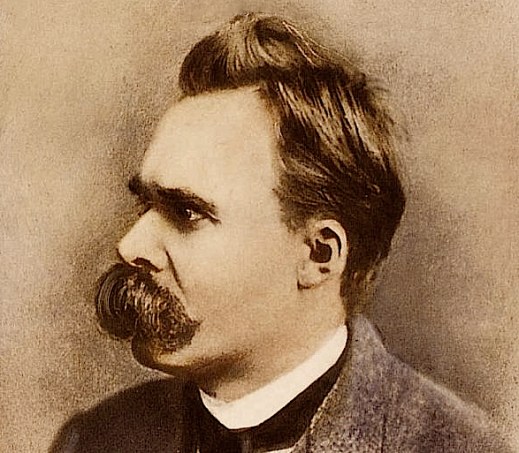
Nietzsche’s Ideal
I want to look at the functionality of Nietzsche’s philosophy. What kind of world does Nietzsche’s philosophy create? Nietzsche’s philosophy creates a world in its own image, one in which people bite and devour each other.
Nietzsche’s philosophy creates all sorts of problems. For example, Nietzsche was not an anti-Semite; he disagreed with his sister and brother-in-law who were. But, it is hard to say upon what grounds. When there is no morality, when “god is dead,” it is hard to criticize morality in other people. Yet, we see him do this time and time again. When we say there is no God, when we say there is no morality, if we are to be consistent we must realize there is no morality and we must come to terms with the world that it creates. So, I am not necessarily pointing out that Nietzsche was wrong, though I think he was, but I want to point out that he and many who have come after him are inconsistent. We cannot hold up Nietzsche’s ideas in the many forms they take and not expect a torrent of injustices to overwhelm us that harken back to Auschwitz.
Nietzsche hated Christianity’s morality that was based, in his opinion, on “pie in the sky.” However, Nietzsche’s morality, or lack thereof, leads to hell here. Nietzsche very likely would not have supported Nazism, and it seems as if he was not anti-Semitic, but many of his writings support the atrocities of the holocaust.
If Nietzsche is right that God is dead then his morality is right as well. That is, there is no right, there is no wrong, there is in sum, no morality. As Ivan Karamazov said in Fyodor Dostoyevsky’s book The Brothers Karamazov, “If God is dead, everything is permitted.” In fact, morality is unhelpful. Nietzsche basically says that morality is nihilistic. He says, “Morality is a way of turning one’s back on the will to existence.”[1]
However, we cannot really live in a world like that, we, at least, would loathe that world. But, that’s the bitter truth if God is dead. If God is dead there is no killing a billion devils. Hell may not then be literal, but hell on earth is. If God is dead, humanity is “free;” free to wallow in its own mire. Free to oppress, free to enslave, free to hate, free to do whatever it is we feel to do, so long as we are more powerful than the powers that be…
So, Nietzsche’s atheistic “morality” might be freeing, if you’re at the top of the food chain. But if you’re a minority or a small off-shoot fringe group that’s not accepted by the powers that be, you are likely to be stubble for the Übermensch’s flame. Freedom it seems only would come to the “god” of this world, the “god” that is strong enough to enslave others (of course you might say, that even that “god” is then enslaved to continually fight for his so-called “godhood”). And so, we see that Nietzsche provides no freedom, he just provides a different master, one that (Romans 6 reminds us) brings a litany of death, debauchery, chaos, and everlasting curse. Nietzsche and his morality—and Darwin and Dawkins[2]—do not finally bring freedom and fun or hope of heaven on earth, they bring a very real type of hell to life on earth; they, when their philosophy is lived out to its logical conclusion, nearly have the power to give demons flesh.[3] They, short of incarnating evil, do image their master the devil. They carry out his deeds by their acts; acts of rape, acts of mutilation, acts of vile debauchery and calculated cruelty, they glory in their shame and they praise and promote those who do the same. They do this because they did not see fit to honor God, they thus become futile in their thinking, and do the works of their father the devil.
My goal is not so much to prove Nietzsche wrong, in my opinion, he has done that himself. My goal is to prove that if “God is dead” it follows that there is no morality and that makes for a terrible world. This is immediately relevant to our current culture. We desire Eden—healthy people and planet, peace, and prosperity—all the while saying there is no God and we can do as we like.[4]
It seems then that Hitler’s Mein Kampf was influenced by Nietzsche’s work. It seems to me that a seed was planted in Nietzsche’s work that Hitler would later cultivate to very destructive ends.[5] Nietzsche may not have foreseen or intended all the Nazi party carried out but it seems that what they did is in line with his thought So, although Nietzsche himself may not have supported the Nazi party, his thought when taken to its logical conclusion, does seem to lead to many of the things that the Nazi party did. Nietzsche, from my reading of him, would certainly have no grounds to criticize anything that they did.
The brutality that Hitler and his regime carried out was necessary as Nietzsche described: “man’s sacrifice en bloc [all together] to the prosperity of one single stronger species of man—that would be progress.”[6] Thus the brutality and sacrifice would be worth it in Nietzsche’s mind because it would bring about a new and better age. Nietzsche, I am sure, could concur with these words from Hitler: “Those who want to live, let them fight, and those who do not want to fight in this world of eternal struggle do not deserve to live.”[7]
Nietzsche said this in Beyond Good and Evil:
The crucial thing about a good and healthy aristocracy… is that it does not feel that it is a function… but rather its essence and highest justification—and that therefore it has not misgivings in condoning the sacrifice of a vast number of people who must for its sake be oppressed and diminished into incomplete people, slaves, tools. Its fundamental belief must simply be that society can not exist for its own sake, but rather only as a foundation and scaffolding to enable a select kind of creature to ascend to its higher task and in general to its higher existence.[8]
As we have said, we can extrapolate, especially with hindsight, that Nietzsche’s philosophy had an impact (though to what degree we cannot say) on Nazism. If there is no right and no wrong, only what is desirable and undesirable for the particular individual, then we allow, even give precedence, for all sorts of moral degradation (because, after all, moral degradation does not actually exist, only the will to power). Thus, we see Nietzsche’s ideal, his philosophy, ultimately promotes violence and all sorts of vile practices.
________________
[1] Friedrich Nietzsche, The Will to Power, par. 11.
[2] Richard Dawkins follows Nietzsche in saying that “In a universe of blind physical forces and genetic replication, some people are going to get hurt, other people are going to get lucky, and you won’t find any rhyme or reason in it, nor any justice. The universe we observe has precisely the properties we should expect if there is, at bottom, no design, no purpose, no evil and no good, nothing but blind, pitiless indifference” (Richard Dawkins, River Out of Eden: A Darwinian View of Life [New York: Basic Books, 1995], 133).
[3] If morality was just a “misfiring” or a “Darwinian mistake,” even a “blessed, precious mistake” (Richard Dawkins, The God Delusion [New York: Mariner Books, 2008], 253) it would not be grounds for living a moral life. Yes, one certainly could still live a moral life, as apparently, Dawkins claims to. He even makes fun of the consideration that people would need a judge in the sky to make us moral. However, Dawkins does not take into account various atheists that attest to the truth that we need a judge in the sky to keep humanity from caring out acts of atrocity on others (cf. e.g. Richard Wurmbrand, Tortured for Christ). If there is no evil, no true transtemporal truth, then there really are no real acts of atrocity. If God is dead, all things are permissible. They may not always be efficient or wise but they are permissible. Efficiency itself becomes the criteria of right and wrong (cite eugenics, euthanasia, Trump’s taxes, etc.). Efficiency becomes a parallel to Nietzsche’s “will to power.” The person that rises above the system (e.g. moral, political), uses the system, or beats the system is the “over-self” that bends the world to its own ends. This is the new “morality,” striving and thriving to subdue life and life’s systems to whatever end is desirable. The true “over-self” may not call themselves a disciple of Nietzsche, it may even be unwise of them to make that claim, but if they live in the ways mentioned above then they are a disciple of Nietzsche even if they don’t know it. They may claim they’re not, they may claim to be pragmatists but they seem to be Nietzsche’s disciples nonetheless.
[4] It reminds me quite a bit of the first sin: forgetting God and doing as we desire. Here we see the danger of autonomous reasoning. From the beginning, even before the Fall, we have been dependent upon God for everything, revelation directing us to know what we should desire. In fact, I think Nietzsche would be happy in that it seems like the only morality today seems to be to do whatever suits the particular individual (unless it infringes upon what someone else wants to do or is really nasty). So, there seems to be no rules, except do not make rules for others or do “really bad things” (like pollution, Christian hypocrisy, and pedophilia).
[5] The Stanford Encyclopedia says “during the 1930s, aspects of Nietzsche’s thought were espoused by the Nazis and Italian Fascists, partly due to the encouragement of Elisabeth Förster-Nietzsche through her associations with Adolf Hitler and Benito Mussolini. It was possible for the Nazi interpreters to assemble, quite selectively, various passages from Nietzsche’s writings whose juxtaposition appeared to justify war, aggression and domination for the sake of nationalistic and racial self-glorification” (Wicks, “Friedrich Nietzsche” in The Stanford Encyclopedia of Philosophy).
[6] Par. 12 of the Second Essay in On the Genealogy of Morality.
[7] Adolf Hitler, Mein Kampf, 289.
[8] Nietzsche, Beyond God and Evil, par. 258. Cf. Darwin’s thoughts on the queen bee. He said, “we ought to admire the savage instinctive hatred of the queen-bee, which urges her instantly to destroy the young queens her daughters as soon as born, or to perish herself in the combat; for undoubtedly this is for the good of the community; and maternal love and maternal hatred, though the latter fortunately is most rare, is all the same to the inexorable principle of natural selection” (Charles Darwin, The Origin of Species [London: Penguin, 1968], 230).
Nietzsche: Prophet of Doom (Part 3)

Nietzsche’s Critique: Christianity is Nihilistic
Nihilism,[1] for Nietzsche, is something that happens when “slave morality”[2] is followed. It seems like Nietzsche is saying that when you follow the Christian teaching then you no longer care about yourself, you put your hope in “pie in the sky,” and you become nothing. Ironically, as we will see, Nietzsche’s philosophy is the ultimate view that leads to nothingness. In his system, there is no ultimate reason for meaning or morality. Thus, what he criticized Christians for is most fully realized in his own position.
Nietzsche is not intending to promote nihilism but sees himself as fighting against it.[3] Nietzsche clearly sees Christianity as nihilistic. He promotes the animal instinct of the will to life, of fighting tooth and nail to exploit whatever can be exploited. In reading Nietzsche, it seems like the ideal world for him would be one in which we live like animals. Nietzsche’s ideal world seems to be a rough and wild animal kingdom where the powerful rule.[4]
Nietzsche concludes that Christianity is nihilistic and believes that the Übermensch who is anti-nihilistic will one day come to save the world.[5] He over and over again, bemoans weak and wicked, guilt ridden, Christianity.[6] He awaits the dawn of the superior man of the future that will deliver the world from its nauseating and nonsensical fascination with compassion and grace.[7]
In On the Genealogy of Morality,[8] Nietzsche says that large birds of prey do nothing wrong in eating and attacking lambs, they are only doing what comes natural to them. The lambs might say that the birds of prey are bad and that whoever is least like them, like a lamb, is good. However, it seems like Nietzsche is saying that that reasoning does not make sense. The lambs are not any better, any more “good,” than the birds of prey. Their criterion of “good” is subjective and they are merely trying to protect themselves by defining “good” as they themselves already are.[9] Within the paragraph Nietzsche says, “a good person is anyone who does not rape, does not harm anyone, who does not attack, does not retaliate, who leaves the taking of revenge to God,… avoids all evil and asks little from life in general.”
It seems like for Nietzsche the “good person,”[10] who does not do bad things, corresponds to the lamb; and the “bad person,” who does bad things like rape and attack, corresponds to the bird of prey. Therefore, Nietzsche seems to be making the point that the “bird of prey,” the so-called “bad person” that rapes, harms, and attacks is really not evil because “evil” after all is something that the “lamb,” the so-called “good person,” made up. Therefore, we see that in a world where God is dead and morality is subjective[11] then there is nothing ultimately wrong with raping, harming, and attacking others.[12] Actually, Nietzsche basically says that the “lambs,” i.e. the early Christians and Jews, made up their morality to get back at the “birds of prey,” the masters that treated them badly.[13]
Plantinga concurs with my observation. He says,
Nietzsche’s… complaint: that religion originates in slave morality, in the ressentment [sic] of the oppressed. As Nietzsche sees it, Christianity both fosters and arises from a sort of sniveling, cowardly, servile, evasive, duplicitous, and all-around contemptible sort of character, which is at the same time envious, self-righteous, and full of hate disguised as charitable kindness. (Not a pretty picture).[14]
Nietzsche said, “I expressly want to place on record that at the time when mankind felt no shame towards its cruelty, life on earth was more cheerful than it is today,… The heavens darkened over man in direct proportion to the increase in his feeling shame at being man.”[15] He is saying that man should not feel shame at “being man,” that is, following his animal instincts (perhaps to rape, harm, and attack like the “bird of prey”). For Nietzsche, it was sermonizing that led the animal “man” to feel ashamed of his instincts.[16]
For Nietzsche, “life functions essentially in an injurious, violent, exploitative and destructive manner, or at least these are its fundamental processes and it cannot be thought of without these characteristics.”[17] Thus, he seems to reason that any system or person that fails to acknowledge this and function in this way is hostile to life and attempts to assassinate the future of man, and follows a path to nothingness.[18] Nietzsche in fact says that “life itself in its essence means appropriating, injuring, overpowering those who are foreign and weaker; oppression, harshness, forcing one’s own forms on others, incorporation, and at the very least, at the very mildest, exploitation.”[19] Nietzsche even says “Perhaps I can even be allowed to admit the possibility that pleasure in cruelty does not really need to have died out.”[20]
Nietzsche said that “people everywhere are rhapsodizing, even under the guise of science, about future social conditions that will have lost their ‘exploitative character’—to my ear that sounds as if they were promising to invent a life form that would refrain from all organic functions.” This seems so apparent to Nietzsche because “the original fact of all history” is that “’Exploitation’ is not part of a decadent or imperfect, primitive society: it is part of the fundamental nature of living things.”[21] Thus, utopia, Eden, heaven, etc. will never be our home. Our nature, since the beginning has been to exploit and Nietzsche would conclude there is nothing wrong with that, it is perfectly normal and realistic.
Nietzsche believes that it is a terrible thing that “the animal ‘man’ is… taught to be ashamed of all his instincts.”[22] Man, at his core, is an animal following his will to life. Christianity, conversely, says we are not animals but that humans, male and female, are created in the image of God and thus have intrinsic worth. We also see that we do not have to follow are base sinful, not merely animalistic, instincts. Nietzsche is hitting on something. We do have instincts, but they come from Adam and the Fall, not animals. Nietzsche’s solution to the inner problem that we all face is wrong as well. The solution is not to give in and forget guilt. The answer is to become a new creation in the better Adam.
_________________
[1] The word “nihilism” comes from the Latin word nihil, which means “nothing.” Nietzsche basically says that nihilism is the predilection for and overvaluation of compassion (see par. 5 in the Preface of On the Genealogy of Morality cf. the end of par. 12 in the First Essay par. 24 in the Second Essay). As Clare Carlisle says, “Although Nietzsche’s philosophy is sometimes mistakenly described as ‘nihilistic’, the opposite is in fact the case, for the purpose of his writing was to halt and to reverse this process of decline” (Clare Carlisle, “Nietzsche’s Beyond Good and Evil: ‘Why insist on the truth?’” in Richmond Journal of Philosophy 4 (Summer 2003). It does seem ironic that Nietzsche’s own philosophy would later be termed nihilistic, which I think is accurate. Nietzsche’s philosophy does lead us to conclude that all values are baseless and that nothing can be known; thus leading us to nihilism. So, although Nietzsche said Christianity was nihilistic, in the final analysis it is his own thought that is. Nietzsche says that Christians have “an imaginary teleology (the “kingdom of God,” “the last judgment,” “eternal life” (The Antichrist, par. 15) and yet Nietzsche has no teleology, Nietzsche is left with nothing—nihilism.
[2] In a sense, so-called “slavery morality” comes from Christ Himself and can be traced all the way back to God the Father. God had pity on Adam and Eve, Israel in Egypt, and on the hopeless state of humanity. Nietzsche is essentially damning humanities only hope of redemption. In fact, the rescue mission included Jesus becoming a man and taking the form of a slave, and dying, dying on a roman cross. Nietzsche who seemed to respect Jesus in many ways hated what Jesus was actually doing. Christ emptied Himself, Christ had pity.
[3] “Pity thwarts the whole law of evolution, which is the law of natural selection. It preserves whatever is ripe for destruction; it fights on the side of those disinherited and condemned by life; by maintaining life in so many of the botched of all kinds, it gives life itself a gloomy and dubious aspect. Mankind has ventured to call pity a virtue (—in every superior moral system it appears as a weakness—); going still further, it has been called the virtue, the source and foundation of all other virtues—but let us always bear in mind that this was from the standpoint of a philosophy that was nihilistic, and upon whose shield the denial of life was inscribed. Schopenhauer was right in this: that by means of pity life is denied, and made worthy of denial—pity is the technic of nihilism. Let me repeat: this depressing and contagious instinct stands against all those instincts which work for the preservation and enhancement of life: in the rôle of protector of the miserable, it is a prime agent in the promotion of décadence—pity persuades to extinction… Of course, one doesn’t say “extinction”: one says “the other world,” or “God” (Nietzsche, The Antichrist, par. 7). One translation says, “pity is the practice of nihilism” (par. 7).
[4] “There is no place in Nietzsche’s picture of the ideal man for pity: pity is nothing more than a morbid fascination with failure. It is the great weakener of the will, and forms the bond between slaves, which perpetuates their slavery” (Roger Scruton, Modern Philosophy: An Introduction and Survey [New York: Penguin Books, 1994], 297).
[5] See par. 24 of the Second Essay in On the Genealogy of Morality.
[6] “I condemn Christianity; I bring against the Christian church the most terrible of all the accusations that an accuser has ever had in his mouth. It is, to me, the greatest of all imaginable corruptions; it seeks to work the ultimate corruption, the worst possible corruption. The Christian church has left nothing untouched by its depravity; it has turned every value into worthlessness, and every truth into a lie, and every integrity into baseness of soul. Let any one dare to speak to me of its “humanitarian” blessings! Its deepest necessities range it against any effort to abolish distress; it lives by distress; it creates distress to make itself immortal… For example, the worm of sin: it was the church that first enriched mankind with this misery!—The “equality of souls before God”—this fraud, this pretext for the rancunes of all the base-minded—this explosive concept, ending in revolution, the modern idea, and the notion of overthrowing the whole social order —this is Christian dynamite… The “humanitarian” blessings of Christianity forsooth! To breed out of humanitas a self-contradiction, an art of self-pollution, a will to lie at any price, an aversion and contempt for all good and honest instincts! All this, to me, is the “humanitarianism” of Christianity!—Parasitism as the only practice of the church; with its anæmic and “holy” ideals, sucking all the blood, all the love, all the hope out of life; the beyond as the will to deny all reality; the cross as the distinguishing mark of the most subterranean conspiracy ever heard of,—against health, beauty, well-being, intellect, kindness of soul—against life itself… .
This eternal accusation against Christianity I shall write upon all walls, wherever walls are to be found—I have letters that even the blind will be able to see… I call Christianity the one great curse, the one great intrinsic depravity, the one great instinct of revenge, for which no means are venomous enough or secret, subterranean and small enough,—I call it the one immortal blemish upon the human race… The transvaluation of all values!…” (Nietzsche, The Antichrist, par. 62).
[7] “Love and compassion, for instance, especially for the weak and sick, was in Nietzsche’s view, contrary to the “life-affirming” philosophy of the Overman” (Richard Weikart, The Death of Humanity: and the Case for Life [Regnery Publishing, 2016], Kindle Locations 3353-3354).
[8] Par.13. Diogenes makes the interesting observation that “Nietzschean genealogy is effective at undermining master narratives precisely because it provides a counternarrative” (Allen Diogenes, Philosophy for Understanding Theology [Atlanta: John Knox Press, 1985], 236-37). David F. Wells believes that Nietzsche’s writing on “slave morality” has had a very large impact. He said that perhaps what laid the groundwork for Nietzsche “becoming the godfather to our morally collapsing world was his contrast between master and slave moralities” (Wells, Losing Our Virtue: Why the Church Must Recover Its Moral Vision, 151).
[9] So the “lamb” (i.e. the Christian and Jew) says, “’Only those who suffer are good, only the poor, the powerless, the lowly are good; the suffering, the deprived, the sick, the ugly, are the only pious people, the only ones saved, salvation is for them alone, whereas you rich, thenoble, and powerful, you are eternally wicked, cruel, lustful, insatiate, godless, you will also be eternally wretched, cursed and damned!’” (Par. 7 in the First Essay of On the Genealogy of Morality). Adolf Hitler said in Mein Kompf that “the Jew knew that by an able and persistent use of propaganda heaven itself can be presented to the people as if it were hell and, vice versa, the most miserable kind of life can be presented as if it were paradise. The Jew knew this and acted accordingly.”
[10] Nietzsche seems to believe that a regressive trait lurks in the “good person.” Morality itself is to blame for man not reaching its highest potential of power and splendor. Morality itself is the danger of dangers (see par. 6 in the Preface of On the Genealogy of Morality).
[11] Jean-Paul Sartre said, “There is this in common between art and morality, that in both we have to do with creation and invention. We cannot decide a priori what it is that should be done” (Sartre, “Existentialism Is a Humanism”). We are “free” to believe and do whatever it is our hands find to do. There is no plum line by which to measure what is morally right and morally wrong and thus, it seems in this view, all things should be permitted. The Lord is dead, in Nietzsche’s thought, so we are lords of our own lives. We decide what is right and we take that path not matter where it leads and no matter what the world says about it.
[12] Yes, it remains true that the “bird of prey” may inconvenience others by his actions and may even reap consequences from his actions but in the final analysis what he did was not evil and thus not really wrong. It should be noted that the bird of prey’s actions will more likely occur when birds of prey are more numerous than lambs; in a system where birds of prey hold sway. This is because the bird of prey will be less likely to have their actions checked by penalties. Benjamin Wiker explains a similar reasoning: “Since the universe is purely material result of chance, it is amoral, a conclusion ultimately drawn from the belief that the universe is not designed (and therefore has no intrinsic moral order) and has no designer (And therefore no extrinsic moral orderer). Given such a universe, it is not difficult to see that the most we could hope for is the maximization of our desire and the minimization of pain” (Benjamin Wiker, Moral Darwinism: How We Became Moral Hedonists [Downers Grove: IVP Academic, 2002], 166). Further, it seems in societies where it is believed that there is no true evil, “bird of prey” actions would be expected as the norm.
[13] Nietzsche said that “Jesus of Nazareth, as the embodiment of the gospel of love, this ‘redeemer’ bringing salvation and victory to the poor, the sick, to sinners—was he not seduction in its most sinister and irresistible form…?” Nietzsche goes on: “Did Israel not reach the pinnacle of her sublime vengefulness via this very ‘redeemer’, this apparent opponent of and disperser of Israel? Is it not part of a secret black art of a truly grand politics of revenge, a far-sighted, subterranean revenge, slow to grip and calculating, that Israel had to denounce her actual instrument of revenge before all the world as a mortal enemy and nail him to the cross so that ‘all the world’, namely all Israel’s enemies, could safely nibble at this bait? And could anyone, on the other hand, using all the ingenuity of his intellect, think up a more dangerous bait?… Israel, with its revenge and revaluation of all former values, has triumphed repeatedly over all other ideals, all nobler ideals.” (Par. 8 in the First Essay of On the Genealogy of Morality cf. par. 9). Later he says that “the Jews were a priestly nation of resentment par excellence” (Ibid., par. 16). See also Nietzsche, The Antichrist, par. 24.
[14] Alvin Plantinga, Warranted Christian Belief (Oxford: Oxford University Press, 2000), 136.
[15] See par. 7 of the Second Essay in On the Genealogy of Morality.
[16] Nietzsche, Second Essay in On the Genealogy of Morality, Par. 7.
[17] Nietzsche, Second Essay in On the Genealogy of Morality, Par. 11.
[18] Cf. par. 11 in Ibid.
[19] Nietzsche, Beyond God and Evil, par. 259.
[20] Nietzsche, On the Genealogy of Morals, par. 7.
[21] Nietzsche, Beyond God and Evil, par. 259.
[22] Nietzsche, On the Genealogy of Morals, par. 7.
Nietzsche: Prophet of Doom (Part 2)

Nietzsche was Right, but He was also very Wrong
What I hope to show in my paper is that Nietzsche’s philosophy was either very accurate or very wrong. That is, Nietzsche’s conclusions if God is “dead” lead inevitably to certain conclusions. In my evaluation, I take three of Nietzsche’s late period writings (1886-88) as my main point of interaction.[1] This is for a two reasons. First, Nietzsche’s writings are large and this paper is not. Second, because his philosophy is more likely to be further established in his later writings.
In Nietzsche’s writings, he shows over and over again that his thought is the converse of Christianity; this is true if we look at his doctrine of eternal recurrence or his writings on slave morality. And as Nietzsche said, philosophy “always creates the world according to its own image, it cannot do otherwise”[2] and for Nietzsche’s thought, when extrapolated and applied, it makes hell. That is what I hope to argue, I hope to show how Nietzsche’s thought, when applied, makes a world in its own image, one that is terrible, filled with war, rape, and violence. I want to show this because I believe it is the inevitable outcome of the path he started. Since the beginning, it has been true that when we turn away from God we turn to our own destruction (Ps. 16:2; Jer. 2:5; Rom. 1; 3:12; etc.).
So, how is Nietzsche right? Nietzsche is right in that he paints a powerful portrait for us of what it means to be given up to our own devices (cf. Rom. 1). Nietzsche shows us the fallout from the Fall of humanity. But, Nietzsche was also gravely wrong. God is not dead!
Nietzsche’s philosophy is most clearly the converse of Christianity. Nietzsche says God is dead.[3] He says there is no truth. He says to assert yourself and make your own way. He says there is no heaven so live each moment today like it will occur eternally. In short, I hope to show that in the throwing off the “shackles” of morality and the hope of heaven Nietzsche has fettered those who follow him to hell on earth. Nietzsche’s writings and subsequent history show us that a world where right and wrong do not exist, is a world where lots of pain and oppression do.[4]
Ideas and beliefs have consequences, profound consequences. Paul says in 1 Corinthians 15 that if Christ has not been raised then let us eat and drink for tomorrow we die. Elijah says in 1 Kings 18:21 that if God is not God then don’t live for Him, live for whatever it is that you believe is true, whether Baal or, I believe he would say, whatever applicable philosophy. So, as we look at Nietzsche’s thought, which is the converse of Christianity, we can begin to understand and better appreciate Christianity.
__________________
[1] That is, Beyond Good and Evil: A Prelude to the Philosophy of the Future (1886), On the Genealogy of Morality (1887), and The Antichrist (1888).
[2] Nietzsche, Beyond God and Evil, par 9.
[3] Friedrich Nietzsche, The Gay Science, par. 108, 125, 343. Cf. e.g. Friedrich Nietzsche, Thus Spake Zarathustra, “Zarathustra’s Prologue,” par. 2 and 3.
[4] “By denying human equality and human rights, and by devaluing the lives of the masses, Nietzsche’s philosophy is really a loveless, forlorn philosophy of death, cruelty, and oppression” (Weikart, Richard, The Death of Humanity: and the Case for Life [Regnery Publishing], Kindle Locations 3394-3395.
Nietzsche: Prophet of Doom (Part 1)
Introduction
What follows is important and relevant for individuals, society, and the world. The water is deep at places but must be forded for us to get to solid ground. The world, I fear, is in a swamp of uncertainty, but the water is rising, every day the need for solid ground is more apparent but harder to reach. Wade through this with me, and perhaps we can find something solid to build upon. Something that will stand through the next wave, whatever that wave may be. As we set out, we will use Friedrich Nietzsche as our marker, though he is no North Star, he helps us map the mire.
First, we should know some about Nietzsche. Friedrich Wilhelm Nietzsche was born on October 15th, 1844 and died on August 25th, 1900. Nietzsche lived a sickly life and died at the age of 55 of pneumonia.[1] Nietzsche’s father was a Lutheran pastor. “Nietzsche’s uncle and grandfathers were also Lutheran ministers, and his paternal grandfather, Friedrich August Ludwig Nietzsche (1756–1826), was further distinguished as a Protestant scholar.”[2] Nietzsche faced many difficulties from a young age. His father died when Nietzsche was only four years old and just six months after the death of his father his younger brother died.
Nietzsche must have been gifted intellectually from a young age. For example, he composed piano, choral, and orchestral music as a teenager. He also received a good education at a first-rate boarding school. As a teenager, he read “David Strauss’s controversial and demythologizing Life of Jesus Critically Examined”[3] and it had a big impact on him. Early on Nietzsche considered himself devout, he was even called “little preacher” when he was young, but eventually, he would deny the faith, though at first not publically.[4]
Second, it should be understood, that in my mind, Nietzsche’s ramblings are closer to rhetoric than to philosophy. Nietzsche often employees ad hominem arguments and attacks a person (e.g. the Apostle Paul[5]) rather than their arguments. Nietzsche also seems fond of constructing straw man fallacies for his argumentative flame.
Third, Nietzsche wrote in a very unique and even enjoyable style. However, his lack of precision in writing is dangerous; people can construe his writings in many ways, and they have. There is much disagreement over Nietzsche and his work, which must to a large degree, must be because Nietzsche seems to have communicated often more like a poet, using words to paint, and not as much for precision.[6] It is true that Nietzsche at times is very hard to discern and it is also true that his body of work is large and there is much disagreement upon what place Nietzsche’s unpublished work should play in Nietzschean scholarship. However, all that being the case, Nietzsche is still responsible for what he wrote and the way he wrote.
Yannick Imbert has said,
In the history of Western thought, Nietzsche most likely holds the distinction of being the most misunderstood and misrepresented philosopher. Understanding him represents a particular challenge for Christians, given Nietzsche’s radical criticism of anything related to Christianity. Let us consider more closely the philosophy of the so-called father of nihilism.[7]
________________
[1] See e.g. D. Demelsoet, K. Hemelsoet, and D. Devreese, “The neurological illness of Friedrich Nietzsche,” 9-16 in Acta neurologica Belgica (April 2008).
[2] Robert Wicks, “Friedrich Nietzsche” in The Stanford Encyclopedia of Philosophy ed. Edward N. Zalta (Fall 2016 Edition)(https://plato.stanford.edu/entries/nietzsche/#Life1844 accessed on December 5th, 2016).
[3] Ibid.
[4] “From his early boyhood, Nietzsche was expected to follow the family tradition and become a minister himself. As late as 1864, when he studied classics and theology at Bonn University, he seems to have adhered to his family’s expectations (if no longer wholeheartedly). When one year later he finally dropped theology, he proved a family crisis” (Jörg Salaquarda, “Nietzsche and the Judaeo-Christian tradition,” 90-118 in The Cambridge Companion to Nietzsche [Cambridge: Cambridge University Press, 1997], 92).
[5] E.g. Nietzsche says, “In Paul is incarnated the very opposite of the “bearer of glad tidings”; he represents the genius for hatred, the vision of hatred, the relentless logic of hatred. What, indeed, has not this dysangelist sacrificed to hatred!… The life, the example, the teaching, the death of Christ, the meaning and the law of the whole gospels—nothing was left of all this after that counterfeiter in hatred had reduced it to his uses. Surely not reality; surely not historical truth!… He simply struck out the yesterday and the day before yesterday of Christianity, and invented his own history of Christian beginnings… The figure of the Saviour, his teaching, his way of life, his death, the meaning of his death, even the consequences of his death—nothing remained untouched, nothing remained in even remote contact with reality. Paul simply shifted the centre of gravity of that whole life to a place behind this existence—in the lie of the “risen” Jesus… The figure of the Saviour, his teaching, his way of life, his death, the meaning of his death, even the consequences of his death—nothing remained untouched, nothing remained in even remote contact with reality. Paul simply shifted the centre of gravity of that whole life to a place behind this existence—in the lie of the “risen” Jesus… What he himself didn’t believe was swallowed readily enough by the idiots among whom he spread his teaching.—What he wanted was power…” (Nietzsche, The AntiChrist, par. 42).
[6] So, Alvin Plantinga has said, Nietzsche “writes with a fine coruscating brilliance, his outrageous rhetoric is sometimes entertaining, and no doubt much the extravagance is meant as overstatement to make a point. Taken overall, however, the violence and exaggeration seem pathological; for a candidate for the sober truth, we shall certainly have to look elsewhere” (Alvin Plantinga, Warranted Christian Belief [Oxford: Oxford University Press, 2000], 136).
[7] Class notes from Yannick Imbert’s lecture in “History of Philosophy and Christian Thought” on Oct. 12th, 2016.
Why Do We Sing In Church? [Part 3]

Singing Cultivates a Heart of Thanksgiving
“And be thankful… singing psalms and hymns and spiritual songs, with thankfulness in your hearts to God. [17] And whatever you do, in word or deed, do everything in the name of the Lord Jesus, giving thanks to God the Father through him” (Col. 3:15-17).
“Addressing one another in psalms and hymns and spiritual songs, singing and making melody to the Lord with your heart, giving thanks always and for everything to God the Father in the name of our Lord Jesus Christ” (Eph. 5:19-20)
Another element of singing is thanksgiving. We sing to one another making melody to the Lord in our hearts (not just in our ears), giving thanks always and for everything to God the Father in the name of our Lord Jesus Christ (Eph. 5:19b-20 cf. Col. 3:16).As we sing rich theological songs we come to see the glories that God has brought to us through Jesus and the regenerating work of the Spirit.
As we sing songs of praise to the Lord the song we make with our hearts is more important than the sound we make with our voices. Singing teaches and transforms us as we thank God for who He is and all He has done. As we thank God for who He is it serves a dual purpose, it also reminds us, we are so prone to forget (and thus, as the song says, “prone to wonder”). As we tell God that He is worthy we ourselves are reminded afresh that God is worthy.
Many of us sadly have a very shallow view of God. In the words of William Lane Craig, we have “a defective concept of God.” We sometimes view God
“as sort of a big chap up there and we appreciate him and we look up to him and so forth, but I think we don’t really understand why we worship God which is to adore God as the supreme good… He is the highest good. He is the paradigm of goodness. That is to say, God’s nature defines what goodness is. It is not as though God lives up to some external standard and does a good job at being good. He is goodness itself. Therefore, he is to be worshiped and adored because he is the highest good.”[i]
So we see that “worship is an active response to God whereby we declare His worth. Worship is not passive, but is participative. Worship is not simply a mood; it is a response. Worship is not just a feeling; it is a declaration.”[ii] That’s in part why were told to make a joyful noise to the LORD, even when we don’t feel like it (Ps. 66:1; 81:1; 95:1, 2; 98:4, 6; 100:1). “Praise Him for His mighty deeds; praise Him according to His excellent greatness! Praise Him with trumpet sound; praise Him with lute and harp!” (Ps. 150:2-3).
We sing because we are thankful (Eph. 5:19b-20) even in the midst of suffering (see Acts 16:25). We do not merely work ourselves up into a frenzy but are moved into orderly worship by the Spirit as we have the eyes of our hearts enlightened (cf. Eph. 1:15-23). Again, we sing with our spirit, but we sing with our mind also (1 Cor. 14:15). Notice that when we look at the book of Nehemiah we see that revival came to God’s people in part through understanding the Scriptures and a retelling of God’s abundant grace to His people (Neh. 8:1ff).
When we sing songs to God we are not just thinking. We are not just singing for the sake of singing or just edifying each other. We are recounting God’s truth and goodness and being moved anew to thanksgiving (cf. Ps. 78). We are declaring God’s worth.
God is worthy not just of songs about Him, but songs of praise to Him.[iii] We may sing country songs, pop songs, etc. but those songs do not consciously praise anyone or anything. As we sing songs of praise we are consciously praising God, realizing He alone is worthy. We are purposely thanking God for all He is and has done. So, even when we don’t feel like it, we should still sing songs of hearty praise to the LORD. He is worthy!
Conclusion
So, what are some goals we have for our singing? We strive to build each other up (1 Cor. 14:26), be filled with God’s Word (Col. 3:16), be filled with the Spirit (Eph. 5:18ff), be a testimony to an unbelieving world (1 Cor. 14:24-15), and gives thanks to God for all He is and has done for us (Eph. 5:20). It is our joy to sing but we are also commanded to sing (cf. Ps. 100:1-2). Singing is serious. So, let’s do as Psalm 47:6 says:
“Sing praises to God, sing praises!
Sing praises to our King, sing praises!”
_______________
[i] Read more: http://www.reasonablefaith.org/what-is-worship#ixzz3pnGBNLGy.
[ii] Ronald Allen and Gordan Borror, Worship, Rediscovering the Missing Jewel [Portland, OR: Multnomah, 1982], 16.
[iii] “Since God is neither an a-personal truth…, contemplation is not appropriate as a way of relating to God. Adoration is. To adore God is not simply to behold the truth in a disinterested way, but to affirm one’s allegiance to God by praising God for his deeds in creation and redemption” (“Reflections on a Christian way of Being-in-the-World,” 209. Italics mine).
Why Do We Sing In Church? [Part 2]

Singing Transforms Us
“And let the peace of Christ rule in your hearts,… Let the word of Christ dwell in you richly,… singing psalms and hymns and spiritual songs” (Col. 3:15-16).
“And do not get drunk with wine, for that is debauchery, but be filled with the Spirit, addressing one another in psalms and hymns and spiritual songs, singing and making melody to the Lord with your heart” (Eph. 5:18-19).
God uses singing to transform us because when we sing God’s truth the Word of Christ dwells in us richly. When we exalt Christ and God’s truth in song we teach ourselves what to desire. We see the glory of Christ and the Spirit tunes our hearts to sing God’s praise. Intentional singing (not haphazard but meditative and prayerful) leads to being transformed by the renewal of our mind (cf. Rom. 12:1-2; notice we offer up our bodies so we see cognition, violation, and emotion all involved in songs of worship and a life of worship). We behold Christ and are thus slowly transformed into His image (2 Cor. 3:18; Col. 3:10). We are sanctified by the word of Christ, as we sing of Christ (Jn. 17:17).
Jesus reasons with us in Matthew 6:19-24 about desire. He shows that what is in our best interest, i.e. what we should desire, is laying up treasure in heaven. He tells us specifically in verse 21 that what we desire, i.e. “treasure,” will bring the rest of us along (i.e. “heart”). Our battle is thus the battle of treasuring, desiring. It is clear then that right and good worship is vital because it exalts and holds before us our chief end. Songs of worship are teleological teachers. If our worship has as its object the wrong thing we will thus go wrong in innumerable ways (cf. Rom. 1:18-32).
“Our chosen actions are always the result of deeply held beliefs about the truest and most beautiful sources of life.”[i] So we see that “Worship is a battle—the battle of two lovers. To worship our Worthy Groom we have to put off the mindset of the flesh that conforms us to the world ruled by the False Seducer. We have to put on the mindset of the Spirit by being transformed through renewing our minds, our inner rational control center of images and ideas about the source of life.”[ii] And so we sing. We remind ourselves, sing to ourselves, and others, that God alone is worthy. Notice also that it is not just the Christian that worships, all people do. And all people have things—whether music, movies, or some other form of media—that holds before them and glorifies their chief end of life (e.g. the gangster has a certain type of rap music that glorifies their view of the good life).
Keeping our chief end in view, or the correct biblically informed chief end in view, is difficult. Truly, in the world we live in
“There is a ‘downward pressure’ continually in operation, which seeks to take that which is penultimate, and make it ultimate… The antidote to such ‘downward pressure’ is the continual eschatological emphasis of word and sacrament, of prayer and praise, and of koinonia [fellowship] lived in the present in light of the age to come.”[iii]
Thus we must focus on what is true, noble, right, pure, lovely, admirable, excellent, and praiseworthy (see Phil. 4:8).[iv] We must keep “the good,” the true good—God and His truth ever before us.[v]
We need deep and substantive reflection and celebration. We need to work at fostering worship of the one true God. John Piper rightly says,
“It is… superior satisfaction in future grace that breaks the power of lust [or addiction, etc.]. With all eternity hanging in the balance, we fight the fight of faith. Our chief enemy is the lie that says sin will make our future happier. Our chief weapon is the truth that says God will make our future happier… We must fight [our sin] with a massive promise of superior happiness. We must swallow up the little flicker of lust’s pleasure in the conflagration of holy satisfaction.”[vi]
Where do we turn for this? “The role of God’s Word is to feed faith’s appetite for God. And, in doing this, it weans [our] heart away from the deceptive taste of [temptation].”[vii] Therefore, we must feast on Scripture. And singing is an especially useful tool to help the word of Christ dwell in us richly (Col. 3:16). Singing songs and hymns and spiritual songs in Christian community is very important because, as C.S. Lewis said, “What is concrete but immaterial can be kept in view only by painful effort.”[viii] We need each other and we need music to shake us awake to unseen realities. That’s why we’re told—commanded even when we don’t feel like it—to make a joyful noise to the LORD (Ps. 66:1; 81:1; 95:1, 2; 98:4, 6; 100:1),[ix] even at times using clashing cymbals (Ps. 150:5).
We’re told to sing because when we sing with our voice our whole body, and I would argue, our whole self (i.e. our heart) reverberates with the truth of what we sing. When we sing lyrics, whether good or bad, they get into us and shape us. We are essentially preaching to ourselves, teaching ourselves, telling our self what we should desire, we are holding up a vision of prospering and “the good.”[x] If we are driving down the highway listening to Taylor Swift, Blink 182, or Eminem it has a very real potential to shape us. We, at least, very often, internalize what we are singing. We imagine and feel not only the rhythm and tone but what the whole artistic message is putting forth. Music shapes us by implanting seeds of desire.
We are to be filled with the Spirit, instead of being drunk with alcohol or high on drugs, in part through singing (Eph. 5:15-20).[xi] We sing because it is the means and the fruit of being indwelled by the Spirit and it is the means and the fruit of having the peace of Christ rule in our hearts (see Eph. 5:17-21; Col. 3:15-17). Thus,
“Worship is one of the most transforming activities for us to engage in as Christians… When we become duly impressed with God our lives change because the things that matter to us change. We no longer want some of the things we previously desired. An overridding and overwelming passion for God himself, God’s people, and God’s kingdom purposes in this world replace those desires. True worship happens when we get a glimpse of God–who he is and what he is about–and just stand there in awe of him, being impressed and transformed down to the very depths of our being by the magnificent vision of the glory of our heavenly Father.”[xii]
Truly, we must use a collaboration of means to remind ourselves that it is the LORD God, the Maker of heaven and earth, alone that can meet our every need. We must use good songs, good stories, the Bible, Christian community, logic, etc. to stir up our (correct) desires for the LORD and all the good He is and has for us. We must take care least there be an unworthy thought in our heart (Deut. 15:9). We must pursue things that bring light and life and reject what is rank in ruin and worthlessness (see e.g. Ps. 101).
Truly, wherever our treasure (i.e. desire, view of “the good,” or our view of the good life) is, our heart (“heart” in Scripture has to do with our whole self; cognition, volition, emotions) will be also (Matt. 6:21; Lk. 12:34).[xiii] Thus, we must work at fostering worship of the one true God. That is why we sing. It holds the goodness of God before us. It transforms us.
“Ever singing, march we onward,
victors in the midst of strife;
joyful music leads us sunward,
in the triumph song of life.”[xiv]
_________________
[i] Robert W. Kellermen, Soul Physicians, 191.
[ii] Ibid., 188.
[iii] Doe, Created for Worship, 236.
[iv] Cf. Payne, The Healing Presence, 140.
[v] In Aristotle’s terms our view of “the good” is reshaped by knowledge. Aristotle says, “All knowledge and every choice have some good as the object of their longing” (1095a14 Page 4 for in Aristotle’s Nicomachean EthicsTrans. Robert C. Bartlett and Susan D. Collins [The University of Chicago Press: Chicago, 2011]). “Aristotle famously argues that all human beings do everything for the sake of what seems or is held to be good” (Ibid., 309). Augustine used the term summum bonum, “supreme good.” It took him years of searching to find it but when he found the summum bonum he said “you made us for yourself and our hearts our find no peace until they rest in you” (Augustine, Confessions, 21).And, in catechismal terms, if our chief end is to glorify God and enjoy Him forever (From the first question of the Westminster Shorter Catechism). it will necessarily have a specific impact on our lives. That is just the way we are as humans. We all, without exception, live towards our chief end, our view of the “good life.” However, this is messy, there are many things and ideas which vie for this place. Thus the importance of “knowledge” rightly directed (i.e. wisdom), “worship,” and “practice;” all of which inform, play off, and undergird the others. Romans 12:2 says that we are transformed by the renewal of our minds, and so we are. However, what we do with our bodies is also important. Notice that in Romans 12:1 we are told to present our bodies as living sacrifices. As humans transformation through practices of mind and body are not mutually exclusive. Rather, what we do with our mind and what we do with our body are closely linked together and have a continual corresponding effect on the other (cf. Thomas R. Schreiner, Romans, 647 and John R. W. Stott, The Message of Romans, 321).
[vi] Piper, Future Grace, 336.
[vii] Ibid., 335.
[viii] C.S. Lewis, Letter to Malcolm: Chiefly on Prayer (New York: Harcourt, Brace and World, 1963), 114.
[ix] “Worship isn’t merely a yes to the God who saves, but also a resounding and furious no to lies that echo in the mountains around us. The church gathers like exiles and pilgrims, collected out of a world that isn’t our home, and looks hopefully toward a future. Our songs and prayers are a foretaste of that future, and even as we practice them, they shape us for our future home” (Mike Cosper, Rhythms of Grace: How the Church’s Worship Tells the Story of the Gospel [Wheaton: Crossway, 2013] 104).
[x] “Music gets ‘in’ us in ways that other forms of discourse rarely do. A song gets absorbed into our imagination in a way that mere texts rarely do… Song seems to have a privileged channel to our imagination, to our kardia, because it involves our body in a unique way… Perhaps it is by hymns, songs, and choruses that the word of Christ ‘dwells in us richly’” (Smith, Desiring the Kingdom, 171).
[xi] “At the conclusion of a passage warning against irrationality and sins of flesh—Paul urges singing and music making… Augustine says: ‘Irrationality is bad. Sensuality is bad. Therefore, be careful about music.’ Paul on the other hand says, ‘Foolishness is bad. Sensuality is bad. Therefore, you had better sing’” (Steven R. Guthrie, “Singing, In the Body and In the Spirit,” 638).
[xii] Richard E. Averbeck, “Spirit, Community, and Mission: A Biblical Theology for Spiritual Formation,” 38 in the Journal of Spiritual Formation & Soul Care). I think Eph. 5:17-21 is noteworthy here. See also “Singing, in the Body and in the Spirit” by Steven R. Guthrie in JETS and “Being the Fullness of God in Christ by the Spirit” by Timothy G. Gombis in Tyndale Bulletin.
[xiii] “Disordered action is a reflection and fruit of disordered desire” (Smith, Desiring the Kingdom, 177)
[xiv] “Joyful, Joyful, We Adore Thee.”
Why Do We Sing In Church? [Part 1]
Introduction
A lot of times we find it hard to engage in singing at church. There are a lot of things to distract us: funny unfamiliar phrases, me singing off-key in front of you, and a thousand other things. Why sing? Why purposely engage in worship?
Singing at Sunday gatherings is basically one-third of what we do. Why do we do it? Why does so much time go into singing? Why have a worship team? Why should so many dedicate so much time so that we can sing songs? There are a lot of reasons. We will only look at three below; the three “T’s” of singing within the church. Singing teaches us, transforms us, and helps us cultivate a heart of thanksgiving.
Singing Teaches Us
“Let the word of Christ dwell in you richly, teaching and admonishing one another in all wisdom, singing psalms and hymns and spiritual songs” (Col. 3:16).
“Addressing one another in psalms and hymns and spiritual songs, singing and making melody to the Lord with your heart” (Eph. 5:19).
Singing teaches us. But how? First, what is singing and what is music? Dicionary.com says singing is “to utter words or sounds in succession with musical modulations of the voice; vocalize melodically.” Music is “an art of sound in time that expresses ideas and emotions in significant forms through the elements of rhythm, melody, harmony, and color.”[i] So, singing can “expresses ideas and emotion” in a unique way. In a way that informational teaching cannot. I can teach on the fact that God sent His Son to die for us but singing that same truth will impact us diffrently. Take these lines for example:[ii]
“And when I think that God, his Son not sparing,
Sent him to die, I scarce can take it in,
That on the cross, my burden gladly bearing,
He bled and died to take away my sin.”[iii]
Singing and music hold the glories of Christ before us in a unique and powerful way.
Singing is a form of communicating ideas and emotions with voice and tune. Music is a gift. Music has the distinct ability to focus truth with laser precision. Music in Scripture is thus rightly placed in the same category as other speech gifts (see 1 Cor. 14:15, 26).
It is widely known that music has a special ability to affect people emotionally. It can help men march into war or weep at a funeral. Music is a powerful and precious gift but should not be wrongly used to stir peoples’ emotions up. That is, we desire the Spirit to move and transform people by the content of the song, not merely by the contours of the song. We are to sing praise with our spirit, and our mind also (1 Cor. 14:15). So it’s important that when people are moved in Christian worship that they “be moved by the impact of the truth on the mind and conscience. Any attempt to bypass these is both wrong and dangerous.”[iv]
First Corinthians 14:26 tells us that “When you come together, each one has a hymn, a lesson, a revelation, a tongue, or an interpretation. Let all things be done for building up.” So when we “come together” we have “a hymn” for the purpose of “building up” each other. Thus, one of the reasons we sing and play various instruments is for the purpose of building each other up.
The “word of Christ dwells in us richly” not just through listening to preaching, talking with friends, or even through the memorization of scripture, but also through “singing” (Col. 3:16). Thabiti Anyabwile has said, “Singing is the moving van taking the Word of Christ into the temple of our lives.” Notice that when we sing more of our whole person is involved—our intellect, emotion, and volition. It should be our desire when we worship to involve as much of our self as we can—body, mind, emotions.
We are physical people; we’re not just souls. We have bodies. So, I believe physical actions (see kinesthetic learning) are important while we sing. So, when you worship: kneel, clap, raise your hands, bow your head, and even dance! We see precedence for these things in Scripture (Ps. 2:12; 47:1; 95:6; 134:1-2; 150:4). Of course, everything should be done “decently and in order” (1 Cor. 14:40).
We must consciously think hard about what the song is communicating (thus we use our mind/cognition; 1 Cor. 14:15). We should thus also be greatly impacted by it (emotions). And as we worship our will (or volition) should be actively engaged as well (both in short-term kinesthetic acts and by long-term acts of service like ministering to orphans and widows). That is, we should actively pray for God’s truth to impact us, we should actively contemplate why God’s truth is amazing, we should actively think about the emotional response we should have, and we should actively evaluate how our everyday life should be reshaped in light of God’s truth.
The question could be asked, “To whom do we sing? I thought that when we gather and sing together, we sing praise to God. So how is teaching part of our songs of worship? How does singing teach us?”
Perhaps surprisingly, we see from Scripture that there are two audiences. We sing to “one another” and we “make music in our hearts to the Lord” (Eph. 5:19). Music has both a horizontal and vertical element to it. Music has the function of edifying and transforming us from the inside out as we meditate on and proclaim God’s truth (cf. 17:17) and it also thanks God for who He is and what He has done.
As we sing praise to God we are also teaching our brothers and sisters (and even ourselves). As we sing in unison we are united in the teachings of the church. We are confessing truth. We are telling others of the gospel and the wonders of God. We are also internalizing God’s truth for ourselves. We are hiding God’s truth in our heart. We are letting Christ and His truth take up residence within us. We are teaching ourselves what to treasure and love.[v]
We give roughly one-third of our Sunday gatherings to singing songs of worship because singing these songs not only teaches but also transforms us. How does God use singing to transform us? …See Part Two.
__________________
[i] Dictionary.com.
[ii] However, I do not mean that teaching is not important. Instead, I believe they compliment each other.
[iii] “How Great Thou Art.”
[iv] Noel Doe, Created For Worship, 235 see also Jonathan Edwards very important book Religious Affections. John Calvin said, “We should be very careful that our ears be not more attentive to the melody than our minds to the spiritual meaning of the words” (Institutes book III, 895).
[v] “Music gets ‘in’ us in ways that other forms of discourse rarely do. A song gets absorbed into our imagination in a way that mere texts rarely do… Song seems to have a privileged channel to our imagination, to our kardia, because it involves our body in a unique way… Perhaps it is by hymns, songs, and choruses that the word of Christ ‘dwells in us richly’” (Smith, Desiring the Kingdom, 171).
Giving to the Church

“For you know the grace of our Lord Jesus Christ, that though He was rich, yet for your sake He became poor, so that you by his poverty might become rich” (2 Cor. 8:9).
Why do we give?
…because God gave
We are to give out of the abundance of joy that is produced in us as we remember what Christ gave for us (see 2 Cor. 8:1-9). So we give cheerfully what we have decided to give out of an overflow of worship, not because we have been constrained to give by a command (2 Cor. 9:7).[1]
…because the Lord is worthy
The expectation that we see for us in Scripture is whole life commitment. The Lord is worthy so we offer all we are, our own selves, as living sacrifices because that is a reasonable response to His abundant goodness (see e.g. Rom. 12:1). We count everything as trash compared to Him (Phil. 3:8).
…because it’s an eternal investment
“As for the rich in this present age, charge them not to be haughty, nor to set their hopes on the uncertainty of riches, but on God, who richly provides us with everything to enjoy. They are to do good, to be rich in good works, to be generous and ready to share, thus storing up treasure for themselves as a good foundation for the future, so that they may take hold of that which is truly life” (1 Tim. 6:17-19 cf. Matt. 6:19-21)
…because everything is God’s
All over Scripture, we see God owns everything. Everything has been graciously given (and entrusted) to us by God (Deut. 10:14; Job 41:11; Ps. 50:10-12; 1 Cor. 4:7; Rom. 11:35).
…because we are stewards
I am not accountable to you and you are not accountable to me. We are accountable to God. We must all ask what God wants us to do with what He has given to us. And we must realize that God calls different people to manage different things in different ways; the Bible is replete with examples of this. God has entrusted us with different levels of responsibility for the gifts He has given us (Matt. 25:14-30; Lk. 12:48; 1 Pet. 4:10).
The common denominator between managers is not that they manage the same amount of stuff but that they are accountable and must be faithful. It is before God that we will be judged, not man (Rom. 14:10; 2 Cor. 5:10). Be faithful. But realize there are no exact standards prescribed so we should not prescribe them.
Where should we give?
Our priority should be to give where we are fed (see 1 Cor. 9:7-11; Gal. 6:10, 17; 1 Tim. 5:17-18). This makes sense because if we eat at Chick-fil-A we don’t pay at Chipotle.

Helpful Resources
Randy Alcorn’s book, The Treasure Principle
Redeemer Presbyterian Church’s “A 20 Day Study in Stewardship”
Discussion/Application Questions
1) Does meditating on the gospel of Christ motivate you to want to give?
2) Do you typically give with a cheerful heart that flows out of joy from the gospel?
3) Do you think it is legalistic to say that you must give to the church?
4) What does it mean that we are stewards/managers? Do you ever reflect on whether or not you are being a good steward of what God has entrusted to you?
5) Why is giving to the local church important? Or, do you think it is? What responsibility do you have to the local church?
6) Are you aware that everything that you have is a gift from God?
7) Materialism may be the single greatest pull away from authentic Christianity (cf. Deut. 6 esp. v.10-13). What do you think?
8) How can we purposely invest in heaven and not drift into the service of other “gods”?
Note
[1] It is instructive to look at the practice of tithing in Scripture. In the New Testament, Jesus does not command that we tithe but he does tell the Pharisees that they ought to tithe (cf. Matt. 23:23). In the Old Testament there was a tithe for Priests and Levites (Lev. 27:30; Num. 18:21-24), community celebrations (Deut. 14:22-29), as well as a tithe for the poor every three years (Deut. 14:28-29; see also Lev. 19:9-10). This equals out not to 10-percent but 23.3%, averaged over a three-year period. This does not take into account the first fruit offerings (Lev. 19:23-25; Num. 15:17-21) and free will offerings (1 Chron. 29:1-9). However, it should be noted that we are in a different governmental and religious situation than the Israelites. All that being the case, the question should never be, “are we to tithe?” or “how much must we give?” but rather “how much will we have the privilege to give to Christ who gave all so that we might have all?”
Living in Light of the Majesty of Christ

Introduction
In Paul’s letter to the Philippians, Paul is seeking to bless and encourage the Philippian church. He has encouraged and wants his friends in Philippi to be bold (1:14), receive joy in the faith (v. 25), and live a life worthy of the gospel (v. 27).
So, how is Paul encouraging the Philippians (and us) in this passage (v. 18b-26)? Paul is showing the Philippians, and us, what is worth living for. Paul gives himself as a prime example.
So, what is worth living for? I mean, what is ultimately worth living for? And, what do you live for?
Let’s look at Philippians 1:18b-20 and see what we should live for:
“Yes, and I will rejoice [because Christ is proclaimed], [19] for I know that through your prayers and the help of the Spirit of Jesus Christ this [the present situation] will turn out for my deliverance, [20] as it is my eager expectation and hope that I will not be at all ashamed, but that with full courage now as always Christ will be honored in my body, whether by life or by death.”
What is Paul saying here? Paul is saying that he rejoices in the midst of the struggles and trials of life because he expects to magnify Christ through them. So, we see we too must…
Magnify Christ in all of life (v. 18b-20)
First, it is important that we ask, “What was Paul going through? What was the situation he was facing and how did he magnify, honor, glorify God in the midst of it?”
The situation
Paul was in prison (1:7, 13) and it seems since he was in prison the question of death was on the table (v. 21, 23). Since Paul was in prison he must have had many physical concerns. Paul was suffering. His situation was not easy. Paul acknowledges that he needs help. He knew he needed the Philippian’s prayers and “the help of the Spirit” (v. 19). Paul knew he would need to “not be ashamed,” he knew he would need to have “full courage.” Paul was aware of the difficulties that awaited him but he was very sure that he would be able to be faithful (v. 20).
Paul believed the truth of Matthew 10:
“You will be hated by all for my name’s sake. But the one who endures to the end will be saved… And do not fear those who kill the body but cannot kill the soul. Rather fear him who can destroy both soul and body in hell… So everyone who acknowledges me before men, I also will acknowledge before my Father who is in heaven, but whoever denies me before men, I also will deny before my Father who is in heaven” (Matt. 10:22, 28, 32-33).
What Paul did
Even in suffering, Paul’s concern was not his own welfare. Paul cared about Christ being honored (v. 20) and the church receiving joy in the faith (v. 25). So, Paul boldly shared the gospel with the Roman guards and he encouraged others to also be bold. And Paul served and encouraged others. Actually, he wanted to depart and be with Christ, that’s what he wanted to do, but he said it is better, even “necessary” that he remain so he could be a means of joy and encouragement for his friends in Philippi.[1] That’s why Paul wrote the letter to the Philippians in the first place. Paul modeled what it means to look not only to our own interests but also to the interests of others (2:4).
“Paul’s deepest hopes for his own immediate future turn neither on the bliss of immediately gaining heaven’s portals nor on returning to a fulfilling ministry and escaping the pangs of death, but on what is best for his converts. Often we are tempted to evaluate alternatives by thinking through what seems best for us. How often do we raise as a first principle what is best for the church?”[2]
So, what did Paul do? Paul sought to live his life—through thick and thin—to magnify and honor Christ and encourage the saints.
What about us?
We, like Paul, should seek to magnify Christ in all we do. Yet, this is very hard. How can we?
Let’s look at Philippians 1:21-26 and see how we can live for Christ:
“For to me to live is Christ, and to die is gain. [22] If I am to live in the flesh, that means fruitful labor for me. Yet which I shall choose [between life and death] I cannot tell. [23] I am hard pressed between the two. My desire is to depart and be with Christ, for that is far better. [24] But to remain in the flesh is more necessary on your account. [25] Convinced of this, I know that I will remain and continue with you all, for your progress and joy in the faith, [26] so that in me you may have ample cause to glory in Christ Jesus, because of my coming to you again.”
What is Paul saying here? Paul is saying that he rejoices in the midst of the struggles and trials of life because he is motivated by the majesty of Christ. So, we too must…
Be motivated by the majesty of Christ (v. 21-26)
If we are to be motivated it is important that we understand how. So, first, how was Paul motivated by the majesty of Christ?
Paul’s motivation
Paul saw Christ as so awesome, so majestic, so worth it, that he would give up all for Him, live for Him, die for Him. Paul cared about Christ. Paul saw Christ’s glory in an amazing way and it radically changed him.
If Paul lived, who would he live for? Christ! Paul said, “If I am to live in the flesh that means fruitful labor for me” (v. 22). Paul said, “to live is Christ.”[3] That’s what life was about for Paul. Paul even said that he wasn’t sure which he would choose, life or death? Paul said, he desired “to depart and be with Christ, for that is far better” (v. 23). How is departing, dying, “far better”? Because he would get to be with Christ! Everything, for Paul, is about Christ (see also 2 Corinthians 5:1-10, 14-15).
What is our motivation?
Our motivation is often success, beauty, fun, etc. But it should be Christ. He alone is worthy. Yet, it is so easy to get distracted. Of course, success, beauty, fun are not bad. But they are not ultimate. They can’t and won’t fulfill. We shouldn’t live for those things. Only Jesus is worthy.
“In the logic of the gospel, there are no alternatives to Christ. Every other option is no option at all. When everything considered valuable in life is seen to be nothing in comparison to the glory of Christ, you learn rather well that Christ alone is worth living for. Christ alone is worthy of an entire life’s affections and devotions.”[4]
What does understanding the majesty of Christ lead to?
For John G. Paton, it meant to live is Christ, and to die is gain. Paton who was a missionary to the South Sea Islands (where Fiji water comes from) was told, “You will be eaten by Cannibals!” Paton responded:
“Mr. Dickson, you are advanced in years now, and your own prospect is soon to be laid in the grave, there to be eaten by worms; I confess to you, that if I can but live and die serving and honoring the Lord Jesus, it will make no difference to me whether I am eaten by Cannibals or by worms; and in the Great Day my Resurrection body will rise as fair as yours in the likeness of our risen Redeemer.”[5]
We must know, as Paul did, that “There is a greater day coming, a greater reward coming, a greater life coming, and the purpose of life while we are alive is to walk in a manner worthy of the gospel, which hold the promise of life everlasting.”[6] We will be more alive than we are now![7] We shall have life and peace beyond what we can imagine. We shall be at perfect peace with God and see Jesus!
Death is “far better” for us too!
Conclusion
Paul encouraged the Philippians (and us!) to live a life worthy of the gospel and in verses 18b-26 he gives us an inward look of how he hopes to live a worthy life: treasure Christ. Christ was Paul’s controlling core. Paul loved Christ and so he lived for Christ.
God is calling us to also love Christ with all we are and live for Him with all we have.
So, what do you live for? What motivating, explosive force, is at the core of your life? What propels you to do what you do?
And notice, if we get it wrong here, we will carry out all sorts of destructive actions.
What is at your core?
Can you say your life is motivated by the majesty of Christ? Can you truly say, “To live is Christ, to die is gain”?
A few questions
1. Paul said, “To live is Christ, and to die is gain.” What do you think about that? Should you be able to say that as well?
2. What’s at the motivational core of your life?
3. How will you stay on track through the temptations and struggles of life?
4. Do you currently feel purpose in living for Jesus Christ?
5. How was Paul impacted by having Christ at his motivational core? How would you be impacted with Christ at the motivational core of your life?
6. What about Christ is so majestic and beautiful and awesome that makes Him worthy of first place in your heart and life?
7. How will you keep Christ at the motivational core of you life with all the other things that fight for that place?
8. Read 2 Corinthians 5:1-10, 14-15 and pray that you would be motivated to live for Christ because of the majesty of Christ.
_______________________
[1] This is very hard for us to understand in our current society and situation. It “can only strike us as strange in the modern church if we have allowed the comforts of our present physical existence to usurp the place of Christ in our lives as our chief priority” (Frank Thielman, Philippians: The NIV Application Commentary, 83.
[2] Carson in Basics for Believers, 30.
[3] “In the context, ‘to live is Christ’ surely means that for Paul to keep on living here means ministry, Christ-centered ministry, Christ-empowered ministry, Christ’s presence in his ministry” (Carson, Basics for Believers, 29).
[4] Matt Chandler, To Live Is Christ, To Die Is Gain, 36.
[5] As quoted by Carson in Basics for Believers, 31.
[6] Matt Chandler, To Live Is Christ, To Die Is Gain, 37.
[7] I concur with what C.S. Lewis says in The Last Battle,
“We can most truly say that they all lived happily ever after. But for them it was only the beginning of the real story. All their life in this world and all their adventures in Narnia had only been the cover and the title page: now at last they were beginning Chapter One of the Great Story which no one on earth has read: which goes on forever: in which every chapter is better than the one before” (C.S. Lewis, The Last Battle (New York: NY: Harper Collins, 2002), 228).
I believe we, upon arrival to the new Eden, will exclaim with Lewis’ Unicorn: “I have come home at last! This is my real country! I belong here. This is the land I have been looking for all my life, though I never knew it to now. The reason why we loved the old Narnia [“old creation”] is that it sometimes looked a little like this” (Ibid., 213).
A (Very) Brief History of Art and the Church [Part I]

The Christian Church has a long and varied heritage when it comes to art.[1] That being the case, it is instructive for us to briefly understand some of the issues involved. This will help us better grasp the Church’s present situation when it comes art.
Christians, at first, as a small unpopular and often persecuted group did not produce works of art that were distinctly Christian or had an impact on secular culture. Early Christian art mainly used pagan vocabulary to express Christian sentiment.[2] “Until roughly A.D. 200 most visual imagery was found in catacombs, the burial places (and sometime hiding places) of Christians.”[3]
“In the third century, as Christianity become more established, marble imagery appeared, though it continued to portray the same images used by the early Christians.”[4] However, the biggest change came with the conversion of Constantine the Great (in 312), the Roman Emperor, and the Edict of Milan (in 313) when Christianity was granted religious toleration within the Roman Empire. After the edict, Christians were free to publically display their faith through art and architecture. After this period we begin to see Christian art flourish.
By 574 we see amazing buildings with huge mosaics depicting scenes from the Old and New Testament being dedicated (like San Vitale). The murals and mosaics were especially important because many people were illiterate and did not have Scripture in their language (e.g. the Mass was in Latin). Although, images were helpful in promoting worship some also saw the use of images as dangerous.
“Images, no matter how discretely chosen, come freighted with conscious or subliminal memories; no matter how limited their projected use, they burn indelible outlines into the mind… Images not only express convictions, they alter feelings and end up justifying convictions.”[5]
One of the dangerous, for some, was the veneration of icons. There are three stages in the development of icons. First, “As the emperor’s image represented the presence of the emperor, Christ’s image, or the image of a saint, came to serve as a kind of ‘proxy’ for their presence.”[6] These images assisted the veneration of the saints. Second, there was a rise in the use of imagery in private devotions. People began to go on pilgrimages to shrines or churches. “The third stage occurred at the end of the seventh century, when portraits or images of Christ and the saints began to appear as isolated frontal figures” and “by the beginning of the eighth century it had become common practice to venerate these images, which meant that honor paid to the image honored the person represented.”[7]
These developments brought controversy to the Church. “The practice in the East of venerating the image of Christ inevitably caused those accustomed to a more symbolic orientation to react. Christians who opposed the use of images in worship generally felt that these objects marginalized the work of Christ.”[8] In fact the controversy got so bad that in 730 Emperor Leo II destroyed the “images of Christ, his mother, and the saints.”[9]
Clearly then, the Church took art and the use of images in various forms very seriously.
“The icon… was much more than an aesthetic image to grace the church and stimulate holy thoughts. It was something that expressed deeply held theological convictions, and it was meant to move the viewer to love and serve God. In many respects, an icon was theology in a visual form, and the practice of making an icon itself represented a spiritual discipline.”[10]
However, did the Church cross the line of making idols that were so clearly and vehemently condemned by the prophets in the Old Testament (e.g. Is. 44:12-20)?
During the Early Renaissance, “a renewal in the arts was closely connected with reform movements that began springing up throughout western Europe.”[11] During this period many massive cathedrals were built (e.g. Salisbury Cathedral and Reims Cathedral).
“These great structures, which must have been extremely impressive amid the modest building around them, not only became the center of the social and religious life of the community but were actually intended to be a microcosm of the world. An image of the last judgment was frequently located over the central portal of the cathedral…, reminding those entering of God’s judgment, which was avoided only by eating the holy Eucharist. The space of the church represented the ‘ark of salvation.’ On either side of the portal were images of the prophets and apostles, on whose word rested the hope of God’s people.”[12]
During this period there were also seeds planted that would eventually rise up and challenge the extravagance of the Church and her art. We see this for example through the work of St. Francis of Assisi and St. Dominic of Spain. For example, Francis and Dominic emphasized simplicity and mission.
Next, we will look at the impact of the Reformation on art within the Church. But at this point, it will be helpful for us to see what we can learn from what we have seen from history so far. So, here are a few questions to consider:
- What are some dangerous to avoid when it comes to art and the church?
- What do you think about the extravagance of the church?
- What concerns should we have?
- What takeaways for our modern context of cinderblocks, cement, lights, and lasers?
- How did art serve the purpose of the early church?
- Can art still serve the purpose of the church? If so, how?
- What should we be cautious of regarding art and the church?
__________________
[1] For a brief and interesting introduction see “The History of Liturgical Art.”
[2] William A. Dyrness, Visual Faith, 26.
[3] Dyrness, Visual Faith 26.
[4] Ibid., 27.
[5] Thomas Matthews, The Clash of the God, 11.
[6] Dyness, Visual Faith, 35.
[7] Ibid., 35.
[8] Ibid., 36.
[9] Ibid., 37.
[10] Ibid., 37.
[11] Ibid., 38.
[12] Ibid., 39-40.



 in X
in X 