Unrestricted Consumption of Electronic Candy Bars

What do we think about the fact that we don’t think about the loads of media that we ingest? Could it be we’re taking in far too many social media “sugars” but we have no labels warning us? And is it possible that at times Facebook is making us “fat”?
We have no scale. But we constantly carry around electronic candy bars. We have no nurtrician facts and nothing that labels the ingredients but does that mean we should say “bottoms up” and consume everything? And with no boundaries telling us when to consume? No “dinnertime”?
If we gave media consumption half as much thought as we do to candy bar consumption that would promote a lot of health.
We’re all new to this digital age. Which makes us babies. And if you know babies you know they have little discretion when it comes to food consumption. They literally consume what comes straight from their momma’s hand (or the unmentioned other part of their body) and basically anything they find on the floor.
They’re inexperienced. And so are we. They don’t really know what they should consume and sometimes neither do we. However, what is true of babies is true of us. What we consume affects us.
A Few Questions
- Are you aware of what you consume and how much you consume?
- Have you considered if what you’re “feeding” on in your feeds promotes health?
- Do you think it’s true that what you consume affect you?
- What are some other good questions to consider regarding social media?
The Contradiction that is Humanity

East of Eden, this trance in which were caught. Serpents all around, lies within, lies without. Death, death, unspoken though it be, prevails. Prevailing misery, wrapped in supposed ecstasy. Whisper, whisper; slither near, they speak the lies into my ear. Sell it all, the order built tall, fails. Embrace it all, accept all, end null. Trudge on and live and die, for what do we expire? Only all we desire. Endless cycle of misery, never free. Eat the apple, embrace the noose. Slither near, oh yes, my dear. Come here, constrict me. Worthless cycle, the viper of this world, strikes fast yet the venom kills slow. How strange, but the hand that feeds me, bites me. Diluted profit, fruitless field, this the futility that we yield. Strive for the Garden, yet we embrace the curse; oh, the contradiction that is humanity.
East of Eden, for a season, the King will soon return. Every foe vanquished, for every thorn a rose. The King, He soon shall reign! Then, the refrain, forever remain, “life, life!” The serpent is gone, we sing a new song forever of our Savior. We ate of the tree, He died on a tree to be the curse we created, and with His death, death’s defeated.
To Leah
In the mean, time I think I’ll just die
Pull my heart out
Give you my left lung
Yes, just pull out all my toe nails too
Cause all I want is you

O’ for the Crash

Smug death
Infection
Guided by misdirection
I fall to the grave
Ablaze
In false glory
The story goes on
Repeated with repugnant nausea
I fall
O’ for the crash
For glue
To hold and make new
Made awake
Invigorated bliss
Subtle kiss
now bursting
O’ for light
O’ dawn blaze
Inflame my gaze
No more night
Set it to flight
Is Love God’s Main Attribute?

“Unequal weights are an abomination to the Lord,” Proverbs tells us (20:10, 23). And this is no less true when it comes to theology. When we give more weight to God’s love then to His other attributes we are not correctly representing who He is. We are being deceiving. Deceit when it comes to earthly treasure is an abomination. How much greater an abomination when He that is infinitely worthy is falsely treated?!
God’s attributes must not be incorrectly understood. The Bible does clearly teach that God is a God of love (e.g. 1 Jn. 4:8) and continued faithfulness or covenant loyalty (Ex. 34:7; Num. 14:18; Deut. 7:9; Ps. 86:15; 119:90; Lam. 3:22-23; Nahum 1:3; 1 Cor. 1:9; 2 Thess. 3:3; Heb. 10:23). However, the Bible also clearly and repeatedly teaches that God is a God of righteous jealousy (Ex. 20:4-6; 34:14; Num. 25:11; Deut. 4:24; 5:8-10; 6:15; 29:20; 32:16, 21; Josh. 24:19-20; 1 Kings 14:22; Is. 42:8; 48:11; Ezek. 8:3-5; 16:38, 42; 23:25; 36:5-7; 38:19; 39:25; Joel 2:18; Nahum 1:2; Zeph. 1:18; 3:8; Zech. 1:14: 8:2; Ps. 78:58; 79:5; 1 Cor. 10:22; James 4:5) and unrestrained wrath (cf. e.g. Is. 13:6-11; Jer. 7:20; Nahum 1:2-8; Matt. 3:12; Rom. 2:5). The Bible clearly shows that God will not clear the guilty that spurn His grace and patience (cf. e.g. Ex. 34:7; Num. 14:18; Deut. 7:9-11; Lam. 3:22-23, 64-66; Nahum 1:3). Further, the Bible never says that love is God’s main attribute or that God has a main attribute. Rather, God is; and He is perfect in all ways. “Attributes,” such as love, wisdom, etc. are anthropological, they are given so that we can understand God. Thus, these attributes should not and cannot be understood when striped from their connection to the whole of who God is.
Also, though God’s attribute of love is clearly and very much on display through the whole of Scripture other attributes, such as God’s holiness (cf. the emphatic “holy, holy, holy” Is. 6:3; Rev. 4:8), could be agued to be God’s central attribute. We also see in different places in Scripture that God pours out judgment on people, clearly not to show His love, but to be glorified (cf. e.g. Ex. 9:13-16, 34-10:2;14:4; 8:13-18; 2 Sam. 24:1, 10-11; 1 Chron. 21:1, 7-8; Is. 6:9-13; Ps. 92:7 [NASB]; Rom. 9:22-24). Actually, we see various times in Scripture that God’s motivation for salvation is His glory (cf. e.g. Ps. 23:3; 25:11; 31:3; Ezek. 36:16-32 [esp. v. 21, 22, 32]; Rom. 9:22-24). James M. Hamilton Jr. persuasively argues that the story of redemption history and the Bible is not about God loving all people without exception but about “God’s Glory in Salvation through Judgment” (the title of his book).[1]
The Universalist extrapolation that since God is love He will not finally allow people to be damned eternally in hell is unfounded. Some Universalists have extrapolated that God’s glory is seen in that He has mercy and compassion and thus will display His glory more when He repeals His judgment on sinners in hell (some wrongly cite Ex. 33:19). However, these Universalists incorrectly understand the Exodus passage. Instead, through a closer look at the text we see that “God’s glory and his name consist fundamentally in his propensity to show mercy and his sovereign freedom in its distribution. Or to put it more precisely, it is the glory of God and his essential nature mainly to dispense mercy (but also wrath, Ex 34:7) on whomever he pleases apart from any constraint originating outside his own will. This is the essence of what it means to be God. This is his name”[2] (cf. Rom. 9:6-24).
God does not bow to any of His “attributes” but He is continually perfect in a unison of perfection. Wrath does not hold a place over love or love over wrath, the Son does not fight with the Father nor the Spirit with the Son, God’s Name and ways are always and forever perfect. His Name, who He is, His character, is holy (cf. Lk. 1:49). He is I AM. We do not determine who He is or what He should do. He is. And He is perfect in all His ways.
So, no. I don’t think love is God’s main attribute.
____________________
[1] See Hamilton’s book length treatment God’s Glory in Salvation through Judgment: A Biblical Theology where he goes from Genesis to Revelation to argue his case or see his much smaller article “The Glory of God in Salvation through Judgment: The Centre of Biblical Theology?” in Tyndale Bulletin 57.1 (2006), 57-84. Also Jonathan Edwards argues the same point in The End for Which God Created the World (see John Piper, God’s Passion for His Glory).
[2] John Piper, The Justification of God: An Exegetical and Theological Study of Romans 9:1-23 (Grand Rapids: Baker Academic, 1993), 88-89. Italics his.
Desecration and De-creation via the Red-Light District

I was in Germany for my job a few years ago. I got to wander the streets of Nuremberg with a few friends. It was a great time until…
Until my friends just happened to stumble upon the red-light district. I saw a woman, made in the image of God, standing naked in the arch of a door offering herself up for purchase. It was very sad.
…Imagine a dozen roses being trampled underfoot and ground into the pavement. Or your families heirloom vase being thrown crashing to the ground. The intended beautiful design gravely marred and belittled…
We didn’t walk down the street.
I wouldn’t.
…Nuremberg is a beautiful city. The city from all I could tell is thriving. Yet it has places, I suppose like any city, where the thin veneer has washed away and the anti-creation is showing. Where the inner man is as visible as the graffiti on the walls…
Here’s a poem I wrote later that day:
Strained by tears that she wears inside
Never to hide
Ever inspected for beauty
Yet coldly rejected
Infected by the strain
The strain of prideful lust
Her bosom embraced but not with kind face
Ever the look of lust
She is a mere possession
A brief obsession
To use and then discard
Disregard that she’s a person and use her for your end
Ageless beauty,
clothed in agony,
the only veil she knows
She roams the streets
Anything for the right price
O’ but this woman that we deface
Is more than a nice face
Men may have her
and hate her
but for her,
Christ He died!
Jesus cries, Daughter!
You are my daughter, no whore!
I will embrace and wipe your tears
I will love and calm your fears
O’ my child, for you I weep
I long to tenderly clothe you
To clothe you with love
To you, show the meaning of true love
When Jesus our King returns
Clean will be the streets
The Storyline of Scripture
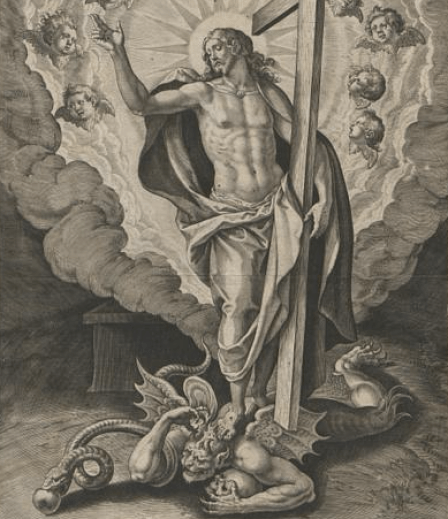
Spoiler alert. If you don’t want to know the resolution to all the twists and turns of the plot line of the Bible do not read on!
Jesus is the hero of the story. He saves the day. As Michael Emlet says, “If you read the Bible from cover to cover you realize that it narrates (proclaims!) a true and cohesive story: the good news that through Jesus Christ God has entered history to liberate and renew the world from its bondage to sin and suffering.”[i] He goes on; God “pursues the restoration of his creation at the cost of his own life. He is making all things new (Rev. 21:5)! That’s the simple and yet profound, life- and world-altering plotline of the Bible.”[ii]
The Bible is chiefly a story about God’s glory being displayed through the recompense of all things wicked, redemption of those made righteous, and finally, the reconciliation of all things in Christ.[iii] The Bible is a true story about God making the world, man messing it up, and God becoming a man to fix the world by not messing up. It is a story of Eden—exile—repeat. It is not until the true Adam, the true and righteous Son of God comes that this process is put to an end. All of Christ’s predeceases fell short; Adam, Noah, Abraham, Saul, David, Solomon, and the lambs, priests, and prophets could not fill Christ’s role.
From the beginning of time and the beginning of God’s word, the Word has been a prominent character in the script (Gen. 1:1; John 1:1). At first, the promised offspring (Gen. 3:15) is vague, in fact, Eve rejoiced because she thought she had the offspring (4:1) but it was all for naught for Cain was of the offspring of the serpent and killed his brother. However, now we have seen that which even the prophets longed to look (Matt. 13:17), we know that all Scripture finds its fulfillment in Jesus who is the long-awaited Christ (2 Cor. 1:20).
When Jesus came the first time, He had no beauty or majesty. When He comes again His face will shine like the sun in full strength (Rev. 1:16). We were cast out of the garden in the beginning but as Jesus said to the thief on the cross, we will be with Him in paradise in the end. Jesus is the linchpin among all the cogs of Scripture. “The trajectory of the arrow shot from the Hebrew Scriptures finds its target (fulfillment) in Jesus of Nazareth.”[iv]
The storyline of the Bible can be understood as creation, fall, redemption, and new creation. We can see the gospel in the storyline of the Bible. God loves us even though we have rebelled against Him. He has provided forgiveness for us through Jesus Christ and if we repent of our sin and trust in Him we will enjoy Him forever in heaven.
Through the creation part of the narrative we see that God made everything (Gen. 1:1; John 1:1-3) and it was good (Gen. 1:4; 10; 12; 18; 21; 25; 31). There was no sin, no death, and no problems before man sinned. Man had perfect fellowship with God.[v]
However, the plot thickens. A cosmic problem is introduced. Through Adam’s fall, we see the collapse of the creation, which explains why everything is no longer good. Man disobeyed and rebelled (Gen. 2:16-17; 3:6) and this brought spiritual and physical death (Gen. 2:17; 3:19), pain (3:16-17), difficulties (3:18-19), and separation from God (3:23-24). This is the bad news. We deserve death and hell.
But there is good news. This is not the end of the story. Even at the beginning of the story, God promised that He would send someone (that is, the Messiah/Christ) to defeat the “bad guy” (that is Satan) of the story (cf. Gen 3:15). In a similar scene, seen throughout the Bible, man’s nemesis is once again at it with him. Satan is tempting not Adam but the second Adam in the wilderness (Luke 4). However, unlike Adam in paradise, the second Adam does not give into the serpent’s temptation although He is in the desert. Jesus was tempted in every way that Adam was, and we are, yet He did not sin (Heb. 4:15) and still He bore our sin upon Himself.
Jesus became man so “that through death he might destroy the one who has the power over death, that is, the devil” (Heb. 2:14). Jesus’ heel was “bruised” at the cross but through that same cross, where He received the bruising, He struck the serpent with a definitive death blow to the head (cf. Gen. 3:15). From the cross, Jesus cried out, “It is finished!” In Jesus’ death, the devil, and death are defeated! He has delivered us from the domain of darkness (Col. 1:13). He disarmed the demonic rulers and authorities and put them to open shame, by triumphing over them through the cross (Col. 2:15).
Jesus is the promised one (Luke 24:27, 44-46; Acts 13:23, 27; 17:3; Rom. 1:2-4; 1 Cor. 15:3-4;) who brings the redemption of all things (cf. Rom. 5:10; Col. 1:20; Titus 2:14; Gal. 3:13; Eph. 1:7, 10). He secures for us an eternal redemption by means of His own blood (Heb. 9:12). Jesus Christ is the solution to the problem; He takes our sin, our problem, upon Himself on the cross. This is the good news; Jesus is the good news! Jesus reversed the curse of sin by becoming a curse for us (Gal. 3:13). Jesus was cast out of the garden so that we could be welcomed back in. Through the one man Adam we all have condemnation yet through the one Man Jesus Christ the grace of God has abounded for many (Rom. 5:12-21). We deserved to be crushed under God’s wrath because of our sin but instead Jesus was crushed in our place (Is. 52:13-53:12). Jesus is the solution to our problem of sin, the sole solution (Jn. 14:6; Act. 4:12). Jesus is the Lamb of God, without blemish, that takes away the sin of the world (John 1:29; Heb. 9:14)!
Jesus is the good news but the good news is not static it goes on and on and on; those in Christ live happily-ever-after. In contrast, God “will gather out of his kingdom all causes of sin and all law-breakers” (Matt. 13:41) and cast them into the pit of eternal fire (Rev. 20:14-15). “They will suffer the punishment of eternal destruction, away from the presence of the Lord and from the glory of his might” (2 Thess. 1:9). However, for those in Christ the story of history will have a happy ending (Rom. 8:29-39).
I concur with what C.S. Lewis says in The Last Battle,
“We can most truly say that they all lived happily ever after. But for them it was only the beginning of the real story. All their life in this world and all their adventures in Narnia had only been the cover and the title page: now at last they were beginning Chapter One of the Great Story which no one on earth has read: which goes on forever: in which every chapter is better than the one before.”[vi]
I believe we, upon arrival to the new Eden, will exclaim with Lewis’ Unicorn:
“I have come home at last! This is my real country! I belong here. This is the land I have been looking for all my life, though I never knew it to now. The reason why we loved the old Narnia [“old creation”] is that it sometime looked a little like this.”[vii]
Through Jesus the Christ we have the unwavering hope of a new creation (2 Peter 3:13). “The creation was subjected to futility” in Adam (Gen. 317-19) but in Christ “the creation itself will be set free from its bondage to corruption and obtain the freedom of the glory of the children of God” (Rom. 8:20-21). As Isaac Watts put it in “Joy to the World,”
“No more let sins and sorrows grow,
Nor thorns infest the ground;
He comes to make His blessings flow
Far as the curse is found,
Far as the curse is found.”
The problem (all of them!) will be fixed and there will be no more sin (Rev. 21:27; 22:3; Matt. 13:41). Everything will be more right than it was ever wrong. We will see that God did, in fact, work all things together for good (Rom. 8:28). Christ will make a new creation and we will be like Him (1 Jn. 3:2; Rom. 8:29; 2 Peter 1:4). “Just as we have borne the image of the man of dust, we shall also bear the image of the man of heaven” (1 Cor. 15:49). God will fulfill our deepest desires and we will finally love the LORD our God with all our heart, soul, mind, and strength when we receive our glorified bodies (Deut. 30:6; Jer. 31:33-34; 32:40; Phil. 3:20-21)! There will be no more pain or problems and God will wipe away all our tears (Rev. 7:17; 21:4). We will once again be in Paradise, the New Jerusalem, and we will have fellowship with God (Rev. 21:3)!
However, this story by its nature, by the fact that it claims to be true, does not leave us alone but calls for a response. We can receive this story or we can reject it outright. God can rewrite us, as it were, into His marvelous script or He can cast us, the unruly “cast,” into hell. We must respond to this story, will we respond rightly? Will we strive to obey the God who reveals Himself? Will we turn to Jesus in faith and repentance?
This is the gospel, the story of all the woes of existence finding their solution in Christ.
____________
[i] Emlet, CrossTalk, 41. A true and cohesive story contained within sixty-six books written by numerous people (with one divine author) in various languages (Hebrew, Greek, and Aramaic) over thousands of years! God’s word about the world being reconciled through the Word is truly amazing!
[ii] Ibid.
[iii] James M. Hamilton Jr. says that “in the broadest terms, the Bible can be summarized in four words: creation, fall, redemption, restoration” (God’s Glory in Salvation through Judgment: A Biblical Theology (Wheaton, IL: Crossway, 2010), 49) but the “ultimate end” of everything is “God’s glory in salvation through judgment.” He goes on to say, “The created realm (creation) is a spectacular theater that serves as the cosmic matrix in which God’s saving and judging glory can be revealed. God’s glory is so grand that no less a stage than the universe—all that is or was and will be, across space and through time—is nescessary for the unfolding of this all-encompassing drama” (Ibid., 53). See also John Piper’s book The Pleasures of God and Jonathon Edwards’ The End for Which God Created the World.
[iv] Emlet, CrossTalk, 47.
[v] Perfect in sense but not like it will be in the new creation; Adam and Eve related to God as creation to Creator and we will relate to God in the new creation as the redeemed to the Redeemer. So we will enjoy a consummated perfect fellowship with God.
[vi] C.S. Lewis, The Last Battle (New York: NY: Harper Collins, 2002), 228.
[vii] Ibid., 213.
Be Transformed by a New Consuming Passion


A Consuming Life Passion?
Instead of feigning for a substance or porn we need to have a new and better all consuming passion. We need to have a new purpose with a new goal as its end. We need a reason to get out of bed in the morning. We need a reason to be.
One of the fundamental questions that psychologists face is what is to be the motivational force in our lives? Is it to get rich? Propagate are genes? To enjoy as much pleasure as we can? What is to be the fuel for the engine of our lives? Do we have anything that can propel us through the sufferings and struggles of life?
This question cries out to be answered, and how it’s answered will have profound implications for the way that we live. Many, I’m sure, are unaware of their motivations and could care less about them. However, I’m sure that this is a great mistake.
The athlete, for instance, competes for a price and are very much aware of what that prize is. We, like the athlete, must not only be aware that there is a prize but what that prize is. We must seek to live with the intentionality of an athlete.
An athlete will discipline their body and bring it under subjection in pursuit of the prize. And when focused on the prize the athlete will gladly do away with hindrances. However, the athlete must have a goal, be competing for a prize, and have an idea of what that prize is if they are to have motivation to compete well.
Christians have Motivation to “Compete”
The language of running the race and competing for a prize were frequently used by the Apostle Paul. He was someone that clearly had a reason for getting out of bed in the morning. He had a consuming passion. He said, “I count everything as absolutely worthless compared to Christ.” Paul suffered the loss of all things in order that he could gain Christ. We also see that Jesus Himself raced the race and endured the cross for the joy that was set before Him.
We too need motivation. We need to be motivated like the Apostle Paul. We need the love of Christ to be the fuel that burns and propels us through the sufferings and struggles of life. Christ alone is sufficient motivation. Christ Jesus, as the Apostle Paul, Augustine, and Brian “Head” Welch, and many others make clear, alone satisfies and is it worth living for.
Here’s Brain “Head” Welch:
Take it from me, nothing you chase after on this earth will satisfy you like a real, everyday intimate relationship with Jesus Christ. Nothing. Trust me. While I was in Korn I had people waiting on me left and right. Anything I wanted, I got. Anywhere I wanted to go, I went. All I had to do was give the word, and it happened. I had the world in the palm of my hand, people; and I have to tell you one last time, there’s nothing there. I promise you. Jesus Christ is the only one that can make you complete. (Save Me from Myself)
The end of the last book of the Bible, the book of Revelation, tells us in chapter 21 what our ultimate goal is. To see God face to face, to be in the eternal temple where He will make all things new. Where He will wipe away every tear from our eye. Where there will be no more pain or crying anymore. Where we will have pleasure forevermore in His presence.
So we see that we have much that God has called us to do. We have much purpose. We have a reason to be. We would do well to set God’s truth before us so that we are motivated to live for the prize.
A verse that God has used to wake me up to the unseen realities and motivate me to purposeful living to His glory is 1 Corinthians 15:58. It says, “Therefore, my beloved brothers, be steadfast, immovable, always abounding in the work of the Lord, knowing that your labor in the Lord is not in vain.” This verse, when understood in the context of chapter 15, shows us that it makes sense for us to be motivated to labor for the Lord because of the reality of the resurrection of Jesus.
The Bible verse that says, “Whether you eat or drink, whatever you do, do you all to the glory of God” is not just a Bible verse. It is not just a good tagline under the name of some private Christian school. It is the way that it makes sense for us to live in light of the glorious gospel.
In a similar way, the oft-quoted phrase “our chief end [or main purpose in life] is to glorify God and enjoy him forever” is not a mere tagline but a phrase that gets at a biblical motivational reality.
Create Your Own Motivational Purpose Statement
We have laid a little bit of groundwork. Now it’s your turn. I want you to write out a biblically infirmed motivational purpose statement for your life.
Just write something down. It does not have to be able to stand the test of time like the Westminster Shorter Catechism on your first attempt. Your purpose statement can adapt and grow as you do.
My own purpose statement is not the best and I certainly could do better about purposely keeping it in my head so that it will be lived out through my hands. However, the purpose behind the statement is not to make it timeless or flawless. It is to be purposeful about our purpose. We have a purpose and it is great. We have a reason to wake up in the morning. A reason to be. I reason to say no to whatever sin it is that calls our name.



 in X
in X 