Diane Langberg, When the Church Harms God’s People
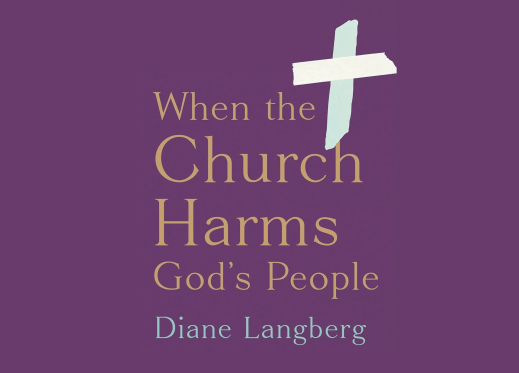
I really appreciated Diane Langberg’s book, When the Church Harms God’s People. Sadly, her book is very needed. Here are a few of my favorite quotes:
The body of Christ is called to be like Christ as individuals and as a gathered body of those who are one with him. Anything that does not look like Christ is not the church, even if it purports to be… We, the body of Christ, are called to follow our Head, be like our Head, carrying his light and truth into the world. Outward success, fame, wealth, and large numbers are not the fruit our Lord demonstrated during his earthly ministry. God’s purpose is to create a living body in which God is over and within each of its members as well as its corporate life.
Ministry growth, fame, and money are often taken as proof of God’s presence and work. But if that is true, then Jesus was an abject failure. He who had ultimate power and riches laid them aside. He did not grab onto them. He did not pursue them. They did not govern him. Proof of the presence of God is not found in the accoutrements of power and fame. It is found in likeness to his character.
If you want to be a shepherd/leader who honors God, the first thing you must know is that limitation is required for expansion. Incarnational leadership follows the opposite course of human leadership. Incarnational leadership descends from heaven to earth; it goes from up to down, from expansive to limited, from broad to narrow.
The infinite gathered himself up into a womb. All-Glory laid himself down in a barn. All-Power became a toddler. All-Love was slain. Such limitation is inconceivable to us. We think of limitation as an obstacle to overcome. We fight tiredness, sickness, and slowness. We believe that if we had more time, more energy, more ability, and more money, we could increase the good we want to accomplish. He, who never grows weary, knew tiredness. He, who is infinite and eternal, submitted to the clock. He, who is perfect, bore our sin and our sicknesses. Our God limited himself on all these fronts and more, and the resulting expansion is mind-boggling.
You want to live and work in the name of Jesus? If you want to lead the people of God in a way that expands his work and protects his honor, then you must do so by way of limitation. Restriction is foundational. There must be restriction of the tongue, the desires, the abilities, and the opinions of the self. There must be limitation of your way, your time frame, your speed, and your preference. There must be a limiting of the good, including your mental capacity, energy level, and powers of speech. If you want to lead, you must make yourself like those who are following. You must know their pace, their thoughts, their fears, and their needs.
We have erected beautiful buildings devoted to worship all over the world. We have created stunning music. We have raised up theology schools and trained theologians. Such things are not inherently wrong. But these things are not the church. A1ll these things can be externally beautiful yet become a den of thieves.To all of you who are shepherds: Your goal is not to preserve a church or human organization. Your goal is to serve your Lord and Shepherd, Jesus Christ.
Institutions, organizations, ministries, places, systems, and leaders may be part of Christendom, but that does not necessarily mean they reflect the ways of Jesus Christ. Nor is Christendom even the same as the living body of Christ; institutions and leaders can look Christian on the outside but be far away from Christ on the inside.
Church leaders and their followers often point to popularity, number of congregants, growing bank accounts, and particular political views as signs of God’s presence and blessing. None of these are listed in Scripture as signs of Christlikeness.
We often tend to select leaders in the Christian world according to their gifts rather than their character. We are often drawn to leaders whose intelligence, oratory, and social facility overshadow a weakness of character. When a leader is particularly gifted verbally, has a charismatic personality, and is adept with using spiritual language, it is easy to assume maturity and obedience to God. We see gifts and assume the leader’s character matches the image they project. Sadly, there have been charismatic leaders in the Christian world who achieved power and status because of their capacity for public speaking, vision casting, and entrepreneurial capabilities but had hidden character flaws such as lack of integrity or egotistical narcissism. We have watched thriving institutions crumble upon the discovery of ungodly leadership. Spiritual maturity is measured by character, by the fruit of the Spirit of God in a life.



 in X
in X 