The Importance of Correct Hermeneutics

If we don’t understand things in their proper context there will be grave results. Let’s look at a few verses as an example and apply a skewed hermeneutical approach and see what the result is.
John 3:16 says, “God sent His Son” and we see that Jesus as God’s son is confirmed in other Scriptures. Take for example Romans 8:32. Or Hebrews 5:8 tells us that although Jesus “was a son, He learned obedience.” Luke 2:42 says that “Jesus increased in wisdom and in stature and in favor with God and man.”
So, it could be argued that Jesus, as God’s Son, was created and had to learn. After all, doesn’t “son” mean “son”?! Isn’t that the clear reading of the text? If the Bible says that Jesus is a “son” and “the firstborn of all creation” does that mean that Jesus is not eternal? Does it mean that He is a created being?
If we just look at the word “son” and extrapolate its meaning without understanding the context and the sense in which the author is using the word we can make very dangerous and false conclusions. Is Jesus a son in the sense of being a created being? No! That is the Arian heresy. We must understand what the author meant and we must use clear texts to help us interpret the less clear. A bad hermeneutical approach will lead to all sorts of false and destructive doctrines.
When looking at any doctrine it is important to understand a number of things. When looking at the sonship of Jesus for example, it is important to know the Old Testament and cultural importance of sonship. It is also important that other Scriptures are factored in. For example, John 1:1-14 and Colossians 1:15-17 show us that Jesus is not created but instead Creator.
So, “the obscure passage must yield to the clear passage. That is, on a given doctrine we should take our primary guidance from those passages which are clear rather from those which are obscure.”[1] Charles Hodge said in his Systematic Theology that
“If the Scriptures be what they claim to be, the word of God, they are the work of one mind, and that mind divine. From this it follows that Scripture cannot contradict Scripture. God cannot teach in one place anything which is inconsistent with what He teaches in another. Hence Scripture must explain Scripture. If a passage admits of different interpretations, that only can be the true one which agrees with what the Bible teaches elsewhere on the same subject.”[2]
Here are some important affirmations for biblical hermeneutics:
- We should affirm the unity, harmony, and consistency of Scripture and declare that it is its own best interpreter.[3]
- We should affirm that any preunderstandings which the interpreter brings to Scripture should be in harmony with scriptural teaching and subject to correction by it.[4]
- We should affirm that our personal zeal and experiences should never be elevated above Scripture (see Rom. 10:2-3).
- We should affirm that texts of Scripture must be interpreted in context (both the immediate and broad context).
- We should affirm that we must only base normative theological doctrine on clear didactic passages that deal with a particular doctrine explicitly. So, we should affirm that we must never use implicit teaching to contradict explicit teaching.
______________________
[1] Bernard Ramm, Protestant Biblical Interpretation: A Textbook of Hermeneutics, 37.
[2] Charles Hodge, Systematic Theology, Vol. 1, Introduction, Chapter VI, The Protestant Rule of Faith.
[3] See “The Chicago Statement on Biblical Hermeneutics,” Article XVII.
[4] See Ibid., Article XIX.
Paul’s Letters

Philemon: A Case Study of New Life in Christ (Part 1)

We see in Paul’s letter to the Colossians[1] that Christians are to put on the new self with new practices, new characteristics. And Paul tells us about the unprecedented unification and reconciliation that happens in Christ between all sorts of different people. Paul says, “there is not Greek and Jew, circumcised and uncircumcised, barbarian, Scythian, slave, free; but Christ is all, and in all” (Col. 3:11 cf. 1 Cor. 12:13-14; Gal. 3:26-27).
But will this really work?! Paul is talking all this big talk but can it ever be practiced. He says, here there is neither slave nor free, and yet there truly were slaves and freemen. There really were Greeks and Jews. There were and are people that are in the world and see the world in all sorts of different ways. How can they be united? Is it really possible? And if so, how?! Read More…

In 2017, let’s consume the Word and diet everything else

The average American spends 50 minutes of their time each day on Facebook’s platforms (Facebook, Instagram, Messenger). That is one-sixteenth of the average American’s waking time.
Facebook, the web, ESPN, and news networks are built to engage and grab us (except perhaps CSPAN). There is a lot riding on whether or not we spend five or fifty minutes on Facebook. There is a lot invested to make us scroll, click, share… There are people fighting for our fascination and time. There are specialists employed and there are algorithms designed to grab our attention.
Of course, I am not the social media police, this is not 1984 or Fahrenheit 451. You can be on social media. I am. Twitter, Instagram, Snapchat, Facebook, Messenger… However, let’s consider the way we plan to spend our time in 2017.
D.A. Carson has said,
“The challenge [to reading Scripture] has become increasingly severe in recent years, owing to several factors. All of us must confront the regular sins of laziness… The sheer pace of life… The constant sensory input from all sides is gently addictive—we become used to being entertained and diverted, and it is difficult to carve out the space and silence necessary for serious and thoughtful reading of Scripture.”[1]
Carson said that in a book published in 1998—18 years ago!—before the iPhone and before dial-up was replaced! Things have changed since 1998. Read More…
“Treasure in the Right Place” sermon on Matthew 6:19-34

Below are some follow up questions for you consider related to my message “Treasure in the Right Place” from Matthew 6:19-34.
Discussion/Application Questions:
-
Is it true that worry often tells us what we worship?
-
Is it true that we can be orthodox and even astute theologically and actually have our heart somewhere else entirely?
-
Is it true that social media and shopping malls shape us and our views of significance and security subtly but substantially?
-
Materialism may be the single greatest pull away from authentic Christianity (cf. Deut. 6 esp. v.10-13). What do you think?
- What does it mean to “lay up treasures in heaven”? What are “treasures” in heaven?
- How do vv. 25-34 relate to the previous verses (vv. 19-24)? How do we apply these verses to our context in Fairfax?
- How can we purposely invest in heaven and not drift to the service of other gods?
- Daily and seriously ask yourself, “Is life more than food, and the body more than clothing?”
- Ask yourself if what you’re focused on and are worried about will stand the test of eternity.
- In chapter 6:1-18 we see the word “reward” 6 times (ESV) and then in vv. 19-21 we see “treasure” used 3 times (ESV). Do we very often think about the “reward” and “treasure” that awaits us in heaven? Remember, anxiety produces nothing; except perhaps ulcers. And remember, anxiety isn’t inevitable. What can help us loosen the grip of anxiety upon our life?
Quote from the Message:
“In the day-to-day trenches of adult life, there is actually no such thing as atheism. There is no such thing as not worshipping. Everybody worships. The only choice we get is what to worship…” and the thing is “If you worship money and things—if they are where you tap real meaning in life—then you will never have enough. Never feel you have enough. It’s the truth. Worship your own body and beauty and sexual allure and you will always feel ugly, and when time and age start showing, you will die a million deaths before they finally plant you. On one level, we all know this stuff already… The whole trick is keeping the truth up- front in daily consciousness. Worship power—you will end up feeling weak and afraid, and you will need ever more power over others to numb your own fear. Worship your intellect, being seen as smart—you will end up feeling stupid, a fraud, always on the verge of being found out.” And so on.
He goes on to say, “Look, the insidious thing about these forms of worship is not that they’re evil or sinful; it is that they are unconscious. They are default-settings. They’re the kind of worship you just gradually slip into, day after day… And the so-called real world will not discourage you from operating on your default- settings, because the so-called world of men and money and power hums along quite nicely on the fuel of fear and contempt and frustration and craving and the worship of self. ” – From a commencement speech given by David Foster Wallace to the 2005 graduating class at Kenyon College
Recommended Resources:
A 20 Day Study in Stewardship by Redeemer Presbyterian Church
20+ Proverbs for those Pining for Substances or Porn

- “My son, if sinners entice you, do not consent” (Prov. 1:10 cf. v. 17-18)
- “Do not enter the path of the wicked, and do not walk in the way of the evil. Avoid it; do not go on it; turn away from it and pass on” (Prov. 4:14-15)
- “The iniquities of the wicked ensnare him, and he is held fast in the cords of his sin. He dies for lack of discipline, and because of his great folly he is led astray” (Prov. 5:22-23)
- “Whoever heeds instruction is on the path to life, but he who rejects reproof leads others astray” (Prov. 10:17)
- “Whoever despises the word brings destruction on himself, but he who reveres the commandment will be rewarded” (Prov. 13:13)
- “The teaching of the wise is a fountain of life, that one may turn away from the snares of death” (Prov. 13:14)
- “Whoever walks with the wise becomes wise, but the companion of fools will suffer harm” (Prov. 13:20)
- “The backslider in heart will be filled with the fruit of his ways, and a good man will be filled with the fruit of his ways” (Prov. 14:14)
- “The fear of the LORD is a fountain of life, that one may turn away from the snares of death” (Prov. 14:27)
- “There is severe discipline for him who forsakes the way; whoever hates reproof will die” (Prov. 15:10)
- “Whoever isolates himself seeks his own desire; he breaks out against all sound judgment” (Prov. 18:1)
- “Wine is a mocker, strong drink a brawler, and whoever is led astray by it is not wise” (Prov. 20:1 cf. 23:29-35)
- “One who wanders from the way of good sense will rest in the assembly of the dead” (Prov. 21:16)
- “Whoever loves pleasure will be a poor man; he who loves wine and oil will not be rich” (Prov. 21:17)
- “Let not your heart envy sinners, but continue in the fear of the LORD all the day” (Prov. 23:17)
- “Be not among drunkards or among gluttonous eaters of meat, for the drunkard and the glutton will come to poverty, and slumber will clothe them with rags” (Prov. 23:20-21)
- “A man without self-control is like a city broken into and left without walls” (Prov. 25:28)
- “Like a dog that returns to his vomit is a fool who repeats his folly” (Prov. 26:11)
- “Whoever digs a pit will fall into it, and a stone will come back on him who starts it rolling” (Prov. 26:27)
- “Whoever conceals his transgressions will not prosper, but he who confesses and forsakes them will obtain mercy. Blessed is the one who fears the LORD always, but whoever hardens his heart will fall into calamity” (Prov. 28:13-14)
A Biblical Basis for Social Media?

The genesis of social media was in Genesis. No we don’t see Snapchat or MySpace but we do see the raw material. That is, theologically.
Humanity is made in the image of the triune, relational, three in one God. So we have an innate need for connectivity. We’re hardwired for it. It’s in our internal processing. We are social (media) beings.
We also see that humanity is to subdue the earth. This results in technological advances, even within the book of Genesis (you could consider the naming of the animals “technology”).[1] Of course, Facebook and the invention of the book hadn’t happened. But advances were being made.
Humanity is made in the image of the triune, relational, three in one God. So we have an innate need for connectivity. We’re hardwired for it. It’s in our internal processing. We are social (media) beings.
So we see that the desire to be connected and the desire for technological advances is not inherently bad. A case could be made to say connectivity and technological advances are “very good.” At the very least being connected and using advances is not bad in itself. However we also see something else really important that we must consider from the beginning of Genesis.
The Fall. The Fall didn’t do away with our need to be connected or to make advances and subdue the earth but it did corrupt it.
So what do these observations from Genesis have to do with social media?
It means that there are elements about social media that are good and there are elements about social media that are not good. It means that social media is not wholly good or wholly bad. It means that we must be careful consumers. We must be proactive and evaluative, not inactive and absorptive.
I plan to post more on this subject later but here are some other relevant posts:
“Unrestricted Consumption of Electric Candy Bars”
“The Megalomania of Mass Media”
“Technology: Connected and Out of Touch”
“Delights, Deceits, and Dangers of the Digital Age”
_______________
[1] There were a lot of significant advances that we see in the beginning of Genesis. “Gardening and naming in Genesis 2, farming and clothes making in Genesis 3, city building and harp and pipe playing in Genesis 4, shipbuilding in Genesis 6, altar building in Genesis 8, fruit growing and wine making in Genesis 9, brick baking in Genesis 11, tent making in Genesis 12” (Steve Turner, Popcultured, 43).
The Storyline of Scripture
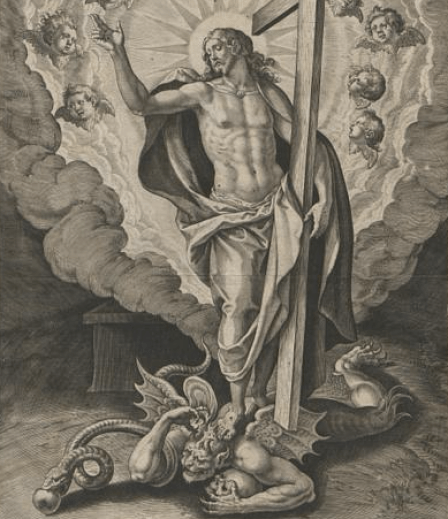
Spoiler alert. If you don’t want to know the resolution to all the twists and turns of the plot line of the Bible do not read on!
Jesus is the hero of the story. He saves the day. As Michael Emlet says, “If you read the Bible from cover to cover you realize that it narrates (proclaims!) a true and cohesive story: the good news that through Jesus Christ God has entered history to liberate and renew the world from its bondage to sin and suffering.”[i] He goes on; God “pursues the restoration of his creation at the cost of his own life. He is making all things new (Rev. 21:5)! That’s the simple and yet profound, life- and world-altering plotline of the Bible.”[ii]
The Bible is chiefly a story about God’s glory being displayed through the recompense of all things wicked, redemption of those made righteous, and finally, the reconciliation of all things in Christ.[iii] The Bible is a true story about God making the world, man messing it up, and God becoming a man to fix the world by not messing up. It is a story of Eden—exile—repeat. It is not until the true Adam, the true and righteous Son of God comes that this process is put to an end. All of Christ’s predeceases fell short; Adam, Noah, Abraham, Saul, David, Solomon, and the lambs, priests, and prophets could not fill Christ’s role.
From the beginning of time and the beginning of God’s word, the Word has been a prominent character in the script (Gen. 1:1; John 1:1). At first, the promised offspring (Gen. 3:15) is vague, in fact, Eve rejoiced because she thought she had the offspring (4:1) but it was all for naught for Cain was of the offspring of the serpent and killed his brother. However, now we have seen that which even the prophets longed to look (Matt. 13:17), we know that all Scripture finds its fulfillment in Jesus who is the long-awaited Christ (2 Cor. 1:20).
When Jesus came the first time, He had no beauty or majesty. When He comes again His face will shine like the sun in full strength (Rev. 1:16). We were cast out of the garden in the beginning but as Jesus said to the thief on the cross, we will be with Him in paradise in the end. Jesus is the linchpin among all the cogs of Scripture. “The trajectory of the arrow shot from the Hebrew Scriptures finds its target (fulfillment) in Jesus of Nazareth.”[iv]
The storyline of the Bible can be understood as creation, fall, redemption, and new creation. We can see the gospel in the storyline of the Bible. God loves us even though we have rebelled against Him. He has provided forgiveness for us through Jesus Christ and if we repent of our sin and trust in Him we will enjoy Him forever in heaven.
Through the creation part of the narrative we see that God made everything (Gen. 1:1; John 1:1-3) and it was good (Gen. 1:4; 10; 12; 18; 21; 25; 31). There was no sin, no death, and no problems before man sinned. Man had perfect fellowship with God.[v]
However, the plot thickens. A cosmic problem is introduced. Through Adam’s fall, we see the collapse of the creation, which explains why everything is no longer good. Man disobeyed and rebelled (Gen. 2:16-17; 3:6) and this brought spiritual and physical death (Gen. 2:17; 3:19), pain (3:16-17), difficulties (3:18-19), and separation from God (3:23-24). This is the bad news. We deserve death and hell.
But there is good news. This is not the end of the story. Even at the beginning of the story, God promised that He would send someone (that is, the Messiah/Christ) to defeat the “bad guy” (that is Satan) of the story (cf. Gen 3:15). In a similar scene, seen throughout the Bible, man’s nemesis is once again at it with him. Satan is tempting not Adam but the second Adam in the wilderness (Luke 4). However, unlike Adam in paradise, the second Adam does not give into the serpent’s temptation although He is in the desert. Jesus was tempted in every way that Adam was, and we are, yet He did not sin (Heb. 4:15) and still He bore our sin upon Himself.
Jesus became man so “that through death he might destroy the one who has the power over death, that is, the devil” (Heb. 2:14). Jesus’ heel was “bruised” at the cross but through that same cross, where He received the bruising, He struck the serpent with a definitive death blow to the head (cf. Gen. 3:15). From the cross, Jesus cried out, “It is finished!” In Jesus’ death, the devil, and death are defeated! He has delivered us from the domain of darkness (Col. 1:13). He disarmed the demonic rulers and authorities and put them to open shame, by triumphing over them through the cross (Col. 2:15).
Jesus is the promised one (Luke 24:27, 44-46; Acts 13:23, 27; 17:3; Rom. 1:2-4; 1 Cor. 15:3-4;) who brings the redemption of all things (cf. Rom. 5:10; Col. 1:20; Titus 2:14; Gal. 3:13; Eph. 1:7, 10). He secures for us an eternal redemption by means of His own blood (Heb. 9:12). Jesus Christ is the solution to the problem; He takes our sin, our problem, upon Himself on the cross. This is the good news; Jesus is the good news! Jesus reversed the curse of sin by becoming a curse for us (Gal. 3:13). Jesus was cast out of the garden so that we could be welcomed back in. Through the one man Adam we all have condemnation yet through the one Man Jesus Christ the grace of God has abounded for many (Rom. 5:12-21). We deserved to be crushed under God’s wrath because of our sin but instead Jesus was crushed in our place (Is. 52:13-53:12). Jesus is the solution to our problem of sin, the sole solution (Jn. 14:6; Act. 4:12). Jesus is the Lamb of God, without blemish, that takes away the sin of the world (John 1:29; Heb. 9:14)!
Jesus is the good news but the good news is not static it goes on and on and on; those in Christ live happily-ever-after. In contrast, God “will gather out of his kingdom all causes of sin and all law-breakers” (Matt. 13:41) and cast them into the pit of eternal fire (Rev. 20:14-15). “They will suffer the punishment of eternal destruction, away from the presence of the Lord and from the glory of his might” (2 Thess. 1:9). However, for those in Christ the story of history will have a happy ending (Rom. 8:29-39).
I concur with what C.S. Lewis says in The Last Battle,
“We can most truly say that they all lived happily ever after. But for them it was only the beginning of the real story. All their life in this world and all their adventures in Narnia had only been the cover and the title page: now at last they were beginning Chapter One of the Great Story which no one on earth has read: which goes on forever: in which every chapter is better than the one before.”[vi]
I believe we, upon arrival to the new Eden, will exclaim with Lewis’ Unicorn:
“I have come home at last! This is my real country! I belong here. This is the land I have been looking for all my life, though I never knew it to now. The reason why we loved the old Narnia [“old creation”] is that it sometime looked a little like this.”[vii]
Through Jesus the Christ we have the unwavering hope of a new creation (2 Peter 3:13). “The creation was subjected to futility” in Adam (Gen. 317-19) but in Christ “the creation itself will be set free from its bondage to corruption and obtain the freedom of the glory of the children of God” (Rom. 8:20-21). As Isaac Watts put it in “Joy to the World,”
“No more let sins and sorrows grow,
Nor thorns infest the ground;
He comes to make His blessings flow
Far as the curse is found,
Far as the curse is found.”
The problem (all of them!) will be fixed and there will be no more sin (Rev. 21:27; 22:3; Matt. 13:41). Everything will be more right than it was ever wrong. We will see that God did, in fact, work all things together for good (Rom. 8:28). Christ will make a new creation and we will be like Him (1 Jn. 3:2; Rom. 8:29; 2 Peter 1:4). “Just as we have borne the image of the man of dust, we shall also bear the image of the man of heaven” (1 Cor. 15:49). God will fulfill our deepest desires and we will finally love the LORD our God with all our heart, soul, mind, and strength when we receive our glorified bodies (Deut. 30:6; Jer. 31:33-34; 32:40; Phil. 3:20-21)! There will be no more pain or problems and God will wipe away all our tears (Rev. 7:17; 21:4). We will once again be in Paradise, the New Jerusalem, and we will have fellowship with God (Rev. 21:3)!
However, this story by its nature, by the fact that it claims to be true, does not leave us alone but calls for a response. We can receive this story or we can reject it outright. God can rewrite us, as it were, into His marvelous script or He can cast us, the unruly “cast,” into hell. We must respond to this story, will we respond rightly? Will we strive to obey the God who reveals Himself? Will we turn to Jesus in faith and repentance?
This is the gospel, the story of all the woes of existence finding their solution in Christ.
____________
[i] Emlet, CrossTalk, 41. A true and cohesive story contained within sixty-six books written by numerous people (with one divine author) in various languages (Hebrew, Greek, and Aramaic) over thousands of years! God’s word about the world being reconciled through the Word is truly amazing!
[ii] Ibid.
[iii] James M. Hamilton Jr. says that “in the broadest terms, the Bible can be summarized in four words: creation, fall, redemption, restoration” (God’s Glory in Salvation through Judgment: A Biblical Theology (Wheaton, IL: Crossway, 2010), 49) but the “ultimate end” of everything is “God’s glory in salvation through judgment.” He goes on to say, “The created realm (creation) is a spectacular theater that serves as the cosmic matrix in which God’s saving and judging glory can be revealed. God’s glory is so grand that no less a stage than the universe—all that is or was and will be, across space and through time—is nescessary for the unfolding of this all-encompassing drama” (Ibid., 53). See also John Piper’s book The Pleasures of God and Jonathon Edwards’ The End for Which God Created the World.
[iv] Emlet, CrossTalk, 47.
[v] Perfect in sense but not like it will be in the new creation; Adam and Eve related to God as creation to Creator and we will relate to God in the new creation as the redeemed to the Redeemer. So we will enjoy a consummated perfect fellowship with God.
[vi] C.S. Lewis, The Last Battle (New York: NY: Harper Collins, 2002), 228.
[vii] Ibid., 213.
Why was the Blind Man Healed Twice?
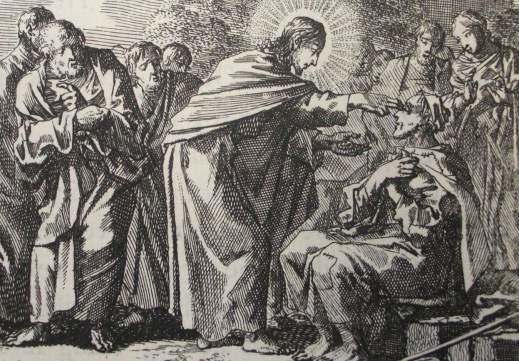
Why would Jesus touch the blind man twice to heal him? Surely He had the power to heal him the first time. So, it would appear to me that there is some significance for why this healing happened this way. Though, in this as with all Scripture we must remember that the hidden things belong to the LORD but the things that have been revealed belong to us (Deut. 29:29). Thus, we cannot take all of the mystery out of this passage but we can offer a few reasons for why this miracle went down as it did (Remember Jesus could have done it much differently cf. Matt. 9:27-31; Jn. 9:1-12). Here is the text under question:
[22]And they came to Bethsaida. And some people brought to him a blind man and begged him to touch him. [23]And he took the blind man by the hand and led him out of the village, and when he had spit on his eyes and laid his hands on him, he asked him, “Do you see anything?” [24]And he looked up and said, “I see people, but they look like trees, walking.” [25]Then Jesus laid his hands on his eyes again; and he opened his eyes, his sight was restored, and he saw everything clearly. [26]And he sent him to his home, saying, “Do not even enter the village.” (Mark 8:14-26)
As with any passage, the context must be considered. This is a cursory look at the passage but we should be able to get at the reason for the double healing. So in the broad context of the New Testament and the Gospels there is quite a lot about spiritual seeing. In Mark chapter four Jesus explains His use of parables. He said (see Mk. 4:10-12) I use parables “so that ‘they may indeed see but not perceive, and may indeed hear but not understand, lest they should turn and be forgiven’” ( cf. Is. 6:9-10).
In the immediate context in chapter 8 we see that Jesus talks about “seeing,” i.e. understanding. He says, “Having eyes do you not see, and having ears do you not hear? And do you not remember? When I broke the five loaves for the five thousand, how many baskets full of broken pieces did you take up?” They said to him, “Twelve.” “And the seven for the four thousand, how many baskets full of broken pieces did you take up?” And they said to Him, “Seven.” And He said to them, “Do you not yet understand?’” (Mk. 8:18-21).
After this the disciples and Jesus (“they”) went to Bethsaida (Mk. 8:22). So there was some time that elapsed between verse 21 and verse 22 in historical reality. Yet Mark places the healing of the blind man directly following the conversation between Jesus and the disciples.
Why? And why such a strange healing? Why would Jesus spit in the blind man’s eyes and yet not completely heal him? Why would he still have poor sight (Mk. 8:24)? Why would Jesus have to touch him again (Mk. 8:25)?
Based on the context I think it reminds us of the disciples and their vision. They “see,” i.e. understand, but their understanding is still very poor. They too will need a second touch. Notice what follows this passage. Jesus asks His disciples, “What do you say that I am?” Peter as the disciples typical spokesman said, “You are the Christ.”
Jesus is essentially asking the disciples, “Do you see, do you understand?” The disciples respond, “Yes, we see you are the Christ.” Yet, they did not know but they didn’t see as clearly as they thought they did. They saw “men , but they look like trees,” you could say (Mk. 8:24). This is proven later especially by the once very vocal Peter as he denies Jesus (Mk. 14:66-72). He truly did not see what it meant for Jesus to be the Christ. He too needed a second touch. He too needed to be healed of his blindness.
Thus I think in retrospect the healing of the blind man in this passage is a type of parable. Jesus asked, “Having eyes do you not see, and having ears do you not hear? And do you not remember?” (Mk. 8:18). The disciple did see and yet they did not see. It is a strange paradox. They had in a sense been healed as the blind man but their vision, their understanding, was still a long way off. Their vision would not be truly “fixed” until they saw the Lord again and He fixed them (Mk. 16:12-14). At the end of Luke, after Jesus’ resurrection, we see that Jesus gave the disciples the correct understanding of the Christ that they lacked (Lk. 24:27, 44-47). After this lens adjustment they could see clearly.
So why was the blind man healed twice? I think to teach something about the disciples. And about us. It appears that way to me based on the immediate context of the passage and the way that blindness and seeing is used in Scripture. It has also been pointed out to me that there is a chiastic structure in this passage. Here’s the diagram:
A: The Apostles don’t see clearly (vv. 14-21)
B: The blind man can’t see clearly (vv. 22-24)
B’: The blind man can see clearly (vv. 25-26)
A’: The Apostles see clearly (vv. 27-30)
We see that the blind man needed a second touch, the Apostles needed a second touch, and we often need second, third, fourth, etc., touches to see as well. We need more contact with Jesus the Lord of life if we are going to see.



 in X
in X 