Is abortion morally justifiable?
Here are a few things I left out of the video…
Thinking and talking about abortion is very difficult but also important. I, therefore, ask that you consider what I say before discounting it. I have strived to consider the subject with compassion and candor. So, out front, I want to say two things: First, I believe abortion is clearly wrong and cannot be morally justified in any circumstance. Second, and very important, there is grace, forgiveness, and hope for those who have had an abortion.
We all do wrong. The Bible says everyone is a sinner. But it also thankfully says that whosoever—liar, thief, cheat—goes to Jesus in faith and repentance can receive new life and be saved by the grace of God. All our sins can be washed away. First John 1:9 gives us all hope: “If we confess our sins, He is faithful and just to forgive our sins and to cleanse us from all unrighteousness.” It is vital that we all remember that there is grace, forgiveness, and hope for all!
And here are some statistics about abortion in America that I left out too…
- Since 1973, there have been 59,000,000 reported and legal abortions. That’s more than the total population of California and Virginia.
- There were 908,000 abortions in 2015.
- 1/4 of American women will have an abortion by the time they are forty-five.
- Reasons why women have an abortion:
- 1% listed rape or incest
- 6% listed potential health problems
- 93% listed social reasons:
- Abortion brings several health risks:
- Breast cancer
- Ectopic (tubal) pregnancy
- Bad effects on future pregnancies
- Becoming sterile
- Sexual dysfunction
- Mental health risks
Books you should’ve read in 2017

I’m being facetious in the title.[1] But here are my favorite books that I read in 2017. They are in no particular order. That would be too difficult. If I could make you read just one book, however, it would be The Tech-Wise Family by Andy Crouch.
- John M. Perkins, Let Justice Roll Down
- William Lane Craig, Reasonable Faith
- Ben Sasse, The Vanishing American Adult
- Andy Crouch, The Tech-Wise Family
- Andrew T. Walker, God and the Transgender Debate
- Ishmael Beah, A Long Way Gone
- Tim Challies, Do More Better
- Nabeel Qureshi, Seeking Allah, Finding Jesus
- Frank Turek, Stealing from God
- John S. Dickerson, The Great Evangelical Recession
Not all “facts” are created equal (and other proverbs for today)

A few important and relevant things I’ve found to be true through my short tenure on earth:
1. Statistics can be skewed (in all sorts of ways).
2. Money talks, and sometimes money makes people talk about facts that don’t actually exist.
3. “Sound bites” don’t equal sound knowledge.
4. Video doesn’t always equal validation.
5. One side sounds right until you hear the other (and a lot of times people don’t listen to or understand the other side).
6. People have agendas (and agendas come through more or less depending on the topic and the person).
7. Not everyone is a specialist (e.g. movie stars getting interviewed about their political opinion might be entertaining but it’s typically not educational).
8. “I read it on the internet” doesn’t equal truth (even if you see the same thing in a few places).
9. Science sold as fact is actually often still theory.
10. Dogmatic assertions should sometimes be doubted (or at least checked and not just by Google).
11. There is a difference between knowing something and wisdom (and the difference can be a matter of life of death).
12. Unless there is objective truth, the exhortation for people to be kind (e.g. planet care, respecting others, and not harming others) is subjective and relative to the whim of individuals (and thus doesn’t really need to be heeded).[1]
13. The idea that there is objective truth is often unpopular but that doesn’t make it wrong.
14. People are often not familiar with what various fallacies are but that doesn’t mean that they are inept in their employment.
15. We can’t have a peaceful world where each person does what is right in their own eyes because people have conflicting desires that will lead to unpeaceful ends.[2]
16. No political leader is the Promised One[3] (no matter what they, the media, your friends, or your psyche says).
17. Money can’t buy happiness (but it can buy distraction); however, happiness can be quite cheap.
18. Video games, YouTube, and social media can keep us away from things that are much more rewarding and fun.
What ones do you like and not like? Why? And what would you add?
______________
[1] That is, it ultimately does not matter morally if people “be kind and rewind,” recycle, or are racist if there is actually no objective right and wrong. However, if there is right and wrong, and it is right to recycle, then that means that there are some objective criteria of right and wrong not determined by me or you and that means that objective truth will have things about it that are not appealing to us but that does not change the truthfulness of the issues under question (whether murder, recycling, or a thousand other things). If not recycling is objectively wrong then so are many other things, some of which we would not like to be wrong (e.g. overeating moose tracks ice cream). We can’t have our cake and eat it too. We can’t both have and not have morality. It just doesn’t work that way. It’s an impossibility.
[2] Thus, the answer for world peace is not accepting that everything is relative (“whatever’s right for you”) but by patiently and loving communicating truth so that people can be sympathetically aligned (though not anonymous).
[3] As in the Christ/Messiah of Scripture.
A (Very) Brief History of Art and the Church [Part I]

The Christian Church has a long and varied heritage when it comes to art.[1] That being the case, it is instructive for us to briefly understand some of the issues involved. This will help us better grasp the Church’s present situation when it comes art.
Christians, at first, as a small unpopular and often persecuted group did not produce works of art that were distinctly Christian or had an impact on secular culture. Early Christian art mainly used pagan vocabulary to express Christian sentiment.[2] “Until roughly A.D. 200 most visual imagery was found in catacombs, the burial places (and sometime hiding places) of Christians.”[3]
“In the third century, as Christianity become more established, marble imagery appeared, though it continued to portray the same images used by the early Christians.”[4] However, the biggest change came with the conversion of Constantine the Great (in 312), the Roman Emperor, and the Edict of Milan (in 313) when Christianity was granted religious toleration within the Roman Empire. After the edict, Christians were free to publically display their faith through art and architecture. After this period we begin to see Christian art flourish.
By 574 we see amazing buildings with huge mosaics depicting scenes from the Old and New Testament being dedicated (like San Vitale). The murals and mosaics were especially important because many people were illiterate and did not have Scripture in their language (e.g. the Mass was in Latin). Although, images were helpful in promoting worship some also saw the use of images as dangerous.
“Images, no matter how discretely chosen, come freighted with conscious or subliminal memories; no matter how limited their projected use, they burn indelible outlines into the mind… Images not only express convictions, they alter feelings and end up justifying convictions.”[5]
One of the dangerous, for some, was the veneration of icons. There are three stages in the development of icons. First, “As the emperor’s image represented the presence of the emperor, Christ’s image, or the image of a saint, came to serve as a kind of ‘proxy’ for their presence.”[6] These images assisted the veneration of the saints. Second, there was a rise in the use of imagery in private devotions. People began to go on pilgrimages to shrines or churches. “The third stage occurred at the end of the seventh century, when portraits or images of Christ and the saints began to appear as isolated frontal figures” and “by the beginning of the eighth century it had become common practice to venerate these images, which meant that honor paid to the image honored the person represented.”[7]
These developments brought controversy to the Church. “The practice in the East of venerating the image of Christ inevitably caused those accustomed to a more symbolic orientation to react. Christians who opposed the use of images in worship generally felt that these objects marginalized the work of Christ.”[8] In fact the controversy got so bad that in 730 Emperor Leo II destroyed the “images of Christ, his mother, and the saints.”[9]
Clearly then, the Church took art and the use of images in various forms very seriously.
“The icon… was much more than an aesthetic image to grace the church and stimulate holy thoughts. It was something that expressed deeply held theological convictions, and it was meant to move the viewer to love and serve God. In many respects, an icon was theology in a visual form, and the practice of making an icon itself represented a spiritual discipline.”[10]
However, did the Church cross the line of making idols that were so clearly and vehemently condemned by the prophets in the Old Testament (e.g. Is. 44:12-20)?
During the Early Renaissance, “a renewal in the arts was closely connected with reform movements that began springing up throughout western Europe.”[11] During this period many massive cathedrals were built (e.g. Salisbury Cathedral and Reims Cathedral).
“These great structures, which must have been extremely impressive amid the modest building around them, not only became the center of the social and religious life of the community but were actually intended to be a microcosm of the world. An image of the last judgment was frequently located over the central portal of the cathedral…, reminding those entering of God’s judgment, which was avoided only by eating the holy Eucharist. The space of the church represented the ‘ark of salvation.’ On either side of the portal were images of the prophets and apostles, on whose word rested the hope of God’s people.”[12]
During this period there were also seeds planted that would eventually rise up and challenge the extravagance of the Church and her art. We see this for example through the work of St. Francis of Assisi and St. Dominic of Spain. For example, Francis and Dominic emphasized simplicity and mission.
Next, we will look at the impact of the Reformation on art within the Church. But at this point, it will be helpful for us to see what we can learn from what we have seen from history so far. So, here are a few questions to consider:
- What are some dangerous to avoid when it comes to art and the church?
- What do you think about the extravagance of the church?
- What concerns should we have?
- What takeaways for our modern context of cinderblocks, cement, lights, and lasers?
- How did art serve the purpose of the early church?
- Can art still serve the purpose of the church? If so, how?
- What should we be cautious of regarding art and the church?
__________________
[1] For a brief and interesting introduction see “The History of Liturgical Art.”
[2] William A. Dyrness, Visual Faith, 26.
[3] Dyrness, Visual Faith 26.
[4] Ibid., 27.
[5] Thomas Matthews, The Clash of the God, 11.
[6] Dyness, Visual Faith, 35.
[7] Ibid., 35.
[8] Ibid., 36.
[9] Ibid., 37.
[10] Ibid., 37.
[11] Ibid., 38.
[12] Ibid., 39-40.
Christianity is Polarizing

Christianity is polarizing, but why?
Teachers in public schools can’t share a Bible verses with their students, let alone lead a Bible study (at least in Fairfax, VA). However, if they started a club on Plato and Aristotle’s teaching it probably wouldn’t be a problem. Actually, they would probably be able to discuss Mein Kampf and it would be less alarming than Jesus’ command to love our neighbors.
Why is this the case? Christianity has not proved to be unhealthy for individuals or society (I could make a good argument for the converse though); and there are many people in America (and in Fairfax, VA) that claim to be Christians. A lot more than claim to hold to platonism, for example.
What makes Christianity polarizing?
The two main things Christians are called to do is love God and love their neighbor. That doesn’t sound so bad. The Bible tells Christians that true religion is to take care of widows and orphans.
Christianity has had a very important place in starting schools and universities (e.g. Princeton, Harvard, Yale), various hospitals, orphanages, and, of course, chic-fil-a. Christianity brought us the YMCA (Young Men’s Christian Association) which brought us basketball which brought us the NBA… and Jordan… and Lebron…
So, what makes Christianity so polarizing? It seems like it has a lot of good aspects. Actually, Jesus Christ, who Christians worship and follow died for people that hated him; and Christians are called to love, serve, and sacrifice in the same way that he did. That’s why, for example, medical missions and orphanages sprouted up.
The Bible, the book that Christians follow, is the number one best seller of all time. No matter what people think about the truth claims of the book it is a work of profound literature. Even Richard Dawkins, a staunch atheist and many ways hater of religion, does not deny that it is an important book.
What causes all the problems when it comes to Christianity? Perhaps it’s that it teaches that we are (all) to love God and love our neighbors. We are (all) called to care for orphans and widows. We are (all) called to love in sacrificial ways.
Perhaps people appreciate these things but know that they are called to do them but don’t live up to them. Perhaps they feel guilty about it. Perhaps it’s a mixture of things. Perhaps people know that Christianity teaches that all are sinners in need of redemption.
Perhaps people know that Christianity teaches that all are sinners in need of redemption. Perhaps that’s offensive to some people, even though it seems to be a very empirical reality.
What do you think? Why is Christianity so polarizing?
Art through the Eyes of Faith

Introduction: How should we think about art? Why has art had such a varied history? What explains why we can relate to both “sad reflective art” as well as “joyous exuberant art”? How does art in its various forms sometimes make us yearn for something that seems out of reach?
These are big questions and questions that have been answered by many better minds than my own. However, I believe as we look to God’s Word as our guide we will be able to make some significant observations that will better position us to answer them.[1]
Let’s consider seven things from the storyline of Scripture.
Consider the Creator
“In the beginning, God created the heavens and the earth…” (Gen. 1:1). He made atoms and oceans, sunsets and frogs, butterflies and hogs. He made matter and motion, the stars in space and every trace of sand. He made my hands and yours too. God makes flowers and bees. God thought up nectar and the neurons that make emotion.
God created the wild crash of hydrogen and oxygen known as water; crystal clear and falls from the sky, and gives life. It’s like miraculous manna from heaven that we completely take for granted.
The only artist who is perfect in all forms of creativity—in technique, in originality, in knowledge, of the past and future, in versatility, in having perfect content to express as well as perfect expression of content, in communicating perfectly the wonders of all that exists as well as something about Himself, is of course God—the God who is Personal.[2]
God is the most majestic musician, supreme sculptor, wowing writer, and awesome artist. We can look at the flowers of the field and see that God is the most creative creator of clothing. He is the creator that gives creativity.“God is the Great Maker, the unique Creator. And all other creative activity derives from him.”[3]
God the Creator is the great Artist. He set the dome of the heavens and fashioned the universe. He created the music of the stars and set the heavenly bodies whirling in a great cosmic dance. He paints the sky of man’s earth with clouds and sunsets, and the ground with flowers and streams. He fashioned man out of dust of the earth. He tells the greatest love story of time and eternity, and unfolds it in a drama unlike any that man has ever created. He uses every art and every medium.[4]
Observation: Our creativity is contingent upon the Creator.[5] God is the great Creator and we merely reflect Him with our creations, as we will see.
Consider Creation
We see in the beginning that when God saw all He had made He pronounced, “very good” (Gen. 1:4; 10; 12; 18; 21; 25; 1:31). There was no sin, no death, and no problems. Man had perfect fellowship with God (cf. Gen. 3:8) and enjoyed God’s beautiful creation.
God’s creation shows us what God wants for us. He wants us to enjoy and take part in the creation that He has made very good. It shows us our intended design: fellowship with God and each other and the correct enjoyment and creative oversight of creation.
The heavens declare and shout forth the glory and beauty of God (Ps. 19:1-6). “Our God is beautiful in all his way; it is part of his perfection. This divine beauty has been woven into the fabric of creation, in the massive stars, inside the submicroscopic balance of the atom.”[6]
Observation: As we take in and enjoy beauty, whether Mozart, Norman Rockwell, or a brook basking in the sun, it points us back to our Creator for which we truly yearn. Even “photography is a longing for eternity, a desire for a lasting impact. When we blast our memories far and wide, we are hoping they will linger when we’re not present and maybe even when we’re gone. How odd that something seemingly instant can be rooted in a hunger for eternity.”[7]
Consider that we are Creative Creatures
What is man? A complex animal, more advanced through Darwinian Evolution? Are humans merely matter in motion?
We see the doctrine of the image of God,[8] the imago Dei, in various places in Scripture (Gen. 1:26-27; 5:1-3; 9:6; 1 Cor. 11:7 Col. 3:10; James 3:9). The most prominent is Genesis 1:27 that says, “God created man in His own image, in the image of God He created him; male and female He created them.”[9] “The ‘image (likeness) of God’ refers to a permanent aspect of our created nature, which was not affected by the fall. It is the special characteristic of the human race, which distinguishes us from other creatures.”[10]
So, “We are created in the likeness of the Creator… So we are, on a finite level, people who can create.”[11]
We were made, in part, to create. We were made to work unhindered at the creative care of the creation. However, the plot thickens. A cosmic problem is introduced. Through man’s fall we see the crash and curse of creation, which explains why everything is no longer good and why our creative care is constrained.
Observation: We are creative creatures; that is part of what we do and how we reflect the image of our Creator. We see that because that is what we were created to do we thrive as individuals and as societies as we create.
Man was created that he might create. It is not a waste of man’s time to be creative, because this is what was made to be able to do. He was made in the image of a Creator, and given the capacity to create—on a finite level of course, needing to use the materials already created—but he is still the creature of a Creator.[12]
We were created in the image of God not to procrastinate but to be productive, to create and “subdue the earth.” When we are functioning according to our design, doing what God has given us to do, it is then that we prosper (and realize I do not mean financially, I mean teleologically).
Realize there are all sorts of types of creativity, one person creates cars, another creates music, and still another manages his restaurant in thoughtful ways.[13] The important observation here is not so much what we do but how we approach our tasks.
We should approach all we do with intentionality and skill. As Timothy Keller says, “our work can be a calling only if it is reimagined as a mission of service to something beyond merely our own interests. Thinking of work mainly as a means of self-fulfillment and self-realization slowly crushes a person and… undermines society itself.”[14]
Consider the Crash
Man disobeyed and rebelled (Gen. 2:16-17; 3:6) and this brought spiritual and physical death (Gen. 2:17; 3:19), pain (3:16-17), difficulties (3:18-19), and separation from God (3:23-24). This is the bad news that we all live in.
In Genesis 3:1-24 we see the Fall of humanity. We see various forms of death given birth to. We see “’an ever-growing avalanche of sin, a continually widening chasm between man and God’. It progresses from disobedience, to murder, to indiscriminate killing, to titanic lust, to total corruption, and uncontrolled violence.”[15] Sin truly brings a litany of death. “Disease, genetic disorders, famine, natural disasters, aging, and death itself are as much the result of sin as are oppression, war, crime, and violence. We have lost God’s shalom—physically, spiritually, socially, psychologically, culturally. Things now fall apart.”[16] Sin opens Pandora’s box and unleashes a horde of evil.
We have marred more than the mediocre; we have marred the Michelangelos of the world. We have marred superb beauty and made it unbelievably hideous.
To illustrate, if I ruin a “masterpiece” that my son made with paper, glue, and crayons, the ramifications will be far less than if I destroy the Mona Lisa.
Well, creation was intended to be a Mona Lisa; that is, it was intended to be supremely glorious. God’s creation was intended to be good, beautiful, and aesthetically pleasing to our senses, emotions, and intellect beyond what we can imagine.
We often think of this world as the way it is not as the way it was intended to be. If we could see a glimpse of what the Great Creator had in mind for His masterpiece, then we’d see that we “paved paradise and put up a parking lot.” We essentially killed a thousand Beethovens and blared white noise. We backfilled the Grand Canyon with gravel. We burned a hundred museums of art. We scorched our taste buds off our tongue. We took a wrecking ball to all the wonders of the world and razed a thousand gorgeous cities. We have brought cataclysmic chaos to the world.
Sin is not a light thing. We, as humans, were created in the image of God. We were to be like Christ, God in flesh (cf. Gen. 1:26-27). The world was meant to be supremely glorious, peaceful, and loving but instead it is disgusting and understandably repugnant to God. So, as we try to grasp the wonder of what has been marred we can begin to understand how serious the situation is and how terrible sin is.
The crash happened in Genesis 3, man disobeyed God and chaos and curse ensued. In the crash, we see what went wrong with us and the world.
Observation: The image we bare is tainted and marred. It’s like one of Winslow Homer’s famous watercolor paintings had a pail of acid poured on it. We can still trace the image but it’s faded. We need a master painter to repaint us.
It is important to observe that “The arts, which speak so subjectively and so very personally regarding who and what we are in relation to our Maker are very vulnerable to the distortion that sin has brought in the world.”[17] Even in the Bible art can be used to idolatrous ends. We, after the crash, often use creativity to de-create and desecrate the good world God has made.
We see that we often desire heaven and make hell. We want back in Eden and sometimes we express that, but sometimes we express the crash. We, in the words of Makoto Fujimura, “carry the dust of Eden in our DNA.”[18] Michael Card has said, “A thousand examples speak of a deep, inner hunger for beauty that, at its heart, is a hunger for God. We hunger for beauty because it is a beautiful God whom we serve.”[19] Yet, we are stuck on the outside of Eden.[20] We are stuck yearning.
Much art reflects on this theme, from superhero movies to angsty art, we know there was a fall. We know we live after the crash. We desire the new creation but many don’t know the answer. They don’t know Christ the Promised One.
Consider Christ
After the crash of creation, after the curse was introduced, there was a promise of a deliverer that would set all right again. At first, the promised offspring (Gen. 3:15) was vague; in fact, Eve rejoiced because she thought she had the offspring (4:1) but it was all for naught because Cain was the offspring of the serpent and killed his brother.
However, later on, we see Him who even the prophets longed to see (Matt. 13:17), we know that all Scripture finds its fulfillment in Jesus who is the long awaited Messiah (2 Cor. 1:20). The one that will crush the curse and bring in the new creation.
The Bible is a true story about God making the world, man messing it up, and God becoming a man to fix the world by not messing up. It is a story of Eden—exile—repeat. It is not until the true Adam, the true and righteous Son of God—Jesus—comes that this process is broken. All of Christ’s predeceases fell short; Adam, Noah, Abraham, Saul, David, Solomon, and the lambs, priests, and prophets could not fill Christ’s role.
Through Christ we see what God has done to put things right. Christ hung, outstretched on the tree, and bore the curse and will come again to bring His eternal reign when peace will be pervasive and joy will be tangible.
Jesus is the hero of the story. He takes upon Himself the curse and brings the new creation and friendship with God that we all yearn for.
The Cosmic Creator that flung the stars in place and knows them all by name cares to the point of crucifixion. He is the author that writes Himself into the story. He makes, He comes, He dies, and He rises again. And He’s coming back to recreate the world.
Observation: In Christ, first we see our Savior, but we see also see a profound example. Christ’s character as seen in the Gospels is one of creativity and compassion. He is expressive and real. He is harsh and gentle.
Christ was honest to the reality of our current condition. He didn’t lighten the realities of the crash and the catastrophes that it created. However, He wasn’t hopeless either. He brought the world the solution they needed: Himself.
We too must understand our current condition and honestly and creatively communicate truth to the world.
Consider our Current Condition
It is important for us to correctly situate ourselves within our current condition. We, for instance, do not want to place ourselves within the new creation when we are still wheeling from the crash. In the same way, we don’t want to forget that Christ has came. We need to understand our current condition. We do not want to have an “over-realized eschatology” or an “under-realized eschatology.” We want to correctly grasp our situation and communicate the struggles and hopes that we have to the world.
Steve Turner has said, “It is not Christian to make art that assumes that the world is unblemished.”[21] It’s certainly true that the Kingdom has come in God’s Son. The light is shining and the darkness is passing away (1 Jn. 2:8) but it hasn’t passed away yet. We still live in a fallen world. Soon the darkness will be forever gone (Rev. 22:5) but for now it’s an element in our reality so to paint or portray reality means including “darkness.”
We must position ourselves after the Creator, the creation of all things, and the crash and curse of the cosmos, and we must remember that we were created as creative creatures to reflect our Creator. We must remember Christ, the hope of all the world. We must hope in Him and the new creation that He will bring at the consummation of His Kingdom.
We must not get stuck hopelessly on the crash and curse of the world, though to be in the world is to reflect realistically on its realities. Yet, we must not forget Christ and His coming Kingdom and the fact that we are not the center of the universe. So, “The Christian artist will often be an irritant, disturbing the anthropocentric view of the world that fallen nature naturally gravitates toward.”[22]
Observation: It is when we remember our current condition, all that has laid behind us and all that lays before us, that we can most profoundly and prophetically speak into our cultures. It is then that we can bring compassion and truth to bear and see God’s truth take root and change people and society.
So, David Skeel says, “The most beautiful and memorable art will reflect the tensions and complexity that only Christianity can fully explain.”[23]
Consider the coming Consummation
When Jesus came the first time, He had no beauty or majesty. When He comes again His face will shine like the sun in full strength (Rev. 1:16). We were cast out of the garden in the beginning but as Jesus said to the thief on the cross, all those who go to Him will be let back in. For those in Christ, the story of history will have a happy ending (Rom. 8:29-39).
Through Jesus the Christ, we have the unwavering hope of a new creation (2 Peter 3:13). “The creation was subjected to futility” in Adam (Gen. 317-19) but in Christ “the creation itself will be set free from its bondage to corruption and obtain the freedom of the glory of the children of God” (Rom. 8:20-21). As Isaac Watts put it in “Joy to the World,”
No more let sins and sorrows grow, Nor thorns infest the ground; He comes to make His blessings flow Far as the curse is found, far as the curse is found.
The problem (all of them!) will be fixed and there will be no more sin (Rev. 21:27; 22:3; Matt. 13:41). Everything will be more right than it was ever wrong. We will see that God did, in fact, work all things together for good (Rom. 8:28). Christ will make a new creation and we will be like Him (1 Jn. 3:2; Rom. 8:29; 2 Peter 1:4). “Just as we have borne the image of the man of dust, we shall also bear the image of the man of heaven” (1 Cor. 15:49). God will fulfill our deepest desires and we will finally live with Him in paradise in the end.
Jesus is the good news but the good news is not static it goes on and on and on; those in Christ live happily-ever-after. In contrast, God “will gather out of his kingdom all causes of sin and all law-breakers” (Matt. 13:41) and cast them into the pit of eternal fire (Rev. 20:14-15). The Lord will bring heaven down and establish His Kingdom that will not be shaken but will last forever and ever in perfect beauty and joy.
Observation: Time is working itself down to a consummation; to a renewal of the creation, in fact, a new creation. Ever since Eden, this is what we have longed for and it is made available through Christ. However, many miss it. They look to the creature rather than to the Creator to find satisfaction, life, and joy.
As we carry out various creative tasks we can thoughtfully point people to what they need and why they need it. We can address the issue of the crash, our current condition, and Christ and the coming consummation.
We can also know that art occupies a type of middle ground. In one way pointing backward (to creation) while planted firmly (in the current condition) and also pointing ahead (to the consummation).
Conclusion: So, how should we think about art?
As we carry out our creative tasks (whether or not it is typically labeled art or not) we reflect our Maker. We point to the reason and rhyme of the universe, especially when we reflect on and cause others to reflect on why, at times, there seems to be no reason and rhyme to the universe.
Lastly, as we seek to be faithful and reflect God’s image we must look to Jesus. He is the Master. He is “painting” us in His image. The brushstrokes that stand out the most are “love the LORD your God with all you are” and “your neighbor as yourself.” It is through the application of those two brushstrokes that we look more and more as we were always supposed to look.
_______________________
[1] My word is very fallible but God’s Word is truth. This is important because, as William Dyrness, has said: ““Artistic issues are, according to the biblical perspective, profoundly theological from the beginning to end” (William A. Dyrness, Visual Faith: Art, Theology, and Worship in Dialogue, 70).
[2] Edith Schaeffer, The Hidden Art of Homemaking, 14-15.
[3] Frank E. Gaebelein, The Christian, The Arts, and Truth, 72.
[4] W. S. LaSor, “Art” in The International Standard Bible Encyclopedia, 302.
[5] “Only God can imagine and make something out of nothing. In this sense, he is the only One who deserves the title of Creator. We are merely creative” (Harold M. Best in Michael Care, Scribbling in the Sand, 122).
[6] Michael Card, Scribbling in the Sand, 32.
[7] Craig Detweiler, iGods: How Technology Shapes Our Spiritual and Social Lives, 189.
[8] “That man by creation uniquely bears the divine image is a fundamental biblical doctrine—as also that this image is sullied by sin and that it is restored by divine salvation” (Carl F. H. Henry, “Man” in Baker’s Dictionary of Theology, 338).
[9] “The declaration that humanity bears God’s likeness is startling, awesome, and almost incredible, but what exactly does it mean?… Two primary, and not necessarily contradictory views are: (1) the substantive view, according to which humans share some aspects of the nature of God (intelligence, emotions, etc.); and (2) the functional view, according to which humans act like God in their divinely given role to rule the earth. The immediate context, with the language of dominion and subjugation, suggests that the functional interpretation is primary” (Köstenberger, God’s Design for Man and Woman, 29). I personally believe in a hybrid view. I believed in a functional view that implies the substantive view. That is, if we as humans are to function as vice-regents we must be endowed with the abilities to carry it out (e.g. intelligence, creativity, etc.).
[10] G. L. Bray, “Image of God” in NDBT, 576.
[11] Edith Schaeffer, The Hidden Art of Homemaking, 24.
[12] Edith Schaeffer, The Hidden Art of Homemaking, 24.
[13] I think for example of Chic-fil-a.
[14] Keller, Every Good Endeavor, 19. He also says “Everyone will be forgotten, nothing we do will make any difference, and all good endeavours, even the best, will come to naught. Unless there is God. If the God of the Bible exists, and there is a True Reality beneath and behind this one, and this life is not the only life, then every good endeavour, even the simplest ones, pursued in response to God’s calling, can matter forever” (29).
[15] Revd Victor James Johnson, “Illustrating Evil – The Effect of the Fall as seen in Genesis 4-11,” 57 in Melanesian Journal of Theology 11-1&2 (1995).
[16] Timothy Keller, The Reason for God: Belief in an Age of Skepticism (New York: Penguin Group, 2008), 177. “Disunion with God is reflected in disunion with others and with oneself” (Johnson, Foundations of Soul Care, 466).
[17] Frank E. Gaebelein, The Christian, The Arts, and Truth, 75.
[18] Makoto Fujimura, Refractions.
[19] Michael Card, Scribbling in the Sand, 32.
[20] “Christianity explains our inability to sustain transcendence as evidence that creation, and the creation, have been corrupted” (David Skeel, True Paradox: How Christianity Makes Sense of Our Complex World, 88).
[21] Steve Turner, Imagine: a vision for Christians in the arts, 86. “To portray the world as a rose garden can be as misleading as portraying it as a cesspool” (Ibid., 58).
[22] Steve Turner, Imagine: a vision for Christians in the arts, 22.
[23] David Skeel, True Paradox: How Christianity Makes Sense of Our Complex World, 82.
The Practical Importance of Doctrine

What is doctrine and what is theology and why are they important? Theos is Greek for God so theology is the study of God and divine things. Doctrine is a teaching or belief from Scripture. John Frame writes, “The purpose of teaching is not merely to state the objective truth, but to bring the people to a state of spiritual health.”[1] He defines theology as “the application of Scripture, by persons, to every area of life.”[2] So we see that theology applies to every area of life.
All theology, all doctrine, is to be practical. That is, any truth rightly understood will move us to something. That is precisely what we see in Scripture; take the book of Ephesians for example. Paul laid out God’s amazing work in salvation: we were dead in our sins but God made us alive through Christ. After teaching on weighty truths for 3 chapters he then says “I therefore [because of the truth of the doctrines I have just shared] … urge you to walk in a manner worthy of the calling to which you have been called” (Eph. 4:1). He then proceeds from the doctrine to give application of that teaching for the remaining 3 chapters (for example he calls the Ephesians to unity in 4:1-6 and to sacrificial love in 5:1-2). If we are going to seek to live as the Lord has called us to live it is absolutely vital that we pray and seek to understand the incomprehensible love and glory of Christ (i.e. doctrine/theology; although, that does not mean that you will have to read theologies but it will at least include pouring over the Scripture).
F. F. Bruce has said,
“Doctrine is never taught in the Bible simply that it may be known; it is taught in order that it may be translated into practice: ‘if you know these things, blessed are you if you do them’ (Jn. 13:17). Hence Paul repeatedly follows up an exposition of doctrine with an ethical exhortation, the latter being linked to the former… often …with the particle ‘therefore’ (cf. Eph. 4:1; Col. 3:5).”[3]
The scripture and its teachings are not senseless banter but truth that must be understood and lived out. And if we understand the truths rightly they will not be drudgery but rather delight. For instance, we know that we are to love others, but why? Because the Scripture teaches us that God loves us (doctrine) therefore we love others (application). First John 4:19 concurs, “We love because He first loved us.” Both the doctrine (understanding God’s love) and the application (loving others) are vital and should never be divided.
So, for example, if we want to give more money to missions we must first not merely give but understand why we give. If we want to do good things (at least effectively and God glorifyingly) it is important that we understand the grounds for what we do, for when doctrine comes before duty our duty is less duty and more delight. I am confident that Paul himself could not have endured all he did without his soul-satisfying doctrine. He endured persecution, but it was merely “a light momentary affliction” compared with the doctrine of heaven, a place where he knew he would receive unimaginable joy.
As Christians, our living is wrong if not influenced by doctrine, and our doctrine is wrong if it doesn’t influence our living. Both doctrine and living are to be inseparable; they are to complement and intensify each other. J.D. Payne has rightly said, “Orthodoxy (right belief) results in orthopraxy (right action); if not, then our orthodoxy is to be questioned.”[4]
A deep understanding of doctrine, as well as an understanding of the God we serve, will, or should, reciprocate a radical living out of that doctrine; this is found throughout scripture. Doctrine in scripture is given for that very purpose: to change us. As J.I. Packer has said, “Theology is for doxology and devotion—that is, the praise of God and the practice of godliness.”[5]
A prime example that comes to mind is found in Second Corinthians 8:9 where it talks about the radical impact the doctrine of the atonement had on the Macedonians. So beware, I am saying that the awesome truths of Scripture do not leave us unscathed. Rather, they call us to awesome, even drastic change; from darkness to light; from sons and daughters of Satan to sons and daughters of God; from being dead in Adam to being alive in Christ; from following Satan to being like Jesus who is God the Son.
______________________
[1] John M. Frame, The Doctrine of the Word of God (Philipsburg, NJ: P&R Publishing Company, 2010), 275.
[2] Ibid., 276. Italics his. “Teaching… is the use of God’s revelation to meet the spiritual needs of people, to promote godliness and spiritual health” (John Frame, The Doctrine of the Knowledge of God, 81).
[3] F.F. Bruce, The Epistle of Paul to the Romans: An Introduction and Commentary. The Tyndale New Testament Commentaries. (Grand Rapids, MI: Wm. B. Eerdmans Publishing Co., 2003), 212.
[4] J.D. Payne, Evangelism: A Biblical Guide to Today’s Questions (Colorado, CO: Biblica Publishing, 2011), XIII.
[5] J.I. Packer, Concise Theology: A Guide to Historic Christian Beliefs (Wheaton, ILL: Tyndale House Publishers, Inc, 1993), xii.
Kim Kardashian, Kanye, Christ, and Snapchat
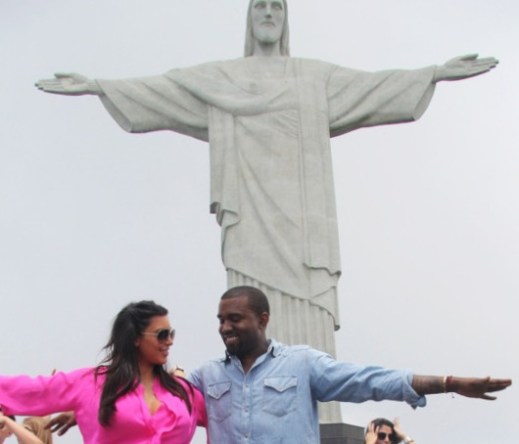
Kim and Kanye are the superstars of Snapchat Stories. It seems like one or both of them always have something going on, from Kim’s body parts to Kanye’s billion dollar (?!) debt. I, however, actually don’t read their Stories or typically any of the Stories. It can be bad enough just looking at the Stories (recall what’s typically featured in reference to Kim). So, why don’t I read the Stories and why does it matter?
Why I Don’t Read the Stories
Well, there are a lot of reasons. I’m busy. That’s an important one. However, I’ll concentrate on three things.
- I need to focus on the Kingdom, not Kim. Seeing Kim and Kanye and reading about their exploits does not help me focus on the Kingdom. Reading about Kanye and his “killer” clothes won’t make me want to invest in the Kingdom but in Kenya’s debt relief program.
- There is news worth reading but it’s typically not on Snapchat Stories. There’s probably something better to read than “Sex Workers Explain How They Deal” and “Kylie Flaunts Under And Overboob.” That being said, I did read an interesting story about the urine content in swimming pools from Snapchat. But typically other news sources are more relevant, even if they are more thought provoking and deep. (On an aside: watch out especially for kiddie pools!)
- I need Christ. Not Kim. Not Kanye. It’s God that “makes known to me the path of life. It’s in His presence that there is fullness of joy. It’s at His right hand that there are pleasures forevermore” (Ps. 16:11).
Why Does it Matter?
It matters for a lot of reasons, again, time is a factor. But I’ll concentrate on three things.
- I need to invest in the treasure that cannot fail or fade but I’m often tempted to get that backwards. Reading about Kim and Kanye’s antics is not helpful in reminding me about what matters.
- Time is precious and there is only so much time to read and watch things. So it makes sense to use our time and even our leisure wisely, and for me that typically doesn’t include Snapchat Stories.
- It matters because I am a new creation called to live as a new creation focused on Christ and His glory (cf. Col. 3:1-17). It matters because there is great joy to be found but that joy is not found in deceitful desires but in the good that God has abundantly provided.
Conclusion
Kim and Kanye are not Christ, so let’s not give them, or anyone else, or anything else, the attention only He deserves.
Fashion, Clothes, & Christ

Clothes and Creation
In the beginning, God created. And His creation was good, even “very good” (Gen. 1:31). We—male and female—were created in the image of God (Gen. 1:27). So we too are creative and that is a good thing. It’s one way that we reflect the image of God.
God is the most majestic musician, supreme sculptor, wowing writer, and awesome artist. And we were created in His likeness. We can look at the flowers of the field and see that God is the most creative creator of clothing. He is the creator that gives creativity. Our creativity is contingent upon the Creator.
Creativity is not bad and creativity when it comes to clothing is not bad. Beauty is not bad. God saw all the good that He made and said “very good”—beautiful. We too can and should create with the goal of saying “beautiful.”
Many critics of Christianity say that Christians are self-loathing and boring. The way that people see Christians can reflect back on the way they conceive of God. Many think of God as a drudge that hates fun and beauty. The Bible, however, says that the body is wonderful (cf. Ps. 139:14). The Bible celebrates beauty and creativity. The Bible shows that God is anything but dull, boring, and against beauty.
Clothes and Communication
Clothes have two main functions. Clothes provide protection, warmth, and modesty. Clothes also communicate things about us. Should we just care about the utility of clothes and not about their beauty and what they communicate?
Clothing can be a form of defiance. It can communicate to people that you don’t care at all about societies accepted norms. Clothes can be, as Steve Turner has said, “a snub to clean and neat conformism.” It was for me when I went through my punk stage (I don’t think I’m fully through it yet). My clothes said, “I’ve seen some stuff and I’m jaded.” My clothes said, “You may have had the perfect little life but I haven’t.”
Clothes communicate. Clothes say, “I don’t care,” “I’m sexy,” “I’m rich,” and so forth. Clothes can communicate that we are respectable and care about beauty. They can show that we are intentional and appreciate quality without communicating pride. Clothes speak but are we aware of what they’re saying?
“We should… be aware of how ideas are communicated through fashion and of the thinking behind the design of clothes. We should be alert to our own motivations for choosing what we wear.”[1]
Fashion is on us and all about us every day so we should be aware of what it’s saying.
Clothes and Conformity
Clothes and culture are in many ways parallel. I think for instance of Marie Antoinette and 18th-century French fashion contrasted with Puritan fashion. Clothes communicate. Clothes reflect the views and convictions of the day. We need to consider this truth and not just conform to the surrounding culture.
As with many things, balance is important. On one side, we can care too much about what we wear. It can consume us and we can find our identity wrapped up in what we wear. On the other side, we can care too little about what we wear and how we look. Steve Turner points out that some
“Christians have often been not merely out of step with fashion but dowdy, boring and unadventurous. Their clothes suggest that they have no pride in their bodies, are content to be disconnected from the times they live in, don’t value creativity or imagination and have no desire to provide aesthetic pleasure for those they meet.”[2]
This should not be the case. God has made a beautiful and creative world. We can image God even in what we wear. For example, God beautifully, creatively, and polychromatically clothes the flowers of the field (Matt. 6:28-29). We too, like the flowers of the field, can point to our creative Creator even in the way that we dress.
In our conversation about clothes and conformity, modesty is a helpful word. For our purposes, modesty means decency in dress. It is behavior, manner, or appearance intended to avoid offense and indecency. It is also the quality of being unassuming or moderate in the estimation of one’s self.
I think Steven Turner maintains a good balance. He says,
“We need on the one hand to avoid dressing in a way that makes it appear that we are ashamed of who we are, take not delight in aesthetics and have a low view of the body, and on the other to avoid wearing clothes designed to encourage sinful pride in ourselves or lust and envy in others.”[3]
We need to ensure our clothes do not send messages that are opposed to what we actually confess and believe.
Clothes and Christ
In my punk rock/heavy metal days (which I have not completely left), my identity was found to a significant degree in my grungy style. I was the angsty skater kid. I was mad at the world, and I was secretly proud of it.
A change happened and it didn’t happen through changing my clothing but it did affect my view of clothing. As I put on more and more of Christ and found my identity in Him, I could literally put off more and more of my grungy clothes and be ok with it. I may not have been able to articulate it but my identity was less and less about any outward style. My identity was in Christ and it eventually worked itself out in tangible ways.
I still like the grungy look and that’s fine. But it is helpful that I can now wear nice pants with my shirt tucked in and I not feel like a sellout. My angst and anger have also been relieved to a great degree.
As Christians, our identity and significance is found in Christ and not in fashion; whatever that fashion is—Nike, Gucci, Ralph Lauren, or Fear of God grunge. Let’s put on Christ and have a Christian perspective as we put on our clothes (cf. Rom. 13:14; Gal. 3:27; Col. 3:1ff).
Conclusion
Clothes are not inherently evil. Beauty is not bad. Care and creativity in regard to clothes is good. We can honor God and even image Him as we intentionally and appropriately dress ourselves. We must, however, seek modesty in our dress and realize that our identity is not dependent upon the shoes on our feet or the hat on our head.
Our identity and significance need to be grounded in Christ and not in clothes.
Questions to Consider
- Can we both be humble and beautiful at the same time with what we wear?
- We can often be tempted to find our identity in what we wear instead of who we are. Is that a temptation for you? If so, how can you fight against that temptation?
- Do you enjoy your clothes as an expression of who you are and of beauty or are clothes merely for protection, warmth, and covering?
- Why do you buy the clothes you buy? Are you trying to impress people and fill a void? Or do you buy clothes for quality, good design, and beauty?
- Do you know that “the prestige given to certain brands is out of all proportion to their usefulness and actual material value”?[4]
- What are you telling others about yourself with what you wear?
- What difference does the social and cultural context make when considering what clothing to wear?
__________________________
[1] Steven Turner, Popcultured: Thinking Christianly About Style, Media and Entertainment (Downers Grove: IVP, 2013), 115.
[2] Ibid., 123.
[3] Ibid., 127.
[4] Ibid., 121. As Time magazine said, “If you’re paying $300 for sunglasses, you’re buying them to look cool and impress people… You’re not buying them for the sake of your eyes’ health” (See Ibid., 121).
Designer Sex (part 2)

Redemption: Romance Rebuilt
The world is broken but Christ came to redeem and fix it. Yet we live in the “already and not yet,” the time in between. We have the down payment and first fruits of all that is to come but Christ’s Kingdom hasn’t come to full affect yet. However, we do see what it means to truly love.
In Ephesians 5 we see an amazing picture of how a husband and wife are to relate to each other. We see a paradigm to build upon. We see love, respect, and mutual concern. We see the things that fell out with the Fall of humanity.
We need instruction. We need to be reminded that sex is a gift from God and not god. We need God to help us.
“God wants married couples to know that sex is his gift to them. And God does not give gifts to people so they won’t enjoy them. If God gives you steak he wants you to savor it. If he gives you wine, he wants you to enjoy it. And when he gives a couple sex in the covenant of marriage, he wants them to indulge in it. The NIV translates the end of Song of Solomon 5:1 this way: ‘Drink your fill of love.” Why would he tell us to drink up if he didn’t want us to be fully satisfied?”[i]
So often Christians are known for being boring and unable to enjoy things. But that just isn’t the case. We should be “known for saying ‘do’—do look, do touch, do indulge, do enjoy sexual relations within marriage.”[ii]
Our loving Father has created many good gifts to be received with thanksgiving (1 Tim. 4:3-4). “God is not stingy with joy when it comes to sexuality. If he gives you a gift, he wants you to enjoy it as it is designed to be enjoyed, which will ultimately lead to your satisfaction, not only with the gift itself but also with himself as the Giver.”[iii]
The Bible teaches that sex is not only a gracious gift but that pure passion is protection against impure passion (Cf. 1 Cor. 7:9).[iv] We see this in various places. Proverbs 5:15-23 says,
“Drink water from your own cistern,
flowing water from your own well.
Should your springs be scattered abroad,
streams of water in the streets?
Let them be for yourself alone,
and not for strangers with you.
Let your fountain be blessed,
and rejoice in the wife of your youth,
a lovely deer, a graceful doe.
Let her breasts fill you at all times with delight;
be intoxicated always in her love.
Why should you be intoxicated, my son, with a forbidden woman
and embrace the bosom of an adulteress?
For a man’s ways are before the eyes of the LORD,
and he ponders all his paths.
The iniquities of the wicked ensnare him,
and he is held fast in the cords of his sin.
He dies for lack of discipline,
and because of his great folly he is led astray.”
“Failing to structure frequent sexual activity into your companionship may open you for Satan’s temptations.”[v] Paul says, “Do not deprive one another, except perhaps by agreement for a limited time, that you may devote yourselves to prayer; but then come together again, so that Satan may not tempt you because of your lack of self-control” (1 Cor. 7:5).
However, that does not mean that we have an excuse for sexual sin if we feel like we have been deprived. This passage is not to be used to hold over your spouse’s head to tell them that they have to have sex with you.
New Creation: Our Longings Fulfilled
Sex is great and I thank God for it. But sex is not what life is about. God is what life is about. And soon we shall see Him face to face. Sex is an empty trace of the connection we long for, all the good that we enjoy is a mere pointer. It points us to God for whom we long to unite in fellowship with.
“Sex is a blessing from God. But sex is more than that. It is also a bridge to God. What I mean is that even the highest pleasures are sweetest intimacies are designed to leave us wanting something more. Sex creates a hunger for something infinitely more beautiful, pleasurable, and satisfying: God!”[vi]
Truly, what we as humans “crave more than anything else is to be intimately close to the God who made us.”[vii]
As I said, we are in the “already and not yet.” We have the first fruits but not the consummation. Though we can even now have fellowship with God through the work of Jesus and the presence of the Holy Spirit we still see God in a mirror dimly. We long for our faith to be sight.
Concluding Thoughts
In the the beginning Adam and Eve had fellowship with God and with each other. After the Fall the world fell apart, and like Humpty Dumpty it couldn’t be put back together again. Until Christ came. Christ put the world back together. He gave us something that sex could never give: restored fellowship with God.
Brothers and sisters, let’s not get the gift mixed up with God the Giver. Let’s not look for sex to fill the infinite hole that only the Infinite One can fill. It is the Creator and Sustainer of the universe, the One who created sex and every good gift, and holds every speck of stellar dust in the universe in His hand that fulfills and gives true life. In His presence there is fullness of joy. At His right hand their are pleasures forevermore (Ps. 16:11).
_____________________________
[i] Chandler, The Mingling of Souls, 139
[ii] O’Donnell, The Song of Solomon, 131.
[iii] Chandler, The Mingling of Souls, 139.
[iv] O’Donnell, The Song of Solomon, 107.
[v] Rosenau, A Celebration of Sex, 5. “Satan tempts and destroys many marriages by extreme inhibitions, extramarital affairs, and other sexual distortions. Often it is subtle drifting apart and a lack of warm, connecting companionship. God has given spouses something precious in the ability as husband and wife to share a physical intimacy that cannot be matched in any other relationship. There is no replacement for what God intended sex to be for intimate marriages. It is a framework for expressing many powerful emotions, like joy, love, trust, and playfulness… Spouses who frequently play together sexually stay together in warm, bonded ways” (Ibid.).
[vi] O’Donnell, The Song of Solomon, 83.
[vii] Gary Thomas, Sacred Marriage, 24.



 in X
in X 