Simple Church Glossary

Here’s a simple glossary for simple churches. It is not exhaustive by any means but will be helpful for people less familiar with the concept of simple church.
Simple Church
We use “simple church” instead of “house church.” “House church” can have negative or weird connotations in our culture. “House church” can also communicate a closed mentality, instead of a missional mentality. Our emphasis is also on simple, not house.[1] We believe in an ecclesiological minimum for the sake of replication, full functioning of the church body, and keeping ministry simple to keep Jesus central.
Church
“Church” is the called-out people of God. Church is not a building; it is a body. The church gathers to be built up, and it scatters to bless the broken world. Church is not an event. Church is not something we go to. Church is something the people of God are.
Missional
“Missional,” Ed Stetzer says, “means adopting the posture of a missionary, joining Jesus on mission, learning and adapting to the culture around you while remaining biblically sound.”[2]
We lovingly engage with the people around us. We do not shut ourselves off in “God ghettos,” we do not create Christian castles. Jesus said that we are to be lights in a dark world (Matt. 5:15). Also as the Father sent Jesus, so Jesus has sent us into the world (Jn. 20:21). So, we leave the “bubble,” learn the culture, love our neighbors, listen to others wisely, live in relationship, and look to connect with people who don’t yet know Jesus.
Discovery Bible Study (DBS)
Discovery Bible Study is a helpful tool or methodology. It is a Bible study method used worldwide that is extremely simple, facilitating replication. It is very easy for people to lead the study even after just going through a DBS once (and that’s the point!). By keeping it simple, people can easily replicate it and pass it on. Importantly, each element teaches an aspect of discipleship.
(Many simple churches use DBS in some form or another. For example, we use DBS in some evangelistic and discipleship contexts.)
APEST (apostle, prophet, evangelist, shepherd, teacher)
The traditional Western church thinks in terms of pastor/shepherd and teacher, maybe even evangelist, but the gift of apostles and prophets is often left out, in contradiction to Ephesians 4. We, as simple churches, want to see the full functioning of Christ’s body so that the saints are equipped, and the body of Christ matures (v. 12-13).
(Alan Hirsch has written much that is helpful on this subject. For example, check out his book 5Q: Reactivating the Original Intelligence and Capacity of the Body of Christ.)
Four Fields
The “Four Fields” refers to a diagram-based training framework (based on Mk. 4:26-29) used as a training aid. It outlines the stages of kingdom growth: (1) Entering (praying and finding people of peace), (2) Sharing Jesus (sowing seeds/evangelism), (3) Growing (discipling), and (4) (4) Gathering as a Church (harvesting, equipping, sending on mission).
Person of Peace
A person of peace is a person who is welcoming and hospitable, and the Spirit uses them to help spread the gospel in their community. The term is from the New Testament, where Jesus instructed His disciples to find people of peace when entering a village.
Oikos Map
An Oikos Map is a visual prayer and evangelism tool. Oikos is Greek for “household.” An Oikos Map is used to map a person’s sphere of influence. The people we know where we work, live, and play: our family, friends, neighbors, and coworkers. It is a visual reminder and prayer guide for people in our social networks. It emphasizes how reaching one person can impact their own social networks.
Movement
As simple churches, we desire to multiply and make disciples who make more disciples, not grow any one location in numerical size. We understand a movement to be four generations of disciple makers along the lines of what Paul says in 2 Timothy 2:2.[3] Notice Paul’s desire and exhortation were not to amass a crowd but to form disciples who would make disciples. As simple churches, that is the movement we desire, a disciple-making movement.
Notes
[1] Although we do believe meeting in homes is often strategic. We meet in various other venues, including outside at parks when the weather is nice.
[2] Ed Stetzer and Daniel Im, Planting Missional Churches, 1.
[3] Here are the four generations of disciples from 2 Timothy 2: (1) Paul to (2) Timothy to (3) faithful persons who will be able to teach (4) others also.
*Photo by Redd Francisco
Finding Identity Beyond the Church Building
Enjoyed this conversation with Britton from Pastor to Pioneer. I recount some of my and Leah’s story, going from mega church to micro church.
What’s Keeping Churches from Making Disciples?

Most churches know that discipleship is the main mission of the church. It’s in most mission statements. Yet, what kind of person does the church produce? The Christ-commanded product is a disciple who makes disciples.[1] “But for many churches, discipleship ranks toward the bottom of their priorities.”
Disciples trust Jesus as Lord and Boss, and follow Him by imitating His life and obeying His teachings.[2] Jesus calls disciples to deny themselves, take up their cross daily, and follow Him. This means disciples have repented of sin, forsaken the world, and committed their lives to follow Him. Historically, being a disciple involved learning, studying, and passing along the master’s teachings.[3]
Is this what the church is making? Many would say no. To a great extent, I agree. Even back in 1988, Bill Hull said,
The evangelical church has become weak, flabby, and too dependent on artificial means that can only simulate real spiritual power. Churches are too little like training centers to shape up the saints and too much like cardiopulmonary wards at the local hospital. We have proliferated self-indulgent consumer religion, the what-can-the-church-do-for-me syndrome. We are too easily satisfied with conventional success: bodies, bucks, and buildings. The average Christian resides in the comfort zone of “I pay the pastor to preach, administrate, and counsel. I pay him, he ministers to me… I am the consumer, he is the retailer.”[4]
While churches are biblically mandated and should be structured to make disciples, many churches prioritize attendance and attractive programs over discipleship, which results in discipleship deficiencies. Discipleship involves more than mere head knowledge; it involves intentionally instructing Jesus’ followers to “observe all that Jesus commanded” and to become disciple-makers themselves.
So, Hull says, “The crisis at the heart of the church is that we give disciple-making lip service, but do not practice it.”[5] If that’s the case, what are some of the issues keeping churches from making disciples?
1. Cultural Values
The cultural air that we breathe has an imperceptible impact. Christian Smith does a good job explaining some of the cultural values that we can easily unknowingly imbibe in his book, Why Religion Went Obsolete.
David Foster Wallace once told this story:
There are these two young fish swimming along, and they happen to meet an older fish swimming the other way. The older fish nods at them: “Morning, boys, how’s the water?” The two young fish swim on for a bit, and then one of them looks over at the other. “What the heck is water?”
It can be very difficult to be aware of our own culture and the impact that it is having on us.[6]
Our culture of consumerism and materialism is a big factor. So, Soong-Chan Rah, for example, has said,
Market-driven church that appeals to the materialistic desires of the individual consumer has resulted in a comfortable church, but not a biblical church. The church’s captivity to materialism has resulted in the unwillingness to confront sins such as economic and racial injustice and has produced consumers of religion rather than followers of Jesus.[7]
My point here is that our culture, even our church culture, does not place high value on discipleship. Although we may say we do. Our actions, or inaction, speak louder than our words.
We must let the Bible dictate our church culture, not culture.
2. Budgetary and Building Needs
Related to number one above, we have a church culture in America that is very dependent on buildings and budgets. We often think that for the church to continue, it has to “pack the pews” so the doors can stay open and the lights can stay on. Thus, the budgetary concerns can easily take precedence over all other concerns.
Here’s our thinking: What good can the church do if the church closes? Sunday comes quickly, and we need to have good sermons and programs if we hope to bring in the tithe or at least some form of giving.
Discipleship can easily take a back seat. Discipleship can be slow. Jesus walked, talked, and trained His disciples. This took time. Lots of time. Actual years. Yet, a movement of multiplication can happen when we make disciples.
We have conditioned ourselves for a type of fast-food or industrial revolution discipleship mentality. We want disciples quick, right off the express line. But that’s not how disciples have ever been made. But perhaps, especially now in our increasingly post-Christian, Bible-illiterate world.
We must care more about building up the actual body of Christ and not prioritize the church building (and budget).
3. Pastoral Identity Issues
Sadly, having been in pastoral ministry for 17 years and worked in various church contexts, sometimes there are pastoral identity issues that prevent pastors from investing in discipleship. It doesn’t feed a pastor’s ego if a lot of people don’t show up (however, “a lot of people” is defined). But Jesus didn’t always have a lot of people around Him. And sometimes when He did, He would say some very controversial things, and then many would leave. Christ’s goal was not a crowd, but “little Christs.”
A pastor’s ego is not fed when he equips others to do the work of the ministry, when he gives away ministry, helps others faithfully lead, shrugs out of the limelight, and pushes others towards success. But Christian ministry was never supposed to be about anyone’s ego.
But you know what is fed when a pastor doesn’t feed his ego? The church is fed, and it thus grows in both size and maturity because it is functioning as Jesus always intended it to function. Not as a one-person show, but as the church body being loving light wheresoever the church body finds itself throughout the week.
The church is an immaterial reality, and it was never meant to be bound by a material building; it was always meant to find physical expression in the living and breathing, walking and talking (incarnate), temples of God that Jesus’ people are. Just as the word of God was not bound, although Paul was bound in prison, God’s church is not bound to a building.
It is most healthy when it’s out loving in the wild world. That’s what it was always meant for. The telos or purpose of a candle is to be a source of light in darkness. It’s the same with the church. The church is called to be light in darkness and salt in a world of rot and decay. Notice, Jesus did not give the church something aspirational when He said, “You are the light of the world.” Jesus said something ontological. He said what we are.
I’m concerned that many pastors’ call to serve the church is self-serving. Pastors are often concerned about “their” church, not the Church. Pastors, sad to say, can be more concerned about their building being full rather than heaven being full.
The church is to make much of Jesus the Good Shepherd and not exalt any human.
4. Lack of Leadership Diversity (APEST)
“APEST” stands for apostles, prophets, evangelists, shepherds, and teachers. The Lord of the church has given these varied gifts to the church so that it will be balanced and mature (see Ephesians 4). Sadly, however, these gifts often find expression disconnected from the other gifts.
(It’s important to note that when I talk about APEST, I am talking about gifting. Not office or authority.)
Churches with certain types of leaders will move in certain directions. Teacher types tend to be thinkers, writers, researchers, and theologians. Shepherds tend to be carers, counselors, and community builders. Evangelists tend to be recruiters to the cause, apologists, and networkers. Prophets tend to call people to change, have holy criticism, and care deeply about social issues. Apostles pioneer, innovate, and create new approaches and structures.[8]
It seems the most common type of church, at least in the West, is the shepherd/teacher church.[9] This often results in a “knowledge-based community where right doctrine is seen to be more important than rightdoing.”[10] There is often an overemphasis on the sermon and Sunday service, and community, discipleship, and evangelism are an afterthought.
Again, diversity and balance are important. “The one-dimensional teaching church attracts people who love to be taught and tends to alienate other forms of spiritual expression. This is seldom a good thing because such churches simply become vulnerable to groupthink or even mass delusion. This has happened way too often… witness the many one-dimensional charismatic/vertical prophetic movements of the last century. Or consider the asymmetrical mega-church that markets religion and ends up producing consumptive, dependent, underdeveloped, cultural Christians with an exaggerated sense of entitlement.”[11]
The fact that “we have sought to negotiate our way in the world without three of the five functions (by elevating teaching and shepherding and neglecting evangelism, the prophetic, and the apostolic) accounts for so many of the problems we face in the church.”[12]
5. Lack of Commitment to the New Testament Ideal
Many times, we don’t know what we’re aiming for when it comes to disciples. We often lack a clear definition, or it’s a knowledge-based definition. Churches often emphasize orthodoxy (right belief) over orthopraxy (right practice). This results in many churchgoers who know a lot but don’t necessarily do a lot. But the great commission doesn’t just say “teach.” Its aim is practice. The Great Commission says, “teach them to observe everything I have commanded” (Matt. 28:20).
The church body is made up of individual members who together and separately worship, reflect, and share. The church is not an institution or an event. It is a living and moving organism. It is embodied all over every sector of society. So, we must ask, are disciples being made who make disciples who know, grow, and go?

The New Testament ideal is every believer practicing the missional mandate. It’s not just about knowing, but about going and doing all that Jesus commanded. The church must have growth goals or metrics that match the mission that Jesus has given to the church.
6. Lack of A Model to Emulate
The Apostle Paul said, “Imitate me as I imitate Christ” (1 Cor. 11:1). Jesus is the New Testament ideal. We are to imitate Him. And “Jesus poured His life into a few disciples and taught them to make other disciples.”[13]
So, we have an example to emulate in Jesus and Paul. Christian leaders must also provide examples and practice what they preach.[14] If pastors, for example, are—intentionally or unintentionally—held up as the Christian ideal, there are certain implications. If pastors mainly study and teach publicly or mainly function as CEOs, then that’s what is being modeled to people. And not lived everyday discipleship.
Conclusion
Good things often distract from the best things. And actually, some of the things churches do that they think are good only serve to create a culture of consumerism. Things must change. We must obey Jesus and make disciples who make disciples. We must make whatever structural and organizational changes are necessary to ensure we’re carrying out Jesus’ commission.[15]
I propose a new approach to “doing church” because, to a great extent, the way we’re currently doing church, at least in the West, is not working. We are not making disciples who make disciples in accordance with our Lord’s command. To a great extent, the church is making sitters. We must take our Boss’s words seriously and make structural and organizational changes.
Transformation happens less by argument and more by creating new rhythms and practices that shift not only people’s thinking but also their values and core commitments. We think, practice, and love our way into transformation. As Alan Hirsch has perceptively said, “The best way of making ideas have impact is to embed them into the very rhythms and habits of the community in the form of common tools and practices.”[16]
We need to stop just talking about discipleship and having programs for discipleship. We need something more radical. We need to scrap the old ways that allow for abstraction, and instead create regular rhythms that embody application.
Notes
[1] See Bill Hull, The Disciple-Making Pastor, 14.
[2] See Michael S. Heiser, What Does God Want? (Blind Spot Press, 2018), 94–95 and Ken Wilson, Finding God in the Bible: A Beginner’s Guide to Knowing God (Chicago: Moody Publishers, 2005), 86.
[3] Robert B. Sloan Jr., “Disciple,” in Holman Illustrated Bible Dictionary, ed. Chad Brand et al. (Nashville, TN: Holman Bible Publishers, 2003), 425.
[4] Bill Hull, The Disciple-Making Pastor, 12.
[5] Hull, The Disciple-Making Pastor, 15.
[6] Alan Hirsch, 5Q: Reactivating the Original Intelligence and Capacity of the Body of Christ.
[7] Soong-Chan Rah, The Next Evangelicalism, 63.
[8] There are a few Johns who stick out as teachers. John Calvin, Jonathan Edwards, and John MacArthur. Here are some other examples: George Whitefield (evangelist/apostle), John Piper (teacher/prophet), Charles Spurgeon (evangelist/prophet), Mother Teresa (shepherd) Richard Baxter (shepherd/teacher), Teresa of Avila (prophet/teacher), St. Patrick (apostle/shepherd) John Wimber (apostle/evangelist), David Platt (teacher/prophet), Hudson Taylor (apostle/evangelist), Catherine Booth (apostle), Dietrich Bonhoeffer (prophet/teacher), Billy Graham (evangelist), and Martin Luther King Jr. (prophet).
[9] “The church is actually perfectly designed by shepherds and teachers to produce shepherding and teaching outcomes. The organizational bias of the inherited form of church organization is in a real sense a reflection of the consciousness of the people who designed it in the first place!” (Alan Hirsch, 5Q).
[10] Hirsch, 5Q.
[11] Ibid.
[12] Ibid.
[13] Spader, Four Chair Discipling, 36. “These few disciples, within two years after the Spirit was poured out at Pentecost, went out and “filled Jerusalem” with Jesus’ teaching (Acts 5:28). Within four and a half years they had planted multiplying churches and equipped multiplying disciples (Acts 9:31). Within eighteen years it was said of them that they “turned the world upside down” (Acts 17;6 ESV). And in twenty-eight years it was said that the gospel is bearing fruit and growing throughout the whole world” (Col. 1:6). For four years Jesus lived out the values He championed in His Everyday Commission. He made disciples who could make disciples!” (Ibid.).
[14] Jesus had a specific method which we would be wise to observe and follow. See, for example, Matthew 9:35-39: “Jesus went throughout all the cities and villages, teaching in their synagogues and proclaiming the gospel of the kingdom and healing every disease and every affliction. When he saw the crowds, he had compassion for them, because they were harassed and helpless, like sheep without a shepherd. Then he said to his disciples, ‘The harvest is plentiful, but the laborers are few; therefore pray earnestly to the Lord of the harvest to send out laborers into his harvest.'” Jesus went, taught, proclaimed, healed, saw, and had compassion. He equipped disciples and sent them out into the harvest. He didn’t want them to sit in a building or do ministry in a building. What’s needed and what Jesus told us to pray for is laborers sent into the harvest.
[15] “Not much will change until we raise the issue and create controversy, until the American church is challenged to take the Great Commission seriously” (Hull, The Disciple-Making Pastor, 15).
[16] Hirsch, 5Q.
*Photo by Nellie Adamyan
13 Concerns About the American Church

As Nadya Williams has said, we shouldn’t be nostalgic and idealize the past. I agree. The early church had its problems and its cultural Christians.[1] Yet, as we see from the New Testament, we must always pursue healthy Christians and churches. Eventually, the church will be completely holy and without blemish (Eph. 5:27). But until then we work for its maturity and health. It’s not idealistic to work towards the ideal; it’s biblical.
Here are 13 general concerns I have with the American Church:
- Consumerism and Entertainment Focus: The church growth model often prioritizes entertainment, convenience, and consumer satisfaction over discipleship, leading to superficial faith and anemic disciples.
- Structural Weaknesses: The typical American church structure, with its emphasis on buildings, branding, and professional clergy, often weakens the church body and individual believers.
- Misplaced Priorities: Churches often aim for “butts in seats” rather than “feet on mission,” focusing on numerical growth and branding instead of authentic discipleship and Kingdom-building.
- Isolation and Lack of Relationships: Many churches fail to foster deep, intergenerational relationships, contributing to loneliness and disconnection among members.
- Competition Among Churches: Churches often compete for attendees rather than collaborating to advance the Kingdom of God.
- Overemphasis on Buildings: The focus on church buildings and facilities can detract from investing in the church body and being on mission where we work, live, and play.
- Complexity Over Simplicity: The traditional church model is often too complex, making it difficult to replicate and hindering the rapid multiplication of disciples and churches.
- Artificiality Over Authenticity: Churches sometimes prioritize staged experiences and curated appearances over genuine, messy, real-life Christian community.
- SuperPastor Culture: The emphasis on charismatic leaders and professional clergy can overshadow the ministry of the church body and lead to pastoral burnout and scandals.
- Neglect of Shepherding: Pastors are often elevated as performers or managers rather than shepherds who deeply know and care for the flock.
- Fad-Driven Practices: Churches sometimes chase cultural relevance and trends at the expense of being historically and spiritually rooted.
- Charisma Over Character: The church often values charisma and influence over Christ-like character, leading to moral failures and scandals.
- Jesus as Savior, Not Lord: The church sometimes emphasizes Jesus as Savior without fully embracing His Lordship, resulting in a lack of obedience and whole-life allegiance. Discipleship is often about knowledge acquisition, not obedience.
We need a radical reformation of the church, focusing on discipleship, authenticity, simplicity, and Kingdom collaboration rather than consumerism, competition, and superficial growth.
What if church were different?
[1] See Nadya Williams, Cultural Christians in the Early Church: A Historical and Practical Introduction to Christians in the Greco-Roman World.
Why does your church meet in a house?

Well, we don’t always meet in houses. We also meet in coffee shops, parks, outdoors, and other locations. We could gather in a more traditional church building but meeting in these other locations is actually strategic.
Biblical Precedence
In the early church, where there was a Christian home, its uses were numerous. The book of Acts illustrates these homes being used for prayer meetings, Christian fellowship, communion services, entire nights of prayer, worship and instruction, impromptu evangelistic gatherings, planned evangelistic meetings, following up with inquirers, and organized instruction (Acts 2:46, 5:42, I0:22, 12:12, 16:32, 18:26, 20:7, 2I:7).[1]
It is of course fine for churches to gather in a church building. It can be a great blessing to steward a building for Kingdom purposes. But the Bible clearly never says that the church gathering must take place in a building reserved for that purpose.[2] Far from it, early Christians utilized houses to a great extent.
| Acts 2:46 | “their homes” |
| Acts 5:42 | “House to house” |
| Acts 10 | Cornelias’ house |
| Acts 12:12 | Mary’s house |
| Acts 16:32 | Jailer’s house |
| Acts 16:40 | Lydia’s house |
| Acts 20:20 | “House to house” |
| Romans 16:5 | Prisca & Aquila’s house |
| 1 Corinthians 16:19 | Prisca & Aquila’s house |
| Colossians 4:15 | Nympha’s house |
| Philemon 1:2 | Philemon’s house |
In fact, it’s intentional for the church not to hide behind the four walls of a church building. Jesus has called us to be light in a land of darkness, how can we be that when all the light is huddled up where it is bright inside? Jesus has called us to be salt in a world of decay, how can we do that when we are all locked up together in the shaker?
The early Christians were out and about and mixing it up with nonbelievers. Paul had discussions at the Hall of Tyrannus (Acts 19:9) and evangelized outside among other places (Acts 16:13). It’s strategic for Christians to be amongst nonChristians.
I was meeting with two guys at a McDonald’s for some discipleship and a guy asked: “Are those Bibles?” We said, “Yep!” and invited him to join us. He did. And we shared the good news of Jesus with him and prayed over him with tears streaming down his cheeks. God worked through us that night. And God has worked through us in other ways as we are the church amongst and visibly mixing it up with our community.
Simplicity and Stewardship
One of our desires as a church and movement is that we would be simple so as to be easily replicable. Most people have access to some sort of location to gather as a church. So, meeting in homes is simple and allows for easy multiplication.
Meeting in homes and other simple locations also allows for the stewardship of resources. Church buildings cost a lot of money and can be a distraction and hindrance to the actual mission of the church. Church buildings are not necessary, faithful disciples who are willing to meet wherever are necessary.
Facilitates Hospitality
The Bible places a lot of value on hospitality. It even commands hospitality and hospitality is a qualification to be a pastor. I am convinced hospitality is really important and yet it is often not valued like it should be. I also think hospitality is a heavily untapped evangelistic tool. Meeting in different people’s homes breeds a culture of hospitality.
Facilitates Discipleship
Meeting in other places besides a traditional church building can help people have a healthy ecclesiology (theology of the church). It is a constant reminder that the church building is not the church, God’s people are the church. The church gathers to be built up and scatters to bless. God’s people are the Church seven days a week throughout the places we live.
Gathering as the church in the places where we work, live, and play also shows us that church is not disconnected from everyday life. There’s also just something about meeting together in certain spaces that facilitate relationships. I can’t say exactly what it is but there’s a special bond that’s made sitting in someone’s house sharing a meal.
Notes
[1] See Michael Green, Evangelism in the Early Church, 218.
[2] God does not dwell in any type of building made with hands (Acts 7:48; 17:24) but rather dwells within His people (Eph. 2:22; 2 Cor. 3:16; 6:16).
The Modern American Church is Sick
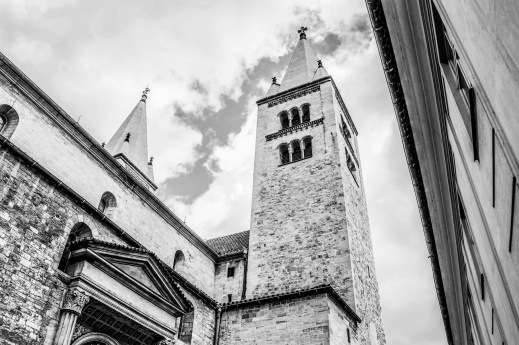
The modern American church is sick. Let me count the ways… Here I’ll just give two. I hate being doomsdayish. But the writing is on the wall.
Invitation/Evangelism
Sadly, many church leaders equate evangelism with church invitation. In his book Meet Generation Z, James Emery White talks about Michael Green’s book on the staggering growth of the early church. He says Green’s book Evangelism in the Early Church had one huge conclusion: the early church “shared the good news of Jesus like gossip over the backyard fence.” Yet, right after this, White says, “In other words, a culture of invitation was both cultivated and celebrated.”
White, however, is not talking about sharing the good news of Jesus. He is talking about inviting people to a church service.
It’s not difficult… We create tools to put into the hands of people to use to invite their friends all the time… We celebrate and honor people who invite people all the time… Such tools can be something as simple as pens with the name of our website on them that people can give to someone. (Meet Generation Z, 151).
I know this is just a little quote but it does highlight that church leaders are stretching to try and get their people to invite others to church. That’s the big push. So, we make it so “It’s not difficult.” We seem to think, the people in the church are only so capable or faithful. We apparently can’t expect too much. We celebrate the faithful few who give their coworker a church pen and invite them to a Christmas Eve service.
The early church was willing to do more than give out pens with the church’s name on it. Let me get all nerdy and drop some biblical language facts. Do you know where the word “martyr” comes from? “Martyr” means someone who dies for their beliefs. “Martyr” comes from the Greek word which means “witness” or “one who gives testimony.” The early church was filled with witnesses—martyrs—who lovingly told others about Jesus, regardless of the cost. We celebrate and cultivate invitation to a church service. There’s a little bit of a difference.
This is what Michael Green says,
Communicating the faith was not regarded as the preserve of the very zealous or of the officially designated evangelist. Evangelism was the prerogative and duty of every church member. We have seen apostles and wandering prophets, nobles and paupers, intellectuals and fishermen all taking part enthusiastically in this the primary task committed by Christ to his Church. The ordinary people of the church saw it as their job: Christianity what supremely a lay movement, spread by informal missionaries. (Evangelism in the Early Church, 516)
He is clearly talking about evangelism, not invitation. They are not the same. He goes on:
Unless there is a transformation of contemporary church life so that once again the task of evangelism is something which is seen as incumbent on every baptized Christian, and is backed up by a quality of living what outshines the best that unbelief can muster, we are unlikely to make much headway through techniques of evangelism. People will not believe that Christians have good news to share until they find that bishops and bakers, university professors and housewives, bus drivers and street corner preachers are all alike keen to pass it on, however different their methods may be. And they will continue to believe that the Church is an introverted society composed of ‘respectable’ people and bent on its own preservation until they see in church groupings and individual Christians the caring, the joy, the fellowship, the self-sacrifice and the openness which marked the early church at its best. (Evangelism in the Early Church, 517-18)
Listen, I am not saying it is bad to invite people to church. There can be a place for that. But we should not equate evangelism and invitation. And we are all called to actually “gossip the gospel,” not hand out a handout.
Transfer Growth/competition within the Kingdom
How can a kingdom divided against itself stand? I’ve talked about this elsewhere but I think Jesus makes a good point (even if the context in which He said that was different. See Matt. 12:26; Mark 3:24).
I heard a story from a friend. They overheard some other friends talking: “I saw the addition to y’all’s church. It looks great! How’s it going?” That’s when a kid chimed in: “My friends are coming from their churches because they’re not doing good.” I think, “From the mouths of babes” is appropriate here.
A lot of churches across America aren’t doing well. A 35,000-square-foot church building in my area with a 400-seat sanctuary just sold for $65,000. Some may celebrate that another church down the street is adding a multimillion addition, but where is the actual growth? Is it Kingdom growth? Are new people crying out Jesus’ praise who previously didn’t, or are we rearranging furniture?
I’m not saying there are no reasons to decide to go to a different church, there are. The way that we think about transfer growth, however, is important. Again, not to pick on James Emery White but his book’s on my mind and in my hand because I just read it. He talks about visiting a church over the summer which “was one of the most programming-challenged services I’ve ever attended.” He doesn’t specify but I imagine it wasn’t very smooth and maybe awkward at points. But he goes on to say that though the service wasn’t very good, his kids liked the kid’s ministry.
Here’s the lesson: you can drop the ball in the service but ace it with the kids and still have a chance that a family will return. But no matter how good the service is, if the children’s ministry is bad, the family won’t come back… Children are at the heart of your growth engine. (Meet Generation Z, 150).
Basically, we need to have better religious goods and services than the church down the street, and an important part of what we need to offer is a really good children’s ministry. Notice the goal is not discipleship of parents so that they love and teach their kids, and it’s not discipleship of the kids; no, it’s an experience for the kids.
Conclusion
I get it, I don’t want things to be bad or awkward. But maybe the whole paradigm is messed up? Perhaps church was never supposed to be structured with a stage and an audience to entertain? Perhaps the church was never meant to be something we attend or a building? Perhaps “we are family” was never meant to be a church tagline but a reality? Perhaps service is meant to be something that the church provides to the world and not something church leaders provide to church members?
I agree that we should do things well. But it is imperative that we do the right things. 1 Corinthians 10:31 is often quoted by church leaders: “Whether you eat or drink, or whatever you do, do all to the glory of God.” Of course, I agree with this verse. But this verse doesn’t give us carte blanche to use any methodology.
I appreciate what J.D. Payne wisely says in his book, Pressure Points:
With over four billion people in the world without Jesus, it is not wise to develop strategies that support methods which are counterproductive to the healthy rapid multiplication of disciples, leaders, and churches. Just because there is much biblical freedom in our culturally shaped methods does not mean that all such expressions are conducive to the multiplication of healthy churches across a people group or population segment.
We should intentionally pursue what makes for rapid multiplication of healthy disciples. This will call for us to be collaborators, not competitors, and care about actual growth, not transfer growth. Buildings, budgets, and even butts in seats are not necessarily an indicator of health or faithfulness to Jesus’ commands.
Redefining Church: From Building to Body
What if church were different? What if we had a church body instead of a building? Paul says we—the people of the church—are “God’s building” (1 Cor. 3:9). Yet, we have communicated for a long time that “church” occurs on Sunday morning. This has resulted in various negative side effects.[1]
Church attendance has become the standard of faithfulness, if people occasionally give to the church or serve in the church they are a “super Christian.” When the building is communicated to be the church, the building receives the attention, time, and money, instead of the church body. The budgetary considerations of the church building can weigh more heavily on leadership than the personnel, relational, and spiritual needs of the church body.
An example of how this has played out: Instead of Deacons caring for the tangible needs of the church—and the church having a “house to house” (Acts 5:42; 20:20) aspect, where people are known in their daily lives and needs—they have become custodians of the church building and grounds. Deacons equipped and needed to care for the church body, are working on the building. Thus, widows and single mothers are often left to struggle.
The church in America communicates that you can come to the church and receive religious goods and services at a set time. Religious goods and services are mediated through a church building and professional clergy. God is accessed on Sunday. To receive what the church offers one must go to a church building and receive a message from an approved person on the stage.[2]
Churches often, unknowingly, communicate that church is a business, brand, and building; they advertise and sell their religious goods and services.
Look at any church website and what is advertised are worship services for us to enjoy, sermons for us to listen to, youth provision for our children, and perhaps a small group that can provide for other needs. We post pictures of our smart buildings, of our edgy youth work, and of well-designed sermon series; we invest time and money in brilliant branding and a hip visual identity. This all serves to reinforce the idea that our churches exist primarily as events for consumer Christians to attend.[3]
What if we stopped seeing the church as a building and saw it as a body? Jesus and being the church are life, not an event.
The church gathers to encourage one another and remember the good news of Jesus. The church is not the building, the church is not the service, and it’s not an hour and a half on a Sunday. The church gathers, yes. But the church is a body of people, people in relationship. People are the church Sunday through Saturday. The church gathers to remember and scatters to bless. “Church building” is a misnomer.
It’s interesting that many of the biggest revivals utilized different spaces than what has now been deemed church buildings. The Methodist circuit riders grew the Church by riding the circuit and going from house to house. The early church did not have buildings deemed “church,” instead, they knew they as the people were the church 24/7, Saturday through Sunday, not some “professional” pastor, not some slick church with programs that can almost compete with the secular market. But it’s not just an early church thing that can’t work now. Consider the house churches in China. Of course, I am not saying it’s bad for churches to gather in buildings and even buildings that are owned strictly for the purpose of the gathering of the church. But the building is not the body. And the building does not grow the body. The building, however, can be a great distraction from the body.
Chuck Colson shares a story about a pastor in Washington DC. He led the church for years when suddenly, one night, he saw the church clearly for the very first time. “He was flying into Washington one day at dusk. At that time the approach path to Washington’s Reagan National Airport happened to pass directly over Fourth Presbyterian Church.” He “pressed his face against the window to catch a glimpse of the building from the air. But everything on the ground was shrouded in the shadows falling over the city as the sun set.”
He couldn’t see the church. He followed the Potomac River, then from a distance the White House and then the Capitol dome. But, as he stared out the window, he began to think about all the people of the church who worked in those offices and government buildings. Disciples he had equipped to live their faith. Then it hit him. “Of course! There it is!” he exclaimed. The church was there all the time. “The church wasn’t marked by a sanctuary or a steeple. The church was spread throughout Washington, in the homes and neighborhoods and offices below him, thousands of points of light illuminating the darkness.”
“That is the way the church should look in the world today. The people of God—one body with many different parts spread throughout every arena of life, twenty-four hours a day, seven days a week.”[4] The church is not a building. The church is a body of people shining wherever they work, live, and play. Church, let’s be the body. And let’s not hide in a building. Let’s mix it up in the world, and be the salt Jesus has called us to be.
Notes
[1] “If the local church is understood as a building and not the people of God, then many ecclesiastical problems develop over time” (J. D. Payne, Apostolic Imagination: Recovering a Biblical Vision for the Church’s Mission Today).
[2] The modern American church, in this way, looks a lot like catholicism. People don’t go to church to receive communion, as has historically been the case for Catholics. They go to a church building to “experience God” through a “worship experience” meditated by “professionals” on the stage and the lights dimmed low. There is a special priestly class that does the ministry. The priesthood of all believers is functionally lost because church revolves around the building and church service.
[3] Krish Kandiah, “Church Is a Family, Not an Event.”
[4] Colson and Vaughn, Being the Body, 307-8. “In His earthly ministry, Jesus was limited to one human body; now the Body of Christ is made up of millions and millions of human bodies stamped with His image” (Ibid., 306).



 in X
in X 