Sin is Not Good #4

Sin, Resulting in the Fall, Explains Humanities Wretchedness and yet Greatness
I think it’s accurate to say that “any viable worldview must successfully explain the seemingly paradoxical nature of the human condition.”[i] The philosopher Blaise Pascal lamented, “What sort of freak is man! How novel, how monstrous, how chaotic, how paradoxical, how prodigious! Judge of all things, feeble earthworm, repository of truth, sink of doubt and error, the glory and refuse of the universe!”[ii]
Look at
“the inexplicable phenomenon of mankind: unquestionably corrupt, subject to inconstancy, boredom, anxiety and selfishness, doing anything in the waking hours to divert the mind from human wretchedness, yet showing the vestiges of inherent greatness in the mind’s realization of this condition. Mankind is also finite, suspended between twin infinities revealed by telescope and microscope, and aware of an inner emptiness which the finite world fails to satisfy. No philosophy makes sense of this. No moral system makes us better or happier. One hypothesis alone, creation in the divine image followed by the fall, explains our predicament and, through a redeemer and mediator with God, offers to restore our rightful state.”[iii]
Human greatness split the atom, human wretchedness uses the same to kill millions of people. A great, though wretched, leader, Adolf Hitler, will lead a nation to slaughter millions. A great leader, Winston Churchhill, will lead a nation in their defense. As much as we are great, we bare God’s image. As much as we are wretched, we bare Satan’s. Ben Carson, with his intelligence, will fight for cures; others will inject poison. Humanity is simultaneously great and wretched. What explains this paradox? We all innately sense it but why is it here?
Humanity is fallen. So “the line between good and evil is never simply between ‘us’ and ‘them.’ The line between good and evil runs through each one of us.”[iv] We are made in God’s image and thus can do fantastic things and fantastic good but we have been marred by the Fall and often reflect Satan so we can also do acts of unbelievable wickedness.
Thus, sin is not good because it wreaks havoc on our greatness, on the fact that we were created in the image of God, and distorts it to evil ends.[v] How sad that we who are capable of exploring the limitless expanse of the sea, the mind, space, and biology so often content ourselves with razing and rioting. How sad that though we as humanity are capable of such good, there is such grave injustice. I’ve read for example that a woman born in parts of South Africa is more likely to be raped then to learn to read.[vi] This surely should not be!
______________________________
[i] Robert Velarde, “Greatness and Wretchedness” “How can one species produce both unspeakable wickedness and nearly inexplicable goodness? How can we be responsible both for the most disgusting squalor and for the most breathtaking beauty? How can grand aspirations and self-destructive impulses, kindness and cruelty, be interwoven in one life? The human enigma cries out for explanation” (Thomas Morris, “Making Sense of It All: Pascal and the Meaning of Life” as quoted in Robert Velarde, “Greatness and Wretchedness: The Usefulness of Pascal’s Anthropological Argument in Apologetics”).
[ii] Pascal, Pensees, 131/434.
[iii] D.G. Preston, New Dictionary of Theology, ed. Sinclair B. Ferguson, David F. Wells, and J.I. Packer (Downers Grove, IL: InterVarsity Press, 1988), s.v. “Blaise Pascal” as quoted in Robert Velarde, “Greatness and Wretchedness: The Usefulness of Pascal’s Anthropological Argument in Apologetics.”
[iv] N.T. Wright, Evil and the Justice of God, 38.
[v] Sadly, “human nature itself, with its vast and mysterious amalgam of capacities to think, feel, supervise, love, create, respond, and act virtuously—that is, with its vast capacities for imaging God—has become the main carrier and exhibit of corruption” (Plantinga, Not the Way It’s Supposed to Be, 30-31).
[vi] Yet how strange and how sad that we hate the thought of this and yet many still struggle with the wickedness of pornography. Most of humanity hates the thought of human trafficking but yet enjoys the very things that feed that market.
Sin is Not Good #3

Sin is Humanities Death Wish
I was always told growing up that it’s not good to do bad things. And for a time I was content with that. It didn’t need to be explained to me. However, as time has gone on and temptations have increased, or at least my perception of them, I find it helpful to understand and remind myself of why “it’s not good to do bad things.”
Obviously, “it’s not good to do bad things” because it doesn’t please God but why doesn’t it please God? Why are bad things bad? We see from reflection on Scripture that bad things are bad because they are not in accord with God’s character and thus apart from being bad they do not finally work with the way things are. In short, they are against the universe. Against existence. Against the way things are. Against the way things work. This is because God is good, supremely good. And creation is thus to operate in a certain way. Sin, evil, and bad are not innate within God’s good creation. They don’t “work” and will one day soon be expelled from the whole system. Then, and only then, will all things be put right and made new.
Thus, “The consequence of human sin is not to be seen as an arbitrarily imposed penalty, like a judge imposing a fine for drunk driving, but rather as an inevitable outworking of the implications of sin.”[i] “Death is not an arbitrary punishment for sin; it is its necessary consequence,” because “the turning away from the living God which constitutes idolatry is the spiritual equivalent of a diver cutting off his own breathing tube.”[ii]
To turn from God, to sin, is not only wrong but also foolish. Why? Because “God is our final good, or maker and savior, the one in whom alone our restless hearts come to rest. To rebel against God is to saw of the branch that supports us.”[iii]
Sin is humanities death wish in everyway.[iv] To be separated from God is to die, physically and spiritually. Human flourishing, true shalom, is bond up with God.[v] Apart from union with God we can seek but we won’t find.
The world is a dichotomy. It’s two paths. The wise and the fool. New creation and de-creation. Damnation and liberation. Life and death. Hell and heaven. Where, in a very real sense, are you going?
Sin is thus not good because it is innately against true human flourishing.[vi] Sin is not good because it is humanities death wish in every sense.
_____________________________
[i] Anthony N. S. Lane, “Lust: the human person as affected by disordered desires” 35 in EQ 78.1 [2006], 21-35.
[ii] N. T. Wright, Evil and the Justice of God, 109.
[iii] Plantinga, Not the Way It’s Supposed to Be, 123. “Sin dissipates us in futile—and self-destructive—projects. Sin hurts other people and grieves God, but it also corrodes us. Sin is a form of self-abuse” (Ibid., 124). “Sin against God is therefore outrageous folly: it’s like pulling the plug on your own resuscitator” (Ibid., 125-26). Thus “because it is futile, because it is vain, because it is unrealistic, because it spoils good things, sin is a prime form of folly” (Ibid., 126). Proverbs 8:35-36 says, “For whoever finds me [i.e. “wisdom” which is the fear of the LORD] finds life and obtains favor from the Lord, but he who fails to find me injures himself; all who hate me love death.”
[iv] “The association of sin with physical and spiritual death runs like a spine through Scripture and Christian tradition” (Cornelius Plantinga, Not the Way It’s Supposed to Be, 47).
[v] “The biblical vision of human flourishing implicit in worship means that we are only properly free when our desires are rightly ordered, when they are bounded and directed to the end that constitutes our good” (Desiring the Kingdom, 176). Likewise John Frame, God’s “law is not arbitrary, but is based on his own nature… His moral standard is simply himself, his person, his nature” (Frame, The Doctrine of God, 448 see also Frame, The Doctrine of the Christian Life, 133-35). G. K. Chesterton said, “God is not a symbol of goodness. Goodness is a symbol of God” (Chesterton, William Blake [London: House of Stratus, 2000], 40).
[vi] “Human flourishing” rather is “the same thing as glorifying God and enjoying him forever” (Plantinga, Not the Way It’s Supposed to Be, 37-38).
Sin is Not Good #2
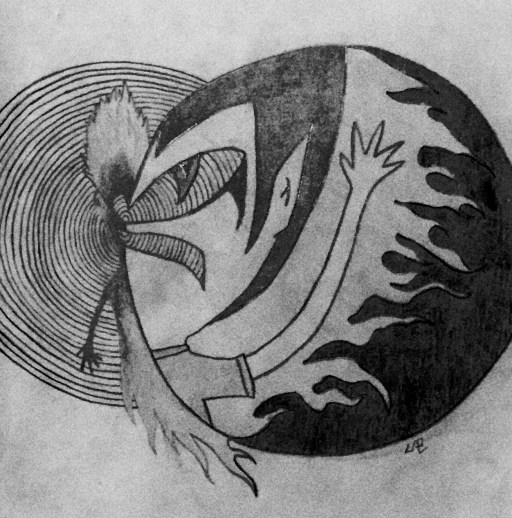
Sin is a Rebellion and a Rampage
Sin is moral. It is an act against God. It is a transgression against God’s law. But not only His law but also His good plan.[i] Sin is not merely moral or highhanded treason it is also a rampage because it is mad; that is foolish, a form of insanity. It goes against good sense. It is a rampage because sin destroys the good.
We have all seen the pain and sorrow that moral derogation has wrought in our lives. We see it for instance in sins of others against us and those close to us, we see it in sins which we have sinned against others, we see it in the world at large (e.g. my parents were divorced, a very close friend of mine was molested as a child, and a friend of mine that struggled with drug addiction committed suicide). There is, for sure, a law written on all our hearts, we go against it to the shame and suffering of humanity; and yet, we all do indeed go against it.
Humanity has and needs a moral standard. This points us to the Creator who gave it to us when He created us in His image. However, it also points us to the Fall. We all fail to measure up to the standard. We can all think of a hypothetical world where everyone followed these standards and where the result was great happiness. Yet, this is not the case. We do not follow these good (innate) standards. How odd. We know the good we ought to do, or at least that there is “a good,” and yet fail to do it.
Sin leads to terrible depraviltiy, hopelessness, and disregard for humanity or anything good. This is vividly portrayed, for example, in Cormac McCarthy’s post-apocalyptic book The Road. We don’t want to suffer what is portrayed there. We don’t even want to think of the horrors of Dachau and Auschwitz. We all know the wickedness of Adolf Hitler, Pol Pot, and Joseph Kony. Yet perhaps their nearly unbelievable atrocities allow us to belittle (in our conscience) our own wickedness. However, even if our sin is so-called “low-grade wickedness” it is the equivalent of their sin, just on a micro level. It has the same seed, though perhaps it hasn’t came to full bloom yet.
What must be realized is that all sin is a movement towards un-creation.[ii] In C.S. Lewis’ words, through sin man becomes the “unman.” Through sin everything that was very good (see Gen. 1:3, 10, 12, 18, 21, 25, 31) becomes cursed instead. Sin covers beauty, boasts in badness, and hides from the supreme joy we all seek. Sin is a rampage.
Sin is a leech and parasite. It lives off of and feeds on life and vitality.[iii] And it kills it. Bleeding it away little by little until the carrier is completely eaten away and destroyed. Note that this death, though complete, can be imperceptible.
Sin leads to de-creation as well as desecration. Humans were made in God’s own image yet through sin that image has literally been put into dirt; man becomes dirt and ashes from whence he came (hence de-creation). From perfection to misdirection, from shalom[iv] to shattering. Everything has come undone. The creation groans with longing. Sin is not merely moral. It is the decay of all things. Sin wrought a wreak and we are still wheeling and writhing in pain.[v]
Thus, sin is not good not only because it is moral rebellion against a good and all-powerful God but also because it is a rampage against His good creation.
_______________________________
[i] “Sin represents an attack upon the harmony of the created order, and not merely a moral lapse” ((Revd Victor James Johnson, “Illustrating Evil – The Effect of the Fall as seen in Genesis 4-11,” 60 in Melanesian Journal of Theology 11-1&2 [1995]). If Jesus is the exact image of God and we were created in God’s image then as we image Jesus—as we are recreated—then we get closer to our beginning, closer to where we were created to be; actually quite a bit beyond that. So in Christ and His truth we are being renewed but through Satan and his lies we are becoming undone. The cosmos is breaking up and will finally be dissolved because of sin and yet remade in and because of Christ.
[ii] “Evil is the force of anti-creation, anti-life, the force which opposes and seeks to deface and destroy God’s good world of space, time and matter, and above all God’s image-bearing human creatures” (N. T. Wright, Evil and the Justice of God, 89)
[iii] “Sin is always the corruption of something good. Its existence is parasitic; it borrows, or rather usurps, its reality from whatever it corrupts” (H. A. G. Blocher, “Sin,” 784 in New Dictionary of Biblical Theology).
[iv] “In the Bible, shalom means universal flourishing, wholeness, and delight… a state of affairs that inspires joyful wonder as its Creator and Savior opens doors and welcomes the creatures in whom he delights. Shalom, in other words, is the way things ought to be” (Cornelius Plantinga Jr., Not the Way It’s Supposed to Be: A Breviary of Sin (Grand Rapids, MI: Eerdmans, 1995), 10; italics original).
[v] Abnormal, sick, unhealthy, dysfunctional, maladjusted, or pathological—“wherever anything wrong exists in the world, anything we experience as antinormative, evil, distorted, or sick there we meet the perversion of God’s good creation” (Walter M. Wolters, Creation Regained, 55).
Sin is Not Good #1
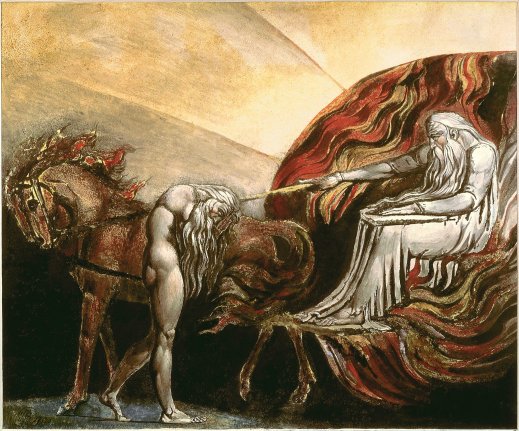
Sin is the Unmaking of Man and a Manifold of Beauties
This world cries out like so much ripe fruit, “I’m good! Eat me! Indulge yourself…” However, much of the fruit here, as in the Garden, leads to cataclysmic clashes, with God, yourself, and humanity. It looks good and much of it is. But much of it has an infectious parasite on it. It’s hard, though not impossible, to consume it without getting “sick.”
In Genesis 3:1-24 we see the Fall of humanity. We see various forms of death given birth to. We see “’an ever-growing avalanche of sin, a continually widening chasm between man and God’. It progresses from disobedience, to murder, to indiscriminate killing, to titanic lust, to total corruption, and uncontrolled violence.”[ii] Sin truly brings a litany of death. “Disease, genetic disorders, famine, natural disasters, aging, and death itself are as much the result of sin as are oppression, war, crime, and violence. We have lost God’s shalom—physically, spiritually, socially, psychologically, culturally. Things now fall apart.”[i]
Through sin we have marred more than the mediocre; we have marred the Michelangelos of the world. We have marred superb beauty and made it unbelievably hideous. Yet, if we see something that is less hideous we look at it as a wonder. Why? Because this world is so tainted and steeped in sin and the effects of sin.
To illustrate, if I ruin a “masterpiece” that my son made with paper, glue, and crayons the ramifications will be far less than if I destroy the Mona Lisa. Well, creation was intended to be a Mona Lisa; that is, it was intended to be supremely glorious. God’s creation was intended to be good, beautiful, and esthetically pleasing to our senses, emotions, and intellect beyond what we can imagine. And so the ramifications of the destruction of such beauty is greater. We often think of this world as the way it is not as the way it was intended to be. If we could see a glimpse of what the Great Creator had in mind for His masterpiece then we’d see that we “paved paradise and put up a parking lot.” We essentially killed a thousand Beethovens and blared white noise. We backfilled the Grand Canyon with gravel. We burned a hundred museums of art. We scorched our taste buds off our tongue. We took a wrecking ball to all the wonders of the world and razed a thousand gorgeous cities. In short, through our “war crimes,” we, as humanity, deserve death. We have brought cataclysmic chaos to the world.
Sin is not a light thing. We, as humans, were created in the image of God. We were to be like Christ, God in flesh (cf. Gen. 1:26-27). The world was meant to be supremely glorious, peaceful, and loving but instead it is disgusting and understandably repugnant to God. So, as we try to grasp the wonder of what has been marred we can begin to understand how serious the situation is and how terrible sin is.
Thus, sin is not good because it is the unmaking of man and a manifold of beauties.
__________________________
[i] Timothy Keller, The Reason for God, 177. “Disunion with God is reflected in disunion with others and with oneself” (Johnson, Foundations of Soul Care, 466 cf. Bonhoeffer, Ethics).
[ii] Revd Victor James Johnson, “Illustrating Evil – The Effect of the Fall as seen in Genesis 4-11,” 57 in Melanesian Journal of Theology 11-1&2 (1995).
“…yet to be filled…”

 Today’s culture believes that you can’t be fulfilled unless you can have the “partner” you want, whether male, female, multiple, or in some other combination that is preferred, and yet so many signs tell us that humanity has yet to be fulfilled. Take, for example, all the recent rich and famous people, people that many of us would think would be fulfilled, that have committed suicide or died of drug overdose.
What does all this tell us? Or as Blaise Pascal says,
“What is it then that this desire and this inability proclaim to us, but that there was once in man a true happiness of which there now remain to him only the mark and empty trace, which he in vain tries to fill from all his surroundings, seeking from things absent the help he does not obtain in things present? But these are all inadequate, because the infinite abyss can only be filled by an infinite and immutable object, that is to say, only by God Himself.”
We have eternity in our hearts. We seek for good gifts, that have become tainted fruit, to fulfill. But they can’t, they were never designed to. Legalizing same sex marriage isn’t the solution. Drugs are not, sex is not, success is not… Not kids, money, things, marriage… They all fail. There’s nothing to be finally gained under the sun.
We need that for which our souls were made. We need the LORD. Jesus the promised Messiah alone gives eternal shalom for our souls.



 in X
in X 