The “Yes!” we scream, whispers “No”
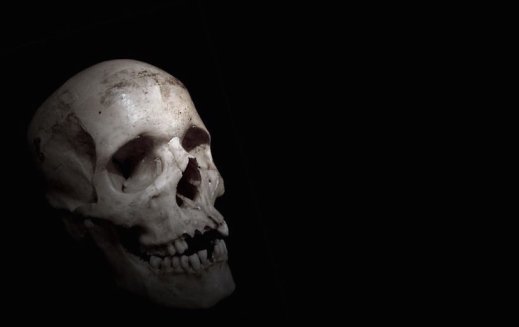
Greet the reaper as he reaps
and weep because of the same
  This silly game
  We do this to ourselves

We’ve mapped out our whole mission
We sketched the whole thing out
  The plan for our destruction

The black hole that is you
  It will consume you
More, more is your mantra
 The only thing that will not go is “no”

Inject the pleasure
Digest the pain
Is it all a game?

You dance,
You dance to your own dirge
Sin is Not Good #6
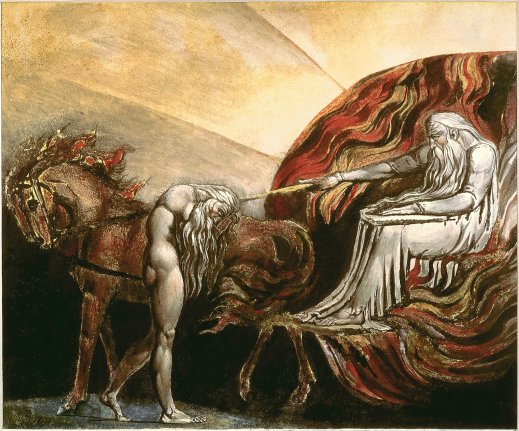
Sin Leads to Enslavement
Sin is like Gollum’s ring. It enslaves and destroys. It looks so good but ends in lava.
Truly, “What we revere, we resemble, either for ruin or restoration,”[i] and we all revere something. So “when we speak of ‘worship’ …we are not speaking about an activity of one’s life, but speaking of the activity of one’s life.”[ii]
Thus, “What distinguishes us (as individuals, but also as ‘people’) is not whether we love, but what we love. At the heart of our being is a kind of ‘love pump’ that can never be turned off—not even by sin or the Fall; rather, the effect of sin on our love pump is to knock it off kilter, misdirecting it and getting it aimed at the wrong things.”[iii]
Yet when we aim at the wrong thing, worship the wrong thing, and thus deprive God of His glory, He deprives us of ours[iv] and we end up empty and doing all manner of wickedness. This is woven into the fabric of the universe, our very existence.
We will worship. That’s not the question. The question is who or what will we worship and to what end. What will be the result?
One catechism asks, “With what design did God create man?” The answer: that we should know God, love and glorify Him, and so be happy forever.[v] Truly “God is to be worshipped, not simply because he demands to be, but because this is the proper destiny of his creation.”[vi] Worship is inevitable.[vii] It will and is happening. The question is not will you worship but what? And what will it lead to?
Will it damn you and lead to enslavement; or will it bring eternal shalom and human flourishing (i.e. true cross-cultural human flourishing not the mere individualistic perception of flourishing) (recall Rom. 1 and 6)? Is it true or is it false?
When we worship the LORD we are going with the grid that is innately ingrained within us since the beginning. This is innate within us but it is strangely not natural. We have been dispossessed of where we were, where we should be. Yet, it is where we should be. The worship of the LORD God is true and right but it also works, it is the way it was designed to be (and thus it not surprisingly works that way).
We were made for ineffable joy and thus we not surprisingly seek for it. The thing about the joy we seek (sehnsucht) is that it’s not quite like our hunger, thirst, or other desires; it cannot be filled within the earth. So, apparently, we with our longing seek to fill it with that which cannot fill it. We think that, similar to our other “thirsts,” it too can be quenched here on earth through tangible means. Yet experience, many wise people, and Scripture have exhorted us that that is just not the case. There is a greater thirst within us, yet also a greater quenching. There is joy unimaginable, though now not wholly obtainable.
So, hear Romans 6:20-23: “When you were slaves to sin, you were free from the control of righteousness. What benefit did you reap at the time from the things you are now ashamed of? Those things result in death! But now that you have been set free from sin and have become slaves of God, the benefit you reap leads to holiness, the result is eternal life. For the wages of sin is death, but the gift of God is eternal life in Christ Jesus our Lord.”
Thus, sin is not good because it enslaves and leads to death although it promises life and fulfillment.
________________________________
[i] G. K. Beale, We Become what we Worship: A Biblical Theology of Idolatry (Downers Grove: InterVarsity Press, 2008.).
[ii] Noel Doe, Created for Worship, 20.
[iii] James K. A. Smith, Desiring the Kingdom, 52.
[iv] cf. Noel Doe, Created for Worship, 29.
[v] Longer Catechism of the Eastern Church [1839], question 120.
[vi] Noel Doe, Created for Worship, 39.
[vii] cf. e.g. Noel Doe, Created for Worship, 230, 231.
Sin is Not Good #4

Sin, Resulting in the Fall, Explains Humanities Wretchedness and yet Greatness
I think it’s accurate to say that “any viable worldview must successfully explain the seemingly paradoxical nature of the human condition.”[i] The philosopher Blaise Pascal lamented, “What sort of freak is man! How novel, how monstrous, how chaotic, how paradoxical, how prodigious! Judge of all things, feeble earthworm, repository of truth, sink of doubt and error, the glory and refuse of the universe!”[ii]
Look at
“the inexplicable phenomenon of mankind: unquestionably corrupt, subject to inconstancy, boredom, anxiety and selfishness, doing anything in the waking hours to divert the mind from human wretchedness, yet showing the vestiges of inherent greatness in the mind’s realization of this condition. Mankind is also finite, suspended between twin infinities revealed by telescope and microscope, and aware of an inner emptiness which the finite world fails to satisfy. No philosophy makes sense of this. No moral system makes us better or happier. One hypothesis alone, creation in the divine image followed by the fall, explains our predicament and, through a redeemer and mediator with God, offers to restore our rightful state.”[iii]
Human greatness split the atom, human wretchedness uses the same to kill millions of people. A great, though wretched, leader, Adolf Hitler, will lead a nation to slaughter millions. A great leader, Winston Churchhill, will lead a nation in their defense. As much as we are great, we bare God’s image. As much as we are wretched, we bare Satan’s. Ben Carson, with his intelligence, will fight for cures; others will inject poison. Humanity is simultaneously great and wretched. What explains this paradox? We all innately sense it but why is it here?
Humanity is fallen. So “the line between good and evil is never simply between ‘us’ and ‘them.’ The line between good and evil runs through each one of us.”[iv] We are made in God’s image and thus can do fantastic things and fantastic good but we have been marred by the Fall and often reflect Satan so we can also do acts of unbelievable wickedness.
Thus, sin is not good because it wreaks havoc on our greatness, on the fact that we were created in the image of God, and distorts it to evil ends.[v] How sad that we who are capable of exploring the limitless expanse of the sea, the mind, space, and biology so often content ourselves with razing and rioting. How sad that though we as humanity are capable of such good, there is such grave injustice. I’ve read for example that a woman born in parts of South Africa is more likely to be raped then to learn to read.[vi] This surely should not be!
______________________________
[i] Robert Velarde, “Greatness and Wretchedness” “How can one species produce both unspeakable wickedness and nearly inexplicable goodness? How can we be responsible both for the most disgusting squalor and for the most breathtaking beauty? How can grand aspirations and self-destructive impulses, kindness and cruelty, be interwoven in one life? The human enigma cries out for explanation” (Thomas Morris, “Making Sense of It All: Pascal and the Meaning of Life” as quoted in Robert Velarde, “Greatness and Wretchedness: The Usefulness of Pascal’s Anthropological Argument in Apologetics”).
[ii] Pascal, Pensees, 131/434.
[iii] D.G. Preston, New Dictionary of Theology, ed. Sinclair B. Ferguson, David F. Wells, and J.I. Packer (Downers Grove, IL: InterVarsity Press, 1988), s.v. “Blaise Pascal” as quoted in Robert Velarde, “Greatness and Wretchedness: The Usefulness of Pascal’s Anthropological Argument in Apologetics.”
[iv] N.T. Wright, Evil and the Justice of God, 38.
[v] Sadly, “human nature itself, with its vast and mysterious amalgam of capacities to think, feel, supervise, love, create, respond, and act virtuously—that is, with its vast capacities for imaging God—has become the main carrier and exhibit of corruption” (Plantinga, Not the Way It’s Supposed to Be, 30-31).
[vi] Yet how strange and how sad that we hate the thought of this and yet many still struggle with the wickedness of pornography. Most of humanity hates the thought of human trafficking but yet enjoys the very things that feed that market.
Sin is Not Good #3

Sin is Humanities Death Wish
I was always told growing up that it’s not good to do bad things. And for a time I was content with that. It didn’t need to be explained to me. However, as time has gone on and temptations have increased, or at least my perception of them, I find it helpful to understand and remind myself of why “it’s not good to do bad things.”
Obviously, “it’s not good to do bad things” because it doesn’t please God but why doesn’t it please God? Why are bad things bad? We see from reflection on Scripture that bad things are bad because they are not in accord with God’s character and thus apart from being bad they do not finally work with the way things are. In short, they are against the universe. Against existence. Against the way things are. Against the way things work. This is because God is good, supremely good. And creation is thus to operate in a certain way. Sin, evil, and bad are not innate within God’s good creation. They don’t “work” and will one day soon be expelled from the whole system. Then, and only then, will all things be put right and made new.
Thus, “The consequence of human sin is not to be seen as an arbitrarily imposed penalty, like a judge imposing a fine for drunk driving, but rather as an inevitable outworking of the implications of sin.”[i] “Death is not an arbitrary punishment for sin; it is its necessary consequence,” because “the turning away from the living God which constitutes idolatry is the spiritual equivalent of a diver cutting off his own breathing tube.”[ii]
To turn from God, to sin, is not only wrong but also foolish. Why? Because “God is our final good, or maker and savior, the one in whom alone our restless hearts come to rest. To rebel against God is to saw of the branch that supports us.”[iii]
Sin is humanities death wish in everyway.[iv] To be separated from God is to die, physically and spiritually. Human flourishing, true shalom, is bond up with God.[v] Apart from union with God we can seek but we won’t find.
The world is a dichotomy. It’s two paths. The wise and the fool. New creation and de-creation. Damnation and liberation. Life and death. Hell and heaven. Where, in a very real sense, are you going?
Sin is thus not good because it is innately against true human flourishing.[vi] Sin is not good because it is humanities death wish in every sense.
_____________________________
[i] Anthony N. S. Lane, “Lust: the human person as affected by disordered desires” 35 in EQ 78.1 [2006], 21-35.
[ii] N. T. Wright, Evil and the Justice of God, 109.
[iii] Plantinga, Not the Way It’s Supposed to Be, 123. “Sin dissipates us in futile—and self-destructive—projects. Sin hurts other people and grieves God, but it also corrodes us. Sin is a form of self-abuse” (Ibid., 124). “Sin against God is therefore outrageous folly: it’s like pulling the plug on your own resuscitator” (Ibid., 125-26). Thus “because it is futile, because it is vain, because it is unrealistic, because it spoils good things, sin is a prime form of folly” (Ibid., 126). Proverbs 8:35-36 says, “For whoever finds me [i.e. “wisdom” which is the fear of the LORD] finds life and obtains favor from the Lord, but he who fails to find me injures himself; all who hate me love death.”
[iv] “The association of sin with physical and spiritual death runs like a spine through Scripture and Christian tradition” (Cornelius Plantinga, Not the Way It’s Supposed to Be, 47).
[v] “The biblical vision of human flourishing implicit in worship means that we are only properly free when our desires are rightly ordered, when they are bounded and directed to the end that constitutes our good” (Desiring the Kingdom, 176). Likewise John Frame, God’s “law is not arbitrary, but is based on his own nature… His moral standard is simply himself, his person, his nature” (Frame, The Doctrine of God, 448 see also Frame, The Doctrine of the Christian Life, 133-35). G. K. Chesterton said, “God is not a symbol of goodness. Goodness is a symbol of God” (Chesterton, William Blake [London: House of Stratus, 2000], 40).
[vi] “Human flourishing” rather is “the same thing as glorifying God and enjoying him forever” (Plantinga, Not the Way It’s Supposed to Be, 37-38).
“Where are you?”
“Where are you?”
In the muck and mire.
“Where are you?”
Setting the world on fire.
Wrapped with the serpent.
Damning Eden.
Covering beauty in foliage and the land with shame.
“Where are you?”
I have yet to know.
It is dark. But I love it.
It is dark. I can hide.
(“Pleasures untold await”) I’ll just hide and hear “where are you?”
I’m in the muck and the mire. I’m in the filth I’ve created. I’ll stay here. I’ll wade in pain.
I’ll close my eyes. Shut up my mind. I’ll shut out any glimmer of grace and light.
Night, night; I’m free. Free to walk. Free to stumble. Free from the sun, from the light. O’ night!
“Where are you, Adam?”
“You were in Eden.”
Slave.

Addiction, the affliction we embrace. Drowning in more, yet never full, we consume the poison.
Freedom from the substance, freedom from the porn, is what we yearn, yet ever embrace our shackles.
Numbing ecstasy, this misery. Bound by this high, damaged by this drink.
Party or prison, this prism through which we peer.
Addiction, this affliction, for which we ever yearn. We burn, burn out, and repeat the syndrome.
No end in sight, all is night, an endless cycle down.
Yes, dirt and sand is all this land, as we thirst for peace and joy. An empty well is where we dwell, no thirst is quenched below.
But as I gaze upon Your grave, where for me You bled, my shackles brake and to You take rest from all this hell. Slave to sin, never again; You my Master alone.
Yet why do I embrace this noose that holds me?
Lord, why do I run to a whore when I know all she has in store for me is death?
I see the light, the joy, and close my eyes, and turn away.
Why don’t I stay?
I run to the slaughter but You’ve prepared a feast. I slit my wrist, when for me You bled.
O’ the misery that is me, when I turn away.
Why don’t I stay?
You quench my thirst, all else is empty wells.
Why swallow up this gravel, when You have abounding streams?
O’ the misery that is me, apart from You.
Are you an Animal?

“He is just an animal.” That is not a very nice thing to say. However, sometimes it is not far from the truth. Sin is sub-human. Think of how Professor Weston becomes the “Un-man” in C.S. Lewis’ Perelandra or think of how J.R.R. Tolkien’s Smeagol mutated into Gollum.
God created us in His image. Not in the image of a dog sniffing the air for food or…. God made us to resemble Himself, morally and spiritually. The more sin we live in, the less we are being what God created us to be, and the closer we are to being animals. The way of the fool is the way of the animal: living on instinct and unaware of higher forms of reality.
Are you an animal? That is a strange question. But the Bible talks about people behaving like “irrational animals, creatures of instinct” (2 Peter 2:12). It says that these people have their belly as their god; that is, they instinctively pursue what they crave and their thoughts rise no higher than the earth (Phil. 3:19). Actually, since the fall, that is our default position (Eph. 2:1-3). I, you, John Doe and Jane Doe—everyone—is naturally desperate.
There is a lot wrong with us. But the solution is Jesus. He transforms us. He makes us into His image. He makes us the way we were intended to be. Yet, how are we to be what we are intended to be?
If you have been raised with Christ, seek the things that are above, where Christ is. Set your minds on things that are above, not on things that are on earth (i.e. don’t act like an ignorant animal).
Don’t act like an animal but put to death what is earthly in you: sexual immorality, impurity, lust, evil desire, and materialism, which is idolatry. Because of these the wrath of God is coming. In these you once walked, when you were living in them. But now you must put them all away: anger, wrath, meanness, insult, and rude talk. Don’t act like an animal! But put off the old self with its practices and put on the new self, which is being renewed in knowledge after the image of its creator.
Put on then, as God’s chosen ones, holy and beloved, compassionate hearts, kindness, humility, meekness, and patience, bearing with one another and, if one has a complaint against another, forgiving each other; as the Lord has forgiven you, so you also must forgive. And above all these put on love, which binds everything together in perfect harmony. And let the peace of Christ rule in your hearts, to which indeed you were called in one body. And be thankful. Let the word of Christ dwell in you richly, teaching and admonishing one another in all wisdom, singing psalms and hymns and spiritual songs, with thankfulness in your hearts to God. And whatever you do, in word or deed, do everything in the name of the Lord Jesus, giving thanks to God the Father through him (Col. 3:1-3, 5-10, 12-17).



 in X
in X 