Sin is Not Good #3

Sin is Humanities Death Wish
I was always told growing up that it’s not good to do bad things. And for a time I was content with that. It didn’t need to be explained to me. However, as time has gone on and temptations have increased, or at least my perception of them, I find it helpful to understand and remind myself of why “it’s not good to do bad things.”
Obviously, “it’s not good to do bad things” because it doesn’t please God but why doesn’t it please God? Why are bad things bad? We see from reflection on Scripture that bad things are bad because they are not in accord with God’s character and thus apart from being bad they do not finally work with the way things are. In short, they are against the universe. Against existence. Against the way things are. Against the way things work. This is because God is good, supremely good. And creation is thus to operate in a certain way. Sin, evil, and bad are not innate within God’s good creation. They don’t “work” and will one day soon be expelled from the whole system. Then, and only then, will all things be put right and made new.
Thus, “The consequence of human sin is not to be seen as an arbitrarily imposed penalty, like a judge imposing a fine for drunk driving, but rather as an inevitable outworking of the implications of sin.”[i] “Death is not an arbitrary punishment for sin; it is its necessary consequence,” because “the turning away from the living God which constitutes idolatry is the spiritual equivalent of a diver cutting off his own breathing tube.”[ii]
To turn from God, to sin, is not only wrong but also foolish. Why? Because “God is our final good, or maker and savior, the one in whom alone our restless hearts come to rest. To rebel against God is to saw of the branch that supports us.”[iii]
Sin is humanities death wish in everyway.[iv] To be separated from God is to die, physically and spiritually. Human flourishing, true shalom, is bond up with God.[v] Apart from union with God we can seek but we won’t find.
The world is a dichotomy. It’s two paths. The wise and the fool. New creation and de-creation. Damnation and liberation. Life and death. Hell and heaven. Where, in a very real sense, are you going?
Sin is thus not good because it is innately against true human flourishing.[vi] Sin is not good because it is humanities death wish in every sense.
_____________________________
[i] Anthony N. S. Lane, “Lust: the human person as affected by disordered desires” 35 in EQ 78.1 [2006], 21-35.
[ii] N. T. Wright, Evil and the Justice of God, 109.
[iii] Plantinga, Not the Way It’s Supposed to Be, 123. “Sin dissipates us in futile—and self-destructive—projects. Sin hurts other people and grieves God, but it also corrodes us. Sin is a form of self-abuse” (Ibid., 124). “Sin against God is therefore outrageous folly: it’s like pulling the plug on your own resuscitator” (Ibid., 125-26). Thus “because it is futile, because it is vain, because it is unrealistic, because it spoils good things, sin is a prime form of folly” (Ibid., 126). Proverbs 8:35-36 says, “For whoever finds me [i.e. “wisdom” which is the fear of the LORD] finds life and obtains favor from the Lord, but he who fails to find me injures himself; all who hate me love death.”
[iv] “The association of sin with physical and spiritual death runs like a spine through Scripture and Christian tradition” (Cornelius Plantinga, Not the Way It’s Supposed to Be, 47).
[v] “The biblical vision of human flourishing implicit in worship means that we are only properly free when our desires are rightly ordered, when they are bounded and directed to the end that constitutes our good” (Desiring the Kingdom, 176). Likewise John Frame, God’s “law is not arbitrary, but is based on his own nature… His moral standard is simply himself, his person, his nature” (Frame, The Doctrine of God, 448 see also Frame, The Doctrine of the Christian Life, 133-35). G. K. Chesterton said, “God is not a symbol of goodness. Goodness is a symbol of God” (Chesterton, William Blake [London: House of Stratus, 2000], 40).
[vi] “Human flourishing” rather is “the same thing as glorifying God and enjoying him forever” (Plantinga, Not the Way It’s Supposed to Be, 37-38).
Sin is Not Good #1
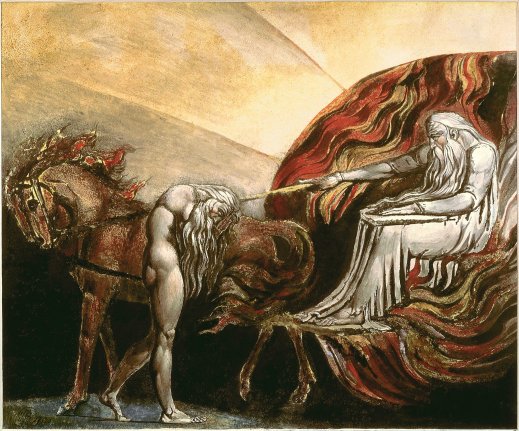
Sin is the Unmaking of Man and a Manifold of Beauties
This world cries out like so much ripe fruit, “I’m good! Eat me! Indulge yourself…” However, much of the fruit here, as in the Garden, leads to cataclysmic clashes, with God, yourself, and humanity. It looks good and much of it is. But much of it has an infectious parasite on it. It’s hard, though not impossible, to consume it without getting “sick.”
In Genesis 3:1-24 we see the Fall of humanity. We see various forms of death given birth to. We see “’an ever-growing avalanche of sin, a continually widening chasm between man and God’. It progresses from disobedience, to murder, to indiscriminate killing, to titanic lust, to total corruption, and uncontrolled violence.”[ii] Sin truly brings a litany of death. “Disease, genetic disorders, famine, natural disasters, aging, and death itself are as much the result of sin as are oppression, war, crime, and violence. We have lost God’s shalom—physically, spiritually, socially, psychologically, culturally. Things now fall apart.”[i]
Through sin we have marred more than the mediocre; we have marred the Michelangelos of the world. We have marred superb beauty and made it unbelievably hideous. Yet, if we see something that is less hideous we look at it as a wonder. Why? Because this world is so tainted and steeped in sin and the effects of sin.
To illustrate, if I ruin a “masterpiece” that my son made with paper, glue, and crayons the ramifications will be far less than if I destroy the Mona Lisa. Well, creation was intended to be a Mona Lisa; that is, it was intended to be supremely glorious. God’s creation was intended to be good, beautiful, and esthetically pleasing to our senses, emotions, and intellect beyond what we can imagine. And so the ramifications of the destruction of such beauty is greater. We often think of this world as the way it is not as the way it was intended to be. If we could see a glimpse of what the Great Creator had in mind for His masterpiece then we’d see that we “paved paradise and put up a parking lot.” We essentially killed a thousand Beethovens and blared white noise. We backfilled the Grand Canyon with gravel. We burned a hundred museums of art. We scorched our taste buds off our tongue. We took a wrecking ball to all the wonders of the world and razed a thousand gorgeous cities. In short, through our “war crimes,” we, as humanity, deserve death. We have brought cataclysmic chaos to the world.
Sin is not a light thing. We, as humans, were created in the image of God. We were to be like Christ, God in flesh (cf. Gen. 1:26-27). The world was meant to be supremely glorious, peaceful, and loving but instead it is disgusting and understandably repugnant to God. So, as we try to grasp the wonder of what has been marred we can begin to understand how serious the situation is and how terrible sin is.
Thus, sin is not good because it is the unmaking of man and a manifold of beauties.
__________________________
[i] Timothy Keller, The Reason for God, 177. “Disunion with God is reflected in disunion with others and with oneself” (Johnson, Foundations of Soul Care, 466 cf. Bonhoeffer, Ethics).
[ii] Revd Victor James Johnson, “Illustrating Evil – The Effect of the Fall as seen in Genesis 4-11,” 57 in Melanesian Journal of Theology 11-1&2 (1995).
Slave.

Addiction, the affliction we embrace. Drowning in more, yet never full, we consume the poison.
Freedom from the substance, freedom from the porn, is what we yearn, yet ever embrace our shackles.
Numbing ecstasy, this misery. Bound by this high, damaged by this drink.
Party or prison, this prism through which we peer.
Addiction, this affliction, for which we ever yearn. We burn, burn out, and repeat the syndrome.
No end in sight, all is night, an endless cycle down.
Yes, dirt and sand is all this land, as we thirst for peace and joy. An empty well is where we dwell, no thirst is quenched below.
But as I gaze upon Your grave, where for me You bled, my shackles brake and to You take rest from all this hell. Slave to sin, never again; You my Master alone.
Yet why do I embrace this noose that holds me?
Lord, why do I run to a whore when I know all she has in store for me is death?
I see the light, the joy, and close my eyes, and turn away.
Why don’t I stay?
I run to the slaughter but You’ve prepared a feast. I slit my wrist, when for me You bled.
O’ the misery that is me, when I turn away.
Why don’t I stay?
You quench my thirst, all else is empty wells.
Why swallow up this gravel, when You have abounding streams?
O’ the misery that is me, apart from You.
Are you an Animal?

“He is just an animal.” That is not a very nice thing to say. However, sometimes it is not far from the truth. Sin is sub-human. Think of how Professor Weston becomes the “Un-man” in C.S. Lewis’ Perelandra or think of how J.R.R. Tolkien’s Smeagol mutated into Gollum.
God created us in His image. Not in the image of a dog sniffing the air for food or…. God made us to resemble Himself, morally and spiritually. The more sin we live in, the less we are being what God created us to be, and the closer we are to being animals. The way of the fool is the way of the animal: living on instinct and unaware of higher forms of reality.
Are you an animal? That is a strange question. But the Bible talks about people behaving like “irrational animals, creatures of instinct” (2 Peter 2:12). It says that these people have their belly as their god; that is, they instinctively pursue what they crave and their thoughts rise no higher than the earth (Phil. 3:19). Actually, since the fall, that is our default position (Eph. 2:1-3). I, you, John Doe and Jane Doe—everyone—is naturally desperate.
There is a lot wrong with us. But the solution is Jesus. He transforms us. He makes us into His image. He makes us the way we were intended to be. Yet, how are we to be what we are intended to be?
If you have been raised with Christ, seek the things that are above, where Christ is. Set your minds on things that are above, not on things that are on earth (i.e. don’t act like an ignorant animal).
Don’t act like an animal but put to death what is earthly in you: sexual immorality, impurity, lust, evil desire, and materialism, which is idolatry. Because of these the wrath of God is coming. In these you once walked, when you were living in them. But now you must put them all away: anger, wrath, meanness, insult, and rude talk. Don’t act like an animal! But put off the old self with its practices and put on the new self, which is being renewed in knowledge after the image of its creator.
Put on then, as God’s chosen ones, holy and beloved, compassionate hearts, kindness, humility, meekness, and patience, bearing with one another and, if one has a complaint against another, forgiving each other; as the Lord has forgiven you, so you also must forgive. And above all these put on love, which binds everything together in perfect harmony. And let the peace of Christ rule in your hearts, to which indeed you were called in one body. And be thankful. Let the word of Christ dwell in you richly, teaching and admonishing one another in all wisdom, singing psalms and hymns and spiritual songs, with thankfulness in your hearts to God. And whatever you do, in word or deed, do everything in the name of the Lord Jesus, giving thanks to God the Father through him (Col. 3:1-3, 5-10, 12-17).
Is Addiction a Disease?

There is a common model that says that addiction is a disease. It is a genetic malfunction. Well, I am no neuroscientists but I do believe that we have all been affected by the fall.[1] I do not mean the season fall, of course. I mean the fall that took place in the Garden of Eden. Man disobeyed God and we have been living with the ramifications ever since. We all have a sin nature.
So, for instance, one way my sinful nature shows itself is anger. When I get mad I like to punch people in the face; and I have done that in the past on a few occasions. But just because my natural disposition is anger and a tendency to violence does not make it right.[2] And it also does not make it a disease. I do not have a virus. I did not catch this sickness from someone else. It is my nature. That being said I do realize that many addictions have very difficult physical “side-affects.” However, those side-affects came as a result of choosing to do the addictive thing in the first place. I do believe it is clear that different people have tendencies. So, there are different factors involved; nature[3] and nurture. But when it all comes down to it, we, ourselves, are culpable. We choose to do whatever it is we choose to do.
That being said, it does have a lot of similarities to disease which is why that model has been so accepted. Scripture even uses sickness as an analogy:
“Oh, what a sinful nation they are—
loaded down with a burden of guilt.
They are evil people,
corrupt children who have rejected the LORD.
They have despised the Holy One of Israel
and turned their backs on him.
5Why do you continue to invite punishment?
Must you rebel forever?
Your head is injured,
and your heart is sick.
6You are battered from head to foot—
covered with bruises, welts, and infected wounds—
without any soothing ointments or bandages” (Is. 1:4-6).
But it uses it as an analogy. And says that the heart is sick. By “heart” is meant the “inner man,” “mind,” or “will.” It is similar to saying you have a fallen nature. All of you is affected and truly infected. It plays itself out like a rancid disease. Our sin is a parasitic cancer that eats away at our life and soul.
So, no, addiction is not a disease. Not biblically. And I would say not medically; though some make it sound like it is.[4]
Then what is it? Addiction is sin. Yet, it is a complex sin. It is idolatry. It is a complex habit.[5] It is a complex habit because through use the addicted has tricked their brain and body to say that they desperately need the substance (which is why professional help should be sought when detoxing). Truly, as Aristotle said, “habit is hard to change because it is like nature.”
Have you ever been off road mudding? When you go mudding it creates groves in the road, sometime huge groves, that are difficult not to drive in. Once you slip into one of those groves it takes you down that path until you can get out of it. But it is hard to get out of because it has been driven down so much. That is kinda what addiction is like. It is like a path that has been driven down a lot. It has created ruts. There are no barriers, no trees or even weeds, in the way. The neural pathways have been blazed. It is an easy path to go down now.
That is why I plan to blog about “action steps.” It is necessary to recalibrate your mind. You need to fill in those old destructive ditches and make new paths that lead to life. This reminds me of Romans 6:20-23. This passage tells us that in our natural state we are a “slave of sin.” That is, we do what our sin tells us to do and apparently it uses neural pathways to tell us what to do. However, these pathways, as Scripture tells us, leads to death. Instead, we need to be sanctified, progressively made into the image of Jesus, and this takes place, at least in part, by creating new healthy and God-honoring neural pathways (we see passages like Deut. 17:18, Rom. 12:2, Eph. 4:22-24, Col. 3:10, 1 Tim. 4:7-8, and Heb. 5:14 are important here) So we see neuroscience does not contradict Scripture. Actually, I think Scripture and neuroscience complement each other (I would like to explore this more in a future post).
[1] “Addiction looks like a disease, but it is a sin nature problem in the heart rather than a disease coming from the outside to the inside” (Mark Shaw, The Heart of Addiction, 20). One writer has said, “It’s a disease in the sense that it attacks a person and is degenerative. However, it’s not a disease in the sense that it takes over a person without that person making choices that allow it to happen” (Substance Abuse, 92). One of the problems is that “he ‘disease’ concept can be used to allow a person to escape moral responsibility” (Ibid.).
[2] “High levels of testosterone are related to higher levels of aggression…; yet malevolent violence is an expression of sin and is blameworthy.” People with “a biological predisposition toward aggressive behavior…” are “still ethically and spiritually responsible to deal with their aggressive predispositions in socially and divinely sanctioned ways” (Eric L. Johnson, Foundations of Soul Care, 477). However, he goes on to point out, “a comprehensive human understanding of such problems–one that corresponds in some measure to God’s understanding–cannot be gained by ignoring the lower-level influences and focusing only on their ethicospiritual blameworthiness. The lower-level dynamics constitute extenuating circumstances–without their being exculpating influences” (Ibid., 478-79).
[3] Note what Edward T. Welch who earned his Ph.D. in counseling (neuropsychology) from the University of Utah says, “There is a categorical difference between being influenced by genetics and being determined by it” (Addictions: A banquet in the grave, 27). He also says that “the scientific data… cannot support the disease approach. For example, it doesn’t account for identical twins (with the same genetic makeup) when one twin is a heavy drinker and the other is not” (Ibid.). Also see his book Blame It on the Brain: Distinguishing Chemical Imbalances, Brain Disorders, and Disobedience; especially 183-202.
[4] So, for instance, Kent Dunnington has pointed out that “neither neural adaptions brought on by substance abuse nor a genetic presdispostion for addiction provides sufficient evidence that addiction is a disease… The disease concept of addiction maintains, first, that addiction is a chronic physiological disorder, and second, that it therefore can be most adequately treated through medical intervention. As it turns out, however, neither of these claims is supported by the evidence. In fact, contrary to the prevailing view of addiction, most substance abusers do stop practicing their additions and go on to lead lives free of addiction, without relapse. Furthermore, the great majority of these addicted persons recover in a nonmedicalized context” (Addiction and Virtue, 24). Also see endnote 2.
[5] Mark Shaw defines addiction as the persistent habitual use of a substance known by the user to be harmful (The Heart of Addiction, 28). “Addiction is a ‘sin nature’ problem and the body responds to the substances in natural ways. Then, in time, the actions associated with addiction become habitual and extremely difficult to overcome” (Ibid., 15 see also Edward Welch,Addictions: A banquet in the grave, 38-39). He also says that this definition “brings more hope to the suffering Christian addict. Because ungodly, destructive habits can be replaced by godly, productive habits” (Ibid., 29). The most profound book on addiction I have ever read is Addiction and Virtue and it is very helpful here; see esp. 138-40.



 in X
in X 