Nietzsche: Prophet of Doom (Part 4)
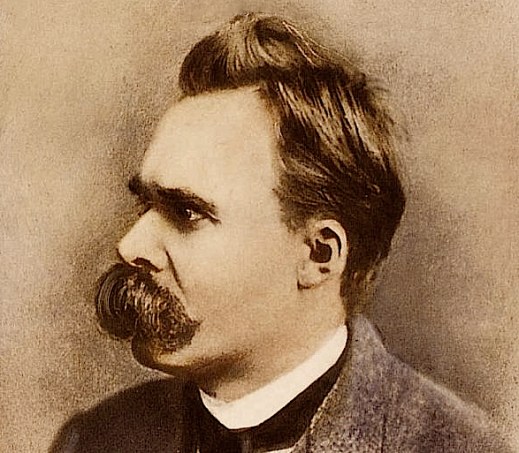
Nietzsche’s Ideal
I want to look at the functionality of Nietzsche’s philosophy. What kind of world does Nietzsche’s philosophy create? Nietzsche’s philosophy creates a world in its own image, one in which people bite and devour each other.
Nietzsche’s philosophy creates all sorts of problems. For example, Nietzsche was not an anti-Semite; he disagreed with his sister and brother-in-law who were. But, it is hard to say upon what grounds. When there is no morality, when “god is dead,” it is hard to criticize morality in other people. Yet, we see him do this time and time again. When we say there is no God, when we say there is no morality, if we are to be consistent we must realize there is no morality and we must come to terms with the world that it creates. So, I am not necessarily pointing out that Nietzsche was wrong, though I think he was, but I want to point out that he and many who have come after him are inconsistent. We cannot hold up Nietzsche’s ideas in the many forms they take and not expect a torrent of injustices to overwhelm us that harken back to Auschwitz.
Nietzsche hated Christianity’s morality that was based, in his opinion, on “pie in the sky.” However, Nietzsche’s morality, or lack thereof, leads to hell here. Nietzsche very likely would not have supported Nazism, and it seems as if he was not anti-Semitic, but many of his writings support the atrocities of the holocaust.
If Nietzsche is right that God is dead then his morality is right as well. That is, there is no right, there is no wrong, there is in sum, no morality. As Ivan Karamazov said in Fyodor Dostoyevsky’s book The Brothers Karamazov, “If God is dead, everything is permitted.” In fact, morality is unhelpful. Nietzsche basically says that morality is nihilistic. He says, “Morality is a way of turning one’s back on the will to existence.”[1]
However, we cannot really live in a world like that, we, at least, would loathe that world. But, that’s the bitter truth if God is dead. If God is dead there is no killing a billion devils. Hell may not then be literal, but hell on earth is. If God is dead, humanity is “free;” free to wallow in its own mire. Free to oppress, free to enslave, free to hate, free to do whatever it is we feel to do, so long as we are more powerful than the powers that be…
So, Nietzsche’s atheistic “morality” might be freeing, if you’re at the top of the food chain. But if you’re a minority or a small off-shoot fringe group that’s not accepted by the powers that be, you are likely to be stubble for the Übermensch’s flame. Freedom it seems only would come to the “god” of this world, the “god” that is strong enough to enslave others (of course you might say, that even that “god” is then enslaved to continually fight for his so-called “godhood”). And so, we see that Nietzsche provides no freedom, he just provides a different master, one that (Romans 6 reminds us) brings a litany of death, debauchery, chaos, and everlasting curse. Nietzsche and his morality—and Darwin and Dawkins[2]—do not finally bring freedom and fun or hope of heaven on earth, they bring a very real type of hell to life on earth; they, when their philosophy is lived out to its logical conclusion, nearly have the power to give demons flesh.[3] They, short of incarnating evil, do image their master the devil. They carry out his deeds by their acts; acts of rape, acts of mutilation, acts of vile debauchery and calculated cruelty, they glory in their shame and they praise and promote those who do the same. They do this because they did not see fit to honor God, they thus become futile in their thinking, and do the works of their father the devil.
My goal is not so much to prove Nietzsche wrong, in my opinion, he has done that himself. My goal is to prove that if “God is dead” it follows that there is no morality and that makes for a terrible world. This is immediately relevant to our current culture. We desire Eden—healthy people and planet, peace, and prosperity—all the while saying there is no God and we can do as we like.[4]
It seems then that Hitler’s Mein Kampf was influenced by Nietzsche’s work. It seems to me that a seed was planted in Nietzsche’s work that Hitler would later cultivate to very destructive ends.[5] Nietzsche may not have foreseen or intended all the Nazi party carried out but it seems that what they did is in line with his thought So, although Nietzsche himself may not have supported the Nazi party, his thought when taken to its logical conclusion, does seem to lead to many of the things that the Nazi party did. Nietzsche, from my reading of him, would certainly have no grounds to criticize anything that they did.
The brutality that Hitler and his regime carried out was necessary as Nietzsche described: “man’s sacrifice en bloc [all together] to the prosperity of one single stronger species of man—that would be progress.”[6] Thus the brutality and sacrifice would be worth it in Nietzsche’s mind because it would bring about a new and better age. Nietzsche, I am sure, could concur with these words from Hitler: “Those who want to live, let them fight, and those who do not want to fight in this world of eternal struggle do not deserve to live.”[7]
Nietzsche said this in Beyond Good and Evil:
The crucial thing about a good and healthy aristocracy… is that it does not feel that it is a function… but rather its essence and highest justification—and that therefore it has not misgivings in condoning the sacrifice of a vast number of people who must for its sake be oppressed and diminished into incomplete people, slaves, tools. Its fundamental belief must simply be that society can not exist for its own sake, but rather only as a foundation and scaffolding to enable a select kind of creature to ascend to its higher task and in general to its higher existence.[8]
As we have said, we can extrapolate, especially with hindsight, that Nietzsche’s philosophy had an impact (though to what degree we cannot say) on Nazism. If there is no right and no wrong, only what is desirable and undesirable for the particular individual, then we allow, even give precedence, for all sorts of moral degradation (because, after all, moral degradation does not actually exist, only the will to power). Thus, we see Nietzsche’s ideal, his philosophy, ultimately promotes violence and all sorts of vile practices.
________________
[1] Friedrich Nietzsche, The Will to Power, par. 11.
[2] Richard Dawkins follows Nietzsche in saying that “In a universe of blind physical forces and genetic replication, some people are going to get hurt, other people are going to get lucky, and you won’t find any rhyme or reason in it, nor any justice. The universe we observe has precisely the properties we should expect if there is, at bottom, no design, no purpose, no evil and no good, nothing but blind, pitiless indifference” (Richard Dawkins, River Out of Eden: A Darwinian View of Life [New York: Basic Books, 1995], 133).
[3] If morality was just a “misfiring” or a “Darwinian mistake,” even a “blessed, precious mistake” (Richard Dawkins, The God Delusion [New York: Mariner Books, 2008], 253) it would not be grounds for living a moral life. Yes, one certainly could still live a moral life, as apparently, Dawkins claims to. He even makes fun of the consideration that people would need a judge in the sky to make us moral. However, Dawkins does not take into account various atheists that attest to the truth that we need a judge in the sky to keep humanity from caring out acts of atrocity on others (cf. e.g. Richard Wurmbrand, Tortured for Christ). If there is no evil, no true transtemporal truth, then there really are no real acts of atrocity. If God is dead, all things are permissible. They may not always be efficient or wise but they are permissible. Efficiency itself becomes the criteria of right and wrong (cite eugenics, euthanasia, Trump’s taxes, etc.). Efficiency becomes a parallel to Nietzsche’s “will to power.” The person that rises above the system (e.g. moral, political), uses the system, or beats the system is the “over-self” that bends the world to its own ends. This is the new “morality,” striving and thriving to subdue life and life’s systems to whatever end is desirable. The true “over-self” may not call themselves a disciple of Nietzsche, it may even be unwise of them to make that claim, but if they live in the ways mentioned above then they are a disciple of Nietzsche even if they don’t know it. They may claim they’re not, they may claim to be pragmatists but they seem to be Nietzsche’s disciples nonetheless.
[4] It reminds me quite a bit of the first sin: forgetting God and doing as we desire. Here we see the danger of autonomous reasoning. From the beginning, even before the Fall, we have been dependent upon God for everything, revelation directing us to know what we should desire. In fact, I think Nietzsche would be happy in that it seems like the only morality today seems to be to do whatever suits the particular individual (unless it infringes upon what someone else wants to do or is really nasty). So, there seems to be no rules, except do not make rules for others or do “really bad things” (like pollution, Christian hypocrisy, and pedophilia).
[5] The Stanford Encyclopedia says “during the 1930s, aspects of Nietzsche’s thought were espoused by the Nazis and Italian Fascists, partly due to the encouragement of Elisabeth Förster-Nietzsche through her associations with Adolf Hitler and Benito Mussolini. It was possible for the Nazi interpreters to assemble, quite selectively, various passages from Nietzsche’s writings whose juxtaposition appeared to justify war, aggression and domination for the sake of nationalistic and racial self-glorification” (Wicks, “Friedrich Nietzsche” in The Stanford Encyclopedia of Philosophy).
[6] Par. 12 of the Second Essay in On the Genealogy of Morality.
[7] Adolf Hitler, Mein Kampf, 289.
[8] Nietzsche, Beyond God and Evil, par. 258. Cf. Darwin’s thoughts on the queen bee. He said, “we ought to admire the savage instinctive hatred of the queen-bee, which urges her instantly to destroy the young queens her daughters as soon as born, or to perish herself in the combat; for undoubtedly this is for the good of the community; and maternal love and maternal hatred, though the latter fortunately is most rare, is all the same to the inexorable principle of natural selection” (Charles Darwin, The Origin of Species [London: Penguin, 1968], 230).
All-Gender Bathrooms, Prosperity, Love, & the Question of Kingdom

Our discussion here should not be limited to bathrooms. It’s not just a problem of bathroom signs and who comes in those bathroom doors. The problem is not just political. If we leave it there we miss the heart of the issue and we fail to care about hearts.
It’s a matter of concern for people and prosperity. It’s a matter of love. And yes it’s a matter of truth. But I feel and fear that the latter has received the emphasis. And it sounds kind of like a noisy gong.
Prosperity
How is this issue related to prosperity? As we think about all-gender restrooms we need to consider the matter from the perspective of love for neighbor and not just moralism or concern for ourselves or even our kids. We need to look at Jesus as the standard of how we interact with people. We should desire to represent Him in this conversation. Not the Andy Griffith Show.
We should have a concern for our neighbors, whether monogamous, transgender, all-gender, because they are fellow human beings created in the image of God. And we don’t want them to miss out on the good design that God gave.
Thus the issue at hand is an issue of prosperity. How do humans prosper and flourish? How and what were we created for? What leads to our ultimate prosperity? What is our ultimate good?
Obviously, what blurs the issue is many believe we weren’t created and we thus have no ultimate purpose. Yet, if God did say in the beginning “it is good” and intends the world to function in a certain way then we shouldn’t want others to miss out on the good God intended even as we realize the world is broken (physically, spiritually, emotionally, etc.). If, however, many of our neighbors our right, if God is not there and He is silent, then it doesn’t matter. Let us eat and drink, let us gloat and indulge in gluttony, let us define our own identity, let us do what we want for tomorrow we die.
But, if as I believe, God did create the world in a certain way, to function according to to certain physical and moral laws then this conversation matters. It matters not just for me, my family, and those that have my same worldview. It matters for all people. It is a matter of being inlined with the laws of the universe, ever as much as we must account for the laws of gravity.
Yet, if we are Christians having this conversations with others, no matter who those others are, we must not be prideful. We must have the conversation in humility and love. We must have it knowing that all of creation groans with longing for redemption. We are all broken. We all struggle (Rosaria Butterfield’s words are helpful).
Love and Concern for People
As we think of and discuss this issue we shouldn’t do it detached from real people. Real people that have real struggles. We should not demonize other people, no matter who those people are. I don’t think Jesus would have done that even if they were putting up new signs on the restrooms at schools. I think Jesus would have seen the masses as blind sheep without a shepherd.
My reading of Scripture leads me to think Jesus would have loved and reached out in love to all people even transgender people (cf. Matt. 23:37). What people still need today is a shepherd, the Shepherd. A loving Shepherd that will lead His sheep to truth.
We must imitate the Good Shepherd. We must love our neighbors even as we disagree with our neighbors. We must be motivated out of love and not out of fear.
How can we who have been loved so much not reach out with love to others?! Are we in a position to judge? Have we removed our log when we reach for another’s speck (cf. Matt. 7:1-6)?
The Kingdom Question
“Hypothetically” if a certain potitical leader did things that didn’t line up with biblical morality and said things like “What is truth?” I don’t think Jesus would have lambasted the political establishment. I think He would have remembered and perhaps reminded us that as Christians our Kingdom is not here. We should not expect it to be (cf. Jn. 18:33ff).
Are you thinking more about the Andy Griffith Show and what our world should be like? Or are you looking at Jesus and what He acted like? Are you expecting to build your kingdom here or are you looking to Christ’s coming Kingdom?*
______________
*Of course, we should not have an uninvolved escapist mentality. We should hold to our biblically informed views (see Politics?).

2016 and Time

“Time flies,” we say. Time, even as you read this, is tick tick ticking away never to return (are you sure you want to read further?!).
Thinking of the fleeting nature of time can be depressing. Yet, as we think of our limited time it should awaken in us intentionality and seriousness. Of course, that does not mean we shouldn’t have fun. If anything it means we should be more intentional about having fun (Ecclesiastes 2:24).
So as we think of the fleeting nature of time we must not become unhelpfully rigid. We must be intentional and purposeful not only in the good that we want to accomplish but also in the good we want to enjoy.
We must realize that much of American culture is akin to a hamster wheel. There’s many people going and doing but for what? To what end? Is it intentional, calculated, purposeful? Or is to no end (see Eccl. 2:26)?
We must also acknowledge that cultures think of time and promptness differently. Some cultures are more relational then prompt. The issue is not really about how much we do or about what people think about what we do but about being an intentional wise steward of the time that God has given us. This will likely look different in different cultural contexts but the stewardship principal remains.
God does not want us, His servants and workman, to waste the time that He has given us to labor for Him. We can rest from time to time like any worker but we must remember that there will come a time when we can no longer work at all (Jn. 9:4). We must keep in mind the perfect rest (shalom) and reward that He has waiting for His laborers.
In this post we will look at why being conscious of the way we spend our time is important. Jonathan Edwards is especially insightful here because he realized the importance of time (See esp. “The Preciousness of Time and the Importance of Redeeming it”).
The Preciousness of Time
Why is time valuable and precious? Edwards said, “Because a happy or miserable eternity depends on the good or ill improvement of it” for you and for others. “Things are precious in proportion to their importance or to the degree wherein they concern our welfare.”[i]
“Gold and silver are esteemed precious by men; but they are of no worth to any man, only as thereby he has an opportunity of avoiding or removing some evil, or of possessing himself of some good. And the greater the evil is which any man hath advantage to escape, or the good which he hath advantage to obtain, by anything that he possesses, by so much the greater is the value of that thing to him, whatever it be. Thus if a man, by anything which he hath, may save his life, which he must lose without it, he will look upon that by which he hath the opportunity of escaping so great an evil as death, to be very precious. — Hence it is that time is so exceedingly precious, because by it we have opportunity of escaping everlasting misery, and of obtaining everlasting blessedness and glory. On this depends our escape from an infinite evil, and our attainment of an infinite good.”[ii]
For example: The life preservers on the Titanic, “the unsinkable ship,” were not thought of as valuable at the outset of the cruise. People must have thought: What is the need of a life preserver on a ship that won’t sink? But that mindset changed. What was it that brought a new and priceless value to the life preservers? People realized that they were, in fact, not on the unsinkable ship; for it was sinking.
In a short time the value of the life perseveres sky rocketed. The people now clinched the life preservers tight, perhaps even fighting over them, when before they would not even give them a second thought. Just like the passengers treated the life preservers differently once they realized the ship was sinking so we must treat time differently once we see that our lives are fleeting. When we realize that time is precious we will clinch it tight and use it wisely.
Life is transitory and we do not know how long we will live. Our life is just a mist that appears for a little time and then vanishes (James 4:14). Time is so valuable, in part, because it is very short. Our time on earth is but dust in the wind, vapor that is here for a moment, grass that withers in the sun. Our time on earth is short and “the scarcity of any commodity occasions men to set a higher value upon it, especially if it be necessary and they cannot do without it… So time is the more to be prized by men, because a whole eternity depends upon it; and yet we have but a little of time.”[iii]
“Time ought to be esteemed by us very precious, because we are uncertain of its continuance.”[iv] We know that time will end for all people; however, we do not know when. We do not know the date and the time.
Time is valuable because when it is gone you can never get it back. Edwards said,
“There are many things which men possess, which if they part with, they can obtain them again. If a man have parted with something which he had, not knowing the worth of it, or the need he should have of it; he often can regain it, at least with pains and cost… But it is not so with respect to time. When once that is gone, it is gone forever; no pains, no cost will recover it.”[v]
“Once the time of life is gone, when once death is come, we have no more to do with time; there is no possibility of obtaining the restoration of it, or another space in which to prepare for eternity. If a man should lose the whole of his worldly substance, and become a bankrupt, it is possible that his loss may be made up. He may have another estate as good. But when the time of life is gone, it is impossible that we should ever obtain another such time. All opportunity of obtaining eternal welfare is utterly and everlastingly gone.”[vi]
The way we spend our time on earth has eternal consequences. This is not a subject to be taken lightly. “A person cannot do anything to time itself—delay or hasten, save or lose it—much less ‘manage’ it. The challenge is to manage ourselves under the lordship of Jesus Christ, from whom we get our goals and values.”[vii]
May we be intentional and wise stewards of 2016.
________________________
[i]Jonathan Edwards, The Works of Jonathan Edwards:2 Volume Set, (Peabody, Massachusetts: Hendrickson Publishers, 2005), 233.
[ii]Edwards, The Works of Jonathan Edwards, 233.
[iii] Ibid.
[iv] Ibid., 234.
[v] Ibid.
[vi] Ibid.
[vii] Charles E. Hummel, The Freedom from the Tyranny of the Urgent (Downers Grove, IL: IVP Books, 1997, 31.
Technology: Connected and Out of Touch

How surreal, I am sitting in a Starbucks and there is an older couple sitting across from me. By all appearances they do not know each other. Their “date,” from what I can tell from spying, consists of looking at their cell phone (maybe the new iPhone 6s), touching it, and occasionally showing each other something on their phone; no doubt a new high score on “angry birds” or some other profound thing like a YouTube video of a monkey.
This is surreal for two reasons: 1) When this couple got together and started dating they could never have imagined the technology that would be available in the palm of their hand. Maybe this partly explains why they are so captivated by their phone and not by the actual person setting beside them. 2) When this couple got together, maybe thirty years ago, they could not have imagined wanting to hold some device in their hand rather than their loved ones’ hand.
Yet how things change. Affections fade and technology grows. And perhaps there is a correlation between the two distancing polls. If we hold a device in our hand instead of our loved ones’ hand, if we have “facetime” instead of real face time, if we have “facebook” and not time with real faces, if we have tweets and not conversations there will necessarily be a distancing effect from technology. And it will likely be that as technology advances so will be the chasm between relationships. However, if we start to put the work in on our relationships that any computer programmer puts in on technology then we may be able to keep pace with the discordant dissidents of technology. But this will require the intentionality and work ethic of those that are bringing us these great advances in technology.
In all of this realize that I am by no means saying that technology and advances in technology are bad, they are not in and of themselves (For instance, things like Skype can help relationships). Yet we must be very conscious in our use of technology. We must consider, am I playing “Tomb Raider” (or whatever it is called) when I should be looking deeply into my loved ones’ eyes? Am I “iTexting” when I should be talking to the person beside me? When I turn on my phone do I turn off my head? Does the “feed” on Facebook or Twitter feed my soul and intellect or does it leave me malnourished and hungry for something of substance like a book? Does being connected to the internet connect me to the world or allow me to be safely removed from it?
I have found these questions surprisingly relevant and present but often unheeded in my own life. I have noticed on more than a few occasions when my family is visiting that we will set around in the living room with more than one person on a technological device. We’ll be “hanging out” yet the majority of the people in the room are on a computer or some such thing. This form of “hanging out” is much different then I remember growing up, and I’m only twenty-eight! My kids will have to be especially careful in their use of technology.
“Genetic Homosexual?” and our morality…

John is attracted to men. Jane is attracted to women. And so, our cultural says, “Go for it! If that’s the way you feel (the culture’s only form of “objective” truth). After all, that’s the way you were born. It’s in your genes.”
I, Paul, am attracted to women (pl.) and yet I am married, to a singular woman. I also have the tendency, bent, disposition, because of innumerable factors (nature, nurture, etc.) to be angry and act out in anger. If I left myself unchecked and just did whatever I felt like, I, sad to say, would be an abusive adulterer. Something that would not be good for me, my wife, my children, or society.
So, even if I am by nature a genetic abusive adulterer is that ok? Should I be content with that? Promote that?
I do not see how that is admirable. Many people would lead me to believe that is the higher good; to be something akin to animals. To do whatever we want, whatever our natural self would want to do. It sounds like many would sniff the wind and follow their inner impulse. However, does anyone realize that our inner impulse, whatever it might be, will often lead to some very bad places?
We all have many dispositions: selfishness, pride, boastfulness, etc. but that does not make it right; even if natural. If we want to just say that everyone should just do whatever their genetic disposition has given them, then we should just do away with the penal system and society in general. For what, in that line of thought, would allow us justification to repress any inner and natural desire?
Many studies, for instance, show that many drug addicts, whether meth, heroin, or cocaine, have a genetic disposition to drug addiction. However, we don’t say, or most of us don’t say, that drug addiction is okay. Why? Many would say because it harms the body and harms society. Just because someone has a disposition for something does not justify that disposition.
The logic that says homosexuality is fine because people have a disposition towards it is faulty. That just does not follow. People have dispositions in all sorts of ways. But that does not make it morally good.
People say: “To your own self be true” and other such phrases. But where does our deepest self lay? In our pants? Or does our mind and our convictions play a pretty big part? Maybe being “true to our self” also, and more fundamentally, means being true to our convictions, to what we think and believe at the core of our being. If I ask, “Is love more than bodily fluids?” This will be answered not unbiasedly but according to other deeper and more fundamental questions. The real issue at stake in this conversation is about fundamental convictions; how we see the world, our ultimate desires, our view of life and our view of “the good.”
People, for instance, compare sex to eating. Yes, sex is like eating in some ways. It is a natural enough thing (although much more significant psychologically, relationally, etc.), yet if we don’t eat we die. That is not the case with sex. Yet sex, under certain belief systems, e.g. naturalistic hedonism, will be seen as close to ultimate. Whereas the Christian sees sex as a good gift from God. A gift that must be enjoyed in the right way to the right end. In the Christian’s belief system there is something more awesome more significant than sex, infinitely more.
When the Christian, whether their tendency is more towards heterosexual, homosexual, or bisexual temptation, has found that there is something more significant, lasting, and satisfying than sex (yes, something better than sex!) it obviously impacts them. They can be recreated and desire what is more significant than some of their inner dispositions.[1] Through relationships, whether with friends, a spouse, or God, we see that we are not just sexual animals; that is one part of our constitution. It is not, or I don’t think we should let it be, the fundamental and driving part. That view is shallow, problematic, and simply just not accurate to reality.
What we are seeing in our culture is two worldviews colliding. One says we are fundamentally animals and thus expects us to live according to our innate animal desires. And from that worldview, it’s consistent. Only why stop with adultery or homosexuality?… whatever one finds to do, whatever the desire, it should be allowed in that system.[2] The other worldview says we are not animals and we should not live simply according to our desires. Our desires can be wrong, very wrong. The Christian says that we were created in the image of God but have been marred through sin. We need to be remade in God’s image by listening to His Word. The problem happened in the beginning exactly because we were not listening and did what we (wrongly) desired.
Our desire must be shaped, informed, led by He who knows; namely God. God has all wisdom. Not us. He, as our good Father, knows how to give good gifts, even if we think we want something else. He knows what we ultimately need and what will ultimately satisfy.
So, there may be “genetic homosexuals” that are not practicing homosexuals. I myself am a “genetic adulterer” yet, by God’s empowering grace, I am not a practicing adulterer.
___________________________________________
[1] Of course, here, if someone sees humans as fundamentally just sexual animals then what I am saying will be scoffed at. However, I will also rightfully scoff at their shallow, sad, and bankrupt view. If we are mere animals then what of love, what of society, what of the penal system? Obviously, “non-Christian presuppositions will lead to non-Christian interpretations and ultimately to non-Christian conclusions” (Michael J. Kruger, “The Sufficiency of Scripture in Apologetics,” 87 in The Master’s Seminary Journal, Vol. 12, No. 1, Spring 2001). Yet, those conclusions are chaotic, problematic, and wrong.
[2] “Logic, science, and morality make no sense within the non-Christian worldview. For example, how can the atheist justify and explain the origin and universal applicability of moral absolutes? He simply cannot. Consider philosopher William Lane Craig as he explains the impossibility of moral absolutes in an atheist worldview: If there is no God, then any ground for regarding the herd morality evolved by homo sapiens as objectively true seems to have been removed. After all, what is so special about human beings? They are just accidental by-products of nature which have evolved relatively recently on an infinitesimal speck of dust lost somewhere in a hostile and mindless universe and which are doomed to perish individually and collectively in a relatively short time. Some action, say incest, may not be biologically or socially advantageous and so in the course of human evolution has become taboo; but there is on the atheistic view nothing re ally wrong about committing incest. If, as Kurt states, ‘The moral principles that govern our behavior are rooted in habit and custom, feeling and fashion,’ then the non-comformist who chooses to flout the herd morality is doing nothing more serious than acting unfashionably (William Lane Craig, The Indispensability of Theological Meta-Ethical Foundations for Morality, located at http://www.leaderu.com/offices/billcraig/meta-eth.html, 4)” (Michael J. Kruger, “The Sufficiency of Scripture in Apologetics,” 83n35 in The Master’s Seminary Journal, Vol. 12, No. 1, Spring 2001).
Our Chronological and Geographical Snobbery and Our Need for a Standard Beyond Ourselves
Science is about what is and can never be about what ought be. Thus, left to our own devices, left to science and our subjective view of what ought to be, we are left with a “might makes right” morality. We are left to Nietzsche and Nazism, to Stalin and suffering. We need a standard that science with all its greatness cannot give us. We need a salvation that science with all its greatness cannot give us. Science, what is, without what ought be, a moral standard beyond us, will inevitably lead to the moral atrocities committed in concentration camps.
Hitler and Nazism justified extermination camps based on what they thought was a good rationale. The U.S. Supreme Court ruling on Dread Scoot vs. Sandford shows that humans are not omniscient. Even now in the 21st century. We will continue to make grave mistakes if we continue in our historical snobbery and arrogant pride and disregard all previous history. As we say “we’ve arrived, we know,” we quote many dead civilizations. I guess we might say with those civilizations, “we’ve arrived” …to our tomb.
We can look down our nose at the Aztecs for their bloody sacrifices. But then, they didn’t know any better. We can look in disdain at Baal worshipers and their practice of baby sacrifice. Perhaps we can even look to Africa, India, and Islam and disdain some of their practices. But, here in the States, here where we lay more babies down each day then what the U.S. lost on D-Day, here where “have it your way” is the moral mantra, here there is nothing to be gained. We’ve arrived. We don’t need a moral compass. We are the moral compass.
We’ll follow our impulses. “Might will make right” and “have it your way” will hold sway. We’ll wade in blood. We’ll turn away. Until we drown.
We don’t need the light of history or God’s word. We are god. We make the rules.
We walk in the darkness we’ve created (cf. Is. 59:10ff). We walk on bodies through the cemetery we’ve created. No wonder we don’t want a light.
Is it not plain that we need Truth, Jesus the Lord of life and the Great Light of the world, to shine away our darkness (Is. 35:5)? We need the Lamb to set on the throne and be our Shepherd (Rev. 7:14-17). All other leaders fail. Scientists and Presidents cannot and will not bring salvation or what finally ought be. The One in the beginning that said it was very good (Gen. 1:31) alone can make it good again (Rev. 21:1ff). The LORD in the face of Jesus Messiah is our sure hope.
Sin is Not Good #6
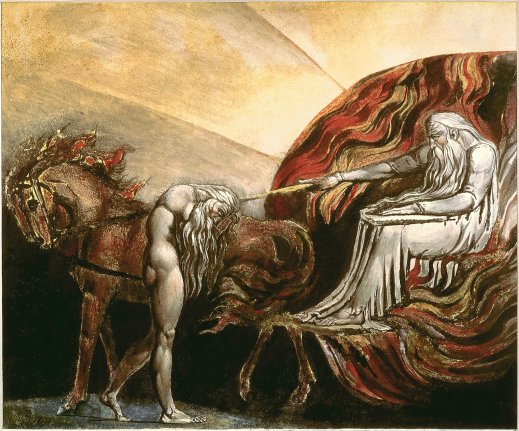
Sin Leads to Enslavement
Sin is like Gollum’s ring. It enslaves and destroys. It looks so good but ends in lava.
Truly, “What we revere, we resemble, either for ruin or restoration,”[i] and we all revere something. So “when we speak of ‘worship’ …we are not speaking about an activity of one’s life, but speaking of the activity of one’s life.”[ii]
Thus, “What distinguishes us (as individuals, but also as ‘people’) is not whether we love, but what we love. At the heart of our being is a kind of ‘love pump’ that can never be turned off—not even by sin or the Fall; rather, the effect of sin on our love pump is to knock it off kilter, misdirecting it and getting it aimed at the wrong things.”[iii]
Yet when we aim at the wrong thing, worship the wrong thing, and thus deprive God of His glory, He deprives us of ours[iv] and we end up empty and doing all manner of wickedness. This is woven into the fabric of the universe, our very existence.
We will worship. That’s not the question. The question is who or what will we worship and to what end. What will be the result?
One catechism asks, “With what design did God create man?” The answer: that we should know God, love and glorify Him, and so be happy forever.[v] Truly “God is to be worshipped, not simply because he demands to be, but because this is the proper destiny of his creation.”[vi] Worship is inevitable.[vii] It will and is happening. The question is not will you worship but what? And what will it lead to?
Will it damn you and lead to enslavement; or will it bring eternal shalom and human flourishing (i.e. true cross-cultural human flourishing not the mere individualistic perception of flourishing) (recall Rom. 1 and 6)? Is it true or is it false?
When we worship the LORD we are going with the grid that is innately ingrained within us since the beginning. This is innate within us but it is strangely not natural. We have been dispossessed of where we were, where we should be. Yet, it is where we should be. The worship of the LORD God is true and right but it also works, it is the way it was designed to be (and thus it not surprisingly works that way).
We were made for ineffable joy and thus we not surprisingly seek for it. The thing about the joy we seek (sehnsucht) is that it’s not quite like our hunger, thirst, or other desires; it cannot be filled within the earth. So, apparently, we with our longing seek to fill it with that which cannot fill it. We think that, similar to our other “thirsts,” it too can be quenched here on earth through tangible means. Yet experience, many wise people, and Scripture have exhorted us that that is just not the case. There is a greater thirst within us, yet also a greater quenching. There is joy unimaginable, though now not wholly obtainable.
So, hear Romans 6:20-23: “When you were slaves to sin, you were free from the control of righteousness. What benefit did you reap at the time from the things you are now ashamed of? Those things result in death! But now that you have been set free from sin and have become slaves of God, the benefit you reap leads to holiness, the result is eternal life. For the wages of sin is death, but the gift of God is eternal life in Christ Jesus our Lord.”
Thus, sin is not good because it enslaves and leads to death although it promises life and fulfillment.
________________________________
[i] G. K. Beale, We Become what we Worship: A Biblical Theology of Idolatry (Downers Grove: InterVarsity Press, 2008.).
[ii] Noel Doe, Created for Worship, 20.
[iii] James K. A. Smith, Desiring the Kingdom, 52.
[iv] cf. Noel Doe, Created for Worship, 29.
[v] Longer Catechism of the Eastern Church [1839], question 120.
[vi] Noel Doe, Created for Worship, 39.
[vii] cf. e.g. Noel Doe, Created for Worship, 230, 231.
Sin is Not Good #4

Sin, Resulting in the Fall, Explains Humanities Wretchedness and yet Greatness
I think it’s accurate to say that “any viable worldview must successfully explain the seemingly paradoxical nature of the human condition.”[i] The philosopher Blaise Pascal lamented, “What sort of freak is man! How novel, how monstrous, how chaotic, how paradoxical, how prodigious! Judge of all things, feeble earthworm, repository of truth, sink of doubt and error, the glory and refuse of the universe!”[ii]
Look at
“the inexplicable phenomenon of mankind: unquestionably corrupt, subject to inconstancy, boredom, anxiety and selfishness, doing anything in the waking hours to divert the mind from human wretchedness, yet showing the vestiges of inherent greatness in the mind’s realization of this condition. Mankind is also finite, suspended between twin infinities revealed by telescope and microscope, and aware of an inner emptiness which the finite world fails to satisfy. No philosophy makes sense of this. No moral system makes us better or happier. One hypothesis alone, creation in the divine image followed by the fall, explains our predicament and, through a redeemer and mediator with God, offers to restore our rightful state.”[iii]
Human greatness split the atom, human wretchedness uses the same to kill millions of people. A great, though wretched, leader, Adolf Hitler, will lead a nation to slaughter millions. A great leader, Winston Churchhill, will lead a nation in their defense. As much as we are great, we bare God’s image. As much as we are wretched, we bare Satan’s. Ben Carson, with his intelligence, will fight for cures; others will inject poison. Humanity is simultaneously great and wretched. What explains this paradox? We all innately sense it but why is it here?
Humanity is fallen. So “the line between good and evil is never simply between ‘us’ and ‘them.’ The line between good and evil runs through each one of us.”[iv] We are made in God’s image and thus can do fantastic things and fantastic good but we have been marred by the Fall and often reflect Satan so we can also do acts of unbelievable wickedness.
Thus, sin is not good because it wreaks havoc on our greatness, on the fact that we were created in the image of God, and distorts it to evil ends.[v] How sad that we who are capable of exploring the limitless expanse of the sea, the mind, space, and biology so often content ourselves with razing and rioting. How sad that though we as humanity are capable of such good, there is such grave injustice. I’ve read for example that a woman born in parts of South Africa is more likely to be raped then to learn to read.[vi] This surely should not be!
______________________________
[i] Robert Velarde, “Greatness and Wretchedness” “How can one species produce both unspeakable wickedness and nearly inexplicable goodness? How can we be responsible both for the most disgusting squalor and for the most breathtaking beauty? How can grand aspirations and self-destructive impulses, kindness and cruelty, be interwoven in one life? The human enigma cries out for explanation” (Thomas Morris, “Making Sense of It All: Pascal and the Meaning of Life” as quoted in Robert Velarde, “Greatness and Wretchedness: The Usefulness of Pascal’s Anthropological Argument in Apologetics”).
[ii] Pascal, Pensees, 131/434.
[iii] D.G. Preston, New Dictionary of Theology, ed. Sinclair B. Ferguson, David F. Wells, and J.I. Packer (Downers Grove, IL: InterVarsity Press, 1988), s.v. “Blaise Pascal” as quoted in Robert Velarde, “Greatness and Wretchedness: The Usefulness of Pascal’s Anthropological Argument in Apologetics.”
[iv] N.T. Wright, Evil and the Justice of God, 38.
[v] Sadly, “human nature itself, with its vast and mysterious amalgam of capacities to think, feel, supervise, love, create, respond, and act virtuously—that is, with its vast capacities for imaging God—has become the main carrier and exhibit of corruption” (Plantinga, Not the Way It’s Supposed to Be, 30-31).
[vi] Yet how strange and how sad that we hate the thought of this and yet many still struggle with the wickedness of pornography. Most of humanity hates the thought of human trafficking but yet enjoys the very things that feed that market.
Sin is Not Good #3

Sin is Humanities Death Wish
I was always told growing up that it’s not good to do bad things. And for a time I was content with that. It didn’t need to be explained to me. However, as time has gone on and temptations have increased, or at least my perception of them, I find it helpful to understand and remind myself of why “it’s not good to do bad things.”
Obviously, “it’s not good to do bad things” because it doesn’t please God but why doesn’t it please God? Why are bad things bad? We see from reflection on Scripture that bad things are bad because they are not in accord with God’s character and thus apart from being bad they do not finally work with the way things are. In short, they are against the universe. Against existence. Against the way things are. Against the way things work. This is because God is good, supremely good. And creation is thus to operate in a certain way. Sin, evil, and bad are not innate within God’s good creation. They don’t “work” and will one day soon be expelled from the whole system. Then, and only then, will all things be put right and made new.
Thus, “The consequence of human sin is not to be seen as an arbitrarily imposed penalty, like a judge imposing a fine for drunk driving, but rather as an inevitable outworking of the implications of sin.”[i] “Death is not an arbitrary punishment for sin; it is its necessary consequence,” because “the turning away from the living God which constitutes idolatry is the spiritual equivalent of a diver cutting off his own breathing tube.”[ii]
To turn from God, to sin, is not only wrong but also foolish. Why? Because “God is our final good, or maker and savior, the one in whom alone our restless hearts come to rest. To rebel against God is to saw of the branch that supports us.”[iii]
Sin is humanities death wish in everyway.[iv] To be separated from God is to die, physically and spiritually. Human flourishing, true shalom, is bond up with God.[v] Apart from union with God we can seek but we won’t find.
The world is a dichotomy. It’s two paths. The wise and the fool. New creation and de-creation. Damnation and liberation. Life and death. Hell and heaven. Where, in a very real sense, are you going?
Sin is thus not good because it is innately against true human flourishing.[vi] Sin is not good because it is humanities death wish in every sense.
_____________________________
[i] Anthony N. S. Lane, “Lust: the human person as affected by disordered desires” 35 in EQ 78.1 [2006], 21-35.
[ii] N. T. Wright, Evil and the Justice of God, 109.
[iii] Plantinga, Not the Way It’s Supposed to Be, 123. “Sin dissipates us in futile—and self-destructive—projects. Sin hurts other people and grieves God, but it also corrodes us. Sin is a form of self-abuse” (Ibid., 124). “Sin against God is therefore outrageous folly: it’s like pulling the plug on your own resuscitator” (Ibid., 125-26). Thus “because it is futile, because it is vain, because it is unrealistic, because it spoils good things, sin is a prime form of folly” (Ibid., 126). Proverbs 8:35-36 says, “For whoever finds me [i.e. “wisdom” which is the fear of the LORD] finds life and obtains favor from the Lord, but he who fails to find me injures himself; all who hate me love death.”
[iv] “The association of sin with physical and spiritual death runs like a spine through Scripture and Christian tradition” (Cornelius Plantinga, Not the Way It’s Supposed to Be, 47).
[v] “The biblical vision of human flourishing implicit in worship means that we are only properly free when our desires are rightly ordered, when they are bounded and directed to the end that constitutes our good” (Desiring the Kingdom, 176). Likewise John Frame, God’s “law is not arbitrary, but is based on his own nature… His moral standard is simply himself, his person, his nature” (Frame, The Doctrine of God, 448 see also Frame, The Doctrine of the Christian Life, 133-35). G. K. Chesterton said, “God is not a symbol of goodness. Goodness is a symbol of God” (Chesterton, William Blake [London: House of Stratus, 2000], 40).
[vi] “Human flourishing” rather is “the same thing as glorifying God and enjoying him forever” (Plantinga, Not the Way It’s Supposed to Be, 37-38).



 in X
in X 