Sin is Not Good #1
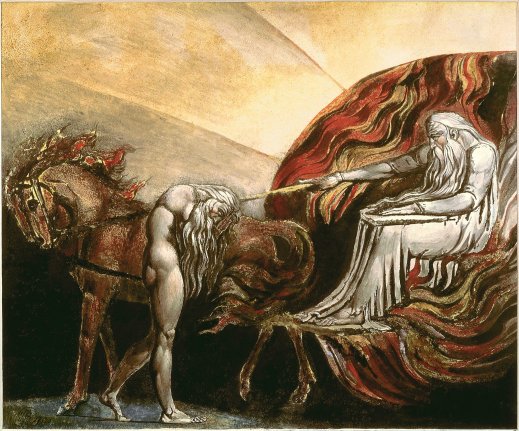
Sin is the Unmaking of Man and a Manifold of Beauties
This world cries out like so much ripe fruit, “I’m good! Eat me! Indulge yourself…” However, much of the fruit here, as in the Garden, leads to cataclysmic clashes, with God, yourself, and humanity. It looks good and much of it is. But much of it has an infectious parasite on it. It’s hard, though not impossible, to consume it without getting “sick.”
In Genesis 3:1-24 we see the Fall of humanity. We see various forms of death given birth to. We see “’an ever-growing avalanche of sin, a continually widening chasm between man and God’. It progresses from disobedience, to murder, to indiscriminate killing, to titanic lust, to total corruption, and uncontrolled violence.”[ii] Sin truly brings a litany of death. “Disease, genetic disorders, famine, natural disasters, aging, and death itself are as much the result of sin as are oppression, war, crime, and violence. We have lost God’s shalom—physically, spiritually, socially, psychologically, culturally. Things now fall apart.”[i]
Through sin we have marred more than the mediocre; we have marred the Michelangelos of the world. We have marred superb beauty and made it unbelievably hideous. Yet, if we see something that is less hideous we look at it as a wonder. Why? Because this world is so tainted and steeped in sin and the effects of sin.
To illustrate, if I ruin a “masterpiece” that my son made with paper, glue, and crayons the ramifications will be far less than if I destroy the Mona Lisa. Well, creation was intended to be a Mona Lisa; that is, it was intended to be supremely glorious. God’s creation was intended to be good, beautiful, and esthetically pleasing to our senses, emotions, and intellect beyond what we can imagine. And so the ramifications of the destruction of such beauty is greater. We often think of this world as the way it is not as the way it was intended to be. If we could see a glimpse of what the Great Creator had in mind for His masterpiece then we’d see that we “paved paradise and put up a parking lot.” We essentially killed a thousand Beethovens and blared white noise. We backfilled the Grand Canyon with gravel. We burned a hundred museums of art. We scorched our taste buds off our tongue. We took a wrecking ball to all the wonders of the world and razed a thousand gorgeous cities. In short, through our “war crimes,” we, as humanity, deserve death. We have brought cataclysmic chaos to the world.
Sin is not a light thing. We, as humans, were created in the image of God. We were to be like Christ, God in flesh (cf. Gen. 1:26-27). The world was meant to be supremely glorious, peaceful, and loving but instead it is disgusting and understandably repugnant to God. So, as we try to grasp the wonder of what has been marred we can begin to understand how serious the situation is and how terrible sin is.
Thus, sin is not good because it is the unmaking of man and a manifold of beauties.
__________________________
[i] Timothy Keller, The Reason for God, 177. “Disunion with God is reflected in disunion with others and with oneself” (Johnson, Foundations of Soul Care, 466 cf. Bonhoeffer, Ethics).
[ii] Revd Victor James Johnson, “Illustrating Evil – The Effect of the Fall as seen in Genesis 4-11,” 57 in Melanesian Journal of Theology 11-1&2 (1995).
Eschatology and Ethics

Eschatology (i.e. the teaching on end times) is not mainly about charts and predictions. It is about worship, longing, and hoping. It is about crying out, How long, O’ Lord?! (Rev. 6:10) and “Come, Lord Jesus!” (Rev. 22:20). Eschatology is about motivation. Motivation to not live for this world that will soon be dissolved but for one that is unfading (cf. 1 Pet. 1:4; 2 Pet. 3:10-12). When we hope in Christ’s return we have motivation to be pure as He is pure (1 Jn. 3:3). Motivation to labor diligently and constantly because our Master is expected at any time (e.g. Matt. 24:36ff; 25:13; 1 Thess. 5:1-2). We are to constantly remind ourselves of His nearing advent and of the feast we shall share with Him (cf. Matt. 26:29; Mk. 14:25; Lk. 22:16; 1 Cor.11:26; Rev. 19:9).[1]
I do think it is good to be well-informed when it comes to Christ’s return. We should understand the main arguments for the different views on eschatology. However, I don’t think we should be dogmatic about how and when exactly it will happen (cf. e.g. Mk. 13:32). But that it will happen and will be glorious. And that it should motivate us as we seek to live faithful lives here as exiles waiting for our blessed hope.
“It is a pity that the church’s teaching on eschatology, the last days, has been concerned mostly with arguments about the order of events. In Scripture itself, the primary thrust of eschatology is ethical,” says John Frame.[2] I agree with Frame, although that should not be a cop-out for studying the book of Revelations and all the other relevant passages.
Yet, if we are just concerned with revealing that which Jesus said would be unrevealed until He came back then we are in a fruitless pursuit (cf. Matt 24:36; Acts 1:7; 1 Thess. 4:13-5:3). However, I do think it is profitable to have general convictions regarding end times. But, in my opinion, a dogmatic conviction is simply unbiblical and unwise. Most of the Pharisees, for example, were so dogmatic they missed Jesus the Messiah. They were so stuck in their ingrained thoughts (and convictions) that they couldn’t see their long Promised Savior before their eyes. Instead, we should be like the Bereans (Acts 17:11). We should know and search the Scriptures; but we should not have every jot and tittle of eschatology dogmatically lined out to a t.
Seven ways the Main Thrust of Eschatology is Ethical[3]:
- We live in the “already but not yet.” That is, the Kingdom of God has been ushered in but it has not been decisively established yet. “So while we are risen with Christ, we must seek the things that are above (Col. 3:1-4). We have died to sin (v. 3), but we must ‘put to death’ the sins of this life (v. 5). So the Christian life is an attempt, motivated by God’s grace, to live according to the principles of the age to come.”[4]
- Peter reminds us that since the present world will be dissolved we should not then live for this world but the next. And thus have morals shaped by the next Kingdom and not this evil one (2 Peter 3:11; 1 Cor. 7:26, 29).
- We “purify ourselves as He is pure,” why? Because we eagerly await the return of Jesus (Phil. 3:20; 2 Peter 3:12; 1 Jn. 3:3). Thus, we see that eschatology is not about hanging up charts that map out when Jesus will return, we clearly cannot know that, but about being found ready when He does come (Matt. 24).
- We can be sure that since Christ resurrected from the grave and was the “firstfruits” that we also will be raised. Therefore,we are told, to be steadfast, immovable, always abounding in the labor of the Lord, because our labor in the Lord is not in vain (1 Cor. 15:58)! When we remember that we too will be raised and receive glorified bodies and enjoy God forever we are motivated to labor for the Lord.
- “We look to the return of Christ as our deliverance from tribulation and thus a source of hope (Luke 21:28).”[5]
- We must always be ready to meet the Lord, always! This is a great prod to faithfulness ( 24:44; 1 Thess. 5:1-10; 1 Peter 1:7; 2 Peter 3:14).
- We also think of the reward that God will give in heaven and this also encourages us to labor for Him (see for example Matt. 5:12, 46; 6:1; Rom. 14:10; 1 Cor. 3:8-15; James 1:12; Rev. 11:18).
Take Away
1) We should study end times. We need to seek to accurately handle the Word of truth (I speak to myself!). Yet we should not dogmatically hold to our position on this subject.
2) We need to remember, that the end of the story, and the main point of the Revelations, is to show that God through Jesus the Christ is victorious! This truth encouraged John who was exiled on Patmos and all the churches that were being persecuted to whom the letter went. If we read the letter, especially in that context, we will respond, not so much with a certain view of how everything will happen, but by saying, “Come Lord Jesus, come”! And that is the more powerful takeaway from the book.
3) Thus, we need to understand that all talk of end times does, or should, have a very practical thrust.
Conclusion
A person can have charts on the wall, even fairly accurate ones, and yet not have Christ in their heart and exuding out of their heart. If our study of the second coming of Christ and the future Kingdom of God does not have a very practical thrust, I don’t care how much we think we understand eschatology, we don’t understand eschatology. May we meditate on eschatology, but may it change not merely our view of the end times, but our ethics!
_____________________________________________________
[1] “We are called to be a people of memory, who are shaped by a tradition that is millennia older than the last Billboard chart. And we are called also called to be a people of expectation, praying for and looking forward to a coming kingdom that will break in upon our present as a thief in the night” (James K. A. Smith, Desiring the Kingdom, 159).
[2] John Frame, The Doctrine of God, p. 277.
[3] These seven points are taken from John Frame.
[4] Ibid., 277.
[5] Ibid., 278.



 in X
in X 