Body and Spirit: Christianity and the Importance of Exercise

I recently read David Mathis’ book, A Little Theology of Exercise. It is good and reminded me to finish writing something I started in 2023…
I have been exercising religiously and consistently for the past five years or so.[1] I use both “religiously” and “consistently” purposely here. I don’t primarily exercise for aesthetics or athleticism. But because “exercise is of some value,” as the Apostle Paul says (1 Timothy 4:8).
Some of the values I have seen in my own life: mental clarity, more patience and less anger, self-discipline, less stress (and fewer stress-related canker sores), and less back and knee pain. But that’s not it. My exercise has been religious too.
Exercise can actually be a type of spiritual discipline and an act of worship when done for the right reasons. Christians need to reject lazy and sedentary lives while also avoiding obsession with fitness and body image. Exercise is to serve the higher purpose of loving God and others well.
Christians know the body is not evil or unimportant; it is a precious part of what it means to be human. So, our bodies are to be stewarded to God’s glory. By working to keep our bodies healthy, we position ourselves to better serve God and others.[2] Exercise can help us better steward our time on earth.
Jonathan Edwards, the 18th-century theologian and philosopher, saw the benefit of regular exercise, although he didn’t have a gym to go to. In the winter, when he couldn’t ride his horse and walk, he would “chop wood, moderately, for the space of half an hour or more.”[3] I don’t think what we do is as important as doing something. We all have things we gravitate towards. Physical activity is helpful for us.
John J. Ratey’s book, Spark: The Revolutionary New Science of Exercise and the Brain, was also helpful. He shows that exercise…
- helps with stress
- is especially helpful for those with ADHD
- is very beneficial for recovering addicts; it can assist the fight for sobriety because of how the reward system works in our brains
- helps with mental agility
- helps spur the growth of new brain cells
- helps combat anxiety and depression
- helps prevent and heal neurodegenerative disorders
Exercise is important. I love what the Apostle Paul says: “Physical training is good, but training for godliness is much better, promising benefits in this life and in the life to come” (1 Timothy 4:8). Of course, the Apostle Paul did not live a sedentary lifestyle.
Paul walked some 10,000 miles on his missionary journeys. So, Paul, although bookish, was also active. Jesus also did not live a sedentary lifestyle. Jesus was a carpenter/masonry craftsman, several of Jesus’ disciples were fishermen, and Paul was a tentmaker.
“Regular human movement has been assumed throughout history.” But now, as David Mathis said, “We have cars, and we walk far less. We have machines and other labor-saving devices, and so we use our hands less. We have screens, and we move less. Added to that, in our prosperity and decadence, food and (sugar-saturated) drinks are available to us like never before.”
We definitely need to hear “godliness is much better,” but I think we also need to hear, “physical training is good.” This is especially the case because we drive, we don’t walk. We order fish, we don’t hoist them in from a ship. We build more things on Minecraft than with our hands.
It does make sense that our spiritual lives are more important than our physical fitness. But I don’t believe there is some huge separation between the two. Activity helps activate our minds. And the Bible says we are supposed to love the Lord our God with all our heart, soul, mind, and strength, and we are to glorify God in whatever we do. The Bible also says that Christians are temples of the living God; that doesn’t mean that our bodies must be marble, but it does mean that we shouldn’t treat our bodies like latrines.
We are embodied beings, not disembodied souls. Our bodies, it is true, are not glorified yet; they are battered and broken, but they’re not inherently bad. So, let’s exercise for effectiveness and longevity, not self-worth or selfies. God is the one who instills our self-worth (and gave Jesus for us), and being obsessed with selfies is silly.
Notes
[1] Exercise has been a part of my life since about as long as I can remember. I started playing soccer when I was five and remember first being allowed to jog to Fleets Fitness when I was thirteen.
[2] Scripture says to do good to people as you have opportunity (Gal. 6:7), but more and more, if it is difficult to get off the couch, it will also be increasingly difficult to help people. So, I think disciplining ourselves for the sake of godliness (1 Timothy 4:7) can and even should include physical exercise.
[3] The Works of President Edwards.
*Photo by Mike Cox
Summary of Our Epidemic of Loneliness and Social Isolation Study

Our Epidemic of Loneliness and Social Isolation is a 2023 advisory report by U.S. Surgeon General Vivek Murthy. It highlights the widespread issue of loneliness and social isolation in the U.S. and its severe health consequences.
Scope of the Problem
The report highlights that loneliness and social isolation have become widespread in the U.S., affecting millions of people across all demographics.
- About one in two adults reports experiencing loneliness. Social isolation has increased due to shifts in how people interact, including greater reliance on technology and remote work.
- Young adults, older adults, and marginalized communities are particularly vulnerable.
Causes and Contributing Factors
- Decline in community participation (e.g., fewer people engaging in religious or civic groups).
- Remote work and digital communication reducing in-person interactions.
- Changes in family structures leading to fewer social connections.
- COVID-19 has had a substantial impact.
- Americans spend less time with friends and family than in previous decades.
Health Impacts
The report emphasizes that loneliness and social isolation are not just emotional struggles—they have serious consequences for physical and mental health, comparable to other well-known public health risks.
- Chronic loneliness increases the risk of heart disease, stroke, dementia, depression, and anxiety.
- The health impact of lacking social connection is comparable to smoking 15 cigarettes per day.
- Social isolation raises the risk of premature death by 26-29%.
Solutions and Recommendations
The report outlines a six-pillar strategy to rebuild social connections and address the loneliness crisis:
1. Strengthen Social Infrastructure
- Invest in public spaces, community centers, and social programs that encourage connection.
2. Promote Pro-Social Public Policies
- Encourage workplace policies that support social well-being. Integrate social connection efforts into healthcare systems, such as screenings for loneliness.
3. Reduce Harmful Aspects of Technology
- Develop healthy digital habits.
4. Deepen Community Engagement
- Increase participation in local organizations, religious groups, and volunteer work**.
5. Equip the Public with Social Skills
- Teach social connection skills in schools and workplaces. Educate people about the importance of maintaining relationships for their well-being.
6. Make Social Connection a Public Health Priority
- Recognize loneliness as a public health crisis and fund research and initiatives.
Quotes from the Study
Social connection is a fundamental human need, as essential to survival as food, water, and shelter. (9)
Despite current advancements that now allow us to live without engaging with others (e.g., food delivery, automation, remote entertainment), our biological need to connect remains. (9)
The lack of social connection poses a significant risk for individual health and longevity. Loneliness and social isolation increase the risk for premature death by 26% and 29% respectively. More broadly, lacking social connection can increase the risk for premature death as much as smoking up to 15 cigarettes a day.* In addition, poor or insufficient social connection is associated with increased risk of disease, including a 29% increased risk of heart disease and a 32% increased risk of stroke. Furthermore, it is associated with increased risk for anxiety, depression, and dementia. Additionally, the lack of social connection may increase susceptibility to viruses and respiratory illness. (8)
Social connection is a significant predictor of longevity and better physical, cognitive, and mental health, while social isolation and loneliness are significant predictors of premature death and poor health. (23)
Substantial evidence also links social isolation and loneliness with accelerated cognitive decline and an increased risk of dementia in older adults, 10.41 including Alzheimer’s disease 63 Chronic loneliness and social isolation can increase the risk of developing dementia by approximately 50% in older adults, even after controlling for demographics and health status.41 A study that followed older adults over 12 years found that cognitive abilities declined 20% faster among those who reported loneliness. (28)
Evidence shows that being objectively isolated, or even the perception of isolation, can increase inflammation to the same degree as physical inactivity. (32)
Increased levels of social connection can improve various biomarkers of cardiovascular functioning, including blood pressure, cardiovascular reactivity, and oxidative stress. (32)
Loneliness… is associated with a greater risk of cardiovascular disease, dementia, stroke, depression, anxiety, and premature death. The mortality impact of being socially disconnected is similar to that caused by smoking up to 15 cigarettes a day. (4)
Photo by Toa Heftiba
Health and Healing, Sickness and Suffering
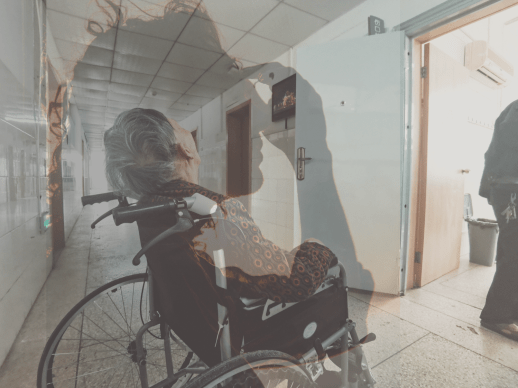
Health and Healing, Sickness and Suffering
When it comes to health and healing, and sickness and suffering, there are a lot of questions and a lot of confusion.
This topic hits home for me because I serve as Care Pastor at Crossroads Church. But, more than that, it hits home because it is home. All the time. My wife has various diagnoses all adding up to making her chronically ill.* That is, she’s sick. She’s sick a lot; more or less all the time.
Does God want us to be healthy and happy? Then why is there suffering and sickness? And why are some people healthy and some people sick? Why is my wife sick? Did she do something to deserve it? Did I do something? Do we lack faith?
The answers to these questions are not simplistic. They are complex. And they are mysterious. It’s always good to remember that God as God is not like us. His ways are higher than our ways, and His thoughts are higher than our thoughts (Is. 55:8-9). That shouldn’t be surprising for us since He’s God, but it is vital that we remember that truth.
So, why sickness and suffering?
Sickness and suffering?
First, we should acknowledge how big and how relevant that question is. People have been asking this question for eons. The Bible gives some very valid and convincing reasons (especially when understand in the context of redemptive history).
Why sickness?
The Fall (sin in general, natural evil)
Sickness was introduced into the world as a result of sin (Gen. 3). When God made the world, it was very good (Gen. 1:31). So, sickness is an intruder. Sickness is not welcome and will not always be in the world. But it is certainly here now. Now in the natural course of the fallen world, people get sick and they die, and people die as a result of old age (Gen. 5 [notice the refrain of “and he died”], 48:1, 21).
Individual Sin (specific personal sin, moral evil)
Sometimes sickness is a result of a specific personal sin (1 Cor. 11:28-30). Of course, all sin leads to separation from God and death. But some sins bring especially pungent consequences. Some sins, as 1 Corinthians says, are against our own bodies (1 Cor. 6:18). Some sickness results from disobeying God (Ex. 15:26). It seems king David himself experienced the physical consequences of sin (Ps. 32:3-4; 38:3-5).
Demonic Forces
From reading the New Testament it seems clear that some sickness is a result of demonic forces. The Gospel of Mark talks about a young boy that has “a spirit that makes him mute” (Mk. 9:17-18 cf. Lk. 11:14). The Gospel of Luke talks about a woman that had a disabling spirit for 18 years (Lk. 13:11). Acts 10:38 tells us that Jesus “went about doing good and healing all who were oppressed by the devil” (cf. Matt. 8:16). Yet, Luke also distinguishes between the casting out of demons and healing (see Lk. 4:40-41) and thus shows that not all sickness is due to demonic forces. When we take into account the points below, it is clear that not all sickness comes from demonic forces.
For God’s Glory
Scripture also explicitly tells us that some sickness is for the glory of God. The most cogent and explicit is the story of the man born blind. Jesus says that the man was not born blind because of sin but instead “so that the works of God would be displayed in him” (Jn. 9:3).
Even the death of Lazarus was for the glory of God, so that Jesus might be glorified through it (Jn. 11:4). And Paul’s “thorn in the flesh,” whatever it was, was so that the power of Christ would rest upon him (2 Cor. 12:7-9).
In these examples, sickness was not a result of sin or a lack of faith. Sickness was for the glory of God.
We don’t always know why
At other times we simply do not know for sure what the reason for the sickness is. In Philippians 2:25-30 we see that Epaphroditus, a faithful co-laborer of Paul, was so sick he nearly died. Yet, we are not given a reason for his sickness. And we have no hint at all that it was because of lack of faith or because of a personal sin. And in 2 Timothy 4:20 we see that Trophimus is left in Miletus.
Paul was an apostle, had faith, and had healed others (Acts 19:11-12; 2 Cor. 12:12) and yet that didn’t guarantee that people—even his close and faithful co-workers—would be healed. We know God, by His Spirit, can heal and we can certainly pray that He will. But prayer and even the gift of healing is not a mechanism that we can simply push and guarantee that healing will be the result. God is sovereign over sickness. And for whatever reason, He doesn’t always heal. We don’t always know, as Paul the Apostle didn’t know, why some are healed, and others aren’t. But, just like Paul, we must trust God. He is good. And He has explicitly and repeatedly demonstrated His goodness.
So, sickness is clearly not always a result of sin or a lack of faith.
What should we do when we’re sick?
Look at James 5:13-18. Notice first that before it talks about healing it talks about patience in suffering (v. 7-11). So, even in the context of asking for healing, there is an expectation of suffering.
Next, notice that whatever situation we are in, good or bad, we are always to go to the LORD in it, with praise or lament (v. 13). Then we see what we are to do if we’re sick. First, we need to realize our need. That is what leads to the calling of the elders. So, humility is necessary. When we are sick, we should realize our need.
Second, we are to realize that our need is not just physical, but spiritual. That is why we call for the “elders of the church.” And that is why we ask for prayer. Prayer is a supernatural beseeching of God; it’s going to God as Father and asking for help.
Third, I think the “anointing” with oil could have at a least a twofold significance. In the Old Testament the king would be anointed with oil and that symbolized the Spirit’s presence and blessing. Oil was also used for medicinal purposes (Mk. 6:13) or used as shorthand for medicine as we see when the Good Samaritan took care of the wounded man (Luke 10:34). Therefore, in anointing with oil we are calling on the Spirit to work and we are also confirming the goodness of medicine and imploring God to make it effective to heal.
Fourth, sickness uniquely reveals that we are but dust, that we soon pass away and are no more (Ps. 39). Yet, the “prayer of faith will save the one who is sick, and the Lord will raise him up” (v. 15), even if it is on the last day that he is raised up (Jn. 6:39-40, 44, 54). I don’t believe this passage means that just because the elders prayed over someone, and they had faith, they will be healed. But I do believe the prayer of faith saves. I believe this because that’s what the Bible teaches elsewhere (Jn. 3:16; 1 Jn. 1:9). Also, as we have said, some sins uniquely lead to sickness. If someone commits one of those sins, they too can be forgiven (v. 15), but that doesn’t necessarily mean they will be healed.
But, fifth, we do have a strong encouragement to confess our sins and pray for one another that we may be healed (v. 16). We know from elsewhere that sin can hinder our prayer (1 Pet. 3:7). It is the prayer of a righteous person that has great power (James 5:16). Just because people are not always healed when we pray does not at all mean they cannot be healed when we pray. James 5:17-18 goes to great lengths to tell us that Elijah was a normal enough guy and yet God moved mightily through his prayers.
So, when we’re sick, we must realize our utter need; we certainly cannot heal ourselves. We should realize the nature of our need as well as who it is we need help from: supernatural help from God. And we should realize that medicine although good, is no good apart from God’s intervening grace. So, even in our use of medicine we must be reliant and thankful to the Lord. If we have unconfessed sin we should confess and repent, knowing that sin can lead to sickness. Lastly, we should pray in faith knowing that God can and does heal.
We should seek the Lord and medical help
I believe that it’s important that we seek the Lord and medical help. We must remember that every good gift comes from the Father (James 1:17). And so, we should receive our Father’s good gifts with thanksgiving (1 Tim. 4:4).
Yet, it is vital that we not just seek out medical help and not seek the help of God. He’s God! He holds every molecule together. It would be utterly foolish to seek out the help from a person who has limited knowledge on a limited number of things, and not seek out God—the All-Knowing-One.
As great as Asa king of Judah was, this was one of his main sins. Second Chronicles 16:12 tells us that “Asa was diseased in his feet, and his disease became severe. Yet even in his disease he did not seek the LORD, but sought help from physicians.” That’s sad. And that’s foolish.
We should not follow Asa’s example. Rather, we should follow what I propose is the biblical example. We should seek the Lord and we should seek out the good physicians He has graciously provided. Paul even tells Timothy to make use of wine for help with a stomach problem (1 Tim. 5:23).
Does God promise health and healing?
Yes and no
In the story of Scripture, the story of Christ’s cosmic rescue, it starts out and the world is flawless, there’s no suffering or sin. But then the cosmic problem comes in. There’s a tear in time, a warp in the world, a curse in the cosmos. And it’s all because of sin.
Yet, the story of Scripture is the story of Jesus—God in flesh—coming to fix the broken world. The story starts in the Garden with God, and it ends in the Garden with God. It starts with no pain, suffering, sin, or sickness, and it ends that way.
Revelations 21 tells us of the glorious reality of God the Father wiping ever tear from all of His children’s faces. We, however, are not at that place in this true cosmic story.
Yes, that will happen—no suffering, sin, sickness, sadness, or death. But we are not there yet.
Yes
Yes, the LORD both forgives iniquities and heals our diseases (Psalms 103:3-5), but that doesn’t mean that the effects will be fully felt at the same time. For instance, the LORD has not yet brought “justice for all the oppressed” (v. 6). But that will happen. Jesus will bring complete justice. Jesus will satisfy His people with good thingsand He will renew our youth (v. 5). But not yet.
We are forgiven and welcomed into the Kingdom in and through Jesus Christ and yet we are not yet in the full realization of the Kingdom. It is true that Jesus has “took our illnesses and bore our diseases” (Matt. 8:16-17; Is. 53:4). And our main illness and disease is that of sin and in taking that on Himself He enables access to the New Creation in which there is no illness or disease.
As Sam Storms has said, “To whatever degree we experience healing in this life, it is the fruit of Christ’s atoning death.” It is by Jesus that we receive the undeserved grace of God, and God taking our illnesses and diseases is certainly undeserved. “But it doesn’t necessarily follow that where there is atonement there is immediate healing.”
That’s a biblical and verifiable reality. Paul, Epaphroditus, Trophimus, and many other faithful Christian brothers and sisters have had their sins bore by Jesus and thus been accounted righteous (Is. 53) and yet died with various sicknesses. Therefore, Jesus’ atoning and propitiatory death does not equal healing in this life.
There’s also another real sense in which “yes, God wants us to be healthy and happy.” That’s part of why God gives His good commands, so that it may go well with us (Deut. 4:40; 5:29, 33; Eph. 6:3). Yet, following God’s commands does not in any way guarantee that things will go well with us from an earthly perspective. Just look at Jesus’ 12 disciples…
No
Does God promise health and healing? No. Not in this life. However, because of the love of God in Christ Jesus we know that in spite of sickness we have a surpassing hope. We know that all things will actually work together for good (Romans 8:28, in context).
“This light momentary affliction is preparing for us an eternal weight of glory beyond all comparison, as we look not to the things that are seen but to the things that are unseen. For the things that are seen are transient, but the things that are unseen are eternal. For we know that if the tent that is our earthly home is destroyed, we have a building from God, a house not made with hands, eternal in the heavens. For in this tent we groan, longing to put on our heavenly dwelling, if indeed by putting it on we may not be found naked. For while we are still in this tent, we groan, being burdened—not that we would be unclothed, but that we would be further clothed, so that what is mortal may be swallowed up by life” (2 Cor. 4:17-5:4).
God does not promise health in healing in this life. In fact, persecution and plague are very likely to await us. That’s what Jesus repeatedly said (see The New Testament on Suffering). Yet, we are “waiting for new heavens and a new earth in which righteousness dwells” (2 Pet. 3:13). This place is not our home. And our current bodies are not our final bodies (1 Cor. 15:35-49).
Conclusion
As you can see, a simplistic answer to the question of sickness and healing will not suffice. Yet, God gives the answer. And the answer is Jesus Christ the Lord. But the answer may be “yes” now, and it may be “no” now, but for all who trust Jesus it’s a “yes” later. Healing will happen. Suffering will cease. But that doesn’t mean it will happen now.
____
*Lyme disease, POTS, EDS. And as of this writing, she has COIVD-19 which is not good to mix in with all of her other health issues.
The New Testament on Suffering

“Blessed are those who are persecuted for righteousness’ sake, for theirs is the kingdom of heaven. 11Blessed are you when others revile you and persecute you and utter all kinds of evil against you falsely on my account. 12Rejoice and be glad, for your reward is great in heaven, for so they persecuted the prophets who were before you” (Matthew 5:10-12).
“But I say to you, Love your enemies and pray for those who persecute you, 45so that you may be sons of your Father who is in heaven. For he makes his sun rise on the evil and on the good, and sends rain on the just and on the unjust” (Matthew 5:44-45).
“And you will be hated by all for my name’s sake. But the one who endures to the end will be saved” (Matthew 10:22 cf. 24:9, 13; John 15:18-21; Mark 13:13; Rev. 2:10; Heb. 3:6).
Read More…


 in X
in X 