Biography As A Form of Discipleship: Edwards, Spurgeon, & Lloyd-Jones (pt. 2)

Different Levels of Gifting, Same Stewardship
Lloyd-Jones had a profound memory, “it was as if he was unraveling an endless ball of wool.”[1] Edwards had a keen intellect being the foremost of American thinkers. Spurgeon was “the Prince of Preachers.” As we can see by these small examples, these men were especially gifted by God but they were not merely gifted, they were also faithful with the gifts God entrusted to them. We will all be held accountable for what God has entrusted to us but praise God I am not held accountable for the intellect of Edwards. That, however, in no way clears me from being faithful. These men were not merely amazingly gifted but amazingly faithful. We may not be able to preach like Spurgeon but we can seek by God’s empowering to be faithful like him.
We are all stewards entrusted with different amounts, some 30, 60, and a 100 fold, but we must all be faithful (Matt. 13:8; 25:14-30; Luke 12:35-48; 1 Peter 4:10). I have not been entrusted with the same stewardship as the men of whom we are seeking to emulate, and it is highly unlikely that you have either. However, these men were not merely gifted, they were all entirely dedicated to the Lord (we will turn to this in more detail shortly). Michael Jordan, arguably the best basketball player of all time, still worked hard. What made him so great was that he was not just talented but also tough in his discipline. The men we are looking at were gifted, there is no doubt, but they were also incredibly faithful. So the first thing we see to emulate from them is their faithfulness.
They were Consumed with God’s Glory
All three of these men here were greatly concerned for the glory of God, even if this desire came to fruition differently in the lives of each man. They did not all, like Edwards, write The End for Which God Created the World, but they all would have agreed with what he wrote and desired, like him, to glorify God with their utmost ability.
It is said that though “Edwards was intellectually brilliant and theologically commanding, his true greatness lay in his indefatigable zeal for the glory of God.”[2] Likewise, “The chief element of Spurgeon’s entire career” was not his preaching, or anything else; it “was his walk with God.”[3] This was also central to Lloyd-Jones: “A God-centered theology was not an addition to his personal life, it was central to it… His jealousy for God’s glory… flowed from his knowing something of being in the presence of God.”[4] In fact, Lloyd-Jones’ concerned for God’s glory, told Iian H. Murray, his biographer, that the biography should be done “for God’s glory only.”[5]
We should, like these men, seek in whatever we do to glorify God. We must, however, remember that we are all gifted differently and thus the route we take may be different than that of these three men. We are all called to different things, but we are all called to seek to glorify God in whatever we do.
They had an All-Encompassing Commitment to Christ[6]
This section is one of the most significant sections. We must remember, however, that these men’s complete commitment to God was not something they mustered up on their own. God gave even that to them. He showed Himself glorious to them, more glorious than anything else, and their complete devotion followed.[7] These men invested all, their time and talent, indeed, their heart, soul mind, and strength because they had been granted eyes to see that God and His glory were worth it.
Their all-encompassing commitment to Christ flowed out of their understanding of the glory of Christ. Not only did these men see that God was glorious and thus worthy for themselves to entirely comment to but also that He was Lord of all. They understood the language in the New Testament that says that Jesus is our Master/Lord and we are slaves, which clearly implies that we do whatever He says, whenever He says it.[8]
Benjamin B. Warfield said that Edwards committed himself without reserve to God. His whole spirit panted to be in all its movement subjected to God’s government.[9] Edwards explained his reasoning for his total commitment. He said,
If God be truly loved, he is loved as God; and to love him as God, is to love him as the supreme good. But he that loves God as the supreme good, is ready to make all other good give place to that; or, which is the same thing, he is willing to suffer all for the sake of this good.[10]
Edwards was entirely committed to God because He is “the supreme good.”
Spurgeon commenting on first Kings 18:21 said, “If God be God, serve him, and do it thoroughly; but if the world be God, serve it, and make no profession of religion.” Later he goes on to tell us, “Either keep up your profession, or give it up… Let your conduct be consistent with your opinions.”[11] What Spurgeon was saying is, if the Bible and the gospel are true we must live as though they are. We must live in line with what we believe. As the scriptures say, “The LORD is God; there is no other… therefore be wholly true to the LORD our God, walking in His statutes and keeping His Commandments” (1 Kings 8:60-61).
Spurgeon lived out what he said. People told Spurgeon that he would break down his constitution by preaching ten times a week among all his other labors. But Spurgeon’s desire, like Paul’s, was to spend and be spent. Spurgeon could say, “If I had fifty constitutions I would rejoice to break them down in the service of the Lord Jesus Christ.”[12]
Spurgeon gave his money, time, and self completely to the Lord. God used Spurgeon greatly. He wrote over 140 books, penned around 500 letters a week, spoke to thousands of people each week, started an orphanage, started a pastor’s college, and led countless people to Christ among other things. That was all possible because he gave himself entirely to the Lord. One of Spurgeon’s biographers, Arnold Dallimore said, “Early in life he had lost all consideration of his own self, and his prayer that he might be hidden behind the cross, that Christ alone might be seen, had expressed his heart’s chief purpose.”[13] Dallimore also said, “Spurgeon was characterized by an earnestness that almost defies description.”[14]
Lloyd-Jones, too, saw that “our supreme duty is to submit ourselves unreservedly to Him.”[15] In fact, “Essential Puritanism,” Lloyd-Jones argued, “put its emphasis upon a life of spiritual, personal religion, an intense realization of the presence of God, a devotion of the entire being to Him.”[16] You can see that Lloyd-Jones did exactly that all over the place in his life, he gave himself to God and the work that He had for him. “When God calls us,” Lloyd-Jones said, “He is to be obeyed in spite of all natural feelings.”[17] Lloyd-Jones not only said this but practiced it himself because he was entirely commented to Christ.
God is looking for individuals in this generation who will rise above the status quo of contemporary Christianity and say with Lloyd-Jones, Spurgeon, and Edwards, “‘I am completely Yours.’”[18] We must resolve, as Edwards did, to be the jar of clay through which God will display his surpassing power. We must seek for pleasure in God above all things. We must seek to be so heavenly-minded that we can be of some earthly good. We must do all this with all the power that God so mightily works in us by His grace. “If one is to impact this world for Jesus Christ, he must live as Edwards did, with extraordinary purpose and firm determination.”[19]
Notes
[1] Murray, The Fight of Faith, 376 see also 406n1, 453, 759.
[2] Steven J. Lawson, The Unwavering Resolve of Jonathan Edwards (Lake Mary, Florida: Reformation Trust Publishing, 2008), 4.
[3] Arnold Dallimore, Spurgeon: A New Biography, (Carlisle, PA: The Banner of Truth Trust, 1999), 177.
[4] Murray, The Fight of Faith, 764-65.
[5] Ibid., 729 see also xxiv.
[6] See Deut. 6:5; 1 Kings 8:61; Matt. 8:22; 22:37-38; Mark 12:30 (heart, soul, mind and strength, i.e. total devotion); Luke 10:27; 14:25-33; 16:13; Rom. 14:7-8; 1 Cor. 7:35 (Paul wants to secure an “undivided devotion to the Lord”); 10:31; 2 Cor. 5:9; 14-15; Phil. 3:7-8; Col. 3:17, 23, and 1 John 2:3-6 for some examples of the all-inclusive nature of the call of Christ. Also in Romans 12:1, we are told to present our bodies as a living sacrifice because that is our reasonable (logical) worship. Thomas R. Schreiner says, “Paul used the term with the meaning ‘rational’ or ‘reasonable,’ as was common in the Greek language. His purpose in doing so was to emphasize that yielding one’s whole self to God is eminently reasonable. Since God has been so merciful, failure to dedicate one’s life to him is the height of folly and irrationality” (Thomas R. Schreiner, Romans [Grand Rapids: Baker Academic, 1998], 645 [italics mine].). In addition, Schreiner points out that “the word ‘bodies’ here refers to the whole person and stresses that consecration to God involves the whole person… Genuine commitment to God embraces every area of life” (Ibid., 644. Italics mine). Christianity is all-encompassing.
[7] God often shows His glory to us before He calls us to comment to Him in unreserved obedience. Note, for example, in the Decalogue. God gives the commands but first He adds a relational and redemptive element, namely, “I am the LORD your God [relational], who brought you out of the land of Egypt, out of the house of slavery [redemptive]” (Deut. 5:6). This same thing is seen throughout Scripture, both OT and NT.
[8] “Edwards would say that actions do reveal something about a man’s will and heart. Professing Christ implies being subject to him in practice, it entails the promise of universal obedience to him” (Iain H. Murray, Jonathon Edwards: A New Biography, (Carlisle, PA: The Banner of Truth Trust, 2008), 336). Edwards understood that “none profess to be on Christ’s side, but they who profess to renounce his rivals” (Idem, Jonathon Edwards: A New Biography, 337). Lloyd-Jones clearly saw that one cannot “receive Christ as Saviour without receiving Him as Lord” (Idem, The Fight of Faith, 470).
[9] Murray, Edwards, 98.
[10] Jonathon Edwards, Charity and its Fruits, (Carlisle, Pennsylvania: The Banner of Truth Trust, 2005), 257.
[11] C. H. Spurgeon, sermon “Elijah’s Appeal to the Undecided” from 1 Kings 18:21 (italics mine).
[12] Dallimore, Spurgeon: A New Biography, 132.
[13] Ibid., 239.
[14] Ibid., 76.
[15] Murray, The Fight of Faith, 181 (italics mine).
[16] Ibid., 460n1 (italics mine).
[17] Ibid., 588.
[18] Lawson, The Unwavering Resolve of Jonathan Edwards, 60.
[19] Ibid.
Biography As A Form of Discipleship: Edwards, Spurgeon, & Lloyd-Jones (pt. 1)
Introduction
We have clear scriptural warrant for emulation. We see this through Jesus’ earthly ministry; He made disciples and in the Great Commission, He instructed us to make disciples (Matt. 28:19). We see this precedence all throughout the New Testament. We will examine a few examples to establish the usefulness and biblical grounds for Christian biography.
The writer of Hebrews instructs us to be “imitators of those who through faith and patience inherit the promises” (Heb. 6:12). He also encourages us with the thought of all the saints that have gone before us. He says, “Let us also lay aside every weight, and sin which clings so closely, and let us run with endurance the race set before us” (12:1). Of course, he wisely reminds us that our supreme example is Jesus (12:2). Again, he says, “Remember your leaders, those who spoke to you the word of God. Consider the outcome of their way of life, and imitate their faith” (13:7). I think here, we can deduce that many times it is a good principle to wait to imitate leaders until we have considered “the outcome of their way of life.” This also shows us that we should not imitate them wholesale but evaluate them. We can emulate good Christian leaders, and that is fine, but we must always remember that only “Jesus Christ is the same yesterday and today and forever” (13:8).
Paul tells us to “honor such men” (Phil. 2:29)[1] who are faithful in service to the Lord. Paul even urged people to imitate himself (1 Cor. 4:16), but only as much as he imitated Christ (1 Cor. 11:1).[2] I wonder if one reason for this is proximity. It is one thing to ask, “What would Jesus do,” it is another thing to see someone who by our evaluation tends to do things that Jesus would have done had He faced similar circumstances. It is easier to understand what love is when it has flesh on. Paul continues to say imitate me, but not just me, but also those who follow my example (Phil. 3:17). Thus, in as much as Jonathan Edwards, Charles Spurgeon, and Lloyd-Jones follow Paul as he followed Christ we should seek to learn from biography’s and emulate them.[3]
It is helpful for most human beings to see something demonstrated before they attempt to do it themselves; it is just how we tend to learn. This is also what we see when it comes to spiritual matters. We need someone to imitate because we are naturally imitators, but not just anyone. Imitators (mimetes) simply means ones who follow. We see this in some of its related words: a “mime” is someone who acts out an imitation of another person or animal. And a “mimeograph” is a machine that makes copies from a template. Thus, we see the template/person we chose to copy/imitate is vital because if we do our job well we will be a lot like them.
The New Testament shows us the importance of discipleship and there is even a sense in which those who have died can still teach us.[4] Look for example at the impact that Jonathon Edwards has had on John Piper or the impact of both Edwards and Spurgeon on Lloyd-Jones.[5]
Then look at the impact that Piper has had on many others. It reminds me of Paul’s exhortation to Timothy (2 Tim 2:1-2). Obviously, Paul is an apostle and Edwards is not, but the principle still applies. We in the 21st century have an unprecedented opportunity to entrust good teaching to faithful men who will teach others also. Biographies are a good source to use when discipling men. It is helpful for us to see men who though they are dead, still speak by the life of faith they lived. However, we must remember to evaluate them in light of Christ and see where they succeeded in following Him and where they failed.[6] We must learn from both the good and the bad. To this, we will turn momentarily but first, we will look at the unique way that God gifts certain people differently yet expects everyone, though not equally gifted, to be equally faithful.
Notes
[1] In this verse, in the Greek, we see the present imperative so Paul is commanding them to continually honor faithful men, in this case, Epaphroditus.
[2] In both these verses from First Corinthians, we see the present imperative tells us to habitually follow the command. It is to be our long-term commitment, our lifestyle, to imitate Paul as he imitates Christ.
[3] We could look at many other texts here to establish the legitimacy, indeed, the blessing of biographies however; we do not have the space for that here. Here are some further texts to look at Phil. 4:8-9; 1 Thess, 1:6, 7; 2 Thess. 3:9.
[4] The Hebrew writer reminds us that we can learn even from Abel though he has long since been dead. Even Abel “through his faith, though he died, he still speaks” (Heb. 12:4) Even though we do not know very much about him we can still learn from what he “speaks” with his demonstration of faith.
[5] Iian H. Murray, D. M. Lloyd-Jones: The Fight of Faith, (Carlisle, PA: The Banner of Truth Trust, 2009), 421 see also idem, D. M. Lloyd-Jones: The First Forty Years, (Carlisle, PA: The Banner of Truth Trust, 2008), 196n1.
[6] As J. C. Ryle has said, “The best of men are only men at their very best. Patriarchs, prophets, and apostles,—martyrs, fathers, reformers, puritans,—all, all are sinners, who need a Saviour: holy, useful, honourable in their place,—but sinners after all” (Murray, D. M. Lloyd-Jones: The Fight of Faith, 752).
Photo by Aaron Burden
The Work of the Spirit | pt. 11
Questions, Concerns, and Cautions
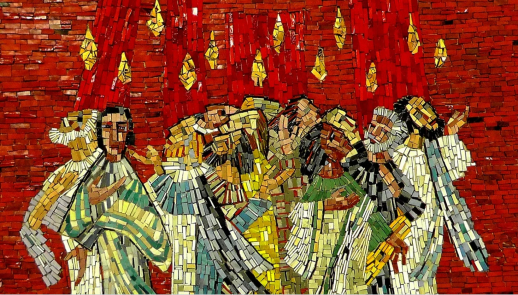
Questions. The first question I think it is important to ask is, what should be our level of expectation regarding the gifts? Sometimes proponents of the continuation of the gifts reference John 14:12, in that passage Jesus said, “whoever believes in me will also do the works that I do; and greater works than these will he do.” Some take that verse to mean that we should expect more miraculous gifts of the Spirit than even seen through the ministry of Jesus.
What, however, are the works that Jesus is referring to? I tend to agree with William Hendriksen’s understanding. He says, as a result of Jesus’ “departure the disciples will perform not only the works which Jesus has been doing all along (miracles in the physical realm), but also even greater works than these, namely, miracles in the spiritual realm.”[1]
I believe that instead of always expecting the miraculous or never expecting it, we should understand that the miraculous is still possible. The gifts have not ceased. However, that does not mean that every Sunday will be a recreation of Pentecost.[2] I believe we see through Scripture and the history of the Church that the miraculous gifts of the Spirit are still given, yet they are not normative, they are not always given or to the same degree.
We are not to expect Pentecost but we are to expectantly pursue the gifts in accordance with Scripture for the upbuilding of the church. In the last days in which we are in, the actual outpouring of the grace gifts will look different at different geographical locations as well as different times throughout history. This is to be expected because in the New Testament there was no equal distribution of grace gifts and God’s mighty acts by the Spirit have in no way been evenly disbursed over the course of redemptive history.[3] The Spirit moves where He wills (John 3:8) but that does not in anyway preclude us from praying for His special empowering. All over Scripture, the Spirit empowered people in mighty ways, we are in no less need of that special empowering today. Although we cannot demand it and it does not seem to be normative.[4]
Second, why do so many unhealthy teachings and experiences go on within some churches that believe in the continuation of the grace gifts? There are various ways to answer this question but briefly, I think the issue shows a need for biblical leadership. That is not to say that biblical leadership has always been lacking in these churches. Paul himself had to provide correction to the Corinthian church that was dealing with various issues. But, he did provide that leadership, he did provide correction.[5] I think it is important to note that abuses seem to abound where there is need for biblical balance regardless of the doctrine. I think for example of hyper-Calvinism or the issue of having orthodoxy but not orthopraxy.
I appreciate this important advice from Carson:
When God graciously manifests himself in abnormal and even spectacular ways, the wisest step that the leaders participating in such a movement may take is to curb the excesses, focus attention on the center—on Christ, on loving discipleship, on self-sacrificing service and obedience, on God himself—and not on the phenomena themselves.[6]
Third, is the popular “open but cautious” view of the gifts a biblically tenable one? I do not believe so. If the grace gifts are still given then Scripture exhorts us to “earnestly desire” them for the upbuilding of the body (1 Cor 12:31; 14:1, 39). If the Lord Jesus cares enough about His church to give gifts and Spirit-empowered abilities to serve people, should we not care enough about the church to use those gifts for that purpose?[7] Are we okay with being merely open to these good gifts, and even cautious about them, when He has graciously given them for our corporate good?[8] That option does not seem open to me (although I understand that it may take some time to study and pray over the topic). Though, this issue should never be one of contention or disunity.
Earnestly desiring the gifts of the Spirit for the upbuilding of the body should never be allowed to cause division in the body. The Spirit wants us to and works so that we “grow up in every way into Him who is the head, into Christ, from whom the whole body, joined and held together by every joint with which it is equipped, when each part is working properly, makes the body grow so that it builds itself up in love” (Eph. 4:15-16). So, the gifts should never be pursued in a way that would cause disunity or disrepute.
Earnestly desiring the gifts of the Spirit for the upbuilding of the body should never be allowed to cause division in the body.
Tweet
I do believer, however, if someone is “open but cautious” then they should study Scripture in depth on the topic. If they are cautious it is important that they be informed on what particularly they should be cautious about. If they are open they should know why and what they are open too. If they are open, they should earnestly desire the grace gifts and lead the church to be built up through the operation of the full range of the grace gifts of the Spirit. This is important, because if the nose is missing, where would be the sense of smell (See 1 Cor 12:12ff)? In the same way we want each part of our body functioning, we should want every grace gift functioning within the church body.
May we long to impart spiritual gifts to strengthen each other as Paul did (Rom 1:11). “If, as Paul puts it, God’s various gifts are given ‘for the common good’ and ‘for the building up of the church,’ then we should expect to flourish to the extent that we receive, steward, and enjoy them.”[9] Thus, the “open but cautious” position is not, in my opinion, a biblical position. Though I believe it is appropriate to be “unsure but studying” even though I believe the correct view is “open and desirous.”
Concerns and Cautions. The Apostle Paul has some good words for us, both groups. He says earnestly desire to prophesy and do not forbid speaking in tongues (1 Cor 14:39). And he also says all things must be done in a proper and in an orderly manner (v. 40). He says I will pray with my spirit, I will sing with my spirit (v. 15). And he says, I will pray with my mind, I will sing with my mind (v. 15). Whatever our view on the continuation of the gifts, our churches should not be able to be labeled either “charismaniacs” or “the frozen chosen.” Because God is not a God of confusion (v. 33) but He is a God of new and exciting life and there is reason for us to respond to Him with visible affection. May we, both of us, worship the LORD, as He deserves, in spirit and in truth (John 4:24).
I believe there is a danger of emotionalism on one side and of distain for emotion on the other. The renowned philosopher, theologian, and pastor Jonathan Edwards said, “there is no true religion where there is nothing else but affection, so there is no true religion where there is no religious affection.”[10] Emotions are not bad in and of themselves but emotions must be guided by Scripture and governed by the self-control of the Spirit. Jay Adams has said,
There are no damaging or destructive emotions per se. Our emotional makeup is totally from God. All emotions of which He made us capable are constructive when used properly (i.e., in accordance with biblical principles)… All emotions, however, can become destructive when we fail to express them in harmony with biblical limitations and structures.[11]
It is also important that we realize that worship is to be a response to revelation, the glory and goodness of God, and not mere hype, lighting, and musical mood. When we respond with the correct emotions to God’s revelation it honors Him. There is a time to “rend our hearts,” for instance (Joel 2:13). As William Wilberforce said, “Scripture speaks with praise of the lively exercise of the passions towards their legitimate object.”[12]
The Christian and Missionary Alliance (C&MA), is a denomination that has a history of reckoning with this important and controversial topic, and they have wisely said, “in all periods of highly emotional religious issues, excesses are inevitable.”[13] The C&MA knows about both the “blessings and the mischief of the [charismatic] movement.”[14] Though it is true that mischief and even grave harm is done by those who teach falsely and wrongly emphasis certain gifts at the expense of others, it does not mean that the gifts themselves are bad. The apostle Paul himself showed that “the correct treatment for abuse is not disuse, but proper use.”[15]
As the C&MA states, “we must… remember that our ‘comfort zone’ is not the same as spiritual discernment, and at times even a gift manifested in love may make those ignorant of it uncomfortable. Therefore, patient teaching on the gifts and their manifestations is a necessity.”[16] Further, we must work very hard to distinguish between a work of the Spirit and what is merely a work of man or even Satan.[17]
Jonathan Edwards gives five evidences of a work of the Holy Spirit that we would be wise to consider.[18] First, the Spirit will work in such a way as to exalt Christ (1 Cor 12:3). Second, the Spirit will work against Satan and his work. Third, the Spirit will cause people to have a greater regard for Scripture and will establish them in God’s truth. Fourth, the Spirit will lead people in truth and convince them of what is true. Fifth, the Spirit will cause people to love God and man. Further, Edwards says,
The surest character of true divine supernatural love—distinguishing it from counterfeits that arise from a natural self-love—is, that the Christian virtue of humility shines in it; that which above all others renounces, abases, and annihilates what we term self… Love and humility are two things the most contrary to the spirit of the devil, of any thing in the world; for the character of that evil spirit, above all things, consists in pride and malice.[19]
The Spirit’s work in us, whatever form that work takes, should not produce pride but humility. Also, the fruits of the Spirit should always accompany the gifts of the Spirit to a high degree (Gal 5:22-23).[20]
It is also very important that we understand, as Jonathan Edwards says, “A work is not to be judged of by any effects on the bodies of men; such as tears, trembling, groans, loud outcries, agonies of body, or the failing of bodily strength.”[21] Thus, Allen Ross is correct in saying, “It is presumptuous for anyone to say that others do not have the joy of the Spirit if they do not dance and shout in a certain way… [or] have particular spiritual gifts. The Holy Spirit works differently in people.”[22]
As a last caution, it is important to hear from Cecil M. Robeck in his book The Azusa Street Mission and Revival. He says, “As a church historian, I have… come to realize that revival is not the normal state of affairs, nor is it intended to be so. Those of us who appreciate the role that revival plays often miss this.”[23] Robeck compares revival to smelling salts. Smelling salts have their purpose. They revive people and bring them back to consciousness. But they are not for everyday life. “Imagine a roomful of people convinced that they need to keep on inhaling smelling salts in order to keep on living.”[24]
Read More…Let’s question “the best use of the time”

Paul, in the book of Ephesians says,
“Look carefully then how you walk, not as unwise but as wise, making the best use of the time, because the days are evil” (Eph. 5:15-16).
We are told to make the “best use of the time.” So, let’s be intentional about our time (“look carefully”). Let’s question “the best use of the time.” Let’s use technology as an aid and not a distraction and hindrance to accomplishing the things we have been given to do.
Jonathan Edwards points out that
“If men were as lavish of their money as they are of their time, if it were as common a thing for them to throw away their money, as it is for them to throw away their time, we should think them beside themselves, and not in the possession of their right minds. Yet time is a thousand times more precious than money; and when it is gone, cannot be purchased for money, cannot be redeemed by silver or gold.”[1]



 in X
in X 