What sets Christianity apart? (part 3)

In Part One, we examined the commonalities among world religions and inquired whether they are fundamentally the same. We discovered that they’re not, and we examined two aspects that distinguish Christianity. In Part Two, we discussed four distinct aspects of Christianity that distinguish it from other religions. Here, we will finish by considering four aspects that set Christianity apart.
7. Positive World Impact
Jesus, a backwater country craftsman, has had an undisputed impact on history and the world. Stephen Prothero has said, “There is no disputing the influence Jesus has had on world history. The Library of Congress in Washington, DC, holds more books about Jesus (roughly seventeen thousand) than about any other historical figure—twice as many as the runner-up, Shakespeare. Worldwide, there are an estimated 187,000 books about Jesus in five hundred different languages.’ Jesus even has a country named after him: the Central American nation of El Salvador (“The Savior”).”[1]
Some people would dispute whether Jesus’ impact has been positive. But religion is generally seen as having a positive impact on humanity. This has been statistically demonstrated. That, however, is not to say religion hasn’t also had a negative impact in certain circumstances. We can quickly cite the Crusades and the September 11th attacks to prove that religion is not always applied in a good way. But, generally, religion is a net positive.[2]
Christianity is specifically good for humanity. This is true statistically and historically, which makes sense because I believe Christianity is true factually. Think of the impact Christianity has had on hospitals. Think of the names of hospitals you know of; most of their names are probably Christian. If not, even still, most of them have Christian histories. But it’s not just hospitals. Consider the sanctity of human life, the value of women, health care, education, science, the abolition of slavery, music, literature, art, and charities.[3] For more on this, I encourage you to check out How Christianity Changed the World by Alvin J. Schmidt, Dominion: How the Christian Revolution Remade the World by Tom Holland, or several books by Rodney Stark.
Christopher Watkin even says that “the reason Jesus’s teaching does not take our breath away is that it has so completely transformed how we think and act already. As Tom Holland reminds us, it is only the incomplete revolutions that are remembered; those that triumph are simply taken for granted. The revolution brought about by Jesus’s teaching and life has triumphed so completely that, religious and secular alike, we take it for granted today.”[4] So, I believe Christianity had a uniquely positive impact on the world.
8. Salvation by Grace
Muslims believe there is salvation through submission. That is, if you confess and carry out the pillars of Islam, you may obtain salvation. Christians believe that “if you confess with your mouth that Jesus is Lord and believe in your heart that God raised Him from the dead, you will be saved” (Rom. 10:9). Christianity is unique because it teaches that salvation is by grace.
This is how Micah 7:18-19 says it: “Who is a God like You, who pardons sin and forgives the transgression of the remnant of His inheritance? You do not stay angry forever but delight to show mercy. You will again have compassion on us; You will tread our sins underfoot and hurl all our iniquities into the depths of the sea.”
Salvation is by grace through faith. Here’s how Ephesians 2:8-10 says it, “For by grace you have been saved through faith. And this is not your own doing; it is the gift of God, not a result of works, so that no one may boast. For we are his workmanship, created in Christ Jesus for good works, which God prepared beforehand, that we should walk in them.”
It should be understood that “faith works.” It does not stay stagnant. As Ephesians 2 says, Christians believe salvation comes through God’s grace as a gift, but that doesn’t lead to license to do whatever. It leads to a life filled with good works.
9. Exclusivity, Inclusivity, and Equality
Christianity is at the same time the most exclusive and inclusive religion. Christianity says that Jesus alone is the way, the truth, the life, and no one gets to God the Father except through Him (Jn. 14:6); and it says whosoever believes—red, black, white, rich, poor, whoever from wherever—will have eternal life.
So, on the exclusive side, Christians believe what 1 Timothy 2:5 says, that “there is one God, and there is one mediator between God and men, the man Christ Jesus.” So, there is one way of salvation—Messiah Jesus. Yet, 1 Timothy 2:6 shows us how inclusive Christianity is. It says Jesus “gave Himself as a ransom for all.” There are no ethnic or cultural requirements.
Christianity is the most global religion. It has the largest number of adherents worldwide. Christianity is followed closely in size by Islam. But I am not making the ad populum argument here. Just because more people say they’re Christian doesn’t make Christianity true.[5] My point, rather, is that not only is Christianity the biggest religion, it is also the most culturally diverse. Muslims are more monolithic. Though that is not to say they are monolithic.[6] Take, for example, the Christian and Muslim religious texts. Islam’s scripture is only considered Allah’s word in Arabic.[7] Christianity seeks to translate the scripture into the languages of every people, tribe, language, nation, and tongue.
Prothero says Muslims “have always insisted that the Quran is revelation only in the original Arabic, Christians do not confine God’s speech to the Hebrew of their Old Testament or the Greek of their New Testament. In fact, while Muslims have resisted translating the Quran (the first English translation by a Muslim did not appear until the twentieth century), Christians have long viewed the translation, publication, and distribution of Bibles in assorted vernaculars as a sacred duty.”[8]
The Christian movement was diverse from the very beginning, ethnically and also socioeconomically (See e.g., Col. 3:11; Gal. 3:28). Christianity is the most ethnically dispersed religion, and Hinduism is the least dispersed.[9] Part of the reason Hinduism especially lacks diversity is because of its caste system. Even while India as a country no longer officially endorses the caste system, its effects are felt.
In contrast, Timothy Keller explains that the cross of Jesus should remove the pride and self-aggrandizement that lead to racial animosity and human disunity.[10] The Bible “insists on the equal value and dignity of all humans. The first churches united high and low classes, rich and poor, slaves and masters, and people of different racial backgrounds in uncomfortable, boundary-crushing fellowship.”[11]
Many may contend here that Christianity is unfair or bad because it says that Jesus is the only way. I’ve dealt with that objection elsewhere. But the fact that someone doesn’t like something does not make that thing untrue. We don’t have to like the truth for it to be true. “Comfort is important when it comes to furniture and headphones, but it is irrelevant when it comes to truth.”[12]
Others may object, if Christianity is the exclusively correct religion, then why are there so many world religions? Because we have a sensus divinitatis, or sense of the divine. This is for various reasons. For one, what can be known about God is plain to see, because God has shown it. “For His invisible attributes, namely, His eternal power and divine nature, have been clearly perceived, ever since the creation of the world, in the things that have been made” (Rom. 1:19-20). Second, Scripture also teaches and many people attest to having a conscience or the “law written on their hearts” (see Romans 2). Third, people have a sense of the divine because there is a spiritual realm. Most people throughout the globe and throughout history have believed in the spiritual realm. It is chronological and geographical snobbery to assume that we modern Westerners automatically know better.
So, the exclusivity of Jesus does not prove Christianity wrong. Although it may prove unpopular. It does make Christianity distinct from some other religions. Buddhism, Hinduism, and other religions hold that there are many ways of salvation (although “salvation” may not always be the best term).
Related to inclusivity and exclusivity is Christianity’s view of equality. The Bible teaches the equality of all humans by saying all humans are made in the image of God (Gen. 1:26-27). It also explains that we are all equally fallen. That is, we all sin and do wrong things. Lastly, it says that salvation is freely offered to all through Jesus.[13] In a similar way, the Bible shows the worth of women repeatedly, while the Qoran, for instance, is often disparaging of women, many believe, even allowing for abuse.
Naturalism, the belief that no God exists, gives no explanation or reason for equality. People who don’t believe in God or the relevance of God might believe in equality, but their belief is not based on any foundation. The idea of equality is accepted as true without proof or solid reason to believe it.
10. Relationship with God
Christians believe that we can have a relationship with God. This is different from Hinduism, for example. Most Hindus believe that the whole of the universe is itself divine. And most Buddhists don’t believe in a divine being. Folk, polytheistic, and animistic religions mainly seek to pacify the gods. “Islam diagnoses the world with ignorance and offers the remedy of sharia, a law to follow. Christianity diagnoses the world with brokenness and offers the remedy of God himself, a relationship with him that leads to heart transformation.”[14]
As we saw in Part One, Christianity teaches that God is an eternally relational being. God walked with Adam and Eve in the Garden in the beginning, He called Abraham to be His own, and He dwelt in the midst of His chosen people. God, in the form of Jesus, became flesh and lived among His people. Jesus taught His people to talk to God as Father. And we were even told that God dwells in us by His Spirit.
God is immensely relational. And God goes to great lengths so that His people can be with Him. In fact, the Christian scriptures say that God’s people will live with Him forever.
Conclusion
Christianity is unique among religions due to its Trinitarian Monotheism, belief in Jesus the Messiah who is the incarnate Son of God, and emphasis on His death and resurrection for humanity’s salvation. Christianity is both exclusive and inclusive, teaching that salvation is through Jesus Christ alone but available to all who believe. It offers a personal relationship with God, teaches salvation by grace through faith, and highlights human equality.
Notes
[1] Stephen Prothero, God Is Not One: The Eight Rival Religions that Run the World—and Why their Differences Matter, 70-71.
[2] “Religion is one of the greatest forces for evil in world history. Yet religion is also one of the greatest forces for good. Religions have put God’s stamp of approval on all sorts of demonic schemes, but religions also possess the power to say no to evil and banality” (Prothero, God Is Not One, 9).
[3] “By far the largest faith-based charity, according to the study, is Lutheran Services of America, with an annual operating revenue of about $21 billion. The study counted 17 more faith-based charities, all among Forbes’s 50 biggestcharities in America, with revenues ranging from $300 million (Cross International) to $6.6 billion (YMCA USA).Almost all the charities are Christian, except for the American Jewish Joint Distribution Committee, with an annual operating revenue of $400 million” (Julie Zauzmer, “Study: Religion contributes more to the U.S. economy than Facebook, Google and Apple combined” [September 15, 2016]).
[4] Christopher Watkin, Biblical Critical Theory: How the Bible’s Unfolding Story Makes Sense of Modern Life and Culture, 372.
[5] It doesn’t even make those people who say they’re Christian acturally Christians.
[6] Islam has many expressions. It is not monolithic. We are wrong if we think we understand Muslims because we have met one or read the Qur’an. That is a simplistic and false understanding. “Islam is a dynamic and varied religious tradition” (James D. Chancellor, “Islam and Violence,” in SBTS, 42.). In the same way, if you have met a Christian and read the New Testament, for example, that does not mean that you understand Christianity. “The range of contemporary Muslim religiosity varies tremendously. One of the reasons for this is that people understand and ‘use’ religion in a variety of ways; that is true whether we are dealing with Islam or Christianity or any other religion.” (Andrew Rippin, Muslims: Their Religious Beliefs and Practices (New York: Routledge, 2012), 311.)
[7] “Today the Quran is, of course, a book. But only about 20 percent of the world’s Muslims are able to read its Arabic, and even for them the Quran is, like the Vedas to Hindus, more about sound than about meaning” (Prothero, God Is Not One, 41).
[8] Prothero, God Is Not One, 67.
[9] See “The Global Religious Landscape,” Pew Research Center, December 18, 2012, http://www.pewforum.org/2012/12/18/global-religious-landscape-exec/.
[10] Timothy Keller, “The Bible and Race” https://quarterly.gospelinlife.com/the-bible-and-race/
[11] Rebecca McLaughlin, Confronting Christianity.
[12] Douglas Groothuis, Christian Apologetics: A Comprehensive Case for Biblical Faith, 137.
[13] See Christopher Watkin, 𝐵𝑖𝑏𝑙𝑖𝑐𝑎𝑙 𝐶𝑟𝑖𝑡𝑖𝑐𝑎𝑙 𝑇ℎ𝑒𝑜𝑟𝑦, 116.
[14] Prothero, No God But One, 45.
* Photo by Willian Justen de Vasconcellos
Jesus and Jihad (part two)

Jesus and Jihad
I talked to a Muslim friend recently that said Islam and Christianity are ninety-six percent the same. I strongly disagree with him and believe most informed Muslims would as well. There is an irrevocable difference between Christianity and Islam. Some Christian missionaries go and die if need be, whereas some Muslim “missionaries” go and kill if need be. This is because Jesus died and said take up your crosses whereas Muhammad killed and said take up your swords. Jesus promises salvation through justification; Muhammad claims it comes through jihad.
It is important to understand that Jesus (Isa in the Qur’an) is quite prominent in the Qur’an and is held to be a prophet. The Qur’an assumes that its readers will have a working knowledge of Jesus and His teaching (cf. Surah 2:136; 4:29; 5:46). Islam even teaches that Jesus will return and carry out justice and “break the cross.”[1] However, there is a very large contrast between what the Qur’an teaches about religious use of violence and what Jesus teaches on violence. So, let’s look at what Jesus has to say about violence.
Jesus and Jihad (part one)

Introduction
Islam has many expressions. It is not monolithic. We are wrong if we think we understand Muslims because we have met one or read the Qur’an. That is a simplistic and false understanding. “Islam is a dynamic and varied religious tradition.”[1] In the same way, if you have met a Christian and read the New Testament, for example, that does not mean that you understand Christianity. “The range of contemporary Muslim religiosity varies tremendously. One of the reasons for this is that people understand and ‘use’ religion in a variety of ways; that is true whether we are dealing with Islam or Christianity or any other religion.”[2]
As Christians have different beliefs regarding certain doctrines, Muslims have different beliefs as well. Christianity has many expressions, liberal and fundamental and various particular denominations. In this post (and in part two), we will explore the Islamic understanding of jihad and contrast it with Christianity. Our first observation is to realize the multifaceted nature of our exploration.
Many Expressions of Islam
As we have briefly seen, not all Muslims are the same and not all Muslims understand jihad in the same way. So, some Muslims emphasize the more peaceful passages (e.g. surah 5:32; 2:256; Allah is also repeatedly said to be “most gracious, most merciful”) and that the Qur’an seems to teach to not begin the fight (2:190; 22:39). However, others believe that those who have not confessed Allah and his prophet have already essentially made war with Muslims and should be subjugated.[3] Some Muslims are strict adherents to Islam and some are secular. Muslims are not homogeneous. (For example, we see two very different narrative accounts in Nabeel Qureshi’s, Seeking Allah, Finding Jesus and Mosab Hassan Yousef’s, Son of Hamas). In fact, “not all Muslims believe that the Qurʾān is the literal and inerrant word of God, nor do all of them believe that Islam requires strict conformity to all the religious and moral precepts in the Qurʾān.”[4] We could group Muslims into three broad groups: secular Muslims, traditional Muslims, and fundamentalist Muslims.
Nabeel Qureshi, Seeking Allah, Finding Jesus (a book review)
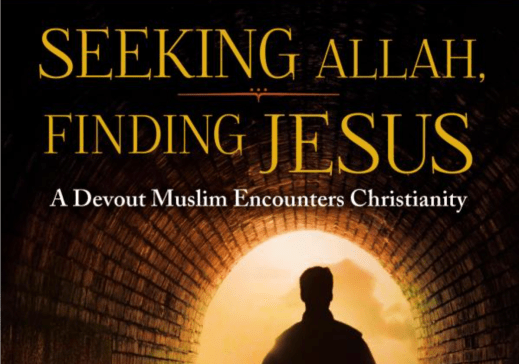
Hearing about Qureshi’ struggle as he thought about what it would mean to convert to Christianity was helpful. It will help me to be appropriately empathetic will discussing Christianity with Muslims. It is helpful to realize that “Muslims often risk everything to embrace the cross” (p. 253). I appreciated hearing his prayer: “O God! Give me time to mourn. More time to mourn the upcoming loss of my family, more time to mourn the life I’ve always lived” (p. 275). I also appreciated what he said about the cost of discipleship: “I had to give my life in order to receive His life. This was not some cliché. The gospel was calling me to die” (p. 278). Read More…



 in X
in X 