Exploring the Mystery of the Nephilim: Who They Were and Their Significance
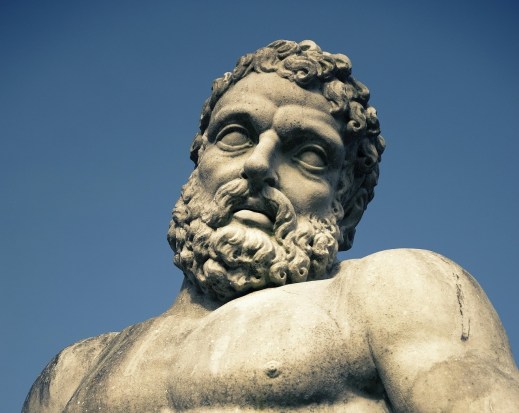
Who are the Nephilim?
The question of the Nephilim is notorious. Who are the Nephilim and why does it matter? Very briefly, it matters because the Nephilim are in the Bible. It mattered to the Biblical writer, and God had the author include the Nephilim for a reason. We should understand that reason as best as we can.
Here’s Genesis 6:1-5, the text under question:
1 When man began to multiply on the face of the land and daughters were born to them, 2 the sons of God saw that the daughters of man were attractive. And they took as their wives any they chose. 3 Then the Lord said, “My Spirit shall not abide in man forever, for he is flesh: his days shall be 120 years.” 4 The Nephilim were on the earth in those days, and also afterward, when the sons of God came in to the daughters of man and they bore children to them. These were the mighty men who were of old, the men of renown. 5 The Lord saw that the wickedness of man was great in the earth, and that every intention of the thoughts of his heart was only evil continually.
There are three main interpretive options:
Option 1: The Sethite View
According to the Sethite view, the “sons of God” are descendants of Seth and the Nephilim are not supernatural beings. Instead, this passage is about marriages between believers and unbelievers. The distinction in this view is between the godly “sons of God” and wicked “daughters of man.” It is true, as William F. Cook has said, “In the Old Testament, God’s covenant people are sometimes referred to as God’s sons (Deut. 14:1; Jer. 3:19), though the precise phrase ‘sons of God’ is never used of them.”[1] Another point proponents make is that Jesus said, “In the resurrection they neither marry nor are given in marriage, but are like angels in heaven” (Matt. 22:30). Advocates of the Sethite view often say something like, “Jesus says angels don’t marry.”[2]
Option 2: The Human Kings View
This view points out that in the ancient Near East, a king might be viewed as divine or partly divine and referred to as a “son” of the gods. So, in this view, the “sons of God” are merely human kings.[3] According to this view, the offspring of these marriages are the Nephilim. They just happen to be a mighty group of people, but they are not the offspring of fallen angelic beings.
Option 3: The Fallen Angels View
The fallen angels view, which is the view I take, understands “sons of God” to be fallen angels who lusted after women and procreated with them. These women gave birth to the Nephilim. The Nephilim were on the earth before Noah’s flood—“in those days, and also afterward” (v. 4). The text says the transgression of the fallen angels was not a one-time occurrence. This explains why it was “also afterward” that the Nephilim were on the earth, because anytime “the sons of God came in to the daughters of man… they bore children to them” (v. 4).
What Does “Sons of God” Mean?
In Job, the phrase clearly refers to angels (Job 1:6; 2:1; 38:7 cf. Ps. 82:1). The Septuagint, the Greek translation of Genesis 6:2, says, “the angels of God” (οἱ ἄγγελοι τοῦ θεοῦ). Derek Kidner says, “The normal meaning of the actual term ‘sons of God’ is ‘angel.’”[4] Documents between the Old and New Testaments interpret Genesis 6 in this way (See Jubilees 7:25–26; 1 Enoch 6:2–3; 7:1–3; 15:3–10). Also, “The earliest view of the ‘sons of God’ among the church fathers was that these were rebel angels who engaged in sexual sin with human women. This was the prevailing view in the first four centuries of the early church.”[5]
Here are two historical perspectives:
For many angels of God accompanied with women, and begat sons that proved unjust, and despisers of all that was good, on account of the confidence they had in their own strength; for the tradition is, that these men did what resembled the acts of those whom the Grecians call giants (Josephus, Antiquities of the Jews, 1.73).
We are instructed, moreover, by our sacred books how from certain angels, who fell of their own free-will, there sprang a more wicked demon-brood, condemned of God along with the authors of their race. Their great business is the ruin of mankind. So, from the very first, spiritual wickedness sought our destruction. They inflict, accordingly, upon our bodies diseases and other grievous calamities, while by violent assaults they hurry the soul into sudden and extraordinary excesses (Tertullian, Apology, ch. 22).
Mitchell L. Chase says it well:
Clearly in Genesis 6:1-4, the “sons of God” are committing sexual sin in the days of Noah. What ultimately convinced me that the “sons of God” are rebel angels is the evidence from the letters of 1-2 Peter and Jude. They seem to be writing statements that show awareness of the prevailing intertestamental reading of Genesis 6:1-4, and they seem to affirm that reading.[6]
But Didn’t Jesus Say Angels Don’t Marry?
What does Jesus mean when He says, “In the resurrection they neither marry nor are given in marriage, but are like angels in heaven” (Matt. 22:30)? His main point is clearly that there is no marriage in heaven. He does not say that angels are incapable of sexual acts. It is heavenly angels who are not married, and clearly angels are not supposed to take part in sexual acts. But that does not mean that it is not possible. Also, what the fallen angels did in Genesis 6 happened on earth, not in heaven. Matthew 22:30 does not contradict Genesis 6.
The Bible does recount angels engaging in human activities like eating (Gen. 18:1–2, 8; 19:1, 5). In Mark 16:5, an angel at Jesus’ empty tomb appears to be a young man. Angels can clearly do physical things. Jacob wrestled with an angel and Jacob sustained an injury from it. Angels open doors (Acts 5:19) and even hit disciples to wake them (Acts 12:7). In Genesis 19:5, the men of Sodom saw the two angels and wanted to have sexual relations with them.
So, although angels are spiritual beings, they are capable of physical actions. Also, “the craving of demons for a body, evident in the Gospels, offers at least some parallel to this hunger for sexual experience.”[7] It’s possible the fallen angels took on physical form or possessed the bodies of men and engaged in sexual acts in that way.[8]
That is what Jude seems to indicate. “And the angels who did not stay within their own position of authority, but left their proper dwelling, he has kept in eternal chains under gloomy darkness until the judgment of the great day— just as Sodom and Gomorrah and the surrounding cities, which likewise indulged in sexual immorality and pursued unnatural desire, serve as an example by undergoing a punishment of eternal fire” (Jude 6-7). Verse 6 says the angels did not do what they were supposed to do; they did not stay within the boundaries given to them, but left their regular and proper residence. This could clearly refer to sexual boundaries. Especially in light of verse 7, which gives a comparison between the angels’ transgression and Sodom and Gomorrah’s transgression. It says, “likewise” or “in the same way,” Sodom and Gomorrah “indulged in sexual immorality and pursued unnatural desire.”
Though strange to our modern minds, the best interpretive option understands the Nephilim to be the hybrid offspring of spirit beings and human beings. As we have seen, several factors support this interpretation.[9]
Conclusion: Why Does It Matter?
First, the Bible recounts a supernatural story; supernatural things happen in it and in reality. We may not like it; we may think it’s weird, but that’s the real world we live in. We must be comfortable with the way the Bible portrays the world. It’s the true world we live in. If the Bible includes it at all, especially in the beginning, we should pay attention to it.
Evangelicals believe, as Michael S. Heiser points out that “The serpent was actually a divine being, not a mere member of the animal kingdom.”[11] That’s strange and unexpected but most people who believe the Bible believe a divine being took the form of a serpent and spoke. The supernatural approach to the early passages in Genesis derive from other passages that plainly have divine beings in embodied human form.[12] In other words, this view is compatible with and goes right along with the whole of Scripture.
Heiser goes on:
Any viewpoint that strips the account of its supernatural flavor must be discarded. The events described in Genesis 6:1-4 were part of Israel’s supernatural worldview. We cannot pretend they saw things as most modern readers would. Since the Nephilim were part of Israel’s supernatural worldview and their descendants turn out to be Israel’s primary obstacle for conquering the promised land, the conquest itself must also be understood in supernatural terms.[13]
Second, the wild reality of the Nephilim helps explain various mythologies. I don’t think mythologies are true, but I do think there are spiritual beings behind mythologies. That’s what the Bible says, and that’s what the early church said too.
The Bible explicitly states that demons are behind false worship. Paul says “what pagans sacrifice they offer to demons and not to God” (See 1 Cor. 10:14–22). There is a clear connection between idolatry and demonic activity. We see the same type of thing in the Old Testament. Deuteronomy says Israel “sacrificed to demons that were not God, to gods they had never known” (See Deut. 32:16–17). Psalm 106 recounts that people disgustingly “sacrificed their sons and their daughters to the demons.”
Is there a connection between Nephilim and what’s recounted in The Epic of Gilgamesh? It seems likely. They both have to do with angelic, god-like beings interacting with humans in the context of a global flood. Is there a connection between the angels lusting after women and gods like Zeus lusting after mortal women? This seems especially interesting when, as we have seen, behind false gods are demons.
Third, we may not realize it at first, but giants are a character in Scripture. Yes, they’re certainly not the main character or the main point, but they do play a part. The word Nephilim appears only three times in the Old Testament (Gen. 6:2; Num. 13:33). But the related word “giant” appears 10 times in 8 verses in the Bible (Genesis 6:4; Numbers 13:33; 1 Chronicles 20:4,6,8; 2 Samuel 21:18,20,22) and Rephaim, a related term, appear numerous times (Gen. 14:5; 15:20; Deut. 2:11; 3:11,13; I Chron. 20:4).
The Nephilim being “mighty men” and “men of renown” makes sense if they are crossbreeds and there is a supernatural explanation for their size and strength. Options 1 and 2 above don’t really answer why the Nephilim would be giants. There are positive examples in the Bible of the Spirit giving supernatural strength. One thinks of Samson (Judges 14:6; 15:14–15; 16:28–30), Japhthah (Judges 11:29), and Saul (1 Sam. 11:6). So, it could be that if there were spiritual-human crossbreeds, they would be extra big and strong. Also, the idea of a line of descendants who are demon-human mixes could also make sense of God’s people being told to eliminate the inhabitants of the Promised Land if they were demon-brood.
The narrative of giants starts with the mysterious Nephilim in Genesis 6, but it does not end there. The Nephilim are linked with the Anakim and Rephaim, who are referenced more often. Notably, ten of the twelve Israelite spies were scared to go into the Promised Land due to the colossal Anakim. Numbers 13:33 explicitly states that these individuals originated from the Nephilim. Here’s what the spies who were scared said:
We are not able to go up against the people, for they are stronger than we are.” 32 So they brought to the people of Israel a bad report of the land that they had spied out, saying, “The land, through which we have gone to spy it out, is a land that devours its inhabitants, and all the people that we saw in it are of great height. 33 And there we saw the Nephilim (the sons of Anak, who come from the Nephilim), and we seemed to ourselves like grasshoppers, and so we seemed to them (v. 31-33).
Deuteronomy 2:10-11 further establishes the Anakim as a formidable giant group known as the Rephaim. While in the wilderness, God used Moses to defeat the giant Og of Bashan, who was among the remaining Rephaim (Deut. 3:10-11). Then after a four-decade sojourn in the wilderness, Joshua and Caleb, two steadfast spies, successfully expelled the giant Anakim from Canaan. They devoted the Anakim to destruction, although there were some Anakim left in Philistine territory (Josh. 11:21-22). Notably, one of these cities was Gath, which is where Goliath came from.[10]
Giants are an important part of the biblical story because they shed light on how bad the world really is and also provide another element to answer why it is so bad. But they also show us another thing Jesus saved us from. David defeated Goliath, but God disarmed the rulers and authorities and put them to open shame by triumphing over them in Jesus the Messiah (Col. 2:15). Giants show how truly great God’s rescuing grace is. You might say God’s grace is giant.
All of this wild stuff about giants may bring up lizard people and other wild conspiracy theories. But that should never ever be our focus. As Christians, we have reasons to believe that wild, weird stuff goes down in this world; we even have a reputable explanation for why. We live in a world in which sinister spiritual beings lurk. But that should never be our focus. Instead, we should have laser-beam focus on Jesus, not distracting speculation.
Notes
[1] William F. Cook, “The Sons of God in Genesis 6: Sons of Seth, Fallen Angels or Something Else?”
[2] Chase, “Who Are the Sons of God, Daughters of Man, and Nephilim?”
[3] See Chase, “Who Are the Sons of God, Daughters of Man, and Nephilim?”
[4] Derek Kidner, Genesis.
[5] Chase, “Who Are the Sons of God, Daughters of Man, and Nephilim?” He also says, “The ancient Jewish interpretation-as well as the earliest Christian interpretation—of Genesis 6:1-4 is that the “sons of God” are rebel angels who committed sexual sin in unions with human women. And I think this ancient view is correct” (Chase, “Who Are the Sons of God, Daughters of Man, and Nephilim?”).
[6] Chase, “Who Are the Sons of God, Daughters of Man, and Nephilim?”
[7] Kidner, Genesis.
[8] See commentary on the NET Bible.
[9] Rachmat Tony SinjoBantaeng, Candra Gunawan Marisi, “A Hermeneutical-Theological Analysis of the Nephilim in Genesis 6:4: A Pentecostal Systematic Theology Approach.”
[10] See Zachary Garris helpful article, to whom I am indebted to for this paragraph: “Giants in the Land: A Biblical Theology of the Nephilm, Anakim, Rephaim (and Goliath).”
[11] Michael S. Heiser, “Who Are the Nephilim and What Is Their Origin?” See also his book, The Unseen Realm: Recovering the Supernatural Worldview of the Bible.
[12] Heiser, “Who Are the Nephilim and What Is Their Origin?” “The ancient reader would have had no problem with it. But for moderns, it seems impossible that a divine being could assume human flesh and do what this passage describes. The objection is odd, since this interpretation is less dramatic than the incarnation of Yahweh as Jesus Christ… The truth is that Christians affirm the incarnation because they have to—it defines Christianity. Genesis 6:1-4 is set aside as peripheral. But belief in a personal God as the Bible describes means embracing the supernatural” (Ibid.)
[13] Heiser, “Who Are the Nephilim and What Is Their Origin?“
Conquer?

As we said before, the book of Revelation is in three literary categories. It is a prophecy, apocalypse or revealing, and a letter.[1] It’s specifically a letter to seven churches in Asia. Revelation, however, is also written to us. And there is a lot of application and encouragement for us today.[2]
What does it mean to conquer? Is this talking about an armed conflict? Is this passage talking about conquering by force?
When I think about “conquering” here, I think of a sporting event. Whether baseball, soccer, basketball, football, track, or whatever; they all have difficult aspects to them. So, to win you have to overcome those obstacles. You have to sacrifice. You have to stay motivated. You have to beat the other team.
It’s not always easy and it’s not always fun. It’s challenging. So, that’s what sports are like. And, that’s what the Christian life is like. “‘Victory’ is not a matter of military might, political influence or athletic achievement; rather, it entails enduring faithfulness to Christ and his Word and spiritual conquest against sin and evil.”[3]
One of the reasons we must work to conquer is because there is one who would like to conquer us. In fact, he often kills us (Rev. 11:7; 13:7). So, the word “conquer” is fitting because life in some ways is war. We are in a cosmic battle, our lives and our allegiances matter.
Christians conquer the beast and the wicked one “by the blood of the Lamb and by the word of their testimony, for they [love] not their lives even unto death” (Rev. 12:11). Christians are in a serious war.
“We, the church, are the paratroopers dropped behind enemy lines. We, the church, are the resistance fighters in the territory occupied by the Enemy. We, the church, are the beleaguered guerrillas waging a war of liberation against ferocious odds. We are the landing troops securing a beachhead while being fired upon from massive fortifications.”[3a]
Revelation tells us this. And it tells us that we must conquer. We must work to win. We must overcome the challenges to have victory!
What are some of the challenges we face?
Christians at that time had various challenges. They were accused of cannibalism because of confusion over the Lord’s Supper. They were accused of atheism because they didn’t believe in the pantheon of Greek gods. And they were accused of political disloyalty because they wouldn’t give ultimate allegiance to the empire or offer sacrifices to the emperor.
We, of course, don’t have any of those challenges but we certainly have other challenges.
What are some of the biggest challenges you face? Perhaps actually living out your faith and making it your own. Maybe it’s living in a growing anti-Christian culture. Or it could be negative media influences and sexual temptation. It could also be your own self-image, what you think about yourself. It could be your consumed with what others think about you or maybe you’re consumed with things, items you want to have.
We may have different challenges, but we have challenges nonetheless.
This brings up an important question. Revelation 21:7 says that the one who conquers will be the son or daughter of God. On the other hand, it would seem if one does not conquer they won’t.
Does conquering save us?
The short answer is “No.”
We are not saved by conquering. We are saved by trusting in Christ our great conqueror. Titus 3:5 says, Jesus “saved us, not because of works done by us in righteousness, but according to His own mercy, by the washing of regeneration and renewal of the Holy Spirit.” And Ephesians 2:8-9 says: “by grace you have been saved through faith. And this is not your own doing; it is the gift of God, not a result of works, so that no one may boast.”
If, however, we are saved by faith we must continue in faith. We must continue to trust, continue no matter the opposition we face. So, we’re not saved by conquering but if we’re saved we will and must conquer.
Revelation is a means of grace to that end. It tells us that we cannot give in or give up. We must give our all. Revelation helps us continue by telling us we must conquer.
Revelation is like a coach cheering for us. It’s saying, “Keep going! Don’t give up! Keep your head up! Remember your motivation!”
So, conquering does not save us but it is vital that we conquer. It is vital that we run the race with endurance; that we keep our eye on the praise. We can’t be passive.
What specifically does the coach of Revelation have to say about conquering?
Revelation talks about conquering a lot.[4] Therefore, it’s an important theme of the book of Revelation. This is especially the case in chapters 2-3 (Rev. 2:7, 11, 17, 26, 3:5, 12, 21). So, what are the main takeaways from Revelation about the Christian call to conquer?
If we are going to be Christian conquers we need to…
1. See the glory and goodness of Christ
Seeing the glory and goodness of Christ is a big part of what the book of Revelation is about. When we see how awesome and worthy of worship Jesus is it motivates us to continue on following Him. It motivates us to be the conquerors we’re called to be.
As Dennis E. Johnson has said, “The church under attack needs not only to see the splendor of our King but also to hear his imperial edicts, assuring us that he knows our situation, probing and exposing our subtle alliances with the enemy, and lifting our sights to the city that is destination of our pilgrimage.”[5]
The book of Revelation is addressed to seven churches and Jesus has a word for each of them. He has encouragement, rebuke, or some mixture of those. But, in each of the parts where Jesus is addressing the specific church, there is a powerful description given of Jesus.
Jesus “holds the seven stars” (Rev. 2:1) and yet He is the one who “died and came to life” (Rev. 2:8). Jesus “has the sharp two-edged sword” (Rev. 2:12) and “has eyes like a flame of fire” (Rev. 2:18). He “has the seven spirits of God” (Rev. 3:1). He is “the holy one, the true one” (Rev. 3:7), “the faithful and true witness” (Rev. 3:14).
Before we get into anything else we need to see how awesome Jesus is. That’s the progression that Scripture shows us. We won’t care about being the conqueror we’re called to be if we don’t care about Christ. If we don’t see the glory of Christ, we won’t care to listen to Him.
The other day my sister-in-law had a really cool shirt on that she had received from running in a 5K. After I saw the shirt I was instantly interested in running in the 5K. I saw “the glory of the sweet t-shirt” and it made me consider running in a 5K in a way I haven’t considered in a long time.
When we see something cool, beautiful, and glorious, it grabs our attention. We need to have our attention grabbed not just by t-shirts and a shiny new iPhone; we need to see the might and majesty of Christ.
Seeing how awesome Jesus is, is a prerequisite to being a conqueror.
This is important for a lot of reasons, for one, Satan wants to conquer us and he uses various means to try to.
1) Distraction: Babylon has all sorts of devilish and deceitful delights.
2) Deception: Trusting the beast for deliverance. Seeing the beast as worthy of worship instead of the lamb who is the lion. Or giving into the deception of false doctrine.
3) Dominance: Another device of the devil is violent persecution. Christians paradoxically conquer by being conquered.
How can we keep from being distracted and destroyed by Satan’s schemes? Instead of being distracted, we need to, again and again, be attracted to Christ, the one alone who is worthy of all our attention.
Can I also say, however, that the one who is the Lion—who is fierce beyond imagining—is also the gentle and lowly Lamb. Jesus, though worthy of all glory and the one who holds the stars, is also accessible. He is the same one who said, “Come to me, all who labor and are heavy laden, and I will give you rest” (Matt. 11:28). “For all his resplendent glory and dazzling holiness, his supreme uniqueness and otherness, no one in human history has ever been more approachable than Jesus Christ.”[6]
We’re likely to fall in one ditch or the other. We’re likely to think of Christ as just chill and nonchalant.[7] Or, we think that Jesus is completely unapproachable and cares nothing for us. Both of those are false. Jesus takes our sin seriously because He loves us and wants what’s good for us. Jesus is good and glorious.
Look what happened when John saw Jesus:
“When I saw Him, I fell at His feet as though dead. But He laid his right hand on me, saying, “Fear not, I am the first and the last, and the living one. I died, and behold I am alive forevermore, and I have the keys of Death and Hades” (Rev. 1:17-18).
The “terrifying description of the Lord Jesus must have created shock when this letter was read”[8] to the churches. I’m sure it was sobering.
We must see and savor the supremacy of our Savior if we are to be protected from the devil’s deceitful schemes. Our vision of Christ must eclipse our vision of the world’s distractions.
So, if we are to conquer as Christ calls us to we need to see how good and glorious Christ is and we also need to…
2. Hear His approval (or rebuke)
We generally naturally want to please our coaches, parents, and teachers. And that’s actually not an inherently bad thing. It can be really encouraging to hear someone you look up to say, “Good job.” It’s just the way we are as humans.
I remember playing football and hearing people cheer my name, for whatever reason, that was motivating and seemed to give me more energy to play hard. Can you relate to that? Have you ever been in a race and towards the finish line people start shouting your name and encouraging you? It helped you push just a little bit harder, didn’t it?
That’s what we see in Revelation 2-3. Jesus is Himself coaching us. Cheering for us.
A good coach will give a lot of encouragement but there is a time for rebuke too. Coaches will know that and will do both.
Sometimes the team needs to hear “good job” and sometimes they need to hear how they can do better.
Jesus is the ultimate coach. He knows how to give us the encouragement or rebuke that we need.
Jesus coaches the churches addressed in Revelation. Some of the churches receive encouragement. They’re doing a good job. Ephesus is told that they’ve done a good job holding to right teaching and enduring (Rev. 2:1-7). Smyrna was encouraged too; they are spiritually rich and are enduring persecution (Rev. 2:8-11). And the church in Pergamum is commended for holding tight to Christ’s name and not denying Him (Rev. 2:12-17). Thyatira is encouraged for its growing love (Rev. 2:18-29) and Philadelphia is exhorted for patiently enduring and keeping God’s word (Rev. 3:7-13).
A few churches, however, do not receive any encouragement. They are simply rebuked. Sardis is said to have dead works (Rev. 3:1-6). “The church at Sardis was like a museum where stuffed animals are exhibited in their natural habitats. Everything appears to be normal, but nothing is alive.”[9] Laodicea is spiritually blind, bankrupt, naked, and lukewarm (Rev. 3:14-22). That’s not what you want to hear. Yet, if that’s the truth it’s gracious because it’s needed.
Some of us might need to hear a strong rebuke. We need to hear Revelation 3:15-16: “I know you inside and out, and find little to my liking. You’re not cold, you’re not hot—far better to be either cold or hot! You’re stale. You’re stagnant. You make me want to vomit. You brag, ‘I’m rich, I’ve got it made, I need nothing from anyone,’ oblivious that in fact you’re a pitiful, blind beggar, threadbare and homeless” (The Message).
Remember, “friendship with the world is enmity with God” (James 4:4 cf. 1 Pet. 2:11). Therefore, if we’re not loving and living for Christ we need to hear His rebuke. If we hear and heed Christ’s rebuke now, we’ll rule with Him in the end.
What rebuke do you need to hear?
Honestly. Really consider that question. It is a gracious thing if it helps you to conquer as Christ calls us to conquer.
If there’s a rebuke we need to hear, we want to hear it. It will help us. We also need to…
3. Remember the rewards for the conquerors
As we have said, Revelation is a revealing. It tells us the way things are. It doesn’t say it will be easy to hear and it doesn’t say we’ll necessarily like it, but Revelation opens up the truth to us.
And the truth is, we must conquer or face the consequences. Because the reality is, there are only two sides in the cosmic battle that we’re all in.
There’s the serpent that brought the curse on one side, and the Savior that took the curse on Himself on the other. There’s the devil that deceives, and the divine Lord that delivers on all His promises. The king of chaos or the good King of all Creation.
As Brian Tabb has said,
“The rivalry between the Lamb and the murderous beast presses Christians to choose whom they will serve. Followers of the Lamb will celebrate his consummate victory over his foes and serve him for ever in paradise (19:14; 22:3–5), while the nations under the serpent’s sway who bind themselves to the beast will face the same terrible judgment in the lake of fire (19:21; 20:10; 21:8).”[10]
I won’t deny the heaviness of the book of Revelation. It does not act like a slick salesman trying to dress something up even if it means lying. No. Revelation is sometimes rough to read because it is honest to
reality. But, better to know reality and be able to respond to it then being sold something that’s not true.
And the good news is there is a bunch of rewards promised to those on Christ the King’s side. Jesus emphatically calls us to listen. So, listen to what He has to say:
“To the one who conquers I will grant to eat of the tree of life, which is in the paradise of God’” (Rev. 2:7).
“The one who conquers will not be hurt by the second death” (Rev. 2:11).
“To the one who conquers I will give some of the hidden manna, and I will give him a white stone, with a new name written on the stone that no one knows except the one who receives it’” (Rev. 2:17).
“The one who conquers and who keeps my works until the end, to him I will give authority over the nations” (Rev. 2:26).
“The one who conquers will be clothed thus in white garments, and I will never blot his name out of the book of life. I will confess his name before my Father and before his angels” (Rev. 3:5).
“The one who conquers, I will make him a pillar in the temple of my God. Never shall he go out of it, and I will write on him the name of my God, and the name of the city of my God, the new Jerusalem, which comes down from my God out of heaven, and my own new name” (Rev. 3:12).
“The one who conquers, I will grant him to sit with me on my throne, as I also conquered and sat down with my Father on his throne” (Rev. 3:21).
“The one who conquers will have this heritage, and I will be his God and she will be my son” (Rev. 21:7 cf. Rev. 15:2).
Do you know why Christ is making that repeated point? He’s saying, “I know it’s hard. I get that. I know it’s hard but it’s worth it. He’s laying out the incentive for us.”
Conclusion
He knows there are temptations. He knows the Devil wants to destroy. He knows Satan wants to slither to us and whisper his lies.
So, Jesus, as our good coach and King, is saying: “Don’t back down! Continue! It’s worth it!”
Listen to this from Revelation 14:9-11:
“If anyone worships the beast and its image and receives a mark on his forehead or on his hand, he also will drink the wine of God’s wrath, poured full strength into the cup of his anger, and he will be tormented with fire and sulfur in the presence of the holy angels and in the presence of the Lamb. And the smoke of their torment goes up forever and ever, and they have no rest, day or night, these worshipers of the beast and its image, and whoever receives the mark of its name.”
This is serious stuff. This is why Jesus is so adamant that we conquer. And so, as verse 12-13 says, “Here is a call for the endurance of the saints, those who keep the commandments of God and their faith in Jesus. And I heard a voice from heaven saying, ‘Write this: blessed are the dead who die in the Lord from now on.’ ‘Blessed indeed,’ says the Spirit, ‘that they may rest from their labors, for their deeds follow them!’”
We need to know Christ calls us to be faithful until the end
Christ’s call to follow Him to the end because He is good. He’s that good. He’s worth the extreme cost that must be paid.
As Jim Elliot said, “He is no fool that gives what he cannot keep to gain what he cannot lose.”
Notes
[1] “First, the Apocalypse clarifies for readers that the Creator God – not Caesar – has ultimate authority and thus deserves ultimate allegiance. Second, John’s prophecy challenges readers to resist and repent of spiritual complacency, worldly compromise and false teaching, while holding fast to the sure promises of God. Third, Revelation comforts afflicted believers with assurances that the supreme Judge will hold their oppressors accountable, will vindicate his people and will secure a glorious future for those who conquer” (Tabb, Brian, All Things New).
[2] Dennis E. Johnson has said, “The seven churches of Asia belong to their first-century setting, but they are also case studies in the conflict that confronts all churches in all the world” (Triumph of the Lamb, 93).
[3] Tabb, Brian, All Things New.
[3a] Fleming Rutledge, Advent: The Once and Future Coming of Jesus Christ, 265.
[4] “The verb nikaō occurs seventeen times in the Apocalypse and is variously translated ‘overcome’, ‘conquer’ and ‘be victorious’. The term draws upon multiple spheres of meaning, including military conquest, victory in athletic competitions and faithfulness amid opposition. In the Apocalypse the ‘victory’ motif highlights the tension between the earthly and heavenly perspective on the church’s situation in the world. On the one hand, John writes from exile to the seven churches as their companion in tribulation (Rev. 1:9). Jesus’ followers face poverty and slander (2:9), imprisonment (2:10), weakness and rejection (3:8–9) and even death ‘for the word of God and for the witness they had borne’ (6:9; cf. 2:10, 13; 20:4). Further, the beast is permitted to war against and conquer (nikēsai) the saints (13:7; cf. 11:7). On the other hand, each of the prophetic messages to the seven churches concludes with a promise of eschatological blessing in the new creation for ‘the one who conquers’ (tō nikōnti). In the climactic vision of the New Jerusalem, the Almighty on the throne declares, ‘The one who conquers will inherit these things, and I will be his God and he will be my son’ (21:7). Thus the Apocalypse presents the people of God ironically as conquered conquerors, who experience present suffering and defeat yet await ultimate victory (Tabb, Brian, All Things New).
[5] Dennis E. Johnson, Triumph of the Lamb, 93-94.
[6] Dane C. Ortlund, Gentle and Lowly, 20.
[7] We find a very telling theological statement in the movie Talladega Nights, “I like to think of Jesus as wearin’ a Tuxedo T-shirt, ’cause it says, like, ‘I want to be formal, but I’m here to party too.’ I like to party, so I like my Jesus to party.” We often have self-conceived versions of Jesus. We may not say that we think Jesus is “wearin’ a Tuxedo T-shirt” but we do very often have misconceptions about who Jesus is.
[8] John MacArthur, Because the Time is Near, 73.
[9] John MacArthur, Because the Time is Near, 83.
[10] Tabb, Brian, All Things New.
Satan Disguises Himself

“And no wonder, for even Satan disguises himself as an angel of light. So it is no surprise if his servants, also, disguise themselves as servants of righteousness. Their end will correspond to their deeds” (2 Corinthians 11:14-15).
Satan disguises himself.
That is a rather scary prospect.
The serpent of old (Rev. 20:2), the great dragon (Rev. 12:9), the one who goes around like a lion just waiting to destroy (1 Pet. 5:8), disguises himself. And his disguise is not what we would expect.
Satan disguises himself as an angel of light. He cloaks himself in radiant dress in order that he may deceive. He once took the form of a serpent (Gen. 3:1). If a snake came up to you and talked and tempted you today you’d probably see right through it. You’d probably run.
We’re not fighting a human war

“For although we live in the flesh, we do not wage war according to the flesh, since the weapons of our warfare are not of the flesh, but are powerful through God for the demolition of strongholds. We demolish arguments and every proud thing that is raised up against the knowledge of God, and we take every thought captive to obey Christ” (2 Corinthians 10:3-5).
The Christian battle is not a battle of the flesh. The Christian’s weapon is not physical and material. But the battle is no less serious. “For our struggle is not against flesh and blood, but against the rulers, against the authorities, against the powers of this dark world and against the spiritual forces of evil in the heavenly realms” (Eph. 6:12).
As Christians, we are to fight. But our fight is the fight of faith (1 Tim. 6:12). Our weapons are not human. We don’t use swords, knives, and guns. Instead, we carry “weapons of righteousness for the right hand and for the left” (2 Cor. 6:7). Our sword is the sword of the Spirit, the word of God (Eph. 6:17).
Our weapons, even though they are not of the flesh are powerful. They’re powerful because they are “through God” (2 Cor. 10:4). We are “strong in the Lord and in the strength of His might” (Eph. 6:10).