The Slippery Slope, Slopes Both Ways
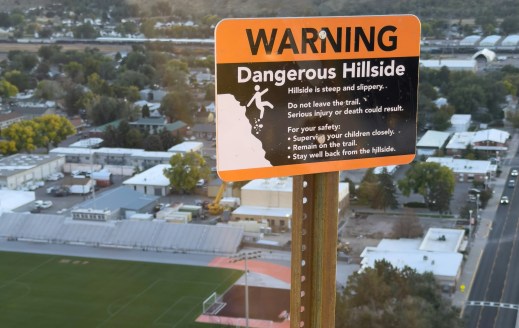
I’ve often heard the slippery slope argument. If we allow such and such, such and such will follow as a matter of course. If we allow smoking, soon marijuana will be legalized. If we allow this, that will be a reality. If we allow moral decay, moral madness will follow. It seems to me those arguments have proven to be prophetic.
We should consider, however, whether the slippery slope slopes both ways. I am not here saying I know all facts or what happened in each of the following examples, but consider with me.
Here’s part of the transcript from Secrtary of War Pete Hegseth’s recent address to General and Flag Officers at Quantico, Virginia:
We unleash overwhelming and punishing violence on the enemy… We also don’t fight with stupid rules of engagement. We untie the hands of our warfighters to intimidate, demoralize, hunt and kill the enemies of our country. No more politically correct and overbearing rules of engagement, just common sense, maximum lethality and authority for warfighters.
What is a potential problem with “overwhelming and punishing violence” and demoralizing the enemy?[1] Is that one of the principles of The Law of Armed Conflict (LOAC) [2] or Just War Theory[3]? The answer is “No.” Instead, “Proportionality” is. “Overwhelming force” is more in the nuclear war vein. And what would we think if our enemies used that overwhelming force logic on us? Should we so quickly and easily disregard The Law of Armed Conflict and Just War Theory principles? What might that lead to?
Yes, getting illegal drugs and drug dealers off the streets is a good thing, but doing it legally is as well. Illegal drugs, drug dealing, and illegally killing drug dealers are illegal, and for good reason. If we celebrate and overlook the killing of noncombatants, what might we slip into? What might be allowed?
What slippery slope could we be on if we kill or murder noncombatants? At what other times and who throughout history has willy-nilly done this? What precedent does this set? What slippery course could we be setting out for?
What precedent does uncharitable and extreme speech coming from the highest office of leadership create? What’s the trickle-down effect? What are we saying is okay to our kids and the broader society? Where’s the Golden Rule? I realize the President is not the Pastor-in-Chief, but does that therefore mean that his demeanor doesn’t matter? Is that a precedent we want to set, let alone for a President?
I am not saying that masked authorities have apprehended people without legal justification. I have not followed everything with fine-toothed fervor. I do think we as a people should care about this question.
We should care that the law is followed, as people are detained who are in America unlawfully. The law must cut both ways. Further, we should care (Christians should especially care!) that these people (made in the image of God, whatever their crimes) be treated humanely. If we turn a blind eye and don’t care, have we considered what slippery slope we may be on? What about the sacredness of every human life? Could there be a slippery slope concern down the road?
Jesus said, “Take the plank out of your own eye so you can see clearly to help get the speck out of someone else’s eye.” We would be wise to do that. We would be wise to see where we might be missing slippery slopes.
The slippery slope, slopes both ways.
Notes
[1] Here’s an AI introduction and overview: “Starting in September 2025, the U.S. military, under the direction of the Trump administration, initiated a campaign of lethal strikes against boats suspected of trafficking drugs from Venezuela, often using “overwhelming force” to destroy vessels in the Caribbean and Eastern Pacific. This campaign, part of “Operation Southern Spear,” escalated to over 100 people killed in more than 30 strikes by late 2025, with the U.S. justifying the actions as an “armed conflict” against cartel-operated vessels designated as terrorists…
These actions have faced intense scrutiny from international observers, human rights groups, and U.S. lawmakers, who questioned the lack of public evidence and argued that the strikes constitute extrajudicial killings rather than legal, intercepted maritime law enforcement.”
It remains to be seen what will happen with this. But we should care and not just look at the explosions of boats and celebrate. We should care what’s going on legally and what slippery slope we are on if we overlook the rule of law.
[2] Again, here’s an AI introduction and overview: The Law of Armed Conflict (LOAC), or International Humanitarian Law (IHL), is a set of international rules limiting the effects of war for humanitarian reasons. It binds all parties in an armed conflict to protect non-combatants and restrict methods of warfare based on principles of distinction, proportionality, necessity, and humanity.
Key Principles of LOAC
- Distinction: Parties must distinguish between combatants and civilians, and between military objectives and civilian objects.
- Proportionality: Attacks are prohibited if the expected incidental loss of civilian life or damage to civilian objects is excessive in relation to the anticipated direct military advantage.
- Military Necessity: Only measures necessary to achieve a legitimate military purpose and not prohibited by international law are permitted.
- Humanity (Unnecessary Suffering): Weapons or methods that cause superfluous injury or unnecessary suffering to combatants are forbidden.
- Honor (Chivalry): Requires a degree of fairness and mutual respect between opposing forces.
[3] https://tjaglcs.army.mil/Portals/1003/SME/ETHICS/JWT%20Booklet1.pdf
*Photo by Donald Merrill



 in X
in X 