The Work of the Spirit | pt. 6
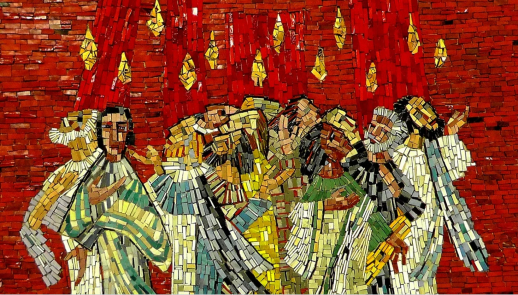
You can see the previous post in the series here.
There is no exegetical reason for believing the gifts have ceased. Ninth, despite what many believe, there is no convincing exegetical argument for the cessation of the grace gifts.[1] 1 Corinthians 13:10 plays a prominent role in many cessationists’ arguments. It did for me when I was taught as a kid. There is another hermeneutical issue, however. Thomas R. Schreiner says,
To see ‘the perfect’ as referring to the New Testament canon is an example of anachronism…
Instead of referring to spiritual maturity or to the canon of the New Testament, ‘the perfect’ most likely refers to the second coming of Christ, the end of the age. The perfect is equivalent with seeing God face to face (1 Cor. 13:12).[2]
John MacArthur says although many “scholars [e.g. B.B. Warfield, Richard Gaffin, Robert Thomas, Thomas Edgar, Simon J. Kistemaker] disagree on the identification of the ‘perfect,’ they all reach the same conclusion—namely, that the miraculous and revelatory gifts have ceased.”[3] He goes on to say that “we must look elsewhere than 1 Corinthians 13:10, to passages like Ephesians 2:20, where Paul indicated that both the apostolic and prophetic offices were only for the foundational age of the church.”[4]
Many, such as John MacArthur, Richard B. Gaffin, along with Schreiner, end up making the argument that the gifts of the Spirit have ceased because they claim, otherwise, the canon of Scripture would be in jeopardy.[5] That, however, is rather a different issue than if the gifts of the Spirit continue or not. For one, the canon of Scripture, as well as the very existence of the Church, has been in jeopardy since the outset. The way to defend Scripture, as well as the church, is a more robust understanding of what Scripture teaches, not fear.
The Work of the Spirit | pt. 5
You can see the previous post in this series here.
Gifts of the Spirit confirm the gospel. Fourth, the gifts of the Spirit serve to authenticate the gospel message (e.g. Rom 15:18-19[1]) and that is still necessary especially in certain contexts but that is not the exclusive reason that God gave the gifts of the Spirit. D.A. Carson correctly points out that just “because miraculous signs have a distinctively attesting role in some instances, it does not follow that this is the only role they play.”[2] Although some assert that the gifts of the Spirit ceased with the closing of the canon they make that claim without biblical warrant. As Carson says, “There is no exegetical warrant for thinking certain classes of the Spirit’s manifestations cease once the crucial points of redemptive history have passed.”[3]
Gifts of the Spirit are poured out in the last days. Fifth, the gifts of the Spirit are part of what it means to be in the last days and we are in the last days.[4]
Cessationists who claim that the healings of Jesus and the apostles where merely authenticating signs of their status as bearers of canonical revelation misunderstand Jesus’ own explanation of them. For Jesus, they are rather expressions of the liberating reign of God, bursting into history, and it is as such that they attest the message of the kingdom.[5]
The gifts of the Spirit are to be expected because they indicate the presence of the Kingdom in the last days. The presence of the Holy Spirit is a sign of the new covenant.
The Work of the Spirit | pt. 4
You can see the previous post here.
There is no indication that the gifts would cease before Christ’s second coming. The Bible never indicates the cessation of the grace gifts until the return of Jesus, this is the second reason I believe in their continuance. There is no indication in the New Testament that the gifts would cease before the coming of Christ. Of course, it is possible that they could just fade out but we would not expect that to be the case from reading the Bible. Jack Deere contends that “If you were to lock a brand-new Christian in a room with a Bible and tell him to study what the Scriptures have to say about healing and miracles, he would never come out of the room a cessationist.”[1]
In 1 Corinthians 1, it seems to indicate the expectation that the gifts will continue until the coming of Christ. If you read the letter as the first recipients would have there is nothing at all that would make you think otherwise. In 1 Corinthians 1:7, Paul says, “…you are not lacking in any gift[2], as you wait for the revealing of our Lord Jesus Christ.” Notice it says “any gift” and it seems as if the gifts will continue until the revealing of the Lord Jesus Christ. That seems to clearly indicate that the gifts of the Spirit will continue until Jesus returns.
Paul, thus, seems to believe that all of the gifts will not be lacking until “the revealing of our Lord Jesus Christ” (1 Cor 1:7). Paul expects that those who are witnesses of Christ[3] will have the spiritual gifts available to them until “the perfect comes” (cf. 13:8-12), that is “the revealing of our Lord Jesus Christ” (1:7).[4] It is also important to note that in the context of 1 Corinthians, “spiritual gifts” (χαρίσματι cf. HCSB, NLT, NIV, Rom 1:11) cannot be limited to encouragement and the like but must also include what is considered the “charismatic gifts.”[5]
The Work of the Spirit | pt. 3
In the last post, we looked at “God the Spirit and the Filling of the Spirit.” In this post, we will be looking at…
Grace Gifts
Next, we need to understand that God the Spirit gives “grace gifts.”[1] God’s abundant grace that we see demonstrated all throughout redemptive history issues in grace gifts.[2] God expresses His grace concretely in the rich number of grace gifts He bestows upon the Church for its upbuilding.[3] Schreiner observes this and says, “I would define spiritual gifts as gifts of grace granted by the Holy Spirit which are designed for the edification of the church.”[4]
The Spirit was vital at the beginning of the church and He continues to be on through to the consummation. He brought the birth of the Church, He hovered over the Church like He hovered over the water at the beginning. The Spirit does not bring charismatic chaos but the creation of order. That was the Spirit’s work at the beginning and it is the Spirit’s work today. There is no biblical warrant for believing in some big discontinuity between the work of the Spirit then and the work of the Spirit now in the last days. Actually, Scripture says, “in the last days I will pour out my Spirit on all flesh” (Acts 2:17). We are in those latter days today and we still need the empowering presence of the Spirit.
The hodgepodge, unlearned, and often unimpressive group of Jesus followers did not see the messianic movement die. Instead, the people of the way (Acts 9:2) actually exploded in growth, this group of people that followed a crucified and cursed man who claimed to be God, this group of people who had no leader on earth. How did this group survive let alone thrive?
Because Jesus did not leave His disciples without what they needed. Jesus sent the Helper.
Jesus said, that it was better that He go. That seems shocking. As it should. And as it did for the first disciples. We are left asking, how could it be better that Jesus’ bodily presence not be with us?
Thankfully Jesus answers that question. He tells us that He will not leave us as orphans. He gives us the Helper, the Holy Spirit, to be with us (See John 14).
The Grace Gifts Continue Today
“You shall receive power when the Holy Spirit comes upon you; and you will be My witnesses” (Acts 1:8[5]). Will we? Will we receive power?
The Work of the Spirit | pt. 2
God the Spirit and the Filling of the Spirit
God the Spirit. Since we are considering the work of the Spirit within the church, it is important that we consider God the Spirit, who He is and what He does. First, without going into any detail, the Holy Spirit is the third person of Trinity. The Spirit is fully God.[1] The Holy Spirit also has personhood; He is not an impersonal force.[2] That is who the Spirit is.
Second,[3] it is important that we briefly consider what it is that the Spirit does. The Old Testament teaches us various things about the Holy Spirit. The Spirit molds creation into shape and gives life to created beings (Gen 1:2; 2:7; Ps 33:6; Job 26:13; 33:4). The Spirit controls the course of nature and history (Ps 104:29-30; Isa 34:16). The Spirit teaches and reveals God’s truth and will to His messengers.[4] The Spirit elicits personal response to God.[5] The Spirit equips individuals for leadership.[6] We also see that the Spirit equips individuals with skill and strength (Exod 31:1-11; 1 Kgs 7:14; Hag 2:5; Zech 4:6).
The Spirit is given as our Helper (John 14:24). He takes what belongs to the Son and shares it with those who believe (John 16:14), beginning with the new birth (John 3:6), teaching and guiding (John 16:14), and transforming (2 Cor 3:5-18) in ways that surpass human capacity (1 Cor 2:10-14). He empowers believers to be Jesus’ witnesses to the end of the earth (Acts 1:8) and to the end of the age (Matt 28:20). By indwelling believers (Rom 8:9; 1 John 2:27), the Spirit washes and renews (Titus 3:5), pours out divine love in our hearts (Rom 5:5), reproduces the divine virtues (Gal 5:22-23; Rom 14:17), enables us to resist sin (Rom 8:13) and pursue holiness (2 Thess 2:13), and build unity among the church (Eph 2:22; 4:3, 13; Phil 2:1-2).[7] The Spirit hears, speaks, witnesses, convinces, shows, leads, guides, teaches, commands, forbids, desires, gives speeches, helps, and intercedes with groans.[8] It is vital that we not leave out the most miraculous work that the Spirit works within people; He makes them new creations in Christ (2 Cor 5:17; 3:3, 6, 18; Titus 3:5-6; Ezek 36:25-28; Rom 2:28-29).
Who is Jesus?

Who is Jesus? That is the all-important question. That is the hinge on which history hangs.
That question has been a question for centuries. John the baptizer even said, “Are you the one who is to come, or should we expect someone else?” (Matt. 11:3). Islam says Jesus is a prophet. Jehovah’s Witnesses say Jesus is a mighty being, even a god. But not God. They do not believe in the Trinity.[1]
So, who is Jesus?
For us to answer that question, it’s important that we consider what Jesus Himself said. So, who did Jesus Himself say He was? Jesus is asked about His identity in the Gospel of John. People asked Jesus, “Aren’t we right in saying that you are a Samaritan and demon-possessed?” (John 8:48).
He is the Faithful God

“Know that the LORD your God is God, the faithful God who keeps His gracious covenant loyalty for a thousand generations with those who love Him and keep His commands” (Deuteronomy 7:9).
How surprising and sad that we need to be reminded so often of God’s truth. And yet we do. I’m thankful that God accommodates to our forgetful ways.
We are told to know something. Our knowledge is not to be merely intellectual. Though it is intellectual. We need to know actual things about God. In this verse, we are to grasp with our minds that the LORD God is actually God.
It is not only that the LORD is really God but that the LORD your God is really God. There is a relational aspect to our knowledge of God. The LORD your God is the supreme being and Creator of the universe. The LORD is not distant and uncaring, He is not a god, but our God.
Wow. That’s a game-changer.
It doesn’t stop there, though.
The supreme being and Creator of the universe that is our God is also faithful. Amazingly faithful.
Deuteronomy 7:9 heaps good news upon good news. If you have the LORD as your God then that means that God—The supreme being and Creator of the universe—is your God. It means the Faithful One is your God.
Our intellectual knowledge of God has a huge practical impact on our lives. It means we do not need to be afraid because the LORD our God is powerful (Deut. 7:18).
So, fight forgetfulness. Work to remember and intimately know your faithful God. And don’t be terrified because the LORD your God, a great and awesome God, is among you (Deut. 7:21).
Proof of God’s Grace #3: Overcoming Grace

Scripture teaches that it is the Spirit that overcomes people’s hardness of heart and gives spiritual life. So, John 6:36 says, “It is the Spirit who gives life; the flesh is no help at all” (see also Ezek. 11:19-21; 36:25-27).[1] Notice it says, “the flesh is no help at all.” The Apostle Paul also says it is “the Spirit that gives life” (2 Cor. 3:6). Thus, salvation does not come from “human will or exertion, but on God, who has mercy” (Rom. 9:16). So Paul says, “It is God who works in you, both to will and to work for His good pleasure” (Phil. 2:13).
James 1:18 says, “Of His own will He brought us forth by the word of truth, that we should be a kind of firstfruits of His creatures.” Whose will was it? It was “His will.” Of course, God uses means to accomplish His will. People are brought to new life through “the word of truth” (cf. Rom. 10:14; 1 Pet. 1:23).[2]
Jesus said, “Truly, truly, I say to you, unless one is born again he cannot see the kingdom of God” (Jn. 3:3). That is because, “That which is born of the flesh is flesh, and that which is born of the Spirit is spirit” (v. 6). It is the supernatural work of God that makes a person a new creation in Christ (2 Cor. 5:17). “No one can say, ‘Jesus is Lord,’ except by the Holy Spirit” (1 Cor. 12:3). That is why we “must be born again” (Jn. 3:7). And of course, no one can make himself or herself be born, let alone born again. It is the Spirit’s prerogative; the Spirit works the way He works (Jn. 3:8). We also see that even faith is a gift from God (1 Chron. 29:14; Jn. 3:27; 1 Cor. 4:7; James 1:17). No one would believe without God first giving the gift of faith. Therefore, Jesus says, “You did not choose me, but I chose you” (Jn. 15:16 cf. v. 19).
So, we say with Peter, “Blessed be the God and Father of our Lord Jesus Christ! According to His great mercy, He has caused us to be born again to a living hope through the resurrection of Jesus Christ from the dead” (1 Pet. 1:3). Peter says that God “has caused us to be born again.”
Proof of God’s Grace #1: Planned Grace

The Bible shows us over and over again proof of God’s abundant grace. Here we are going to look at the acronym PROOF[1] to look at God’s grace. We are going to look at: Planned grace, Resurrecting grace, Outrageous grace, Overcoming grace, and Forever grace.
Why is it important that we consider the proof of grace? First, because when we understand all the proof of God’s grace we praise and glorify God for His abundant grace. Second, anything that is the teaching of Scripture is important and profitable for us to understand (2 Tim. 3:16-17). Third, when we understand the extent of God’s grace it humbles us. Fourth, when we understand more of the extent of our desperation we will (or should) love God more (Lk. 7:47).
First Corinthians and the Continuation of the Gifts of the Spirit

I have written on this subject elsewhere but here we’re going to look at the text of 1 Corinthians and evaluate what it’s says regarding the continuation of the gifts of the Spirit.
First, it’s important that we acknowledge that this is a controversial issue. And it’s important that we consider these questions from an unbiased perspective.
What we were taught in the past should not determine our beliefs. We also should not let misapplications or extremes that people have that hold a certain belief dissuade us from holding a certain belief. The validity of a theological truth must be determined by what the Bible itself says. It’s important that we first agree on that.
Scripture is the final say on wether or not the gifts of the Spirit continue, not whether or not we understand each of the gifts perfectly or whether or not those who believe the gifts of the Spirit continue practice everything in a way that builds up the body of Christ in accordance with Scripture. Those other things are distractions (in logical argumentation they are referred to as the red herring fallacy).
So, what does 1 Corinthians itself say about the continuation of the gifts of the Spirit?



 in X
in X 