Jesus: The Utterly Unique
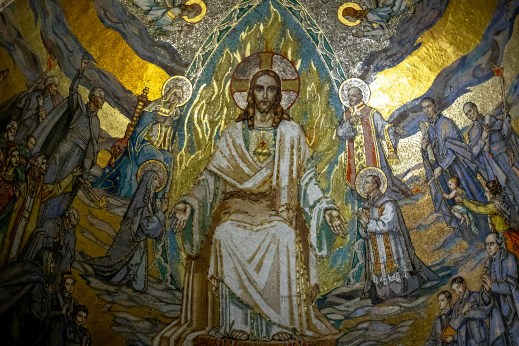
When we read Jesus’ biographies, we realize we are “in the presence of the utterly unique.”[1]
The Utterly Unique
Consider some of the most unique and paradigm-shifting musical artists—whether Nirvana, Elvis, The Beatles, Jimi Hendrix, or Taylor Swift—they all left an indelible impact. Whether raw and real emotions, gyrating hips, or unbelievably packed stadiums. Each one of these artists brought a massive shift in music culture. They redefined style and what was possible. They were unique and had an impact.
But they were not utterly unique. They shifted a paradigm; they weren’t something entirely new. Jesus was different. Obviously, he wasn’t a musical artist. But He was different in that He was and is someone entirely different and unexpected. He was “utterly unique.”
Jesus transcends conventional notions. He was and is much, much more than people imagine. Jesus is larger, more profound, and disturbing than anyone could conceive.[2]
People did not have categories to understand who Jesus was. Again, He brought more than a paradigm shift. He was something else altogether and brought a Kingdom not of this world.
Jesus did so many things and had such an impact, but His biographies couldn’t nearly communicate everything. In fact, one of his biographers wrote that there is not room enough in all the world to contain all the books that would need to be written (John 21:25). But there have been some 109,000,000 books about Jesus.
Jesus was not a king; He was the true King. People are accustomed to “the ordinary, shabby, second-rate sort.” People were seeking a builder to construct their desired home, but Jesus was the architect with a new plan entirely. They wanted a singer to sing their familiar song, but Jesus was the composer bringing a whole new beautiful genre. Jesus redefined what it means to lead and love. Jesus gave us a new way to be human.[3]
Because Jesus was so unique, people were all sorts of confused by Him. His biographies repeatedly capture this confusion. There were questions in public (Matt. 11:2–3; Lk. 7:18–20; Jn. 10:24). In fact, when Jesus enters Jerusalem, the entire city is stirred up and asking, “Who is this?” (Matt 21:10).
There are all sorts of reactions to Jesus’s authority. The disciples ask, “Who is this that even the wind and sea obey Him?” (Mk. 4:41; Matt. 8:27; Lk. 8:25). The religious leaders of the time challenge His authority to forgive sins, asking “Who can forgive sins except God?” (Mk. 2:7; Lk. 5:21; 7:49). People marvel at His authority over unclean spirits, asking what this new teaching is (Mk. 1:27; Lk. 4:36).
People were dumbfounded by who Jesus was and questioned His origins. They marveled and questioned: “Is not this the son of the carpenter?” (Matt 13:54–56). “Is not this the carpenter, son of Mary?” (Mk. 6:2–3). “Is not this Jesus, the son of Joseph?” (Jn. 6:42). “Is not this the son of Joseph?” (Lk. 4:22).
There was debate about Jesus’ identity as the promised Messiah. Some of the people of Jerusalem said, “Can it be that the authorities really know that this is the Messiah?” (Jn. 7:26). The crowd debates whether He is the prophet or the Messiah, questioning whether the Messiah could come from Galilee (Jn. 7:40–43).[4]
Sometimes there were direct questions: “Who are you?” (Jn. 8:25). “Who do you claim to be?” (Jn. 8:53) “Who is this Son of Man?” (Jn. 12:34). The Samaritan woman wondered aloud whether Jesus might be the Messiah (Jn. 4:29). The Pharisees debated whether Jesus was from God, with some claiming He couldn’t be because He broke the Sabbath, while others questioned how a sinful man could perform such signs (Jn. 9:16).
Jesus Himself asked His disciples who people said He was. “Some say John the Baptist, others say Elijah, and others Jeremiah or one of the prophets” (Matt. 16:13–15). Then Jesus asked them directly who they believe He is. “You are the Christ,” is the response (Mk. 8:27–29; Lk. 9:18–20).
The disciples, captivated by Jesus’ character, miracles, and teachings, follow Him, yet they struggle to comprehend who He really is.[5] The confusion about Jesus’ identity in His biographies isn’t accidental—it’s integral to how their honest message is communicated. Everyone was confused by Jesus the Christ. Of course they were. No one on earth had ever been like Him. To truly understand Jesus, we must work backwards from His crucifixion and resurrection.[6] We must see that He is the utterly unique.
When we read Jesus’ biographies, the Gospels about Him, we read with hindsight. We read knowing about the end. His earliest disciples didn’t have that convenience. They were perplexed. “Who is this man?”
Jesus’ biographers were honest about Jesus and His story, the confusing and the fantastic. They could be honest because “Jesus does not need to be protected. He needs to be presented. He protects himself.”[7]
Jesus “was not a hothouse plant that would wither under the touch of criticism, but he was rooted in reality, was the very living expression of our moral and spiritual universe.”[8] Christ comes out of the storms untouched and stronger when really seen. “The only way to kill Christianity is to take it out of life and protect it. The way to make it shine and show its genius is to put it down in life and let it speak directly to life itself. Jesus is his own witness.”[9]
We can be honest too. We can take our trust in Jesus and put it out before the world. We can say, “There He is, break Him if you can.” But the more people try to crush Him, the more He shines.[10]
Conclusion
Jesus is absolutely unprecedented. His biographies capture the confusion and awe He inspired, as people struggled to comprehend His identity as the true King and Messiah. Despite the confusion, Jesus’ biographers present an honest portrayal of His life, confident in His ability to withstand scrutiny and reveal His true nature: the utterly unique.
If you like this post, you might also like “Who is the real Jesus of history?“
Notes
[1] E. Stanley Jones, The Christ of the Indian Road, 160.
[2] N.T. Wright, Simply Jesus.
[3] Wright, Simply Jesus.
[4] Jesus also asks the Pharisees what they think about the Messiah and whose son he is (Matt 22:41–46) (Matt. 22:41–46; Mk. 12:35–37; Lk. 20:41–44). The Phariees show constanation and can’t answer Jesus’ question.
[5] Mark J. Keown, Discovering the New Testament: An Introduction to Its Background, Theology, and Themes: The Gospels & Acts (Bellingham, WA: Lexham Press, 2018).
[6] Stefan Alkier and David M. Moffitt, New Testament Basics: A Guide for Reading and Interpreting the Text (Minneapolis, MN: Fortress Press, 2022), 354.
[7] E. Stanley Jones, The Christ of the Indian Road, 133.
[8] Jones, The Christ of the Indian Road, 132.
[9] Jones, The Christ of the Indian Road, 132.
[10] Jones, The Christ of the Indian Road, 132.
*Photo by Stephanie LeBlanc