Care in the Church

The Conviction to Care in the Church
What does Scripture say about shepherding care?
First, the word “pastor” comes from the Latin word pastor, meaning shepherd. A pastor is a “shepherd” or “one who cares for a flock or herd.” That’s why “pastor” sounds like the word “pasture.” The two words are connected. “The concept of the leader as a shepherd is a theme with deep roots in God’s written revelation with its foundation in the Old Testament and fulfillment in the New.”[4] We are going to briefly consider some of the passages about God’s call to leaders to provide shepherding care.
Care in the Old Testament
God has always shepherded His people (Gen. 48:15; Ps. 23:1; Ps. 71:17-18; 77:20; 78:52, 72; 80:1; 95:6-7; Is. 40:11; Mic. 5:4). Further, He has provided under-shepherds to lead and care for His people. He has told people that serve as leaders to shepherd His people (2 Sam. 7:7). Ironically, before Moses and David shepherded God’s people, they shepherded a literal flock of sheep (cf. Ps. 78:70-71).
God, for example, knows that unexperienced challenges come with age (2 Sam. 19:35; Eccl. 12:2-5) and He cares that His people are helped with those challenges. Scripture even says, “Precious in the sight of the Lord is the death of His saints” (Ps. 116:15). God deeply cares for His people and wants to see them cared for.
When God’s people are not rightly cared for, He is upset. God says, “Woe to the shepherds who destroy and scatter the sheep of my pasture” (see Jer. 23:1-4)! And Ezekiel 34 shows that God takes the failure of His under-shepherds very seriously. He pronounces judgment on them (Ezek. 34:1-10). He promises He Himself will care for them (Ezek. 34:11-22).[5] And He promises that the Perfect Shepherd will come and care for them (Ezek. 34:23-31). This brings us to the New Testament and pastors serving as Jesus’ under-shepherds.
Care in the New Testament
First, is Paul’s powerful exhortation to pastor/elders to “pay careful attention to yourselves and to all the flock, in which the Holy Spirit has made you overseers, to care for the church of God, which He obtained with His own blood” (Acts 20:28). What a high, precious, and important calling! Pastors are to care for what Jesus bought with His very blood. If it is that important to Jesus, how can it not be important to us?
Paul himself provides a powerful example of pastoral care. Paul visited people to “see how they are doing” (Acts 15:36).[6] And his letters showed his shepherding care. His letters were part of his care. So, Paul sought to make disciples and care for disciples. These are complementary callings of church leaders.
Paul shared pastoral concern for God’s people. He wrote “I have you in my heart” (Phil. 1:7) as well as “being affectionately desirous of you, we were ready to share with you not only the gospel of God but also our own selves, because you had become very dear to us” (1 Thess. 2:8). But Paul didn’t just write letters, he also visited people(Acts 15:36). So, Scripture would have us see the importance of ministry both “publicly” and “house to house” (Acts 20:20).
Second, Peter passed on what he heard from Jesus: “shepherd the flock” (John 21:15-17). Peter relayed the command that we are to shepherd the flock of God that is among us (1 Peter 5:1) yet Peter also reminds us of our motivation: that the chief Shepherd when He appears, will give us the unfading crown of glory (v. 4).
Third, Acts 6:1-7 shows us we must make plans, delegate, and ensure the practical needs of people in the church are taken care of. And Ephesians 4:7-16 shows us that it is not just pastors that are to do ministry, but a big part of pastoral ministry is equipping the saints to do ministry. The church is the body, and each member is to do their part if the body is to function as it is supposed to (1 Cor. 12:4-31). Each member is equipped with gifts from the Spirit (Rom. 12:3-8) and is supposed to employ them for the common good (1 Cor. 12:7). Sadly, a Gallup survey found that only 10% of church members in America are active in any kind of personal ministry.[7]
Fourth, Jesus has compassion and cares for people when they helpless like a sheep without a shepherd (Matthew 9:36). Jesus holds church leaders responsible to care for His precious sheep. The leaders of the church are to keep watch on Jesus’ sheep knowing that they “will have to give an account” (Heb. 13:17). In fact, Jesus sees the care of those who are “down in out” as though it was done for Him. So, as we visit people, Jesus sees it as though we were visiting Him (see Matthew 25:35–36).
King David, before he was king, risked his life for mere sheep (1 Samuel 17:34-36). King Jesus gave His life for His sinful people. He’s the Good Shepherd that lays down His life of the sheep (John 10:11). And His under-shepherds are to lovingly and practically care for those for whom He gave His life (Acts 20:28).
Thus, in summary, we have seen King Jesus, the Great and Sovereign Shepherd, laid down His life for the sheep and calls the church to care for His sheep. So, we must do so.
Biblical Delegation of Care
As Acts 6:1-7 and Ephesians 4:7-16 show us, the delegation of care within the church is not only wise, practical, and necessary, it is also biblical. Exodus 18 also shows us the important of shifting care to the congregation. If the church is going to care well as God would have it, care cannot just be left to one pastor or even a team of pastors.
The New Testament teaches that God equips believers. It teaches the “priesthood of all believers” (1 Pet. 2:4-5). That is, those who are new creations in Christ (2 Cor. 5:21) not only have access to God through Christ but they are also equipped to do ministry by the Spirit of God. Therefore, the care of the church is to be done not just by a pastor or pastors, but by the church itself. The pastor is to be the “lead carer” and to equip other “carers” but he is not to do it on his own. Nor can he. So, one of the many things Christian leaders must do, is equip the church to do the ministry of the church.
The church is described in various ways, but the main image of the church is body.[8] And each part of the body is vital. It won’t work as it is supposed to without each part functioning. “For just as the body is one and has many members, and all the members of the body, though many, are one body, so it is with Christ” (1 Cor. 12:12). We are people in need of care, helping people in need of care.[9]
The biblical and effective church will be the church that mobilizes, equips, empowers, and supports Christians in ministry.[10] Many people can do most of what pastors do, pastors must do what most people can’t do.[11] One of the main tasks of pastors is to equip people to do what they can do.
One Christian leader has said, “Caring for 30 people personally is possible. Caring for 230 is not.”[12] So, we must structure bigger to go bigger. That’s essentially what Jethro’s advice was in Exodus 18. “The pastoral care model of church leadership simply doesn’t scale.”[13] So, to care for the church well, as God has told pastors to do, we must do something biblical. We must “equip the saints for the wok of the ministry” (Eph. 4:12).
So, once again, the conviction to care in the church, must come before care in the church. I hope this has helped you towards the conviction part. In a future post, I hope to lay out the specifics of implementing that care.
Notes
[1] “Upon leaving seminary, many a young man discovers that his love for the Chief Shepherd does not extend to a love for God’s sheep. Without dispute, difficulties in dealing with people is the number one cause for ministry dropouts (85 percent according to one denomination)” (David C. Deuel, “The Pastor’s Comoassion for People, ”176 in Pastoral Ministry: How to Shepherd Bibically.
[2] Albert Mohler, The Conviction To Lead: 25 Principles For Leadership That Matters (Bethany House, 2012), 53
[3] Mohler, The Conviction To Lead, 26.
[4] Timothy Z. Witmer, The Shepherd Leader: Achieving Effective Shepherding in Your Church, 9.
[5] The LORD says “I will…” twenty four times in Ezekiel 34. He will shepherd His sheep. The chapter also says “LORD” sixteen times and “Sovereign LORD” eight times.
[6] And remember, John longed to see his people “face to face.” He was not satisfied with letters. He wanted to visit.
[7] Rick Warren, The Purpose Driven Church, 365-66.
[8] The church is a family (Eph. 2:19; 3:15), temple (Eph. 2:20-22), army (Eph. 6:11-18; 2 Tim. 2:3-4), and bride of Christ (2 Cor. 11:2; Eph. 5:25-32; Rev. 19:2-8).
[9] Taken from the subtitle of Paul David Tripp’s book, Instruments in the Redeemer’s Hands: People In Need of Change Helping People in Need of Change.
[10] Robert E. Slocum, Maximize Your Ministry (Colorado Springs: Navpress, 1990), 9.
[11] See Barry G. Lawson, “Lay Shepherding: Developing A Pastoral Care Ministry for The Small To Mid-Sized Church,” 13.
[12] Carey Neiuwhof, “How Pastoral Care Stunts the Growth of Most Churches.”
[13] Neiuwhof, “How Pastoral Care Stunts the Growth of Most Churches.”
*Photo by Antonello Falcone
The Bible on the Shortness of Life

What does the Bible say about the length of our days? It says are days are short. Here’s the Bible on the shortness of life:
Job 8:9
“For we are but of yesterday and know nothing,
for our days on earth are a shadow.”
Psalm 39:4-5
“O Lord, make me know my end
and what is the measure of my days;
let me know how fleeting I am!
Behold, you have made my days a few handbreadths,
and my lifetime is as nothing before you.
Surely all mankind stands as a mere breath!”
Psalm 90:10
“The years of our life are seventy,
or even by reason of strength eighty;
yet their span is but toil and trouble;
they are soon gone, and we fly away.”
Psalm 103:15-16
“As for man, his days are like grass;
he flourishes like a flower of the field;
for the wind passes over it, and it is gone,
and its place knows it no more.”
James 4:13-15
“Come now, you who say, ‘Today or tomorrow we will go into such and such a town and spend a year there and trade and make a profit’—yet you do not know what tomorrow will bring. What is your life? For you are a mist that appears for a little time and then vanishes. Instead you ought to say, ‘If the Lord wills, we will live and do this or that.’”
What hope is there in the face of death? In the face of the shortness of life?
*Photo by Scott Rodgerson
What explains the contradiction of humanity?

What explains the contradiction of humanity?
Quotes from Nancy Pearcey’s book Love Thy Body
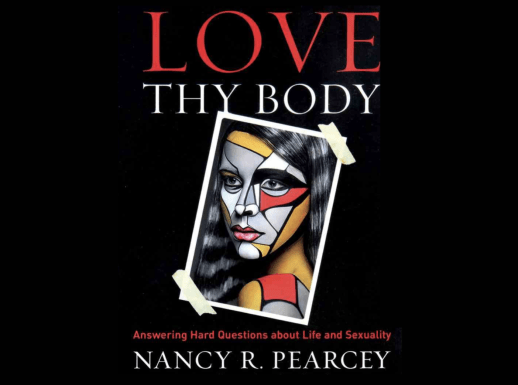
Here are 10 quotes from Nancy Pearcey’s book Love Thy Body: Answering Hard Questions about Life and Sexuality (Grand Rapids: Backer Books, 2018). It’s a really good and timely book.
Quote #1
“A worldview that says human life has no inherent value or dignity will never lead to utopia, no matter how advanced the tools and technology” (Nancy R. Pearcey, Love Thy Body, 101).
Quote #2
The Apostle Paul “would have seen prostitutes on the street and in the doorways of brothels. He probably saw slave auctions, where youths his own age were being sold to local pimps” (Pearcey, Love Thy Body, 187).
Quote #3
“From the beginning, Christians have not defended ‘traditional values.’ They have stood for truth against prevailing cultural norms” (Pearcey, Love Thy Body, 188).
Quote #4
“The biblical ethic says our sexual identity has the high honor of being part of the moral structure of the universe” (Pearcey, Love Thy Body, 189).
Quote #5
“Christians must once again become known as those who honor the whole person. The reason they speak out on moral issues should not be because their beliefs are being threatened or because they feel‘offended.’…. Christians must make it clear that they are speaking out because they genuinely care about people” (Pearcey, Love Thy Body, 190).
Quote #6
“People must be drawn in by a vision that attracts them by offering a more appealing, more life-affirming worldview. Christians must present biblical morality in a way that reveals the beauty of the biblical view of the human person so that people actually want it to be true. And they must back up their words with actions that treat people with genuine dignity and worth” (Pearcey, Love Thy Body, 190).
Quote #7
Pearcey quotes Jean Paul Sartre: “There is no human nature because there is no God to have a conception of it…. Man is nothing else but that which he makes himself.” So, in this view, as Pearcey says, “There is no blueprint for what it means to be human…. And if nature reveals no purpose, then it cannot inform our morality” (Pearcey, Love Thy Body, 206).
Quote #8
“Christianity assigns the human body… much richer dignity and value. Humans do not need freedom from the body to discover their true authentic self. Rather we can celebrate our embodied existence as a good gift from God. Instead of escaping from the body, the goal is to live in harmony with it” (Pearcey, Love Thy Body, 210-11).
Quote #9
“Those who respect science the most should also be the most pro-marriage” (Nancy R. Pearcey, Love Thy Body, 242). Why? Because “children of unmarried or divorced parents are far more likely to suffer emotional, behavioral, and health problems. They are at higher risk for crime, poverty, depression, suicide, school difficulties, unmarried pregnancy, and drug and alcohol abuse” (Pearcey, Love Thy Body, 242).
Quote #10
“Instead of moving out of the state of nature populated by lone, autonomous individuals, we are moving into a state where adults are isolated individuals, connecting with others temporarily and only when it meets their needs. We are regressing to a pre-civilized condition” (Pearcey, Love Thy Body, 248).
.
Christmas is real good news of great joy for all people

I think, no matter who you are, there has been misinformation on both sides of about everything the past year or two. Sometimes we see something on social media, Facebook, or whatever, and it grabs our attention and seems pretty possible. Then there’s other stuff like this…

There is no coast of Austria. Austria is a land-locked country. And there is no Whale Team 6, at least that I know of. This story, of course, is just made up to be funny.
But, there has been a lot of bad news and a lot of false news this year. But, thankfully, I have something much different for you.
I have some incredibly good news and it is not fake!
First, I want to show you that this is not false news. That’s really important. Then we’ll get into the really good news. Of course, if the news were fake then it couldn’t be good.
Real News (Luke 1:1-4; 2:1-3)
Luke, the one who wrote one of the accounts of Jesus’ life, had a fourfold approach to his task. First, we see he did an investigation. He interviewed eyewitnesses. Second, he went back to the beginning. He didn’t pick up halfway through. Third, we see that Luke was thorough. He did his homework and “investigated everything.” Fourth, we see it wasn’t done in a roughshod way. Luke “carefully investigated everything.” So, the main impact of what Luke writes is that “Christianity is true and is capable of confirmation by appeal to what happened.”[i]
In fact, one author has said, “Wherever it has been possible to check Luke’s statements, his impeccability as a historian has come to light.”[ii]
Also, the Gospel of Luke doesn’t start out like a fairytale story: “Once upon a time…” It starts out by showing us that it is a biography. Luke did his research in putting together the account about Jesus. It’s not fake news. It’s real news.
The story of Jesus—of His birth and life—is not in the same category as fiction but history. Luke reports true historical events. Or, that’s certainly what it claims to report.
So, the issue on which everything hangs is not whether or not you like what the Bible teaches but whether or not the Bible is true.[iii]
The story of Christmas does not have value because it is a cute story about a down-and-out couple having a child in an unexpected setting. No. The story of Christmas has value because it is a true story about the good news of rescue through Jesus.
It’s very interesting to me that Caesar Augustus (Luke 2:1) was the first, and many say, the greatest Roman emperor. Actually, Augustus means, “Revered one” and some worshiped Caesar Augustus as divine. But, in his day, someone much greater was on the scene, someone truly divine. And it is actually because of this other person, this person that was a crucified Jewish carpenter, that I even know the name of Caesar Augustus.
Good News
Friends, this is good news! God has provided a Savior and we desperately need a Savior. We all fail, we all sin. As James says, “we all stumble in many ways.” Sometimes when we’re not even trying to. We don’t love others or God as we should.
The coming of Jesus the Messiah shows us that God keeps His promises. His promises to Abraham (Gen. 12:1-3), David (2 Sam. 7:16), Israel (Deut. 30:1, 5), and all people (Gen. 3:15). We see this truth highlighted a bunch throughout Luke chapters 1 and 2.
And that’s really good news. God kept His past promises. He said He would send a rescuer and He sent Jesus to rescue in ways that are mindboggling. And soon we’ll have perfect joy before Him. That promise too will come true.
Brothers and sisters, through the Messiah, we have light instead of darkness. Soon pervasive peace.
Joy to the world! the Lord is come;
Let earth receive her King;
Let every heart prepare him room,
And heaven and nature sing,…
Joy to the world! the Saviour reigns;
Let men their songs employ…
No more let sins and sorrows grow,
Nor thorns infest the ground;
He comes to make His blessings flow
Far as the curse is found,…
Brothers and sisters, we have good news even in this stinky year because Jesus came to bring good news of great joy…
for All Peoples
Who is this good news for? It is “for all the people” (Luke 2:10). “Regardless of nationality, age, wealth, fame, social position, sex, education, etc.”[iv]
Also, Jesus’ birth was announced to shepherds. As a class of people shepherds had a bad reputation. They were often known for stealing. They were also considered unreliable and were not even allowed to give testimony in the court of law (Talmud, Sanhedrin, 25b).[v]
Jesus is the deliver, master, and anointed king. Yet, He is born among very common folk. He is not born with pomp in a palace. He’s born around stinky smells in a mere stable.
What an amazing irony that the most amazing event of history took place in a lowly manger. Yet, how fitting because God elevates the lowly, and He humbles the proud. We see this also through the angelic announcement. The King’s birth was not announced to other kings, though Herod hunted for news. No! The news, the amazing news, was given to shepherds. The announcement to the humble was a harbinger of things to come.
The Lord cares for all and identifies with ordinary people.
Respond to the News
Look at Luke 2:13-14: “Suddenly a great company of the heavenly host appeared with the angel, praising God and saying, ‘Glory to God in the highest heaven, and on earth peace to those on whom His favor rests.'”
The angels themselves are in awe of God! The angels can’t help but praise God! The fact that God became flesh and was born to a poor family in a mere manger was indescribably awesome to the angels. They had never seen the wonder of God’s love shown to such an extent. And they responded as we all should. They praised God! And they desired that others give Him His rightful praise too.
“Glory to the newborn King!
Peace on earth and mercy mild
God and sinners reconciled”
Joyful, all ye nations rise
Join the triumph of the skies
With angelic hosts proclaim:
‘Christ is born in Bethlehem’
Hark! the herald angels sing:
‘Glory to the newborn King!'”
How will you respond?
Let’s look at how the shepherds responded in Luke 2:15-20:
“When the angels had left them and gone into heaven, the shepherds said to one another, ‘Let’s go to Bethlehem and see this thing that has happened, which the Lord has told us about.’ So they hurried off and found Mary and Joseph, and the baby, who was lying in the manger. When they had seen Him, they spread the word concerning what had been told them about this child, and all who heard it were amazed at what the shepherds said to them. But Mary treasured up all these things and pondered them in her heart. The shepherds returned, glorifying and praising God for all the things they had heard and seen, which were just as they had been told.”
The shepherds were in the middle of something, they were keeping watch over the sheep. Yet, we see they hurried off. We don’t even know what they did about the sheep. The shepherds’ main concern was to act. To respond. To see the Savior.
Yet, we should understand why. Is there more amazing news?!
That’s news to be told, at least, if we actually believe it.
Do you really believe it?
Do you really believe this is real news of great joy for all people?
Brothers and sisters, this news is real. Jesus did come. Jesus, who deserves to be magnified forever, was born in a manger. And the good news is He came as our Rescuer, our Savior. So, treasure up this truth in your heart and praise the Lord for the real good news we celebrate at Christmas.
On a day, a real day in history, in a city, in a real place, the Savior, came to take our sin away. The Messiah came to fulfill our hopes and keep His promise. The Lord came to defeat death and make us safe forevermore.
That’s why we have great joy. That’s why Christmas is such great news.
That’s why Christmas is real good news of great joy for all people.
So…
Notes
[i] N. B. Stonehouse, The Witness of Luke to Christ, 44.
[ii] William Hendriksen, The Gospel of Luke, 141.
[iii] See Keller who makes this point in The Reason for God p. 210.
[iv] William Hendriksen, The Gospel of Luke, 152.
[v] Leon Morris, Luke, 101.
*Photo by Tim Mossholder
Hinduism & New Age Spirituality on Suffering

Hinduism & New Age Spirituality on Suffering
What does Hinduism say about suffering?
The most prominent of the six schools of Hindu philosophy is Vedanta Hinduism. It teaches that suffering comes from ignorance (maya). This view teaches that we can be freed from suffering when we recognize our oneness with the Divine. This form of Hinduism thus says since all is divine, there is truly no sin and no suffering. Salvation is thus through knowledge, the knowledge that one is actually God.[1]
It is important to realize that Hinduism “does not technically name one religion but is a broad term that includes the various religious beliefs and practices of India. Hinduism has no founder and no single authoritative text.” But, “all Hindus share some core beliefs, including the eternality of the cosmos, reincarnation, karma, the caste system, affirmation of Vedic scriptures, and liberation from the cycle of death and rebirth as the ultimate goal of life.”[2]
A second view of suffering from Hinduism is that our suffering comes from a previous life in which wrong was done. As the Dalai Lama and Howard C. Cutler say in The Art of Happiness, “In the Buddhist and Hindu models… suffering is a result of our own negative past actions and is seen as a catalyst for seeking spiritual liberation”[3]
We, in this life, are thus paying for the wrongs we did in our previous lives. All suffering thus has its antecedent sin, somewhere.[4] We may not understand it but all suffering is thus just.[5] This is the doctrine of karma: people get what’s coming to them.[6]
A few questions come to mind. What acts of compassion to alleviate the suffering of others do you expect from Hinduism that does not believe in the reality of suffering? Also, as we have seen, Hinduism teaches Karma, people get the suffering that they deserve in this life. Does that lead to compassion for those who are suffering? Sadly, often it does not.
Think of the caste system. If someone was born into poverty that’s what they must deserve. If someone gets sick and dies that’s what they must deserve. Hinduism holds that humans “are directly responsible for the suffering (physical, mental, spiritual, existential, and so on) that they are experiencing.”[7]
That’s very briefly what Hinduism says about suffering.
The Bible as we will see teaches that we are not divine, we are not God; we are made in the image of God (Gen. 1:26-27). Ignorance is a problem but it is not the problem.
The Bible teaches the decisiveness of this life, we had no other life in the past.[8] What we do matters more than we can know. It does not just affect the next life where we get a retry. It affects eternity. So, the way people live and how they treat people has a lot of significance.
Also, from a Christian perspective, there is judgment. People will get what they deserve, we can be assured of that, but it’s not through Karma. It’s through Jesus, the good and just Judge (Rev. 22:12).
Lastly, Christianity places huge importance on compassion (Col. 3:12-13). Jesus came and suffered for us to ultimately alleviate our suffering even when we didn’t deserve it. Therefore, Christians are to be compassionate and even sacrificial.
What does New Age Spirituality about suffering?
First, what is New Age Spirituality?[9] It is a mix of Buddhism and Hinduism and personal feelings. It is kind of the “mix n’ match” of religions.
It’s basically impossible to distill down what New Age Spirituality says about suffering because you’d probably get a different answer from each adherent to the many forms of New Age Spirituality. I hope here, however, to give a general perspective.
It seems suffering in this view is a result of not being awakened to our inner power. We need to relinquish negativity so that “the universe’s healing power might flow unimpeded.”[10] If someone is in your life that you’re having trouble with, then the solution is to cut them off. They are not helping your inner calm so they need to go. New Age Spirituality seems to teach that the solution to suffering is to focus on yourself.
New Age Spirituality seems very self and inward-focused. Of course, they say they are very inclusive and accepting of everyone. So, New Age Spirituality is also very pluralistic. ‘You have your truth and I have my truth. And that’s fine.” That’s what proponents of this view would likely say.
Primarily, though, suffering is something to be avoided. What is messy and unlikable is to be avoided. New Age Spirituality in that sense seems to be an escapist mentality. In contrast, “the Christian path of obedience, sacrifice, and suffering can seem foolish, even masochistic.”[11]
Suffering exists for various reasons, but Christianity teaches that it is primarily a result of sin. Sin is not really a category for the New Age Spiritualists. Christianity also differs in that it says suffering is not always to be avoided.
Jesus waded into our suffering to provide salvation. And Jesus very often calls us to also take up our crosses. And love people. Even when it is difficult. Even when it means sacrificial suffering. Christians believe that they cannot agree with everyone (for example, Jesus is the only way to God) but they are to love and sacrifice for anyone—even when they disagree with that person and caring for them requires sacrifice (think of the Good Samaritan).
Notes
[1] E. Stanley Jones, Christ and Human Suffering [New York: The Abingdon Press, 1937], 58.
[2] Tawa J. Anderson, W. Michael Clark, and David K. Naugle, An Introduction to Christian Worldview: Pursuing God’s Perspective in a Pluralistic World [Downers Grove, IL: IVP Academic, 2017], 269.
[3] The Dalai Lama and Howard C. Cutler, The Art of Happiness, 200.
[4] Jones, Christ and Human Suffering, 51.
[5] Some would take this to mean that we should not relieve the sufferings of others because it really is not helping them. They are getting their just desserts for their wrongdoing. If we relieve them in one way they will just suffer in another.
[6] Jones says, “There is a deep and abiding truth in the law of Karma. We do reap what we sow” (Jones, Christ and Human Suffering 54). See Galatians 6:8. However, the doctrine of karma is wrong although God does justly mete out justice.
[7] Scott J Fitzpatrick, Ian H Kerridge, Christopher F C Jordens, Laurie Zoloth, Christopher Tollefsen, Karma Lekshe Tsomo, Michael P Jensen, Abdulaziz Sachedina, Deepak Sarma, “Religious perspectives on human suffering: Implications for medicine and bioethics” in Journal of Religion and Health 2016; 55:159–173.
[8] The Bible says that it is appointed for man to die once, and after that comes the judgment (Heb. 9:27).
[9] See also “Is the world enchanted?”
[10] Nicole Watt, “A Reiki Master’s Redemption,” 95 in Christianity Today.
[11] Watt, “A Reiki Master’s Redemption,” 95 in Christianity Today.
*Photo by Min An
Some “Christmas Songs” should be all the time Songs

Some “Christmas Songs” should be all the time Songs
We thankfully don’t limit songs that refer to the cross or the resurrection to Easter. So why do we limit songs about Christ’s advent and incarnation to the Christmas season?
Jesus’ coming and incarnation are not just relevant in December. Those profound truths are relevant in the summer too.
The word “Christmas” comes from what the day, December 25th, was set apart to do. It was set apart to be a “mass on Christ’s day.” That is, Christmas was a day designated to celebrate and contemplate Christ’s coming and why He came.
Christmas certainly has a worthy goal. Just as Easter (Resurrection Sunday!) is a special day set apart on the Lord’s day to especially celebrate Christ’s resurrection. We, however, can rightly remember Jesus’ resurrection every Sunday/Lord’s Day, indeed every day!
I am convinced certain “Christmas songs” should be more common throughout the year. Perhaps we should rename Christmas songs “Advent” or “Incarnation” songs. For that is what they’re about.
They are not about the hustle and bustle of the season. They have nothing really to do with red and green or Santa or reindeer or snow. But, Christ’s advent and incarnation have to do with everything because they affect everything.
We are amiss when we miss the relevance of Christ’s coming and incarnation in the spring, summer, and fall. Songs are partly meant to be sung to help us recall what we should never forget. They are a trumpet blast to our lousy memories.
So, some “Christmas songs” should be all the time songs.
Here are fives Advent/Incarnation songs we should sing year round:
1. “O Come O Come Emmanuel”
Here’s why we should sing this song all year long: the song is great lyrically and musically. The lyrics might be a little archaic at points but it’s worth putting in the work to understand.
“Thou Rod of Jesse” refers to Jesus the Promised One. He is the one that brings victory from Satan’s plots. So, we can and should rejoice because Emmanuel (which means God with us) has come.
2. “O Holy Night”
How could you not appreciate those lines? And I don’t think those lines are just powerful during the Christmas holiday.
3. “Hark! The Herald Angels Sing”
4. “Come, Thou Long Expected Jesus”
5. “Joy to the World”
*Photo by David Beale
Is science our salvation?

Science brings solutions. Solutions I thank God for. Without the breakthroughs in medicine that science has brought, my wife and son would not be alive because of a dangerous birth. The Bible tells us to be thankful for good things like science. It doesn’t say science isn’t real, or anything crazy like that. Instead, it says, “every good gift… comes down from heaven” and “should be received with thanksgiving.”
But, science is not everything. Science is not our salvation because science is wielded by humans, and humans do something that is unpopularly referred to as sin. So, in the most scientifically advanced century, there were also the most mass inflicted deaths. If the past is an indication of the future, science will continue to be a place of ethical stress and struggle. Science has been good in many cases, but science has also been used to propel genocide.
So, I’m super thankful for science but science is not our salvation. Science can’t even begin to tell us the meaning of life. It only answers questions that can be found through reproducible observations. It can tell us about the way the world is, but it cannot to us about the way the world ought to be.
Science might provide solutions, science might help us out especially physically, but our problems are deeper than that. Our problem is not just physical, it’s spiritual. And science knows nothing of the spiritual. It can’t see or do tests on what ills us at our deepest levels and so it can offer no final solutions.
If humanity is to be saved we need more power than even science offers. And we need it welded by a perfect person. Christians believe in just that person.
Christians believe Jesus is the Solution
Christ’s resurrection proves both that the world is more than meets the eye and that science, though often very good, is not our salvation. Jesus the Bible repeatedly shows, is our salvation.
“For the Christian the natural world is real and full of strangeness and wonder, but it is not the only reality or the higher reality, so important though science is, there are ways of knowing other than through science… After all, there are many sounds that humans cannot hear, but they are still objectively real and completely audible to dogs, bats and bears.”[1]
Yet, just because Christians believe more is needed than just science, does not mean Christians discount science. And just because Christians believe that Jesus is the solution, does not mean Christians discount reason.
Christianity is a reasonable religion. Or, it at least certainly claims to be. Each person has to decide for themself. But, the Bible indeed gives reasons to believe. It’s arguing for something. It’s proposing a full-orbed philosophy of life.
Christianity has been reasoned since the beginning. In fact, the Bible makes the huge claim that reason (logos) was fleshed out as Jesus walked in the flesh (see John 1:1-14). Wisdom walked the earth. Philosophy was not abstract, theoretical, and locked up in a far-away lecture hall. No. Philosophy was flawlessly lived out by Jesus who perfectly loved people and God.
Science cannot save us but it points us with a whisper and a roar to the One who can. Jesus can do the surgery on our hearts that we all need because He is knowledge and wisdom incarnate. He is philosophy. He is Logic made flesh.
Jesus the sovereign over science is the one who brings salvation. He is the sinless solution. The one alone who perfectly welds His power.
Notes
[1] Os Guinness, Fools Talk, 150.
500th Blog Post!

Super excited. This is the 500th blog post. And over 21,000 different people from 145 countries have visited the site.
This is great because that’s the purpose of this site, to provide truth that transforms. We want to pepper people’s lives with relevant Christ-centered teaching. We want people to consider Christ and His relevance in their lives.
There are a lot of distractions in the world. A lot of reasons to falsely think Jesus doesn’t matter. We want to be part of counteracting those lies. We want to herald the Truth from the hills and the hollers, from wherever we can, by whatever means we can. Therefore, we will use any means available to reach and teach as many as we can. And we’ve reached a lot of people from some 145 countries!
We are excited about that. But, we’re not done. There are more people to reach. More truth to share. Thus, we forget what lies behind us and strain forward to what lies ahead (Phil. 3:13).
So, that’s what we’re going to keep working at. We are going to keep sharing relevant truth that transforms. We have some exciting plans for the upcoming year and are happy about what the new writers have to share.
Ways To Support
We have an exciting project coming up that we would love to have you support. We’ll give more information in the coming weeks. But, the short of it is, we are creating a resource that will help people see the relevance of Jesus. It’s created for people that grew up in the church and left the church. For people that know of Christ, but don’t live for Christ.
It’s our prayerful aim to change that.
Here are some ways you can support:
Pray
I know and quote Psalm 127:1 often. It says, “Unless the Lord builds the house, those who build it labor in vain (Ps. 127:1). I want to reach 10,000 people with this new resource. And I know the Spirit can use it to keep people from limping back and forth, one minute holding Jesus to be relevant and the next irrelevant (2 Kings 18:21). God can awaken hearts to Himself through this resource.
But, for it to happen, it would be a work of the Lord. My part, however, is to do the work. And, I’ll do the work. I’d love for you to pray that I wouldn’t labor in vain. Pray that the Lord would choose to richly repay my work to His glory.
Give
High goals require giving. I’ve given to the goal of writing and sharing truth that transforms. And some of those goals have been met. I’m thankful. And I’m going to keep working and writing (I can’t help it. It’s one of the things my hand has found to do, and I‘m going to work at it with all my might).
But, I want to reach more people. I believe there is a huge need. Especially for my millennial peers and those younger than me. It is for those that I am working on this next resource. I want them to see and eternally savor the glory of Jesus.
So, if you can finically support the work, you can give here.
Share
You can also share and follow on Facebook or whatever platforms you use.
Some Favorite Posts
- Is the world enchanted?
- The Church is a Place for Outcasts
- A Brief Christian Perspective on Psychoactive Medication
- You Are What You Read
- Is Homosexuality Part of God’s Good Design?
- The Woman, the Beast, and Babylon
- The Bible teaches that what we do matters.
- A Brief Theology of Emotions
- ***Porn*** (pt 1)
What is the difference between self-confidence and pride?

Theologically what is the difference between self-confidence and pride?
Self-confidence
God does gift individuals. And it is good to acknowledge that truth. The manager in Jesus’ parable that invested his talents and earned a good return for the owner had to have a type of confidence (Matt. 25:14-30).
Further, God created us as a “work of art” to carry out the good deeds and mission He wants us to accomplish (Eph. 2:10). So, in a sense, we can have confidence in the self that God intended us to be. Therefore, self-confidence is not in itself bad.
Of course, these truths need to be balanced by the humbling reality that we are sinners and that every good thing we have is a gift. What do we have that we did not receive (1 Cor. 4:7)? And we should always recall that every good gift and every perfect gift comes from God (James 1:17). It’s not innately ours.
Self-confidence can mean prideful evaluation of one’s ability. It does not, I don’t think, have to be understood that way though. It could mean something like: confidence in who God made you to be and in your God-given abilities. If understood that way, perhaps “God-confidence” or “God-acknowledgment” would be better.
Either way, it does not seem to me that self-confidence is inherently bad. I also think considering the opposite term can be helpful to consider: “self-skepticism” or “self-suspicion.” The Bible does say that our hearts are desperately wicked (Jer. 17:9). So, does “self-skepticism” better describe what the view of ourselves should be?
I don’t think so. I don’t think self-confidence or self-skepticism gives us the whole picture. And if left with just one of them or even a balance of both of them together, we still miss something huge! We miss our self in relation to God.
If we consider ourselves without relation to or thought of God, we’re going to get it wrong. We’ll error on either over-confidence or over-suspicion about our self. Yet, when we consider ourselves with reference to what God can and does do, we can be confident in who He has made us to be. While at the same time not obsessing about our self, because we’re focused on Him. We can have a healthy suspicion of our self but that’s not crushing. Because we know that God can and does overcome our sin.
Pride
“Pride,” at least how I think about it, has to do with what one has done. In my mind, it means someone is proud of what they themselves have accomplished. Pride is less an evaluation of one’s ability and more so a belief that’s one’s ability is simply a result of one’s own efforts. There’s no grace in pride, given or received; all is earned.
So, with pride, there is a fundamental misunderstanding of who humans are and who God is. God is the giver we, as humans, are receivers. God is, and we are contingent. Pride is a foolish misunderstanding of ontology. God is independent, humans are dependent.
Notice, King Nebuchadnezzar was humbled after he praised himself and all he thought he himself had accomplished. Nebuchadnezzar found out that God humbles those who walk in pride (Dan. 4:37). When pride comes, then comes disgrace (Prov. 11:2).
We should, however, understand that there is a difference between “pride” and “pleasure.” King Nebuchadnezzar didn’t just take pleasure in his kingdom and in all that God had entrusted to him, he took pride in it. That is, he acted as if he was responsible for it all himself. He exalted himself and failed to exalt God.
I believe it is good to take pleasure in the abilities God has given us—whether preaching, building cabinets, or whatever. In a movie about Eric Liddel, a Christian Olympic runner, he says, “God made me fast. And when I run, I feel His pleasure.” There’s nothing wrong with taking pleasure in what God has given us to do. But, notice an important point: Liddel said, “God made me fast.” Liddel acknowledged God even in his abilities.
But wait, didn’t Liddel run? Didn’t Liddel sweat? Didn’t Liddel sacrifice? He showed amazing discipline to be an Olympic runner, right? Yes. And every good gift is from God. Including Liddel’s ability to do each of those things and also his ability to breathe and his very existence was from God.
So, I believe one could evaluate themself as very good at what they do and that it required a lot of work on their part to become effective, without being prideful. How so? They acknowledge that it is all a gift. Discipline—a gift. Breathing—a gift. Etc.—a gift.
Conclusion
Perhaps the fundamental difference between “pride” and “self-confidence” as we are considering the terms is this: One is an exaltation of self without reference to God, the other can be confidence in God with reference to who He has made you to be.
The apostle Paul had a sort of confidence—we see it demonstrated through his letters and missionary work—but he also said it was not him but Christ in him (Gal. 2:20). Paul, after He met and was radically transformed by Christ, was not so much confident in himself as what God was able to do through him, though he was a mere disposable jar of clay (2 Cor. 4:7).
So, I believe it is right and good to have a kind of self-confidence in who God has made us to be even while we work at killing pride.
*Photo by Nicolas I.



 in X
in X 