Diane Langberg, When the Church Harms God’s People

I really appreciated Diane Langberg’s book, When the Church Harms God’s People. Sadly, her book is very needed. Here are a few of my favorite quotes:
The body of Christ is called to be like Christ as individuals and as a gathered body of those who are one with him. Anything that does not look like Christ is not the church, even if it purports to be… We, the body of Christ, are called to follow our Head, be like our Head, carrying his light and truth into the world. Outward success, fame, wealth, and large numbers are not the fruit our Lord demonstrated during his earthly ministry. God’s purpose is to create a living body in which God is over and within each of its members as well as its corporate life.
Ministry growth, fame, and money are often taken as proof of God’s presence and work. But if that is true, then Jesus was an abject failure. He who had ultimate power and riches laid them aside. He did not grab onto them. He did not pursue them. They did not govern him. Proof of the presence of God is not found in the accoutrements of power and fame. It is found in likeness to his character.
If you want to be a shepherd/leader who honors God, the first thing you must know is that limitation is required for expansion. Incarnational leadership follows the opposite course of human leadership. Incarnational leadership descends from heaven to earth; it goes from up to down, from expansive to limited, from broad to narrow.
The infinite gathered himself up into a womb. All-Glory laid himself down in a barn. All-Power became a toddler. All-Love was slain. Such limitation is inconceivable to us. We think of limitation as an obstacle to overcome. We fight tiredness, sickness, and slowness. We believe that if we had more time, more energy, more ability, and more money, we could increase the good we want to accomplish. He, who never grows weary, knew tiredness. He, who is infinite and eternal, submitted to the clock. He, who is perfect, bore our sin and our sicknesses. Our God limited himself on all these fronts and more, and the resulting expansion is mind-boggling.
You want to live and work in the name of Jesus? If you want to lead the people of God in a way that expands his work and protects his honor, then you must do so by way of limitation. Restriction is foundational. There must be restriction of the tongue, the desires, the abilities, and the opinions of the self. There must be limitation of your way, your time frame, your speed, and your preference. There must be a limiting of the good, including your mental capacity, energy level, and powers of speech. If you want to lead, you must make yourself like those who are following. You must know their pace, their thoughts, their fears, and their needs.
We have erected beautiful buildings devoted to worship all over the world. We have created stunning music. We have raised up theology schools and trained theologians. Such things are not inherently wrong. But these things are not the church. A1ll these things can be externally beautiful yet become a den of thieves.To all of you who are shepherds: Your goal is not to preserve a church or human organization. Your goal is to serve your Lord and Shepherd, Jesus Christ.
Institutions, organizations, ministries, places, systems, and leaders may be part of Christendom, but that does not necessarily mean they reflect the ways of Jesus Christ. Nor is Christendom even the same as the living body of Christ; institutions and leaders can look Christian on the outside but be far away from Christ on the inside.
Church leaders and their followers often point to popularity, number of congregants, growing bank accounts, and particular political views as signs of God’s presence and blessing. None of these are listed in Scripture as signs of Christlikeness.
We often tend to select leaders in the Christian world according to their gifts rather than their character. We are often drawn to leaders whose intelligence, oratory, and social facility overshadow a weakness of character. When a leader is particularly gifted verbally, has a charismatic personality, and is adept with using spiritual language, it is easy to assume maturity and obedience to God. We see gifts and assume the leader’s character matches the image they project. Sadly, there have been charismatic leaders in the Christian world who achieved power and status because of their capacity for public speaking, vision casting, and entrepreneurial capabilities but had hidden character flaws such as lack of integrity or egotistical narcissism. We have watched thriving institutions crumble upon the discovery of ungodly leadership. Spiritual maturity is measured by character, by the fruit of the Spirit of God in a life.
Jonathan Tepper, Shooting Up (a book review)

Jonathan Tepper, Shooting Up: A Memoir of Love, Loss and Addiction,
Author Background
Jonathan Tepper seems like a rather amazing and interesting individual. He grew up as a missionary kid among drug addicts. And yet received the Rhodes Scholarship, which is extremely difficult to get. It is one of the most prestigious and competitive awards, and requires exceptional academic achievement, but also outstanding leadership, character, and commitment to serve others. He earned an M.Litt. in Modern History from the University of Oxford. He is now the Chief Investment Officer of Prevatt Capital.
In addition to the book we’re reviewing, he wrote The Myth of Capitalism, which was ranked as one of the Best Books of 2018 in Economics by the Financial Times. Tepper does not mean that capitalism does not exist, but that monopolies ruin the benefits of capitalism. This is true in regard to large-scale markets as well as the local scale of your internet provider. We need a recovery and appropriate enforcement of antitrust laws to protect consumers and competition itself. So, part of the financial problem many families face is not a problem of capitalism but competition. Much of the apparent competition is an illusion. All the while, companies with a monopoly pay what they want and price how they want. The monopoly wins, and competition and the average American lose.
Introduction
Shooting Up tells the story of the author growing up in a drug slum in Spain, where his missionary parents sacrificially loved and cared for heroin addicts. This eventually led to the founding of a groundbreaking drug rehabilitation center. It tells the true tale of care and dedication in the midst of destructive addiction. It recounts one family’s real and gritty love for the forgotten and left behind. It’s honest about the harsh realities of the world and the questions and struggles life brings.
If God could part the Red Sea and multiply loaves and fish, why didn’t God heal His faithful followers dying of AIDS? “Jesus healed the lepers and raised the dead. He spat into the mud and rubbed it into the blind man’s eyes to heal him. But the Bible stories all seemed like a sick joke when the men and women in the center were dying with no healing in sight.” (p. 203)
Here’s my own set of questions: “If Jesus loves the little children so much, then why did Ollie, Paige, MarieAnne, Torry, Terrance, and others need to die? If Jesus brings transformation, why did Mike steal Christmas presents from his kids to buy drugs‽”
I’ve always thought addiction is a microcosm of the sinful world we inhabit. It highlights the effects of sin in high definition and accelerated form. Shooting Up is an honest account of addiction, recovery, and loss seen through the eyes of a young boy coming to grips with the rugged realities we call life. “Shooting Up is a quietly devastating coming-of-age memoir that is as unsettling as it is unforgettable—a haunting exploration of belief, belonging, and the costs of sacrifice.”
The author graciously shared a free copy for me to review. I was immediately interested based on my experience with my heroin addict friends.
Insights and Impact
Overall, I appreciated the real-life story with real-life struggles and wrestling. It reflects the harsh realities we face in life. I also felt compelled to a real, gritty, in-the-trenches with people love. Love like Jesus’ love—Light going into darkness, the Pure entering putrid. Of course, that’s not the full reality. For when we truly enter into others’ lives, we see how alike we are to them, no matter what we thought before. We see our humanity is their humanity.
Four specific lessons stuck out to me…
1) Incarnation is real and painful.
In the house, there was a plaque with a quote from C. T Studd: “Some want to live within the sound of church or chapel bell; I want to run a rescue shop, within a yard of hell.” (p. 6) That’s what the Tepper family did. And in doing so, they imitated our Lord Jesus. Jesus had said, “As the Father has sent me, even so, in the same way, I am sending you.” The Tepper family listened and incarnated themselves into a diffrent people and culture.
In the incarnation, God entered flesh. “Carnal” often has bad connotations. Yet, Jesus became in-carnate—in flesh. Jesus is God with boots on, well, sandals. If Jesus were walking our streets today, He would be talking and making disciples of junkies.
Or as Bono from U2 said, “If Jesus were on earth you’d find him in a gay bar in San Francisco. He’d be working with people suffering from AIDS. These people are the new lepers. If you want to find out where Jesus would be hanging outit’ll be with the lepers.” (Alan Hirsch and Michael Frost, The Shaping of Things to Come, p. 44).
Sadly, very often we as Christians are ex-carnational. We have a come and see mentality that makes those who don’t know Jesus cross borders—whatever those borders are—and be missionaries themselves. That, however, was not the case with the Tepper family. They infleshed the gospel.
The Bible is honest about the brutality of the incarnation. Jesus took on flesh, and His flesh was bruised and battered, and He Himself was tempted (Heb. 4:15). Jesus, the Light, plummeted into our darkness, and the devil threw his worst at Him. When we serve and incarnate ourselves, we should expect no less.
One of the difficult things about ministry, however, is that the whole family is often swallowed up by it. Missionary kids and pastor kids don’t necessarily choose ministry, but they’re still stuck in the thick of it.
“If your parents are engineers, plumbers, or lawyers, it doesn’t matter one bit to your life, but if your parents are missionaries, it changes everything. You can’t pick your parents, but they get to pick your life. They decide where you’ll live, when you’ll pack your bags and go, and you’ll get roped into their work saving the lost.” (p. 9)
2) After repairs, there are still scars.
There’s a theme of repairing what is broken throughout the book. Repairing furniture, cleaning up buildings, and helping addicts. One of the things the drug rehabilitation center did to stay afloat financially was a furniture repair shop. “When the used or abandoned furniture entered through the doorway, the pieces came in with scrapes and dents, disfigured by years of neglect and abuse. The former owners had been unkind to the dressers, wardrobes, and desks. The handles were missing, the mirrors cracked and shattered, and often layers of faded paint covered what had once been solid oak.” (p. 70)
The men “took the furniture apart piece by piece, revealing stains and scratches in the wood, and peeling off all the old coats of paint.” (p. 70) “They loved taking something others thought was rubbish, cleaning it, caring for it and transforming into something new with sandpaper, varnish and care.” (p. 37) Maybe the men saw something in the funiture that resembled themselves.
“As a child,” the author shared, “I believed that no matter how broken and scarred by scrapes the pieces were when they entered the shop, they could always be restored. Now, though, I saw that although the scratches and scars grew fainter, they were never gone. The woodworm remained hidden, but the ravages of time could never fully be reversed. How easily we are damaged, and how hard to put back together.” (p. 180)
The Apostle Paul said in 2 Corinthians 5:17 that if anyone is in Christ, they are a new creation; the old has gone, behold, all things are new. But he also said “before transformed by the renewal of your mind” and that we “are being transformed into the same image from one degree of glory to another” (2 Cor. 3:18). Transformation takes time, and scars remain. It’s true of furniture, and it’s true of each of us in this life.
3) There are blessings and perils to education.
The Tepper family clearly valued education, but there are particular perils to education. The author shares that he couldn’t decide on many things about his life, but with his books and encyclopedias, his mind was free to roam where it wanted. “Books could fit in any backpack, yet they contained entire worlds. They were my magic carpet to change reality and take me wherever I wanted.”
“Books filled every corner of our small apartment. My parents had made a study with bookcases that lined the walls from the floor to the ceiling, as my father had when he was growing up. Books were stacked randomly in piles on the carpet like stalagmites. My parents said books had the power to transport and transform you.” (p. 9)
Education can be a blessing but also baffling. The author quotes Solomon: “For in much wisdom is much grief; and he that increases knowledge increases sorrow” (Eccl. 1:18). “Education can be a bittersweet experience. For all the joy of discovery, sometimes I wished I were a house painter and had skipped school when I was twelve. I would know how to read, but I might not be troubled by questions of belief. (p. 202)
4) Beauty will break forth from the brokenness.
Very tragically, the author’s mother got a brain tumor. After her surgery, she was not the same. She took her own life in 2012. She jumped from the rooftop of the drug rehab headquarters.
“With the added perspective of time, death has made me aware of the preciousness of life, the importance of family and friends, and the overwhelming power of love and memory.” The author goes on to share, “Shattering tragedies have marked my life, but I was always surrounded by a loving family and community. True misfortune and trauma are for those who suffer and are not surrounded by love.” (p. 266)
Yet, in reading the book, a question replayed in my mind. Why, if God is good, is there suffering? More than that, why doesn’t God protect His own faithful servants from suicide? There are many questions beyond my understanding, but I know God is love. And soon sin, and its chorus of chaos will end, and new creation will resound.
As the author said, “My mother suffered a great deal, and now she is suffering no more. I hope people will remember what a wonderful woman she was all her life. I never met a kinder, gentler, more selfless person.” (p. 264)
As Julian of Norwich said, and as is quoted in the book,
All shall be well and
All manner of things shall be well.
That is the Christian hope. We can minister in the dark because the light has come, and soon it will totally overwhelm the darkness.
Favorite Quotes
Suffering itself is meaningless. It is our response to it that gives it meaning, and it is not an easy task to thread the needle of suffering. The answer to suffering is always more love. We can love those who are hurting, and when we are grieving, we can treasure and remember those who have passed.(p. 266)
I could come home in the years ahead, but it would never truly be the same. You cannot turn back the days to the hours of youth and health. Home is not even a place; it is a fleeting state of mind—of innocence—you can never go back to. You can never truly go home. (p. 224)
Why was it that some Christians took parts of the Bible so literally—the seven-day creation, the flood, and the endless genealogies— yet viewed the Sermon on the Mount with its call to meekness, kindness, and love, and the Ten Commandments, as mere suggestions? (p. 117-18)
Suffering itself is meaningless. It is our response to it that gives it meaning, and it is not an easy task to thread the needle of suffering. The answer to suffering is always more love. We can love those who are hurting, and when we are grieving, we can treasure and remember those who have passed. (p. 266)
Every great love story will eventually become one of loss. If we do not love, we will not suffer. We cannot have it any other way. (p. 266)
Hate destroys you, but love transforms us and the world around us. (p. 69)
My mother and father had reason to be proud of all they accomplished over the decades, but not because of the size of the building or the numbers of addicts in the centers. My parents did not set out to create a large organization, seek political influence, or fight any culture wars. They set out to show compassion to one addict at a time. (p. 262)
What a vast gap between knowledge and wisdom! I was no more responsible for my odd, schizophrenic childhood than they were for their normal ones, yet I placed the burden upon them to understand me. It is easier to blame others than to accept our shortcomings and grow. And so I retreated further into my shell. (p. 224)
If only my parents had not taught me how to think, I would not have had the tools to take my own beliefs apart piece by piece and to saw off the branch I was sitting on. (p. 202)
“Thank you, Lord, that while we were stealing from the slot machines last night you didn’t let the police catch us. Thank you, God, for looking after your sheep. Amen.” (p. 39)
Some Christians were the worst possible advertisements for Christianity. (p. 117)
David shared a room with Timmy, and I bunked with Peter, who was only one year, two months, and one day younger than me. But my parents’ books had a room all to themselves. (p. 10)
Quotes from Nancy Pearcey’s book Love Thy Body
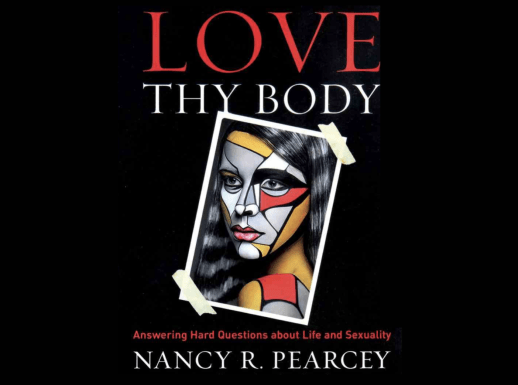
Here are 10 quotes from Nancy Pearcey’s book Love Thy Body: Answering Hard Questions about Life and Sexuality (Grand Rapids: Backer Books, 2018). It’s a really good and timely book.
Quote #1
“A worldview that says human life has no inherent value or dignity will never lead to utopia, no matter how advanced the tools and technology” (Nancy R. Pearcey, Love Thy Body, 101).
Quote #2
The Apostle Paul “would have seen prostitutes on the street and in the doorways of brothels. He probably saw slave auctions, where youths his own age were being sold to local pimps” (Pearcey, Love Thy Body, 187).
Quote #3
“From the beginning, Christians have not defended ‘traditional values.’ They have stood for truth against prevailing cultural norms” (Pearcey, Love Thy Body, 188).
Quote #4
“The biblical ethic says our sexual identity has the high honor of being part of the moral structure of the universe” (Pearcey, Love Thy Body, 189).
Quote #5
“Christians must once again become known as those who honor the whole person. The reason they speak out on moral issues should not be because their beliefs are being threatened or because they feel‘offended.’…. Christians must make it clear that they are speaking out because they genuinely care about people” (Pearcey, Love Thy Body, 190).
Quote #6
“People must be drawn in by a vision that attracts them by offering a more appealing, more life-affirming worldview. Christians must present biblical morality in a way that reveals the beauty of the biblical view of the human person so that people actually want it to be true. And they must back up their words with actions that treat people with genuine dignity and worth” (Pearcey, Love Thy Body, 190).
Quote #7
Pearcey quotes Jean Paul Sartre: “There is no human nature because there is no God to have a conception of it…. Man is nothing else but that which he makes himself.” So, in this view, as Pearcey says, “There is no blueprint for what it means to be human…. And if nature reveals no purpose, then it cannot inform our morality” (Pearcey, Love Thy Body, 206).
Quote #8
“Christianity assigns the human body… much richer dignity and value. Humans do not need freedom from the body to discover their true authentic self. Rather we can celebrate our embodied existence as a good gift from God. Instead of escaping from the body, the goal is to live in harmony with it” (Pearcey, Love Thy Body, 210-11).
Quote #9
“Those who respect science the most should also be the most pro-marriage” (Nancy R. Pearcey, Love Thy Body, 242). Why? Because “children of unmarried or divorced parents are far more likely to suffer emotional, behavioral, and health problems. They are at higher risk for crime, poverty, depression, suicide, school difficulties, unmarried pregnancy, and drug and alcohol abuse” (Pearcey, Love Thy Body, 242).
Quote #10
“Instead of moving out of the state of nature populated by lone, autonomous individuals, we are moving into a state where adults are isolated individuals, connecting with others temporarily and only when it meets their needs. We are regressing to a pre-civilized condition” (Pearcey, Love Thy Body, 248).
.
Quotes from The Christian Faith by Michael Horton

“A mystery is inexhaustible, but a contradiction is nonsense. For example, to say that God is one in essence and three in persons is indeed a mystery, but it is not a contradiction. Believers revel in the paradox of the God who became flesh, but divine and human natures united in one person is not a contradiction. It is not reason that recoils before such miracles as ex nihilo creation, the exodus, or the virginal conception, atoning death, and bodily resurrection of Jesus Christ. Rather, it is the fallen heart of reasoners that refuses to entertain even the possibility of a world in which divine acts occur” (Michael Horton, The Christian Faith, 101).
“Faithful reasoning neither enthrones nor avoids human questioning. Rather, it presupposes a humble submission to the way things actually are, not the way we expect them to be. Faithful reasoning anticipates surprise, because it is genuinely open to reality. If reality is always exactly what we assumed, then the chances are good that we have enclosed ourselves in a safe cocoon of subjective assertions. Unbelief is its own form of fideism, a close-mindedness whose a priori, untested, and unproven commitments have already restricted the horizon of possible interpretations” (Horton, The Christian Faith, 102).
“Ethical imperatives are extrapolated from gospel indicatives. The gospel of free justification liberates us to embrace the very law that once condemned us” (Ibid., 640).
“In the Greek language we must differentiate between the indicative mood, which is declarative (simply describing a certain state of affairs), and the imperative mood, which sets forth commands). For example, in Romans Paul first explains who believers were in Adam and their new status in Christ (justification) and then reasons from this indicative to the imperatives as a logical conclusion: ‘Do not present your members to sin as instruments for unrighteousness, but present yourselves to God as those who have been brought from death to life…’ (Ro 6:13). He concludes with another imperative (command), but this time it is really an indicative: ‘For sin will have no dominion over you, since you are not under law but under grace’ (v.14)” (Ibid., 649).
“Where most people think that the goal of religion is to get people to become something that they are not, the Scriptures call believers to become more and more what they already are in Christ” (Ibid., 652).
“Although we cannot work for our own salvation, we can and must work out that salvation in all areas of our daily practice. When God calls, ‘Adam, where are you?’ the Spirit leads us to answer, ‘In Christ’ (Ibid., 662).
“It is crucial to remind ourselves that in this daily human act of turning, we are always turning not only from sin but toward Christ rather than toward our own experience or piety” (Ibid., 663).
10 Quotes on Preaching

“Expository preaching is the best method for displaying and conveying your conviction that the whole Bible is true… A careful expository sermon makes it easier for the hearers to recognize that the authority rest not in the speaker’s opinions or reasoning but in God, in his revelation through the text itself… Expository preaching enables God to set the agenda for your Christian community… Expository preaching lets the text set the agenda for the preacher as well… Exposition can prevent us from riding our personal hobbyhorses and pet issues… A steady diet of expository sermons also teaches your audience how to read their own Bibles” (Timothy Keller, Preaching, 32-38).[1]
“Expository sermons help us let God set the agenda for our lives…. Secondly, expository preaching treats the Bible as God treated it, respecting particular contexts, history and style of the human authors” (Peter Adams, Speaking God’s Words: A Practical Theology of Preaching, 128).
Read More…“An expository sermon may be defined as a message whose structure and thought are derived from a biblical text, that covers the scope of the text, and that explains the features and context of the text in order to disclose the enduring principle for faithful thinking, living, and worship intended by the Spirit, who inspired the text” (Bryan Chapell, Christ-Centered Preaching, 31).
10 Quotes from John Piper’s book, Future Grace

“The commandments of God are not negligible because we are under grace. They are double because we are under grace” (John Piper, Future Grace, 168).
“The way to fight sin in our lives is to battle our bent toward unbelief” (Piper, Future Grace, 219).
“The faith that justifies is a faith that also sanctifies… The test of whether our faith is the kind of faith that justifies is whether it is the kind of faith that sanctifies” (Ibid., 332).
“The blood of Christ obtained for us not only the cancellation of sin, but also the conquering of sin. This is the grace we live under—the sin-conquering, not just sin-canceling, grace of God (Ibid., 333).
“The problem with our love for happiness is never that its intensity is too great. The main problem is that it flows in the wrong channels toward the wrong objects, because our nature is corrupt and in desperate need of renovation by the Holy Spirit” (Ibid., 397).
“The role of Gods Word is to feed faith’s appetite for God. And, in doing this, it weans my heart away from the deceptive taste of lust” (Ibid., 335)
“It is this superior satisfaction in future grace that breaks the power of lust. With all eternity hanging in the balance, we fight the fight of faith. Our chief enemy is the lie that says sin will make our future happier. Our chief weapon is the Truth that says God will make our future happier. We must fight it with a massive promise of superior happiness. We must swallow up the little flicker of lust’s pleasure in the conflagration of holy satisfaction” (Ibid., 336).
“There are no closed countries to those who assume that persecution, imprisonment and death are the likely results of spreading the gospel. (Matthew 24:9. RSV)” (Ibid., 345).
“Perseverance in faith is, in one sense, the condition of justification; that is, the promise of acceptance is made only to a persevering sort of faith, and the proper evidence of it being that sort is its actual perseverance” (Piper, Future Grace, 26 quoting Jonathan Edwards).
“Humility follows God like a shadow” (Ibid., 85).



 in X
in X 