Not all “facts” are created equal (and other proverbs for today)

A few important and relevant things I’ve found to be true through my short tenure on earth:
1. Statistics can be skewed (in all sorts of ways).
2. Money talks, and sometimes money makes people talk about facts that don’t actually exist.
3. “Sound bites” don’t equal sound knowledge.
4. Video doesn’t always equal validation.
5. One side sounds right until you hear the other (and a lot of times people don’t listen to or understand the other side).
6. People have agendas (and agendas come through more or less depending on the topic and the person).
7. Not everyone is a specialist (e.g. movie stars getting interviewed about their political opinion might be entertaining but it’s typically not educational).
8. “I read it on the internet” doesn’t equal truth (even if you see the same thing in a few places).
9. Science sold as fact is actually often still theory.
10. Dogmatic assertions should sometimes be doubted (or at least checked and not just by Google).
11. There is a difference between knowing something and wisdom (and the difference can be a matter of life of death).
12. Unless there is objective truth, the exhortation for people to be kind (e.g. planet care, respecting others, and not harming others) is subjective and relative to the whim of individuals (and thus doesn’t really need to be heeded).[1]
13. The idea that there is objective truth is often unpopular but that doesn’t make it wrong.
14. People are often not familiar with what various fallacies are but that doesn’t mean that they are inept in their employment.
15. We can’t have a peaceful world where each person does what is right in their own eyes because people have conflicting desires that will lead to unpeaceful ends.[2]
16. No political leader is the Promised One[3] (no matter what they, the media, your friends, or your psyche says).
17. Money can’t buy happiness (but it can buy distraction); however, happiness can be quite cheap.
18. Video games, YouTube, and social media can keep us away from things that are much more rewarding and fun.
What ones do you like and not like? Why? And what would you add?
______________
[1] That is, it ultimately does not matter morally if people “be kind and rewind,” recycle, or are racist if there is actually no objective right and wrong. However, if there is right and wrong, and it is right to recycle, then that means that there are some objective criteria of right and wrong not determined by me or you and that means that objective truth will have things about it that are not appealing to us but that does not change the truthfulness of the issues under question (whether murder, recycling, or a thousand other things). If not recycling is objectively wrong then so are many other things, some of which we would not like to be wrong (e.g. overeating moose tracks ice cream). We can’t have our cake and eat it too. We can’t both have and not have morality. It just doesn’t work that way. It’s an impossibility.
[2] Thus, the answer for world peace is not accepting that everything is relative (“whatever’s right for you”) but by patiently and loving communicating truth so that people can be sympathetically aligned (though not anonymous).
[3] As in the Christ/Messiah of Scripture.
10 Most Read Posts of 2016

I published 67 posts in 2016. Here are the 10 most popular posts of 2016:
- America’s Trump Morality
- A Brief Christian Perspective on Psychoactive Medication
- All-Gender Bathrooms, Prosperity, Love, & the Question of Kingdom
- Kim Kardashian, Kanye, Christ, and Snapchat
- Designer Sex (part 1)
- The Practical Importance of Doctrine
- Delights, Deceits, and Dangers of the Digital Age #1
- Fashion, Clothes, & Christ
- Ten Songs for those Struggling with Addiction
- Designer Sex (part 2)
How we live as exiles…

The Bible teaches us that we, as Christians, are exiles (1 Pet. 1:1, 17; 2:11; Phil. 3:20; Heb. 13:14). That is, we as Christians are separated from our true country. This is a biblical reality and more and more becoming an empirical reality. For instance, Newsweek has said, “Christians are now making up a declining percentage of the American population” (cf. U.S. Public Becoming Less Religious“).
America has been postmodern and now we’re told America is post-Christian. But it’s not surprising. And it’s actually ok because this is not our home. We are “exiles” (1 Pet. 1:1, 17) and so we shouldn’t expect to have a nice cushy Christian majority (not that a Christian majority is wrong). We function, as the early church functioned, from the margins, not from the center.
Also, notice that Peter doesn’t tell us to wage war to ensure that we are the “moral majority.” No. Peter says, “Beloved, I urge you as sojourners and exiles to abstain from the passions of the flesh, which wage war against your soul. Keep your conduct among the Gentiles honorable, so that when they speak against you as evildoers, they may see your good deeds and glorify God on the day of visitation” (1 Pet. 2:11-12 see also 1 Cor. 5:9-13).
It’s actually Christian’s morality that Peter is concerned with. Peter doesn’t say watch out for the world’s morality (and Peter lived under Roman control). No. He says, watch out for your own morality. Wage war against your soul. We are called to live our lives “constructively embedded within society while not being enslaved to all of its norms and ideals” (Lee Beach, The Church in Exile, 183). Read More…

A few thoughts on loving our neighbors…

God is a missionary God. God sent prophet after prophet and even sent His own Son (cf. Matt. 21:33ff). And now Jesus the Son is sending us into the world (Jn. 17:18). The task was dangerous for the prophets and deathly for Jesus. We shouldn’t expect anything less (Christians are the most persecuted group in the world). We were sent into the world, not a Christian conclave. And we were sent into the world not to win the world over to our side but to love the world, to love our neighbor. To implore the world on behalf of Christ to be reconciled to God (2 Cor. 5:20).
We are not to hide in Christian castles, build castles, or lob missiles at the outside world from our castle. The commission from Christ did not include a castle, it included sacrificial—boots on the ground—compassion. God showed His love for us through the amazingly tangible incarnation and cross. There is a sense in which we too can give love flesh.
In 2017, let’s consume the Word and diet everything else

The average American spends 50 minutes of their time each day on Facebook’s platforms (Facebook, Instagram, Messenger). That is one-sixteenth of the average American’s waking time.
Facebook, the web, ESPN, and news networks are built to engage and grab us (except perhaps CSPAN). There is a lot riding on whether or not we spend five or fifty minutes on Facebook. There is a lot invested to make us scroll, click, share… There are people fighting for our fascination and time. There are specialists employed and there are algorithms designed to grab our attention.
Of course, I am not the social media police, this is not 1984 or Fahrenheit 451. You can be on social media. I am. Twitter, Instagram, Snapchat, Facebook, Messenger… However, let’s consider the way we plan to spend our time in 2017.
D.A. Carson has said,
“The challenge [to reading Scripture] has become increasingly severe in recent years, owing to several factors. All of us must confront the regular sins of laziness… The sheer pace of life… The constant sensory input from all sides is gently addictive—we become used to being entertained and diverted, and it is difficult to carve out the space and silence necessary for serious and thoughtful reading of Scripture.”[1]
Carson said that in a book published in 1998—18 years ago!—before the iPhone and before dial-up was replaced! Things have changed since 1998. Read More…
Nietzsche: Prophet of Doom (Part 1)
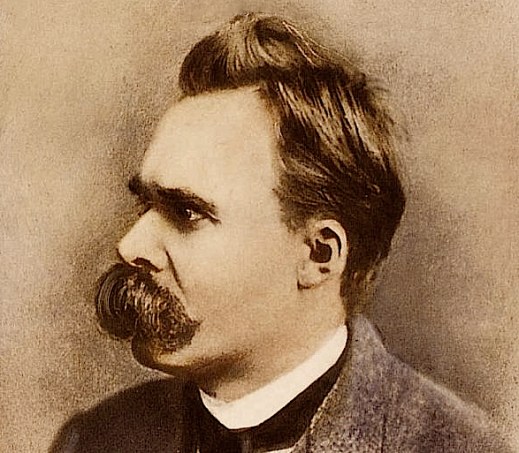
Introduction
What follows is important and relevant for individuals, society, and the world. The water is deep at places but must be forded for us to get to solid ground. The world, I fear, is in a swamp of uncertainty, but the water is rising, every day the need for solid ground is more apparent but harder to reach. Wade through this with me, and perhaps we can find something solid to build upon. Something that will stand through the next wave, whatever that wave may be. As we set out, we will use Friedrich Nietzsche as our marker, though he is no North Star, he helps us map the mire.
First, we should know some about Nietzsche. Friedrich Wilhelm Nietzsche was born on October 15th, 1844 and died on August 25th, 1900. Nietzsche lived a sickly life and died at the age of 55 of pneumonia.[1] Nietzsche’s father was a Lutheran pastor. “Nietzsche’s uncle and grandfathers were also Lutheran ministers, and his paternal grandfather, Friedrich August Ludwig Nietzsche (1756–1826), was further distinguished as a Protestant scholar.”[2] Nietzsche faced many difficulties from a young age. His father died when Nietzsche was only four years old and just six months after the death of his father his younger brother died.
Nietzsche must have been gifted intellectually from a young age. For example, he composed piano, choral, and orchestral music as a teenager. He also received a good education at a first-rate boarding school. As a teenager, he read “David Strauss’s controversial and demythologizing Life of Jesus Critically Examined”[3] and it had a big impact on him. Early on Nietzsche considered himself devout, he was even called “little preacher” when he was young, but eventually, he would deny the faith, though at first not publically.[4]
Second, it should be understood, that in my mind, Nietzsche’s ramblings are closer to rhetoric than to philosophy. Nietzsche often employees ad hominem arguments and attacks a person (e.g. the Apostle Paul[5]) rather than their arguments. Nietzsche also seems fond of constructing straw man fallacies for his argumentative flame.
Third, Nietzsche wrote in a very unique and even enjoyable style. However, his lack of precision in writing is dangerous; people can construe his writings in many ways, and they have. There is much disagreement over Nietzsche and his work, which must to a large degree, must be because Nietzsche seems to have communicated often more like a poet, using words to paint, and not as much for precision.[6] It is true that Nietzsche at times is very hard to discern and it is also true that his body of work is large and there is much disagreement upon what place Nietzsche’s unpublished work should play in Nietzschean scholarship. However, all that being the case, Nietzsche is still responsible for what he wrote and the way he wrote.
Yannick Imbert has said,
In the history of Western thought, Nietzsche most likely holds the distinction of being the most misunderstood and misrepresented philosopher. Understanding him represents a particular challenge for Christians, given Nietzsche’s radical criticism of anything related to Christianity. Let us consider more closely the philosophy of the so-called father of nihilism.[7]
________________
[1] See e.g. D. Demelsoet, K. Hemelsoet, and D. Devreese, “The neurological illness of Friedrich Nietzsche,” 9-16 in Acta neurologica Belgica (April 2008).
[2] Robert Wicks, “Friedrich Nietzsche” in The Stanford Encyclopedia of Philosophy ed. Edward N. Zalta (Fall 2016 Edition)(https://plato.stanford.edu/entries/nietzsche/#Life1844 accessed on December 5th, 2016).
[3] Ibid.
[4] “From his early boyhood, Nietzsche was expected to follow the family tradition and become a minister himself. As late as 1864, when he studied classics and theology at Bonn University, he seems to have adhered to his family’s expectations (if no longer wholeheartedly). When one year later he finally dropped theology, he proved a family crisis” (Jörg Salaquarda, “Nietzsche and the Judaeo-Christian tradition,” 90-118 in The Cambridge Companion to Nietzsche [Cambridge: Cambridge University Press, 1997], 92).
[5] E.g. Nietzsche says, “In Paul is incarnated the very opposite of the “bearer of glad tidings”; he represents the genius for hatred, the vision of hatred, the relentless logic of hatred. What, indeed, has not this dysangelist sacrificed to hatred!… The life, the example, the teaching, the death of Christ, the meaning and the law of the whole gospels—nothing was left of all this after that counterfeiter in hatred had reduced it to his uses. Surely not reality; surely not historical truth!… He simply struck out the yesterday and the day before yesterday of Christianity, and invented his own history of Christian beginnings… The figure of the Saviour, his teaching, his way of life, his death, the meaning of his death, even the consequences of his death—nothing remained untouched, nothing remained in even remote contact with reality. Paul simply shifted the centre of gravity of that whole life to a place behind this existence—in the lie of the “risen” Jesus… The figure of the Saviour, his teaching, his way of life, his death, the meaning of his death, even the consequences of his death—nothing remained untouched, nothing remained in even remote contact with reality. Paul simply shifted the centre of gravity of that whole life to a place behind this existence—in the lie of the “risen” Jesus… What he himself didn’t believe was swallowed readily enough by the idiots among whom he spread his teaching.—What he wanted was power…” (Nietzsche, The AntiChrist, par. 42).
[6] So, Alvin Plantinga has said, Nietzsche “writes with a fine coruscating brilliance, his outrageous rhetoric is sometimes entertaining, and no doubt much the extravagance is meant as overstatement to make a point. Taken overall, however, the violence and exaggeration seem pathological; for a candidate for the sober truth, we shall certainly have to look elsewhere” (Alvin Plantinga, Warranted Christian Belief [Oxford: Oxford University Press, 2000], 136).
[7] Class notes from Yannick Imbert’s lecture in “History of Philosophy and Christian Thought” on Oct. 12th, 2016.
Giving to the Church

“For you know the grace of our Lord Jesus Christ, that though He was rich, yet for your sake He became poor, so that you by his poverty might become rich” (2 Cor. 8:9).
Why do we give?
…because God gave
We are to give out of the abundance of joy that is produced in us as we remember what Christ gave for us (see 2 Cor. 8:1-9). So we give cheerfully what we have decided to give out of an overflow of worship, not because we have been constrained to give by a command (2 Cor. 9:7).[1]
…because the Lord is worthy
The expectation that we see for us in Scripture is whole life commitment. The Lord is worthy so we offer all we are, our own selves, as living sacrifices because that is a reasonable response to His abundant goodness (see e.g. Rom. 12:1). We count everything as trash compared to Him (Phil. 3:8).
…because it’s an eternal investment
“As for the rich in this present age, charge them not to be haughty, nor to set their hopes on the uncertainty of riches, but on God, who richly provides us with everything to enjoy. They are to do good, to be rich in good works, to be generous and ready to share, thus storing up treasure for themselves as a good foundation for the future, so that they may take hold of that which is truly life” (1 Tim. 6:17-19 cf. Matt. 6:19-21)
…because everything is God’s
All over Scripture, we see God owns everything. Everything has been graciously given (and entrusted) to us by God (Deut. 10:14; Job 41:11; Ps. 50:10-12; 1 Cor. 4:7; Rom. 11:35).
…because we are stewards
I am not accountable to you and you are not accountable to me. We are accountable to God. We must all ask what God wants us to do with what He has given to us. And we must realize that God calls different people to manage different things in different ways; the Bible is replete with examples of this. God has entrusted us with different levels of responsibility for the gifts He has given us (Matt. 25:14-30; Lk. 12:48; 1 Pet. 4:10).
The common denominator between managers is not that they manage the same amount of stuff but that they are accountable and must be faithful. It is before God that we will be judged, not man (Rom. 14:10; 2 Cor. 5:10). Be faithful. But realize there are no exact standards prescribed so we should not prescribe them.
Where should we give?
Our priority should be to give where we are fed (see 1 Cor. 9:7-11; Gal. 6:10, 17; 1 Tim. 5:17-18). This makes sense because if we eat at Chick-fil-A we don’t pay at Chipotle.

Helpful Resources
Randy Alcorn’s book, The Treasure Principle
Redeemer Presbyterian Church’s “A 20 Day Study in Stewardship”
Discussion/Application Questions
1) Does meditating on the gospel of Christ motivate you to want to give?
2) Do you typically give with a cheerful heart that flows out of joy from the gospel?
3) Do you think it is legalistic to say that you must give to the church?
4) What does it mean that we are stewards/managers? Do you ever reflect on whether or not you are being a good steward of what God has entrusted to you?
5) Why is giving to the local church important? Or, do you think it is? What responsibility do you have to the local church?
6) Are you aware that everything that you have is a gift from God?
7) Materialism may be the single greatest pull away from authentic Christianity (cf. Deut. 6 esp. v.10-13). What do you think?
8) How can we purposely invest in heaven and not drift into the service of other “gods”?
Note
[1] It is instructive to look at the practice of tithing in Scripture. In the New Testament, Jesus does not command that we tithe but he does tell the Pharisees that they ought to tithe (cf. Matt. 23:23). In the Old Testament there was a tithe for Priests and Levites (Lev. 27:30; Num. 18:21-24), community celebrations (Deut. 14:22-29), as well as a tithe for the poor every three years (Deut. 14:28-29; see also Lev. 19:9-10). This equals out not to 10-percent but 23.3%, averaged over a three-year period. This does not take into account the first fruit offerings (Lev. 19:23-25; Num. 15:17-21) and free will offerings (1 Chron. 29:1-9). However, it should be noted that we are in a different governmental and religious situation than the Israelites. All that being the case, the question should never be, “are we to tithe?” or “how much must we give?” but rather “how much will we have the privilege to give to Christ who gave all so that we might have all?”
Living in Light of the Majesty of Christ

Introduction
In Paul’s letter to the Philippians, Paul is seeking to bless and encourage the Philippian church. He has encouraged and wants his friends in Philippi to be bold (1:14), receive joy in the faith (v. 25), and live a life worthy of the gospel (v. 27).
So, how is Paul encouraging the Philippians (and us) in this passage (v. 18b-26)? Paul is showing the Philippians, and us, what is worth living for. Paul gives himself as a prime example.
So, what is worth living for? I mean, what is ultimately worth living for? And, what do you live for?
Let’s look at Philippians 1:18b-20 and see what we should live for:
“Yes, and I will rejoice [because Christ is proclaimed], [19] for I know that through your prayers and the help of the Spirit of Jesus Christ this [the present situation] will turn out for my deliverance, [20] as it is my eager expectation and hope that I will not be at all ashamed, but that with full courage now as always Christ will be honored in my body, whether by life or by death.”
What is Paul saying here? Paul is saying that he rejoices in the midst of the struggles and trials of life because he expects to magnify Christ through them. So, we see we too must…
Magnify Christ in all of life (v. 18b-20)
First, it is important that we ask, “What was Paul going through? What was the situation he was facing and how did he magnify, honor, glorify God in the midst of it?”
The situation
Paul was in prison (1:7, 13) and it seems since he was in prison the question of death was on the table (v. 21, 23). Since Paul was in prison he must have had many physical concerns. Paul was suffering. His situation was not easy. Paul acknowledges that he needs help. He knew he needed the Philippian’s prayers and “the help of the Spirit” (v. 19). Paul knew he would need to “not be ashamed,” he knew he would need to have “full courage.” Paul was aware of the difficulties that awaited him but he was very sure that he would be able to be faithful (v. 20).
Paul believed the truth of Matthew 10:
“You will be hated by all for my name’s sake. But the one who endures to the end will be saved… And do not fear those who kill the body but cannot kill the soul. Rather fear him who can destroy both soul and body in hell… So everyone who acknowledges me before men, I also will acknowledge before my Father who is in heaven, but whoever denies me before men, I also will deny before my Father who is in heaven” (Matt. 10:22, 28, 32-33).
What Paul did
Even in suffering, Paul’s concern was not his own welfare. Paul cared about Christ being honored (v. 20) and the church receiving joy in the faith (v. 25). So, Paul boldly shared the gospel with the Roman guards and he encouraged others to also be bold. And Paul served and encouraged others. Actually, he wanted to depart and be with Christ, that’s what he wanted to do, but he said it is better, even “necessary” that he remain so he could be a means of joy and encouragement for his friends in Philippi.[1] That’s why Paul wrote the letter to the Philippians in the first place. Paul modeled what it means to look not only to our own interests but also to the interests of others (2:4).
“Paul’s deepest hopes for his own immediate future turn neither on the bliss of immediately gaining heaven’s portals nor on returning to a fulfilling ministry and escaping the pangs of death, but on what is best for his converts. Often we are tempted to evaluate alternatives by thinking through what seems best for us. How often do we raise as a first principle what is best for the church?”[2]
So, what did Paul do? Paul sought to live his life—through thick and thin—to magnify and honor Christ and encourage the saints.
What about us?
We, like Paul, should seek to magnify Christ in all we do. Yet, this is very hard. How can we?
Let’s look at Philippians 1:21-26 and see how we can live for Christ:
“For to me to live is Christ, and to die is gain. [22] If I am to live in the flesh, that means fruitful labor for me. Yet which I shall choose [between life and death] I cannot tell. [23] I am hard pressed between the two. My desire is to depart and be with Christ, for that is far better. [24] But to remain in the flesh is more necessary on your account. [25] Convinced of this, I know that I will remain and continue with you all, for your progress and joy in the faith, [26] so that in me you may have ample cause to glory in Christ Jesus, because of my coming to you again.”
What is Paul saying here? Paul is saying that he rejoices in the midst of the struggles and trials of life because he is motivated by the majesty of Christ. So, we too must…
Be motivated by the majesty of Christ (v. 21-26)
If we are to be motivated it is important that we understand how. So, first, how was Paul motivated by the majesty of Christ?
Paul’s motivation
Paul saw Christ as so awesome, so majestic, so worth it, that he would give up all for Him, live for Him, die for Him. Paul cared about Christ. Paul saw Christ’s glory in an amazing way and it radically changed him.
If Paul lived, who would he live for? Christ! Paul said, “If I am to live in the flesh that means fruitful labor for me” (v. 22). Paul said, “to live is Christ.”[3] That’s what life was about for Paul. Paul even said that he wasn’t sure which he would choose, life or death? Paul said, he desired “to depart and be with Christ, for that is far better” (v. 23). How is departing, dying, “far better”? Because he would get to be with Christ! Everything, for Paul, is about Christ (see also 2 Corinthians 5:1-10, 14-15).
What is our motivation?
Our motivation is often success, beauty, fun, etc. But it should be Christ. He alone is worthy. Yet, it is so easy to get distracted. Of course, success, beauty, fun are not bad. But they are not ultimate. They can’t and won’t fulfill. We shouldn’t live for those things. Only Jesus is worthy.
“In the logic of the gospel, there are no alternatives to Christ. Every other option is no option at all. When everything considered valuable in life is seen to be nothing in comparison to the glory of Christ, you learn rather well that Christ alone is worth living for. Christ alone is worthy of an entire life’s affections and devotions.”[4]
What does understanding the majesty of Christ lead to?
For John G. Paton, it meant to live is Christ, and to die is gain. Paton who was a missionary to the South Sea Islands (where Fiji water comes from) was told, “You will be eaten by Cannibals!” Paton responded:
“Mr. Dickson, you are advanced in years now, and your own prospect is soon to be laid in the grave, there to be eaten by worms; I confess to you, that if I can but live and die serving and honoring the Lord Jesus, it will make no difference to me whether I am eaten by Cannibals or by worms; and in the Great Day my Resurrection body will rise as fair as yours in the likeness of our risen Redeemer.”[5]
We must know, as Paul did, that “There is a greater day coming, a greater reward coming, a greater life coming, and the purpose of life while we are alive is to walk in a manner worthy of the gospel, which hold the promise of life everlasting.”[6] We will be more alive than we are now![7] We shall have life and peace beyond what we can imagine. We shall be at perfect peace with God and see Jesus!
Death is “far better” for us too!
Conclusion
Paul encouraged the Philippians (and us!) to live a life worthy of the gospel and in verses 18b-26 he gives us an inward look of how he hopes to live a worthy life: treasure Christ. Christ was Paul’s controlling core. Paul loved Christ and so he lived for Christ.
God is calling us to also love Christ with all we are and live for Him with all we have.
So, what do you live for? What motivating, explosive force, is at the core of your life? What propels you to do what you do?
And notice, if we get it wrong here, we will carry out all sorts of destructive actions.
What is at your core?
Can you say your life is motivated by the majesty of Christ? Can you truly say, “To live is Christ, to die is gain”?
A few questions
1. Paul said, “To live is Christ, and to die is gain.” What do you think about that? Should you be able to say that as well?
2. What’s at the motivational core of your life?
3. How will you stay on track through the temptations and struggles of life?
4. Do you currently feel purpose in living for Jesus Christ?
5. How was Paul impacted by having Christ at his motivational core? How would you be impacted with Christ at the motivational core of your life?
6. What about Christ is so majestic and beautiful and awesome that makes Him worthy of first place in your heart and life?
7. How will you keep Christ at the motivational core of you life with all the other things that fight for that place?
8. Read 2 Corinthians 5:1-10, 14-15 and pray that you would be motivated to live for Christ because of the majesty of Christ.
_______________________
[1] This is very hard for us to understand in our current society and situation. It “can only strike us as strange in the modern church if we have allowed the comforts of our present physical existence to usurp the place of Christ in our lives as our chief priority” (Frank Thielman, Philippians: The NIV Application Commentary, 83.
[2] Carson in Basics for Believers, 30.
[3] “In the context, ‘to live is Christ’ surely means that for Paul to keep on living here means ministry, Christ-centered ministry, Christ-empowered ministry, Christ’s presence in his ministry” (Carson, Basics for Believers, 29).
[4] Matt Chandler, To Live Is Christ, To Die Is Gain, 36.
[5] As quoted by Carson in Basics for Believers, 31.
[6] Matt Chandler, To Live Is Christ, To Die Is Gain, 37.
[7] I concur with what C.S. Lewis says in The Last Battle,
“We can most truly say that they all lived happily ever after. But for them it was only the beginning of the real story. All their life in this world and all their adventures in Narnia had only been the cover and the title page: now at last they were beginning Chapter One of the Great Story which no one on earth has read: which goes on forever: in which every chapter is better than the one before” (C.S. Lewis, The Last Battle (New York: NY: Harper Collins, 2002), 228).
I believe we, upon arrival to the new Eden, will exclaim with Lewis’ Unicorn: “I have come home at last! This is my real country! I belong here. This is the land I have been looking for all my life, though I never knew it to now. The reason why we loved the old Narnia [“old creation”] is that it sometimes looked a little like this” (Ibid., 213).
Living to Share the Gospel

As we read in Philippians we see that Paul lived to share the gospel. That’s what he was all about. Even when he was imprisoned for sharing the gospel he said, “It’s okay. It actually worked out quite well because I was able to tell the prison guards about Jesus.”
Paul lived to share the gospel. But what made him live like this? He hadn’t always lived for the gospel so what changed him? And what perhaps needs to change in our own lives so that we will live to share the gospel of Christ?
As I was preparing to write this I struggled because this portion of Philippians (1:12-18, 27-30) seems irrelevant. It seems disconnected from our everyday life. So, I was trying to think of some angle that I could share to make it relevant and I was struggling to do so. I was thinking that if I were talking about procrastination, lust, or something else then that would be relevant.
As I continued to think about it, however, I realized the problem is not with the passage. The problem is with us, with me. The passage doesn’t seem relevant because we don’t share the concern that Paul had, and that the Bible has. We, I am afraid, our deficient in our devotion to the gospel.
Sharing the gospel and our…
Our Deficiency
This first point comes from my own mouth and mind and not directly from Philippians. However, upon reflection, I think it is important that we consider our potential deficiency.What is our deficiency? Or, what would make this passage seem irrelevant?
I fear we (myself included!) get used to the gospel. It ceases to amaze us. We take it for granted. Paul’s letter to the Philippians was likely written 30 years after his conversion but we see that he is still amazed by the gospel of Jesus Christ. Paul says, “For to me to live is Christ, and to die is gain” (Phil. 1:21) and later on he says everything is rubbish compared to Christ (3:8).
Our deficiency is our deficient view of the gospel. We esteem it of low worth. Until that deficiency changes we won’t delight in sharing the gospel and we won’t carry out our duty of sharing the gospel. So, briefly, what is the gospel?
Philippians 2 talks about Jesus, who though He was in the form of God, made Himself nothing and humbled Himself to die for us, even by death on a cross. 2 Corinthians 8:9 reminds us of the wonder of the gospel: our Lord Jesus Christ, though He was rich, became poor, so that we by His poverty might become rich. This is the good news of the “great exchange.” Jesus, God in flesh, took our filthy sinful stains upon Himself on the tree; and He gave us His beautiful robes of righteousness.
The apostle Paul understood that and that’s why he said everything—everything!—is rubbish compared to Christ. We too need to understand that. It makes sense logically but often times it hasn’t worked itself into the nooks and crannies of our lives.
So, we see the need of cultivating a heart of worship, a heart that is amazed by the gospel. As John Piper has said,
“No one will be able to rise to the magnificence of the missionary cause who does not feel the magnificence of Christ. There will be no big world vision without a big God. There will be no passion to draw others into our worship where there is no passion for worship.”[1]
It is when we taste and see that a restaurant is good that we tell others about it. It is the same with the gospel. We need to “taste” that it is good. We need to know understand that the LORD “has done gloriously.” Look at Isaiah 12:1-5:
“I will give thanks to you, O LORD, for though you were angry with me, your anger turned away, that you might comfort me. Behold, God is my salvation… Give thanks to the LORD, call upon his name, make known his deeds among the peoples, proclaim that his name is exalted. Sing praises to the LORD, for he has done gloriously; let this be made known in all the earth.”
It when we taste the God’s goodness that we say, “Let this be known in all the earth!”
Sharing the gospel and our…
Our Devotion (Phil. 1:12-18)
In a letter such as this, it would have been customary for Paul to explain how he was doing. It would have been natural to discuss his physical conditions.[2] I expect Paul to say something like:
“I thank my God in all my remembrance of you, especially for the gift you gave me. That was really helpful. However, as you know I am in jail for preaching the gospel and I am fresh out of funds. I don’t have a lot of food and my sneakers are worn out. It’d be great to get some help. I am also very tired as my bed is very uncomfortable and the blanket they gave me is terrible. The guards also keep me up late. They like to play cards and their cursing is terrible…”
However, Paul says nothing like that. Actually, we’re not even really told about his physical well-being, let alone the state of his sneakers.
Yet, imagine how difficult it must have been for Paul. One commentator has said, “For a traveling apostle to be put in prison must have seemed like a concert pianist having his hands tied behind his back.”[3] Yet, Paul was not complaining.
Why is this the case? Certainly, Paul had material concerns. There are times when Paul let his material needs be known. For instance, he asks for his coat and books (2 Tim. 4:13). Paul surely had physical/material concerns but they weren’t main concern. We see Paul is concerned with the gospel and its advancement.
Paul’s good is wrapped up with the gospel.[4] Even though he was locked up he could rejoice because it “served to advance the gospel” (Phil. 1:12).[5] Paul made known to his guards that he was in jail for telling people about Christ. It was such a big deal that it got around to a bunch of people, “the whole imperial guard,” it says (v. 13).
“The soldiers were used, of course, to the ‘gospel’ of Caesar—the supposed ‘good news’ that a new emperor had taken the throne, bringing (so he claimed) peace and justice to the world. Now here was someone out of the blue announcing that there was a different ‘gospel’: that Jesus of Nazareth had taken the throne of the world, and was summoning every man, woman and child to bow the knee to him.”[6]
The guards were interested in hearing Paul’s story because they probably thought Paul was crazy at first. After all, they must have thought, who worships and confesses as King and Lord a crucified Jew?!
Yet, upon further discussion with Paul, they would have seen that Paul was not a lunatic but rather quite sane. If what Paul said about Jesus was true it would make sense that he would be willing to be imprisoned for Him (the guards themselves had suffered for their own king). Further, in light of Jesus being the King and Lord, it makes sense that Paul was encouraged, even in prison.
We see also the impact that Paul’s example had on the Philippians; they were emboldened to “speak the word without fear” (v. 14). How might our boldness help others to be bolder in sharing the gospel? You never know, God may use you to stir up a revival.
Perhaps the most surprising thing we see is that Paul even rejoices when people “preach Christ from envy and rivalry” (v. 15) and “out of selfish ambition” (v. 17). So, we see Paul had a delight in the gospel that bled out into the way he thought about the sharing of the gospel. Paul was passionate about the gospel and desired it to be shared. He had written previously, in Romans, that “he was ashamed of the gospel of Christ because it was the power of God for salvation to all that believe” (Rom. 1:16). Paul continued passionately and boldly unashamed.
So, what are your aspirations? To make money? To travel? To find a new job? To be in a relationship? To do well in school? To be successful in life (however, you define success)? “None of these is inadmissible; none is to be despised. The question is whether these aspirations become so devouring that the Christian’s central aspiration is squeezed to the periphery or choked out of existence entirely.”[7] Our central concern should be the gospel and its advancement.
Sharing the gospel and our…
Our Duty (Phil. 1:27-30)
In Philippians 1:27 Paul tells us about our duty. Paul says, “Only let your manner of life be worthy of the gospel of Christ.” Paul is telling us that the gospel is amazing and calls us to life change. We cannot understand and be impacted by the gospel without being changed. When we taste the sweetness of the gospel then we begin to be moved to desire to live our life in line with the gospel. We begin to strive “side by side for the faith of the gospel” (v. 27). We even begin to see it as a good thing if we suffer for the sake of Christ (v. 29).
Paul’s form of ambassadorship changed but not his purpose and duty. Paul was an ambassador in chains (Eph. 6:20).[8] This is the case for us too. We might serve in different locations and different circumstances but we are still called to be ambassadors for Christ wherever we are. So, the specific call and circumstance might change but we are all called to share and care about the gospel.
When our devotion to the gospel of Christ is waning and deficient we need to work at cultivating a heart of worship. Because not only is the gospel a delight but we also have a duty to share and care about it. We are called to strive “side by side for the faith of the gospel” (v. 27) and notice as we stand side by side and encourage each other we can stand firm not and not be afraid of our opponents (v. 27-28).
A Few Questions:
1. What did you find encouraging and what did you find challenging about this post?
2. How is our view of the gospel sometimes deficient?
3. The gospel is the most amazing reality in the world but sometimes it may seem irrelevant. What does that say about us and our focus when that is true of us?
4. What are you tempted to care about more than the gospel? What is your “good news”?
5. Do you care about the gospel? Do you share the gospel?
6. How might your boldness help others to be bold in sharing the gospel?
7. Is it true we should have a devotion to Jesus and His gospel? Or, is it legalistic to say we must be devoted and that we have duty?
8. What would a devotion to the gospel look like in your everyday life?
9. Why would we be devoted to the gospel of Jesus Christ? What would motivate us in that way?
____________________
[1] John Piper, Let the Nations be Glad (Grand Rapids, MI: Baker Books, 1993), 40.
[2] Paul’s letter “is thoroughly transformed by the gospel” (Gordon D. Fee, Paul’s Letter to the Philippians, 106 cf. 108).
[3] N.T. Wright, Paul for Everyone: The Prison Letters, 89.
[4] “This passage shows us that when our joy is connected to the advancement of the gospel rather than to our physical condition or to the responses of other people to us, it remains firm, even when these circumstances stand against us” (Frank Thielman, The NIV Application Commentary: Philippians, 66).
[5] We see that “God works not merely in spite of but through adverse circumstances” (Ibid.).
[6] Ibid. Cf. D. A. Carson, Basics for Believers: An Exposition of Philippians, 23.
[7] D. A. Carson, Basics for Believers: An Exposition of Philippians, 26.
[8] John Stott, The Message of Philippians, 72.



 in X
in X 