Why celebrate the Lord’s Supper?

Jesus commands us to together partake of the bread and the cup in remembrance of Him, and so that is why we celebrate Lord’s Supper. We see this in a few different passages (Matt. 26:26-29; Mk. 14:22-25; Lk. 22:17-20; 1 Cor. 11:23-25).
We partake together and first remember Jesus’ propitiatory death for us and so the Lord’s supper causes us to reflect on the past. Second, the Lord’s Supper causes us to reflect on the current fellowship we together experience through union with Christ. And third, we look ahead to the future when we shall feast with Jesus after His return (we “proclaim the Lord’s death until he comes,” 1 Cor. 11:26). Scripture also points us to the importance of self-examination so that we do not take the Lord’s Supper in an unworthy manner and thus bring condemnation upon ourselves (1 Cor. 11:28ff).
The New City Catechism says, “Christ commanded all Christians to eat bread and to drink from the cup in thankful remembrance of him and his death. The Lord’s Supper is a celebration of the presence of God in our midst; bringing us into communion with God and with one another; feeding and nourishing our souls. It also anticipates the day when we will eat and drink with Christ in his Father’s kingdom” (Q46).
The Lord’s Supper is a beautiful and amazing picture of the gospel for us. Jesus’ body was broken and His life was poured out so that we could have life. When we partake of the Lord’s Supper we are reminded of the amazing truth that Jesus—God in flesh—is the Lamb of God that takes away our sin. The Holy Spirit uses the God-ordained and Christ instituted means of the Lord’s Supper to help us remember with thankfulness Christ’s finished work on the cross.
4 Reasons Sermons are Essential

Why are sermons such a big deal? The Bible tells us to sing as the gathered church. The Bible also tells us to celebrate the Lord’s Supper and baptisms. But why are sermons essential?
Sermons are essential because they teach God’s truth so as to exalt Christ, encourage and build up, and exhort the gathered church.
First, the teaching aspect of the sermon is important. Its importance is seen all over Scripture (e.g. Neh. 8:7-8; 1 Tim. 3:2). God has spoken and so helping people understand and apply the revelation from Him is life-changing. God’s people, however, are able to understand His truth. This is because all believers are indwelt by the Holy Spirit (Eph. 2:22; 1 Cor. 3:16; 2 Cor. 6:16), Jesus has made all those in Him priests (1 Pet. 2:5, 9; Rev. 1:5-6), and Scripture is clear on the things which are “necessary to be known, believed, and observed, for salvation” (The Westminster Confession of Faith, ch. 1). Qualified teachers are still vital, however, because sound (or healthy) doctrine is vital. That is, in part, why pastors must be “able to teach” (1 Tim. 3:2; 2 Tim. 2:24) and defend the truth (2 Tim. 2:25; Titus 1:9). We also see in Scripture that right teaching leads to maturity and the body of Christ being equipped for every good work. Believers may be able to subsist on milk but teachers are able to provide needed meat (2 Cor. 3:2; Heb. 5:12-13).
Second, communicating God’s truth in sermons is vital because the Bible is the authoritative word of God and it is uniquely profitable (2 Tim. 3:16-17). It is our sole authority for faith and practice. Scripture is a light (Ps. 119:105,130), a sword (Eph. 6:17), a hammer (Jer. 23:29), and a surgeon (Heb. 4:12). Scripture is more essential than bread (Matt. 4:4), better than gold (Ps. 19:10; 119:72), and we need it to live (Ps. 119:144). Scripture is perfect (Ps. 19:7), true (Ps. 19:9), pure (Ps. 19:8), and eternal (1 Pet. 1:25). Scripture contains the words of life (Jn. 6:68) and the words that are breathed out by God (2 Tim. 3:16). Scripture gives joy (Ps. 119:111; Jer. 15:16), makes wise (Ps. 19:7), equips (2 Tim. 3:17), guards (Ps. 119:9), guides (Ps. 73:24; 119:105), saves (1 Pet. 1:23), sanctifies (Ps. 119:9,11; Jn. 17:17), and satisfies because by it we know God (1 Pet. 2:3 cf. Ps. 16:11; Jn. 17:3).
20 Quotes from Soong-Chan Rah’s book The Next Evangelicalism
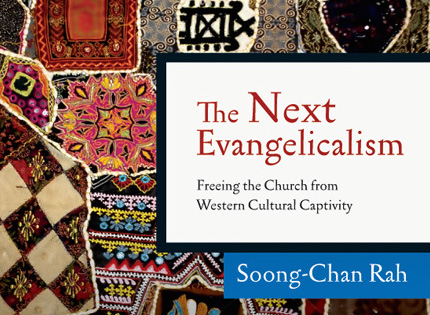
1. “Diametrically opposed to the characteristics of mobility, and a spiritual numbness and apathy arising from mobility, are the characteristics of the body of Christ. Instead of upward mobility, there is the doctrine of the incarnation. Instead of a seeking of comfort through geographic and technological mobility, there is Jesus’ willingness to suffer and die on the cross. Mobility may be a high value in our contemporary culture, but the value of the kingdom of God and the example of Jesus Christ is the incarnation. The doctrine of the incarnation stands in opposition to our obsession with mobility” (Soong-Chan Rah, The Next Evangelicalism, 151)
2. “The American church needs to face the inevitable and prepare for the next stage of her history—we are looking at a nonwhite majority, multiethnic American Christianity in the immediate future” (p.The Next Evangelicalism, 12).
The Missional Mandate for Christians

As followers of Jesus, Christians have a missional[1] mandate (Matt. 28:18-20). Christians are pupils and apprentices. We follow Jesus and we do as He did. We give our lives away in love and we tell people about the good news of Jesus. To be a disciple is to be missional. We are not true disciples if we are not missional.
We lovingly engage with the people around us. We do not shut ourselves off in “God ghettos,” we do not create Christian castles. Jesus said that we are to be lights in a dark world (Matt. 5:15).[2] Paul said we are not to leave the world (1 Cor. 5:9-11) but be messengers of the King in the world (2 Cor. 5:20).
So, we as followers of Jesus…
Leave the “bubble”
We remove excess emphasis on Christian bubble activities and programs and instead spend time relationally engaging together with peers, neighbors, and coworkers. We are intentionally in the world. Jesus intentionally went to the world, He left heaven. He incarnated Himself (Matt. 1:22-23; Jn. 1:14; Phil. 2:7).
We follow our King and we enter the world in love (Matt. 5:13-16; Eph. 5:8; Phil. 2:15; 1 Pet. 2:12 cf. 1 Cor. 5:9-10; Jn. 17:15-16).
As the church we are…

This is not an ecclesiology. But it does tell you a lot about the church. As the church we are…
Welcomed and Welcoming
We remember that Jesus Himself was criticized by religious leaders because of the type of people that He hung out with and helped (cf. Matt. 9:9-13; 11:19; 21:31-32; Mk. 2:15-17; Lk. 3:12-14; 5:29-32; 7:36-50; 15; 19:1-10). So, we’re not like the hypocritical religious leaders. Instead, we’re like our Leader, the One who reaches out to heal our brokenness.
A Monopoly of Outcasts

The church is a gathering of the redeemed. We are made holy. We were not innately holy. The church is a place where those who know they are sick come to the Great Physician (cf. Lk. 5:31). The church is a monopoly of outcasts. It is filled with struggling ex-thieves, ex-drunkards, ex-adulterers, and ex-revilers (cf. 1 Cor. 6:9-11).
The church is (or should be!) a welcoming place for all because we have all been welcomed at Jesus’ own expense. Colossians radically says that in the church “there is not Greek and Jew, circumcised and uncircumcised, barbarian, Scythian, slave, free; but Christ is all, and in all” (Col. 3:11).
The church is filled with all sorts of people with all sorts of problems. Let’s not be prideful about our problems and prudish about the problems of others.
God’s Sovereignty and our Responsibility to Evangelize

Introduction
How should we understand the relationship between God’s sovereignty and our responsibility to evangelize? J.I. Packer’s book, Evangelism and the Sovereignty of God, is a helpful book for those considering this important question.
God’s Sovereignty and our Responsibility
Packer gives various examples of the sovereignty of God. He points out that just by praying to God we acknowledge His sovereignty.[1] Packer points out that God’s sovereignty and man’s responsibility are taught side by side in Scripture.[2] And “far from making evangelism pointless, the sovereignty of God in grace is the one thing that prevents evangelism from being pointless. For it creates the possibility—indeed, the certainty—that evangelism will be fruitful.”[3]
God’s sovereignty is a great means of encouragement to us in our evangelism. Packer helpfully says that in our evangelism we
have every reason to be bold, and free, and natural, and hopeful of success. For God can give His truth an effectiveness that you and I cannot give it. God can make His truth triumphant to the conversion of the most seemingly hardened unbeliever. You and I will never write off anyone as hopeless and beyond the reach of God if we believe in the sovereignty of His grace.[4]
So, we are responsible for sharing the gospel but God is sovereign. A proper understanding of God’s sovereignty and our responsibility is important and practical. It is important for us to realize, as Packer says, that “it is God who brings men and women under the sound of the gospel, and it is God who brings them to faith in Christ. Our evangelistic work is the instrument that He uses for this purpose, but the power that saves is not in the instrument: It is in the hand of the One who uses the instrument.”[5] So, “the belief that God is sovereign in grace does not affect the necessity of evangelism.”[6] Will Metzger, in agreement with Packer says, “We should not consider… sovereignty and responsibility as enemies but rather see them the way the Bible does—as friends!”[7] So, God’s sovereignty and man’s responsibility may seem at odds but they are really not, although we may not understand.[8] We must remember that the secret things belong to the LORD but the things that have been revealed belong to us that we may do what God has called us to do (see Deut. 29:29).
The Crash of the American Church?

Research shows that the “evangelical church” lost around 10 percent of her people in the last decade. There are many factors that are involved that have resulted in this decline. Further, most churches that are growing are just taking people from other churches, not converting people. The Great Evangelical Recession explores the factors involved in the decline of the church and offers suggestions for the future. I found the book helpful and thought-provoking.
Universalism and Historical Confessional Christianity

As a protestant who believes in sola Scriptura (Scripture alone), I believe that tradition and confessional Christianity does not hold a place above Scripture. However, I do believe it is important and helpful to consider what church history has to say on theological issues. So let’s look briefly at the question of whether or not universalism has been accepted in historical confessional Christianity.
Harold J. Brown makes an interesting point that we should consider. He says,
“curiously enough, it is heresy that offers us some of the best evidence for orthodoxy, for while heresy is often very explicit in the first centuries of Christianity, orthodoxy is often only implicit. If we hope, today, that the orthodoxy we believe is the ‘faith once delivered to the saints’ (Jude v. 3), then it is necessary to assume that it is older than heresy. But heresy appears on the historical record earlier, and is better documented, than most of what the church came to call orthodoxy. How then can heresy be younger, orthodoxy more original? The answer is that orthodoxy was there from the beginning and heresy reflected it. Sometimes one catches a glimpse of another person or object in a mirror or a lake before seeing the original. But the original preceded the reflection, and our perception of it. The same, we could argue, is true of orthodoxy—the original—and heresy—the reflection. The heresy we frequently see first, but orthodoxy preceded it.”[1]
False teachings call into question the pillars of Christianity and so teachers and creeds rise up in protection of the church’s foundational teaching. The doctrine of the Trinity has always been orthodox but there has not always been a creed stating such. The reason for this is because false teaching gives rise to defensive of orthodox teaching. Thus, in history we often see heresy argued before we see orthodoxy defended. Greg A. Allison says that the “issue of the continuation of punishment for the wicked became a point of debate with the theology of Origen”[2] (c. 185-254) so it makes sense that universalism was not formally acknowledged as heresy until later on.
Everett Ferguson says that
“apart from Origen, who entertained the possibility of universal salvation after a period of purification and education of souls in the afterlife, those who spoke to the subject understood an ultimate division of humanity in heaven or hell. The expectation of eternal reward sustained Christian endurance in the face of persecution and other hardships.”[3]
W. G. T. Shedd wrote:
“The common opinion in the Ancient church was, that the future punishment of the impenitent wicked is endless. This was the catholic faith; as much so as belief in the trinity. But as there were some church fathers who deviated from the creed of the church respecting the doctrine of the trinity, so there were some who dissented from it in respect to that of eternal retribution. The deviation in eschatology, however, was far less extensive than in trinitarianism.”[4]
Allison demonstrates in his book Historical Theology: An Introduction to Christian Doctrine that
“from its inception, the church has believed that there will be a final judgment of both believers and unbelievers… On the one hand, this judgment will usher believers into the presence of Christ and the blessedness of heavenly reward forever. On the other hand, following the judgment of condemnation, unbelievers will experience eternal conscious punishment in hell. Only a few Christians deviated from this understanding of the last judgment and eternal punishment.”[5]
A few more examples:
“As regards the fate of the wicked… the general view was that their punishment would be eternal, without any possibility of remission.”[6]
“Everlasting punishment of the wicked always was, and always will be the orthodox theory.”[7]
“The punishment inflicted upon the lost was regarded by the Fathers of the Ancient Church, with very few exceptions, as endless.”[8]
“Church creeds from the early Middle Ages through the Reformation and into the modern era regularly affirmed the eternal punishment of the wicked… The reality of hell and eternal punishment was thought to be as basic to Christian belief as the Trinity and incarnation.”[9]
A few thoughts on loving our neighbors…

God is a missionary God. God sent prophet after prophet and even sent His own Son (cf. Matt. 21:33ff). And now Jesus the Son is sending us into the world (Jn. 17:18). The task was dangerous for the prophets and deathly for Jesus. We shouldn’t expect anything less (Christians are the most persecuted group in the world). We were sent into the world, not a Christian conclave. And we were sent into the world not to win the world over to our side but to love the world, to love our neighbor. To implore the world on behalf of Christ to be reconciled to God (2 Cor. 5:20).
We are not to hide in Christian castles, build castles, or lob missiles at the outside world from our castle. The commission from Christ did not include a castle, it included sacrificial—boots on the ground—compassion. God showed His love for us through the amazingly tangible incarnation and cross. There is a sense in which we too can give love flesh.



 in X
in X 