How to Find a Good Church

It can be hard to find a good church. We’ll look at nine important things to look for in your search.
|
Christ has no perfect churches on earth yet there are churches that wholeheartedly strive to exalt the perfect Christ through a perfected bride. |
Introduction. If you are reading this it is likely because you are leaving a church. Remember that leaving a church is not a light thing. If you are a member, you have formally covenanted with the local body and bride of Christ, that is not a light thing! We must take church membership and searching for a church seriously.
I hate to see you leave your church but as you go, I want to help you to know what to look for in your next church. “What makes for a good church?”
1. A good church will exalt Jesus
Does the preacher shy away from talking about the wrath of God poured out on Jesus to pay for sin? Is the atoning sacrifice of Jesus celebrated? Even if the sermon comes from the Old Testament is it clear that the sermon is not by a Jewish Rabbi? Does the church make much of the work and wonder of Jesus Christ?
What does this look like practically? Ask yourself, “Could that sermon have been preached by a Jewish Rabbi?” “Did the preacher seem to shy away from the truth about Jesus, whether His deity, exclusivity, or atoning death?” Of course, when asking these questions there should be grace for the minister and understanding.
2. Keep God’s Word central
God has spoken and He has spoken through Scripture. So, the Word of God should be foundational to what the church does.
The preaching should be about what God has said in His Word and not about something that the preacher thinks is nifty. If the preacher doesn’t read from the Bible or even reference the Bible it is a pretty good indication that there is no reason to go back to that church.
Jesus said sanctify them in truth, Your Word is truth (Jn. 17:17). If we want to be made holy, which we do, we need to hear God’s truth, not the thoughts of men. The disciples said that Jesus had the words of life. We need those words, “the words of life,” not just any words. We need spiritual bread; not self-help tidbits. It is all Scripture that is “profitable for teaching, for reproof, for correction, and for training in righteousness that the man of God may be complete, equipped for every good work” (1 Tim. 3:16-17). Thus, the first thing to look for is a church that has a conviction that the Word of God must be central in both the preaching and the life of the church in general.
What does this look like practically? Look at the church’s website and literature, does it talk about or reference Scripture? Check to see if the church has a statement of faith that reveals their view of Scripture. Is the Word of God read in the worship gathering? Is the Word of God taught?
3. A good church will rely on God
This can be a subjective question but an important one. We obviously cannot know the intentions of the heart. Yet, we need to realize that we do not want to be part of a church that is not relying on God’s power.
God says the gates of hell will not overcome His church because of His power. We know that God shows His amazing, wondrous power, through worthless vessels that trust in Him.
What does this look like practically? An important thing to look for here is whether or not the leaders pray and how they pray. Do the prayers show neediness, a reliance on God to meet the people’s true needs, or is it just a habitual mantra, something spouted off because, after all, it is what we are supposed to do?
4. A good church will have an atmosphere of love
Of course, this one is subjective too. However, that does not lessen its importance. We know from Scripture that people will know that we are Christians by our love so that is a good thing to look for in a church. Realizing love is not tangible or measurable.
What does this look like practically? I think a good way to look for this is simply by seeing if people were welcoming and seemed to genuinely care that you exist. Another thing to look for is what people did after the service. Did everyone run to their perspective sports games and their favorite restaurants to get the best seat? Or did they stay for a little bit to talk with others? These are not full-proof things to look for but they should help in finding a caring and loving church.
5. A good church will practice church discipline
This is important for various reasons. First, if the church practices biblical church discipline you can be sure that they are striving to be faithful to the Scriptures, Second, you want to attend a church that practices church discipline just in case you need it yourself.
What does this look like practically? Obviously, most churches won’t have banners flying proclaiming that they practice church discipline (and in fact if they do you may want to avoid them!). However, if they do practice biblical church discipline the leadership should be able to tell you why and how they typically practice church discipline.
If the church does not practice church discipline that is not necessarily a deal-breaker. There could be various reasons they don’t yet. Perhaps the pastor has not been able to teach on it and lead the church in that direction yet.
6. Have a statement of faith you agree with
This seems like a pretty obvious one but it is very important. You do not want to join a church or even attend one for an extended period of time if you do not agree with their fundamental doctrines. A church’s view on critical doctrines should be available on their website. If the church does not have a formal statement of faith or confession you would be wise to be leery.
What does this look like practically? Check the church’s website to see if they have a statement of faith and it would be good to check out the church’s membership commitment too. Remember if it is a young church they may not have these things in place yet. Talk to a leader about what they believe on critical issues. This should certainly include doctrinal issues as well as other things that are convictions for you. An example would be the church’s stance on alcohol.
7. A good church will practice discipleship and evangelism
We know from the Great Commission that we are to make disciples. This includes evangelism and teaching new apprentices of Jesus to observe “all things.” So any church that you consider attending should understand this important task. It is also good to make sure that you agree with the way that they are seeking to go about this task.
What does this look like practically? When possible it would be helpful if you could see how discipleship and evangelism are carried out first hand. This ensures that you agree with both the message and the methods.
8. A good church will have qualified pastor/elders
Here again, is another abstract question. This is a difficult one because if you are visiting a church you probably barely, if at all, know the pastor(s). Yet, it is clear from Scripture that the biblical qualification of a pastor is important.
What does this look like practically? How practically can you find out if a pastor is qualified? Well, I am not sure that you really can. But it would be possible to observe if he is not. For instance, if he is not apt to teach then he is not apt to be a pastor. If people legitimately speak ill of him then this may be an indication that he is not qualified. These things however will more than likely not be clear so I encourage you to simply ask a leader why they consider the pastor/pastors to be qualified. This will at least allow you to see if the leadership has thought through this important question. If it is not something that they have ever considered then it might be an issue.
9. Be one you can commit and submit to
Any church will have things that you do not like or even wholly agree with so you have to make a conscious choice whether or not that it will be great enough of a problem to prevent you from covenanting with the church or not.
What does this look like practically? It may be helpful to make a list of what are crucial issues for you, such as doctrinal matters like the deity of Christ, and what might be less important, like how often the Lord’s Supper is celebrated.
Conclusion
There is a whole host of other questions that could be asked but this, I trust, will be a good spur to get you thinking about the seriousness of “church hunting.”
The church is the body and bride of Christ and our connection to it is vital yet we should not foolishly connect ourselves to an unfaithful church
The Task of a Teacher of God’s Word

1.Serious Trust
If the teacher of God’s word does not trust God’s word and trust that it will accomplish what God wants it to accomplish (Is. 55:10-11) they will struggle in their task. And may not be fit for their task. If the teacher does not trust God’s word to be God’s word they are unlikely to teach very well for very long.
So, serious trust in God’s word is foundational.
2.Strenuous Commitment
In Acts 6 we see there were a lot of important distractions for those who were tasked to preach the good news of Jesus. There were lots of important needs that were dear to their hearts and dear to God’s heart. And yet they resolved to devote themselves “to prayer and to the ministry of the word” (v. 4). They knew it was not right for them to be distracted from “preaching the word of God” (v. 2).
In fact, they were so committed to preaching about the glory and goodness of God as seen in Christ, that even when threatened with beatings and imprisonment they continued. They rejoiced that they were worthy to suffer for the Savior and they continued teaching and preaching Jesus as the Christ (Acts 5:41-42).
3.Studious Study
Ezra is an important model for every pastor and minister of the word. And really every Christian. Every Christian, in one way or another, should study the word of God, do it, and teach it (Ezra 7:10). It’s probably good to do it in that order too.
The teacher “must hold firm to the trustworthy word as taught, so that he may be able to give instruction in sound doctrine and also to rebuke those who contradict it” (Titus 1:9). And that requires studious study.
“There is no long-range effective teaching of the Bible that is not accompanied by long hours of ongoing study of the Bible.”[1]
4.Self-Application
A teacher could “understand all mysterious and all knowledge” yet if they have not love it is worth nothing (1 Cor. 13:2-3). Self-application is essential. James even tells us “Not many of you should become teachers, my fellow believers, because you know that we who teach will be judged more strictly” (3:1).
As we saw with Ezra, he did not just study God’s word, or just teach God’s word, he himself did God’s word. He applied it and lived it himself. That is vital.
It’s actually a qualification for Christian leaders. They are to be above reproach. They are to apply Scripture first to themselves. They are to not be hypocrites.
5.Solid Teaching
There is a place of course to adapt the message to the audience. Jesus and Paul themselves did that. That is good. Yet, we also want to give meat, even if we have to cut it up nicely and make it bite-size. Our desire should be solid teaching, not trivial trifles (see Heb. 5:12; 1 Cor. 3:2).
There is a time to give milk and not solid food. Babies need milk because they cannot yet take solid food. They, however, would be stunned if they had to stay with mere milk. So, solid sermons are essential.
It is important to read from the Bible clearly and explain it so that people understood what’s being read (see Neh. 8:8 cf. 1 Tim. 4:13; Mal. 2:7). That’s what expository preaching is. It exposes and reveals the meaning of the passage. That is why pastors must be “able to teach” (1 Tim. 3:1).
6.Specific Application
Scripture has the power to “cut to the heart” (Acts 2:37). So, Scripture should be wielded with careful and intentional precision. It is “sharper than any two-edged sword” and pieces to the depths of our hearts (Heb. 4:12).
Scripture should be applied specifically and carefully. Scripture should call to action but not legalistic action. Saints should be equipped for the work of ministry (Eph. 4:11-12) but it should be through the truth spoken in love (Eph. 4:15).
So, the teacher of God’s word must “preach the word; be ready in season and out of season; reprove, rebuke, and exhort, with complete patience and teaching” (2 Tim. 4:1-2). That is a high and challenging calling.
7.Show Christ
When we preach or teach we are not to use “eloquent wisdom” to make much of ourselves but we “preach Christ and Him crucified” (1 Cor. 1:17; 2:2). It is not us we proclaim. It is Him we proclaim (Col. 1:28).
We show Christ from every passage, Old and New Testament, knowing Scripture is about Him (Jn. 5:39) and every promise finds its “yes” in Him (2 Cor. 1:20).
8.Share the Gospel
Sharing the gospel is needed all of the time, for believers and unbelievers. We all need to be reminded of the best news there is. The Apostle Paul wrote Romans and Ephesians to Christians and yet he didn’t assume the gospel. He expounded on it and applied it.
Believers and unbelievers need the gospel. So we must share the gospel (Matt. 10:6-7; Lk. 25:45-49; Rom. 10:14-17).
___
[1] D.A. Carson, For the Love of God vol. 2, January 7.
*Photo by Carolyn V
How to Evaluate Christian Leaders?

Recently, I’ve seen a lot of Christian leaders be criticized or criticize, and even call other Christian leaders names because of disagreement on such things as politics, the pandemic, and policies regarding justice. And not surprisingly, those who are not leaders are also jumping into the fray and lobbing grenades too.
How many people, however, actually think through the appropriate way to evaluate Christian leaders? And how many people know what reasons Scripture gives for concern? How many Christians have a sort of theological triage they use to evaluate and make these important decisions?
There are doctrines of “prime importance and great weight” that we must insist on.[1] “There is a time to fight. There are certain hills that must not be surrendered, even if the cost is losing our lives.”[2] Some of the hills that we must be willing to die on are the deity, life, death, resurrection, and Second Coming of the Lord Messiah Jesus.
Other doctrines, beliefs, and convictions are, or should be, a little further down the list of importance. Just as a doctor would jump to help the patient with a gunshot wound to the chest before she would help someone with a broken pinky finger. It is not that the pinky finger is not important; it is that the gunshot wound is more important and dire.
So, let’s look at some biblical criteria by which to evaluate Christian leaders. It should be understood that these criteria do not have the same weight. The criteria of “Christology,” for example, should be given more weight of importance than “Clarity.”
1. Christology (& sound doctrine)
Christian leaders have the duty to communicate God’s transforming truth, exalt Jesus Christ, teach the Bible so that people understand and apply what God has said, and encourage conformity to Christ (see e.g. Neh. 8:7-8; 1 Tim. 3:2). Faithfulness to the revelation of God and preaching Christ are paramount (Col. 1:28). If the word of God and Jesus the Messiah are not being preached then you have reason for concern.
If false or unhealthy things are said or taught about God, His word, or Jesus the Messiah then you have great reason for concern and should share your concern and likely leave that individual’s leadership. It is important that we are aware that leaders sometimes don’t preach the truth. Peter told us that there will be false teachers among us, who will secretly bring in destructive heresies, even denying the Master who bought us (2 Pet. 2:1).
“If anyone teaches a different doctrine and does not agree with the sound words of our Lord Jesus Christ and the teaching that accords with godliness, he is puffed up with conceit and understands nothing. He has an unhealthy craving for controversy and for quarrels about words, which produce envy, dissension, slander, evil suspicions” (1 Tim. 6:3-4).
So, in evaluating a Christian leader, ask yourself:
- “Does this person preach/teach true, healthy doctrine? Does this person preach/teach the goodness and glory of Messiah Jesus?”
Don’t ask:
- “Do I like the style etc. of the person?”
See also: Deut. 13:1-5; 1 Jn. 4:1-3; 1 Cor. 12:3; Col. 1:28; 2:8 2 Thess. 2:15; 1 Tim. 1:10; 2 Tim. 1:13; 4:3; Titus 1:9, 13.
2. Character
The leaders own life should be in order. That is, the leader should have Christ-like character. Leaders and teachers can “profess to know God” and yet “deny Him by their works” (Titus 1:16). That’s partly why it’s so important that Christian leaders meet the biblical qualifications (1 Tim. 3:1-13; Titus 1:1-9).
Gospel Motive Filter
How can we know if our motives are gospel-focused or not? In the below video I outline a way to filter out motivations that are not gospel-focused.
The Work of the Spirit | pt. 8
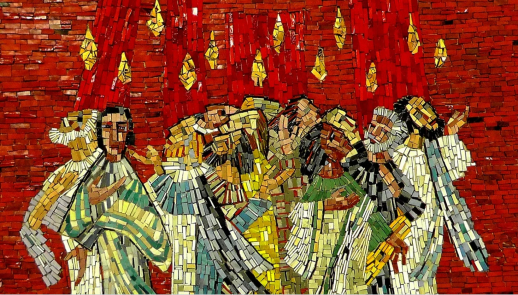
Prophecy
The ministry of a prophet does not contradict or add to Scripture but if truly from God is infallible. This is very controversial but it seems to be the correct conclusion when we unbiasedly consider the biblical evidence. It is helpful here to consider what Sam Storms has said, “If noncanonical revelation was not a threat to the ultimate authority of Scripture in its emerging from, neither should it pose a threat to Scripture in its final form.”[1] Many, however, do not buy that.
For example, John MacArthur says, “extrabiblical revelation always leads to error!”[2] Then he proceeds to look at cults and mentions the Book of Mormon as an example. It is true that there are many false claims to revelation but that in itself does not mean that there is not still revelation. If we truly believe in solo Scriptura we need to show where the Bible says there is no longer revelation.
Schreiner, in his helpful book Spiritual Gifts, argues that prophecy no longer continues because the prophecy in the New Testament was infallible and what is happening now is not infallible.[3] He never demonstrates, however, that all of what is called “prophecy” today is not at least in some cases from God and thus infallible. Further, this is not an argument grounded in Scripture. Instead, Schreiner is simply making an assertion about all modern claims to prophecy.[4] That, we should see, is a big sweeping claim.
I believe Schreiner actually helps the case for the continuance of prophecy because he makes a strong argument that not all prophecy is inscripturated. That is a big part of what I believe regarding prophecy. I believe infallible prophecy continues today but just like in the Old and New Testaments, not all infallible prophecy is included within the canon.
Schreiner shows that New Testament prophecy does not differ from Old Testament prophecy.[5] He says,
New Testament prophets spoke authoritatively and with complete truth to the situations in their churches. The fact that most prophecies weren’t written down and preserved is completely irrelevant as far as the truth of the prophecies is concerned. It is a category mistake to think that if prophecies are without error, then they must be written down and included in the Scriptures. And it doesn’t logically follow that prophecies must contain errors if they aren’t preserved and written down. God spoke authoritatively and truly through the prophets, even if their prophecies weren’t recorded and preserved. They spoke the infallible word of God to their contemporaries, who needed to hear these true and authoritative words of God.[6]
Further, in chapter 7, Schreiner makes a convincing case for infallible prophecy. He argues that “the idea that New Testament prophecies are mixed with error is mistaken.”[7]
I believe that what the prophets of today share is similar to what Agabus shared. Of course, some claim that Agabus’ prophecy in Acts 11 was wrong. They, however, are mistaken.[8] Ferguson concludes, “Paul’s testimony assumes its accuracy. We have no reason to believe that Agabus’ prophecy failed. Luke gives no indication that Paul thought it had done so.”[9]
Prophecy is never produced by human will[10]; instead, the person with the prophecy speaks what God gives them to say by the Spirit (2 Pet 1:20-21).[11] Thus, prophecy is infallible because prophecy gives the words of God and God always speaks the truth (Titus. 1:2; John 17:3,17; Heb 6:18; Prov 30:5).[12] Of course, we can misunderstand or disobey but God’s words are always without error.
So we see prophecy in the New Testament was both accurate and highly significant for the actions of the church[13] but it was not on par with Scripture in the sense that it was not to be inscripturated.[14] It is not the type of revelation to be inscripturated. It is not didactic revelatory teaching but pertains to the local body or a local situation. As in disclosing someone’s heart (as in the Spurgeon’s real-life example[15]) and that encourages the local body because they see the Lord at work. It is not something that would add to the canon.
The Work of the Spirit | pt. 6
You can see the previous post in the series here.
There is no exegetical reason for believing the gifts have ceased. Ninth, despite what many believe, there is no convincing exegetical argument for the cessation of the grace gifts.[1] 1 Corinthians 13:10 plays a prominent role in many cessationists’ arguments. It did for me when I was taught as a kid. There is another hermeneutical issue, however. Thomas R. Schreiner says,
To see ‘the perfect’ as referring to the New Testament canon is an example of anachronism…
Instead of referring to spiritual maturity or to the canon of the New Testament, ‘the perfect’ most likely refers to the second coming of Christ, the end of the age. The perfect is equivalent with seeing God face to face (1 Cor. 13:12).[2]
John MacArthur says although many “scholars [e.g. B.B. Warfield, Richard Gaffin, Robert Thomas, Thomas Edgar, Simon J. Kistemaker] disagree on the identification of the ‘perfect,’ they all reach the same conclusion—namely, that the miraculous and revelatory gifts have ceased.”[3] He goes on to say that “we must look elsewhere than 1 Corinthians 13:10, to passages like Ephesians 2:20, where Paul indicated that both the apostolic and prophetic offices were only for the foundational age of the church.”[4]
Many, such as John MacArthur, Richard B. Gaffin, along with Schreiner, end up making the argument that the gifts of the Spirit have ceased because they claim, otherwise, the canon of Scripture would be in jeopardy.[5] That, however, is rather a different issue than if the gifts of the Spirit continue or not. For one, the canon of Scripture, as well as the very existence of the Church, has been in jeopardy since the outset. The way to defend Scripture, as well as the church, is a more robust understanding of what Scripture teaches, not fear.
The Work of the Spirit | pt. 5
You can see the previous post in this series here.
Gifts of the Spirit confirm the gospel. Fourth, the gifts of the Spirit serve to authenticate the gospel message (e.g. Rom 15:18-19[1]) and that is still necessary especially in certain contexts but that is not the exclusive reason that God gave the gifts of the Spirit. D.A. Carson correctly points out that just “because miraculous signs have a distinctively attesting role in some instances, it does not follow that this is the only role they play.”[2] Although some assert that the gifts of the Spirit ceased with the closing of the canon they make that claim without biblical warrant. As Carson says, “There is no exegetical warrant for thinking certain classes of the Spirit’s manifestations cease once the crucial points of redemptive history have passed.”[3]
Gifts of the Spirit are poured out in the last days. Fifth, the gifts of the Spirit are part of what it means to be in the last days and we are in the last days.[4]
Cessationists who claim that the healings of Jesus and the apostles where merely authenticating signs of their status as bearers of canonical revelation misunderstand Jesus’ own explanation of them. For Jesus, they are rather expressions of the liberating reign of God, bursting into history, and it is as such that they attest the message of the kingdom.[5]
The gifts of the Spirit are to be expected because they indicate the presence of the Kingdom in the last days. The presence of the Holy Spirit is a sign of the new covenant.
The Work of the Spirit | pt. 3
In the last post, we looked at “God the Spirit and the Filling of the Spirit.” In this post, we will be looking at…
Grace Gifts
Next, we need to understand that God the Spirit gives “grace gifts.”[1] God’s abundant grace that we see demonstrated all throughout redemptive history issues in grace gifts.[2] God expresses His grace concretely in the rich number of grace gifts He bestows upon the Church for its upbuilding.[3] Schreiner observes this and says, “I would define spiritual gifts as gifts of grace granted by the Holy Spirit which are designed for the edification of the church.”[4]
The Spirit was vital at the beginning of the church and He continues to be on through to the consummation. He brought the birth of the Church, He hovered over the Church like He hovered over the water at the beginning. The Spirit does not bring charismatic chaos but the creation of order. That was the Spirit’s work at the beginning and it is the Spirit’s work today. There is no biblical warrant for believing in some big discontinuity between the work of the Spirit then and the work of the Spirit now in the last days. Actually, Scripture says, “in the last days I will pour out my Spirit on all flesh” (Acts 2:17). We are in those latter days today and we still need the empowering presence of the Spirit.
The hodgepodge, unlearned, and often unimpressive group of Jesus followers did not see the messianic movement die. Instead, the people of the way (Acts 9:2) actually exploded in growth, this group of people that followed a crucified and cursed man who claimed to be God, this group of people who had no leader on earth. How did this group survive let alone thrive?
Because Jesus did not leave His disciples without what they needed. Jesus sent the Helper.
Jesus said, that it was better that He go. That seems shocking. As it should. And as it did for the first disciples. We are left asking, how could it be better that Jesus’ bodily presence not be with us?
Thankfully Jesus answers that question. He tells us that He will not leave us as orphans. He gives us the Helper, the Holy Spirit, to be with us (See John 14).
The Grace Gifts Continue Today
“You shall receive power when the Holy Spirit comes upon you; and you will be My witnesses” (Acts 1:8[5]). Will we? Will we receive power?
The Work of the Spirit | pt. 2
God the Spirit and the Filling of the Spirit
God the Spirit. Since we are considering the work of the Spirit within the church, it is important that we consider God the Spirit, who He is and what He does. First, without going into any detail, the Holy Spirit is the third person of Trinity. The Spirit is fully God.[1] The Holy Spirit also has personhood; He is not an impersonal force.[2] That is who the Spirit is.
Second,[3] it is important that we briefly consider what it is that the Spirit does. The Old Testament teaches us various things about the Holy Spirit. The Spirit molds creation into shape and gives life to created beings (Gen 1:2; 2:7; Ps 33:6; Job 26:13; 33:4). The Spirit controls the course of nature and history (Ps 104:29-30; Isa 34:16). The Spirit teaches and reveals God’s truth and will to His messengers.[4] The Spirit elicits personal response to God.[5] The Spirit equips individuals for leadership.[6] We also see that the Spirit equips individuals with skill and strength (Exod 31:1-11; 1 Kgs 7:14; Hag 2:5; Zech 4:6).
The Spirit is given as our Helper (John 14:24). He takes what belongs to the Son and shares it with those who believe (John 16:14), beginning with the new birth (John 3:6), teaching and guiding (John 16:14), and transforming (2 Cor 3:5-18) in ways that surpass human capacity (1 Cor 2:10-14). He empowers believers to be Jesus’ witnesses to the end of the earth (Acts 1:8) and to the end of the age (Matt 28:20). By indwelling believers (Rom 8:9; 1 John 2:27), the Spirit washes and renews (Titus 3:5), pours out divine love in our hearts (Rom 5:5), reproduces the divine virtues (Gal 5:22-23; Rom 14:17), enables us to resist sin (Rom 8:13) and pursue holiness (2 Thess 2:13), and build unity among the church (Eph 2:22; 4:3, 13; Phil 2:1-2).[7] The Spirit hears, speaks, witnesses, convinces, shows, leads, guides, teaches, commands, forbids, desires, gives speeches, helps, and intercedes with groans.[8] It is vital that we not leave out the most miraculous work that the Spirit works within people; He makes them new creations in Christ (2 Cor 5:17; 3:3, 6, 18; Titus 3:5-6; Ezek 36:25-28; Rom 2:28-29).
Why is it important to sing hymns in worship?

Scripture exhorts us to sing “psalms and hymns and spiritual songs” (Eph. 5:19-20; Col. 3:15-17). The Westminster Directory of Public Worship concurs with Scripture and says, “It is the duty of Christians to praise God publickly, by singing of psalms together in the congregation.”
“Why do Christians sing when they are together?” Dietrich Bonhoeffer answers: “The reason is, quite simply, because in singing together it is possible for them to speak and pray the same Word at the same time; in other words, because here they can unite in the Word” (Life Together, 59). I think that’s an important point.
Notice that right before Paul says to sing “psalms and hymns and spiritual songs,” he says, “Let the word of Christ dwell in you [pl.] richly, teaching and admonishing one another in all wisdom” (Col. 3:16). So, singing ought to be part of the ministry of the word. We ought to sing the Bible. We ought to sing Psalms and we ought to also sing biblically rich songs. So, that’s in part why the Directory says our “chief care must be to sing with understanding.”
When we sing songs to God, however, we are not just thinking. We are not just singing for the sake of singing or just edifying each other. We are recounting God’s truth and goodness and being moved anew to thanksgiving (cf. Ps. 78).



 in X
in X 