Philemon: A Case Study of New Life in Christ (Part 1)

We see in Paul’s letter to the Colossians[1] that Christians are to put on the new self with new practices, new characteristics. And Paul tells us about the unprecedented unification and reconciliation that happens in Christ between all sorts of different people. Paul says, “there is not Greek and Jew, circumcised and uncircumcised, barbarian, Scythian, slave, free; but Christ is all, and in all” (Col. 3:11 cf. 1 Cor. 12:13-14; Gal. 3:26-27).
But will this really work?! Paul is talking all this big talk but can it ever be practiced. He says, here there is neither slave nor free, and yet there truly were slaves and freemen. There really were Greeks and Jews. There were and are people that are in the world and see the world in all sorts of different ways. How can they be united? Is it really possible? And if so, how?! Read More…
Slavery and its defeat

At the time of the writing of the New Testament, in the Roman Empire, there were essentially three classes of people: The rich, the slaves (about half the population), and freemen. These “freemen” were free in that they were not owned by anyone, yet they often went hungry because of their “freedom.” Whereas, slaves sometimes had good masters and sometimes had bad masters.
Slavery in Rome was not what it was like in America 150 years ago.
“In Paul’s day, slavery was not based on race. Additionally, slaves had any number of duties and responsibilities, ranging from farming, mining, and milling to cooking, teaching, and managing. Furthermore, slaves were not infrequently freed from the shackles of slavery (a process known as manumission).
There is no mistaking the fact, however, that slavery in the Greco-Roman world was degrading, dehumanizing, and downright disgusting. Taken together, slaves were perceived and treated as property and were frequently subject to unimaginable punishments based on their maters’ malevolent whims. Indeed, Roman historian Cassius Dio tells of an especially cruel slave owner, Vedius Pollio, who had slaves who displeased him thrown into a pool of flesh-eating eels.”[1]
So, what was slavery’s defeat? Harriet Beecher Stowe said:
“The Christian master was directed to receive his Christianized slave, ‘NOT now as a slave, but above a slave, a brother beloved [Philemon 16];’ and, as in all these other cases, nothing was said to him about the barbarous powers which the Roman law gave him, since it was perfectly understood that he could not at the same time treat him as a brother beloved and as a slave in the sense of [unconstitutional] Roman law.
When, therefore, the question is asked, why did not the apostles seek the abolition of slavery, we answer, they did seek it. They sought it by the safest, shortest, and most direct course which could possibly have been adopted.”[2]
Paul’s system founded on Jesus the Christ—Jesus who came to serve and not be served—subverts any form of human oppression.[3] So, we see Paul lays the necessary groundwork for the emancipation proclamation. The gospel has changed the basic structure of the way Paul looks at the world and it should change the way we see the world as well. Read More…
Is my body for sex and sexiness?

[[Warning!!!]] The conclusion I come to here may be offensive, radical, and seemingly insane to the majority of Americans. The culture we consume continuously yells: “Sex! Sex! SEX!!!” However, I ask you to consider my perspective on sex.
So, are our bodies for sex and sexiness? First, if you are above the age of 30 it is probably a daily empirical reality that no, our bodies are not (primarily) made for sex and sexiness.[1] Thus, virgins can (and do!) live fulfilled lives!
In my opinion, the sexual revolution is missing out on our bodies’ teleological (or ulitmate) function and so people are left vying for fulfillment. This is the case because “The body is not meant for sexual immorality [misunderstanding of the bodies telos], but for the Lord [correct telos], and the Lord for the body” (1 Cor. 6:13). God does not say that sex is bad and that humans should not enjoy sex. Actually, we find that God wants us to enjoy sex and that when it is enjoyed as intended He calls it “very good” (see Designer Sex 1 and 2).
God is not a cosmic killjoy. Truly, we find that God has our best in mind. He wants us to appropriately enjoy the many good things He made (e.g. the earth, other human beings, grapes and what can be created from grapes). However, as the supreme and glorious creator of the universe, He also knows, in the words of Augustine that “our hearts are restless until they rest in Him.” Or as Blaise Pascal said, we have an infinite hole that can only be filled by the infinite; namely, only by God Himself. Read More…
Can we have hope in the midst of Trump’s (or Obama’s or Clinton’s) “reign”?

How can we as Christians have hope in the midst of the “reign” of political leaders that we dislike or disagree with? We can have hope when we…
understand who is the King
As Christians, the king or President is not our ultimate King, Jesus is. Peter and Paul both lived under Roman rule, which was not the best of situations. Actually, we are told they were both beheaded under Roman rule. There are many other things that we could look at that happened under Roman rule (e.g. slavery, infanticide, public crucifixion, pornography, bisexuality). However, those things were not Peter and Paul’s main concern. Their main concern was Jesus and His gospel and they could find joy in the midst of adversity in the eschatological hope of Christ and His coming Kingdom.
Our hope is in no king here. Our hope is in the King that came and died. Our hope is in that King coming back and setting all things right. Until then, our job is to be faithful representatives of the King that came to serve and give His life as a ransom for many.
Christ is ultimately King! Not Clinton. Not Trump. Read More…
Not all “facts” are created equal (and other proverbs for today)

A few important and relevant things I’ve found to be true through my short tenure on earth:
1. Statistics can be skewed (in all sorts of ways).
2. Money talks, and sometimes money makes people talk about facts that don’t actually exist.
3. “Sound bites” don’t equal sound knowledge.
4. Video doesn’t always equal validation.
5. One side sounds right until you hear the other (and a lot of times people don’t listen to or understand the other side).
6. People have agendas (and agendas come through more or less depending on the topic and the person).
7. Not everyone is a specialist (e.g. movie stars getting interviewed about their political opinion might be entertaining but it’s typically not educational).
8. “I read it on the internet” doesn’t equal truth (even if you see the same thing in a few places).
9. Science sold as fact is actually often still theory.
10. Dogmatic assertions should sometimes be doubted (or at least checked and not just by Google).
11. There is a difference between knowing something and wisdom (and the difference can be a matter of life of death).
12. Unless there is objective truth, the exhortation for people to be kind (e.g. planet care, respecting others, and not harming others) is subjective and relative to the whim of individuals (and thus doesn’t really need to be heeded).[1]
13. The idea that there is objective truth is often unpopular but that doesn’t make it wrong.
14. People are often not familiar with what various fallacies are but that doesn’t mean that they are inept in their employment.
15. We can’t have a peaceful world where each person does what is right in their own eyes because people have conflicting desires that will lead to unpeaceful ends.[2]
16. No political leader is the Promised One[3] (no matter what they, the media, your friends, or your psyche says).
17. Money can’t buy happiness (but it can buy distraction); however, happiness can be quite cheap.
18. Video games, YouTube, and social media can keep us away from things that are much more rewarding and fun.
What ones do you like and not like? Why? And what would you add?
______________
[1] That is, it ultimately does not matter morally if people “be kind and rewind,” recycle, or are racist if there is actually no objective right and wrong. However, if there is right and wrong, and it is right to recycle, then that means that there are some objective criteria of right and wrong not determined by me or you and that means that objective truth will have things about it that are not appealing to us but that does not change the truthfulness of the issues under question (whether murder, recycling, or a thousand other things). If not recycling is objectively wrong then so are many other things, some of which we would not like to be wrong (e.g. overeating moose tracks ice cream). We can’t have our cake and eat it too. We can’t both have and not have morality. It just doesn’t work that way. It’s an impossibility.
[2] Thus, the answer for world peace is not accepting that everything is relative (“whatever’s right for you”) but by patiently and loving communicating truth so that people can be sympathetically aligned (though not anonymous).
[3] As in the Christ/Messiah of Scripture.
“Whatever’s right for you”

What is right? What is wrong? Is there right and wrong? Or is everything relative to the situation or the individual? Can we answer these questions?
These are complex, important, and very relevant questions. Especially because “Americans are both concerned about the nation’s moral condition and confused about morality itself.”[1] Actually, “A majority of American adults across age, ethnicity, gender, socioeconomic status and political ideology expresses concern about the nation’s moral condition—eight in 10 overall (80%).”[2] Read More…
How we live as exiles…

The Bible teaches us that we, as Christians, are exiles (1 Pet. 1:1, 17; 2:11; Phil. 3:20; Heb. 13:14). That is, we as Christians are separated from our true country. This is a biblical reality and more and more becoming an empirical reality. For instance, Newsweek has said, “Christians are now making up a declining percentage of the American population” (cf. U.S. Public Becoming Less Religious“).
America has been postmodern and now we’re told America is post-Christian. But it’s not surprising. And it’s actually ok because this is not our home. We are “exiles” (1 Pet. 1:1, 17) and so we shouldn’t expect to have a nice cushy Christian majority (not that a Christian majority is wrong). We function, as the early church functioned, from the margins, not from the center.
Also, notice that Peter doesn’t tell us to wage war to ensure that we are the “moral majority.” No. Peter says, “Beloved, I urge you as sojourners and exiles to abstain from the passions of the flesh, which wage war against your soul. Keep your conduct among the Gentiles honorable, so that when they speak against you as evildoers, they may see your good deeds and glorify God on the day of visitation” (1 Pet. 2:11-12 see also 1 Cor. 5:9-13).
It’s actually Christian’s morality that Peter is concerned with. Peter doesn’t say watch out for the world’s morality (and Peter lived under Roman control). No. He says, watch out for your own morality. Wage war against your soul. We are called to live our lives “constructively embedded within society while not being enslaved to all of its norms and ideals” (Lee Beach, The Church in Exile, 183). Read More…
Nietzsche: Prophet of Doom (Part 6)

The Christian Ideal and the Answer to what Ails Us
Apologetics sees the questions in philosophy and religion and points to how Scripture ultimately answers them. Scripture answers Nietzsche’s questions (though perhaps unvocalized) about meaning and hopelessness.
Nietzsche is basically stuck on the Fall but does not understand the rest of the Biblical story that explains our reality. He does not realize that because God does exist and has revealed Himself and made us in His image that we have access to and can know truth. We also see in Scripture that there is more than nothing (nihil), there is hope in Christ. In fact, hope of everything that Nietzsche acknowledged as so wrong being fixed.
Interestingly, we see that we desire a superhero, a savior. We see this truth in all sorts of examples (e.g. The Avengers, Matrix, Batman, Superman, etc.). For Nietzsche, it was the Übermensch that he hoped in.[1] In all of this, we see humanities need for meaning and morality and for a Savior to fix all that we sense is so wrong. What explains all of this? The biblical worldview.[2] Read More…
Nietzsche: Prophet of Doom (Part 2)
Nietzsche was Right, but He was also very Wrong
What I hope to show in my paper is that Nietzsche’s philosophy was either very accurate or very wrong. That is, Nietzsche’s conclusions if God is “dead” lead inevitably to certain conclusions. In my evaluation, I take three of Nietzsche’s late period writings (1886-88) as my main point of interaction.[1] This is for a two reasons. First, Nietzsche’s writings are large and this paper is not. Second, because his philosophy is more likely to be further established in his later writings.
In Nietzsche’s writings, he shows over and over again that his thought is the converse of Christianity; this is true if we look at his doctrine of eternal recurrence or his writings on slave morality. And as Nietzsche said, philosophy “always creates the world according to its own image, it cannot do otherwise”[2] and for Nietzsche’s thought, when extrapolated and applied, it makes hell. That is what I hope to argue, I hope to show how Nietzsche’s thought, when applied, makes a world in its own image, one that is terrible, filled with war, rape, and violence. I want to show this because I believe it is the inevitable outcome of the path he started. Since the beginning, it has been true that when we turn away from God we turn to our own destruction (Ps. 16:2; Jer. 2:5; Rom. 1; 3:12; etc.).
So, how is Nietzsche right? Nietzsche is right in that he paints a powerful portrait for us of what it means to be given up to our own devices (cf. Rom. 1). Nietzsche shows us the fallout from the Fall of humanity. But, Nietzsche was also gravely wrong. God is not dead!
Nietzsche’s philosophy is most clearly the converse of Christianity. Nietzsche says God is dead.[3] He says there is no truth. He says to assert yourself and make your own way. He says there is no heaven so live each moment today like it will occur eternally. In short, I hope to show that in the throwing off the “shackles” of morality and the hope of heaven Nietzsche has fettered those who follow him to hell on earth. Nietzsche’s writings and subsequent history show us that a world where right and wrong do not exist, is a world where lots of pain and oppression do.[4]
Ideas and beliefs have consequences, profound consequences. Paul says in 1 Corinthians 15 that if Christ has not been raised then let us eat and drink for tomorrow we die. Elijah says in 1 Kings 18:21 that if God is not God then don’t live for Him, live for whatever it is that you believe is true, whether Baal or, I believe he would say, whatever applicable philosophy. So, as we look at Nietzsche’s thought, which is the converse of Christianity, we can begin to understand and better appreciate Christianity.
__________________
[1] That is, Beyond Good and Evil: A Prelude to the Philosophy of the Future (1886), On the Genealogy of Morality (1887), and The Antichrist (1888).
[2] Nietzsche, Beyond God and Evil, par 9.
[3] Friedrich Nietzsche, The Gay Science, par. 108, 125, 343. Cf. e.g. Friedrich Nietzsche, Thus Spake Zarathustra, “Zarathustra’s Prologue,” par. 2 and 3.
[4] “By denying human equality and human rights, and by devaluing the lives of the masses, Nietzsche’s philosophy is really a loveless, forlorn philosophy of death, cruelty, and oppression” (Weikart, Richard, The Death of Humanity: and the Case for Life [Regnery Publishing], Kindle Locations 3394-3395.
Nietzsche: Prophet of Doom (Part 1)
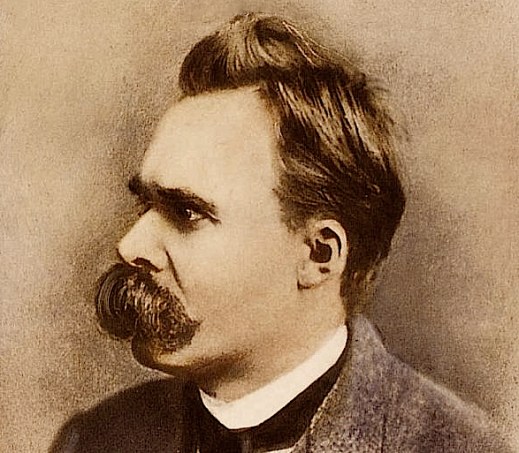
Introduction
What follows is important and relevant for individuals, society, and the world. The water is deep at places but must be forded for us to get to solid ground. The world, I fear, is in a swamp of uncertainty, but the water is rising, every day the need for solid ground is more apparent but harder to reach. Wade through this with me, and perhaps we can find something solid to build upon. Something that will stand through the next wave, whatever that wave may be. As we set out, we will use Friedrich Nietzsche as our marker, though he is no North Star, he helps us map the mire.
First, we should know some about Nietzsche. Friedrich Wilhelm Nietzsche was born on October 15th, 1844 and died on August 25th, 1900. Nietzsche lived a sickly life and died at the age of 55 of pneumonia.[1] Nietzsche’s father was a Lutheran pastor. “Nietzsche’s uncle and grandfathers were also Lutheran ministers, and his paternal grandfather, Friedrich August Ludwig Nietzsche (1756–1826), was further distinguished as a Protestant scholar.”[2] Nietzsche faced many difficulties from a young age. His father died when Nietzsche was only four years old and just six months after the death of his father his younger brother died.
Nietzsche must have been gifted intellectually from a young age. For example, he composed piano, choral, and orchestral music as a teenager. He also received a good education at a first-rate boarding school. As a teenager, he read “David Strauss’s controversial and demythologizing Life of Jesus Critically Examined”[3] and it had a big impact on him. Early on Nietzsche considered himself devout, he was even called “little preacher” when he was young, but eventually, he would deny the faith, though at first not publically.[4]
Second, it should be understood, that in my mind, Nietzsche’s ramblings are closer to rhetoric than to philosophy. Nietzsche often employees ad hominem arguments and attacks a person (e.g. the Apostle Paul[5]) rather than their arguments. Nietzsche also seems fond of constructing straw man fallacies for his argumentative flame.
Third, Nietzsche wrote in a very unique and even enjoyable style. However, his lack of precision in writing is dangerous; people can construe his writings in many ways, and they have. There is much disagreement over Nietzsche and his work, which must to a large degree, must be because Nietzsche seems to have communicated often more like a poet, using words to paint, and not as much for precision.[6] It is true that Nietzsche at times is very hard to discern and it is also true that his body of work is large and there is much disagreement upon what place Nietzsche’s unpublished work should play in Nietzschean scholarship. However, all that being the case, Nietzsche is still responsible for what he wrote and the way he wrote.
Yannick Imbert has said,
In the history of Western thought, Nietzsche most likely holds the distinction of being the most misunderstood and misrepresented philosopher. Understanding him represents a particular challenge for Christians, given Nietzsche’s radical criticism of anything related to Christianity. Let us consider more closely the philosophy of the so-called father of nihilism.[7]
________________
[1] See e.g. D. Demelsoet, K. Hemelsoet, and D. Devreese, “The neurological illness of Friedrich Nietzsche,” 9-16 in Acta neurologica Belgica (April 2008).
[2] Robert Wicks, “Friedrich Nietzsche” in The Stanford Encyclopedia of Philosophy ed. Edward N. Zalta (Fall 2016 Edition)(https://plato.stanford.edu/entries/nietzsche/#Life1844 accessed on December 5th, 2016).
[3] Ibid.
[4] “From his early boyhood, Nietzsche was expected to follow the family tradition and become a minister himself. As late as 1864, when he studied classics and theology at Bonn University, he seems to have adhered to his family’s expectations (if no longer wholeheartedly). When one year later he finally dropped theology, he proved a family crisis” (Jörg Salaquarda, “Nietzsche and the Judaeo-Christian tradition,” 90-118 in The Cambridge Companion to Nietzsche [Cambridge: Cambridge University Press, 1997], 92).
[5] E.g. Nietzsche says, “In Paul is incarnated the very opposite of the “bearer of glad tidings”; he represents the genius for hatred, the vision of hatred, the relentless logic of hatred. What, indeed, has not this dysangelist sacrificed to hatred!… The life, the example, the teaching, the death of Christ, the meaning and the law of the whole gospels—nothing was left of all this after that counterfeiter in hatred had reduced it to his uses. Surely not reality; surely not historical truth!… He simply struck out the yesterday and the day before yesterday of Christianity, and invented his own history of Christian beginnings… The figure of the Saviour, his teaching, his way of life, his death, the meaning of his death, even the consequences of his death—nothing remained untouched, nothing remained in even remote contact with reality. Paul simply shifted the centre of gravity of that whole life to a place behind this existence—in the lie of the “risen” Jesus… The figure of the Saviour, his teaching, his way of life, his death, the meaning of his death, even the consequences of his death—nothing remained untouched, nothing remained in even remote contact with reality. Paul simply shifted the centre of gravity of that whole life to a place behind this existence—in the lie of the “risen” Jesus… What he himself didn’t believe was swallowed readily enough by the idiots among whom he spread his teaching.—What he wanted was power…” (Nietzsche, The AntiChrist, par. 42).
[6] So, Alvin Plantinga has said, Nietzsche “writes with a fine coruscating brilliance, his outrageous rhetoric is sometimes entertaining, and no doubt much the extravagance is meant as overstatement to make a point. Taken overall, however, the violence and exaggeration seem pathological; for a candidate for the sober truth, we shall certainly have to look elsewhere” (Alvin Plantinga, Warranted Christian Belief [Oxford: Oxford University Press, 2000], 136).
[7] Class notes from Yannick Imbert’s lecture in “History of Philosophy and Christian Thought” on Oct. 12th, 2016.



 in X
in X 