The Storyline of Scripture
Spoiler alert. If you don’t want to know the resolution to all the twists and turns of the plot line of the Bible do not read on!
Jesus is the hero of the story. He saves the day. As Michael Emlet says, “If you read the Bible from cover to cover you realize that it narrates (proclaims!) a true and cohesive story: the good news that through Jesus Christ God has entered history to liberate and renew the world from its bondage to sin and suffering.”[i] He goes on; God “pursues the restoration of his creation at the cost of his own life. He is making all things new (Rev. 21:5)! That’s the simple and yet profound, life- and world-altering plotline of the Bible.”[ii]
The Bible is chiefly a story about God’s glory being displayed through the recompense of all things wicked, redemption of those made righteous, and finally, the reconciliation of all things in Christ.[iii] The Bible is a true story about God making the world, man messing it up, and God becoming a man to fix the world by not messing up. It is a story of Eden—exile—repeat. It is not until the true Adam, the true and righteous Son of God comes that this process is put to an end. All of Christ’s predeceases fell short; Adam, Noah, Abraham, Saul, David, Solomon, and the lambs, priests, and prophets could not fill Christ’s role.
From the beginning of time and the beginning of God’s word, the Word has been a prominent character in the script (Gen. 1:1; John 1:1). At first, the promised offspring (Gen. 3:15) is vague, in fact, Eve rejoiced because she thought she had the offspring (4:1) but it was all for naught for Cain was of the offspring of the serpent and killed his brother. However, now we have seen that which even the prophets longed to look (Matt. 13:17), we know that all Scripture finds its fulfillment in Jesus who is the long-awaited Christ (2 Cor. 1:20).
When Jesus came the first time, He had no beauty or majesty. When He comes again His face will shine like the sun in full strength (Rev. 1:16). We were cast out of the garden in the beginning but as Jesus said to the thief on the cross, we will be with Him in paradise in the end. Jesus is the linchpin among all the cogs of Scripture. “The trajectory of the arrow shot from the Hebrew Scriptures finds its target (fulfillment) in Jesus of Nazareth.”[iv]
The storyline of the Bible can be understood as creation, fall, redemption, and new creation. We can see the gospel in the storyline of the Bible. God loves us even though we have rebelled against Him. He has provided forgiveness for us through Jesus Christ and if we repent of our sin and trust in Him we will enjoy Him forever in heaven.
Through the creation part of the narrative we see that God made everything (Gen. 1:1; John 1:1-3) and it was good (Gen. 1:4; 10; 12; 18; 21; 25; 31). There was no sin, no death, and no problems before man sinned. Man had perfect fellowship with God.[v]
However, the plot thickens. A cosmic problem is introduced. Through Adam’s fall, we see the collapse of the creation, which explains why everything is no longer good. Man disobeyed and rebelled (Gen. 2:16-17; 3:6) and this brought spiritual and physical death (Gen. 2:17; 3:19), pain (3:16-17), difficulties (3:18-19), and separation from God (3:23-24). This is the bad news. We deserve death and hell.
But there is good news. This is not the end of the story. Even at the beginning of the story, God promised that He would send someone (that is, the Messiah/Christ) to defeat the “bad guy” (that is Satan) of the story (cf. Gen 3:15). In a similar scene, seen throughout the Bible, man’s nemesis is once again at it with him. Satan is tempting not Adam but the second Adam in the wilderness (Luke 4). However, unlike Adam in paradise, the second Adam does not give into the serpent’s temptation although He is in the desert. Jesus was tempted in every way that Adam was, and we are, yet He did not sin (Heb. 4:15) and still He bore our sin upon Himself.
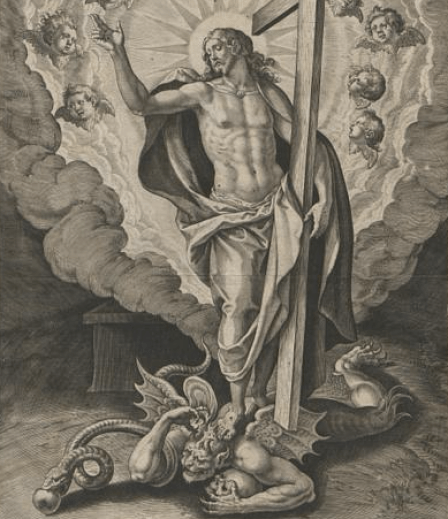
Jesus became man so “that through death he might destroy the one who has the power over death, that is, the devil” (Heb. 2:14). Jesus’ heel was “bruised” at the cross but through that same cross, where He received the bruising, He struck the serpent with a definitive death blow to the head (cf. Gen. 3:15). From the cross, Jesus cried out, “It is finished!” In Jesus’ death, the devil, and death are defeated! He has delivered us from the domain of darkness (Col. 1:13). He disarmed the demonic rulers and authorities and put them to open shame, by triumphing over them through the cross (Col. 2:15).
Jesus is the promised one (Luke 24:27, 44-46; Acts 13:23, 27; 17:3; Rom. 1:2-4; 1 Cor. 15:3-4;) who brings the redemption of all things (cf. Rom. 5:10; Col. 1:20; Titus 2:14; Gal. 3:13; Eph. 1:7, 10). He secures for us an eternal redemption by means of His own blood (Heb. 9:12). Jesus Christ is the solution to the problem; He takes our sin, our problem, upon Himself on the cross. This is the good news; Jesus is the good news! Jesus reversed the curse of sin by becoming a curse for us (Gal. 3:13). Jesus was cast out of the garden so that we could be welcomed back in. Through the one man Adam we all have condemnation yet through the one Man Jesus Christ the grace of God has abounded for many (Rom. 5:12-21). We deserved to be crushed under God’s wrath because of our sin but instead Jesus was crushed in our place (Is. 52:13-53:12). Jesus is the solution to our problem of sin, the sole solution (Jn. 14:6; Act. 4:12). Jesus is the Lamb of God, without blemish, that takes away the sin of the world (John 1:29; Heb. 9:14)!
Jesus is the good news but the good news is not static it goes on and on and on; those in Christ live happily-ever-after. In contrast, God “will gather out of his kingdom all causes of sin and all law-breakers” (Matt. 13:41) and cast them into the pit of eternal fire (Rev. 20:14-15). “They will suffer the punishment of eternal destruction, away from the presence of the Lord and from the glory of his might” (2 Thess. 1:9). However, for those in Christ the story of history will have a happy ending (Rom. 8:29-39).
I concur with what C.S. Lewis says in The Last Battle,
“We can most truly say that they all lived happily ever after. But for them it was only the beginning of the real story. All their life in this world and all their adventures in Narnia had only been the cover and the title page: now at last they were beginning Chapter One of the Great Story which no one on earth has read: which goes on forever: in which every chapter is better than the one before.”[vi]
I believe we, upon arrival to the new Eden, will exclaim with Lewis’ Unicorn:
“I have come home at last! This is my real country! I belong here. This is the land I have been looking for all my life, though I never knew it to now. The reason why we loved the old Narnia [“old creation”] is that it sometime looked a little like this.”[vii]
Through Jesus the Christ we have the unwavering hope of a new creation (2 Peter 3:13). “The creation was subjected to futility” in Adam (Gen. 317-19) but in Christ “the creation itself will be set free from its bondage to corruption and obtain the freedom of the glory of the children of God” (Rom. 8:20-21). As Isaac Watts put it in “Joy to the World,”
“No more let sins and sorrows grow,
Nor thorns infest the ground;
He comes to make His blessings flow
Far as the curse is found,
Far as the curse is found.”
The problem (all of them!) will be fixed and there will be no more sin (Rev. 21:27; 22:3; Matt. 13:41). Everything will be more right than it was ever wrong. We will see that God did, in fact, work all things together for good (Rom. 8:28). Christ will make a new creation and we will be like Him (1 Jn. 3:2; Rom. 8:29; 2 Peter 1:4). “Just as we have borne the image of the man of dust, we shall also bear the image of the man of heaven” (1 Cor. 15:49). God will fulfill our deepest desires and we will finally love the LORD our God with all our heart, soul, mind, and strength when we receive our glorified bodies (Deut. 30:6; Jer. 31:33-34; 32:40; Phil. 3:20-21)! There will be no more pain or problems and God will wipe away all our tears (Rev. 7:17; 21:4). We will once again be in Paradise, the New Jerusalem, and we will have fellowship with God (Rev. 21:3)!
However, this story by its nature, by the fact that it claims to be true, does not leave us alone but calls for a response. We can receive this story or we can reject it outright. God can rewrite us, as it were, into His marvelous script or He can cast us, the unruly “cast,” into hell. We must respond to this story, will we respond rightly? Will we strive to obey the God who reveals Himself? Will we turn to Jesus in faith and repentance?
This is the gospel, the story of all the woes of existence finding their solution in Christ.
____________
[i] Emlet, CrossTalk, 41. A true and cohesive story contained within sixty-six books written by numerous people (with one divine author) in various languages (Hebrew, Greek, and Aramaic) over thousands of years! God’s word about the world being reconciled through the Word is truly amazing!
[ii] Ibid.
[iii] James M. Hamilton Jr. says that “in the broadest terms, the Bible can be summarized in four words: creation, fall, redemption, restoration” (God’s Glory in Salvation through Judgment: A Biblical Theology (Wheaton, IL: Crossway, 2010), 49) but the “ultimate end” of everything is “God’s glory in salvation through judgment.” He goes on to say, “The created realm (creation) is a spectacular theater that serves as the cosmic matrix in which God’s saving and judging glory can be revealed. God’s glory is so grand that no less a stage than the universe—all that is or was and will be, across space and through time—is nescessary for the unfolding of this all-encompassing drama” (Ibid., 53). See also John Piper’s book The Pleasures of God and Jonathon Edwards’ The End for Which God Created the World.
[iv] Emlet, CrossTalk, 47.
[v] Perfect in sense but not like it will be in the new creation; Adam and Eve related to God as creation to Creator and we will relate to God in the new creation as the redeemed to the Redeemer. So we will enjoy a consummated perfect fellowship with God.
[vi] C.S. Lewis, The Last Battle (New York: NY: Harper Collins, 2002), 228.
[vii] Ibid., 213.
to deep darkness the Light

“The people who walked in darkness
have seen a great light;
those who dwelt in a land of deep darkness,
on them has light shone.”
~Isaiah 9:2
Incarnation to New Creation

Just a word and all wonders wrought,
God announced, and behold, it was all good.
Creation had communion with the Creator,
God walked in the Garden.
Yet with Adam the serpent did conspire,
and brought the world into mire.
Beckoned to the grave,
everything disarranged.
The curse burst upon the scene,
but in the midst a seed of hope was seen.
Yes, long of told
,
the Scriptures told
,
of a King who’d come.
In His wake,
death shall quake
,
and the deserts they shall bloom.
Yet, many men came and went,
was the hope of promise spent?
Many lambs, prophets, priests and kings,
yet none with true salvation in their wings.
Darkness for a time,
no prophet’s voice was heard.
Yet in the darkness,
I light it shone,
and it would overcome the darkness.
Behold, O’ world, your Prophet, Priest, and King,
Jesus the Promised seed and Lamb.
The curse brought in shall be expunged;
yes, replunged upon the Son.
Christ was crushed as promised,
but in His crushing, crushed Satan, sin, and death.
Yes, He was cursed to reverse the curse.
He felt our plight to set all things right.
Yes, creation Creator collided
yet we did not hide
for God He brought no wrath,
there was no blood bath,
the world did not implode or explode into non-being.
Instead, angelic greeting:
“Peace on the earth,
goodwill to men”
because the Great I AM is come.
Our Lord, Messiah, Savior in a crib.
Wonderful Counselor,
Prince of Peace,
Bright and Morning Star,
born.
He who lay the foundations of the earth,
laid in a manger.
The Infinite born,
a swaddled babe.
Yes, He that holds the nations in His hand,
grasps His mother’s hand.
He that calls the stars by name,
spoke no name,
nor word.
He formed Himself
in His mother’s womb.
He upheld the nails
that held His hands.
He died for you,
for me.
He became poor
to restore our riches.
Yes, He felt our plight
to set all things right.
He was born to die,
that we might live.
The Deity
incarnate brings
salvation in His wings.
Man once again will be in the Garden
because God’s Son walked from Gethsemane to Golgotha.
No more brier prick or thorn to stick.
All shall be made new.
When our King all subdue,
all shall be made new.
All foes to be forgotten.
Forever banished now.
Satan’s role will be revoked,
the Lord Messiah come.
The demons tremble in His wake;
the blind see,
creation glimmers,
soon the groaning’s cease.
This is the time in between,
the already and not yet.
The Kingdom has come, but not consummated;
it shall be slightly belated.
Peace on the earth,
goodwill to man,
God’s eternal plan in fruition.
The Kingdom has come in God’s Son,
the lion to lay down with the lamb.
No tent or temple,
for the LORD tabernacled.
Yahweh is Messiah.
Immanuel,
born the balm,
for the vacuum of our souls.
Yes, the myth came true in the manger.
God is no longer a stranger,
but makes Himself known in His Son.
Jesus, Joshua’s namesake, true!
The LORD our Savior come!
He was, and is, and is to come.
All things consummate(d) in Him.
Amen.
(click here for audio)
Sin is Not Good #7 (but Jesus is)

Sin’s Solution
In the book of Genesis we read of societal progress. There are advances in technology and the arts. Yet, the problem remains: We have sinful hearts. Thus relationships and truly the world remain fractured. Like humpty dumpty; we can’t put it back together again. The answer to my problem, humanities problem, and the world’s problem is external to us.
One would think that
“Auschwitz destroyed… the idea that European civilization at least was a place where nobility, virtue and humanizing reason could flourish and abound… It seems remarkable that the belief in progress still survives and triumphs… People still continue to this day to suppose that the world is basically a good place and that its problems are more or less soluble by technology, education, ‘development’ in the sense of ‘Westernization.’”[i]
However, today’s problems, like that of all history past, is not solved by advances in technology or even any sort of knowledge or morality. It is solved by a Savior. It is Messiah Jesus that will once and for all eradicate sin and suffering (see e.g. Rom. 11:26-27; Heb. 12:23; 1 Jn. 3:2; Rev. 3:12; 21:1-8, 27; 22:3).
When we control the measures to make a utopian society the way we think it should be, it fails. Whether we control “the stirrings” (e.g. The Giver), emotions (e.g. Equilibrium), everything (e.g. The Lego Movie), or the socioeconomic structure (e.g. The Hunger Games) the result is not paradise; it’s a sort of hell, at least for many. We messed up utopia, we can’t with our fallible minds design a new one. Only our Lord can. He has the only infallible and incorruptible mind. He perfectly balances justice and grace. And He alone can make us and all things new.
So the recent movie and classic The Giver does more than entertain. It teaches us a profound truth, one we would do well to remember: There is no utopian society outside of Christ. We can’t fix it. There have been many botched attempts throughout history. They lay died with their victims.
“Everything is awesome. Everything is cool when you’re part of a team…” As catchy as The Lego Movie song is, it is not exactly right. Everything is not awesome, not yet. However, it will be. But not from our own doing (Notice I am not saying we shouldn’t work for social justice. We should! Yet, it will not bring the ultimate and forever peace that we long for.).
Heaven comes down (Rev. 21:2). We don’t, nor can we, build it here. I am with you and Miss America in saying I desire world peace, yet it won’t ultimately come until our Lord does. When our Lord comes He will wipe away all evil, pain, and tears, not some charismatic leader or government (Rev. 21:1ff). Jesus will make all things new. Jesus will bring utopia.
Maranatha! Come Lord Jesus, come!
Sin is not good. But Jesus is. He will bring the shalom we all desire. Live for Him.
___________________________
[i] N.T. Wright, Evil and the Justice of God, 22-23.
Shalom is Slain
O’ for the worlds that lay asunder,
for the shalom that is slain.
We ingrain habits of unrest,
we fester and pass on spoil.
O’ for the earth to break,
for all to be made anew.
For the habits in my heart to pour out,
and for living waters to ensue.
God this world is broken,
we are altogether damaged and damned.
“Destroy the destroyers of the earth,”
destroy what in me destroys.
Shalom was slain
but through the slain Messiah (is/will be) renewed.
O’ God, Maranatha!
What is the Gospel?

It must be understood here that even if all the books ever written were expositions of the gospel they would not begin to reach the summit of all the gospel is. John Piper has demonstrated in his book that God is the Gospel and God is infinite and thus the good news is infinitely and inexhaustibly good and cannot begin to be fully comprehended.[1]
The gospel means good news.[2] It is the announcement of the good news of Christ but as I have said, there is a lot of good news to announce. In fact, a limitless amount of good news. We have, in Christ, reconciliation with God and will with men, we have appeasement from God’s wrath and peace in its place, we have a new heart that loves the Lord, we are holy and being made holy, we will be glorified, we have riches in heaven, we are sons and daughters of God, and this is just the beginning of all the good news that is found in Christ.
In Kevin Deyoung’s and Greg Gilbert’s book What Is the Mission of the Church?, they have a helpful discussion on the wide-angle lens and the zoom-lens aspect of the gospel. When asked, “’What is the whole good news of Christianity?’” they say, “the gospel of the kingdom through the cross.”[3] The good news is legion but it all flows from the good news of Jesus’ death, burial, and resurrection according to the Scriptures (cf. 1 Cor. 15:3-4 and 51-57). I wonder if the reason why we as Americans are sometimes not excited about the gospel of the Kingdom is that we are so enamored by the present earthly kingdom. Though, I do realize that the gospel of the Kingdom has suffered many abuses. The gospel of the Kingdom has an “already/not yet” aspect to it, that must be remembered. Sadly, however, the pendulum often swigs too far in one direction or another.
D. A. Carson in writing on the wide and narrow senses of the gospel shows what a helpful balance looks like:
“There is but one gospel of Jesus Christ. The narrower focus draws you to Jesus—his incarnation, his death and resurrection, his session and reign—as that from which all the elements of what God is doing are drawn. The broader focus sketches in the right dimensions of what Christ has secured. But this means that if one preaches the gospel in the broader sense without also emphasizing the gospel in the more focused sense of what God has done to bring about such sweeping transformation, one actually sacrifices the gospel. To preach the gospel as if this were equivalent to preaching, say, the demands of the kingdom or the characteristics and promises of the kingdom, both now in its inauguration and finally in its consummation, without the making clear what secures the whole, is not to preach the gospel…
The heart of the gospel is what God has done in Jesus, supremely in his death and resurrection. Period. It is not personal testimony about our repentance; it is not a few words about our faith response; it is not obedience; it is not the cultural mandate or any other mandate. Repentance, faith, and obedience are of course essential, and must be rightly related in the light of Scripture, but they are not the good news. The gospel is good news about what God has done.”[4]
________________________________
[1] “The finite cannot take in all of the infinite… The end of increasing pleasure in God will never come. God is inexhaustible, infinite” (John Piper, Taste and See [Colorado Springs: Multnomah Books, 2005], 148). “Here is the way Edwards puts it: ‘I suppose it will not be denied by any, that God, in glorifying the saints in heaven with eternal felicity, aims to satisfy his infinite grace benevolence, by the bestowment of a good [which is] infinitely valuable, because eternal: and yet there never will come the moment, when it can be said, that now this infinitely valuable good has been actually bestowed’ (The End for Which God Created the World, ¶285, in God’s Passion for His Glory [Wheaton: Crossway, 1998], 251).
Moreover, he says, our eternal rising into more and more of God will be a ‘rising higher and higher through that infinite duration, and…not with constantly diminishing (but perhaps an increasing) [velocity] …[to an] infinite height; though there never will be any particular time when it can be said already to have come to such a height’ (God’s Passion for His Glory, 279). It will take an infinite number of ages for God to be done glorifying the wealth of his grace to us—which is to say he will never be done. And our joy will increase forever and ever, Boredom is absolutely excluded in the presence of an infinitely glorious God” (Ibid.).
[2] Knowing that the good news of the gospel encapsulates more than could ever be written down Mark Dever offers this helpful definition: “The good news is that the one and only God, who is holy, made us in his image to know him. But we sinned and cut ourselves off from him. In his great love, God became a man in Jesus, lived a perfect life, and died on the cross, thus fulfilling the law himself and taking on himself the punishment for sins of all those who would ever turn and trust in him. He rose again from the dead, showing that God accepted Christ’s sacrifice and that God’s wrath against us had been exhausted. He now calls us to repent of our sins and to trust in Christ alone for forgiveness. If we repent of our sins and trust in Christ, we are born again into a new life, an eternal life with God” (Mark Dever, The Gospel and Personal Evangelism [Wheaton, IL: Crossway Books, 2007], 43).
[3] What Is the Mission of the Church?: Making Sense of Social Justice, Shalom and the Great Commission (Wheaton, IL: Crossway, 2011), 111.
[4] D. A. Carson, “What is the Gospel?—Revisited” in For the Fame of God’s Name, 161-62.
The Storyline of Scripture
Scene 1 & 2: Creation and Fall
The Bible is a true story about God making the world, man messing it up, and God becoming a man to fix the world by not messing up. It is a story of Eden—exile—repeat. It is not until the true Adam, the true and righteous Son of God comes that this process is put to an end. All of Christ’s predeceases fell short; Adam, Noah, Abraham, Saul, David, Solomon, and the lambs, priests, and prophets could not fill Christ’s rule.
From the beginning of time and the beginning of God’s word, the Word has been a prominent character in the script of history (Gen. 1:1ff; Jn. 1:1ff). At first, the promised offspring (Gen. 3:15) is vague, in fact, Eve rejoiced because she thought she had the offspring (4:1) but it was all for naught for Cain was of the offspring of the serpent and killed his brother. However, now we have seen that which even the prophets longed to look (Matt. 13:17), we know that all Scripture finds its fulfillment in Jesus who is the long awaited Messiah (2 Cor. 1:20).
When Jesus came the first time, He had no beauty or majesty (Is. 53:2). When He comes again His face will shine like the sun in full strength (Rev. 1:16). We were cast out of the Garden in the beginning but as Jesus said to the thief on the cross, we will be with Him in paradise in the end. Jesus is the linchpin among all the cogs of Scripture. “The trajectory of the arrow shot from the Hebrew Scriptures finds its target (fulfillment) in Jesus of Nazareth.”[1]
The Storyline of the Scripture has all sorts of twists and turns, conflicts and resolutions, but the overarching story can be summed up: creation, fall, redemption, and new creation.
Through the creation part of the narrative we see that God made everything (Gen. 1:1ff; Jn. 1:1-3) and it was good (Gen. 1:4; 10; 12; 18; 21; 25; 31). There was no sin, no death, and no problems before man sinned. Man had perfect fellowship with God (cf. Gen. 3:8).[2]
However, the plot thickens. A cosmic problem is introduced. Through man’s fall, we see the collapse of the creation, which explains why everything is no longer good. Man disobeyed and rebelled (Gen. 2:16-17; 3:6) and this brought spiritual and physical death (Gen. 2:17; 3:19), pain (3:16-17), difficulties (3:18-19), and separation from God (3:23-24). This is the bad news. We deserve death and hell.
Scene 3 & 4: Redemption and New Creation
This is not the end of the story. There is good news. Even at the beginning of the story, God promised that He would send someone (i.e. the Messiah/Christ) to defeat the “bad guy” (i.e. Satan) of the story (cf. Gen 3:15). In a similar scene, seen throughout the Bible, man’s nemesis is once again at it with him. Satan is tempting not Adam but the second Adam in the wilderness (Luke 4). However, unlike Adam in paradise, the second Adam does not give into the serpent’s temptation, although He is in the desert. Jesus was tempted in every way that Adam was, and we are, yet He did not sin (Heb. 4:15) and still He bore our sin upon Himself.
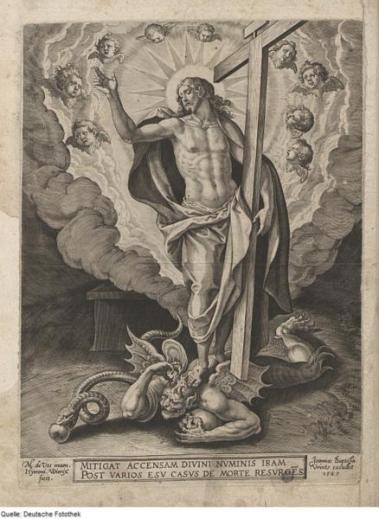
Jesus became man so “that through death he might destroy the one who has the power over death, that is, the devil” (Heb. 2:14). Jesus’ heel was “bruised” at the cross but through that same cross, where He received the bruising, He struck the serpent with a definitive death blow to the head (cf. Gen. 3:15). From the cross, Jesus cried out, “It is finished!” In Jesus’ death, the devil, and death are defeated! He has delivered us from the domain of darkness (Col. 1:13). He disarmed the demonic rulers and authorities and put them to open shame, by triumphing over them through the cross (Col. 2:15).
Jesus is the Promised One (Luke 24:27, 44-46; Acts 13:23, 27; 17:3; Rom. 1:2-4; 1 Cor. 15:3-4;) who brings the redemption of all things (cf. Rom. 5:10; Col. 1:20; Titus 2:14; Gal. 3:13; Eph. 1:7, 10).[3] He secures for us an eternal redemption by means of His own blood (Heb. 9:12). Jesus Christ is the solution to the problem; He takes our sin, our problem, upon Himself on the cross. This is the good news; Jesus is the good news![4] Jesus reversed the curse of sin by becoming a curse for us (Gal. 3:13). Jesus was cast out of the garden so that we could be welcomed back in. Through the one man Adam we all have condemnation yet through the one Man Jesus Christ the grace of God has abounded for many (Rom. 5:12-21).We deserved to be crushed under God’s wrath because of our sin but instead Jesus was crushed in our place (Is. 52:13-53:12). Jesus is the solution to our problem of sin, the sole solution (Jn. 14:6; Act. 4:12). Jesus is the Lamb of God, without blemish, that takes away the sin of the world (John 1:29; Heb. 9:14)!
Jesus is the good news but the good news is not static it goes on and on and on; those in Christ live happily-ever-after (see endnote 3). In contrast, God “will gather out of his kingdom all causes of sin and all law-breakers” (Matt. 13:41) and cast them into the pit of eternal fire (Rev. 20:14-15). “They will suffer the punishment of eternal destruction, away from the presence of the Lord and from the glory of his might” (2 Thess. 1:9). However, for those in Christ the story of history will have a happy ending (Rom. 8:29-39).[5]
I concur with what C.S. Lewis says in The Last Battle,
“We can most truly say that they all lived happily ever after. But for them it was only the beginning of the real story. All their life in this world and all their adventures in Narnia had only been the cover and the title page: now at last they were beginning Chapter One of the Great Story which no one on earth has read: which goes on forever: in which every chapter is better than the one before.”[6]
I believe we, upon arrival to the new Eden, will exclaim with Lewis’ Unicorn:
“I have come home at last! This is my real country! I belong here. This is the land I have been looking for all my life, though I never knew it to now. The reason why we loved the old Narnia [“old creation”] is that it sometime looked a little like this.”[7]
Through Jesus the Christ we have the unwavering hope of a new creation (2 Peter 3:13). “The creation was subjected to futility” in Adam (Gen. 317-19) but in Christ “the creation itself will be set free from its bondage to corruption and obtain the freedom of the glory of the children of God” (Rom. 8:20-21). As Isaac Watts put it in “Joy to the World,”
“No more let sins and sorrows grow,
Nor thorns infest the ground;
He comes to make His blessings flow
Far as the curse is found,
Far as the curse is found.”
The problem (all of them!) will be fixed and there will be no more sin (Rev. 21:27; 22:3; Matt. 13:41). Everything will be more right than it was ever wrong. We will see that God did, in fact, work all things together for good (Rom. 8:28). Christ will make a new creation and we will be like Him (1 Jn. 3:2; Rom. 8:29; 2 Peter 1:4). “Just as we have borne the image of the man of dust, we shall also bear the image of the man of heaven” (1 Cor. 15:49). God will fulfill our deepest desires and we will finally love the LORD our God with all our heart, soul, mind, and strength when we receive our glorified bodies (Deut. 30:6; Jer. 31:33-34; 32:40; Phil. 3:20-21)! There will be no more pain or problems and God will wipe away all our tears (Rev. 7:17; 21:4). We will once again be in Paradise, the New Jerusalem, and we will have fellowship with God (Rev. 21:3)![8]
Epilogue
This story by its nature, by the fact that it claims to be true, does not leave us alone but calls for a response. We can receive this story or we can reject it outright. God can rewrite us, as it were, into His marvelous script or He can cast us, the unruly “cast,” into hell. We must respond to this story, will we respond rightly? Will we strive to obey the God who reveals Himself?
I can’t say it better than Michael Hortan. Those of us who have believed this story and are found in Christ,
“God has ‘rescripted’ us and recast us in his story. No longer trying to fit ‘God’ or the gods into our own life story, we become characters in his unfolding drama: seated at the table with Abraham, Isaac, and Jacob. From God’s perspective, our own script was wrong. Regardless of the role we thought we had, our inherited character was that of ‘strangers and to the covenants of promise” who were ‘having no hope … in the world’ (Eph. 2:12). But God calls us, as he did Abram and the disciples, away from our dead-end character. In God’s, our old character dies and a new character emerges who is now given a supporting role in a plot that centers on Christ. As the casting director, the Spirit gives us not only a new identity with new clothes but a new script, with new lines.”[9]
This is the gospel, the story of all the woes of existence finding there solution in Christ.
________________________________________________
[1] Emlet, CrossTalk, 47.
[2] Perfect in sense but not like it will be in the new creation; Adam and Eve related to God as creation to Creator and we will relate to God in the new creation as the redeemed to the Redeemer. Therefore, we will enjoy a consummated perfect fellowship with God.
[3] Jesus has inaugurated the Kingdom of God but there is an already/not yet aspect to it. Although the Kingdom has been ushered in through Christ it will not reach its zenith until Christ’s second coming and the culmination of the new creation. Jesus has saved us and “put away sin by the sacrifice of Himself” (Heb. 9:26) and yet there is still a future aspect to our salvation; He will save us (v. 28).
[4] Luke 2:10-11 says, “I bring you good news of great joy that will be for all people… a Savior, who is Christ the Lord” (or even, LORD!). Matthew 1:24 says, Immanuel (which means, God with us)! Notice the genealogies point to Jesus as being the Christ that was promised to defeat “the Serpent of old” (Matt. 1:1-18; Luke 3:23-38 says, “Jesus… the son of Adam” who will crush Satan under His feet as promised).
[5] Sadly, those who do not have faith in Jesus Christ will be cast into the lake of eternal fire (Dan. 12:2; Matt. 25:46; John 5:28-29; Acts 24:15; Rev. 20:12-13). It should be understood that this is part of God’s reconciliation of the world, but not in redemption, but in recompense. The story for those in Christ is happily-ever-after, even more so than can be imagined, but for those not in Christ the story does not end nicely; in fact, it never ends, but is incomprehensible torment-ever-after. We should never take this part of the story lightly but we must seek to spread the good message of Christ and the hope of a “happily-ever-after.” Look at the difference between God’s people in Isaiah 65:17-25 and the rebellious in 66:24.
[6] C.S. Lewis, The Last Battle (New York: NY: Harper Collins, 2002), 228.
[7] Ibid., 213.
[8] Jesus is surly coming soon (Rev. 22:7, 20), may we be found ready (v. 12; 3:23; Luke 12:47-48; Matt. 16:27; 1 Cor. 3:14-15) and may we respond with John: “Come, Lord Jesus!”
[9] Michael Hortan, The Christian Faith: A Systematic Theology for Pilgrims on the Way, 643.
Cosmic Christmas
Long of old
the Scriptures told
of a King who’d come.
In His wake
death shall quake
and the deserts they shall bloom.
Yes, creation creator collide
yet we did not hide
for God He brought no wrath,
there was no blood bath,
the world did not implode or explode into non-being.
Instead, angelic greeting:
“Peace on the earth,
goodwill to men”
because the Great I AM is come.
Our Lord, Messiah, Savior in a crib.
Wonderful Counselor,
Prince of Peace,
Bright and Morning Star,
born.
He who lay the foundations of the earth,
laid in a manger.
The Infinite born,
a swaddled babe.
He that holds the nations in His hand,
grasps His mother’s hand.
He that calls the stars by name,
spoke no name, nor word.
Wonder see!
the Omnipresent crawl!
He formed Himself
in His mother’s womb.
He upheld the nails
that held His hands.
He died for you,
for me.
He became poor
to restore our riches.
Yes, He felt our plight
to set all things right.
He was born to die,
that we might live.
The Deity
incarnate brings
salvation in His wings.
From incarnation,
liberation;
new life has been set free!
The hypostatic union
brings communion;
the LORD walks with man.
Man once again will be in the Garden
because God’s Son walked from Gethsemane.
Satan’s role has been revoked,
the Lord Messiah come.
The demons tremble in His wake;
the blind see,
creation glimmers,
soon the groaning’s seize.
This is the time in between,
the already and not yet.
The Kingdom has come, but not consummated;
it shall be slightly belated.
Peace on the earth,
goodwill to man,
God’s eternal plan in fruition.
The Kingdom has come in God’s Son,
the lion to lay down with the lamb.
Satan and his host defeated,
all their power to be depleted,
they won’t sleep, but feel the wrath of the Lamb.
The immaterial
infused material;
God in the flesh behold!
No tent or temple,
for the LORD tabernacled.
Yahweh is Messiah.
The Offspring Madonna bears
shall wipe all tears
and crush the serpent’s head.
Every fear and tear to be forgotten
in the splendor of our joy.
The beatific vision brings
life and joy in its wings;
for when we see Him, we shall be like Him.
Immanuel,
born the balm,
for the vacuum of our souls.
The myth came true in the manger.[1]
God is no longer a stranger,
but makes Himself known in His Son.
Jesus, Joshua’s namesake, true!
The LORD our Savior come!
He was, and is, and is to come.
All things consummate(d) in Him.
Amen.
____________
I use myth in the sense that C. S. Lewis used it.
“The Giver” and the Failure of Utopian Societies

When we control the measures to make a utopian society the way we think it should be, it fails. Whether we control “the stirrings” (e.g. The Giver), emotions (e.g. Equilibrium), everything (e.g. The Lego Movie), or the socioeconomic structure (e.g. The Hunger Games) the result is not paradise; it’s a sort of hell, at least for many. We messed up utopia, we can’t with our fallible minds design a new one. Only our Lord can. He has the only infallible and incorruptible mind. He perfectly balances justice and grace. And He alone can make us and all things new.
So the recent movie and classic The Giver does more than entertain. It teaches us a profound truth, one we would do well to remember: There is no utopian society outside of Christ. We can’t fix it. There have been many botched attempts throughout history. They lay died with their victims.
“Everything is awesome. Everything is cool when you’re part of a team…” As catchy as The Lego Movie song is, it is not exactly right. Everything is not awesome, not yet. However, it will be. But not from our own doing.*
Heaven comes down (Rev. 21:2). We don’t, nor can we, build it here. I am with you and Miss America in saying I desire world peace, yet it won’t ultimately come until our Lord does. When our Lord comes He will wipe away all evil, pain, and tears (Rev. 21:1ff). He will make all things new. He will bring utopia.
Maranatha! Come Lord Jesus, come!
________________
*Notice I am not saying we shouldn’t work for social justice. We should! Yet, it will not bring the ultimate and forever peace that we long for.



 in X
in X 